


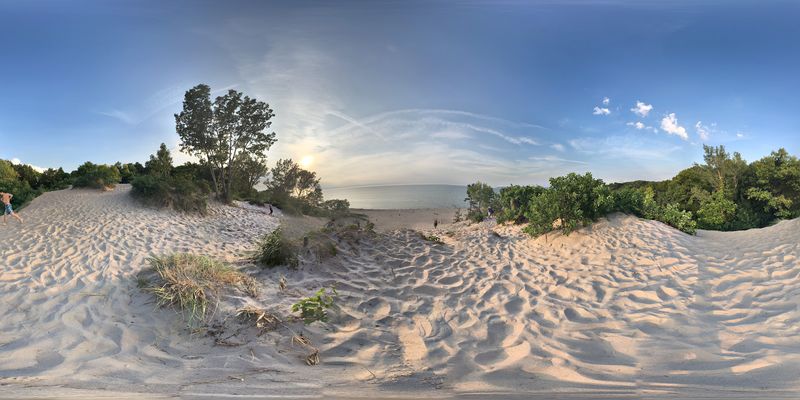
Some hills in Indiana are mostly made of sand, and one of them stands taller than a 15-story building. It rises right off the southern shore of Lake Michigan, about an hour from downtown Chicago.
The climb up is short but steep, with wooden steps that give way to soft sand that slides back a little with every stride. People huff, pause, laugh at themselves, and keep going.
At the top, the payoff is a wide look at the lake, the shoreline, and on clear days, a city skyline far across the water. This story covers the whole place behind that climb.
It explains where the park sits, how it came to be protected, and why its tallest dune has turned into a friendly test of legs and lungs. It also covers the beach, the quieter trails, the nature center, and the practical tips that make a first trip go smoothly.
A Sandy Corner of Northwest Indiana
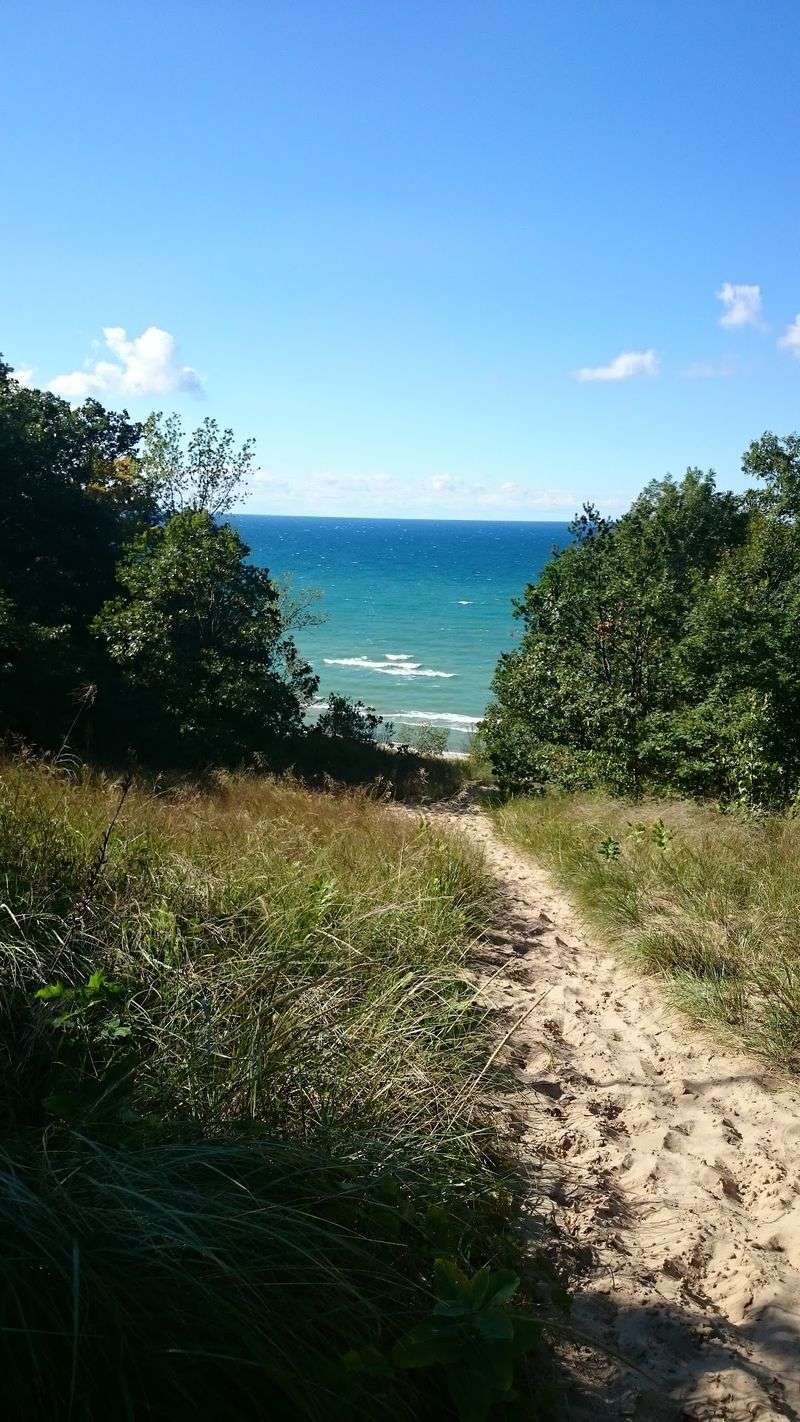
Few states can claim a mountain made of sand, yet northwest Indiana has several of them lined up along the water.
Indiana Dunes State Park sits in Westchester Township, IN 46304, USA, in Porter County near the town of Chesterton. It stretches along the southern tip of Lake Michigan, where the shoreline curves between Indiana, Illinois, and Michigan.
The park covers roughly 2,100 acres. That space holds forested dunes, open beach, wetlands, and a long web of hiking trails.
A large share of that land is set aside as a dedicated state nature preserve. The rules there are meant to keep plants and dunes as undisturbed as possible, so hikers are asked to stay on marked paths.
The location surprises many first-timers. Busy highways, rail lines, and industrial sites sit not far away, yet the park itself feels tucked away behind its ridges of sand.
It is also surrounded by Indiana Dunes National Park, a separate federal park that became a national park in 2019. The two share the same shoreline but are managed by different agencies, which matters when planning a visit and paying entry fees.
For a place so close to a major metro area, it holds a surprising amount of wild ground, and its most famous feature waits just behind the beach.
A Century of Saving the Sand
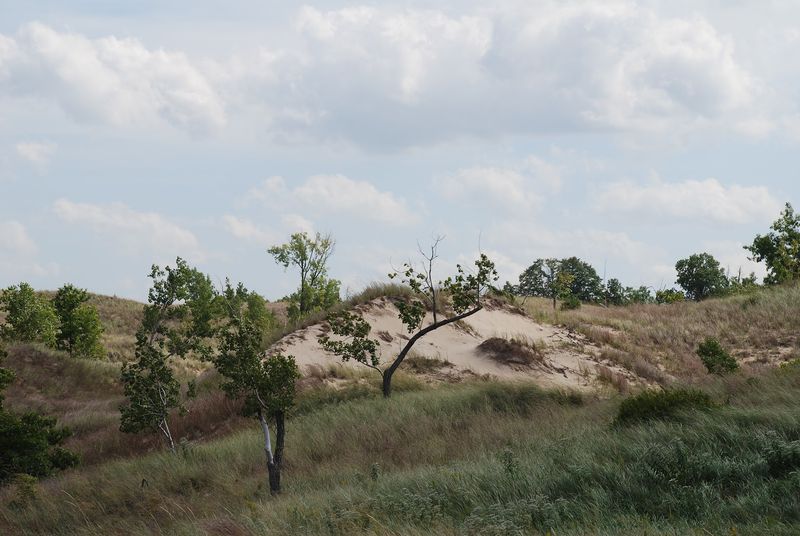
Long before anyone timed their climb up Mount Tom, people were arguing about whether these dunes should exist at all.
In the early 1900s, the Indiana shoreline was prized for its sand. Industry was spreading along the lake, and many dunes were carted away or flattened for development.
A group of scientists, artists, and hiking clubs from Indiana and Chicago pushed back. They argued the dunes held rare plant life and deserved protection for the public.
Their efforts paid off in 1925, when Indiana Dunes State Park was established. It opened to the public the following year and quickly became a weekend escape for city residents.
The dunes also drew attention from scientists. Researchers studied how plant communities changed from the bare beach to the older forested dunes, and that work helped shape the field of plant ecology in the United States.
Later decades brought more struggles over the surrounding shoreline. Those battles eventually led to the creation of the neighboring federal lands that now wrap around the state park.
Today the park is nearing its hundredth birthday. Every set of footprints on Mount Tom exists because people a century ago decided a sand hill was worth fighting for.
Mount Tom, the Park’s Tallest Summit
Mount Tom does not look like much from the parking lot, and that is exactly how it tricks people.
At about 192 feet above the lake, it is the tallest dune in the park. That height may sound modest next to real mountains, but the climb happens over a short distance and mostly on loose sand.
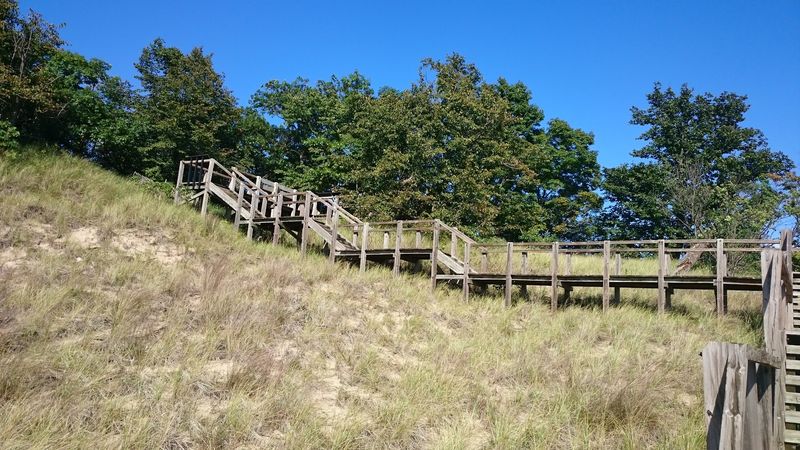
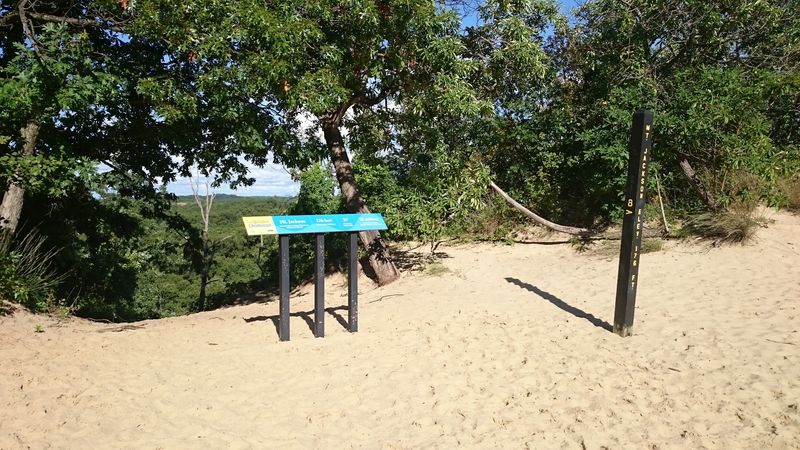
Trail 8 is the main route to the top. It starts near the park’s beach area and heads up through a wooded slope, with sections of wooden stairs mixed with open sand.
The stairs help, but they do not do all the work. Many hikers stop more than once, catching their breath on a landing before tackling the next stretch.
Sand is the real challenge. Each step sinks a bit and slips backward, so the effort feels bigger than the numbers on a map suggest.
Good shoes make a noticeable difference. Sandals and flip-flops tend to fill with sand and slide, while sneakers or hiking shoes give better footing on both the steps and the slopes.
Once at the summit, most climbers find a flat spot and simply stand still for a moment. The reward for all that effort deserves its own section.
Three Dunes, One Bragging Right
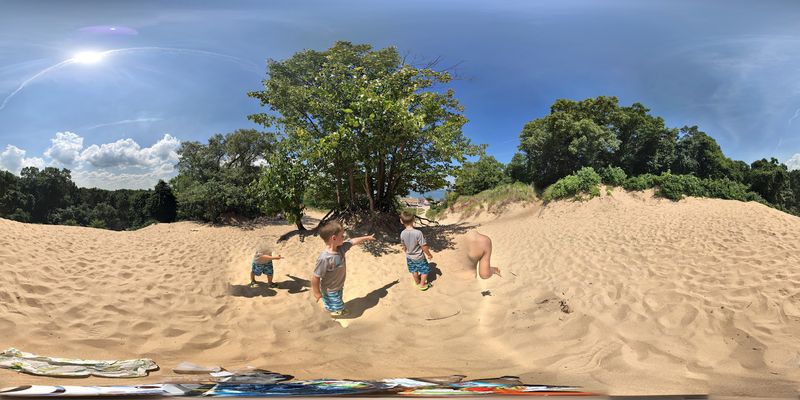
Climbing one tall dune is good exercise. Climbing three in a row has become a local rite of passage.
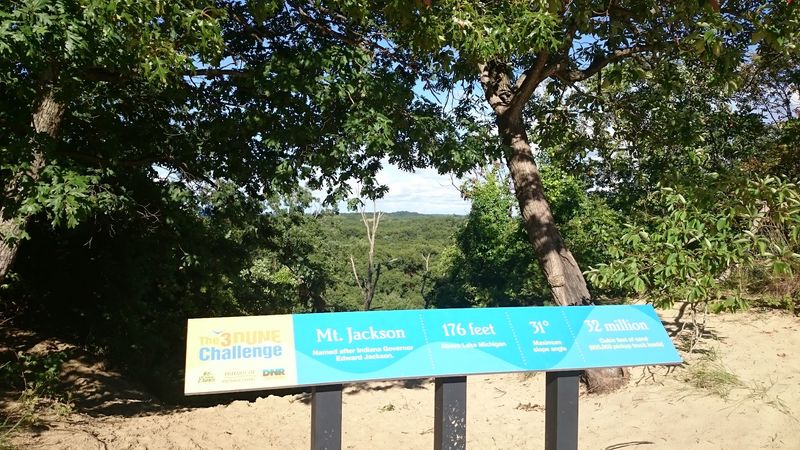
The Three Dune Challenge links Mount Tom with its two neighbors, Mount Holden and Mount Jackson. Mount Holden stands about 184 feet and Mount Jackson about 176 feet, so none of them is a pushover.
The full loop runs about 1.5 miles. Along the way, hikers gain roughly 552 feet in total elevation, most of it on sand.
That short distance fools plenty of people. The route goes up and down repeatedly, and legs feel the descents almost as much as the climbs.
The challenge is not a race, and there is no required pace. Families with older kids, fitness fans, and casual hikers all take it on at their own speed.
Signs along the route help keep people on track. The park has promoted the challenge for years, and finishing it has become a small point of pride for many who try.
Plenty of hikers take photos at each summit to prove they made it. After the third peak, a snack break usually feels well earned.
For anyone who wants more than a single climb, this loop turns a short walk into a real accomplishment.
What Waits at the Top
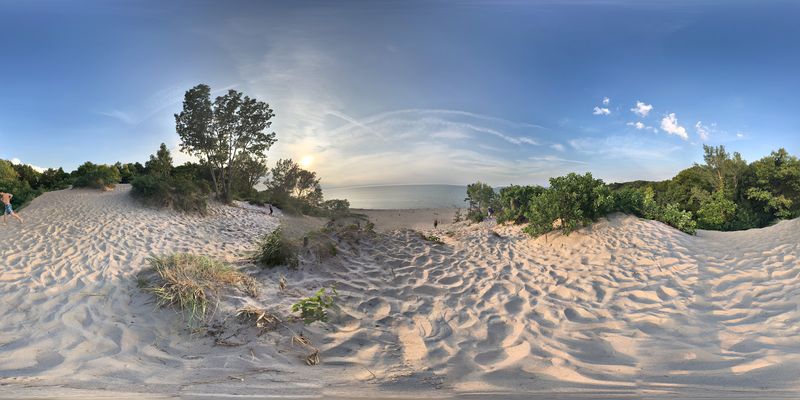
Here is the part that makes all the huffing and puffing worth it.
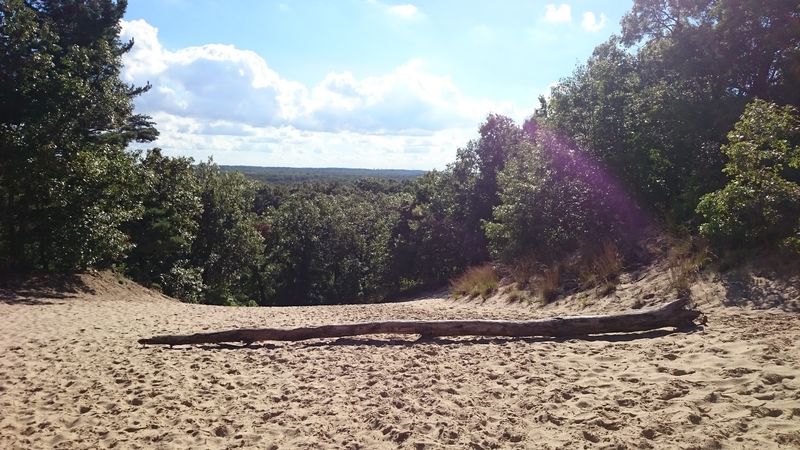
From the summit of Mount Tom, the view opens across the treetops to Lake Michigan. The lake stretches far enough that it looks like an ocean from this height.
On clear days, the Chicago skyline can be spotted across the water. It appears as a thin line of towers on the horizon, roughly 30 miles or more away.
Weather decides how much of that view shows up. Haze or clouds can hide the skyline completely, so a crisp, clear day gives the best odds.
The shoreline itself is also worth studying. The beach curves along the base of the dunes, and the forest below shows how plants have slowly taken hold of the sand over time.
Many hikers linger longer than planned. Some take photos, some sit on the steps, and some just point out landmarks to whoever climbed with them.
Sunset trips are popular in warmer months, though it helps to know the park’s closing time before heading up late.
After the view, the walk down feels a lot easier on the lungs. Knees might disagree, but that is a small price for such a wide look at the lake.
Three Miles of Lake Michigan Beach
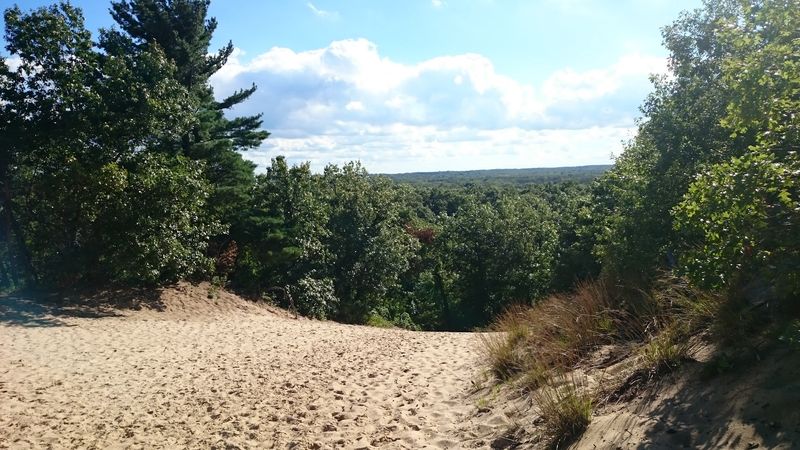
Not every trip to the park needs to involve climbing. Some of the best hours are spent at ground level, right on the sand by the water.
The park has about three miles of Lake Michigan shoreline. The main beach area sits near the pavilion and draws big crowds on summer weekends.
Swimming is a major draw in warm months. Lake Michigan can have strong waves and currents, so it pays to watch posted flags and follow any safety notices at the beach.
Walking the shoreline is another option. Heading away from the main beach area usually means fewer people and more space to spread out.
Beach days often pair nicely with a dune climb. Many people hike Mount Tom in the morning and cool off in the lake afterward.
Summer weekends can fill the parking areas early. Arriving in the morning is a common strategy for anyone hoping to claim a good spot.
Off-season beach walks have their own appeal. Fall and winter bring far fewer people, and the empty shoreline feels like a completely different place.
Towels, sunscreen, and plenty of water are the basics. With those in the bag, the beach can easily fill an entire afternoon.
Quieter Trails Behind the Big Climb
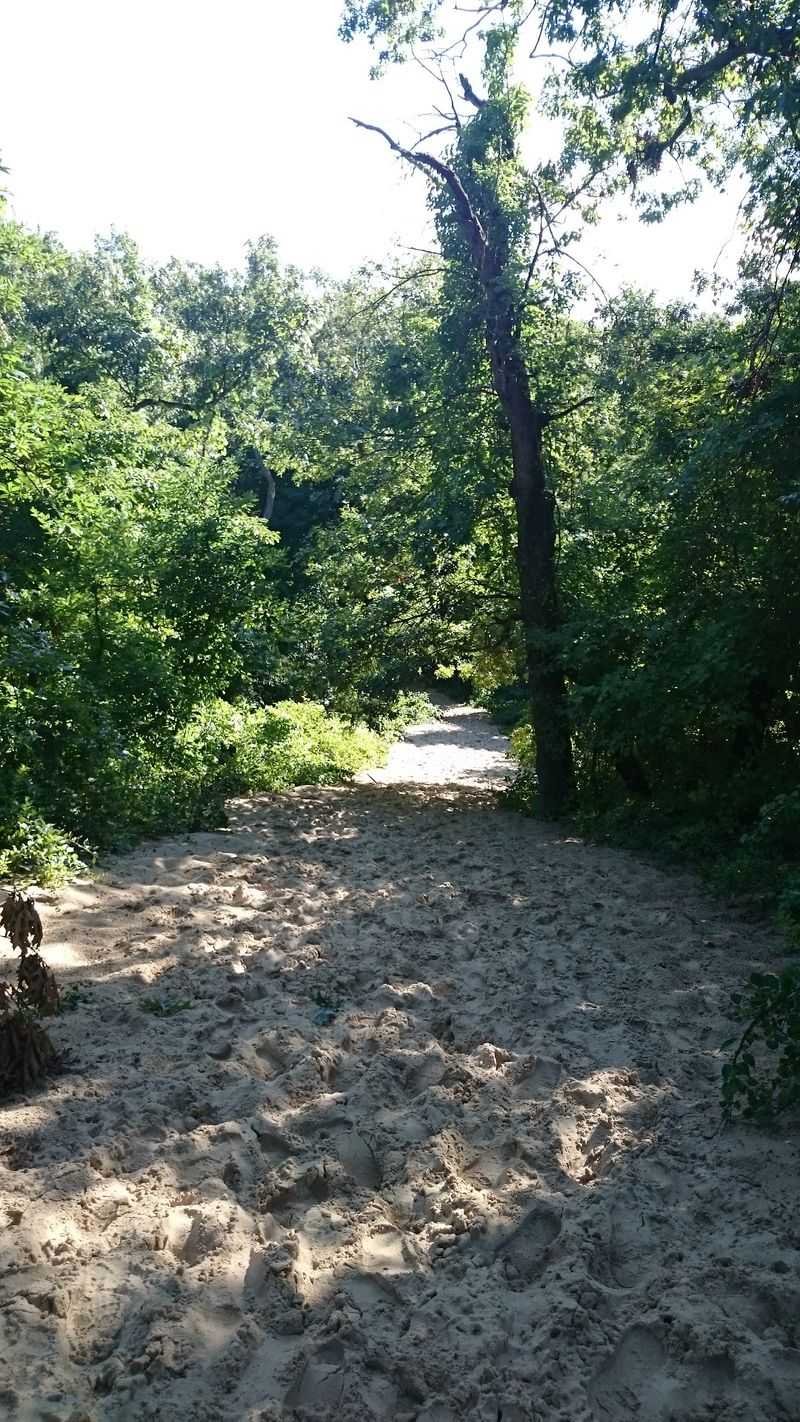
Mount Tom gets the headlines, but the rest of the trail map holds plenty of surprises.
The park has around 16 miles of hiking trails. They wind through forests, over dunes, across wetlands, and along the beach.
Trail 2 is a favorite for easier walks. It follows a flat route with boardwalk sections through wetland areas, making it a good choice for anyone not in the mood for sand stairs.
Trail 10 is one of the longer options. It loops through the back dunes and along the shoreline, offering a mix of forest and beach in one outing.
Trail 9 is known for its route along the ridge of the dunes. It includes views over blowouts, which are areas where wind has scooped out large bowls of sand.
Each trail offers a different side of the landscape. Some feel deep in the woods, while others stay close to open sand and water.
Trail maps are available from the park, and trail numbers are posted along the routes. Checking a map before heading out helps avoid accidental extra miles.
Spending a whole day hopping between trails is easy here. The dunes might be the celebrities, but these paths are the supporting cast that makes the show work.
Nature Center and Winged Neighbors
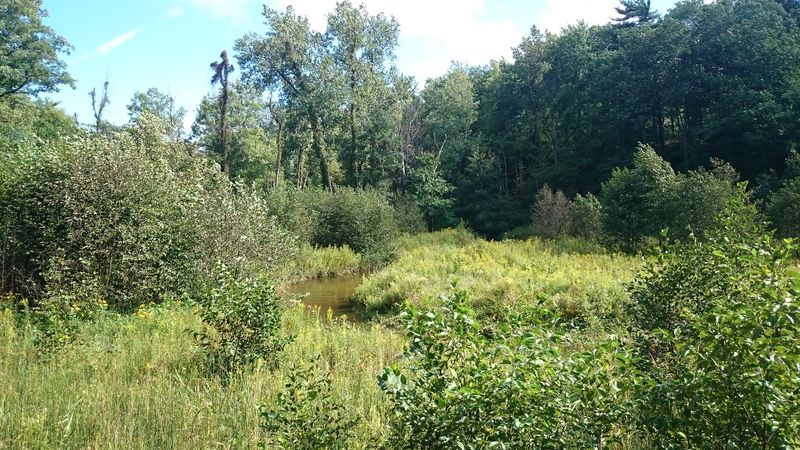
Curious about what actually lives in all those dunes? The park’s nature center is the place to find out.
The center offers exhibits about the dunes, the plants, and the wildlife of the area. It is a helpful stop before hitting the trails, especially for kids who want to know what to look for.
A bird-watching window is one of its most popular features. Feeders outside draw a steady rotation of birds, and people can watch from indoors in any season.
The Indiana dunes sit along a major bird migration route. Spring and fall bring many species passing through along the lake shore.
Naturalists at the park lead programs throughout the year. Topics often cover wildlife, dune formation, and the area’s history, and schedules change by season.
The plant life here is a big deal to scientists. The dunes hold a mix of species that range from beach grasses to forests, all packed into a small area.
Families often find the center a good rest stop between hikes. It offers a break from the sun and a chance to learn something new.
Program times and center hours can vary, so checking the park’s official information before a visit keeps plans on track.
The Pavilion and the Neighbors Next Door
Right at the edge of the main beach stands a building that has watched nearly a century of summers go by.
The Dunes Pavilion dates to the park’s early years, built around 1930. It has long served as a gathering point near the beach and has gone through renovations to keep it in use.
Its location makes it a natural landmark. Many people use it as a meeting spot before splitting off to the beach or the trails.
Just beyond the park boundaries lies Indiana Dunes National Park. The federal park covers more than 15,000 acres spread along the shoreline on both sides of the state park.
That neighbor adds even more to explore. Its own beaches, trails, and historic sites sit within a short drive.
Keep in mind the two parks are run separately. Fees, rules, and passes are not always shared, so it helps to know which park a trail or beach belongs to.
Many travelers spend one day in the state park and another in the national park. That split gives time to climb Mount Tom without rushing and still see more of the coast.
With history at the pavilion and more land next door, the area rewards anyone who plans for more than a quick stop.
The Kind of Crowd the Dunes Attract
Part workout, part beach day, part nature class, the park manages to please a very mixed crowd.
Fitness fans come for the dunes. Mount Tom and the Three Dune Challenge offer a tough, short workout that feels different from running on pavement.
Families come for variety. Kids can climb a sand hill, splash in the lake, and look at birds from the nature center window, all in one afternoon.
Nature lovers find plenty to study. The mix of forest, wetland, and open dunes supports a wide range of plants and wildlife.
City dwellers use the park as an easy escape. Its closeness to Chicago and northwest Indiana makes it a realistic day trip without an overnight stay.
The atmosphere shifts with the seasons. Summer weekends bring lively crowds at the beach, while fall and winter feel quiet and calm on the trails.
Some areas are more accessible than others. The beach and certain flat trails suit most people, while the dune climbs demand steady legs and a willingness to take breaks.
Nobody needs to be an athlete to enjoy the place. Setting a comfortable pace and picking the right trail is the whole secret.
Getting There, Paying Up, and Staying Over

Good planning keeps a great day from turning into a long wait at the gate.
Most people arrive by car. The park sits just north of Interstate 94, and Indiana State Road 49 leads directly toward the entrance near Chesterton.
Train travel is another option from the Chicago area. The South Shore Line has a stop at Dune Park station, which lies a short distance from the park, though some walking is involved.
The park charges an entrance fee per vehicle. Rates differ for Indiana residents and out-of-state vehicles, and an annual Indiana state park pass covers entry for frequent guests.
Fees and hours can change, so checking the Indiana Department of Natural Resources website before a trip is wise. That source also posts alerts about closures and beach conditions.
A campground inside the park offers sites for tents and RVs. Reservations are recommended in busy months, since summer weekends fill quickly.
Arriving early helps on warm weekends. Parking near the beach can fill by late morning, and the entrance line can grow long.
Packing water, sturdy shoes, and sun protection covers most needs. With those basics handled, the only thing left is deciding which dune to climb first.
Worth Every Sandy Step
Some parks ask for very little and give a little back. This one asks for a bit of sweat and returns far more.
The story starts with people who refused to let the dunes vanish a century ago. Their work left behind a stretch of shoreline that still feels wild despite the busy region around it.
Mount Tom sits at the center of that story. The climb is short, steep, and humbling, and the lake view at the top makes a strong case for every step.
For those who want more, the Three Dune Challenge adds a proper test. For those who want less, the beach and the flat trails offer an easy, relaxed day.
The nature center, the historic pavilion, and the neighboring national park fill in the rest. Together they make the area worth more than a single quick visit.
Every season brings a different version of the park. Summer is lively, fall is colorful, and winter is quiet enough to have a trail almost to yourself.
So pack good shoes, bring plenty of water, and leave room in the schedule for a pause at the top. Mount Tom will be waiting, and the view from its summit tends to stay with people long after the sand is shaken out of their shoes.
Enjoyed this story?
Add Fast Food Club as a preferred source to see more of our reporting on Google.