


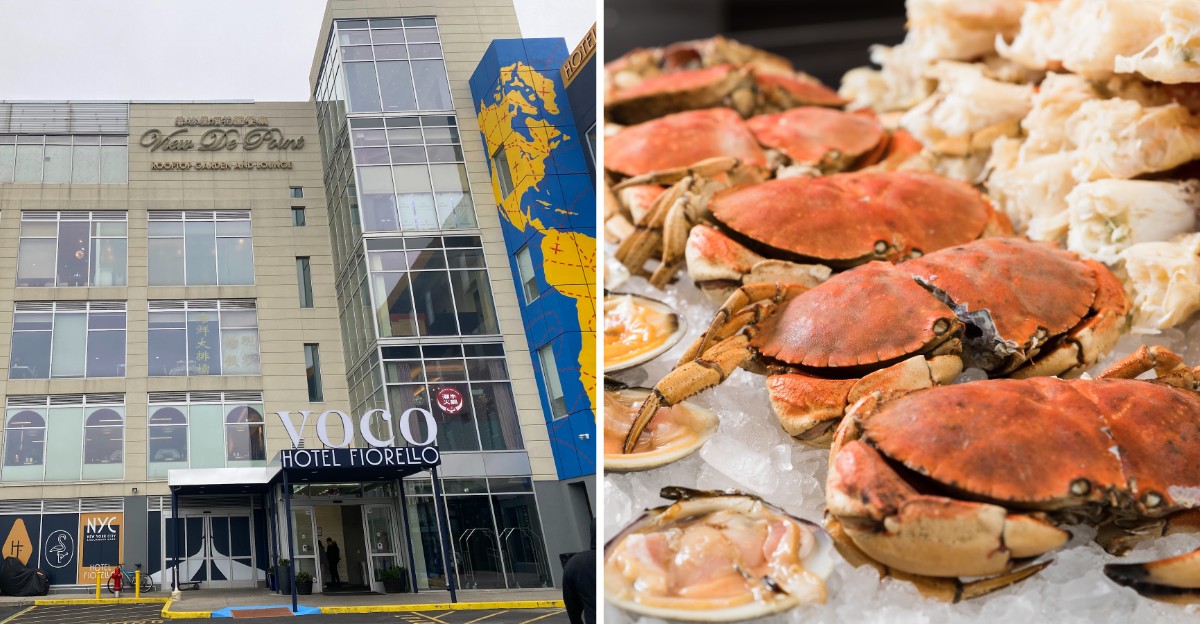
Some meals in New York come with a long list of add-ons, upcharges, and surprise fees. This one asks for a single price at the door and then hands over the keys to an enormous spread.
Crab legs, oysters, sashimi, a hibachi grill where cooks make plates to order, and a dessert zone with its own cotton candy machine all sit under one roof in College Point, Queens. The place sits four floors up inside a hotel, and the windows face the Manhattan skyline.
It draws long weekend lines, birthday groups, and seafood fans willing to ride a bus from Flushing just to eat here. It also has quirks worth knowing before you go, from the wait to the parking situation.
Keep reading for the full rundown on what to eat, when to arrive, and how to plan the trip.
A Fourth-Floor Feast in College Point
Finding this place takes a little detective work, and that is part of the fun. The Buffet sits at 20-07 127th St, 4th floor, College Point, NY 11356, in the borough of Queens, New York, United States.
The restaurant is tucked inside a hotel, and signage outside is limited. Plenty of first-timers circle the building before spotting the entrance, so give yourself a few extra minutes.
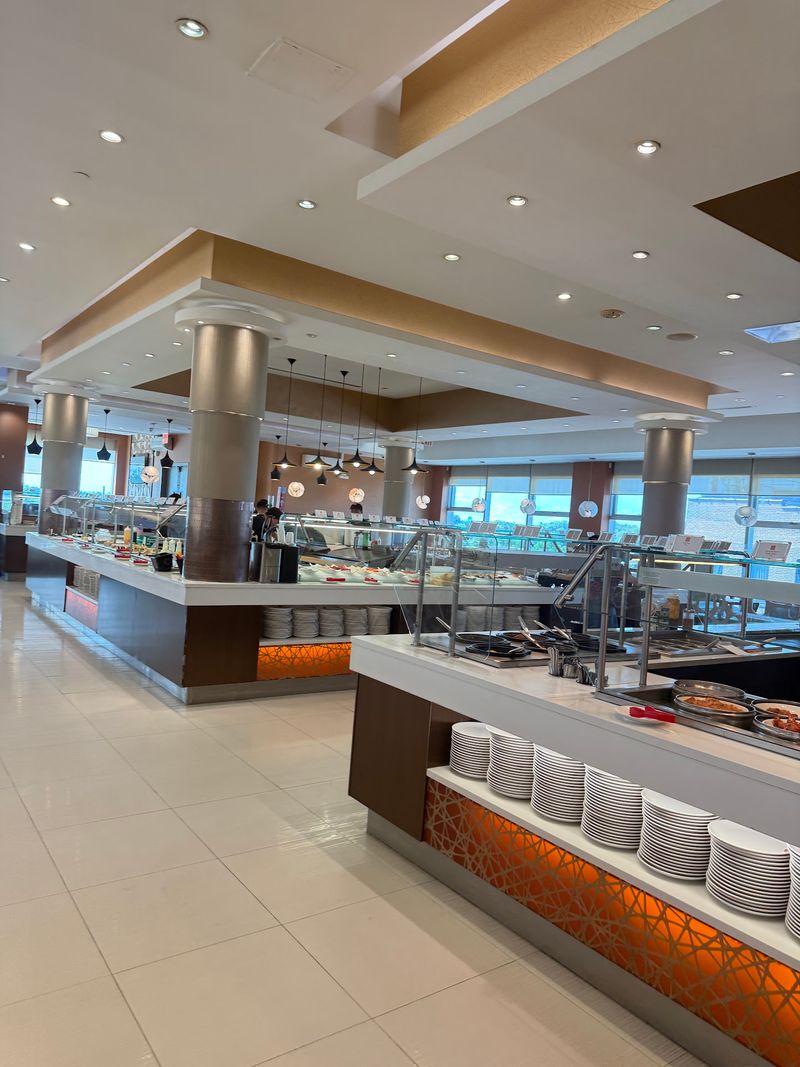
What waits upstairs is an all-you-can-eat Pan-Asian restaurant with an open, modern layout. The concept centers on unlimited portions, with sushi and hibachi leading the lineup alongside a long run of hot and cold stations.
College Point itself sits in the northern part of Queens, a quieter corner away from the Manhattan bustle. That distance shapes the whole experience here.
The trip is longer than a quick subway hop, but the reward is a dining room big enough to rank among the largest buffets in the city. Groups, families, and serious seafood fans all make the journey for the same reason.
One price at the door covers the whole spread. That simple setup is the main hook, and it explains why the elevator stays busy on weekends.
Once you know where it is, the next question is what sets it apart from every other buffet in town.
Not Your Corner Takeout Buffet
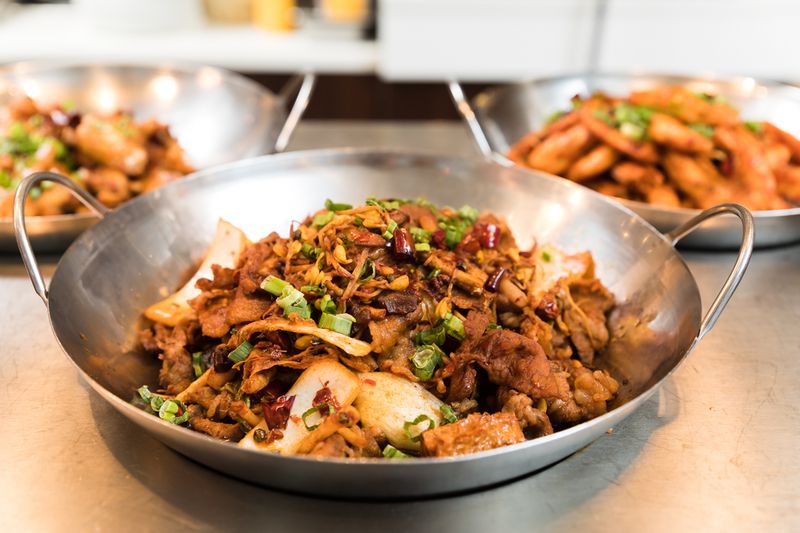
Anyone expecting the usual lineup of American Chinese takeout classics may need a quick reset. The menu here leans toward traditional Chinese cooking plus Japanese favorites, not the familiar strip-mall standards.
Hot trays carry dishes like braised pork belly, steamed fish, soy poached fish, fried rice, and a variety of meat and seafood plates. Peking duck shows up so often in conversation that it has become one of the restaurant’s signature draws.
The kitchen also sneaks in items rarely seen at other buffets. Fried frog legs and snail dishes appear on the lineup, giving adventurous eaters something new to try.
Diners who come for that wider range tend to leave happy. Those hunting for a specific takeout favorite sometimes walk away a bit puzzled, so it helps to arrive with an open plate.
The restaurant itself describes the concept as a different experience from a traditional American Chinese buffet. That framing matters, since expectations shape how the meal lands.
Think of the menu as a tour through Pan-Asian cooking rather than a greatest-hits takeout list. Curious eaters get the most mileage from the trip.
And the tour really picks up speed once you reach the seafood section.
Crab Legs, Oysters, and the Raw Bar
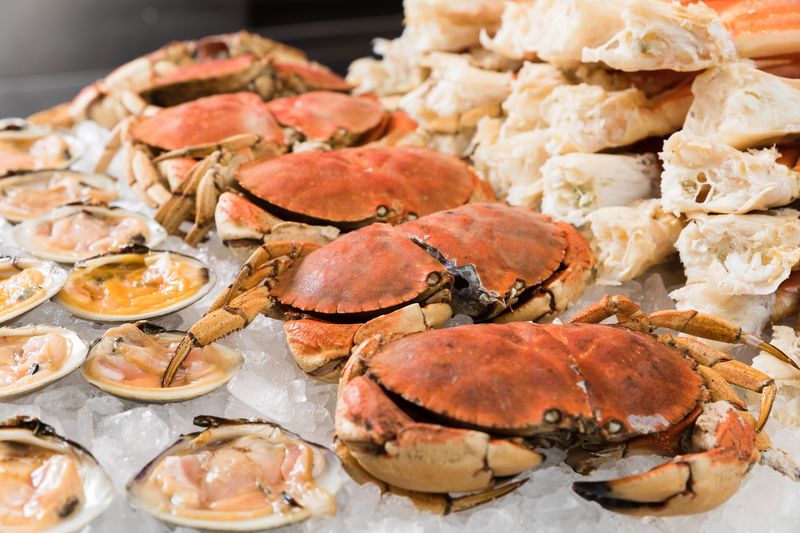
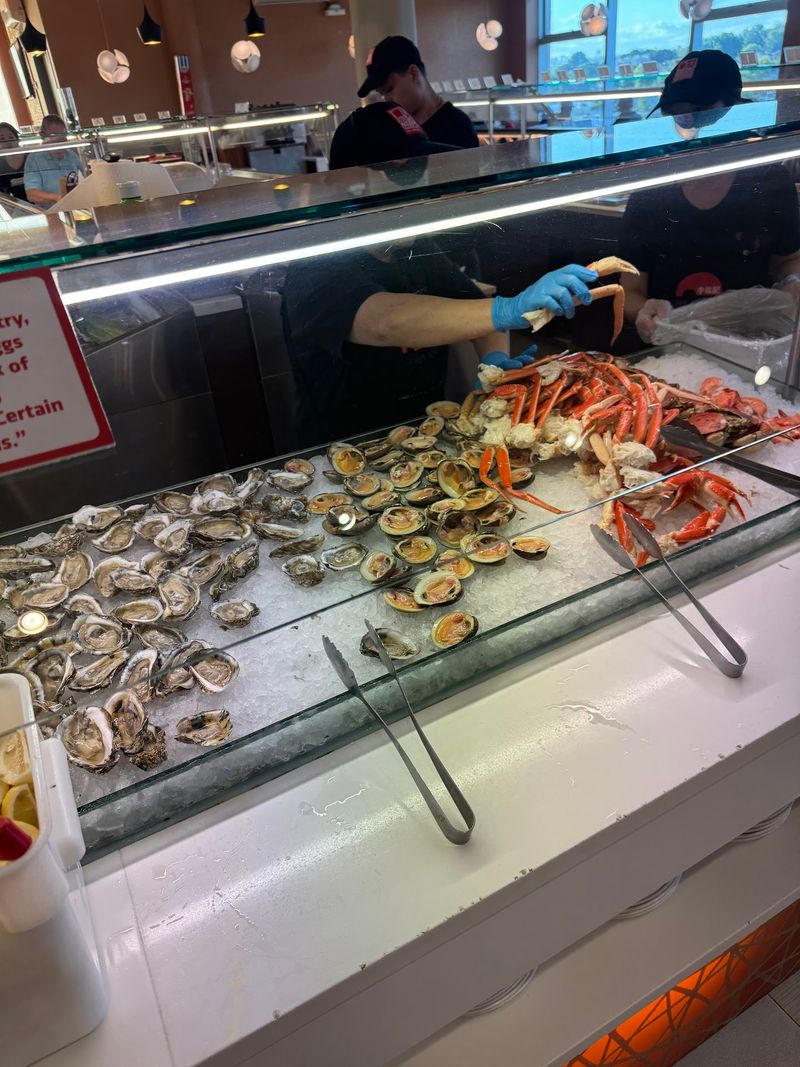
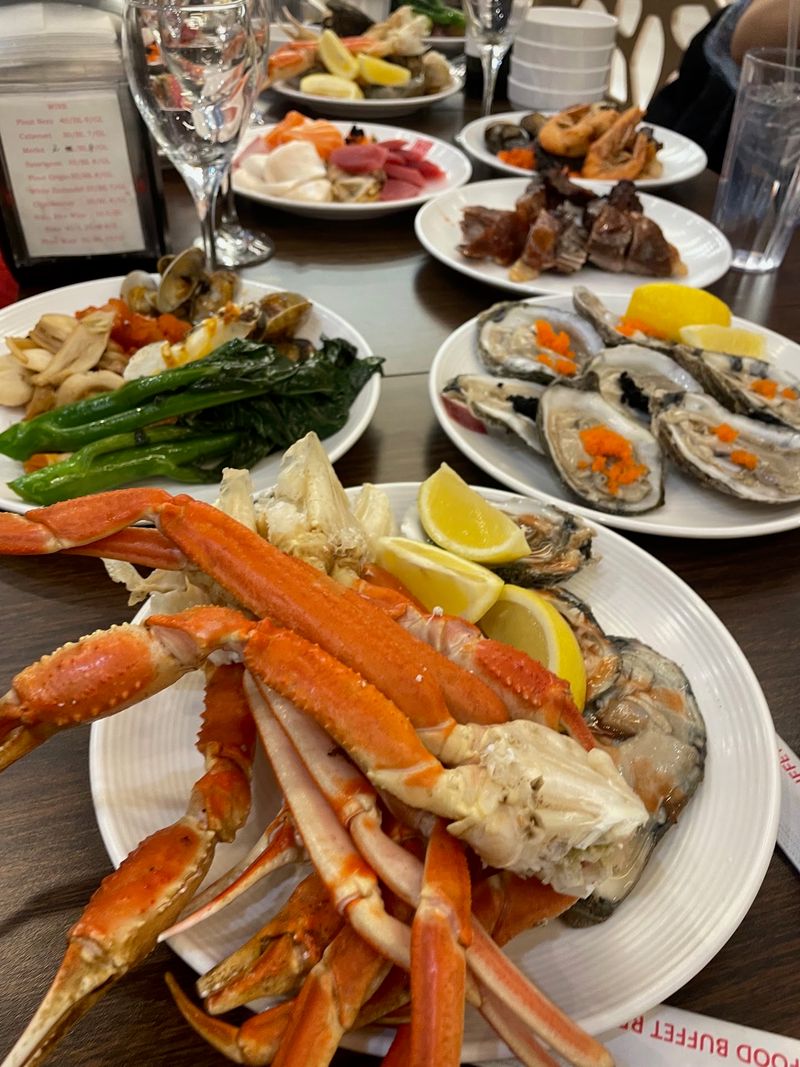
Seafood is the headline act, and the cast list is long. Crab legs, whole stone crabs, steamed snow crab, raw oysters, clams, shrimp, and crawfish all show up across the stations.
The raw bar keeps a steady supply of oysters for people who like them straight from the shell. Crawfish has its own following too, popping up often when regulars describe their plates.
Crab is the star many people come for, though cracking it takes effort. The snow crab shells can be tough, and tools are not always provided, so patience is part of the deal.
Seafood fans often call the quality and variety worth the cost, especially for special occasions. Others feel the seafood options could be wider, which shows how much personal taste plays into it.
Timing helps here. Popular trays can empty fast during crowded hours, and refills sometimes take a while.
Arriving near the start of a service window gives you the best shot at a full spread. A little planning goes a long way when crab is on the line.
Of course, not all the seafood is cooked, and the cold side of the room deserves its own spotlight.
Sashimi Counters and Sushi Rows
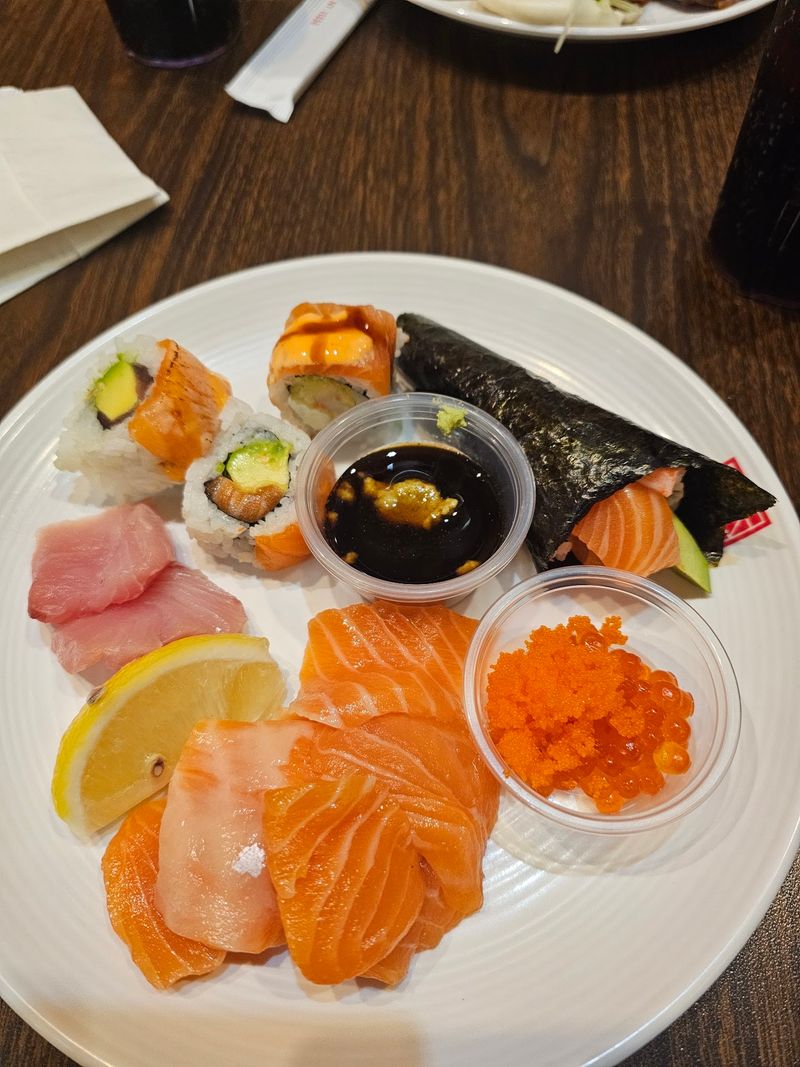
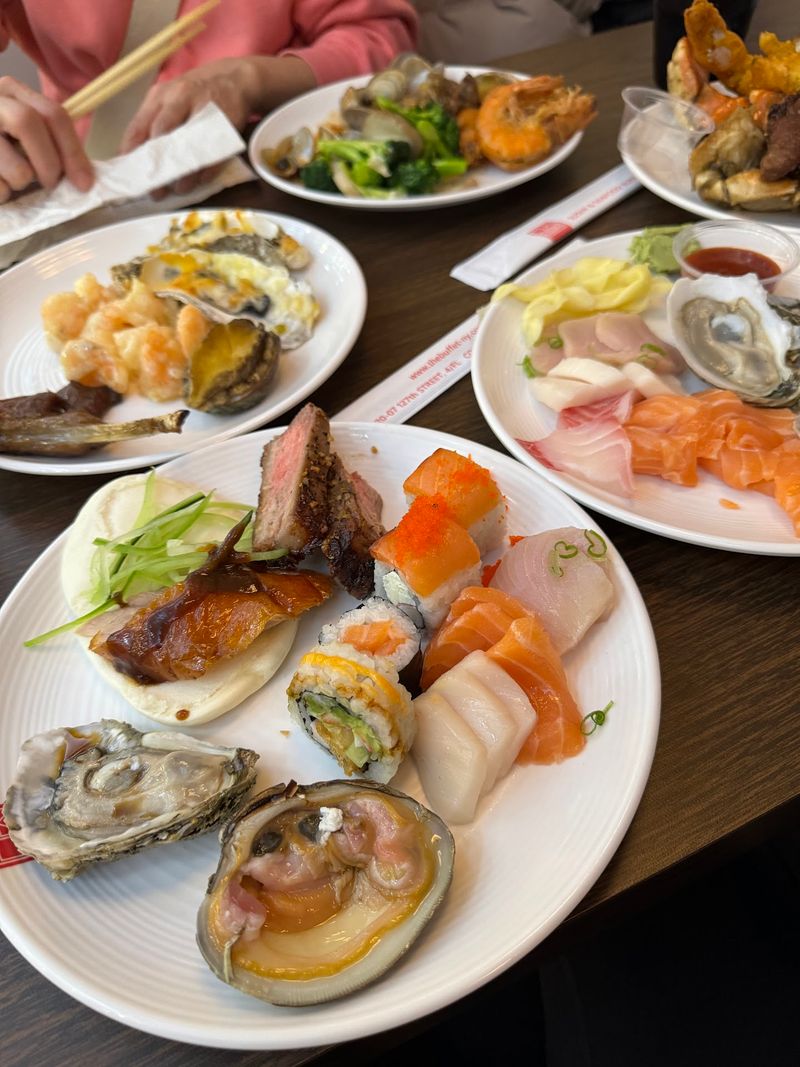
Sashimi ranks near the top of the list of things people talk about after a meal here. The cold station offers lots of different cuts, which makes it easy to build a plate of raw fish without ordering a thing.
Sushi rolls line up nearby for those who prefer rice with their fish. These rolls get mixed marks, with some diners finding them no better than standard buffet fare.
The sashimi tends to earn warmer words than the rolls. If you only have room for one, the sliced fish is usually the smarter pick.
Like other popular stations, this area can run low when the room is packed. Staff do restock, but busy weekend evenings test their speed.
The soy sauce containers on the tables are not always clearly labeled. A quick question to a server clears up any confusion before you pour.
Sushi lovers will find enough variety to sample widely without much repetition. Sashimi devotees may find this station alone justifies a second lap.
From the cold counter, the action moves to the warmest corner of the room, where the grill does the talking.
Made-To-Order Hibachi on the Spot
Here is where the buffet turns into a cooking show. The hibachi station lets you request food cooked on the grill right in front of you.
Choose your items, hand them over, and a cook prepares them fresh while you wait. It adds a personal touch to a meal that is otherwise all self-serve.
Hibachi is one of the features named in the restaurant’s own description, alongside sushi. That pairing tells you where the kitchen puts its pride.
Lines can form at the grill and at a few other stations during peak hours. Some counters also hand out a set portion each time, so a return trip may be needed for seconds.
The chef cooking section rounds out a lineup that already includes seafood, meats, hot food, and cold food areas. Having a made-to-order option breaks up the routine of scooping from trays.
Nearby, a carving station serves meats like ribeye. The slices can come out on the thick side and sometimes more cooked than some people prefer, so speak up if you want it a certain way.
Fresh off the grill is a fine way to eat, but the dessert side of the room may steal the show.
Cotton Candy and a Chocolate Fountain
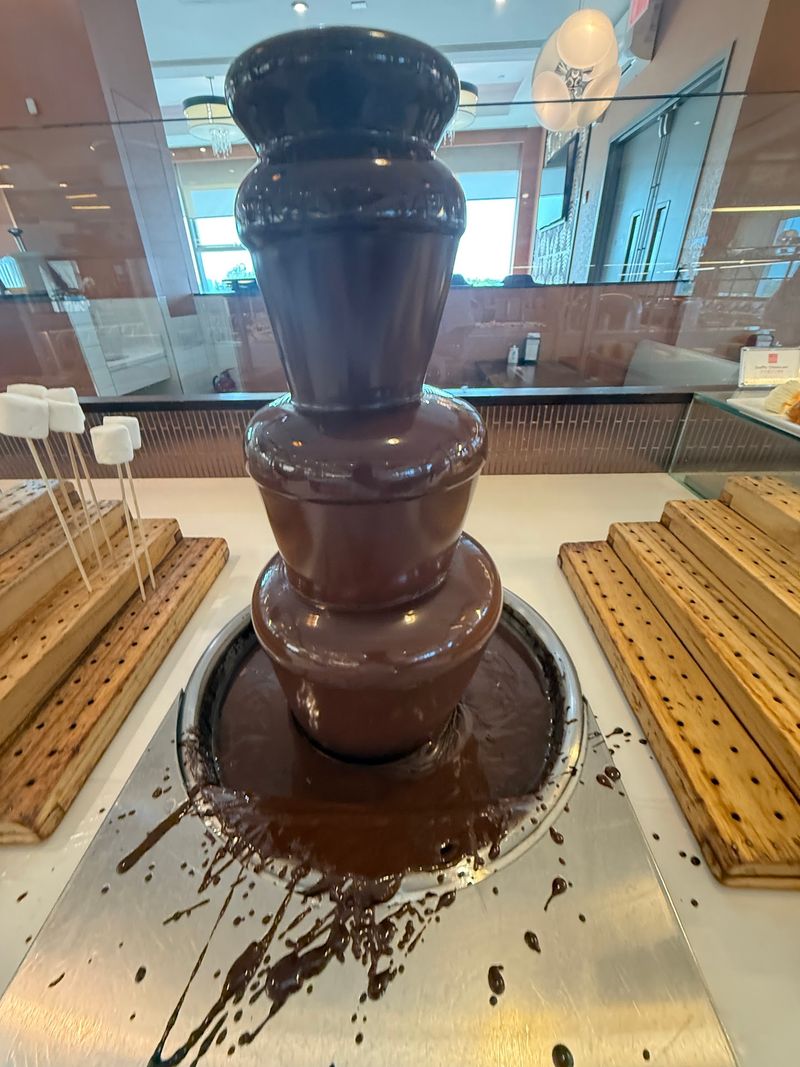
Save room, because the sweets section plays like a carnival. A chocolate fountain flows with marshmallows and mini churros for dipping.
A cotton candy machine sits nearby, and it has become one of the most talked-about details of the whole restaurant. Plenty of meals here end with a puff of spun sugar.
The lineup keeps going with a soft serve ice cream machine, matcha ice cream, and a crepe station staffed by a worker who makes them to order. Cakes, pastries, brownies, sweet soup, and a spread of fruit fill out the rest.
Macarons appear on some days, and when they are missing, the kitchen tends to swap in something else. Flexibility keeps the dessert table stocked.
There is also a boba option, though choices can be limited to a single tea flavor and a short wait. Most drinks come included with the meal.
Opinions on the sweets vary, with some calling them plentiful and others wishing for more range. The playful stations, though, win over kids and adults alike.
And speaking of kids, the restaurant has quietly planned for the younger crowd too.
Stations for Every Kind of Eater
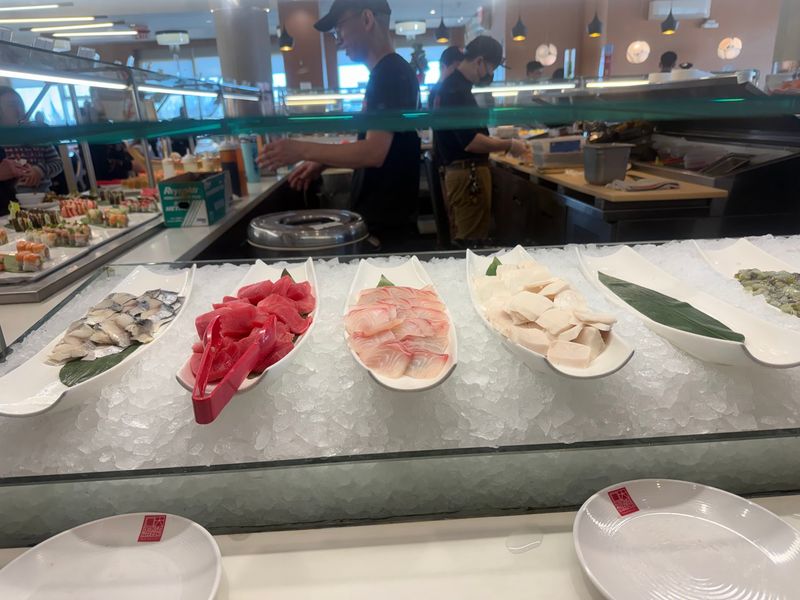
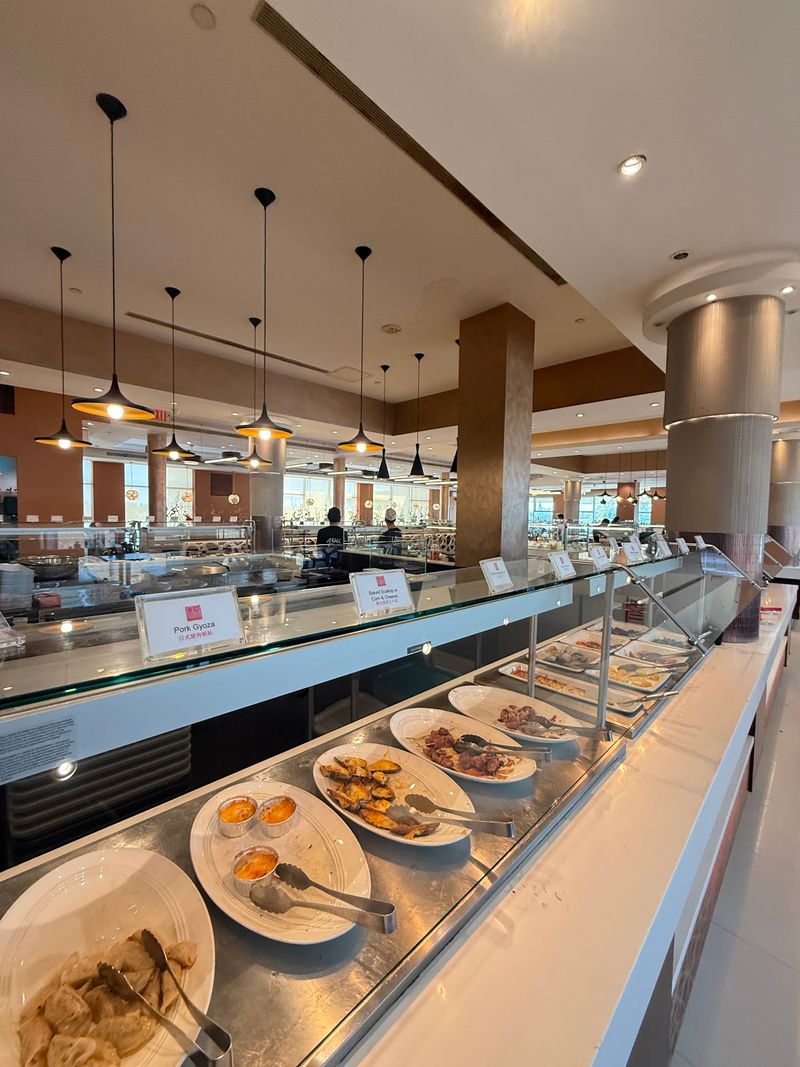
Mapping the room takes a full lap. Separate stations cover salad, soup, a carving area, seafood, Chinese dishes, the raw bar, fruit, and desserts.
Tucked in the back is a small section built for children. Chicken nuggets, fries, and similar easy picks give picky eaters a safe harbor.
That kids corner makes the restaurant a practical choice for families. Parents can load up on crab while the little ones stick to familiar plates.
Vegetarian diners get a mixed picture. Some find healthy choices and many vegetarian dishes, while others say greens are scarce, so expectations should stay moderate.
The variety is the real selling point. With so many zones, a group with very different tastes can eat together without anyone feeling left out.
Some dishes shine more than others, and that is normal for a buffet of this size. Trying small portions first helps you find your favorites before committing to a full plate.
All this food needs a big room to hold it, and the dining space itself has a surprise waiting by the windows.
Skyline Views From the Dining Room
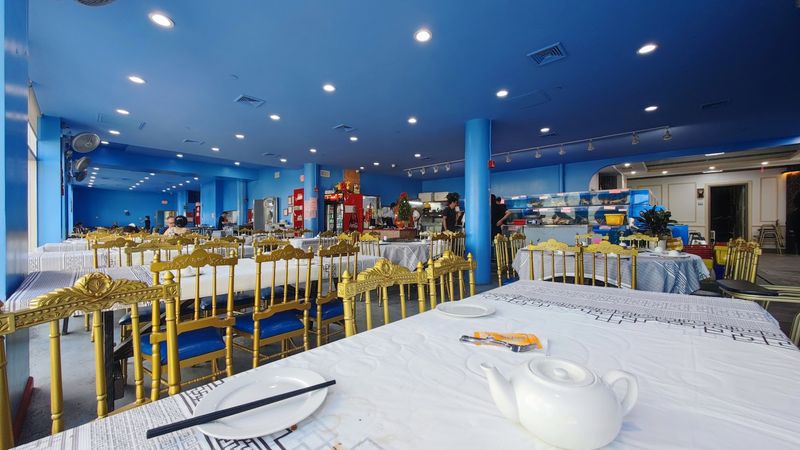
Few buffets come with a view worth bragging about. From the fourth floor, window tables look out toward the Manhattan skyline.
Even diners with mixed feelings about the food tend to agree the views are a plus. Landing a seat by the glass can turn an ordinary lunch into a small occasion.
The room itself is open and modern, often described as clean and upscale. Some call it the classiest buffet they have visited.
It is also spacious, with lots of tables that work well for large groups. Big family gatherings and friend groups can usually find room together.
Restrooms get attention too, praised as clean and equipped with modern technology. Small details like that add to the polished feel.
Not every account is glowing, as some have spotted cleanliness issues during visits. Overall, though, most descriptions point to a well-kept dining space.
Window seats are not guaranteed, especially on busy days. Asking politely at check-in does not hurt.
A nice room only helps if you can get into it, and that brings up the matter of the line.
The Weekend Line and How to Beat It
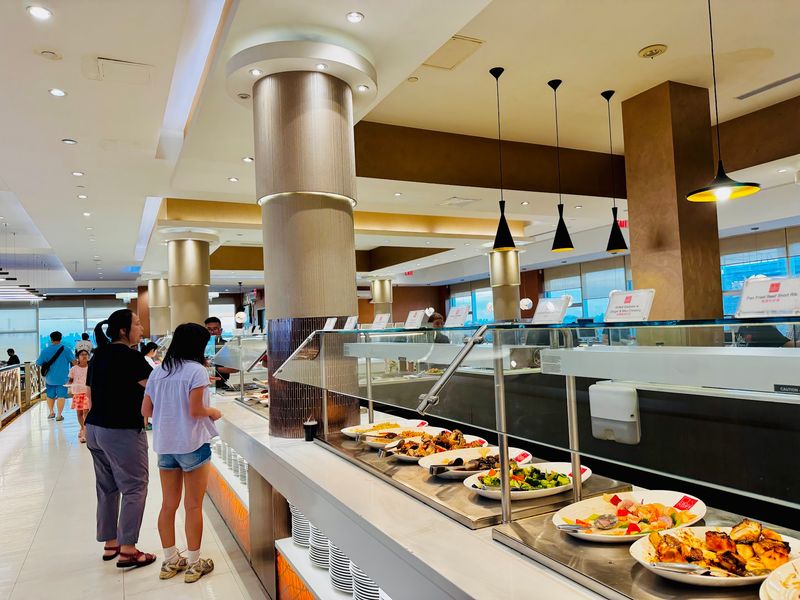
Early birds sometimes discover the worm has already been claimed. People who arrive right at opening often find crowds already filling plates.
Saturday lunch around 12:30 PM can mean a wait of about 40 minutes. Other times the wait runs closer to 20 minutes, depending on the day.
Weekends are the busiest stretch, and weekday evenings can get crowded too. Mondays tend to be calmer, with some groups feeling like they had a private party.
Check-in can get noisy. The host calls names out loud in a packed waiting area, and some guests miss their turn because they cannot hear.
Staying close to the front desk solves most of that problem. If your name gets skipped, the staff will usually sort it out and seat you.
The process looks hectic, yet it often moves smoothly and quickly. Patience pays off once you are seated.
For the shortest wait, aim for a weekday or arrive near the start of a service window. Lunch and dinner run as separate sessions, which brings us to the clock.
Two Seatings a Day, Seven Days a Week
Timing is everything at a buffet with a split schedule. The restaurant serves lunch and dinner as two distinct windows every day.
Lunch runs from 11:30 AM to 3:30 PM daily. Dinner starts at 5:30 PM.
From Sunday through Thursday, dinner wraps up at 10 PM. On Friday and Saturday, it stretches to 10:30 PM.
That gap between 3:30 PM and 5:30 PM matters for planning. Show up mid-afternoon and you will find the doors closed while the kitchen resets.
Arriving soon after a session opens gives you the freshest trays and the widest selection. Some items can run out by around 6 PM on busy nights, so dinner guests benefit from coming early too.
Late arrivals still find plenty of food on calmer nights. One group showing up at night on a quiet Monday found many items still available.
For more details, the restaurant keeps a website at thebuffet-ny.com. Checking ahead before a long trip is always a smart move.
Once the schedule is set, the next question is what that one flat price will cost.
One Price, No Tip Required
Here is the number everyone asks about first. Expect to spend roughly $30 to $70 per person, with dinner landing on the higher end.
One dinner guest put the cost at around $50 plus per person. Lunch typically comes in lower, making it the budget-friendly choice.
A major perk is the no tipping policy. It comes up often in conversations about the restaurant and makes the final bill easier to predict.
Most drinks are free too. Between included beverages and no tip, the price at the door covers most of the meal.
Opinions on value split widely. Some say the food could command double the price, while others feel the cost runs high for the quality.
The best value comes to those who sample broadly. Seafood lovers and curious eaters willing to try unusual dishes tend to feel the price pays off.
Diners who only want a few familiar items may find better deals elsewhere. Knowing your appetite helps set expectations.
With the bill sorted, the last practical hurdle is getting yourself to College Point in the first place.
Getting There by Car or Bus
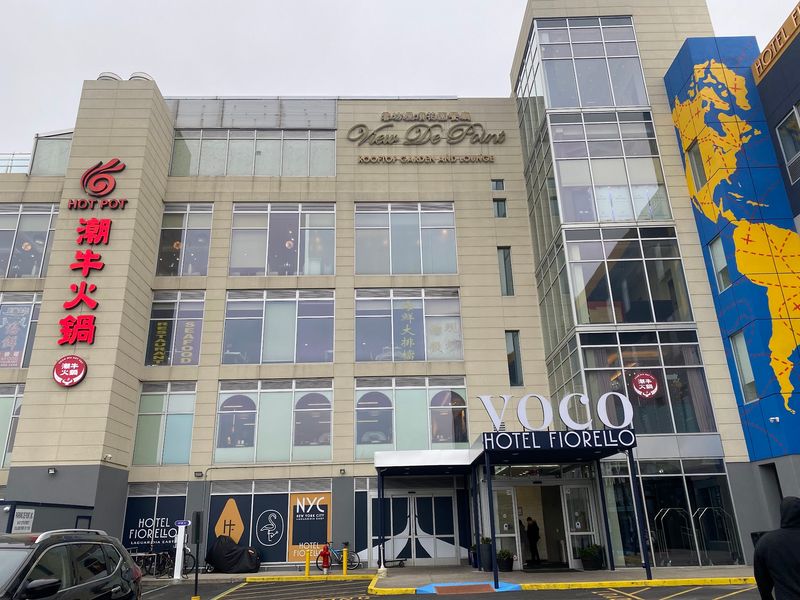
Getting here is half the adventure. College Point sits far from Manhattan, and there is no subway stop at the door.
Transit riders typically take a bus from Flushing Main Street. It adds time, but plenty of people make the trip regularly.
Drivers have it easier. A parking lot serves the building, with the first hour free in at least one account.
Fees after that are modest, often mentioned in the range of about $4 to $6. Parking is managed separately from the restaurant.
Street parking is another option. Some drivers find a spot about a block away without much trouble.
The parking area can look busy, yet it tends to move along. Allow a few extra minutes during weekend rushes.
Remember that signage is light and the restaurant sits inside a hotel. Heading straight for the fourth floor saves confusion.
The distance keeps some people from visiting as often as they would like. Others treat the trip as part of a special outing worth the effort.
So who should make that trip, and who might want to skip it?
Worth the Ride for the Right Appetite
Every big buffet has its fans and its skeptics, and this one is no exception. The restaurant holds a 3.9 average from more than 2,600 opinions, a sign of both loyal regulars and mixed feelings.
Service gets plenty of praise, with servers clearing plates and refilling drinks even during the rush. Some guests, though, have met staff who seemed rushed or unfriendly on busy nights.
Celebrations work well here. Staff have been known to sing for birthday groups, and the large room suits gatherings of all sizes.
The best fit is a diner who loves seafood, wants to try Peking duck and unusual dishes, and enjoys a lively crowd. Families with kids also have plenty to work with.
Those craving takeout-style classics or a quiet meal might feel less at home. Going in with clear expectations makes all the difference.
Many guests return again and again, while others call it a one-time experience. Either way, crab legs, hibachi, cotton candy, and a skyline view under one price make a strong case for at least one visit.
Bring a big appetite, come early, and leave room for dessert.
Enjoyed this story?
Add Fast Food Club as a preferred source to see more of our reporting on Google.