


Some meals come on a plate, and some meals come in a parade of bowls that keeps marching until the table runs out of room. In Boone, North Carolina, one old building has built its whole reputation on the second kind.
Families plan trips around it, college towns talk about it, and people who moved across the country still come back decades later to sit at the same kind of table. Supper here is passed, shared, and refilled, and the line out front is part of the tradition.
The rules are simple, the portions are generous, and there is one detail about paying that catches newcomers off guard. Keep reading to learn where it is, how the meal works, which desserts people argue over, when to show up, and what to bring in your wallet before you go.
An Old Building on Hardin Street
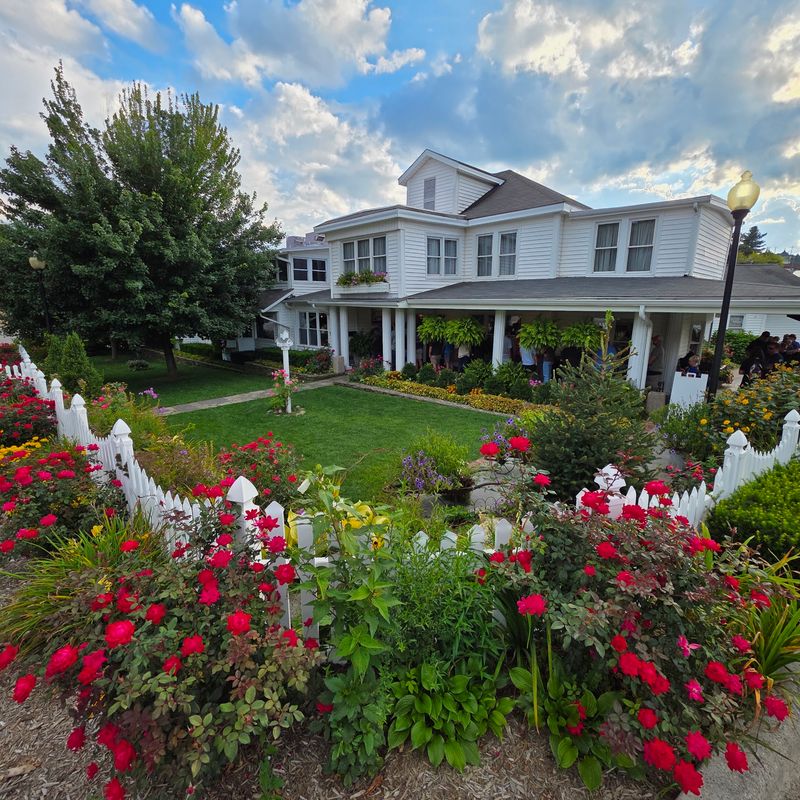
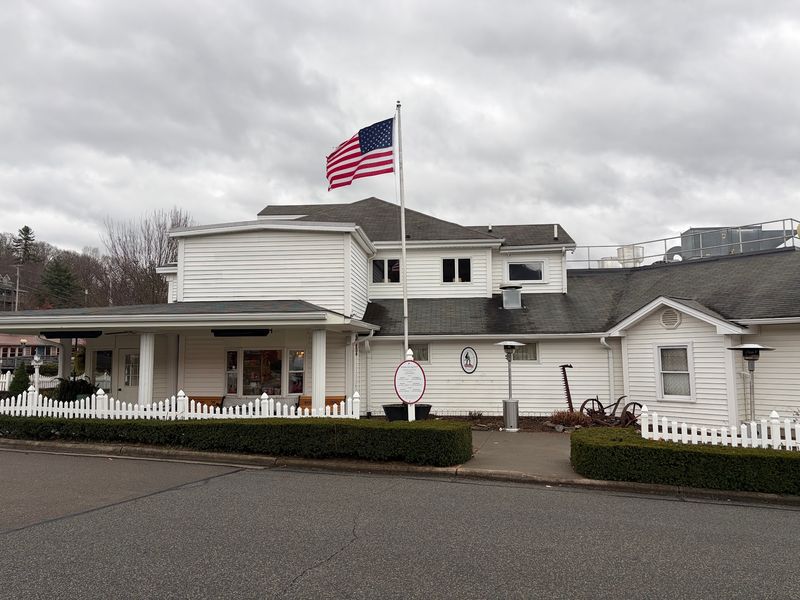
Boone has plenty of places to eat, but few carry the history of the Dan’l Boone Inn. The restaurant sits at 130 Hardin St, Boone, NC 28607, in the mountain region of North Carolina, United States.
It occupies one of the oldest buildings in town. That alone gives a meal here a different weight than a stop at a newer spot down the road.
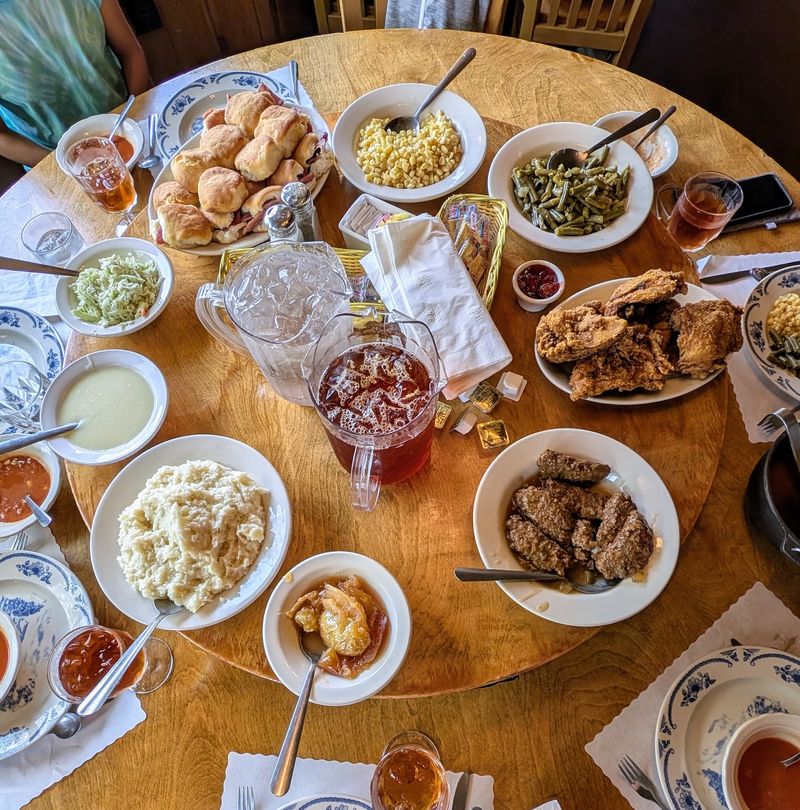
The concept is straightforward. Down-home Southern comfort food arrives family-style, meaning dishes are set in the middle of the table for everyone to pass around.
The address puts it right in the heart of Boone, close to the rest of the High Country. People traveling through the Boone and Blowing Rock area often treat it as a required stop rather than a maybe.
Its popularity is no secret. The restaurant holds a 4.6-star standing across more than 5,700 opinions, a number that tells you this is not a hidden corner kept by a few locals.
Still, the place keeps a homey, unhurried identity. It is a family restaurant first, and the building helps remind everyone of that the moment they reach the porch.
So the stage is set: old walls, a busy porch, and a kitchen ready to fill the table. The real story starts once you sit down.
History You Can Eat Inside
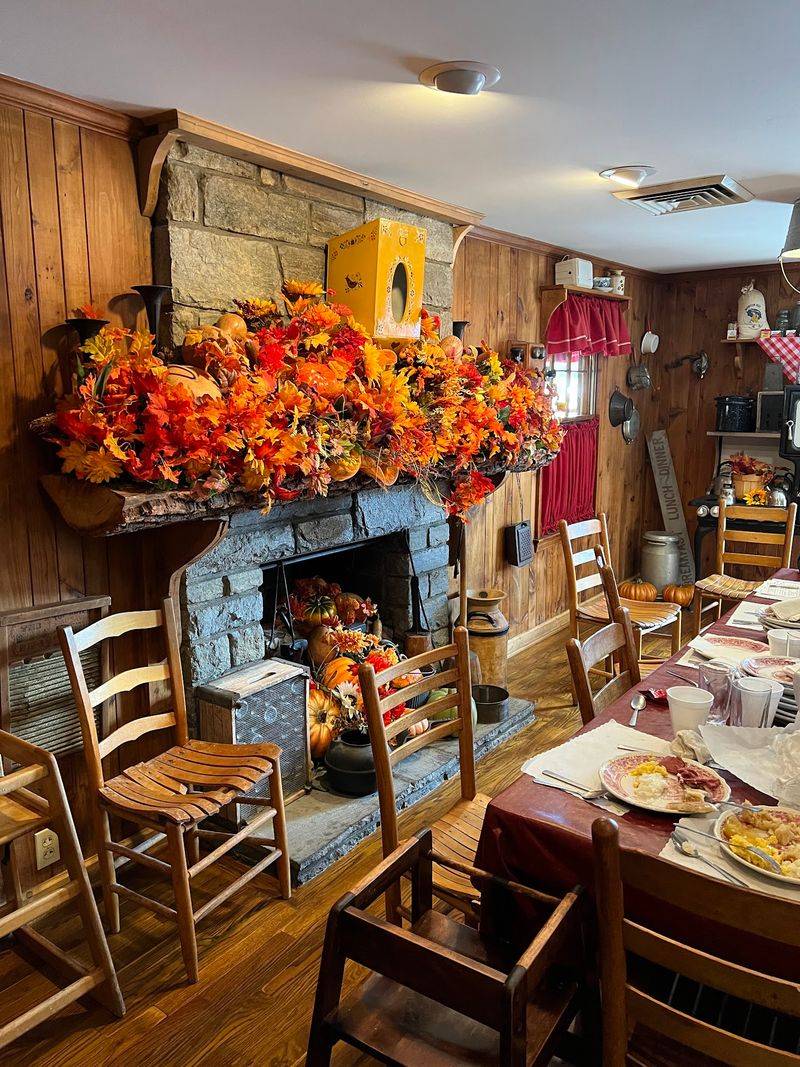
Old buildings tend to collect stories, and this one has turned its age into part of the menu experience. Dining inside a historic inn gives supper the feeling of a Sunday gathering at a grandparent’s house.
The interior leans rustic. A woodsman theme runs through the space, and the dinnerware has an old-style look that fits the setting.
Even the staff dress the part. Servers wear woodsman-style uniforms, which adds a little frontier personality without turning the meal into a costume party.
There is a vintage charm here that many describe as a blast from the past. The place does not chase trends, and that steadiness is a big reason people return.
Of course, older buildings have quirks. Floors and tables in a structure this age are not always perfectly level, and at least one table has been known to tilt a bit.
If a seat feels off, asking for another table is simple. Staff are generally happy to help, and that small request can make the meal more comfortable.
The history is not presented as a museum lesson. It is simply the backdrop, and it quietly makes every bowl on the table feel part of something longer lasting.
How Family-Style Actually Works
First-timers often expect a menu with dozens of choices. Instead, a server explains the routine, and then the food simply starts arriving.
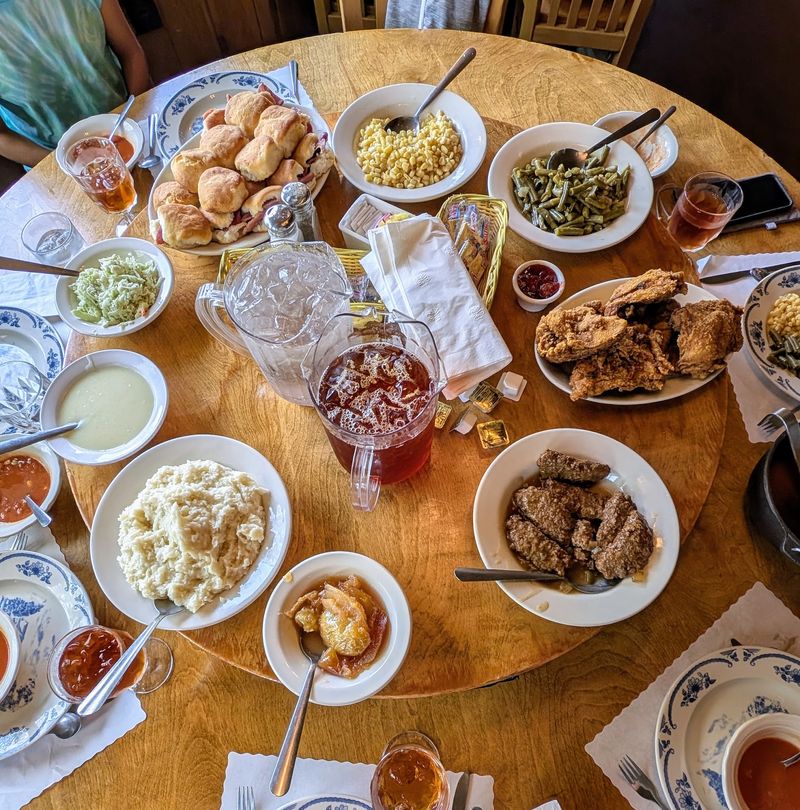
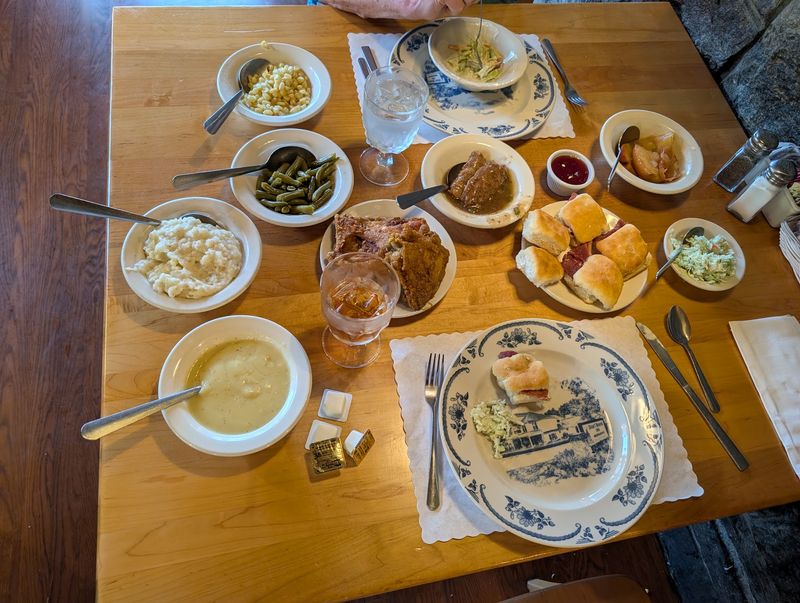
Every dish lands in a shared bowl or platter in the center of the table. Guests serve themselves and pass to the left, right, or across, depending on how hungry the person next to them looks.
The best part is the refill policy. It is essentially all-you-can-eat, so when a bowl runs low, the staff will bring more.
That setup changes the pace of a meal. Nobody has to commit to one entree and hope it was the right call.
It also makes the experience surprisingly efficient. Bowls come out quickly after seating, so even a busy dinner hour does not drag once you are at the table.
Small eaters are not left out either. You can eat as much or as little as you like, which keeps things relaxed for anyone not planning a marathon.
Family-style is the restaurant’s signature, and it comes up more than any other topic connected to the place. Once you have tried it, a regular menu might feel a little lonely.
Soup and Salad Open the Show
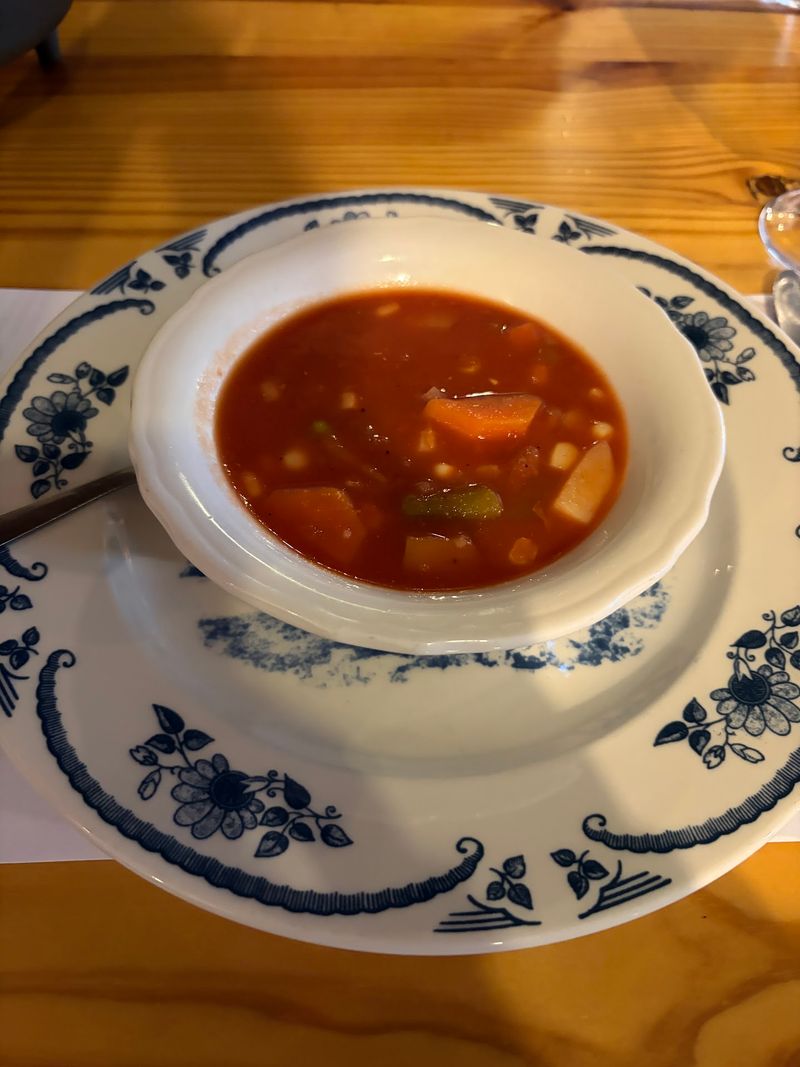
Before the big platters show up, supper begins quietly. A chilled salad is often waiting at the table right after guests are seated.
Vegetable soup also appears as an opener. It earns surprising praise for something many people treat as a warm-up act.
This starter round matters more than it seems. It gives the table a moment to settle in, pour drinks, and get the passing rhythm going.
Don’t get too comfortable, though. Shortly after the soup and salad, the staff begins carrying out everything else in quick succession.
Seasoned guests learn to pace themselves here. Filling up on the first course is a rookie move when there is a whole house of food on the way.
The opening course also hints at the kitchen’s approach. Things taste fresh and homemade rather than mass produced, and that sets expectations for the rest of the meal.
Think of it as the opening chapter of a long book. It is good on its own, but the plot thickens fast.
The Main Course Crowd
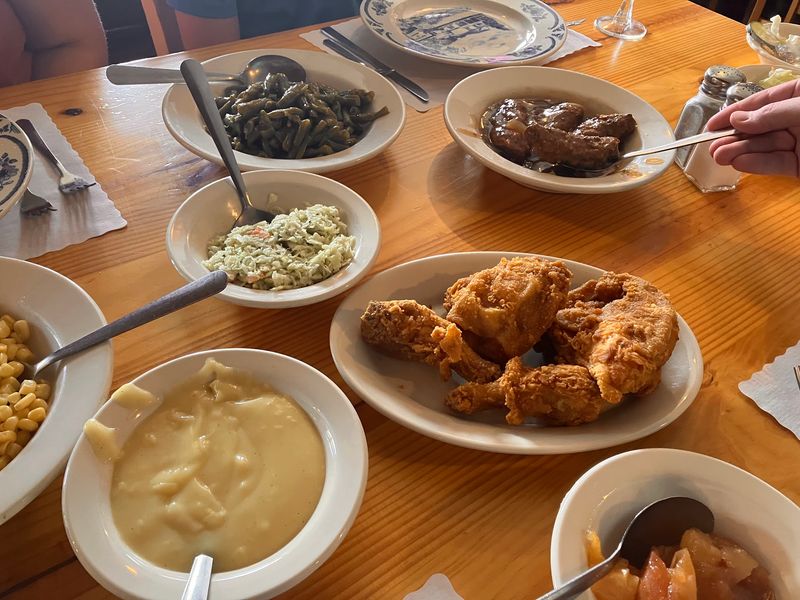
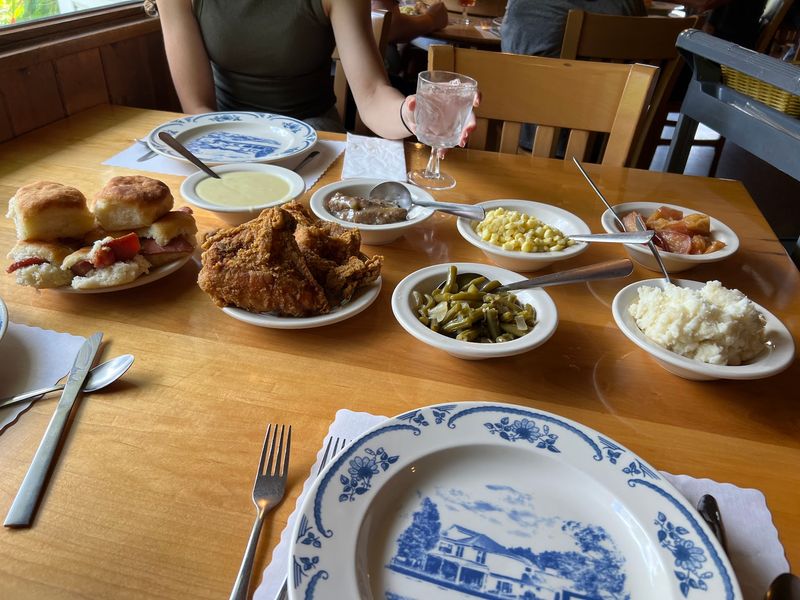
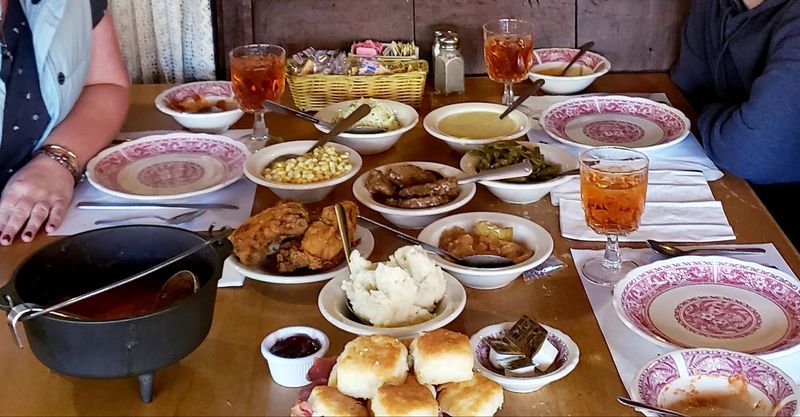
Here is where the table starts running out of space. The supper lineup is a classic spread of Southern home cooking, with several mains and a long row of sides.
Fried chicken is the headliner. It gets more attention than any single dish, praised for a crisp outside, tender inside, and a lack of greasiness.
Country-style steak with gravy is another favorite. Some call it the most flavorful thing on the table, though a few find it closer to a simple patty in onion gravy.
The supporting cast is long. Mashed potatoes with gravy, green beans, corn, slaw, and cooked sweet apples all make regular appearances.
Biscuits get their own fan club. Ham biscuits with country ham are a standout, and some meals feature country sausage biscuits too.
Not every bite wins every guest. The chicken has occasionally come out salty or overcooked for some, but most tables report a steady run of satisfying dishes.
Large portions are a defining trait. Leaving hungry here takes real effort.
Dessert Debates at the Table
Save room. That advice gets repeated so often it could be printed on the napkins.
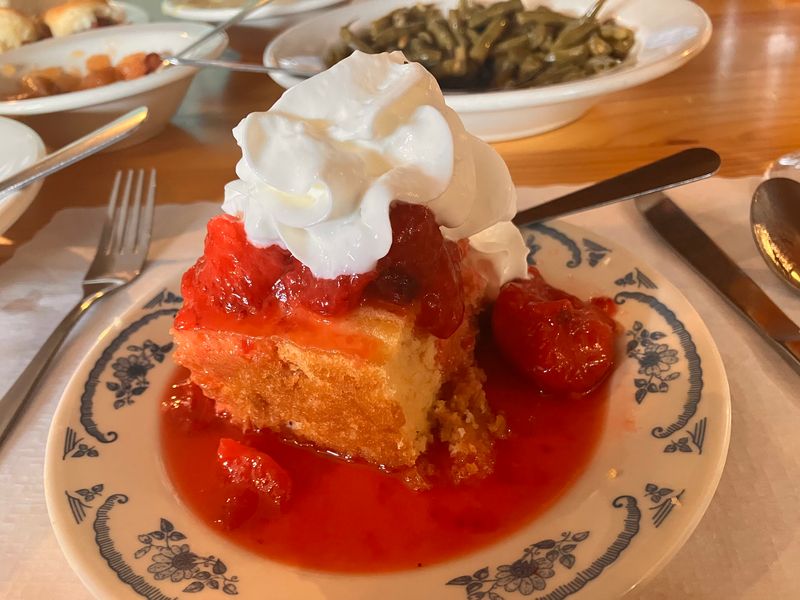
Three desserts dominate the conversation: banana pudding, strawberry shortcake, and chocolate cake. Each has loyal fans, and families sometimes cannot crown a winner.
Banana pudding draws especially strong praise. Home cooks who make their own say it comes very close to the homemade version.
Chocolate cake is a popular pick for kids and chocolate lovers. Opinions vary, with most enjoying it and a few finding it a touch dry.
Strawberry shortcake rounds out the trio. It shows up often enough in conversation to prove it is no backup singer.
Cherry cobbler has also made an appearance on some tables. That variety means dessert can shift a little depending on the day.
Here is a friendly tip for groups. Order different desserts and share, because once the plates arrive, ownership rules tend to go out the window.
It is the sweet final act that keeps people talking on the drive home.
Breakfast Worth an Early Alarm
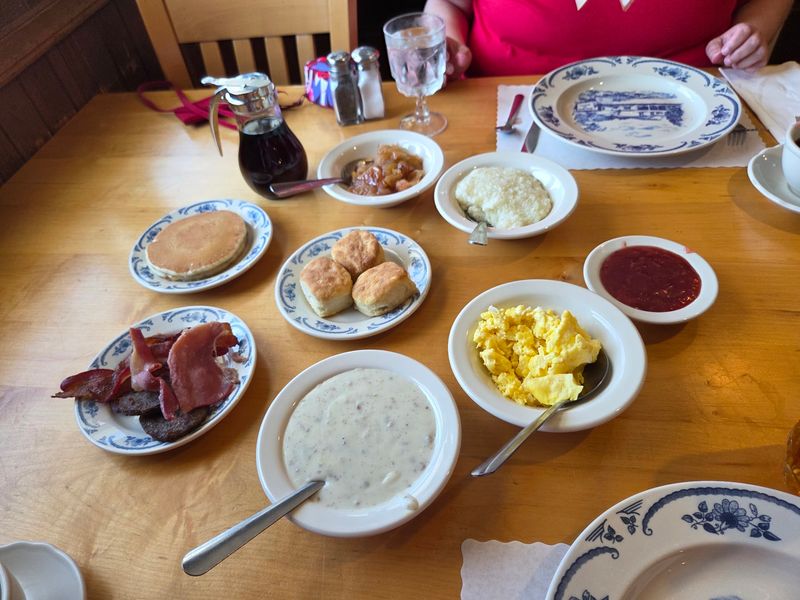
Supper gets the headlines, but the morning crowd has its own loyal following. Breakfast is served on weekends, starting at 8 AM on Friday, Saturday, and Sunday.
Some guests even rank breakfast above lunch and dinner. That is a bold claim at a place famous for its evening spread.
The catch is timing. Monday through Thursday, the doors open at 11:30 AM, so breakfast is not on the table those days.
More than one traveler has shown up on a Monday morning expecting biscuits at dawn. Checking the schedule first saves a lot of disappointment.
Coffee also gets kind words. It is a small detail, but a good cup goes a long way before a day of mountain sightseeing.
Breakfast also offers a strategic advantage. Starting early on a weekend can mean dodging the biggest crowds that build later in the day.
For travelers with only one meal to spare in Boone, a weekend morning could be the sleeper pick.
Servers Who Become the Story
Good food brings people in, but the staff often becomes the memory they carry home. Names of individual servers come up again and again from guests who ask for them on return trips.
The common thread is warmth. Servers check in often, explain how the family-style meal works, and keep bowls filled without being asked twice.
Hospitality here feels personal rather than scripted. Many describe being treated like guests at a relative’s table instead of customers in a rush.
Attentiveness matters at a place built on refills. A server who notices an empty bowl of mashed potatoes before you do is doing the job right.
Even on busy nights, the team tends to move with friendly efficiency. Food comes out promptly once a table is seated.
Some guests plan future visits around a favorite server’s section. That kind of loyalty says a lot about the people working the floor.
In a restaurant where everything is shared, kindness turns out to be one more thing passed around the table.
Who Belongs at These Tables
Groups are the natural audience here. A meal built on passing bowls works best with several people around the table.
Multigenerational families fit right in. Grandparents, parents, and kids can all find something they like without anyone negotiating over a menu.
Friends traveling together will find it just as fun. The shared format keeps conversation flowing between bites.
Couples are welcome too, though the amount of food can feel comically large for two. Expect to look at the table and wonder how anyone finishes it.
The atmosphere is distinctly Southern and country. It is relaxed, comfortable, and casual enough that nobody needs to dress up.
Special occasions also land well here. A birthday, reunion, or long-awaited return trip feels right in an old building with a long history.
Some families come back after decades away and find the quality and quantity unchanged. That consistency is rare.
Bottom line: bring an appetite and a few favorite people, and the restaurant handles the rest.
The Line, the Porch, and the Wait
Popularity comes with a price, and here that price is sometimes patience. On some days, the line wraps around the porch and the wait can stretch for hours.
Other days, guests walk right in. A five-minute wait at 6:15 on a Saturday evening is not unheard of, though it should not be counted on.
The good news is that the line usually moves smoothly. Family-style seating helps tables turn steadily.
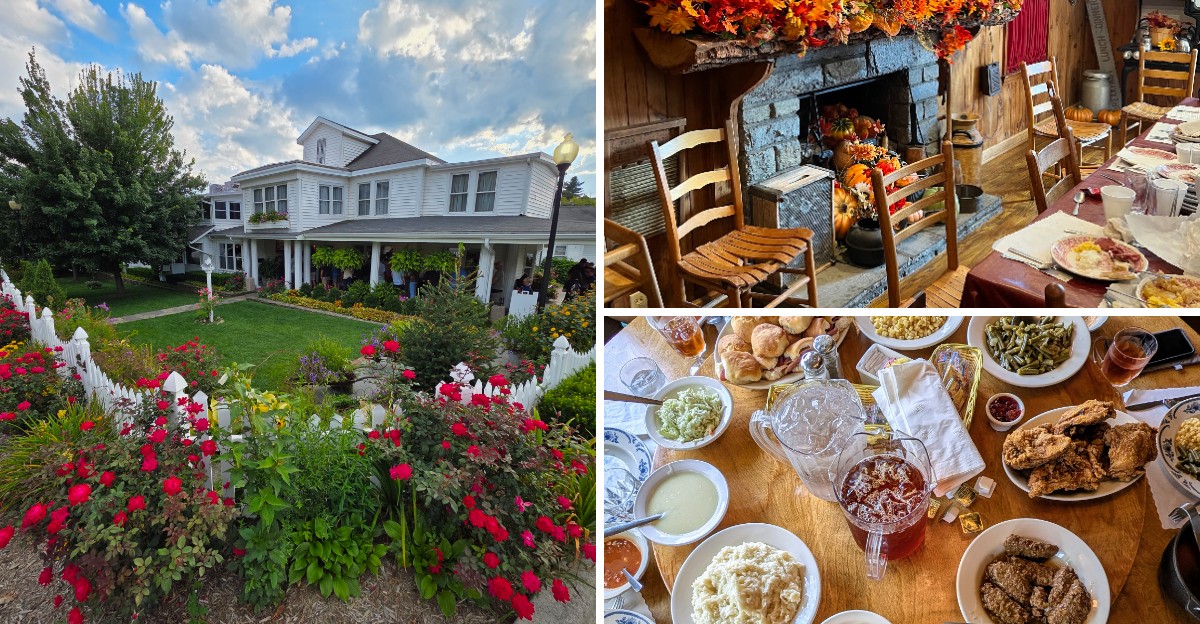
Waiting outside is not a hardship either. The grounds are well kept, with landscaping and spring blooms that make the porch a pleasant place to stand.
Parking can get tight during peak hours. Arriving a little early improves the odds of finding a spot.
Opening time can also bring a brief pause. At 11:30 AM on a weekday, staff may need a few minutes to get organized before seating starts.
A gift store inside offers items to take home, and clean restrooms are available. Both help when the wait runs long.
Plan a cushion of time, and the wait becomes part of the tradition.
Cash, Hours, and the Bill
Here is the detail that surprises newcomers most. The restaurant is cash only, and cards are not accepted.
That fact comes up constantly, so it is worth planning for before the drive. Bring enough cash for the whole group, plus tip.
Prices typically run about $20 to $30 per person. Considering the refills and dessert, many consider it a strong value.
One family of four adults and a 12-year-old paid around $99 before tax. That gives a useful real-world benchmark.
Hours are simple to remember once you see the pattern:
Friday, Saturday, and Sunday: 8 AM to 8 PM.
Monday through Thursday: 11:30 AM to 8 PM.
Since closing is at 8 PM every day, late arrivals should not cut it close. Showing up well before closing leaves time for the wait and a relaxed meal.
The official website lists details for anyone wanting to confirm before a trip. A little planning keeps the evening about the food, not a scramble for an ATM.
A Supper Worth the Detour
Some restaurants chase novelty. This one has spent years perfecting the opposite, serving familiar comfort food the same generous way every day.
The formula is not complicated. An old building, a friendly staff, and bowls that keep coming add up to a meal people remember.
It is not flawless. The waits can be long, the tables are not always level, and an occasional dish misses the mark for someone.
Yet those small wrinkles rarely change the overall verdict. Most leave full, happy, and already talking about the next trip.
The appeal crosses generations. Families who first came decades ago bring their children and grandchildren, and the experience still holds up.
For travelers exploring the High Country, it offers something beyond scenery. It gives a taste of how Southern mountain hospitality looks around a shared table.
Bring cash, bring company, and bring patience for the line. Supper in Boone tends to be worth every minute, and the dessert debate can always continue on the next visit.
Enjoyed this story?
Add Fast Food Club as a preferred source to see more of our reporting on Google.