


Some buildings in Baltimore are famous because of who built them. Others are famous because of who filmed them.
This story is about one small chrome-trimmed building downtown that went from ordinary lunch counter to big-screen backdrop and then into a quieter third act few people expected. Its booths once sat under film lights, and its counter became part of the city’s movie history.
Today the story has a twist, because the building no longer works the way it once did. City records tell part of the tale, local memory fills in more, and the address itself still draws curious fans.
Keep reading to learn where it sits, why film lovers still talk about it, what changed, and what a visit looks like now for anyone chasing a piece of Baltimore on film.
A Diner Car on East Saratoga Street
Downtown Baltimore has plenty of grand landmarks, yet one of its most talked-about buildings is surprisingly compact.
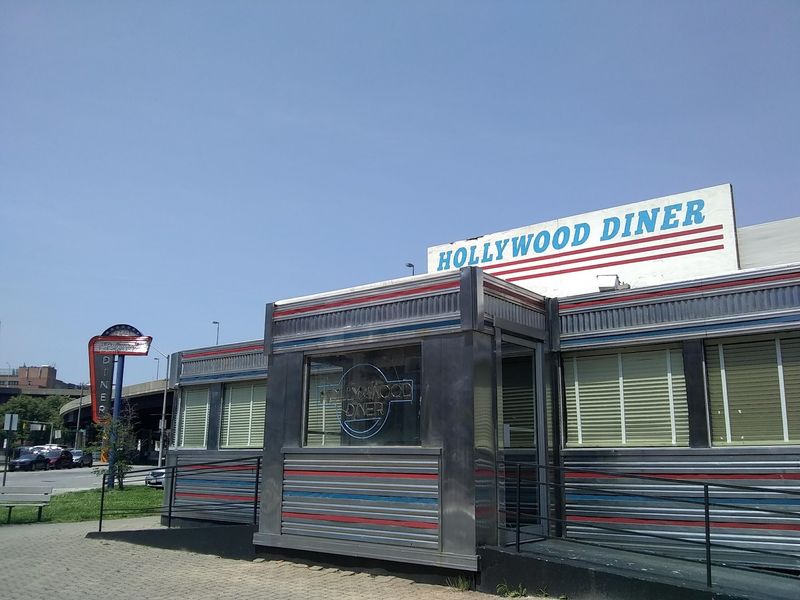
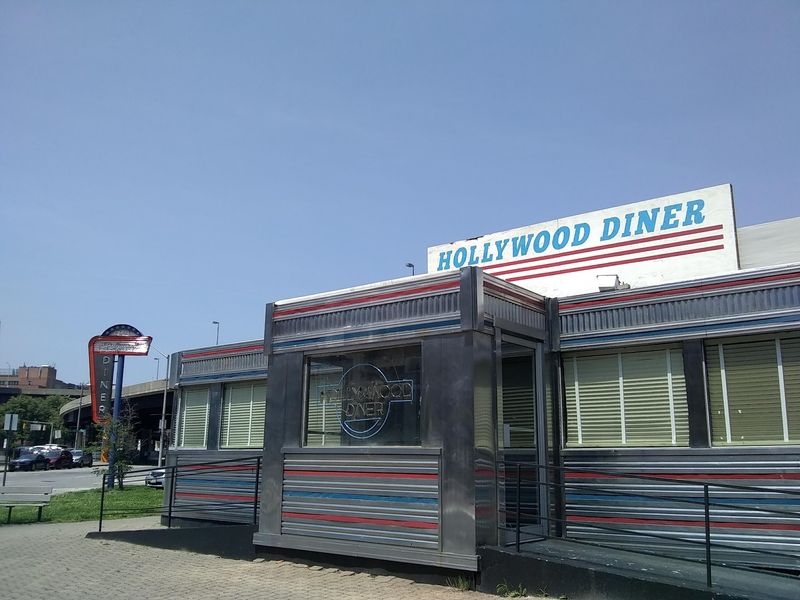
The Hollywood Diner sits at 400 E Saratoga St, Baltimore, MD 21202, in the state of Maryland in the United States. It is listed on maps simply as a diner, which is exactly the look it carries from the curb.
The spot lands in the heart of the city, close to government offices and busy downtown blocks. That setting matters, because the building’s later life is tied closely to the city itself.
Fans of old-school roadside design will recognize the shape right away. Long and low, it follows the classic diner layout that once filled American towns and highways.
What makes this address stand out is not size or flash. It is the story packed inside those walls, one that runs through Hollywood cameras, local history, and a change of ownership that surprised many people who remembered it as a place to grab a seat at the counter.
Think of this first stop as the opening credits, because the plot only thickens from here.
How a Name Earned Its Meaning
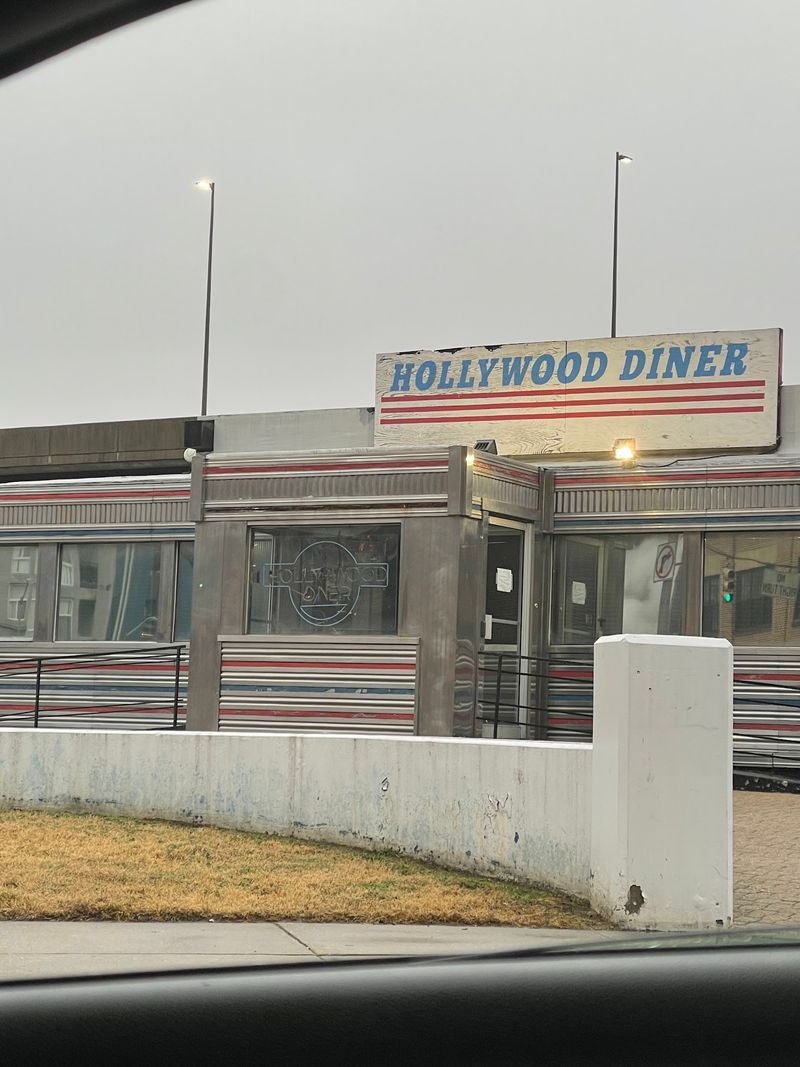
Plenty of restaurants borrow the word Hollywood for a little glamour. This one actually earned it.
The building became known for its ties to filmmaking, which is the whole reason its booths carry such a famous reputation. In Baltimore, a city that has been the backdrop for many movies, that is no small claim.
The name works almost like a wink to passersby. It tells you the diner is more than a counter and some stools, even before you learn the details.
Movie lovers often treat places like this as real-world souvenirs of the stories they watched on screen. A diner is especially perfect for that role, since so many film scenes revolve around people talking over a table.
For the Hollywood Diner, that blend of everyday setting and silver-screen fame became its calling card. It turned a simple stop into a destination with a backstory.
And as with any good movie, the name is only the trailer for what comes next.
Booths Built for the Big Screen
Here is the headline fact in plain terms: the booths look like a movie set because the diner served as one.
Film crews favored the space because a classic diner tells the audience a lot in a single shot. Booths, a long counter, and stools lined up in a row set the mood of an era without much extra work.
That made the Hollywood Diner a natural choice for productions looking to capture Baltimore on camera. The city has a strong filmmaking tradition, and this little building became part of it.
For fans, the thrill is simple. A table where actors once sat is the kind of detail that makes a movie feel real and close to home.
The layout itself also helps explain the appeal. Diners pack a lot of character into a narrow footprint, so every seat ends up in frame.
Not every set gets a second life after the cameras leave, which is exactly why this one keeps people curious.
Baltimore’s Habit of Starring in Movies
Baltimore has a long relationship with filmmakers, and the city often plays itself on screen.
Directors with local roots have used real neighborhoods, row houses, and businesses to tell stories set right here. That approach gives movies an honest, lived-in look that studio lots can struggle to match.
The Hollywood Diner fits neatly into that tradition. A real building with a real address carries more weight than a copy built on a soundstage.
Locals tend to take pride in spotting familiar places in films. A diner on a downtown corner is the kind of landmark that sparks a quick nudge to the person in the next seat at the theater.
That pride is a big part of why the building’s name still comes up in conversation. It represents a moment when Baltimore’s everyday spaces were good enough for the big screen exactly as they were.
So the diner is not just a film location. It is one chapter in the city’s ongoing role as a leading character.
Classic Diner Design, Up Close
Long before filmmakers arrived, the diner format had already become an American design icon.
The classic shape is long and narrow, with a counter running along one side and booths along the windows. That style came from a time when diners were built to be efficient, friendly, and easy to recognize from the street.
The Hollywood Diner follows that tradition, which helps explain why it photographs so well. Straight lines and repeated booths create a tidy, symmetrical frame for a camera.
Architecture fans appreciate these buildings as a fading slice of history. Fewer of them remain in active use across the country, so each survivor gets extra attention.
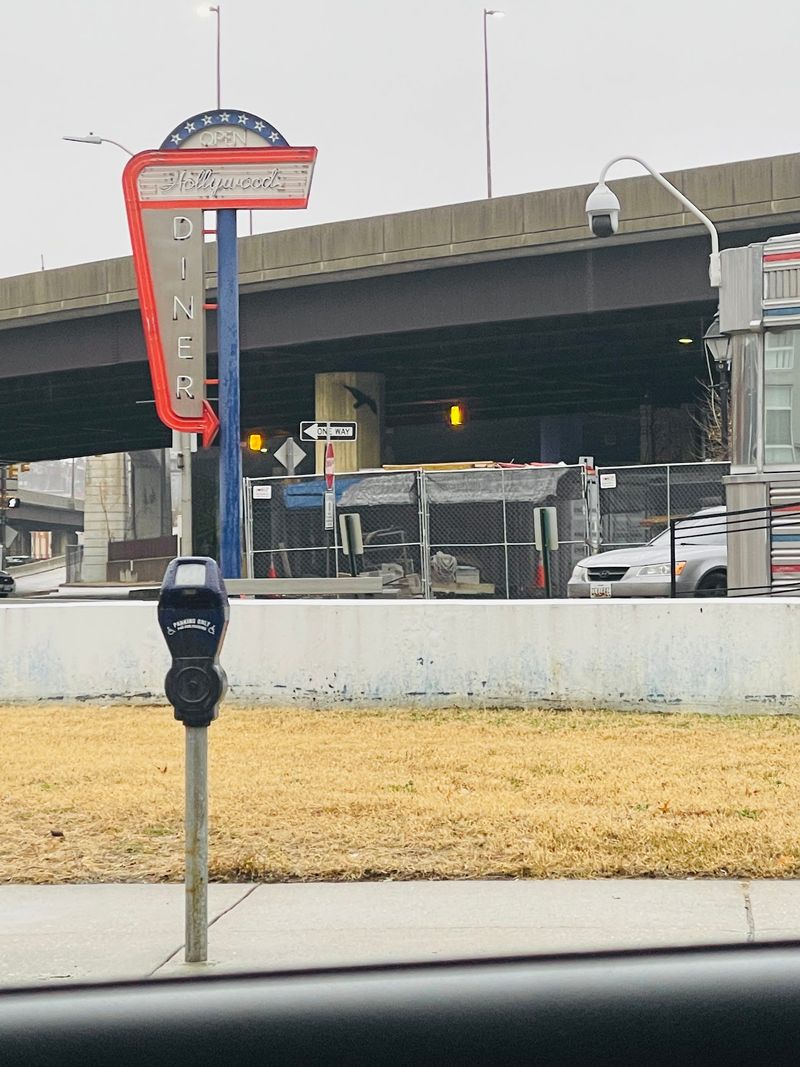
Here in downtown Baltimore, the building stands out against larger offices and city structures nearby. Its modest scale is part of its charm.
Design like this rarely shouts. It simply waits on the corner for someone to notice how much history fits inside a single row of booths.
The Plot Twist Nobody Ordered
Every good story needs a twist, and this one delivers.
The Hollywood Diner is no longer operating as a diner. Local accounts note that the building is now owned by DGS of Baltimore, the city’s Department of General Services.
That change surprised people who remembered it as a working spot with open booths and a busy counter. It also shifted the building from a place to sit down into a property used by the city.
For film fans, the news can feel a little bittersweet. The set is still there in shape, but the original role has changed.
Still, buildings often take on new jobs as neighborhoods evolve. Keeping the structure standing at all means the memory of its famous past remains tied to a real place.
Consider this the scene where the music shifts. The story does not end, it simply heads somewhere unexpected.
From Counter Stools to a Badge
Few diners can say they went from movie backdrop to police use, but this one apparently can.
Local word describes the building as a police station in its current form. Combined with city ownership through DGS, that points to a very different daily routine from its lunch counter years.
It is one of the more unusual career changes a building could make. Booths once arranged for actors now sit inside a space connected to public service.
That reality matters for anyone planning a trip. This is not a place to stop in for a seat and a chat with a server anymore.
Instead, it is best appreciated from the outside, with respect for the work happening there. Fans can still admire the shape and think about its screen history from the sidewalk.
Somewhere, a screenwriter is probably taking notes, because this sequel practically writes itself.
Atmosphere on the Downtown Block
Downtown Baltimore moves at a workday pace, and the blocks around East Saratoga Street reflect that.
Office workers, city staff, and commuters share the area during the week. The diner’s small frame sits among that steady flow, looking like a time capsule dropped into a modern business district.
The contrast is part of the appeal for photographers and history buffs. A retro building surrounded by newer city structures makes for an interesting snapshot of how Baltimore has changed.
Since the building is no longer open as a diner, the atmosphere is about observation rather than dining. People come to look, read up on its past, and move along.
That makes a stop here quick and low-key. It works well as part of a longer walk through downtown rather than a destination that fills an entire afternoon.
Sometimes the best landmarks are the ones you pass in a minute and think about for a week.
Who Will Love This Stop Most
Not every landmark suits every traveler, and that is perfectly fine.
Movie buffs top the list here. Anyone who enjoys tracking down real filming locations will appreciate seeing a building that once hosted cameras and crews.
Architecture fans make a strong second group. Classic diner design is becoming rarer, and spotting one in a downtown setting is a small treat.
Photographers may also enjoy the visual contrast between the retro building and the modern city around it. A quick exterior shot can tell a big story.
On the other hand, travelers hoping for a sit-down meal should plan elsewhere. With the diner no longer operating, there is no menu, no counter service, and no booth waiting for a party of four.
Families with curious kids might still enjoy the stop as a fun lesson in how movies get made. Pointing at a building and saying it was on film tends to spark questions.
Know your crowd, and this short visit can be a highlight of a Baltimore walking day.
Getting There Without the Guesswork
Finding the building is straightforward, since it sits on a well-known downtown street.
The address is easy to plug into any map app, and the area is walkable from many central Baltimore spots. Pairing the stop with other downtown sightseeing makes the trip feel worthwhile.
Because the building is city-owned and connected to official use, visitors should keep to public sidewalks. Respecting staff and entrances is the right move.
There are no posted dining hours or prices to plan around, since the diner no longer operates as a restaurant. That keeps planning simple: show up during daylight, look, snap a photo, and continue on.
Weekdays bring more activity to the surrounding blocks. Anyone hoping for quieter photos might find calmer moments outside standard business hours.
A little planning goes a long way, and here it mostly means remembering that the booths are no longer open for business.
Respectful Fan Etiquette
Visiting a working city building calls for a slightly different mindset than visiting a museum.
The Hollywood Diner now serves the public in a new way, so the people inside are busy with real responsibilities. Fans should keep a polite distance and avoid blocking doors or walkways.
Photos from the sidewalk are the safest bet. If anyone on site asks you to move along, a friendly nod and a smile keep the experience pleasant.
It also helps to manage expectations before arriving. There is no gift shop, no tour, and no plaque promising a guided look at the famous booths.
What you get instead is authenticity. The building is a genuine piece of the city, still standing and still doing useful work.
Good manners are free, and they make sure the next film fan who stops by is welcomed just as kindly.
The Final Reel on Saratoga Street
Roll the credits, because this little building has had quite a run.
It started as a classic diner, stepped into the spotlight as a movie set, and then took on a new role under city ownership. Few places can claim a story with that many scene changes.
For travelers, the Hollywood Diner offers something gentle rather than grand. It is a quick, thoughtful stop for anyone who loves film history, retro design, or the hidden stories of downtown Baltimore.
Expectations matter, since the booths are no longer open for dining. Go in knowing that, and the visit becomes a satisfying moment of connection with a piece of the city’s screen legacy.
The building’s modest frame proves that fame does not require size. Sometimes a narrow row of booths is enough to hold a lifetime of stories.
Stand on the sidewalk, glance at that familiar shape, and let Baltimore’s own movie magic play out one more time.
Enjoyed this story?
Add Fast Food Club as a preferred source to see more of our reporting on Google.