


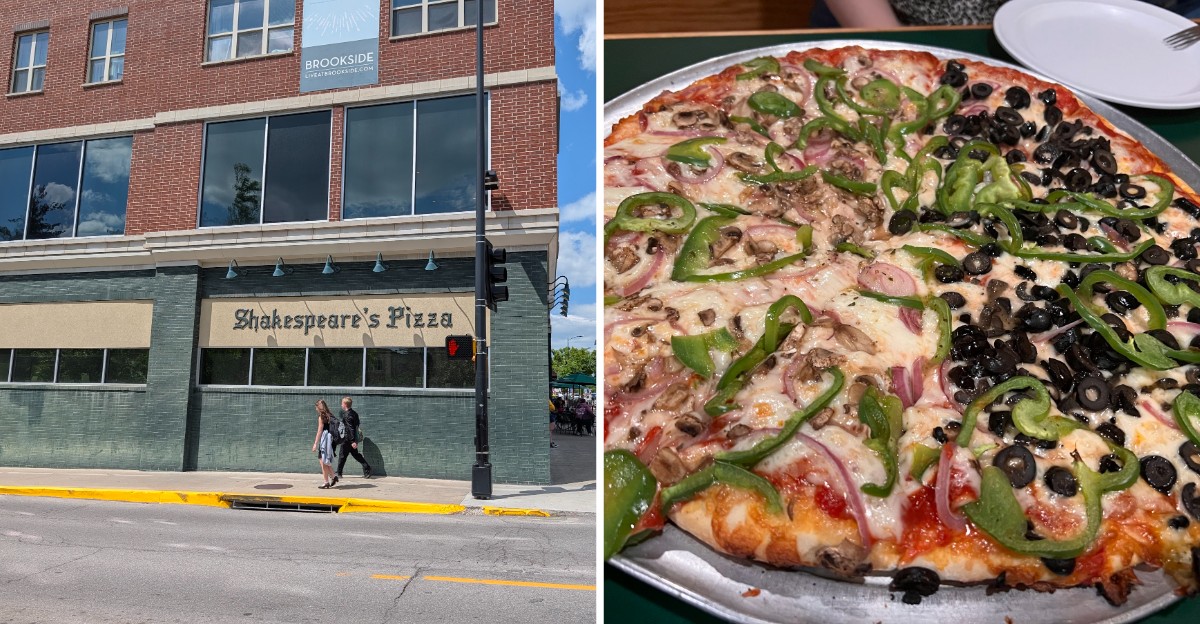
Some college traditions fade after graduation, but one in Columbia, Missouri, follows people around for decades. Former students drive back across the state just to stand in line again.
Parents bring kids who were not born when they first ordered here. A graduate from 1991 came back years later and found the pizza even better than the memory.
That loyalty is rare, and it says a lot about a downtown pizza counter that stays open past midnight every night of the week. The place has no servers, plenty of quirks, and a habit of calling out names over the noise.
This story covers where to find it, how it was rebuilt, what to order, how the ordering works, when to go, and why so many people treat a late slice here as a homecoming ritual worth the trip.
A Downtown Corner Between Broadway and Campus
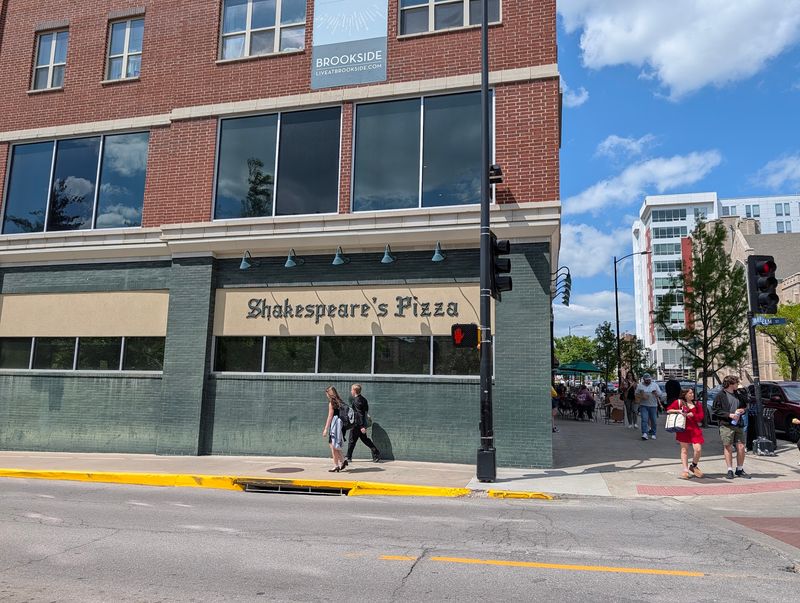
Every college town has its landmark meal, and in Columbia the answer usually comes fast. Shakespeare’s Pizza – Downtown sits at 225 S 9th St, Columbia, MO 65201, in the heart of Missouri.
The spot is just south of Broadway and north of the University of Missouri campus. That placement puts it within easy reach of dorms, classrooms, and the downtown blocks where students spend their free hours.
At its core, the restaurant is a low-key pizza place. The menu centers on hearty pies, slices, and build-your-own options, all served in a relaxed, casual setting.
Price expectations are friendly for most budgets. A typical meal lands in the $10 to $20 range per person, which explains part of its long run with the student crowd.
The downtown address also matters for another reason. People who come to explore 9th Street, shop, or catch a game on campus can fold a pizza stop into the day without a detour.
Many locals call it an institution at Mizzou, and the phrase fits. It is the kind of place that newcomers hear about in their first week and still mention years after moving away.
Knowing where it is turns out to be the easy part, though, because the building itself has a story worth hearing next.
Rebuilt Brick by Brick
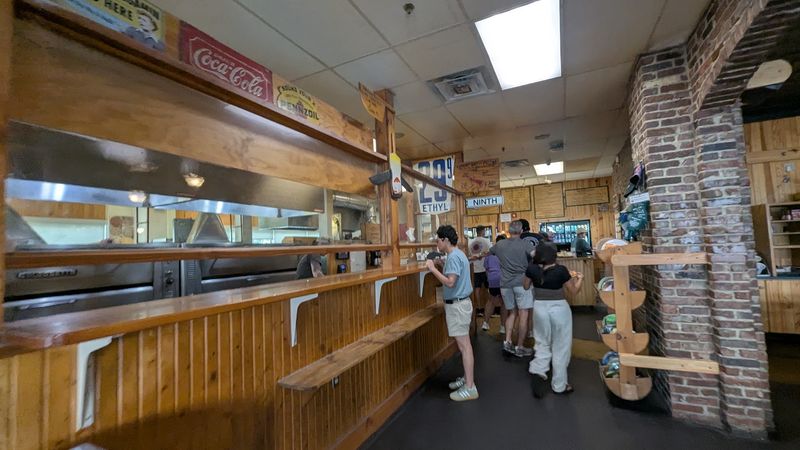
Most restaurants that start over choose something shiny and new. Shakespeare’s took the opposite route.
The downtown building was rebuilt brick by brick, a choice that kept the old character alive for the people who grew up eating there. Regulars notice the effort right away, and many point to it as proof that the owners understand what the place means to the town.
History shows up in small pieces throughout the space. Snippets of the past are scattered across walls and corners, so a trip to grab napkins can turn into a short lesson on local life.
For alumni, that continuity is the whole point. A former student who left Columbia as a kid described coming back as a lot like coming home, and that feeling depends on the room still looking familiar.
The result is a restaurant that feels updated without feeling erased. New booths and fresh layouts sit beside reminders of decades past.
It is a tidy trick, honestly. The place got a fresh start while keeping its old story firmly in the frame, and the decor inside takes that idea even further.
Memorabilia Around Every Turn
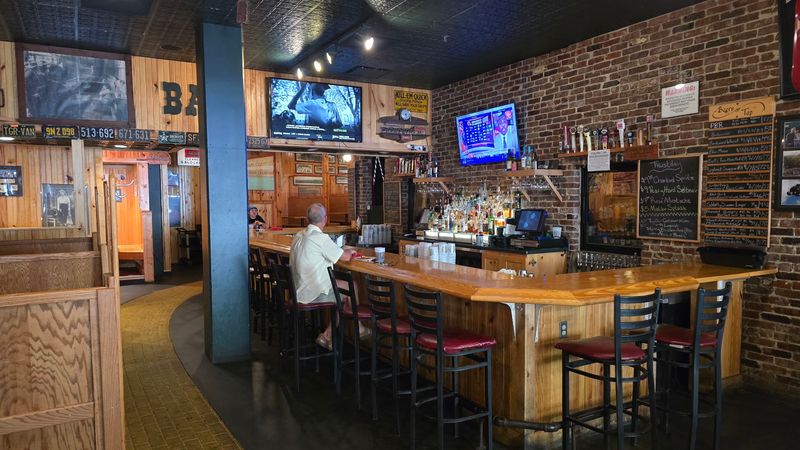
Old Columbia has a home on these walls. The decor features memorabilia from local establishments of years gone by, which gives longtime residents plenty to point at and talk about.
The layout encourages wandering. Seating appears around nearly every corner, and each turn opens up a different view of the room.
Guests often describe the space as beautifully decorated from front to back. It is the sort of room where people get up from the table just to see what is hanging in the next section.
That quirkiness is a big part of the appeal. Out-of-state fans, including at least one group cheering for a rival school, have praised the decor and the playful personality of the place.
For students, the walls work as a crash course in the town they now live in. Names of former shops and hangouts give context that a campus tour never covers.
Alumni get something different from the same walls. They see the places they once knew, framed and kept, which makes the trip back feel personal.
All that wandering tends to work up an appetite, which brings everyone back to the counter.
The Ordering System Newcomers Learn Fast
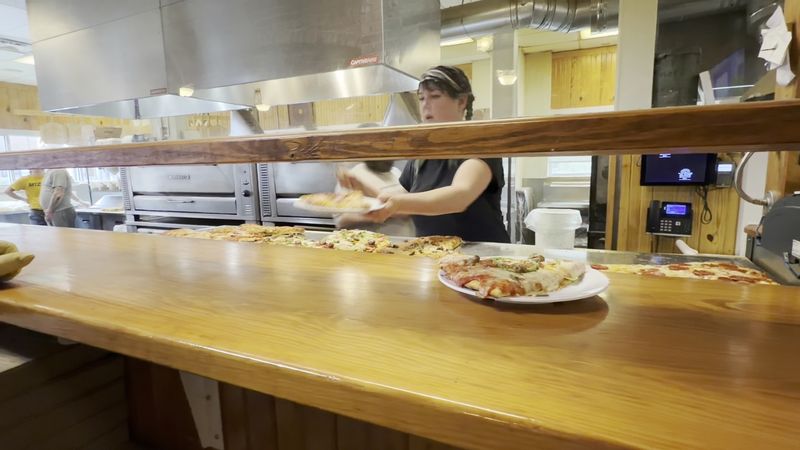
First-timers sometimes sit down and wait for a server who never arrives. No one comes to the table here, and that is by design.
The process is mostly self-serve. Guests order at the bar or counter, find a seat, and pick up their food at the kitchen when it is ready.
Slices follow a slightly different path. During part of the day, people can buy pizza by the slice straight from the cooks making the pies.
The setup can confuse a new group for a minute. Some people simply watch how others order before stepping up, which is a perfectly fine strategy.
Once it clicks, the system moves quickly. Staff earn praise for being friendly, quick, and efficient, and many are happy to offer suggestions to anyone unsure about what to get.
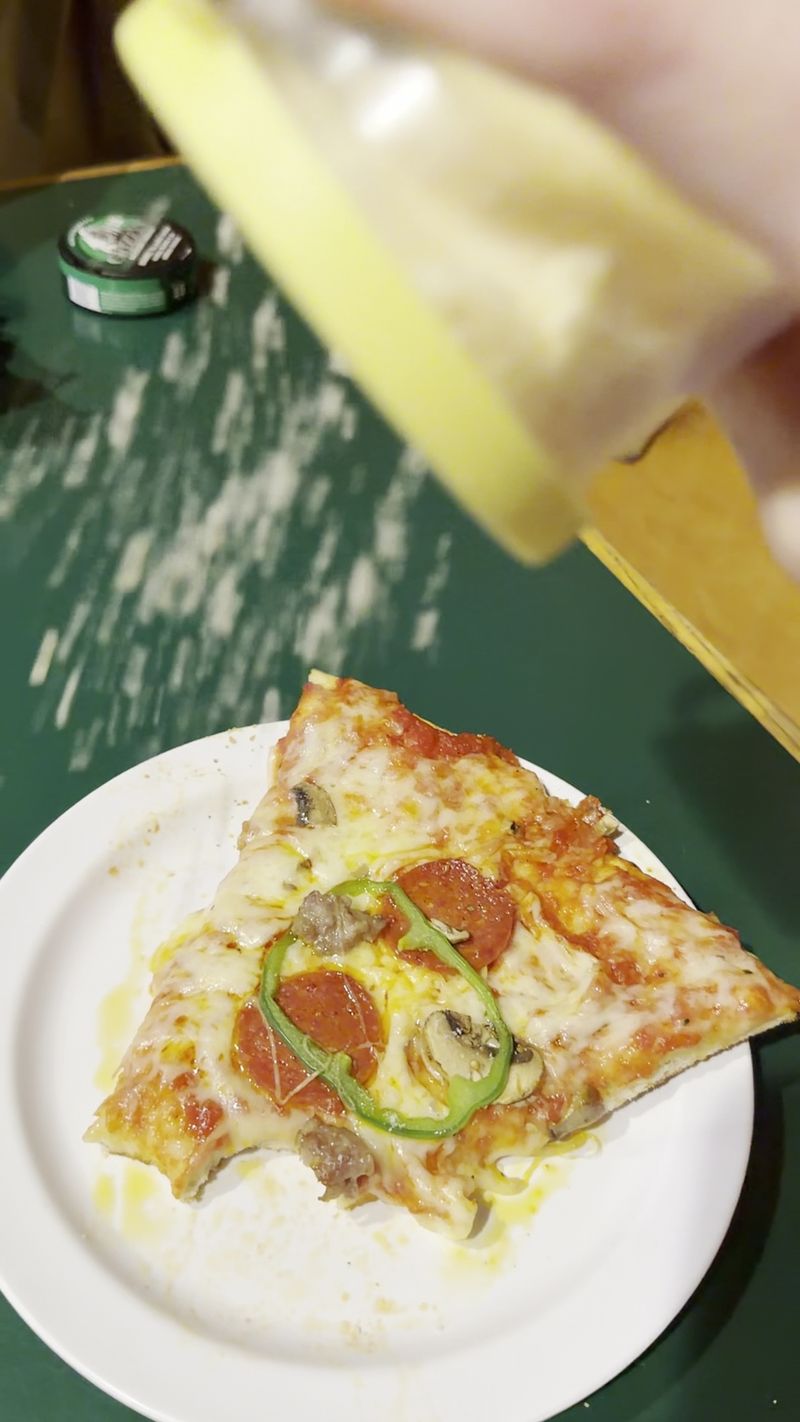
A self-serve station handles extras like Parmesan and red pepper flakes. On a slow night that area can run a little low, so grabbing shakers from a nearby table is part of the routine.
The best part of the system, though, is the way your order finds you, and that deserves its own spotlight.
When the Kitchen Calls Your Name
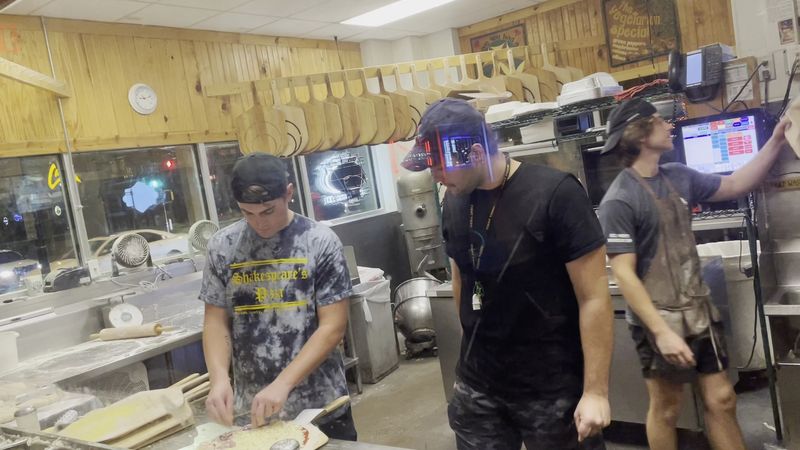
Listen closely, because your name is about to be announced to the entire room. Orders are called out loud when pizzas are ready, a tradition that has stuck around for decades.
Sometimes the name comes out mangled. Longtime fans treat that as part of the charm rather than a problem.
A graduate who had a first slice here in 1991 came back recently and noticed the same habit still in place. Hearing a name called the old way was one of the details that made the return trip feel familiar.
The call-out system also keeps things honest during busy hours. The kitchen posts realistic estimates for how long a pizza will take, so diners know roughly when to expect their turn.
That transparency helps at peak times. Guests who go during a rush are encouraged to stay patient and treat the crowd as part of the experience.
Small groups often turn the wait into a game of guessing how the next name will come out. It is low-stakes entertainment, and it costs nothing.
Of course, a name is only as good as the pizza attached to it.
Toppings Piled With No Holding Back
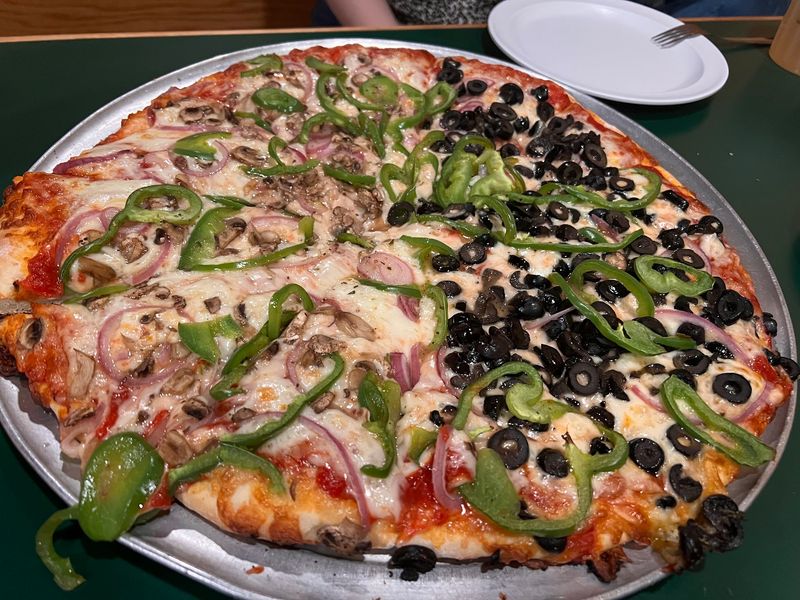
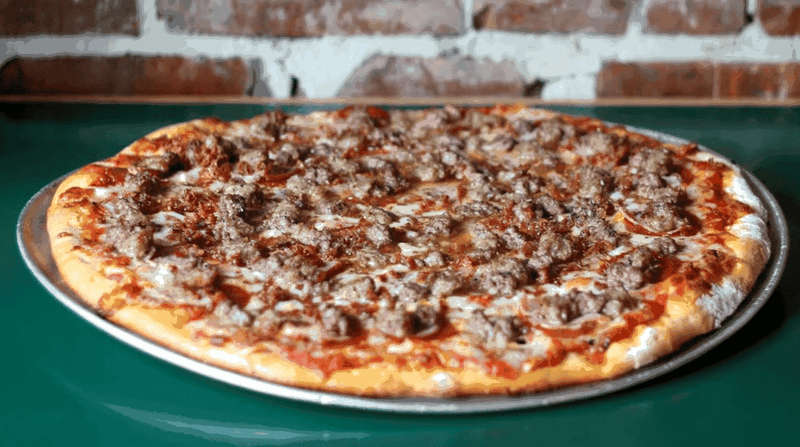
Nobody accuses this kitchen of being stingy. Toppings are piled on generously, and that reputation follows the pizza everywhere.
The meat lover’s pizza comes up often. It arrives loaded, and fans accept that the extra meat makes it a bit greasy, which is pretty much the deal with a pie built this heavy.
Pepper fans have their own pick. The P pizza combines pepperoni with banana peppers, green peppers, and jalapeño peppers.
Classic tastes are covered too. The plain cheese pizza earns loyal fans, and some say it is all they ever need.
Crust gets its share of praise, with many calling it crispy. Others wish for a thinner option, so preferences do vary.
Pepper jack cheese shows up as a choice, and the menu rotates in combinations that keep repeat trips interesting. A daily special also offers a solid deal for those watching their budget.
Guests who want control can build their own pizza from scratch. Gluten free pizza is available as well, which helps groups with different needs order together.
Size, however, is where things get truly ambitious.
The Masterpiece and Other Big Commitments
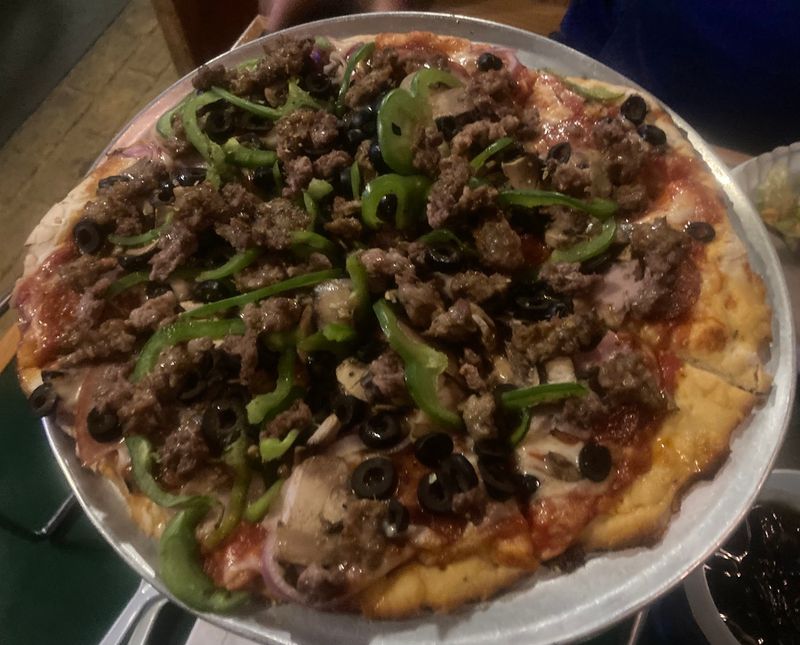
Some pizzas are dinner, and some are a group project. The Masterpiece falls firmly into the second category.
Fans joke that it could feed a family for generations. It is a big, loaded specialty pie meant for sharing.
Smaller sizes still deliver. Even the personal pizza is described as big enough for one person plus leftovers for later.
That makes the menu flexible for students. One order can cover tonight and tomorrow’s lunch, which matters on a college budget.
Prices do draw mixed opinions. Most meals fall between $10 and $20 a person, but a small specialty pizza can approach $25, which some feel is steep for the size.
The workaround is simple. Splitting a larger pie or sticking to slices keeps costs reasonable, especially for groups.
Families often go the sharing route anyway. A couple of large pizzas spread across a booth handle a crowd with less fuss than individual orders.
Whatever size lands on the table, the next question is where to sit, and the answer has plenty of options.
Booths, High-Tops, and Room to Spread Out
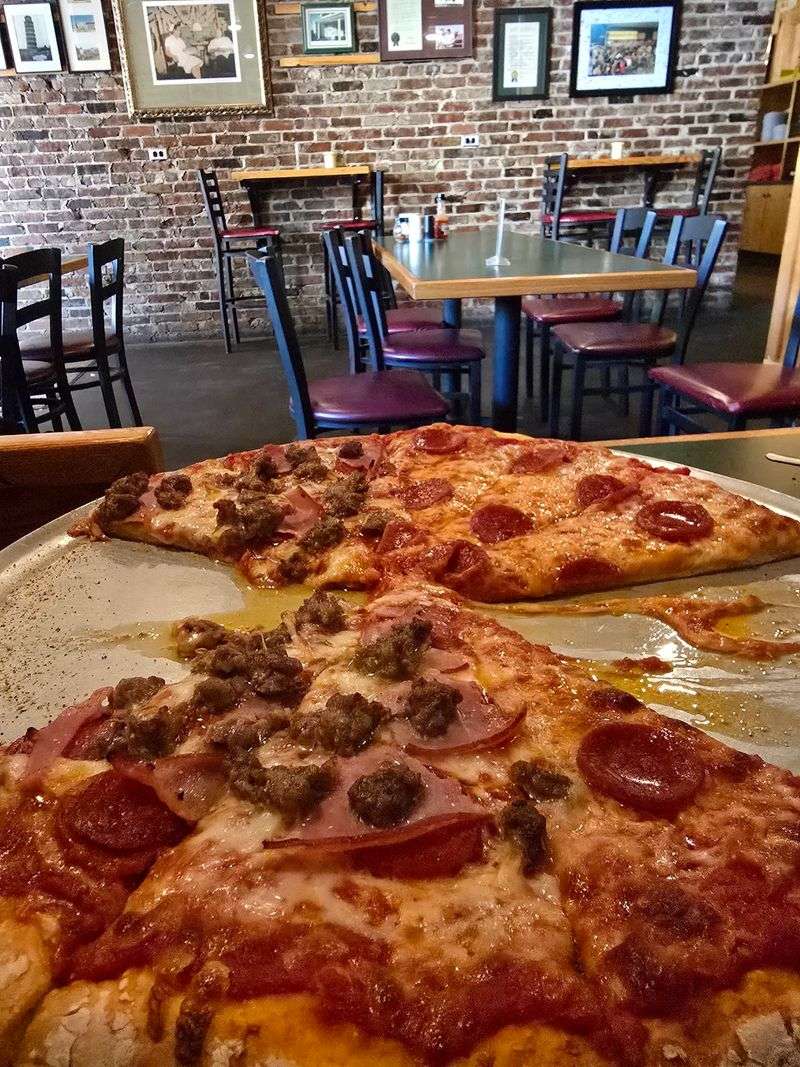
Finding a seat is rarely a hunt. The restaurant offers plenty of seating spread across different areas, so groups of most sizes can settle in.
High-top booths give larger parties extra space. Cozy booths elsewhere suit pairs and small groups who want a quieter corner.
Because the room is so large, waits for a table tend to stay short. Many longtime fans say they have never faced a long line for seating.
TVs hang throughout the space. Game days and casual nights both work well here, since screens are easy to spot from many tables.
The variety of zones gives each trip a slightly different feel. One night might mean a booth near the kitchen, while another lands a table in a far corner full of old signs.
Families appreciate the flexibility too. Kids tend to enjoy the long list of fountain soda choices, and the restaurant offers both Pepsi and Coca-Cola products, which settles plenty of family debates.
Indoor seating covers most needs, but on nice days the best seats are often outside.
Outdoor Tables for People Watching
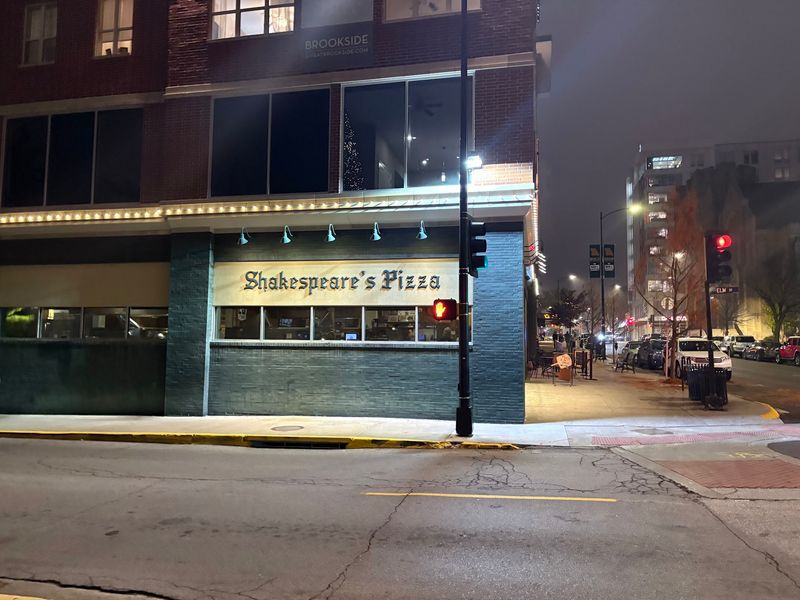
A sunny afternoon changes the whole plan. The outdoor seating area is one of the most mentioned features, and it fills quickly when the weather cooperates.
Tables outside put diners right in the flow of downtown. People watching becomes part of the meal, with students and locals moving along 9th Street.
The patio offers a welcoming spot for anyone who prefers open air to a busy dining room. It also gives groups a bit more breathing room during peak hours.
Alumni seem especially fond of it. One returning graduate credited a bright afternoon outside with making a nostalgic slice even more memorable.
Out-of-town guests get a quick read on the neighborhood from these seats. Watching campus life roll by says more about Columbia than any brochure.
Outdoor dining also pairs well with the self-serve setup. Grab the order at the kitchen, carry it outside, and settle in without waiting on anyone.
When the sun drops, though, the crowd shifts, and the late hours tell the real story behind the slice.
Open Late, Every Single Night
Midnight is a deadline here, not a suggestion to leave early. The doors stay open until 12 AM Sunday through Thursday and until 1 AM on Friday and Saturday.
Every day starts at 11 AM. That long window covers lunch between classes, dinner with friends, and a final slice after a late study session.
Those late hours are a big reason students keep showing up. Few spots downtown serve a full menu so close to the end of the night.
Timing affects the experience a lot. Weekend nights during the school year are lively, while a Saturday during a campus break can mean no wait at all.
Weeknights offer a middle ground. A Monday evening still brings a good crowd without the full weekend rush.
Slice availability is worth keeping in mind. Pizza by the slice is offered during part of the day, so anyone set on a single slice should check timing at the counter.
Getting there is the last practical piece, and downtown parking has a simple solution.
Parking, Walking, and Practical Timing
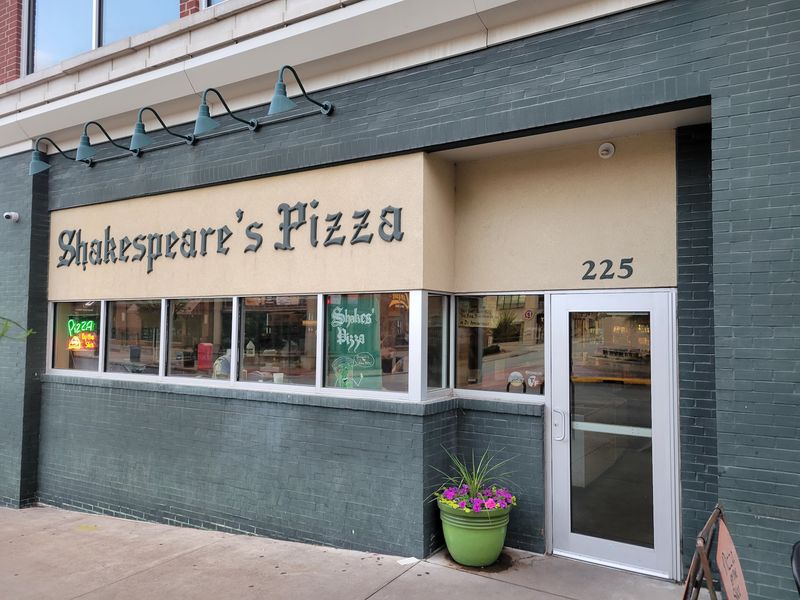
Downtown parking makes some people nervous, but this trip is easy. A free parking garage sits about a block away, leaving only a short walk to the door.
Students on campus often skip the car entirely. The restaurant sits just north of the university, which makes it an easy walk from many parts of campus.
A few planning tips help the visit go smoothly. Check the posted cook time when ordering, since pies take longer than slices during busy stretches.
Large groups can save time by deciding on orders before reaching the counter. That keeps the line moving and gets everyone seated faster.
Budget wise, expect most meals to land between $10 and $20 per person. The daily special and shared pies stretch that further.
Gluten free diners can order with confidence, since a gluten free pizza is on the menu. Picky eaters can lean on the create-your-own option.
For contact details and menus, the official website at shakespeares.com is the best resource.
With logistics handled, the bigger question remains: why do people keep collecting this place like a souvenir?
Cups, Checklists, and College Traditions
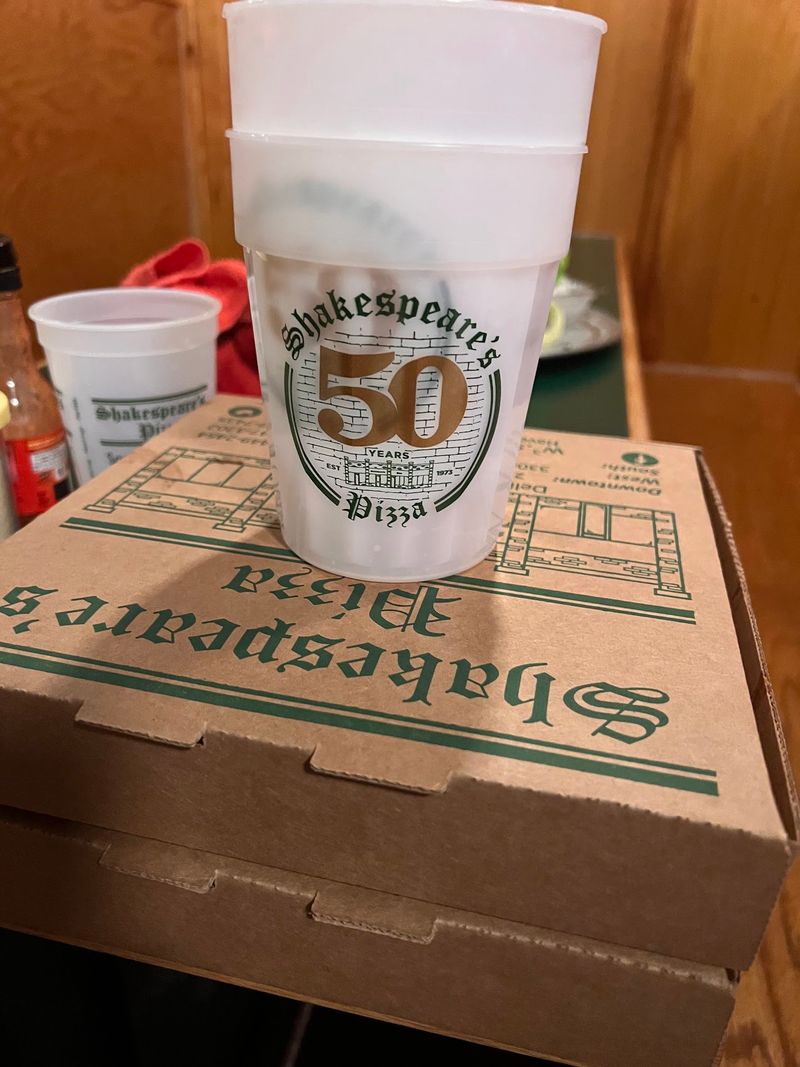
Some fans keep diplomas, and others keep cups. Regulars admit to owning stacks of the restaurant’s cups, a quiet badge of how many meals they have logged.
The place also shows up on a local bucket list. A guide called 100 Things to Do in Columbia, MO, written by University of Missouri professor Steven Paul Sayers, includes it, and fans work through that list stop by stop.
One couple from Kansas City admitted they lived in town for five years before finally trying it. Their checklist trip fixed that.
Bringing friends here is its own tradition. Many locals love introducing newcomers to the atmosphere and watching them figure out the ordering system.
Travelers passing through Missouri often plan routes around it. Friends on a road trip across the state have made a point of stopping in Columbia just for a few slices.
The pull is less about any single pizza and more about the ritual. Ordering, waiting for a name, and grabbing a booth adds up to a shared experience.
All of which leads to a fair final question about who should go.
A Slice Worth Coming Back For
Plenty of pizza places feed a town, but few become part of its memory. Shakespeare’s Pizza manages both.
Students get a late-night spot with fair prices, big portions, and room for a crowd. Alumni get a building that held onto its history, a familiar way of ordering, and names still called across the room.
Families fit in easily with shareable pies and plenty of soda choices. Travelers get a simple way to understand Columbia in a single meal.
It is not flawless. Some find specialty prices high, the self-serve setup can puzzle beginners, and those wanting a thin crust may leave wishing for one.
Still, the strengths add up. Loaded toppings, a lively room full of old Columbia, outdoor tables, and hours that run past midnight explain why the place stays busy.
The best approach is simple. Go hungry, learn the ordering routine, grab a seat with a view of the memorabilia, and listen for your name.
After that, the only real decision is how soon to plan the next late slice.
Enjoyed this story?
Add Fast Food Club as a preferred source to see more of our reporting on Google.