


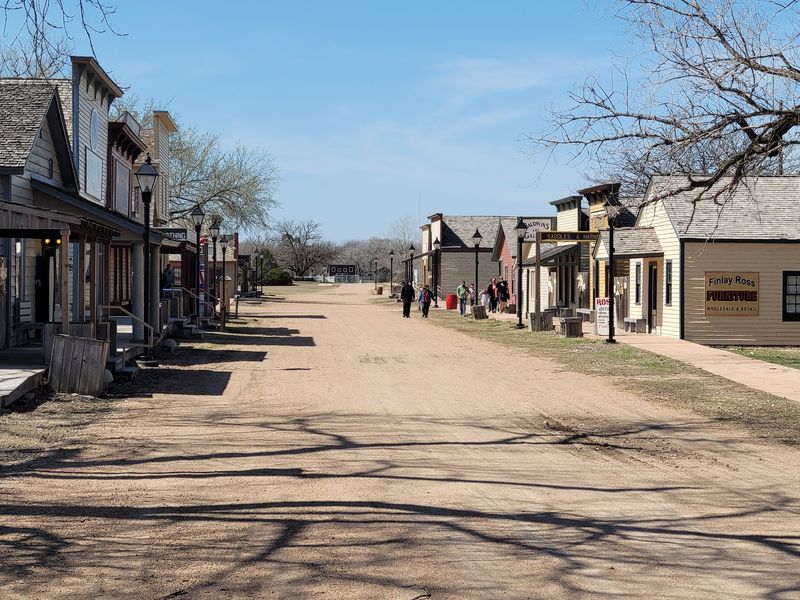
Somewhere in the middle of modern Wichita, there is a whole little town where the dirt roads still win and the calendar seems stuck somewhere around 1870. Costumed townsfolk tip their hats, a blacksmith keeps his fire busy, and the sheriff may have a showdown scheduled before lunch.
It is the kind of place where kids beg to come back before they even reach the parking lot, and grown-ups quietly agree with them. Keep reading to find out where this frontier hideaway sits, what fills its streets, and how to plan an easy, crowd-dodging day trip around it.
A Frontier Town Hiding in Wichita
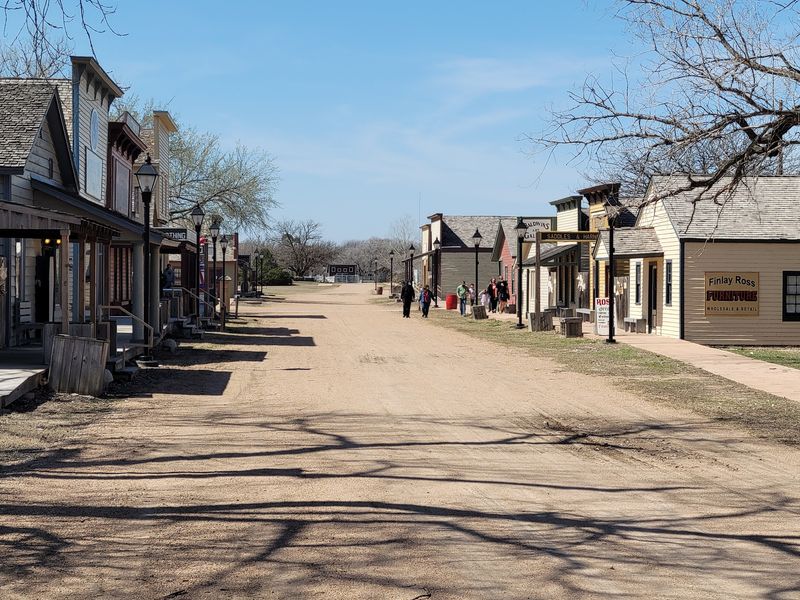
The surprise is how close it is to everything else. Old Cowtown Museum sits at 1865 Museum Blvd, Wichita, KS 67203, United States, right in the heart of Kansas and only minutes from the city’s busier corners.
Behind the gates waits a re-creation of late-1800s Wichita. The museum focuses on life in the county during that era, with farm animals, period buildings, and photo and document archives that keep the past carefully on file.
It is an outdoor living history museum, which means the history is not trapped behind glass. Costumed interpreters roam the streets, doors stand open, and many buildings invite people inside to look around.
The site covers about 23 acres. That is plenty of room for a full frontier town, a working farm area, and enough side streets to keep curious explorers busy for hours.
Wichita has plenty of attractions, but few let guests trade the present for the 1800s in a single afternoon. The museum earns a 4.7-star standing from more than 2,300 people, which says a lot about how well that trade works.
So the town is real, the address is set, and the wagon is loaded. Next comes the story of how a cattle town ended up rebuilt in one place.
Cattle Town Roots, 1865 to 1880
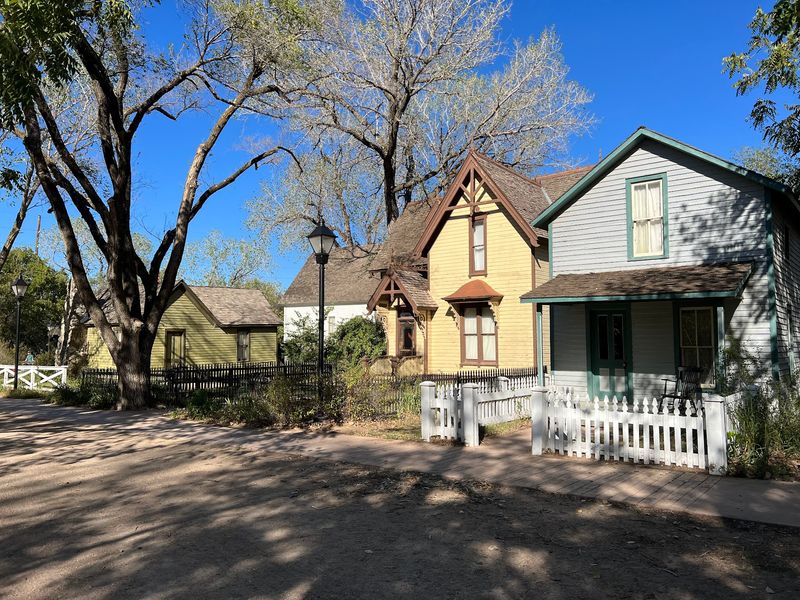
Long before skyscrapers and highways, Wichita was a booming cattle town. The museum zeroes in on those early years, roughly 1865 to 1880, when the settlement was growing fast.
The goal is to show how a small frontier outpost turned into a bustling agricultural and manufacturing center. Each street and building helps tell part of that change.
History buffs will find a ton of local detail here. The focus stays on Wichita and its surrounding county rather than a generic Western theme park version of the past.
That local angle makes a difference. Instead of tumbleweeds and clichés, guests get the actual story of the people who built homes, opened businesses, and figured out farming on the plains.
Fun fact: the museum’s street address, 1865 Museum Blvd, lines up neatly with the first year of the era it brings back to life. It is a small detail, but a clever one for a place that cares so much about dates.
The archives help back up that story with photos and documents. They give the buildings outside a paper trail, which is handy when the goal is accuracy over fantasy.
With the timeline in place, the next question is obvious. Where did all these old buildings come from?
Buildings That Traveled to Town
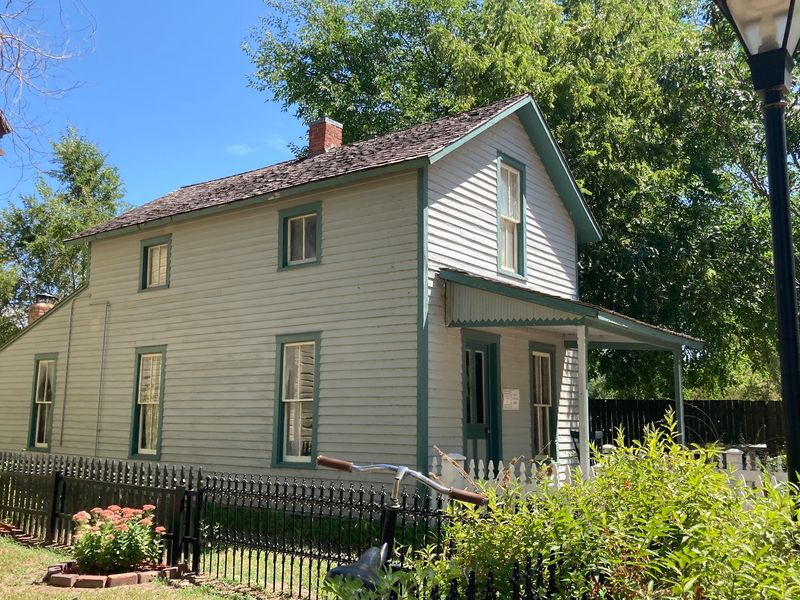
Some of these houses have racked up more miles than a cattle drive. Many original homes were donated and moved to the museum from around Kansas, then settled into their new frontier neighborhood.
The site holds more than 50 historic and recreated buildings. Some counts put the number close to 60, which explains why first-timers often find the place bigger than expected.
Homes, shops, a blacksmith shop, and a period farm all share the grounds. Each building is filled with decor, instruments, clothing, and machinery that fit the time period.
One standout is the original house of the Wichita Eagle owner. Newspaper history fans will want to put it near the top of the list, since it connects the town’s early days to a name Wichita still knows.
The best part is how many buildings guests can actually enter. Stepping through so many doorways turns a stroll into a scavenger hunt through the 1800s.
Some shops are arranged exactly as they would have been in that century, and a few still serve guests today. It is history with a working counter.
All that architecture needs people to bring it to life. Luckily, the town comes with a cast.
The Blacksmith Who Steals the Show
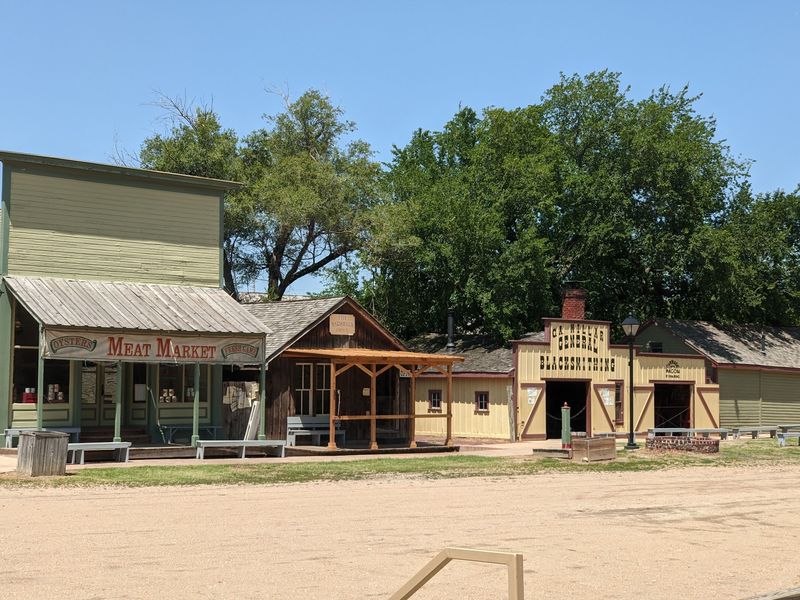
Ask a group of kids for their favorite stop, and the blacksmith shop tends to win by a horseshoe. It is one of the most talked-about corners of the whole museum.
The blacksmith works the forge and explains the craft as he goes. He is known for being informative and patient with questions, even the endless ones from school groups.
Field trips often make this a key stop. Students get a direct look at how tools and hardware were made before factories took over the job.
Here is a useful tip. On some weekdays, the blacksmith may be the main interpreter on site, so a Thursday trip might mean fewer demonstrations elsewhere but plenty of one-on-one time at the anvil.
Plenty of folks leave saying he was one of the most interesting people they met all trip. That is a strong endorsement for someone who spends his day next to a fire in a leather apron.
The shop also shows how central this trade was to a frontier town. Wagons, farm gear, and horses all depended on it.
Of course, not every demonstration involves hammers. Some involve a sheriff, a challenge, and a lot of dramatic timing.
High Noon on a Dirt Road
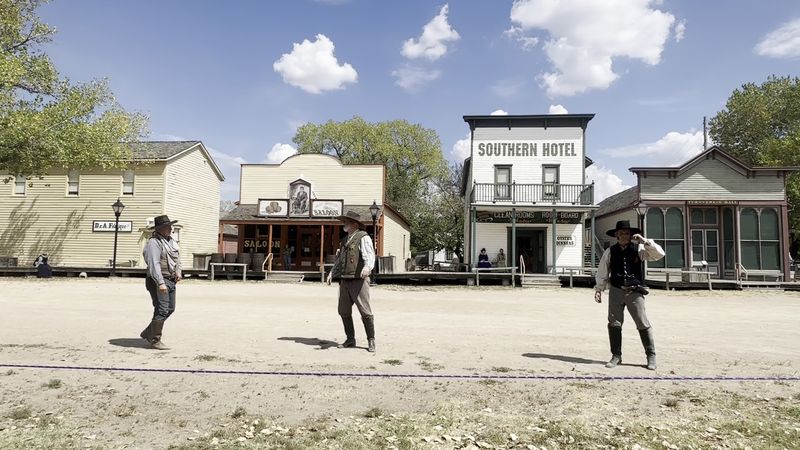
Nothing gathers a crowd on Main Street faster than a showdown. The staged gunfights are easily the most mentioned attraction at the museum, and for good reason.
Costumed actors play out frontier conflicts in the street. These shows are theatrical, family-friendly, and built to give a taste of the drama that cattle towns were famous for.
Reenactments go beyond shootouts too. Performances about daily life back then help explain how people worked, argued, and got along in a growing settlement.
Some days bring extra entertainment, such as gentlemen playing period drums in town. Those moments add a festive layer to an ordinary stroll.
Schedules can vary by day and season, so checking the website before the trip is smart. Weekend visits are more likely to catch the bigger lineup of shows.
Even guests who miss a performance tend to catch the buzz. Videos of the shows have a way of convincing people to come back and see the next one live.
The actors are known for being super friendly once the show ends. They are happy to chat, which makes the shootout a conversation starter instead of just a spectacle.
After the dust settles, it is a good time to step inside and get hands-on.
Hands-On History for Curious Kids
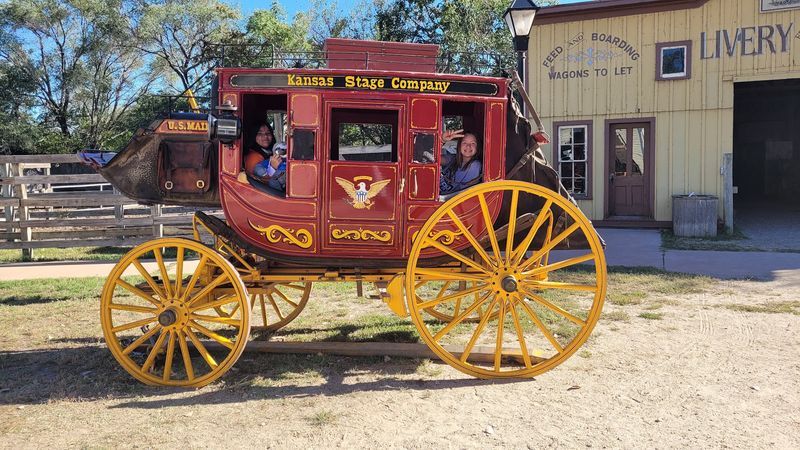
Museums that say please touch are rare, so this one feels like a small rebellion against velvet ropes. Interactive exhibits pop up throughout the grounds.
Kids have played an old piano, handled animal furs, and sat at tables from another century. Those small moments make history feel like something they did rather than something they read.
Families with young children often find the whole place easy to enjoy together. Boys and girls ten and under regularly leave asking when the next trip will be.
Dressing up is another favorite. Some families make a habit of arriving in period-inspired outfits, which fits right in among the costumed interpreters.
Live demonstrations add even more to do. Watching a craft in action, then asking the person doing it a question, keeps short attention spans busy.
The printing press is a quieter highlight that older kids often enjoy. It offers a peek at how news traveled long before phones.
Parents also appreciate that the experience works on several levels. Little ones enjoy the action, while adults catch the deeper history in the details.
Speaking of all ages, the town has a few four-legged residents worth a look as well.
Farm Life and Four-Legged Locals
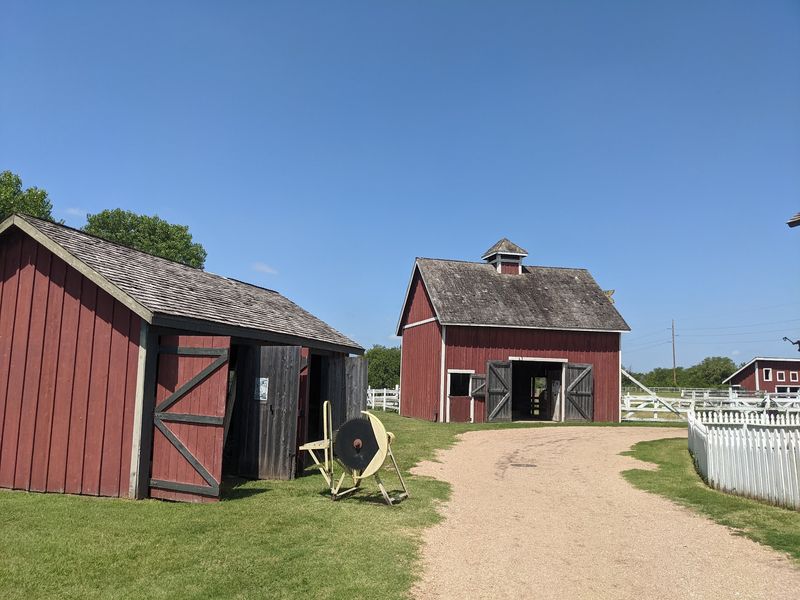
Not every resident of this town wears a hat. Farm animals are part of the museum’s re-creation of late-1880s county life, and they help round out the picture.
The period farm shows how families outside the town center lived and worked. It is a reminder that Wichita’s growth depended on agriculture as much as on cattle drives.
Barns, fences, and farm equipment fill in the setting. Guests can compare the rural homestead with the busier storefronts on Main Street.
That contrast is one of the quieter lessons here. A walk from town to farm shows the full range of frontier life in one compact trip.
There is also a friendly cat who has earned a small fan club. Feline cameos are not on the official schedule, but they rarely hurt anyone’s day.
The farm area works well as a calm break between shows. Families can slow down, let kids look around, and chat about how chores worked without modern machines.
Machinery displays inside buildings help explain those tasks. Seeing the tools makes it clearer why farm days started early and ended late.
With livestock checked off the list, there is still one tall glass of tradition waiting in town.
A Sarsaparilla Stop on Main Street
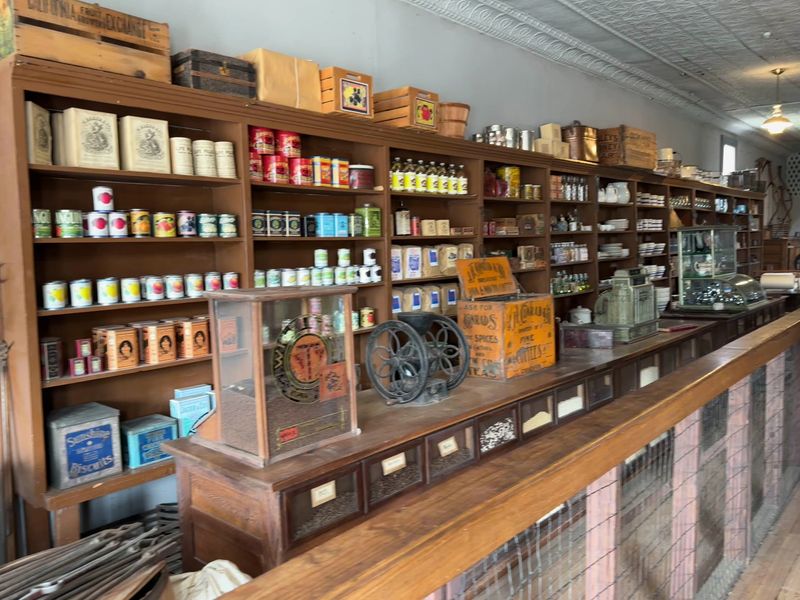
Old West movies have their famous drinks, and Cowtown has its own crowd favorite: sarsaparilla. It comes up again and again as a must-try part of the trip.
The classic root-based soda fits the theme nicely. Ordering one at a period counter is a simple way to feel like a local resident of 1870s Wichita.
For a title promising cafes, this is the frontier version. Several shops still serve guests, keeping the businesses in town active rather than purely decorative.
Families often treat the sarsaparilla as a reward after a long loop around the grounds. It makes a fun halfway point before tackling the rest of the buildings.
Did you know? Sarsaparilla has long been linked with Western lore, which is why it shows up so often in cowboy stories and films.
Guests who packed their own meal have options too. Picnic benches sit in the town area, and the porch of the visitor center is another handy spot for a lunch break.
That flexibility makes the trip easy on budgets and picky eaters alike. Nobody has to leave the frontier just to refuel.
Before heading home, though, most people make one last stop for souvenirs.
Souvenirs and Seasonal Surprises
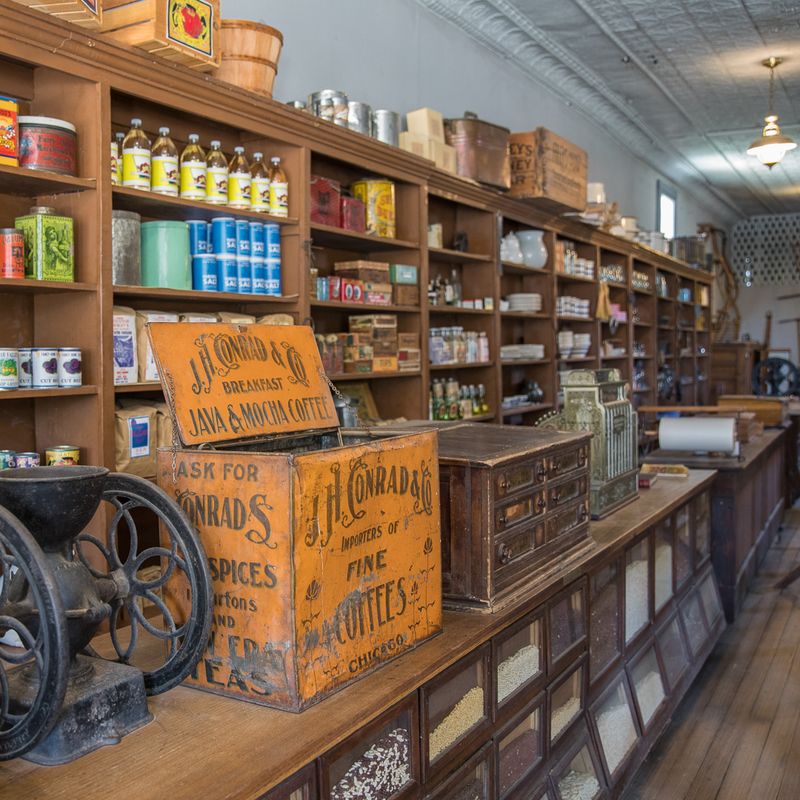
Every good frontier town needs a place to stock up, and the souvenir shop here takes the job seriously. It is known for having a lot of fun things to browse.
Western-themed keepsakes make it easy to bring a bit of the trip home. Kids especially enjoy hunting for something to remember the gunfights or the blacksmith.
The museum also mixes things up through the year. Seasonal events give regulars a reason to return, since the calendar keeps adding something new.
Those rotating activities are a big reason families come back again and again. A spring trip and a fall trip can feel quite different.
Checking the official website before a visit helps catch special programming. Event days often bring more actors, more shows, and more to see on the streets.
People who first came as elementary students often return as parents. Many are pleased to find the museum has grown in the best way since their own school field trip.
That growth shows in the number of buildings, the activities, and the overall polish. The town keeps expanding without losing its period focus.
All this activity raises a fair question. How does a museum stay so accurate while staying so lively?
Ready for Its Close-Up
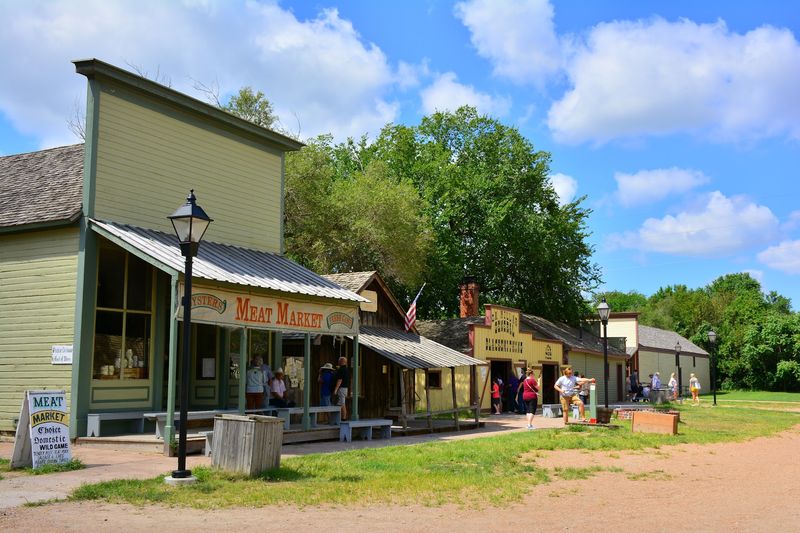
Hollywood has noticed the attention to detail here. Cowtown served as a setting for a historically focused CBS television movie, which was filmed partially in the Flint Hills and partially at the museum.
The production featured well-known actors, including Janine Turner and Dennis Weaver. The story drew on documented records from the frontier era, so the setting needed to look the part.
Those involved in the filming noted how carefully the buildings and Main Street matched the period. That kind of accuracy is hard to fake, even with a big crew.
For guests, this adds a fun layer to the stroll. Some of the same streets that appeared on screen are open for anyone to explore.
The film connection also says something about how the museum is maintained. Buildings are kept in a condition that holds up to a camera’s close look.
Preservation is a common theme among those who visit. Many call the town impeccable and very well preserved, from the furnishings to the storefronts.
It is a reminder that the museum is not just a playground. It is a carefully managed collection that happens to be very entertaining.
Now for the practical part, starting with the clock.
Hours, Fees, and Free Sundays
Timing a trip well can save both money and patience. The museum is open Wednesday through Saturday from 10 AM to 5 PM, and Sunday from 12 to 5 PM.
Monday and Tuesday are closed. Those two days are worth remembering before loading up the car.
Admission has been around $10, a fee many consider well worth it for the size of the site. Prices can change, so the official website is the best place to confirm current rates.
Here is a budget-friendly tip. Sundays in the summer have offered free entry, which makes a weekend trip especially appealing for families.
The museum’s own guidance suggests allowing 1.5 to 2 hours. In practice, many groups stay much longer.
Some families spend four hours and still miss buildings they wanted to explore. Reading every sign and catching every show can easily turn the trip into a full day.
Arriving right at opening is a smart move. Mornings tend to be quieter, and the grounds usually get busier around noon.
Once the schedule is set, the next thing to plan for is the weather and the walking.
Comfortable Shoes Required
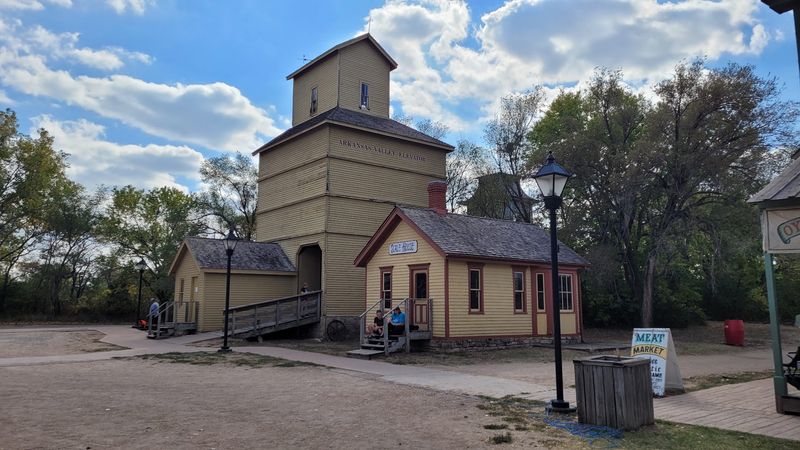
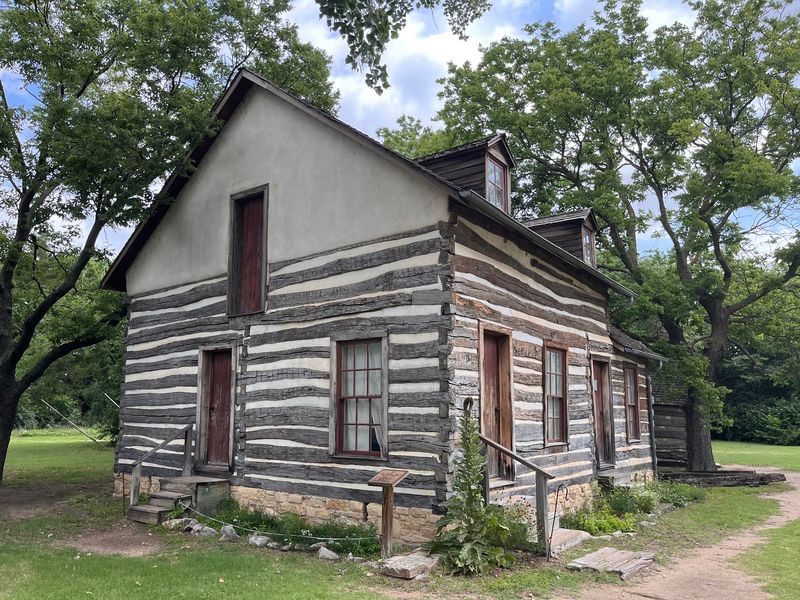
Frontier towns were not built with escalators, and this one stays true to form. Expect a lot of walking across dirt roads and between buildings.
Most guests agree the effort is worth it. Still, anyone with knee or ankle troubles should plan rest breaks or consider how much ground to cover.
Kansas summers can get hot. A cooler day makes the outdoor portions much more pleasant.
Good news for July travelers: many buildings are equipped with air conditioning. Ducking inside offers a welcome break while still learning something new.
Families have made it work even on the hottest weekend of the year. The grounds are easy to get around as a group, and the indoor stops help everyone pace themselves.
Water bottles, hats, and sturdy shoes are simple ways to stay comfortable. Packing a picnic also cuts down on extra trips back to the car.
Planning short loops can help too. Covering one section, taking a break, then tackling the next keeps energy steady for kids and adults.
With the walking sorted, it is easy to stretch the trip beyond the museum gates. A few famous neighbors sit just down the road.
A Museum-Hopping Day Worth Saddling Up For
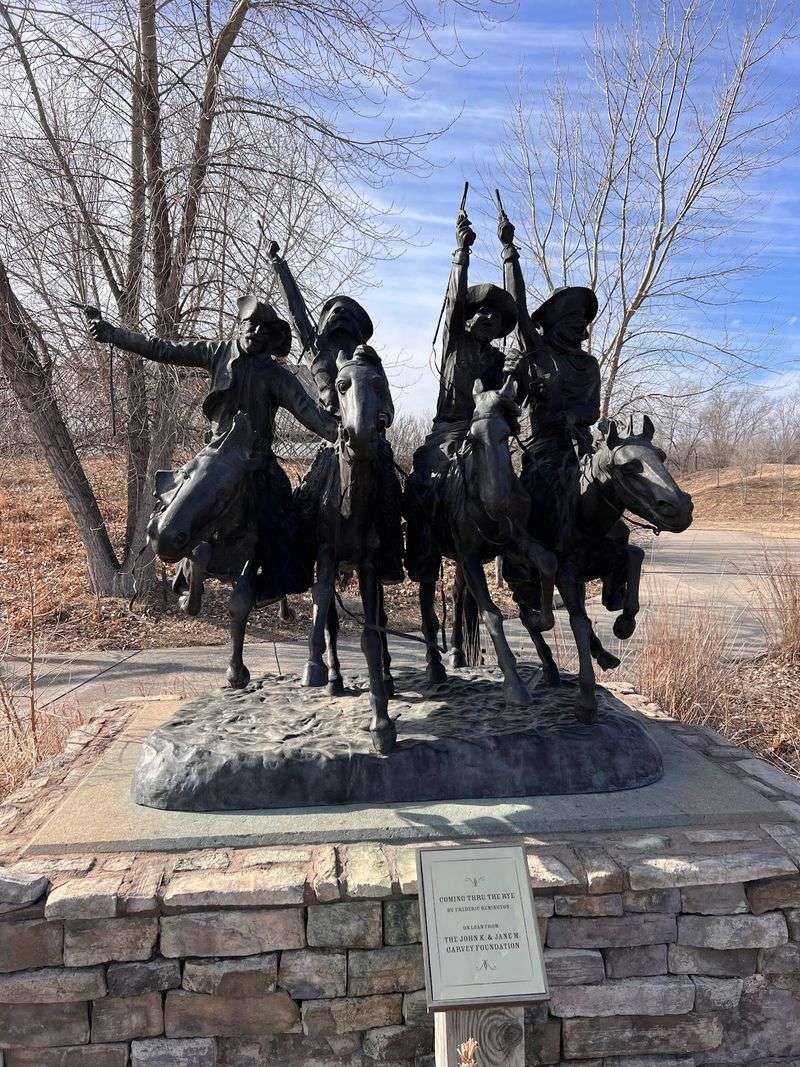
Great day trips rarely stop at one door, and Cowtown sits in a very handy neighborhood. Botanica, the Keeper of the Plains, and the Wichita Art Museum are all nearby.
That cluster makes it simple to plan a full day of museum hopping. A morning in the 1800s can roll into an afternoon of gardens, art, or landmark sightseeing.
It also helps with timing. Arriving at Cowtown when it opens, then heading to a neighbor around the noon rush, keeps the day flowing smoothly.
The museum suits a wide range of people. History lovers, school groups, young families, and out-of-state travelers all find something to enjoy.
Even folks who live a modern Western life in places like Phoenix have called it a real treat. The town offers a version of the West that feels rooted in actual history.
Friendly staff and knowledgeable volunteers tie it all together. People regularly leave impressed that it was bigger and better than expected.
For an easy Kansas day trip, few places pack this much story into one stop. Pack the comfortable shoes, check the schedule, and let Wichita’s frontier past take the reins for a while.
Enjoyed this story?
Add Fast Food Club as a preferred source to see more of our reporting on Google.