


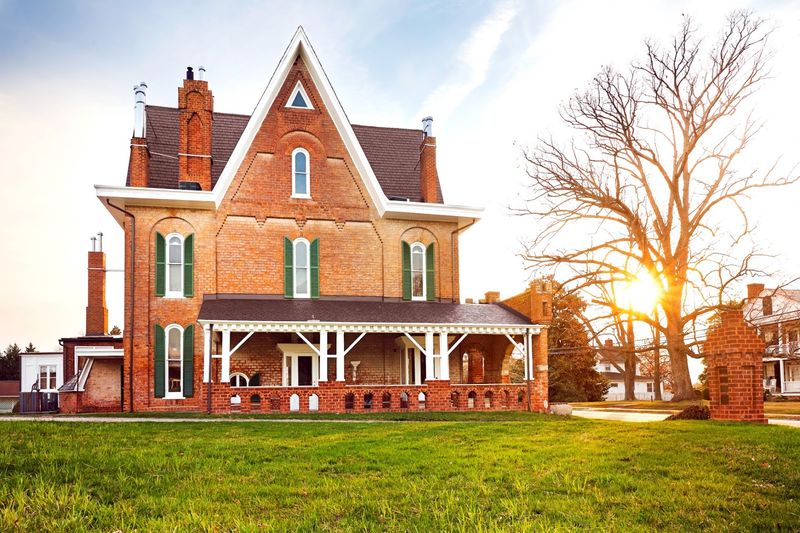
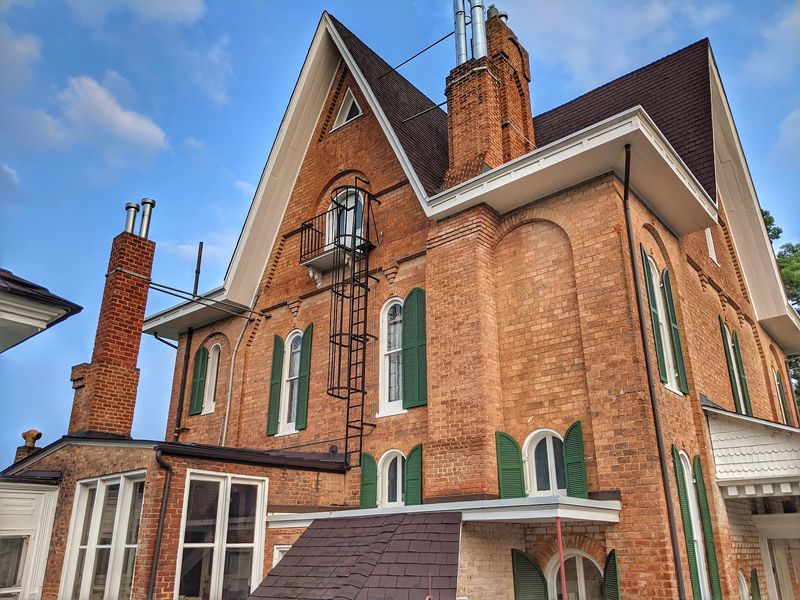
Some old houses sit quietly and keep their secrets. This one has seven levels, 22 rooms, 15 fireplaces, and ceilings so low that tall guests end up ducking like they owe someone money.
Tucked into a small North Carolina town near Winston-Salem, the house has been called weird, whimsical, and a maze. Some people compare it to a famous California mystery house, minus the spooky backstory and plus a lot more personality.
Parts of it are still unrestored, with worn walls standing right beside freshly finished rooms. That contrast gives the place an air of a past that never fully left.
Keep reading to learn where it is, what makes each room so strange, when to go, and how to plan a visit without bumping your head.
A Victorian Puzzle on South Main Street
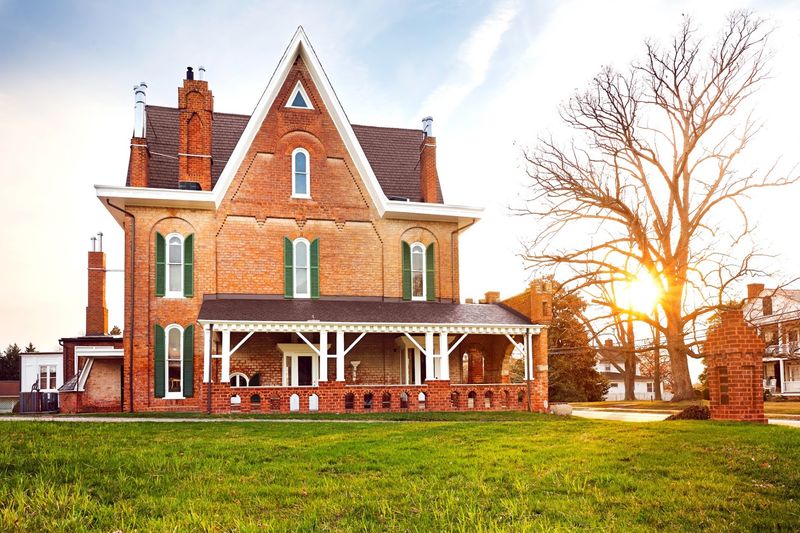
The house goes by a name that sounds like a confession: Körner’s Folly. It stands at 401 S Main St, Kernersville, NC 27284, in the United States.
Kernersville sits about a 10-minute drive from Winston-Salem. Charlotte is roughly an hour to the south, so the trip works well as a day outing.
Today the home operates as a historic house museum. It is listed as a quirky, 19th-century property with 22 period-furnished rooms open for touring.
Calling it a mansion only tells part of the story. The house spreads across seven levels and holds 15 fireplaces, which is a lot of hearths for one address.
It also sits next to the town’s newer welcome and visitor center. That building handles tickets and parking, and it serves as the starting line for every visit.
The museum has earned strong affection from the people who make the trip. A 4.8-star standing across hundreds of opinions suggests the folly in the name is meant with fondness.
So what kind of house earns a nickname like that? The answer starts with the man who designed it.
The Designer Behind the Oddities
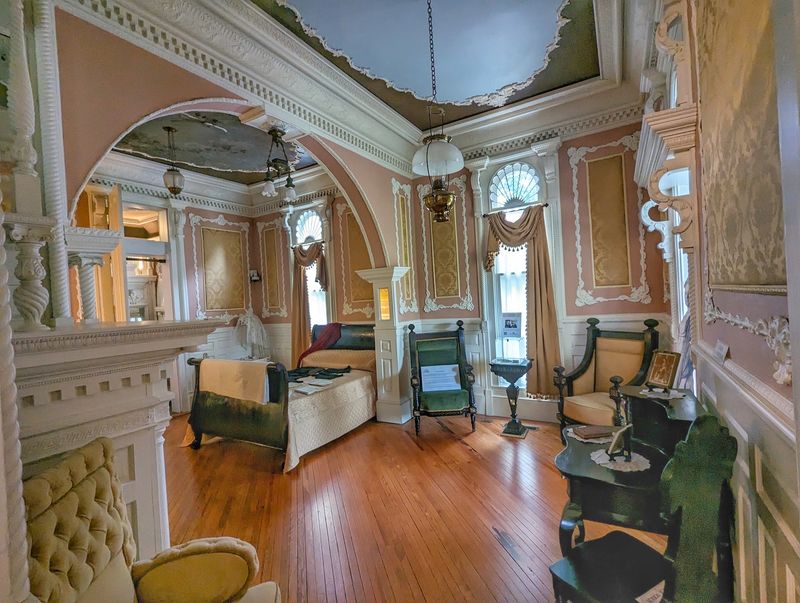
Long before home makeover shows, one man treated his house as a living sample book. The home is tied to one of the first interior designers in the United States.
It worked as a display home at the turn of the last century. Rooms showed off authentic examples of interior design, furnishings, and architecture that clients could see in person.
That purpose explains a lot. Each space looks different because each space was meant to show a different idea.
The design was well ahead of its time for its era. Fans of the Gilded Age tend to find the story especially rewarding.
The house has also changed a great deal since it was first built. Additions, adjustments, and decades of wear all left marks that the restoration team now works to sort out.
Comparisons to the Winchester Mystery House come up often. The key difference is motive, since this home was built out of whimsy rather than any wish to calm restless spirits.
Odd, yes. Gloomy, not at all.
That playful spirit becomes obvious the moment the tour heads indoors.
Rooms That Refuse to Match
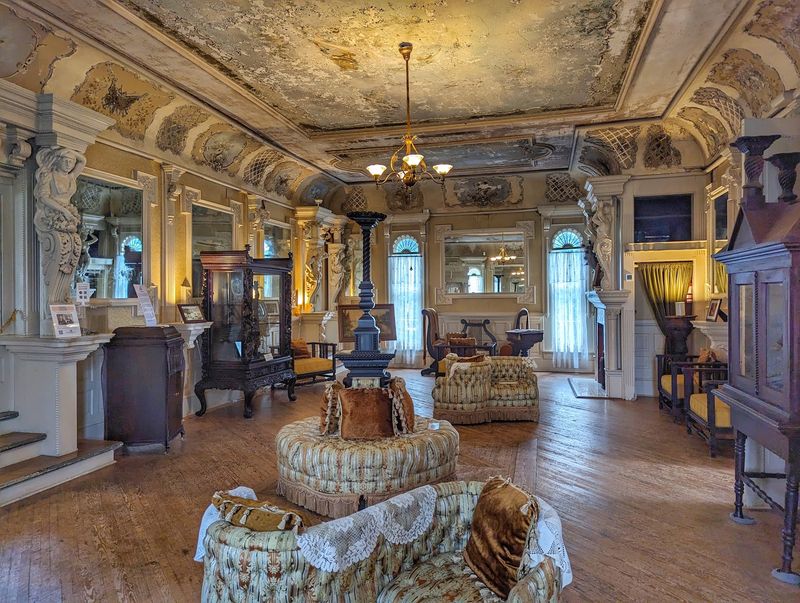
Expect every doorway to open onto a surprise. Unique rooms are the single most talked-about feature of the house.
The 22 rooms come furnished in period style. Ceiling murals, detailed woodwork, and vintage furniture fill the spaces.
Woodworkers in particular tend to linger. The craftsmanship in the trim and paneling rewards a slow look.
Each room has an explanatory card that offers context. Even so, there are layers and layers of detail, and a card can only cover so much.
Old technology gets attention too. Guests often find themselves studying how things were put together rather than just admiring the finishes.
That hands-on curiosity wins over skeptics. People dragged along by a partner frequently end up spending just as long as the history fan who planned the trip.
Teenagers are not immune either. Even a 16-year-old can walk out recommending the place, which may be the strongest endorsement any museum can earn.
The furniture is only half the adventure, though. Getting from one room to the next is its own puzzle.
Low Ceilings and Twisting Stairs
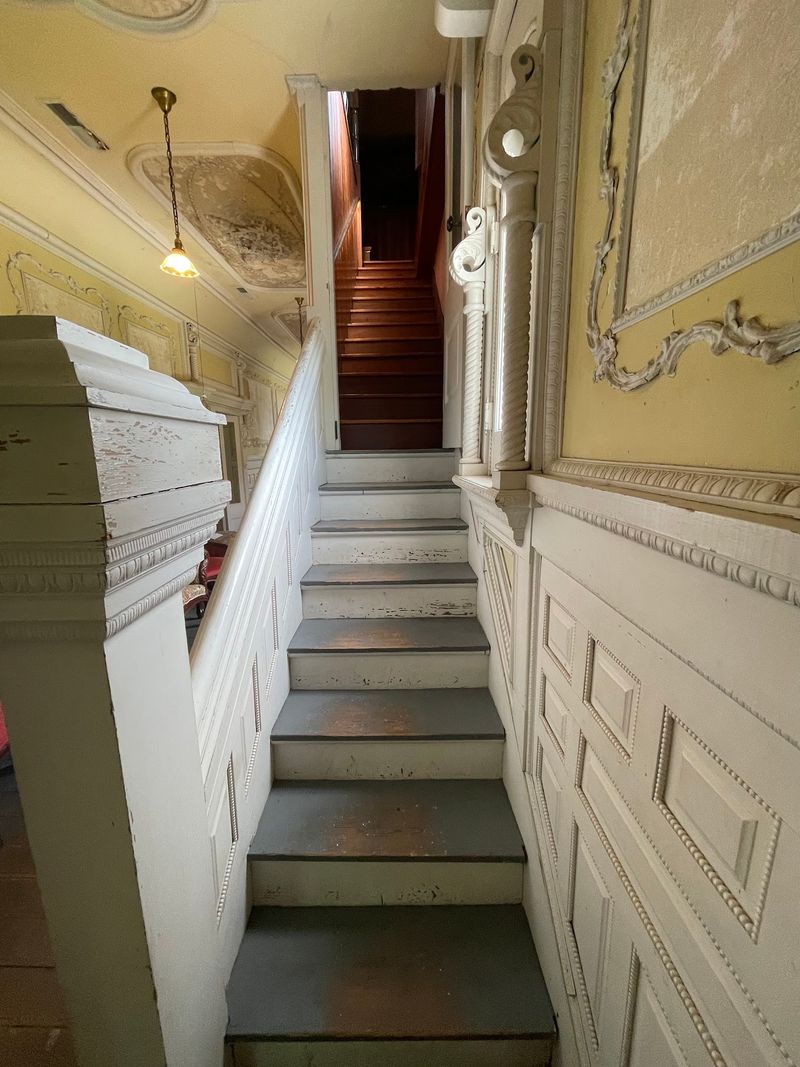
Tall guests, consider this a friendly warning. Some rooms are short enough that standing up straight is not an option.
The children’s rooms have notably low ceilings. A tight back staircase adds to the squeeze.
Narrow hallways and doorsteps appear throughout. The layout feels like a maze, full of intriguing avenues that twist in unexpected directions.
Stairs come up constantly in conversations about the house. With seven levels to cover, there is a lot of climbing.
People who feel claustrophobic may struggle in certain spots. The house is also not handicapped accessible because of the stairs.
Families should plan ahead as well. Strollers can be left on the porch by the entrance, and small children need close watching in the tight spaces.
Some parents swap off with another caregiver. That way each adult gets time to actually read the information in each room.
None of it is unmanageable for most guests. It is simply part of the charm, and part of why the place feels so unlike a typical house tour.
A Tiny Theater Under the Roof
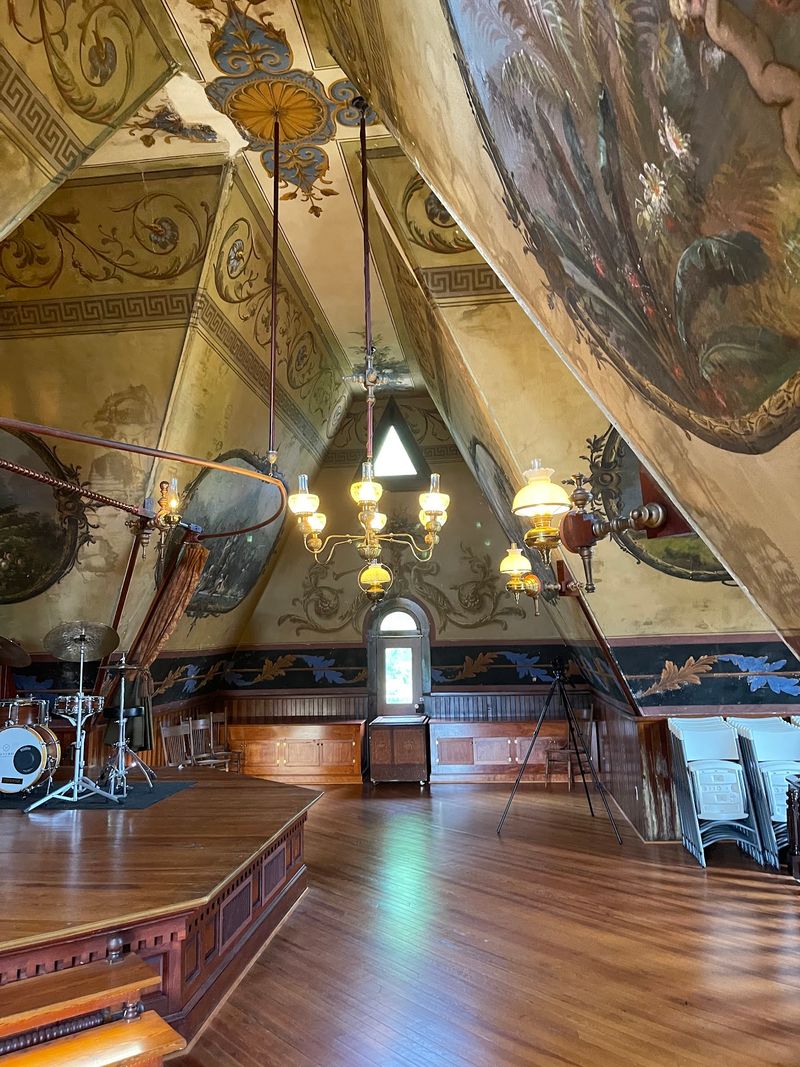
Here is a fun fact to share at dinner. The house holds what is described as the first little theater in the United States.
The tour covers three main floors open to the public. The first two served as living quarters.
The third floor is home to the theater. It turns the top of the house into a stage instead of a storage attic.
That detail says plenty about the household. This was a home built for performance and display, not quiet living.
Reaching the theater means climbing those famous stairs. Most guests agree the effort pays off.
The space also shows why the house earned its nickname. Few families of that era would have squeezed a theater into the upper reaches of their home.
Curtain up, ceiling low. The show really does go on here.
Restoration in Plain Sight
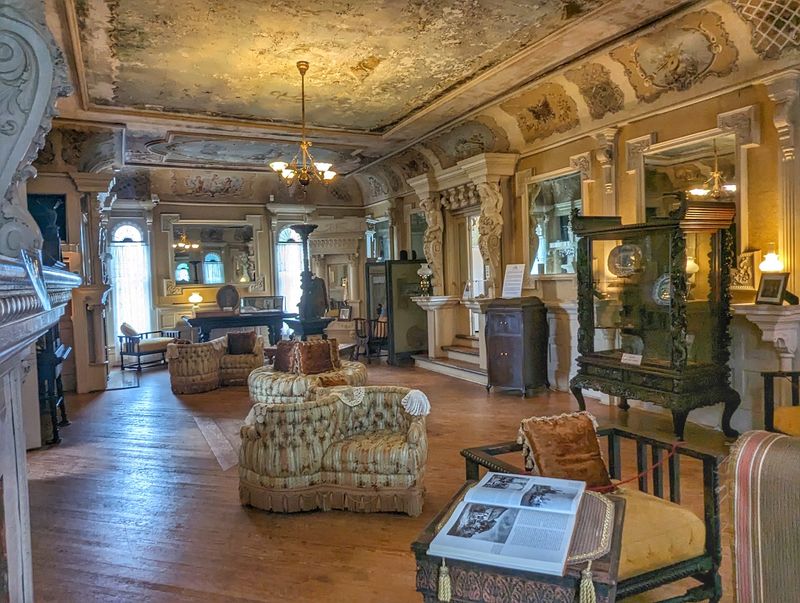
The crumbling part of the story is not a myth. Some rooms remain in their unrestored state, standing beside spaces that have gone through painstaking restoration.
Seeing both side by side is one of the most interesting parts of the visit. It shows exactly how much work goes into bringing a room back.
Preservation is ongoing. A few rooms were completed in 2022 and 2025, and renovation work from 2021 is also finished.
That steady progress means the house keeps changing. Rooms that looked one way years ago may look quite different now.
Return trips are common for that reason. People who toured long ago often find the experience feels fresh again.
Support for the house continues through members and volunteers. Their dedication helps protect what many consider an architectural treasure.
A house that is still being rescued has a certain pull. Every visit captures it at a slightly different chapter.
Holiday Magic and Special Events
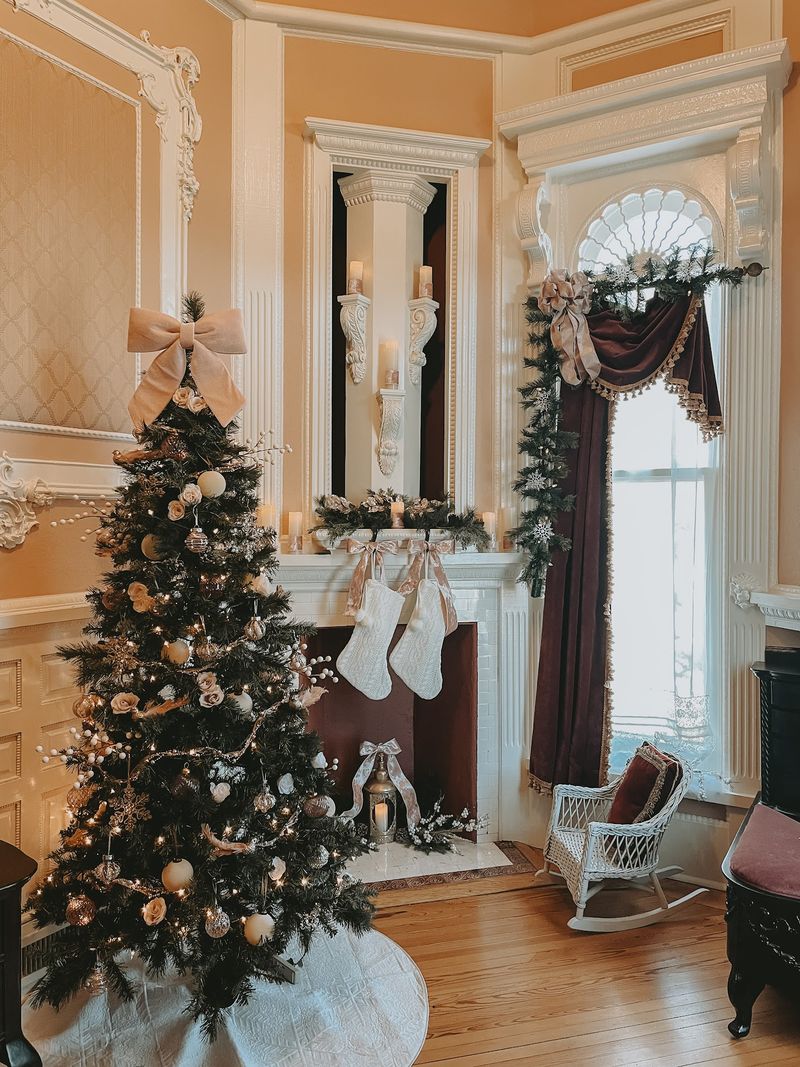
December may be the house’s best season. At Christmas each room is decorated differently, inspired by a work of art.
The displays change every year. Some guests even turn the trip into an annual New Year tradition.
People who have toured in summer often call the holiday version a whole new experience. The decorations add a festive layer to an already unusual house.
The calendar goes beyond winter. The museum hosts a flower decor weekend, an Oktoberfest, family and scout days, and free historic presentations.
Kids can join a scavenger hunt during the tour. It gives younger guests a reason to look closely at every corner.
Staff earn steady praise for being knowledgeable, helpful, and gracious. Groups can book guided tours, with large parties split between guides.
One church group of 18 spent about 1.5 hours inside with two guides. Self-guided visits are also available for those who prefer their own pace.
The gift shop is worth a stop for creative gifts before heading out.
Planning the Trip and a Fond Verdict
A little planning goes a long way here. The museum is open Tuesday through Saturday from 10 AM to 4 PM and Sunday from 12 to 4 PM.
It is closed on Mondays. Self-guided tours begin up until 3 PM, one hour before closing.
Tickets were once listed at $12 for adults, though prices may have changed. Buying ahead is smart, since the house gets tight with large groups.
Park at the visitor center next door, not at the house itself. GPS may lead straight to the mansion, so watch for the welcome center.
Parking is free, though it can fill up. Purchase tickets there and walk over.
Start with the 10-minute history video at the visitor center. It makes the rooms easier to appreciate.
So is it worth the trip? For history fans, architecture lovers, and anyone who enjoys the delightfully strange, the answer leans firmly yes.
Just mind your head on the way up.
Enjoyed this story?
Add Fast Food Club as a preferred source to see more of our reporting on Google.