


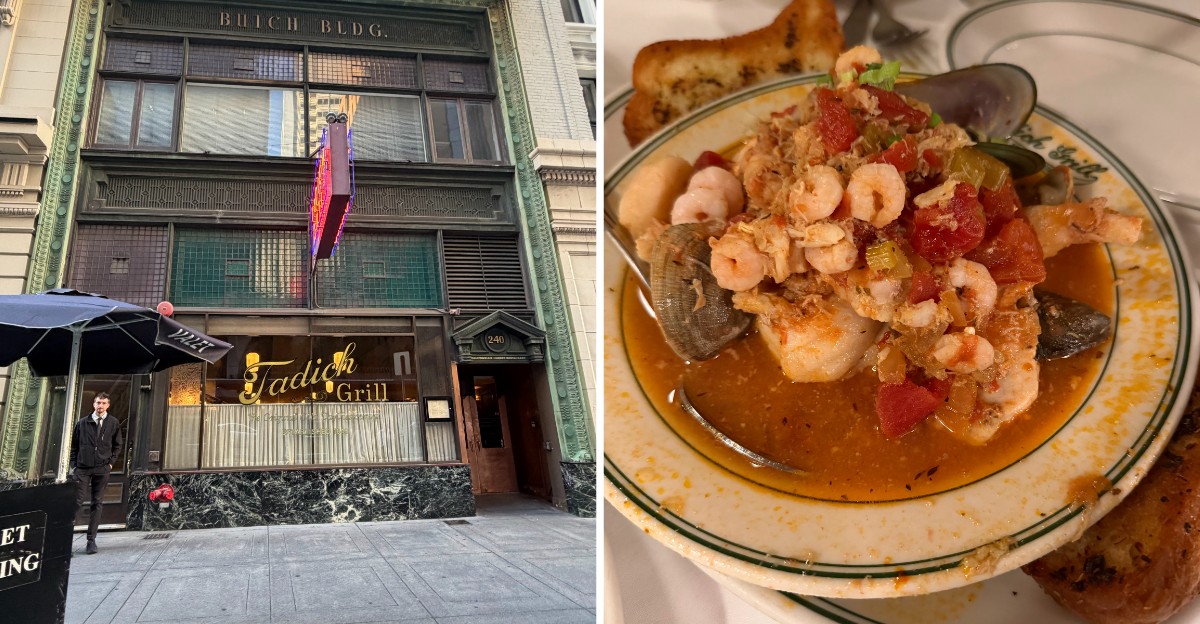
Some San Francisco restaurants chase trends, and one downtown dining room has spent generations politely ignoring them. Its story began with a simple coffee stand near the waterfront during the Gold Rush, and it has outlasted earthquakes, fires, and more economic ups and downs than anyone can count.
Today it still sends out the city’s signature seafood stew to diners perched along a long wooden counter, served by staff in crisp white jackets. Keep reading to learn where this living piece of history sits, how it got there, why the cioppino keeps people coming back, and exactly what to know before grabbing a seat.
A Financial District Address With Gold Rush Roots
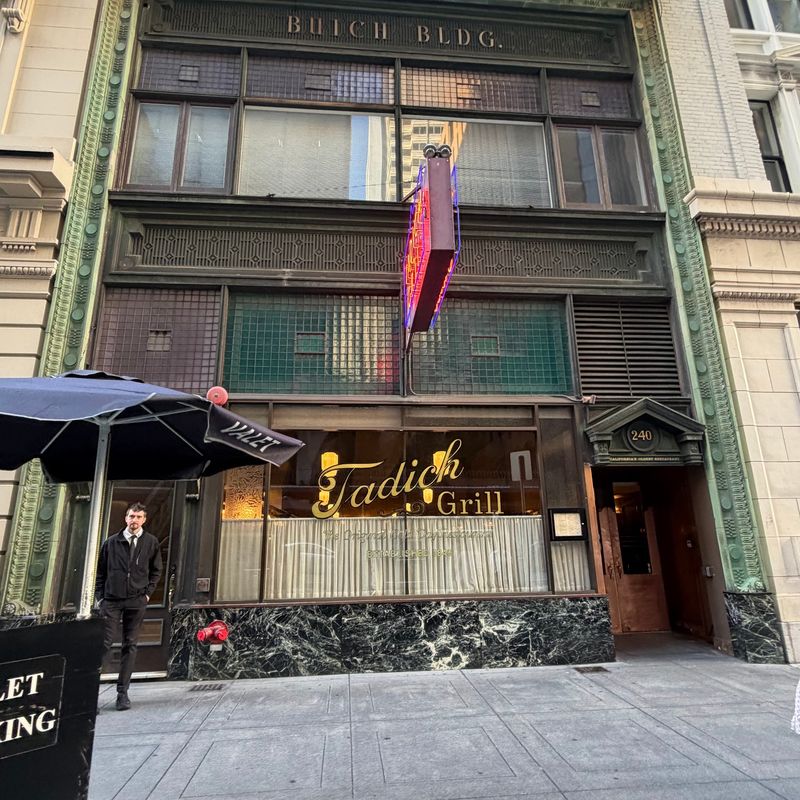
Tucked among the office towers of downtown, one storefront has been quietly outlasting nearly everything around it. Tadich Grill sits at 240 California St, San Francisco, CA 94111, in the heart of the Financial District of California, United States.
The restaurant is a seafood house first and foremost. It is widely considered the oldest continuously operating restaurant in California, which is a big claim for a place that keeps such a low-key front door.
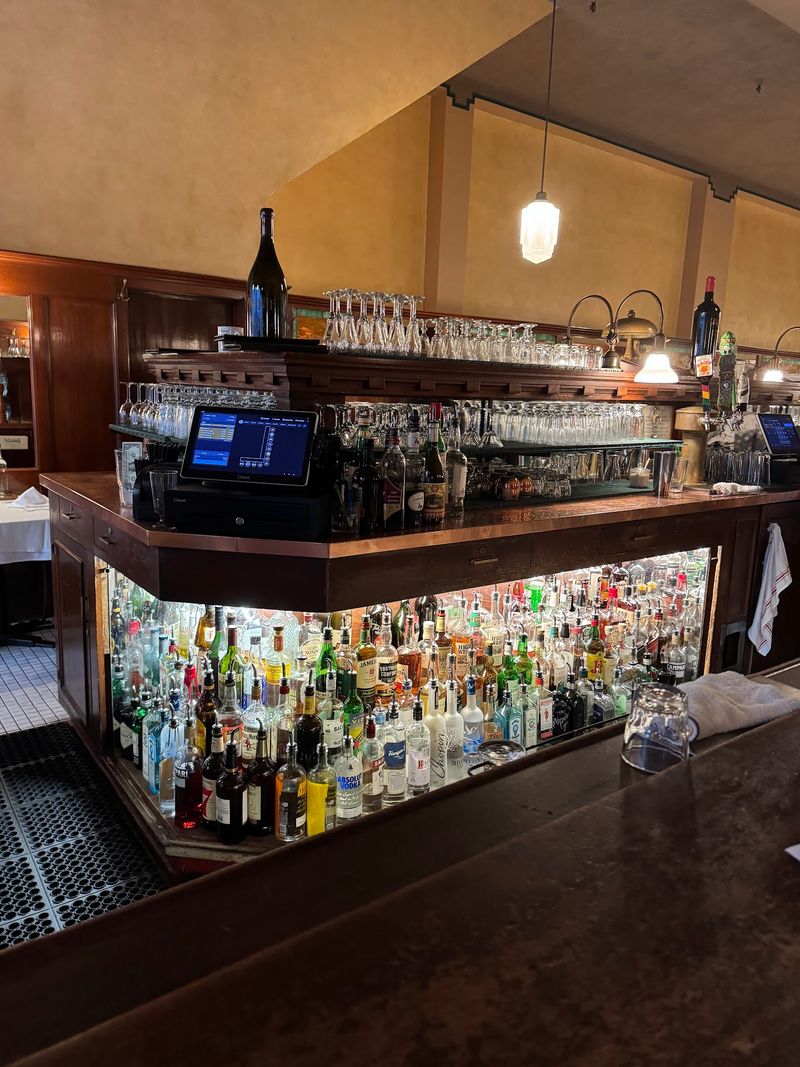
Inside, the setting leans fully into its past. There are old-school counters, wood decor, cozy little tables, and booths along the room.
The menu covers a lot of ground. Seafood takes the spotlight, but stews, casseroles, and classic meat dishes have been part of the lineup for close to a century.
Lunch crowds from nearby offices mix with tourists and longtime locals. Some families have been coming for decades, and it is not unusual for a parent to recommend the place to a grown child based on a meal from 40 years ago.
The dining room is on the smaller side, so it fills up fast. That cozy size is part of what keeps the mood lively instead of formal.
So how did a waterfront coffee stand end up as a downtown landmark? The answer involves a tent, a name change, and a whole lot of moving trucks.
From Coffee Tent to City Institution
Back in 1849, three Croatian immigrants pitched a simple tent near the San Francisco waterfront. They called it a coffee stand, and nobody could have guessed what it would become.
Eighteen years later, John Tadich bought the small eatery. He put his name on it, and that name has stuck ever since.
Then came the 1906 earthquake. The restaurant relocated afterward, and following a few more moves, it eventually settled into its current home on California Street.
Ownership changed hands again in 1934. Tom Buich and his brothers purchased the restaurant from Tadich, and the Buich family still runs it today.
That kind of family continuity is rare in any city. In a place where rents rise and restaurants come and go, it is practically a local legend.
The restaurant has weathered fires, recessions, and even a pandemic. Recently, it marked its 176th year in business, a milestone very few kitchens anywhere can claim.
Here is a fun bonus for history fans. The front page of the menu includes a short history of the restaurant, and it makes for a quick read while waiting to order.
Of course, a long résumé only matters if the food holds up. And at this address, one bowl in particular carries most of the reputation.
The Cioppino Everyone Comes For
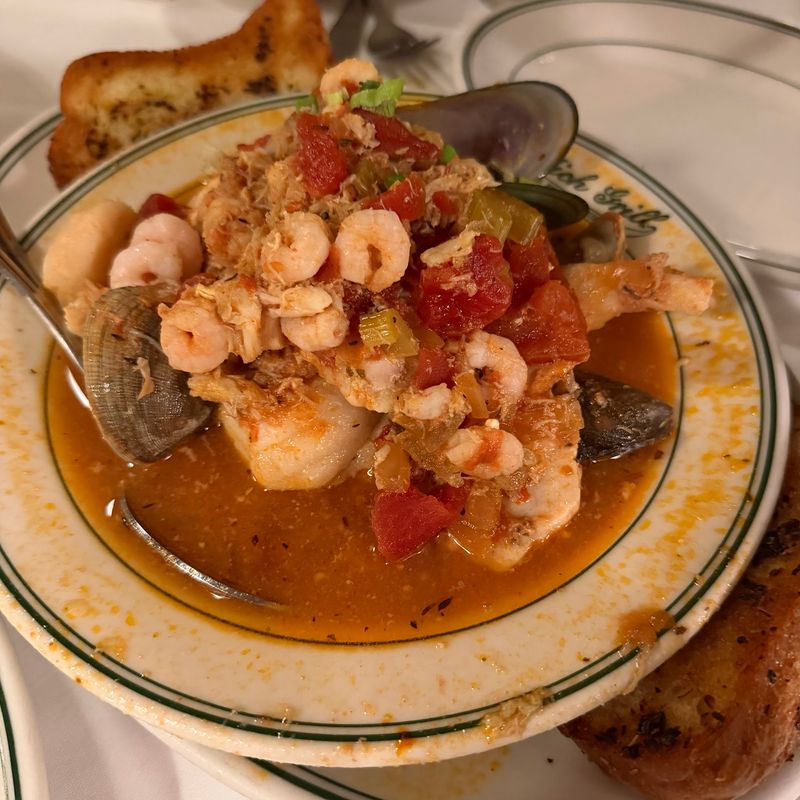
Cioppino is San Francisco’s very own seafood stew, and this kitchen treats it like the house treasure. It is easily the most talked-about dish on the menu, by a wide margin.
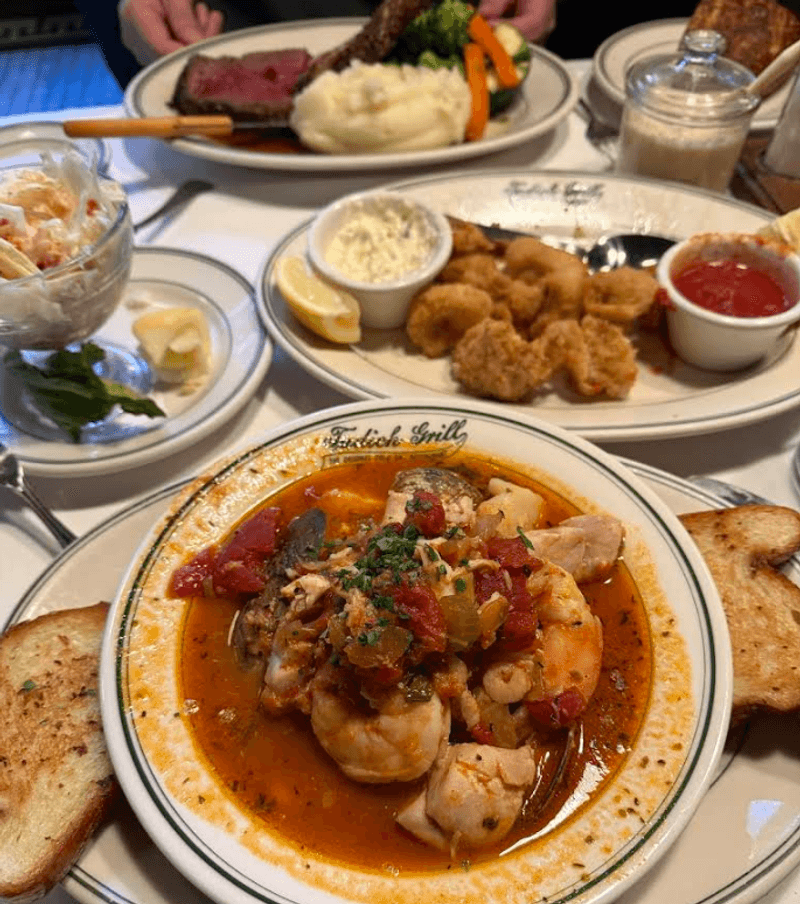
The bowl arrives generously filled. Scallops, clams, shrimp, mussels, white fish, and more share space in a rich, tomato-based broth.
Portions are famously large. Many diners describe it as a gigantic serving, so arriving hungry is a smart strategy.
Balance is a big part of its appeal. The tomato sauce does not overpower the seafood, which stands out for both quality and quantity.
Plenty of first-timers walk in with a cioppino-or-bust mindset. Plenty of regulars confess they promise themselves to order something new, then end up with the same bowl yet again.
A popular habit is pairing the stew with the complimentary bread served at the table. Dipping into that broth is practically a house ritual.
It is fair to say the dish has earned its fame honestly. Few things last this long on a menu without good reason.
Still, a great bowl tastes even better with a great view of the action. That brings us to the best seat in the house, which might surprise you.
Life Along the Long Wooden Counter
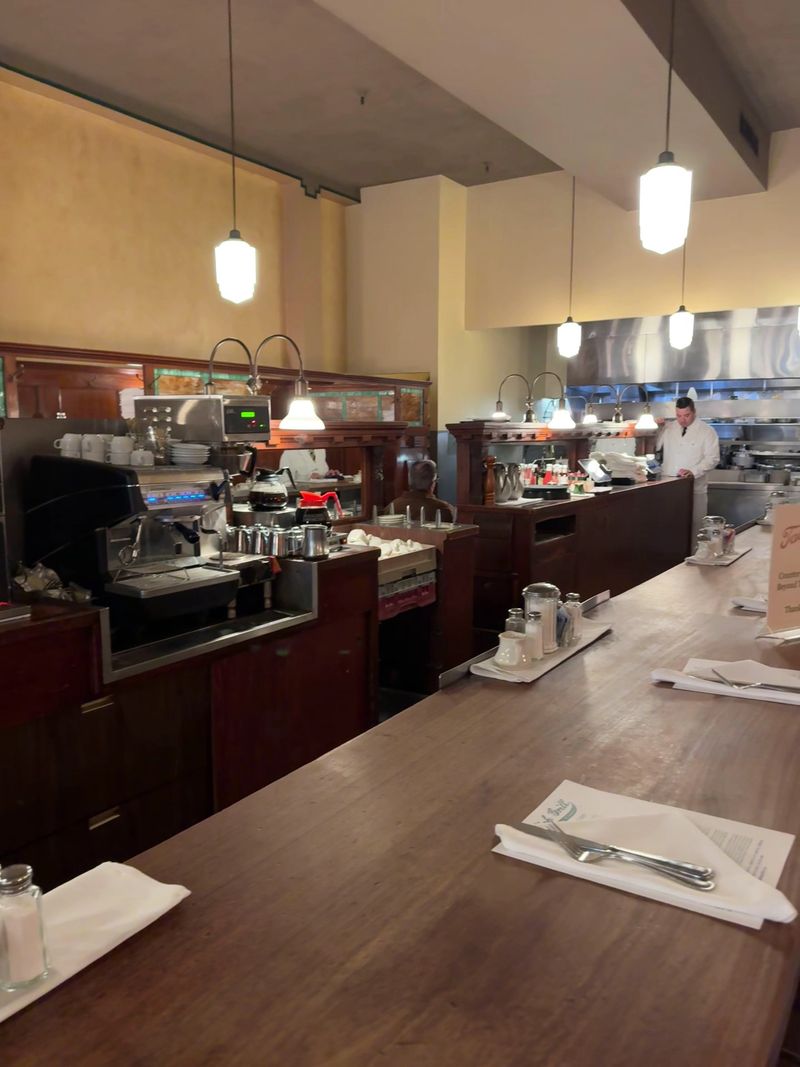
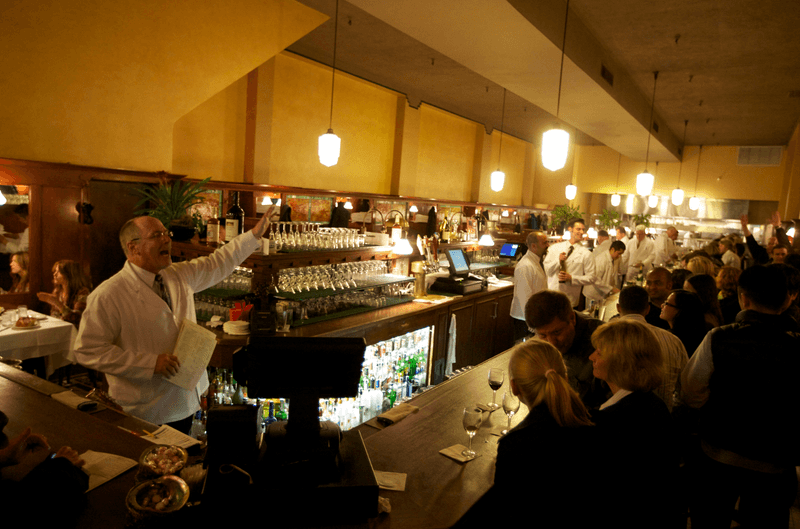
Forget the corner booth for a moment. For many fans, the real prize is a stool at the long wooden counter.
Bar seating is one of the most frequently praised parts of the restaurant. It offers a front-row view of the servers moving through their routines with impressive speed.
Solo diners and pairs do especially well here. Seasoned regulars suggest that first-timers sit at the counter and strike up a conversation with their server.
That tip comes with a real payoff. Many of the staff have worked at the restaurant for decades and can share stories about its past, the city, or the menu itself.
The counter also works as a handy backup plan. Tables usually require a reservation, while counter seats can open up with a short wait.
Early arrivals sometimes get invited to sit at the counter before their table is ready. Counter service is quick, and many guests end up happy they took the seat.
There is something charming about eating shoulder to shoulder with strangers in a room this old. It feels less like a fancy dinner and more like joining a long-running neighborhood tradition.
Speaking of the people behind that counter, they deserve a section of their own.
White Jackets and Old-School Hospitality
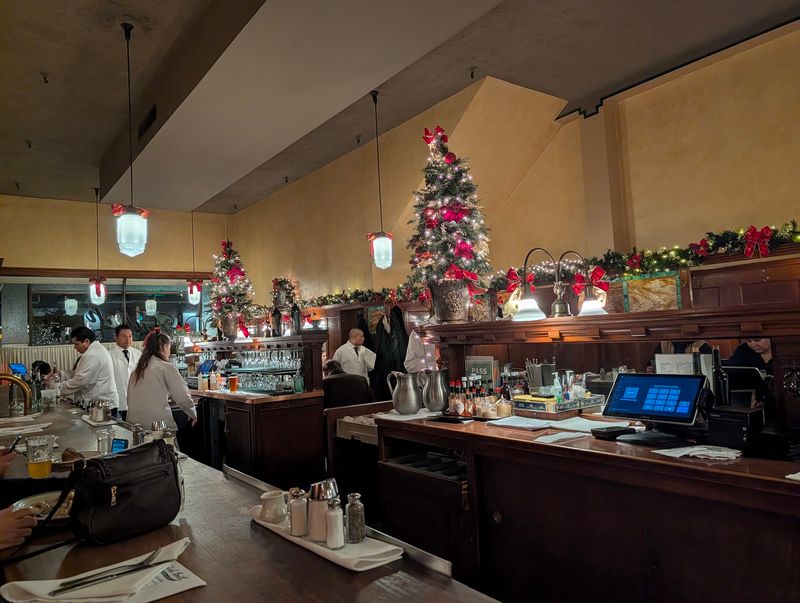
Crisp white jackets are the uniform here, and they are not a costume. They are part of a polished service style that newer restaurants rarely attempt.
Servers earn steady praise for being attentive without hovering. The pace tends to be well judged, neither slow nor rushed.
The menu is long, and some find it a little overwhelming at first. Staff are known for walking guests through the options and helping them choose.
Small gestures stand out. One server brought a cup of each version of a soup when a table could not decide, and another delivered extra sauce once a plate had been cleaned.
Hospitality goes beyond the order pad. Waiters often entertain, share recommendations, and make newcomers feel like regulars by the end of the meal.
Complimentary bread and butter arrive at the table too. It is a touch that long-standing restaurants keep alive while many newer spots have dropped it.
White tablecloths complete the classic look. Even so, nobody needs to feel stiff or formal while sitting down to eat.
All that tradition raises a fair question about the menu. Is it just a cioppino show, or is there more worth exploring?
A Mesquite Broiler and a Menu Built for Exploring
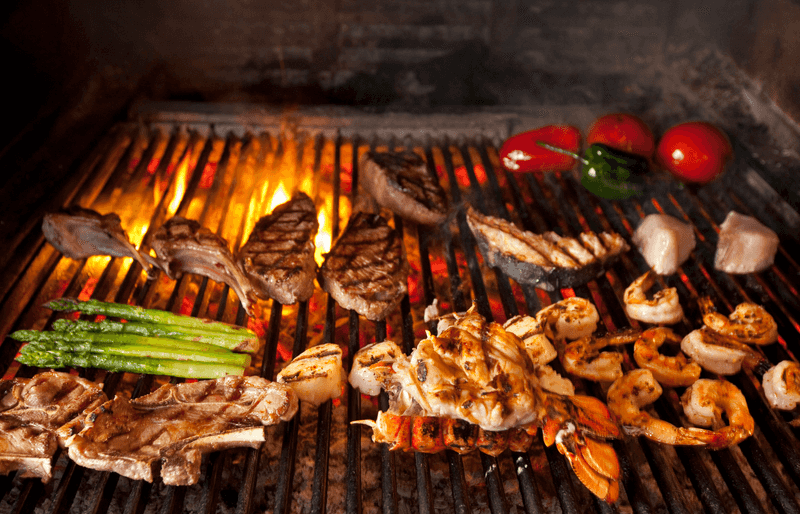
Behind the scenes, a mesquite charcoal broiler does much of the heavy lifting. Fresh local seafood is still cooked over it, just as it has been for many years.
The menu stretches well beyond a single signature dish. Seafood leads the way, while stews, casseroles, and classic meat options round things out for anyone who prefers land over sea.
Variety is one reason the place appeals to adventurous eaters. Many consider it an ideal spot to try seafood dishes they have never ordered before.
Some diners even order unusual items on purpose. More than a few walk away calling it one of the best meals in recent memory.
Small groups have an advantage here. Sharing several plates is a popular way to sample more of the menu in one sitting.
Portions run generous across the board. Leftovers are common, and some dishes hold up nicely the next day.
Not every plate lands perfectly for every guest. A few people have found some dishes good rather than exceptional, especially given the price and the restaurant’s stature.
Still, most leave planning a return trip to work through more of the menu. With so many choices, one visit rarely feels like enough.
An Atmosphere That Wears Its Age Proudly
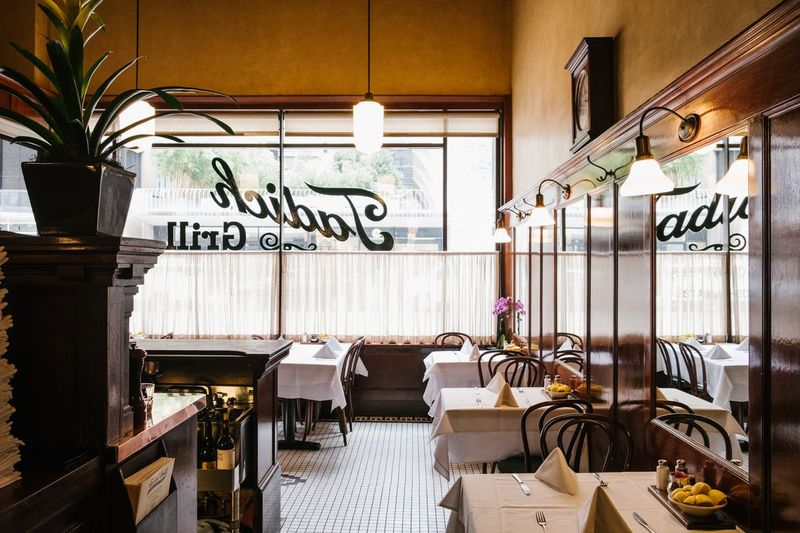
Some restaurants try to look vintage. This one simply is vintage, and it shows in every corner.
The room combines old-school counters, wood decor, booths, and small tables. It has a classic look that many compare to an old New England dining hall.
Crowds keep the energy high. The space is often extremely busy, and the mood stays lively instead of hushed.
The clientele has shifted over the years. Business suits once ruled the booths during lunch deals, and today the dress code leans more toward quarter-zips and slacks.
Smart attire is a reasonable choice. In practice, though, this is a casual bar and grill at heart, so nobody needs to dress up.
Who will enjoy it most? History buffs, seafood lovers, curious travelers, and longtime locals all seem to find something to appreciate.
Couples enjoy the cozy tables, while small groups do well in the booths. Solo diners tend to gravitate toward the counter.
A setting this popular comes with one unavoidable reality. Getting in takes a little planning, and the next section covers exactly how.
Reservations, Waits, and Smart Timing
Popularity has a price, and here it is usually paid in planning. Reservations are strongly recommended, and a table typically requires one.
Weekend spots can book up completely. Some diners have found a fully booked weekend but an open Monday, so flexible dates help.
Online booking is available. It is a simple way to lock in a dinner time before showing up.
Counter seats offer another path. Seating is limited, so a short wait for a spot at the bar is possible.
Lunch is a solid option for anyone working around a busy schedule. A weekday noon meal fits nicely into a downtown visit.
Monday evenings can also work well. Groups have been seated in booths on those nights with service that stays well paced.
Arriving a little early is fine too. Guests who show up ahead of their reservation are sometimes offered counter seats while they wait.
Once a seat is secured, there are just a few more practical details to sort out. Hours and costs come next.
Hours, Costs, and Getting There
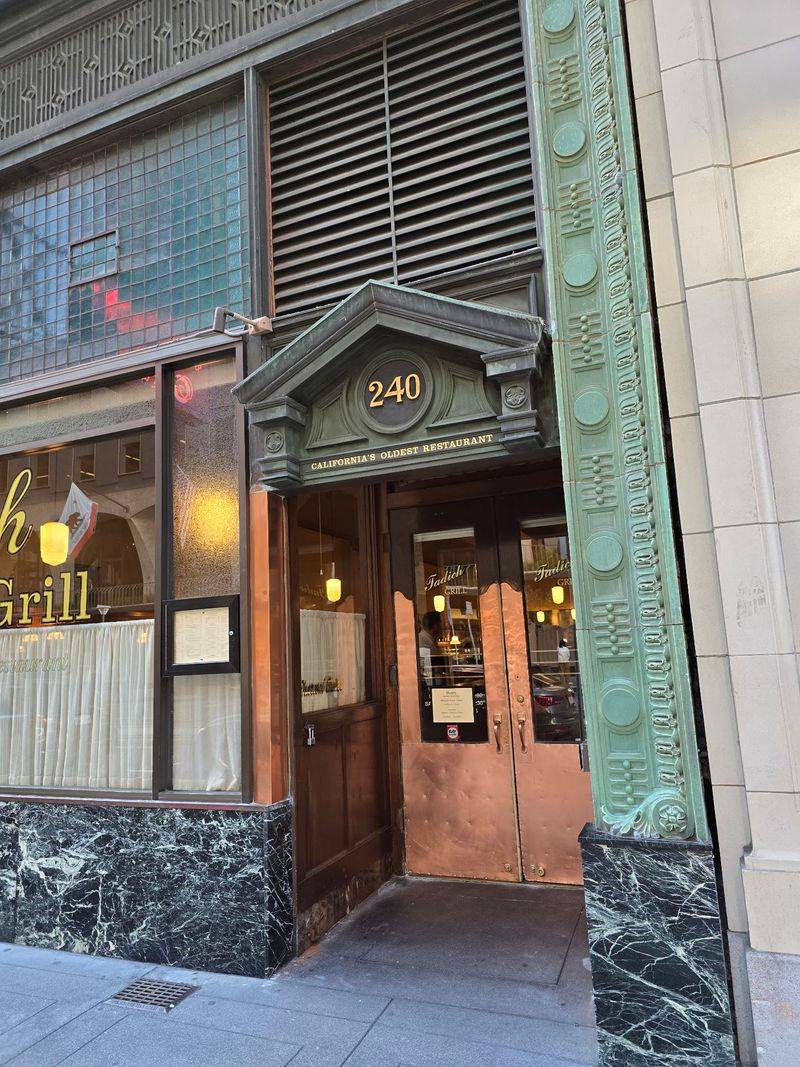
Timing a visit is straightforward once the schedule is clear. The restaurant opens at 11 AM and closes at 9 PM Monday through Friday.
Saturday runs on a shorter schedule, from 4 PM to 9 PM. Sunday is a day off, so the doors stay closed.
Budget expectations matter here. Seafood dishes run on the pricey side, though many diners say the meal is worth it.
There are also plenty of options beyond the priciest seafood plates. That gives some room to tailor the bill.
Generous portions help stretch the value. Sharing plates among a small group is both economical and a fun way to taste more.
Parking downtown can be tricky. Valet parking is available, which is a real help in a city famous for tight streets.
The California Street location keeps it easy to reach for anyone already exploring the Financial District. It works well as a lunch stop or a dinner destination after a day in the city.
With logistics handled, only one question remains. Is this landmark worth the effort?
Why the Bowl Keeps Calling People Back
More than 3,000 people have weighed in on this place, and it holds a 4.5-star average. For a restaurant this busy and this old, that kind of consistency says plenty.
The appeal is easy to explain. It offers history you can sit inside, a menu with real range, and a signature stew that has become a San Francisco rite of passage.
Not every plate will win over every guest. Some find certain dishes simply good, and prices are on the higher side.
Even so, the overall experience tends to leave people happy. Many describe it as a rare mix of solid food, a classic setting, and genuine hospitality.
First-timers should aim for the counter, chat with a veteran server, and read the menu’s history page. Regulars will likely just order the cioppino and call it a day.
Families keep passing the recommendation down through generations. That alone shows how deeply the place is woven into the city’s story.
A coffee tent from 1849 grew into a downtown institution that still fills its stools every day. For anyone curious about how San Francisco once ate, and still does, a seat at that long wooden counter is a fine place to start.
Enjoyed this story?
Add Fast Food Club as a preferred source to see more of our reporting on Google.