


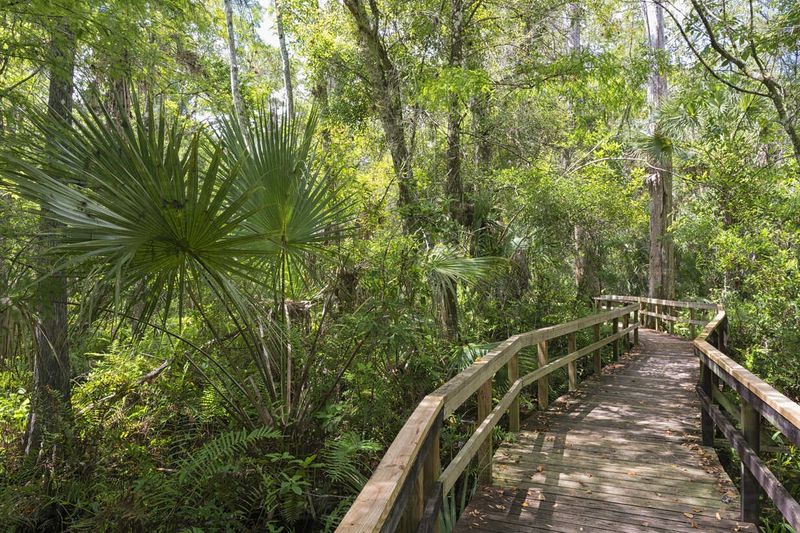
Southwest Florida still hides a corner where the loudest thing around is a heron lifting off a pond. Down near the tiny community of Copeland, a swamp forest stretches for miles with almost nobody in it.
Alligators nap beside the trails, mother gators guard their babies, and deer step out onto a bumpy dirt road. Florida panthers and black bears live here too, though spotting one takes real luck.
The place costs only a few dollars to enter, yet many drivers on US 41 roll right past it. Keep reading to learn where it is, what makes its forest unlike any other on Earth, which trails lead to a cabin crowded with gators, and how to prepare for the mosquitoes.
By the end, you will know exactly how to plan a quiet day in raw, old Florida.
A Wild Address on Coast Line Drive
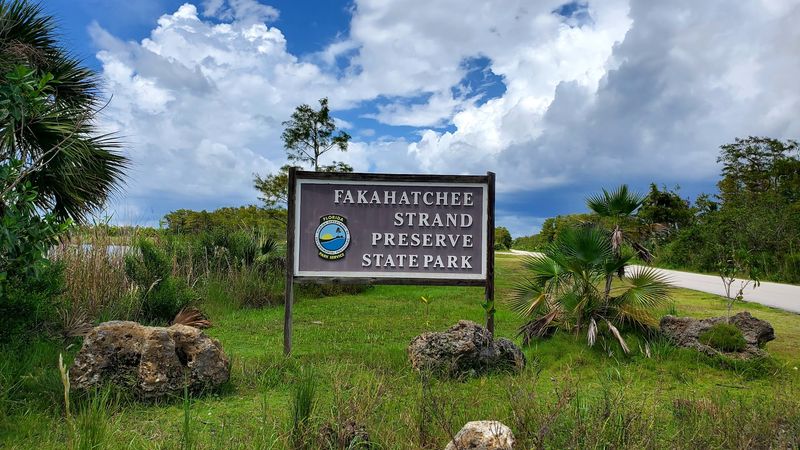
Some state parks announce themselves with big signs and busy parking lots, but this one stays quiet. Fakahatchee Strand Preserve State Park sits at 137 Coast Line Dr, Copeland, FL 34137, in the southwest corner of Florida, United States.
Copeland is a small spot near Everglades City, and the preserve reaches out from there into a vast forested swamp. Officially, it is a state park, but it works more like a wildlife refuge than a playground.
There are no beaches here and no play areas for kids. Instead, the land is home to panthers, deer, black bears, migratory birds, and plenty of alligators.
Fakahatchee is often called the largest state preserve in Florida. Staff have also described it as the largest linear state park, since it stretches out in a long, narrow band of swamp.
That shape matters for planning. Different sections of the park have different entry points, trails, and features, so it helps to know which part you want to explore.
Gates open daily at 8 am and close at 8 pm, every day of the week. That gives early risers and evening explorers plenty of room to find the quiet hours, and quiet is something this preserve has in generous supply.
The Only Forest of Its Kind
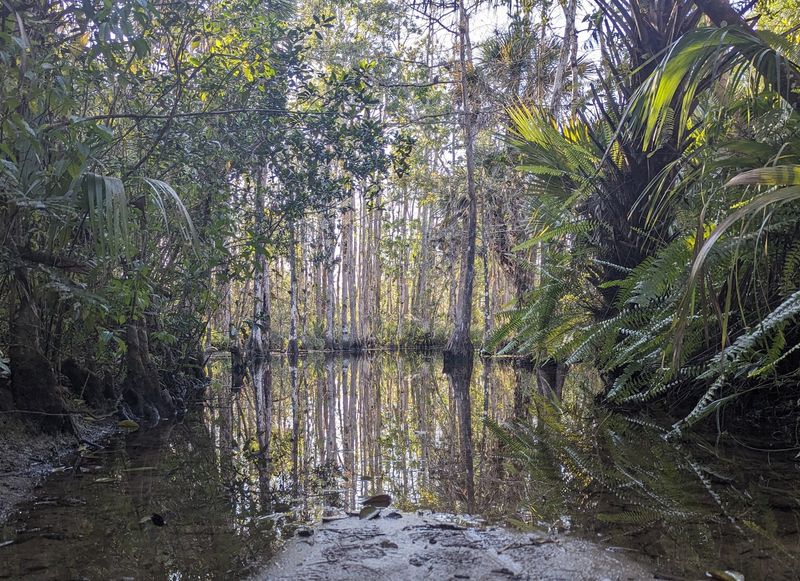
Here is a fact worth bringing up at the next family dinner. Fakahatchee is known as the only bald cypress and royal palm swamp forest in the world.
Bald cypress is usually a tree of cooler, temperate places. Royal palms belong to the tropics.
In this strand, the two grow side by side and share the same canopy.
Scientists call a meeting zone like this an ecotone. No other spot on the planet is known to have this exact mix of trees.
The word strand describes a long, slow-moving channel of swampy forest. Water drains through it gradually, which helps all kinds of plants survive here.
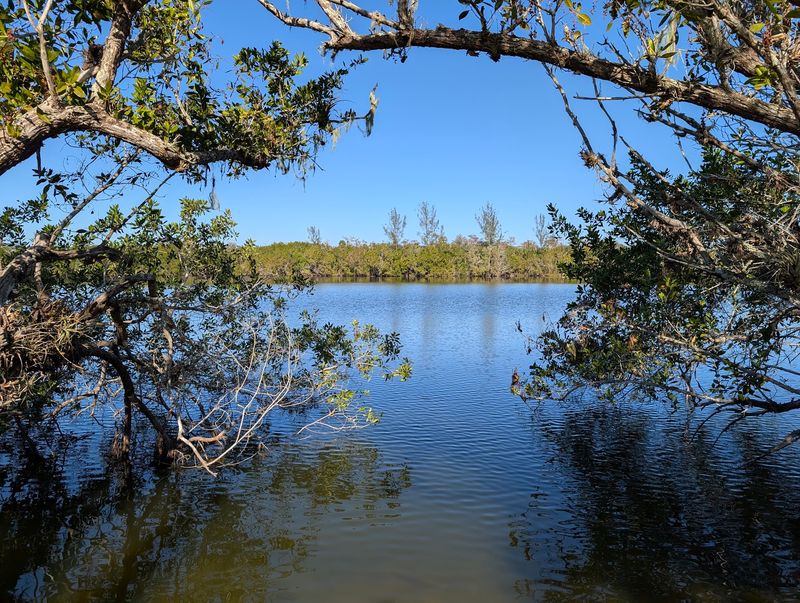
The result is a place that looks like a jungle in many stretches. Mangroves, palms, and small water areas line the roads, giving the whole preserve a deeply untamed character.
Many people come for the gators and leave talking about the trees. Once you know what you are looking at, every palm poking up beside a cypress starts to feel like a small botanical miracle.
Orchids Hiding in Plain Sight
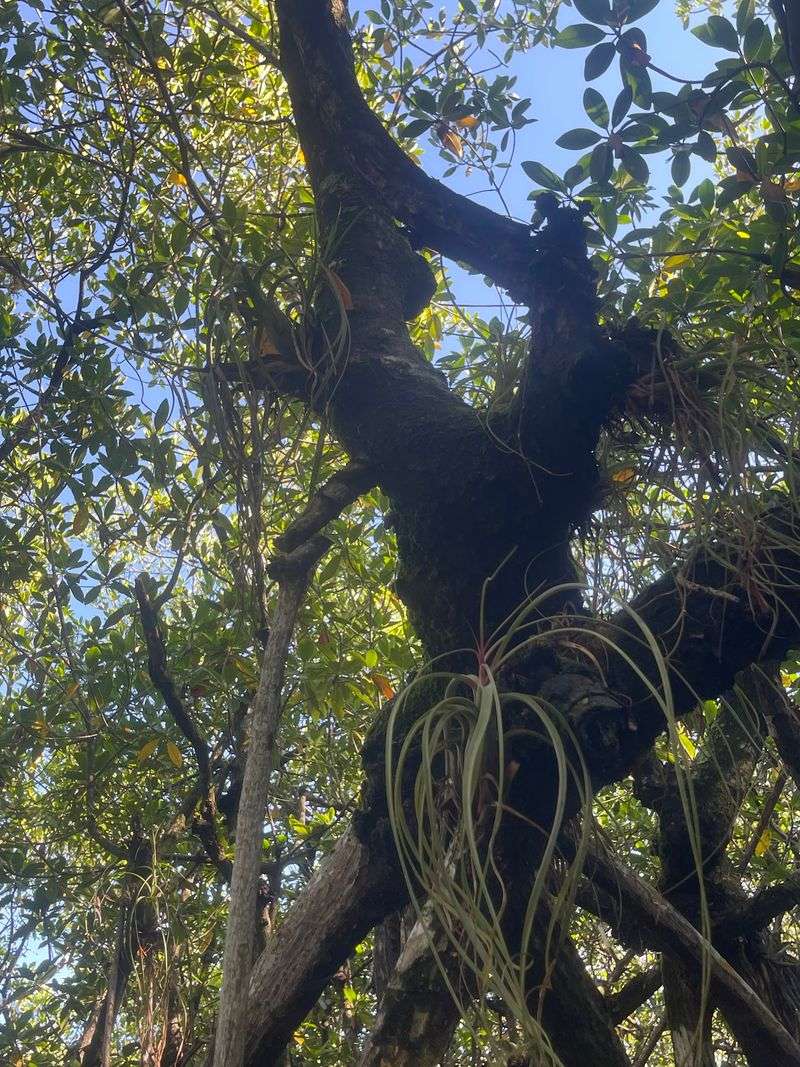
Plant lovers, take note. Fakahatchee holds the highest concentration of native orchids and bromeliads in North America.
More than 47 native orchid species grow here, along with over 30 kinds of bromeliads. Many are Caribbean species that barely reach United States soil at all.
Most of them cling to tree branches and trunks rather than growing in the ground. That means looking up is just as important as watching your step.
Bromeliads often sit in clusters along cypress limbs. Orchids can be far harder to find, since many are small and bloom only at certain times.
A good rule is to slow down and scan the trees carefully. Binoculars help, and so does patience.
These plants are protected, so the right move is to admire them and leave them exactly where they are. Taking a photo is the only souvenir the swamp allows.
For many people, finding even one wild bromeliad up close turns a simple walk into a treasure hunt. The trees here hold more secrets than most visitors ever spot, which is part of the fun.
Big Cypress Bend Boardwalk
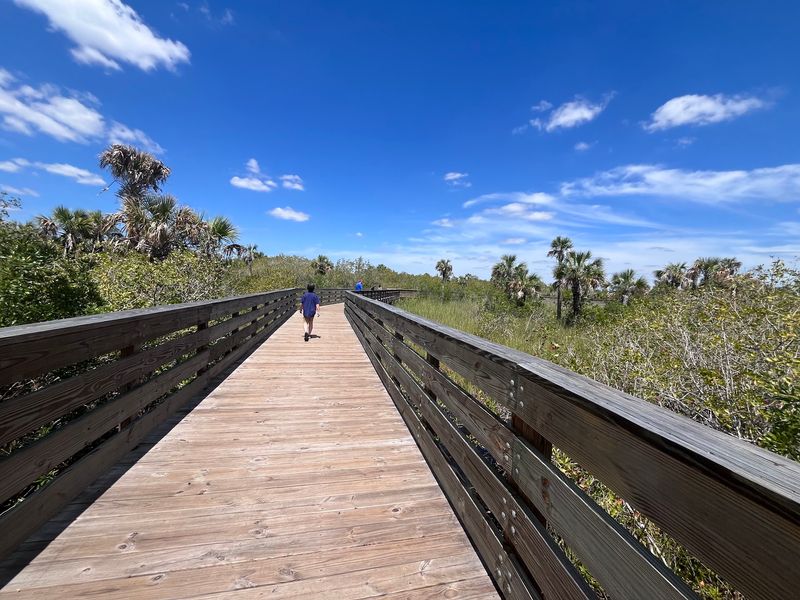
Easy to miss and easy to love, the boardwalk is the friendliest way into the strand. Big Cypress Bend sits a few miles east of the Collier area along US 41.
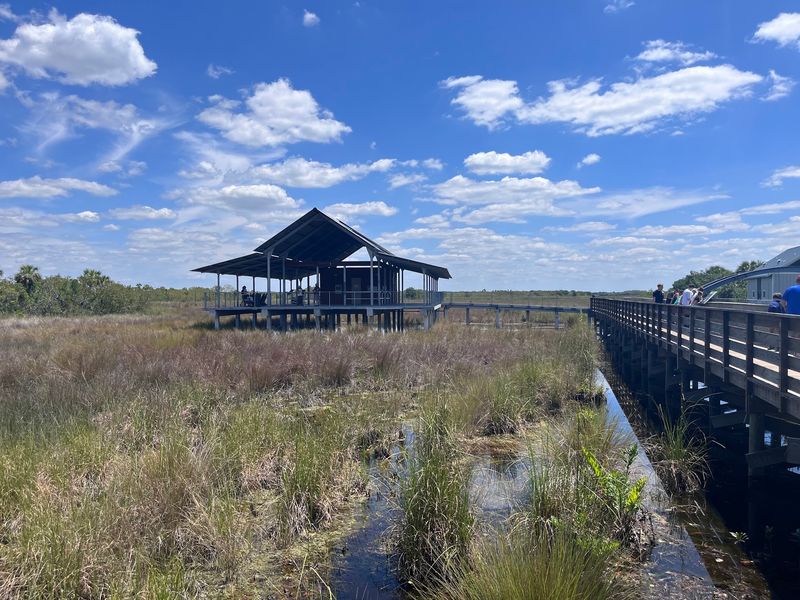
The wooden walkway runs about half a mile into the swamp. Plan on walking roughly a mile round trip to reach the end and come back.
It is flat, short, and simple enough for most people. Families with little ones and anyone who prefers a gentle stroll will find it manageable.
Markers along the way identify trees, plants, birds, and animals common to the area. Educational signs also appear at the shelter, so there is plenty to learn without a guide.
The boardwalk ends near the water, where alligators and birds often gather. Mother gators with several babies have been spotted here.
Volunteers sometimes staff the overlook with hands-on exhibits and pamphlets about the park. Public restrooms near this area are well maintained.
Despite all this, the walkway is rarely crowded. Many travelers zoom by on the highway, leaving the boards wonderfully empty for anyone who takes the turn.
Gators, Gators, and More Gators
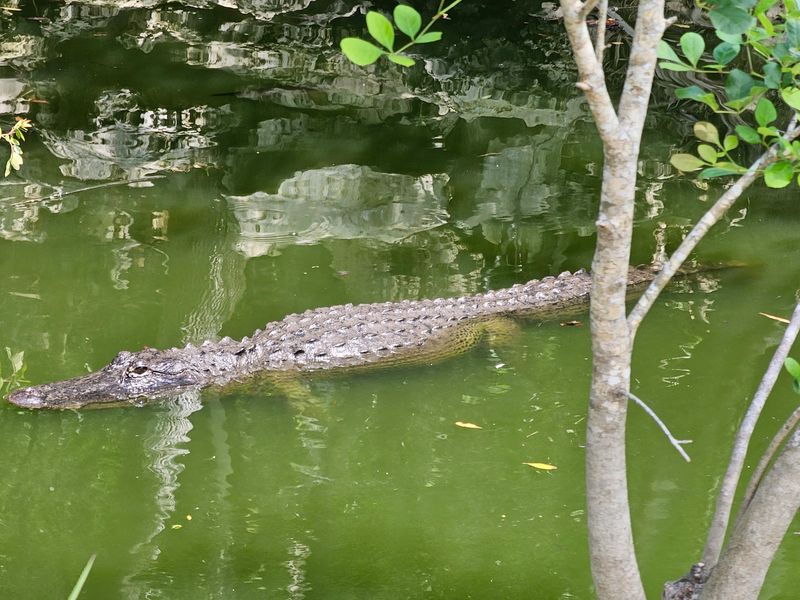
Nobody needs to beg the alligators to show up. They are easily the most talked-about residents of the preserve.
Gators rest in pools deep enough to hold water, lounge in shallows, and sun themselves on grassy patches. Some even stretch out right on the trails.
Mother alligators with five or more babies have been seen along the drive and near the boardwalk. Watching a little crew of hatchlings stick close to mom is a highlight for many.
Canals throughout the area hold both fish and alligators. A small lake near the cabin known as the Fakahatchee Hilton is famously packed with them.
Safety comes first, of course. Keep a respectful distance, never feed wildlife, and watch the path ahead when hiking.
Kids tend to start counting gators and lose track by lunch. That is a pretty good problem to have, and it says a lot about how healthy this swamp really is.
For photographers, a zoom lens is a smart pick. It lets you capture the scaly details without getting too close for comfort.
Panthers, Bears, and Minks, Oh My
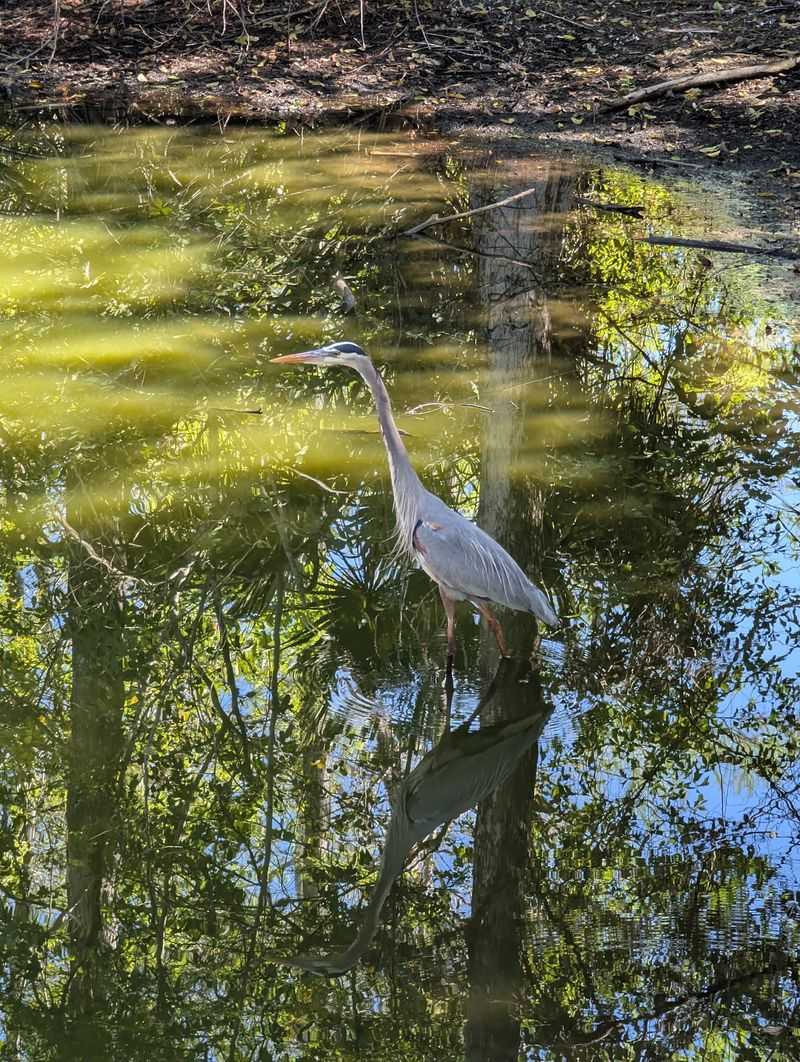
Beyond the gators, the list of residents gets surprisingly long. Florida panthers and black bears both call this swamp home.
Spotting either one is rare, and plenty of people leave hoping for better luck next time. Panthers have been seen here, though, which keeps hopes high.
Deer are far more common. They often step out onto the scenic drive, sometimes in groups of three.
Wild turkeys, rabbits, and turtles show up regularly. The rare Everglades mink lives here too, a small creature that few people ever get to see.
Birdwatchers can look for ibises, egrets, red-shouldered hawks, and red-tailed hawks. Vultures sometimes perch surprisingly close.
Snakes are part of the picture as well. Black snakes and even a baby cottonmouth have been spotted, so stay alert near the water.
The thick forest on both sides of the road makes many animals tricky to find. The best chances come early, right when the gates open, or just before dusk.
Patience pays off in this preserve. The slower you move, the more the swamp seems willing to share.
Janes Memorial Scenic Drive
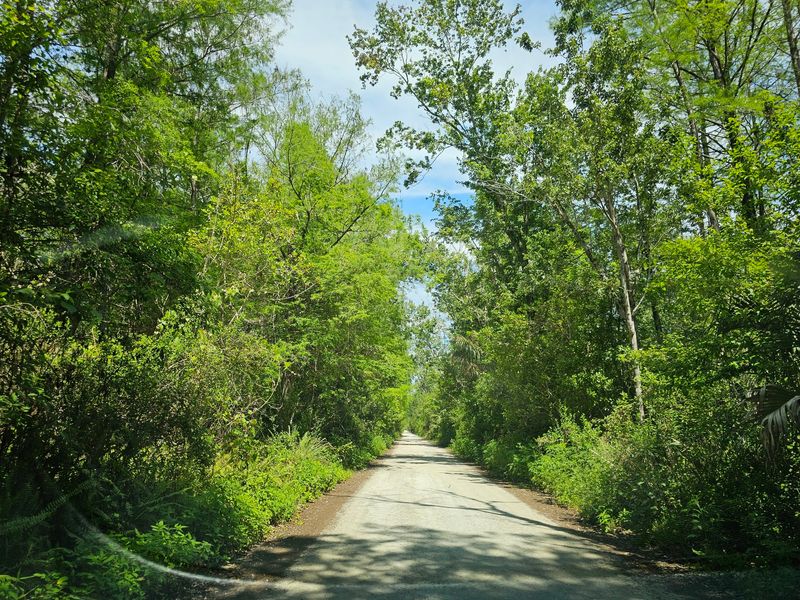
Slow and steady wins this race, mostly because nothing else is possible. Janes Memorial Scenic Drive runs roughly six to seven miles into the heart of the preserve.
The road cuts through jungle-like forest with palms, mangroves, and small ponds. Wildlife often appears right beside the car.
Driving slowly is the whole point. People who keep their eyes open spot alligators, turtles, wading birds, and deer along the way.
Near the start, look for restrooms on the right and a drop box for the park fee. The entry fee has been listed at just $3.
Some drivers reach the main hiking area in 15 minutes. Others, rolling under 10 miles per hour, take nearly an hour to cover the full stretch.
The drive ends at a grassy parking area. From there, hiking and biking trails continue deeper into the strand.
Plenty of folks say the cruise alone is worth the trip. Big grasshoppers on the road in add a quirky bonus feature nobody ordered.
About That Bumpy Road
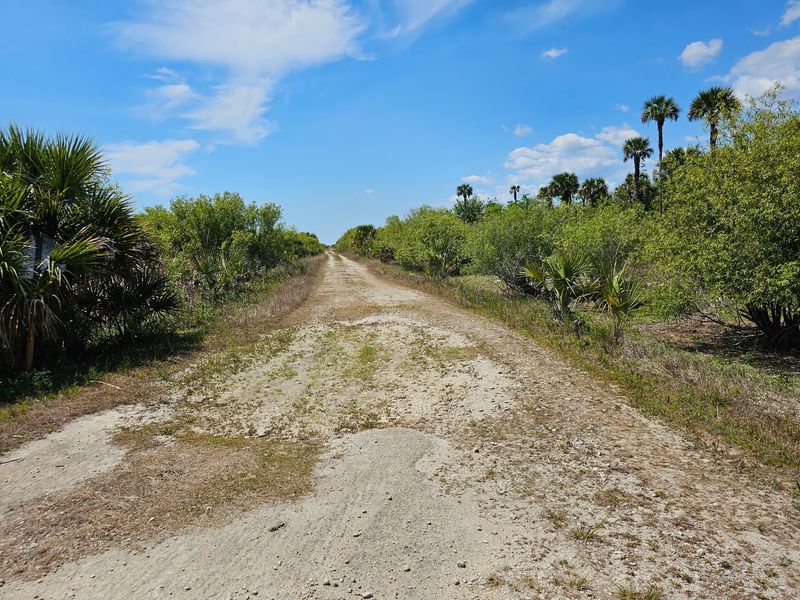
Fair warning for anyone driving a low sports car. The dirt road into the preserve is rough, rutted, and full of holes.
Some stretches have large craters that make the trip tough for small cars. A few drivers have turned back before reaching the trails.
Trucks and higher vehicles handle the road best. Even then, expect a slow, bumpy ride.
Conditions can change with the seasons. Wet months can leave puddles along the edges, while the dry season usually firms things up.
Gas is another detail to sort out ahead of time. Fill up before heading down this way, since services in the area are limited.
None of this is a surprise in a natural preserve. The road is part of what keeps the crowds thin and the wildlife comfortable.
Think of it as a built-in filter. The few who make the journey are usually the ones who want this kind of wild quiet the most, and they rarely regret a single pothole.
East Main Tram to the Fakahatchee Hilton
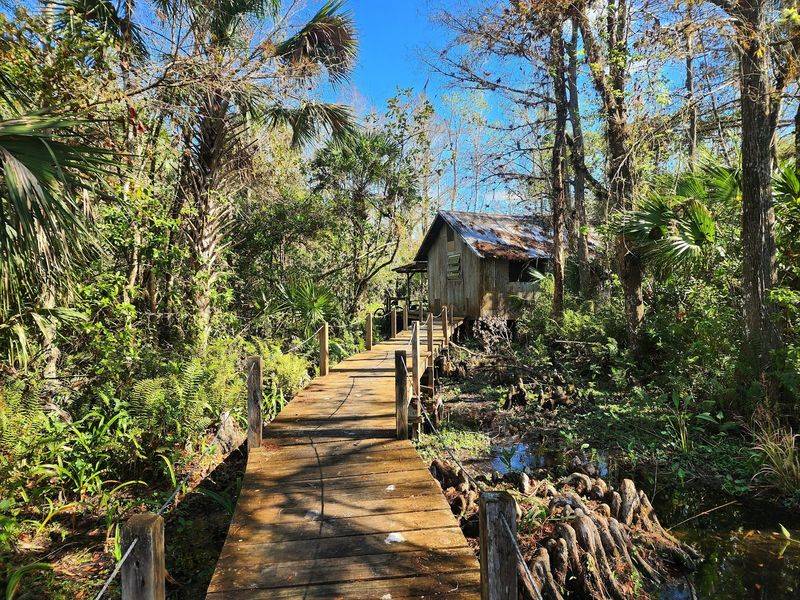
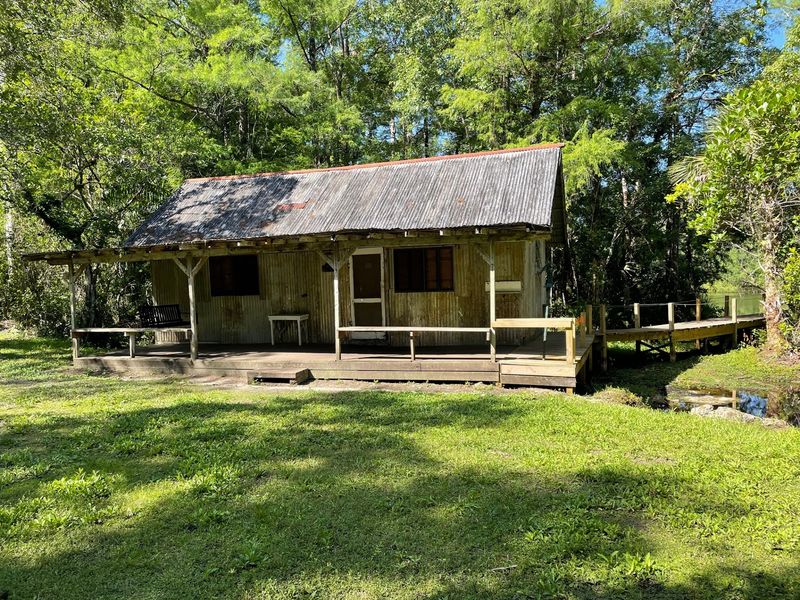
Despite the fancy nickname, nobody checks in at this Hilton. The Fakahatchee Hilton is a small wooden cabin with a dock on a lake, and it sits on private property.
Reaching it means hiking the East Main Tram Trail, also known as Gate 12. The walk is about two miles each way, around four miles round trip.
The trail is a long grassy road with no elevation. It is well shaded and not strenuous, with cypress swamp on both sides.
At the cabin, the trail splits. Head left and you may find a crowd of big alligators sunbathing on a grassy patch past the outhouse.
The dock offers a good spot for viewing gators and birds on the water. Many hikers simply turn around here and call it a perfect day.
Bring water and a snack for this walk. Gators may also be lounging right on the trail, so give them plenty of room.
Tram trails can look a lot alike, so stay on the main path. Getting turned around in a swamp is a story better left untold.
Gravel Bikes and Long Trails
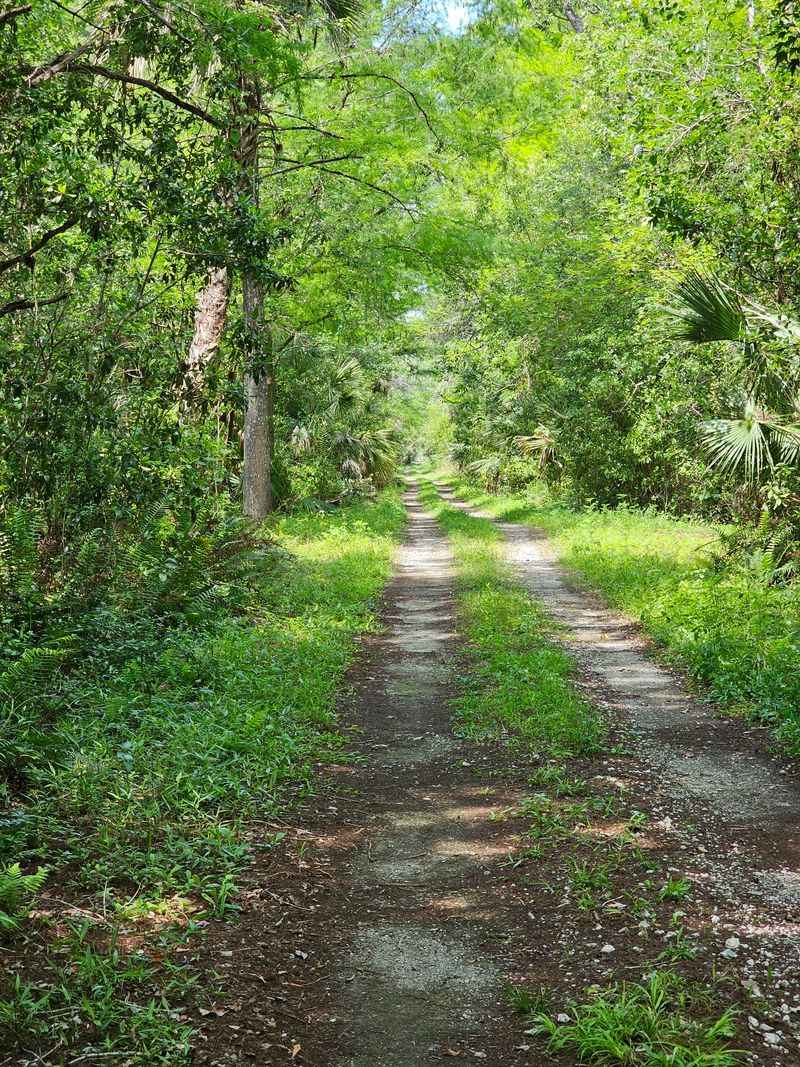
Wheels open up a whole new chapter here. Past the gate at the end of the scenic drive, trails keep going for miles.
Gravel bikes are a great fit for this terrain. The path straight ahead continues about five more miles toward Picayune Strand State Forest.
The shift from dirt road to trail feels like leaving the last bit of civilization behind. There are no crowds and no curated stops, just open wild country.
Wildlife sightings often pick up deeper in. Alligators rest in ponds, and deer can step onto the path without warning.
Runners use the trails too. The flat ground makes it a solid place for long, steady miles.
The dry season usually means less standing water beside the trails. During wetter months, expect more pools and more green growth.
Hikers who prefer feet over pedals have options as well, including a couple of shorter routes deeper into the park. Either way, the preserve rewards anyone willing to go slow and look around.
Mosquitoes Mean Business
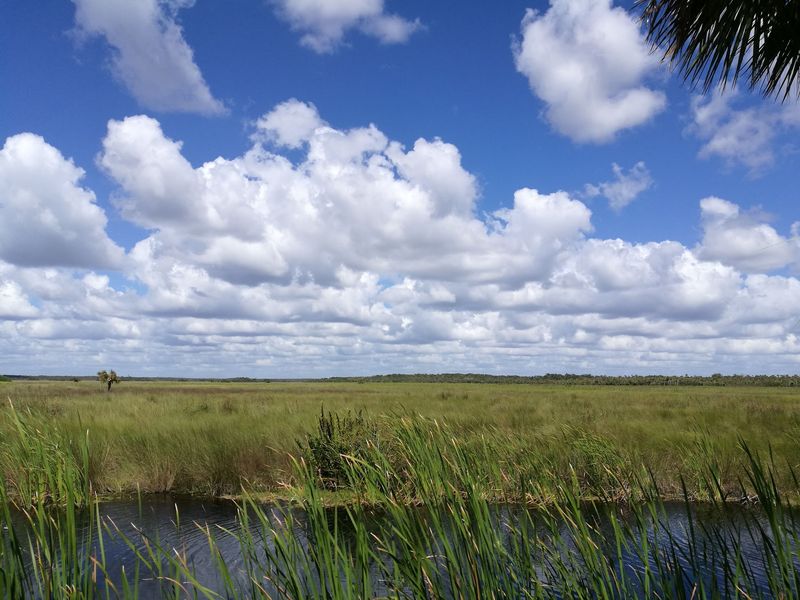
Every swamp has a tax collector, and here it has wings. Mosquitoes are the biggest drawback in the preserve.
Bug spray helps, but they will find any patch of skin you miss. Rangers often wear head nets, which is a strong hint for everyone else.
Long pants and sneakers are wise choices. Sun protection cream and a hat help on open stretches of road.
Insects of all kinds are plentiful, from mosquitoes to giant grasshoppers. That busy bug life is part of what feeds the birds and other animals.
Cooler, dry days tend to be the most comfortable. Some locals like to visit when the forecast tops out around 74 degrees with no rain.
September brings lush green growth, while the dry season is often favored for wildlife and easier walking. Each season has its trade-offs.
Packing smart turns a buggy outing into a fun one. A little prep keeps the attention on the gators instead of the itching.
Bring Everything You Need
Primitive is the right word for much of this place. It is clean and well kept, but services deep inside are minimal.
There are no trash bins and no restrooms along the inner sections of the park. Whatever you bring in, you carry back out.
Restrooms sit near the entrance, close to the fee drop box. The Big Cypress Bend area also has well-maintained public restrooms.
Near the main entrance and parking area, a small rest zone has a few picnic tables. It makes a handy spot for a snack before or after the drive.
Water is a must for every trip. The trails are long and the Florida sun can be strong.
A simple packing list covers most needs:
Water, snacks, bug spray, sunscreen, a hat, sneakers, and long pants. Binoculars and a camera round things out nicely.
Coming prepared turns a simple outing into a comfortable adventure. The swamp does not run a gift shop, so the backpack is your best friend.
Who Will Love This Swamp
Solitude seekers, this one is for you. Fakahatchee is about silence, wildlife, and the feeling of moving through a living ecosystem.
The preserve gives back what you put in. Patient people who drive slowly and keep watching tend to see the most.
Families can enjoy it too, especially on the short, flat boardwalk. Groups have brought toddlers along and still had a peaceful visit.
Leashed pets are allowed, but some owners later decide to leave their dogs home. Deer and other wildlife can make a curious pup a bit too excited.
Fishing fans will find spots along canals and ponds that hold plenty of fish. Hikers, bikers, and runners all have room to roam.
Anyone wanting beaches or playgrounds should look elsewhere. This park offers raw, old Florida with no frills.
For those curious about what southwest Florida looked like before all the development, this preserve offers a rare look back. It feels less like a park and more like a time machine with gators.
A Quiet Verdict on Old Florida
Few places in Florida stay this wild with this little fuss. Fakahatchee Strand Preserve proves that the best adventures sometimes sit just off a busy highway.
It offers a forest found nowhere else on Earth. Royal palms and bald cypress share the sky, while orchids and bromeliads cling to the branches.
Alligators, deer, hawks, and maybe even a mink keep things lively. The boardwalk offers an easy taste, and the tram trails give a deeper one.
The road is rough and the mosquitoes are bold. Those small hurdles help keep the place calm and uncrowded.
Hours run from 8 am to 8 pm daily, and the entry fee is modest. Arriving early gives the best shot at wildlife sightings.
Pair a visit with a trip to nearby Everglades City, a small fishing village close by. It makes for a full day in this corner of the state.
Hardly a soul walks the long boardwalk here, and that might be the greatest gift of all. Slow down, look up, and let the swamp do the talking.
Enjoyed this story?
Add Fast Food Club as a preferred source to see more of our reporting on Google.