


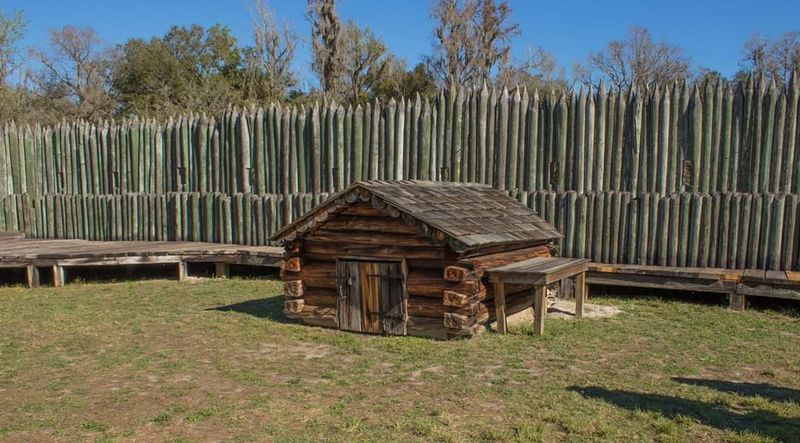
Most Florida fort lovers know the famous brick walls and the stories that come with them, but a quieter fort near Tampa tells a tale built from logs instead of bricks. It stands on the very ground where soldiers once guarded a bridge during the Second Seminole War, and hurricanes have knocked it down more than once, yet it keeps coming back.
Getting inside takes a little planning, because the gates swing open only on certain days and for special events. Keep reading to learn when to go, what to see, how to reach it, and why the night battles and costumed storytellers make this log stronghold worth the trip.
A Log Fort Off US-301
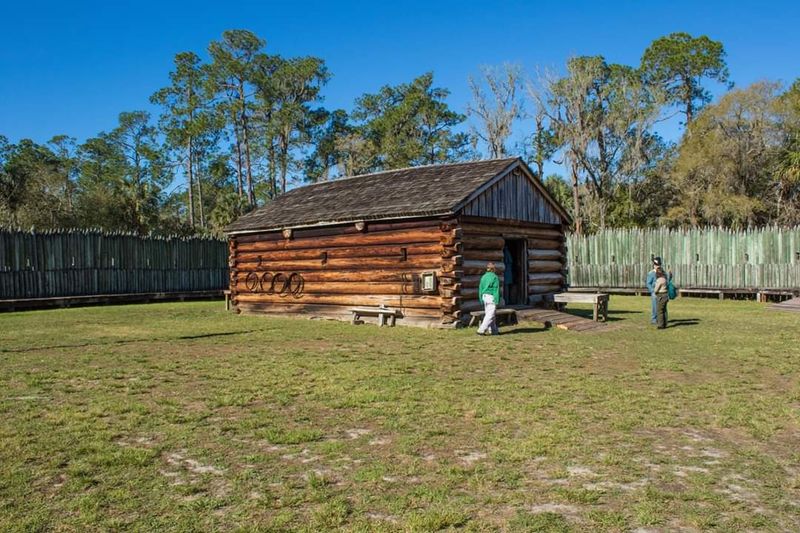
Forget brick and mortar for a moment, because this fort was built from timber. Fort Foster State Historic Site sits at 15402 US-301, Thonotosassa, FL 33592, in the Tampa Bay area of Florida.
The site is managed as a Florida state park and is tied closely to Hillsborough River State Park, which sits right across the road. Many longtime campers and kayakers at that bigger park never realize the fort belongs to the same family.
What waits here is a full reconstruction of an early 19th-century log fort. It is a replica, yet it rises on the actual ground where the original fort once stood.
That detail matters to history fans. Standing on the real spot gives the place a weight that a fort built somewhere else simply could not match.
The general park hours are listed as 8 am to 5 pm every day of the week. The fort itself keeps a much tighter schedule, which later sections explain in detail.
The official website at floridastateparks.org has a dedicated Fort Foster page. It is the best place to confirm open days before making the drive.
Small in size but big on story, this stop rewards anyone willing to plan ahead, and the next chapter explains exactly why those logs were stacked in the first place.
Echoes of the Second Seminole War
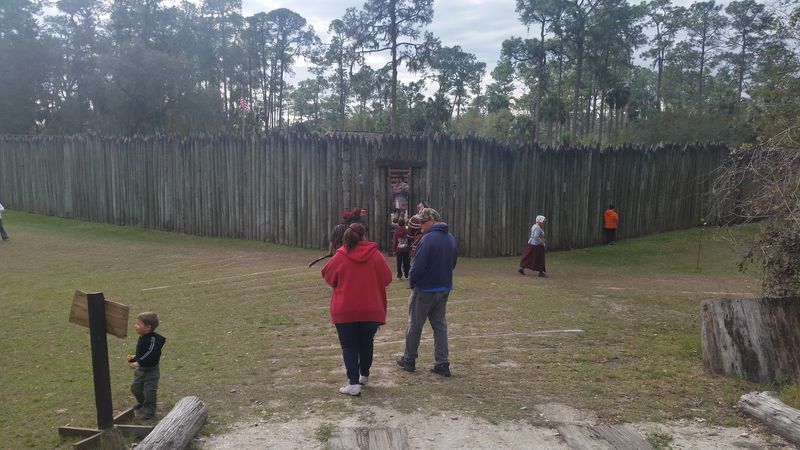
The year was 1836, and Florida was in the middle of the Second Seminole War. Fort Foster grew out of that conflict, guarding a crossing on the Hillsborough River.
Today the site serves as a classroom without walls. Volunteers and rangers share stories about the Seminole people and the United States soldiers, often covering chapters that many guests admit they never learned in school.
The reconstruction follows the specifications that historians had available. That means the layout aims to reflect how the original stronghold was designed, rather than a loose guess.
Entering the gates is often described as a step back to 1836. The costumed guides help by spinning tales that keep attention locked on the past.
A Seminole camp area is also part of the tour route on event days. Guided walks begin at the flag inside the fort and finish at that camp, giving both sides of the story a place on the grounds.
Big textbooks cover this war in a few lines. Here, the conversation stretches out, questions are welcome, and the history feels less like a list of dates and more like a neighborhood with people in it.
The Fort That Refuses to Fall
Some forts fall once and stay down. This one has been rebuilt three times.
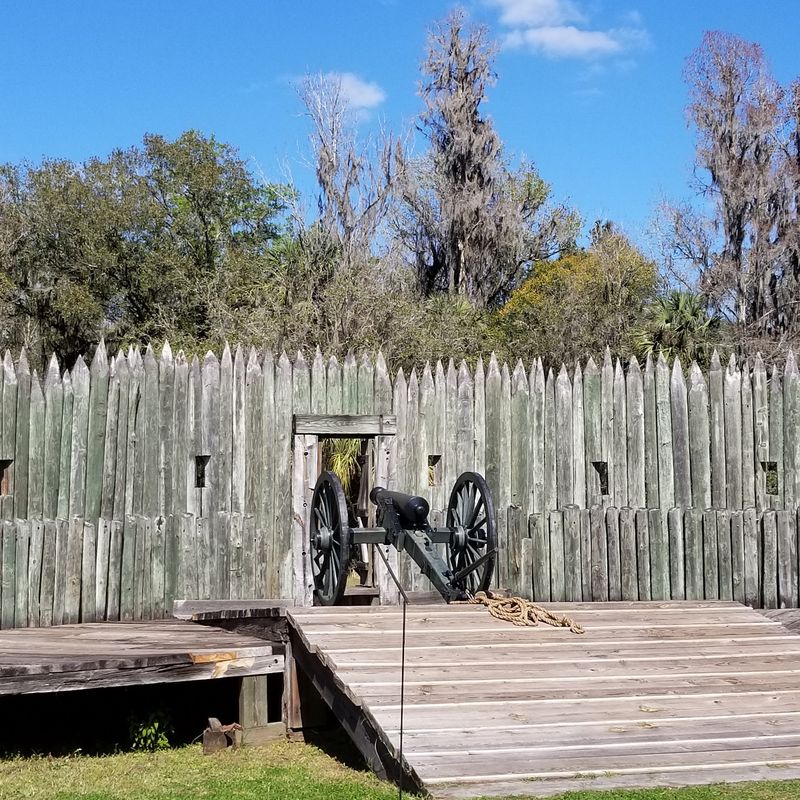
Hurricanes have damaged the wooden walls over the years, which makes sense for a timber structure in Florida. Each time, the fort has been put back together, and fans proudly call it a tough old structure that still stands.
The current version is a fully rebuilt 1830s fort, complete with cannons. Supporters describe it as nicely replicated and well maintained.
That comeback story is a big part of the charm. The people who care for this place clearly treat it as a long-term project, not a one-time display.
Volunteers play a major role in keeping the site alive. Many of the reenactors are part of that dedicated crew, and attending events helps support the park’s future.
There is something fitting about a frontier fort that keeps getting knocked around and keeps getting back up. The soldiers who first built it faced plenty of trouble too.
So when the logs look fresh, that is not a sign of a fake. It is a sign of a fort with stubborn friends who refuse to let the story wash away.
Cannons, Muskets, and Night Battles
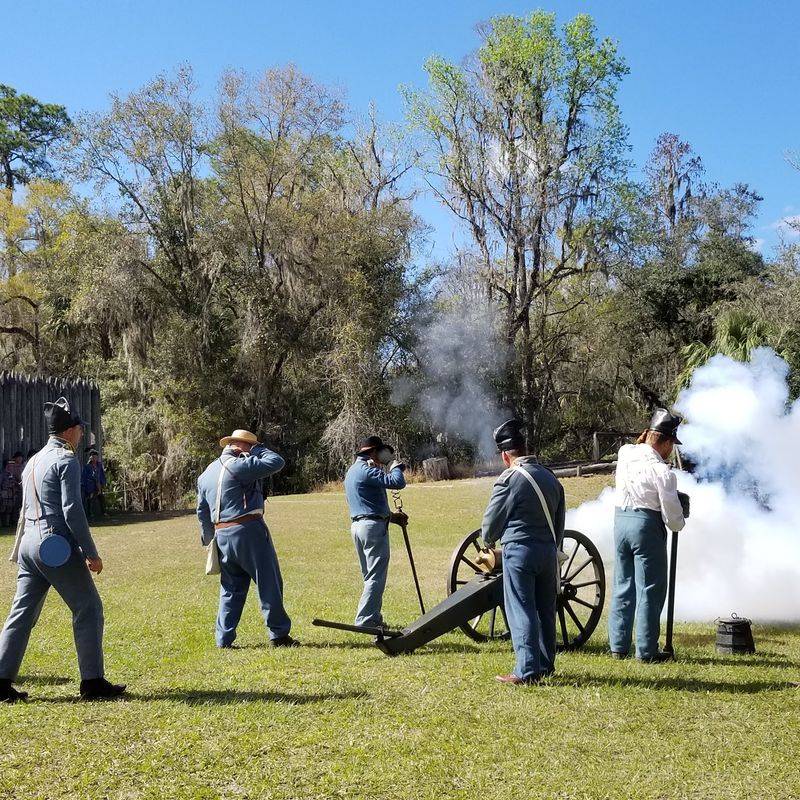
Reenactments are the headline act here, and they come up more than any other topic among fans of the site. The volunteers put a huge amount of effort into every detail.
Skirmish battles happen about twice a year. One of them takes place at night, with muskets and cannon firing after dark.
Event months have included December and February. Some years have offered only one major reenactment, so checking the calendar early is a smart move.
The reenactors portray both soldiers and Seminole warriors. They are known for being colorful, informative, and fully committed to their roles.
One playful warning comes from experience. A sudden war cry from a reenactor has been known to make guests jump out of their shoes.
Weather and safety rules can change the show. During a burn ban, live weapon firing may be cancelled, yet the day still offers deeper conversations and more show-and-tell with the volunteers.
History buffs, families with curious kids, and anyone who enjoys a good spectacle will find plenty to talk about on the ride home. Just remember that the cannons do not fire on a random Tuesday, which brings up the next big topic.
A Day at Fort Foster Days
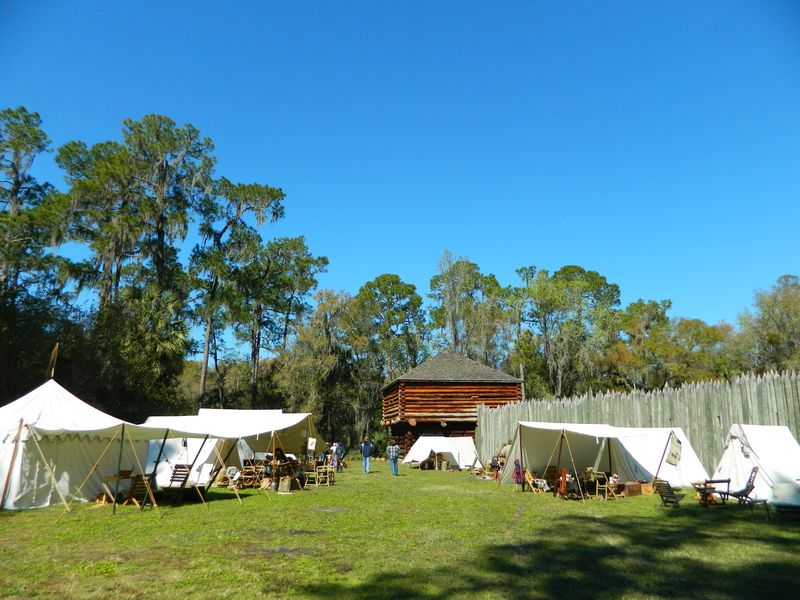
Fort Foster Days is the site’s signature weekend. The 2025 edition took place February 14 and 15, and its schedule gives a clear idea of how the event flows.
Gates opened at 10 am, followed by a flag raising inside the fort at 10:15. A guided tour started at 10:20, beginning at the flag and ending at the Seminole camp.
Historic weapons demonstrations were held at the main gate at 11:30. A soldier life program followed at 1 pm.
The battle reenactment on the battlefield kicked off at 2 pm. Sunday added a second soldier life session at 3 pm.
Another weapons demonstration closed things out at 4 pm, with the day wrapping up at 5 pm. That is a full lineup without much downtime.
Vendors and exhibits add to the experience. Many guests say the event is well worth the price of admission.
The crowds tend to stay manageable, which makes it easy to chat with participants at each stop. Future dates may shift, so treat this schedule as a sample rather than a promise.
Candlelight and Starlit Evenings
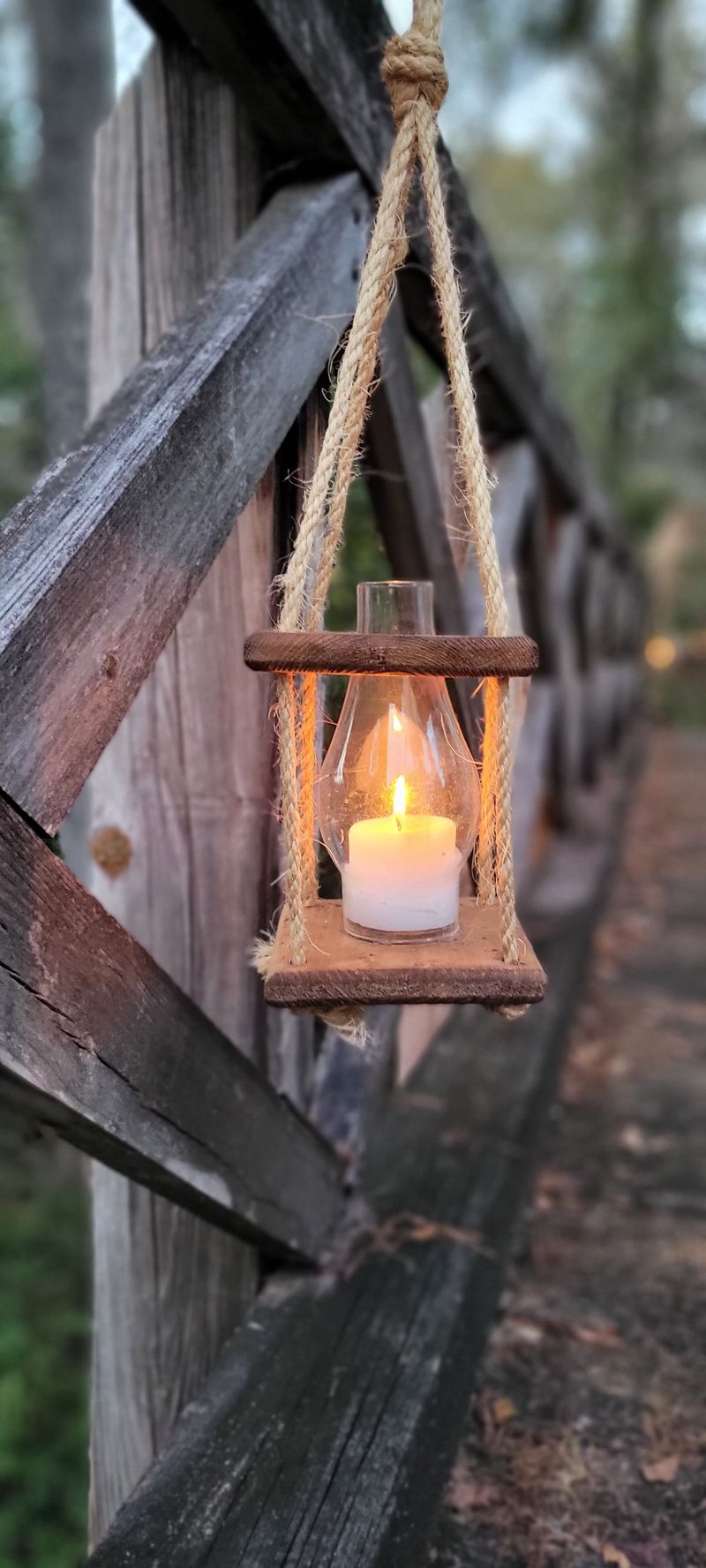
Not every special event involves smoke and cannon fire. The fall season has brought Candle Light Nights, which many fans count among the best times to go.
Special events like dinner under the stars have also appeared on the calendar. These gatherings show a softer side of the fort, built around atmosphere and conversation.
The word magical comes up more than once when people describe this place. A handful of events spread throughout the year keep that reputation going.
Evening programs give the fort a completely different mood than a daytime tour. The same walls tell the same history, but the setting shifts.
Spots and dates for these events can vary from year to year. The Florida State Parks website is the place to look for current offerings.
Planning a trip around one of these nights is a clever way to see the site at its most memorable. Couples, history lovers, and anyone tired of the usual weekend routine will find something fresh here.
Of course, daytime visits have their own perks, especially for people who like to roam, read, and explore on foot.
Clues Along the Interpretive Trail
Even on days when the fort gate stays shut, the story is not locked away. Interpretive points near the pay gate area share archaeological discoveries, maps, and models.
These stops help explain how the fort and the river crossing fit together. They are a solid warm-up before any guided tour, or a decent consolation prize when no tour is running.
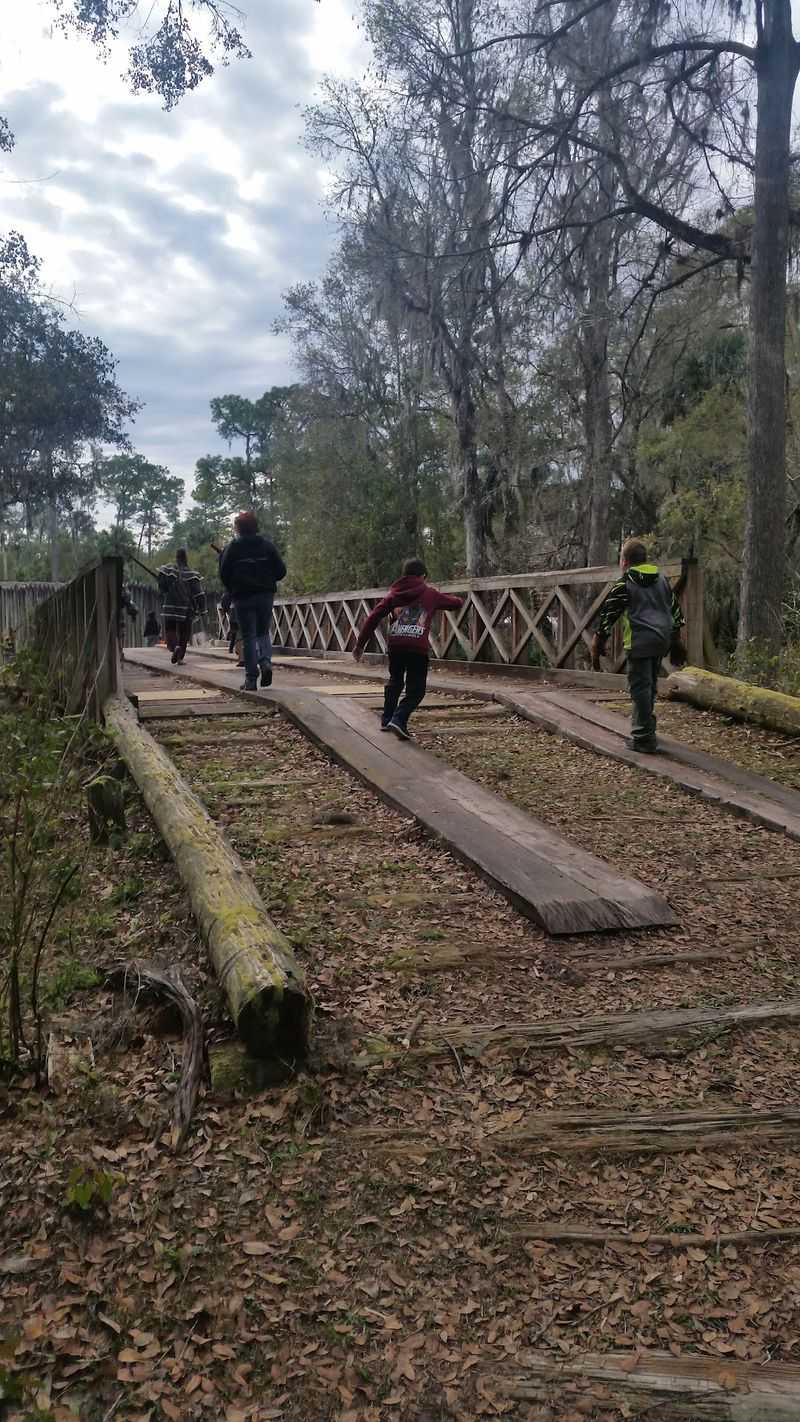
A short hike leads to one of the most interesting relics on the property. Timbers from the original bridge can still be seen, and fans of the site strongly recommend making the walk.
Those old timbers connect the replica fort to the real past. They are not reconstructions, which gives them extra value for history fans.
Some guests who missed a cancelled tour still hiked over to the fort for photos. Seeing the walls from outside was still considered worthwhile.
Keep an eye on the ground while exploring. Gopher tortoises dig tunnels in the area, and at least one guest has stumbled into one, leaving with a funny story and no hard feelings.
Comfortable shoes and a bit of patience go a long way on these paths.
River Time Next Door
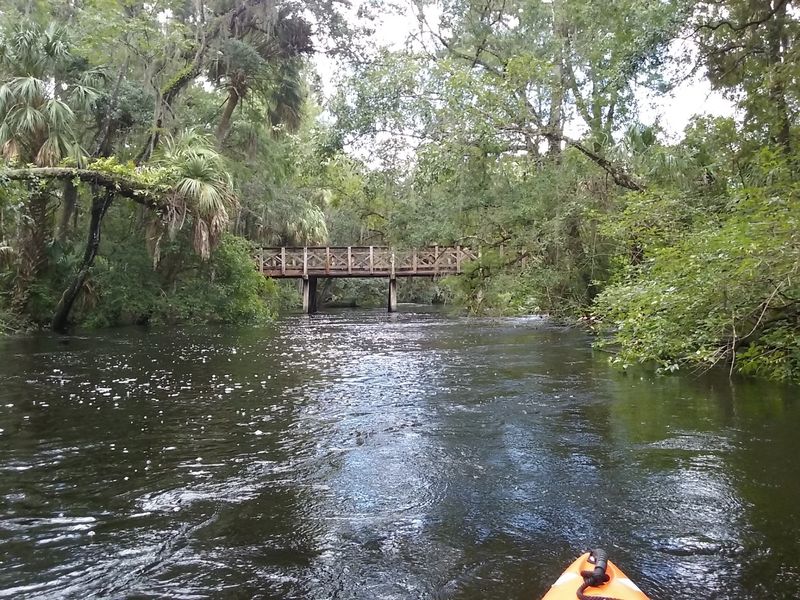
History is the main course, but the river makes a fine side trip. The park area features a river with Class II rapids, rare for this part of Florida.
A canoe launch makes it easy to get on the water. Fishing and canoeing are among the outdoor activities offered.
A suspension bridge crosses the river and is a popular stop. Another regular bridge has been closed in the past due to disrepair, so plans may need some flexibility.
The building known as the cafe doubles as the kayak rental spot, gift shop, and camp store. It is a handy place to pick up a souvenir t-shirt.
Camping is available in the larger park as well. Plenty of people come for the campground and paddling long before they learn about the fort.
The park also shows the work of the Civilian Conservation Corps from the 1930s and 1940s. Not every corner has been updated since, and an old pool area has been seen sitting in poor condition.
Pairing a paddle with a fort tour turns a short stop into a full day, and it softens the blow if the fort calendar does not line up perfectly.
The Tricky Business of Getting Inside
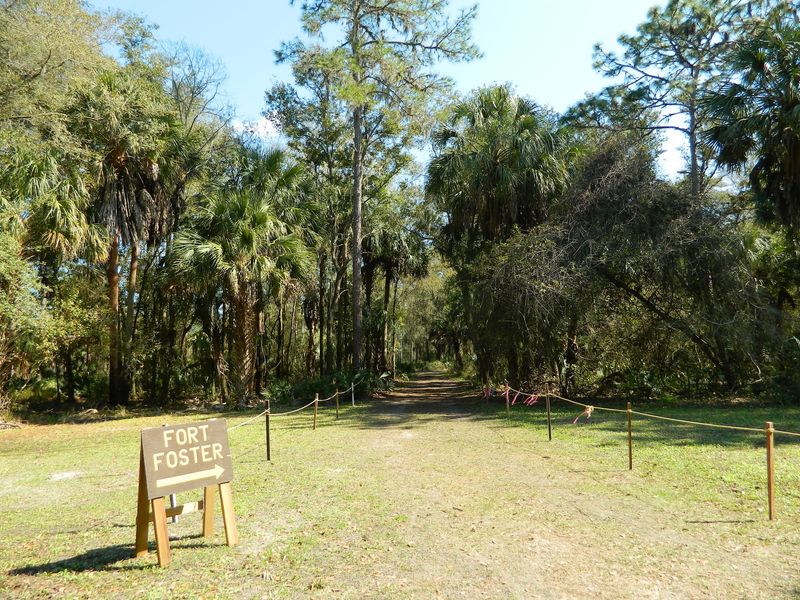
Here is the part that trips people up. The fort is not open every day, even though the general listed hours run 8 am to 5 pm daily.
Recent guidance points to openings on Thursday mornings and every third Saturday. Tours have also been described as happening about once a month, so double-checking matters.
The fort sits across the street from Hillsborough River State Park. You cannot drive straight to it, which surprises many first-timers.
Instead, head to the first parking lot in the main park for fort information and tram tours. Crossing to the fort side has involved a busy road, so extra caution is wise.
The pay gate has charged $6 per entry in the past. Event admission can differ, so confirm costs before arriving.
Years ago, the fort was closed to the public for a stretch, and outdated online info left some guests frustrated after a long drive. That history is a good reminder to call or check the website first.
A little homework up front saves a lot of disappointment. Once the logistics are sorted, the reward is a fort that very few people ever get to explore.
Who Will Love This Place Most
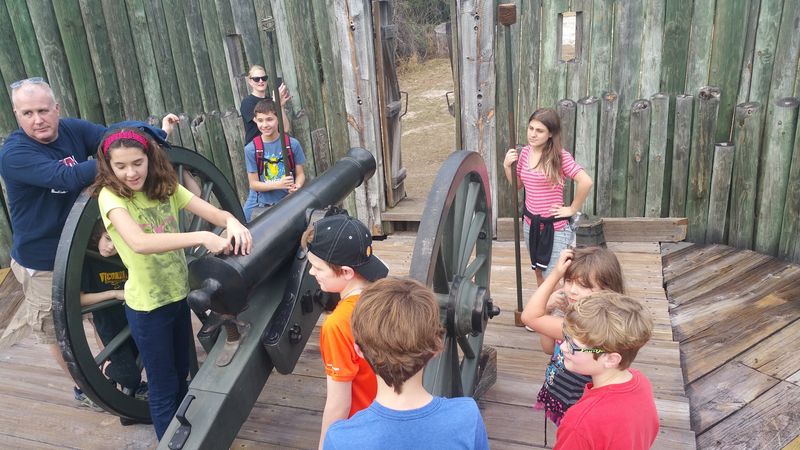
Certain people light up the moment they spot a musket. Those are the folks who will get the most out of Fort Foster.
History fans top the list, especially anyone curious about Florida’s frontier years and the Seminole Wars. The knowledgeable staff and volunteers turn every stop into a mini lesson.
Families can find plenty of value here too. Kids who struggle with textbooks often pay closer attention when a costumed guide tells a story face to face.
Photographers will appreciate the rebuilt walls and cannons. Even shots from outside the fort have been considered worth the effort.
Outdoor lovers get a bonus with paddling, hiking, and camping just across the road. That mix keeps restless members of a group busy.
The site is small, though. Anyone expecting a huge complex with endless exhibits may want to adjust expectations.
People who enjoy uncrowded spaces will find the event days pleasantly relaxed. Fans often describe the overall mood as magical, a word that pops up more than once.
Bottom line, curiosity matters more than age here, and the best way to enjoy it is to arrive with questions ready.
Worth the Detour From the Brick Forts
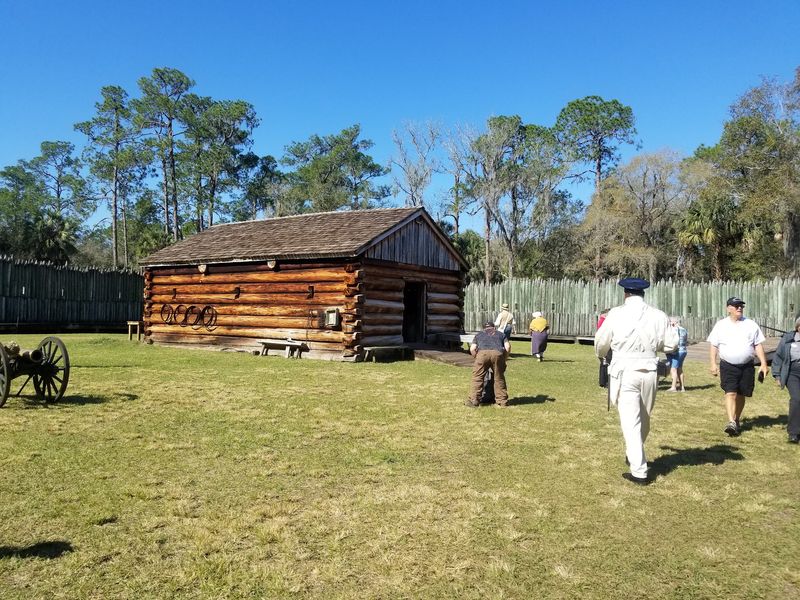
Brick forts get the spotlight, but this log stronghold near Tampa has earned its own fan club. The place holds a 4.5-star average across more than a hundred opinions, a strong showing for such a small site.
Its appeal comes from a simple mix. Real ground, a careful reconstruction, passionate volunteers, and events that bring 1836 back to life.
The catch is timing. Limited open days, a road crossing, and changing schedules mean spontaneity is not your friend here.
Still, those hurdles keep crowds small. People who make the effort often get personal attention and longer conversations with the guides.
The best plan is clear. Check the Florida State Parks website, aim for a reenactment weekend or a special evening, and pack time for the river next door.
Skip the planning, and the trip may end at a locked gate. Plan well, and you could catch a night battle, a candlelit evening, or a tour led by someone who knows every log by name.
For a fort that has stood back up three times, a little scheduling effort seems like a fair trade, and history here is always ready for another chapter.
Enjoyed this story?
Add Fast Food Club as a preferred source to see more of our reporting on Google.