


East of Orlando, past the theme park billboards and highway traffic, there is a small town with a name that sounds like a holiday card. Most people speed by it on their way to the coast.
They miss a timber fort, a row of pioneer homes, and a schoolhouse with books still on the shelves. The ride here does not run on rails, but it does carry you through nearly two hundred years of Florida life.
It costs nothing and asks for only an afternoon. The buildings are open, the grounds are tidy, and the crowds are thin.
This guide walks through the fort, the homes, the play areas, and the practical details, so you know how to plan a visit. By the end, you will see why this quiet spot deserves a spot on your Central Florida list.
A Fort in a Town Called Christmas
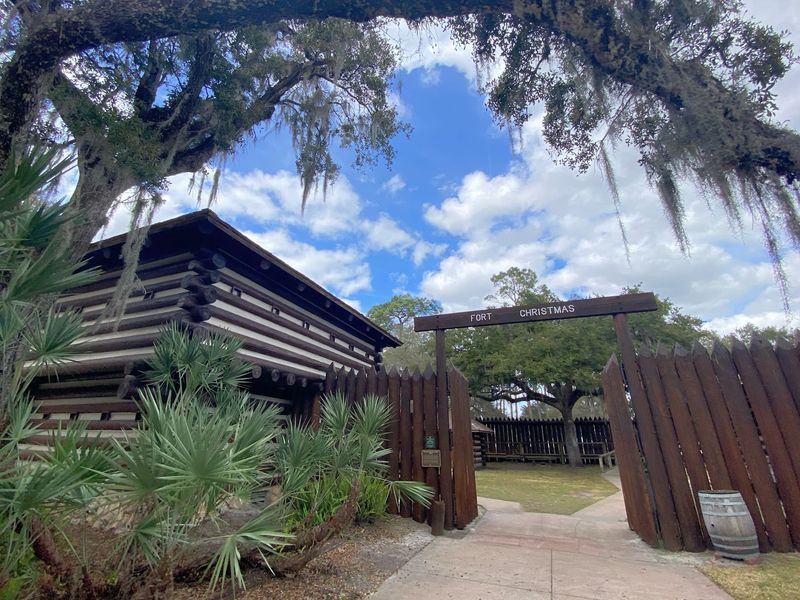
Yes, there really is a town in Florida named Christmas, and yes, it has a fort. Fort Christmas Historical Park sits at 1300 N Fort Christmas Rd, Christmas, FL 32709, in Orange County, east of Orlando.
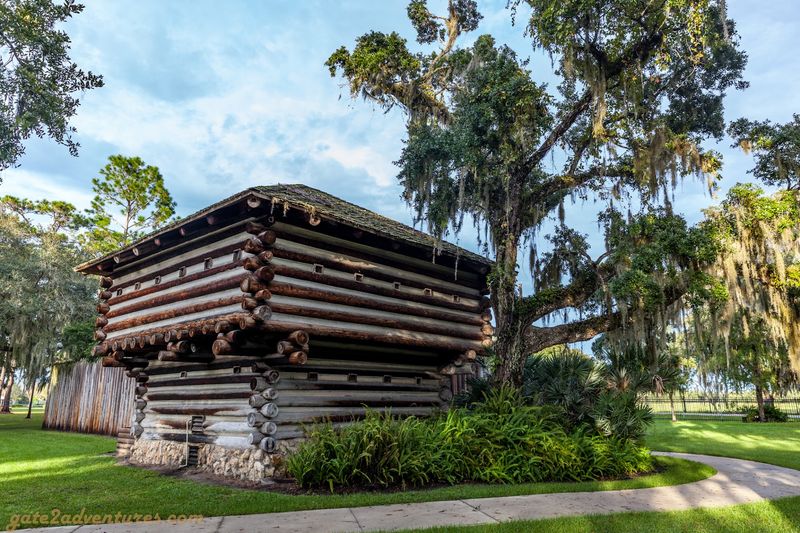
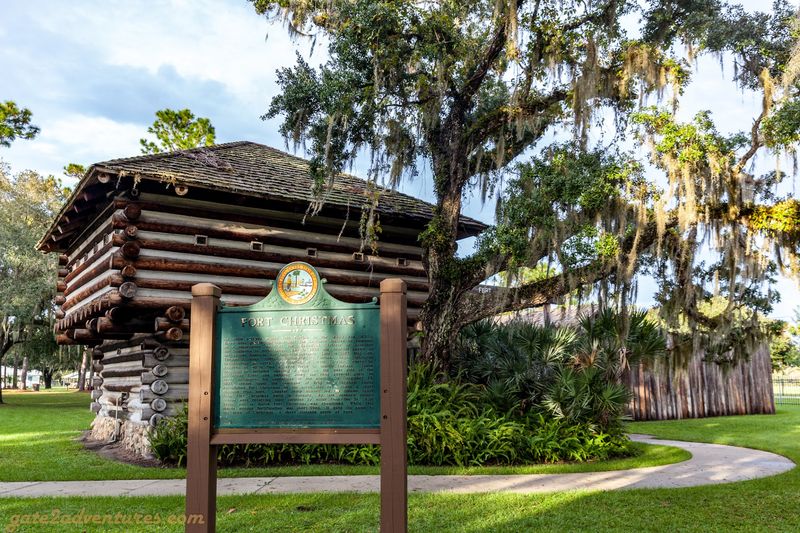
The park is built around a full-size replica of an 1837 fort. Around it stands a collection of pioneer homes and historic buildings that trace how families lived in this part of Florida long before the highways arrived.
The site is much bigger than many people expect. A quick stop can easily turn into a long walk from building to building, with plenty of reading along the way.
Educational markers sit at nearly every structure. Each one explains who lived there, what the building was used for, and how daily life worked during its era.
Beyond the history, the park doubles as a neighborhood green space. There are pavilions, a large playground, ball fields, and courts for anyone who needs a break from the past.
Best of all, admission is free. That makes it one of the easiest history lessons in the region, and the fort is only the opening chapter of the story waiting inside these grounds.
The Year 1837 and the Seminole Wars
Some forts earn their names from generals. This one earned its name from the calendar.
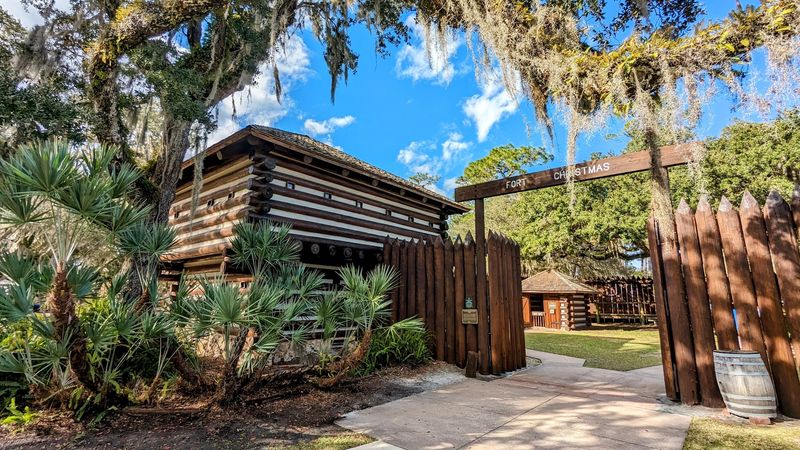
The original Fort Christmas was built in 1837 during the Second Seminole War, one of the longest conflicts in Florida history. The replica at the park shows what the original fort may have looked like at that time.
Displays inside explain the war and the period that followed. They cover how settlement in the area changed once the conflict ended and new families began moving into the region.
At first glance, the fort can seem fairly simple. Log walls, a gate, and open ground make up much of the view from the outside.
That first impression changes quickly once you head inside. The structure acts as the anchor of the whole park, and every other building on the property connects back to the community that grew up near it.
A fair point worth knowing: the exhibits lean heavily toward the settler side of the story. Some people would like to see more about the Native American tribes involved, so readers with that interest may want to do extra homework before or after the trip.
Still, as a starting point for Florida frontier history, the fort delivers a solid foundation.
Blockhouses That Hide the Best Stuff
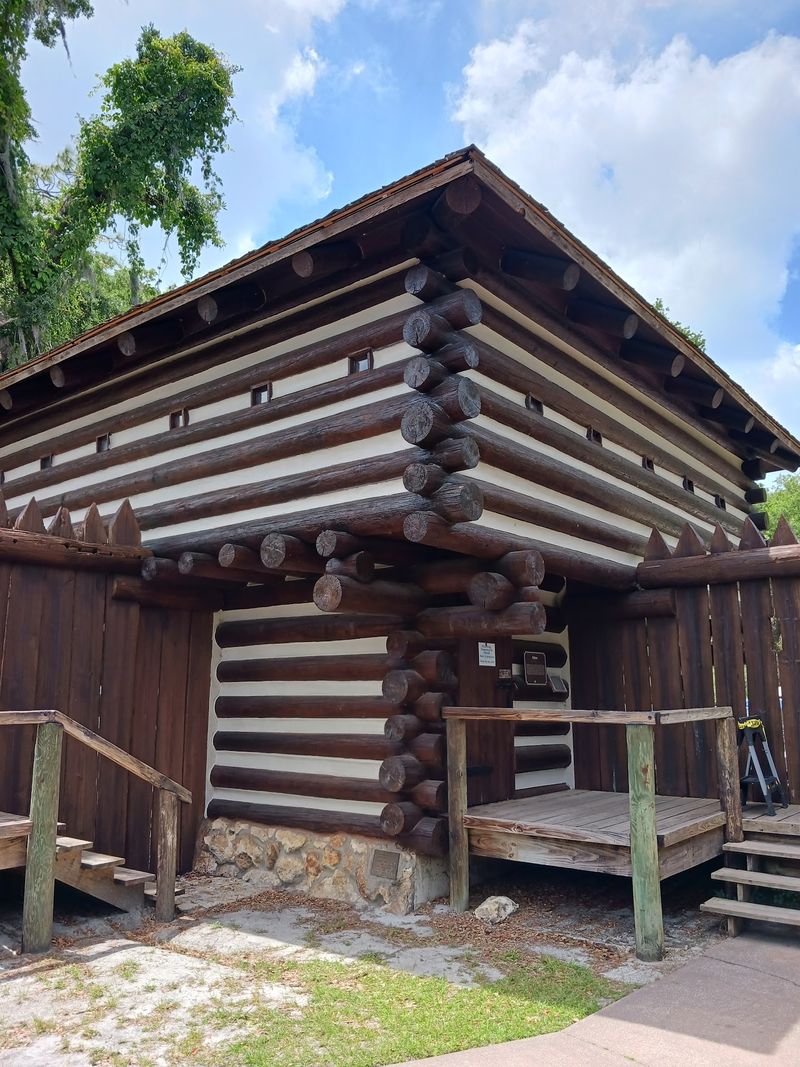
Here is the insider tip that changes the whole fort visit. Go inside the blockhouses.
The corner blockhouses of the replica fort are air conditioned. In a state known for heat and humidity, that alone makes them popular stops on a summer afternoon.
The bigger reward is what sits inside. The blockhouses hold a large collection of memorabilia and historical items, turning a plain wooden structure into a small museum.
Many guests skim the fort yard and move on. That is a mistake, since the blockhouses carry much of the detailed information about the Seminole Wars and the people who lived through that time.
The exhibits are self guided. You can move at your own pace, read every panel, or simply browse the objects that catch your attention.
Staff members are sometimes on hand around the property. They are known for being friendly and happy to answer questions about the site and its history.
Plan for a few extra minutes here. The blockhouses are a good place to cool off, collect your thoughts, and get the background you need before heading off toward the pioneer homes across the park.
Three Eras on One Lawn
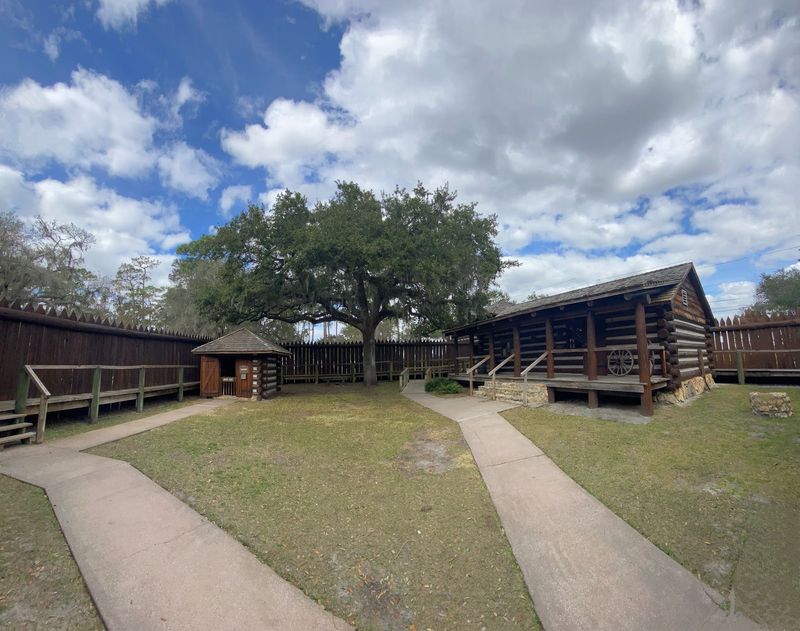
Most parks cover one moment in time. This one covers at least three.
The grounds are organized around distinct periods of local life. There is the Fort Christmas era of 1837, the Homestead era from 1890 to 1927, and the early twentieth century from 1906 to 1953.
The layout follows a loose timeline. More recent buildings tend to sit near the front of the park, while the older structures are found toward the back.
That arrangement makes the visit feel like a slow walk backward through history. Start at the entrance and the years peel away as you move deeper onto the property.
Some of the buildings are replicas. Others are original structures that were preserved and brought together to tell the community’s story.
Each building has information posted nearby, so it is easy to tell which era you are standing in. The signage is clear enough that most people never feel lost or confused about the timeline.
Wear comfortable shoes. There is a lot of ground to cover between buildings, and the walking adds up faster than you might think, especially once the homes start pulling you inside one after another.
Homes Furnished Like the Owners Just Left
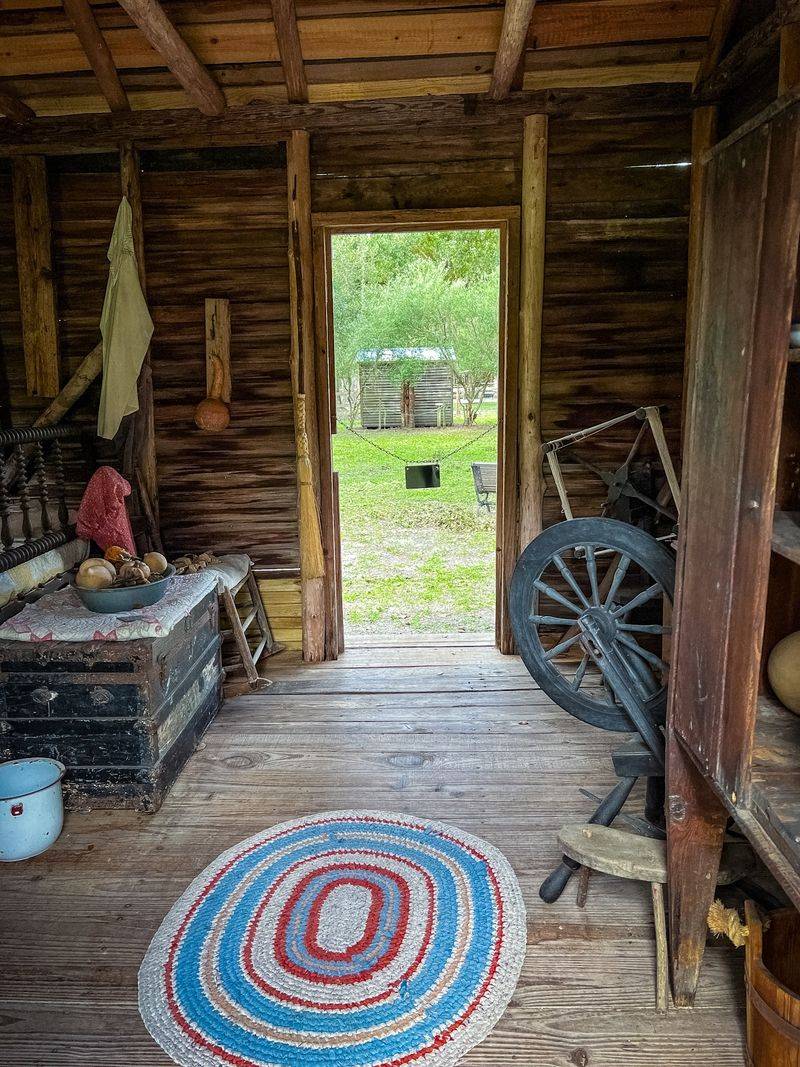
Open the door of a pioneer home here and the rooms look ready for someone to walk back in.
The houses are furnished with period pieces. Old furniture, sinks, quilts, afghans, wood stoves, and original ice boxes fill the rooms and give each home a lived-in look.
Unlike many historic sites, this park lets people walk through most of the buildings and rooms. You are not stuck peering through a rope line from a doorway.
Some of the homes have two stories. The stairs are few and easy to manage, so the upper floors are reachable for most guests.
One of the more interesting displays focuses on everyday chores. It shows how tasks such as laundry changed over the years, which tends to spark conversations between generations.
Older guests often recognize household items from their own childhood. Younger ones get a clear look at life before electric appliances and modern conveniences.
There is a full kitchen to explore as well, plus farm equipment that shows how families worked the land. Take your time in these rooms, because the small details are where the real stories live.
Schoolhouse Lessons and a Sugar Mill
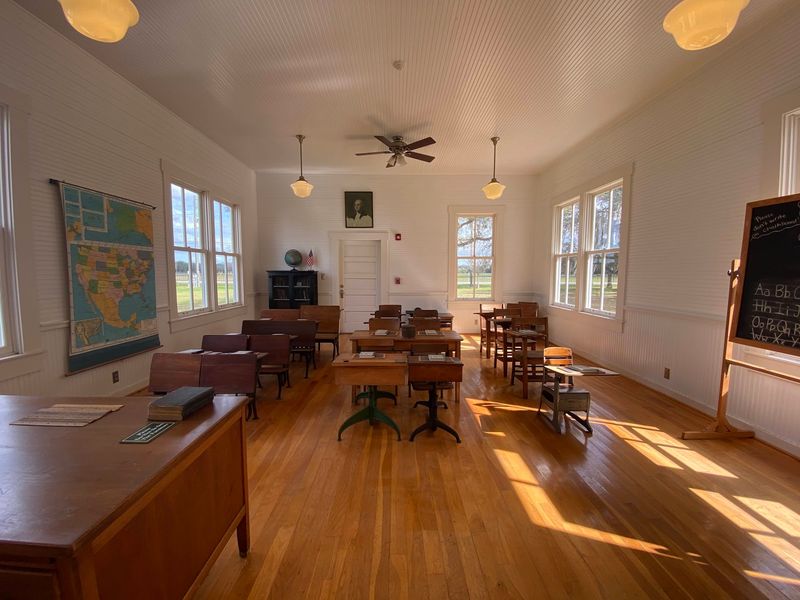
Report cards were not the only thing kept in an old Florida schoolhouse. At this park, the shelves still hold books.
The historic school is one of the favorite stops on the grounds. Many adults spend extra time browsing the old books, and some spot titles they remember from their own school days.
Nearby stands a post office that helps explain how the small community stayed connected. It was one of the gathering points for local residents in earlier times.
The park also includes a replica sugar mill. Sugar processing was part of rural life, and the mill gives a look at one of the ways families made a living.
Farm equipment is spread around the property too. Together, these buildings show that pioneer life was about more than housing, it was about learning, trading, and working.
Exhibits do change and grow over time. Parts of the post office exhibit, for example, were being prepared for future opening at one point, so it helps to check ahead if a specific building matters to you.
These town buildings round out the picture nicely. After the homes, they show the public side of a frontier community.
Family Names From the Early Settlers
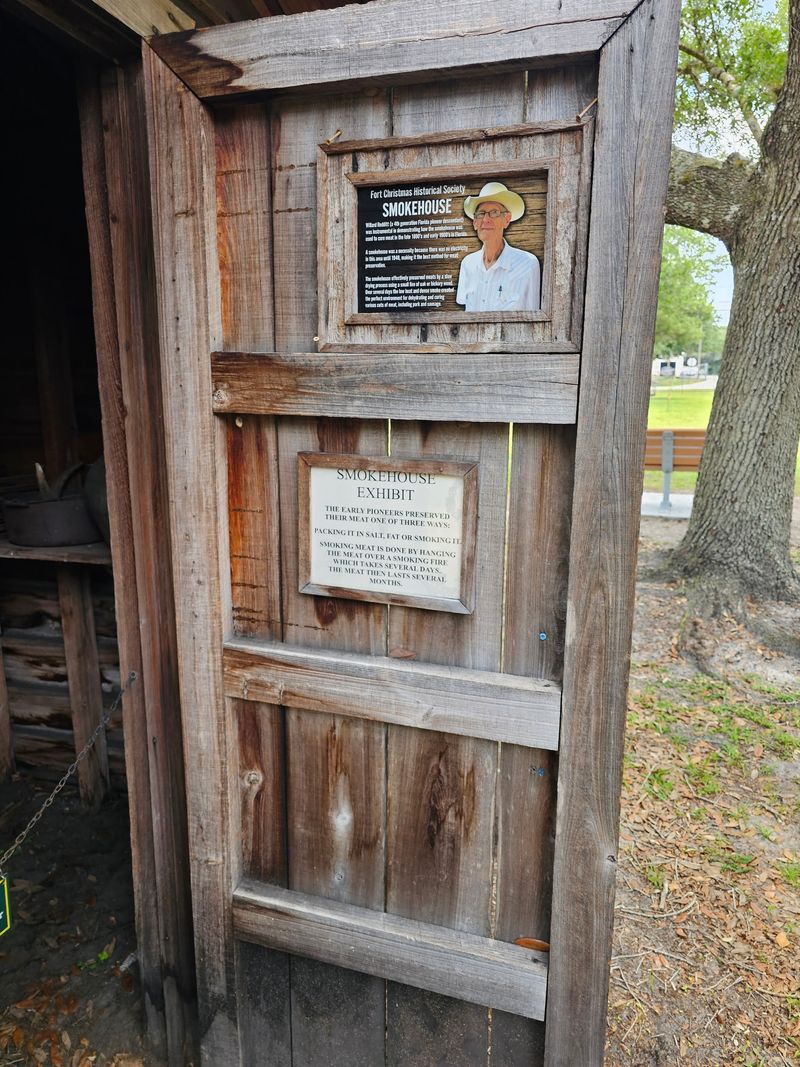
History feels different when it includes your last name.
Many of the artifacts at the park were donated by families whose ancestors lived in the area long ago. That gives the collection a strong local connection that a generic museum cannot match.
The exhibits name some of the earliest settlers in the region. People whose families go back several generations in Florida sometimes find familiar surnames among them.
Even without a personal link, the displays help explain the living situation after the Second Seminole War. They show how families built homes, raised children, and made a community out of open land.
The site is managed by a small staff. Their work shows in how well the buildings and grounds are kept, which is no easy job given the Florida climate.
For genealogy fans, a visit here can be a nice companion to research done at home. Bring a notebook and jot down names or dates that seem worth following up on later.
For everyone else, these personal touches add warmth to the history. They turn old objects into reminders that real people once used them every single day.
Playgrounds, Courts and Open Fields
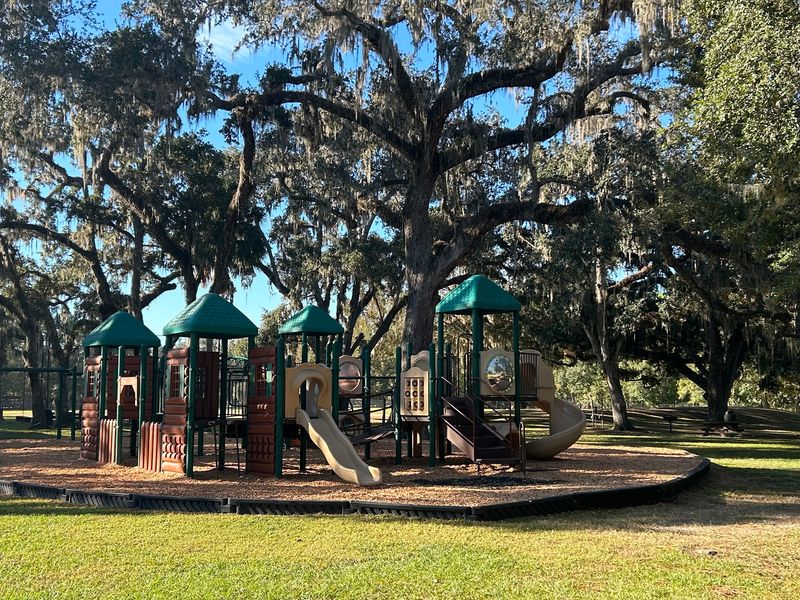
Kids can only read so many history panels before they need to burn off some energy. The park planned for that.
A large playground sits on the property, and it is nicely shaded. That shade matters on warm Florida days when metal slides and open sun do not mix well.
Beyond the playground, there is an open baseball field and plenty of green space. Families can toss a ball, run around, or simply spread out on the grass.
Basketball courts and tennis courts are also available. They make the park useful for locals who come for exercise as much as for history.
The mix works well for family outings. Children can explore the fort and homes, ask questions, and see how people lived long ago, then head outside to play.
That balance makes the trip easier on parents too. A visit does not have to feel like a school assignment when recess is built right into the grounds.
Groups and larger get-togethers fit here nicely as well. With so much open space, there is room for everyone to find their own corner of fun.
Pavilions and a Plan for Lunch
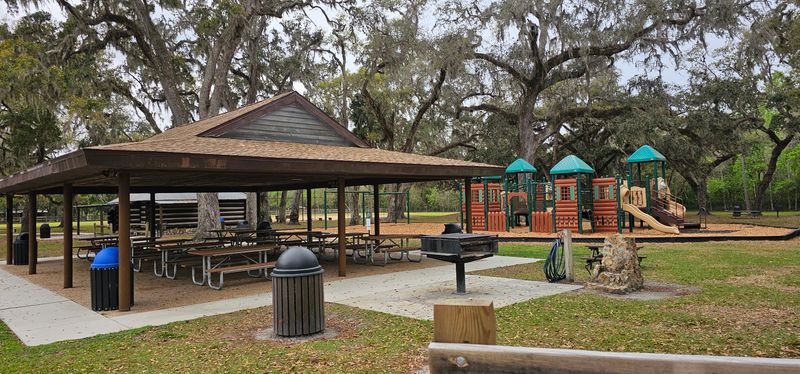
Here is the one thing that catches people off guard. There is no food stand on site.
The park does have a small shop, but meals are not part of the offering. Plan to bring your own food or drive a few miles to find somewhere to eat.
The good news is that the picnic setup is excellent. Several pavilions and many picnic tables are spread across the grounds, ready for a packed lunch.
Pavilions are one of the most talked-about features of the park. They make it a solid choice for birthday gatherings, family meetups, and group outings.
Restrooms are another bright spot. They are known for being clean and well maintained, which is always appreciated on a long day out.
A simple plan works best. Explore the historic buildings in the morning, break for a picnic under a pavilion, then head back out to finish the tour or let the kids play.
Pack water too, especially in the warmer months. A cooler in the car and a little advance thinking will keep the whole day running smoothly from the first cabin to the last.
A Lake, a Hawk and Plenty of Quiet
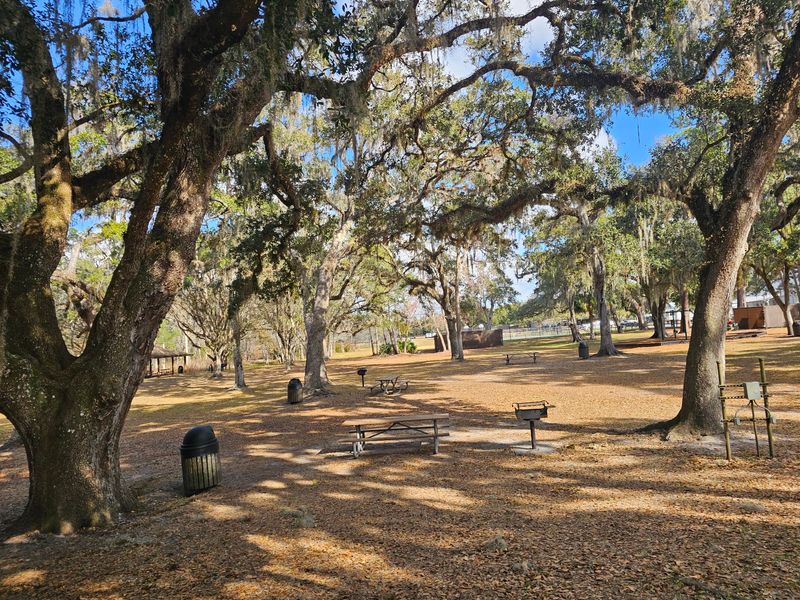
Bring a camera, and not just for the buildings.
There is a lake on the property, and wildlife makes appearances now and then. Photographers have spotted a large hawk flying around near the water.
The grounds tend to be calm. Crowds are usually light, and many people find the park peaceful and uncrowded even on a weekday afternoon.
Shaded areas are scattered across the property. They offer a spot to sit down, rest between buildings, or simply enjoy a slower pace than the busy attractions closer to Orlando.
One honest note: the park sits right next to the road. Car traffic can add some noise, especially near the front of the property.
That small drawback does not seem to spoil the experience for most people. The deeper you walk into the grounds, the more the older buildings and open space take over.
For anyone tired of lines and wristbands, this setting is a welcome change. It is the kind of place where an afternoon can unfold without a schedule, and the lake makes a pleasant final stop before heading back to the car.
Hours, Parking and the Free Ticket
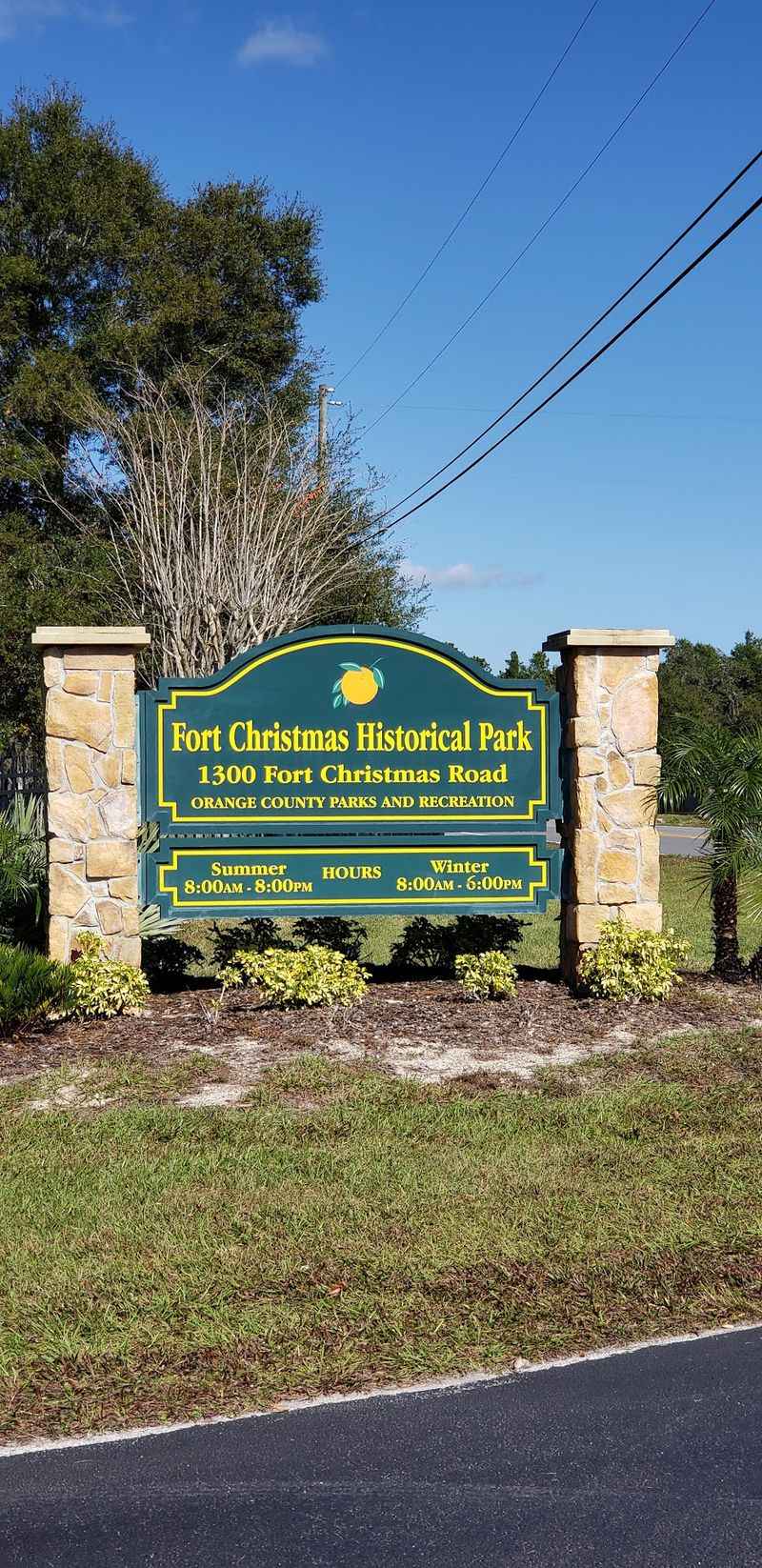
The price of admission is the easiest number to remember. It is zero.
Fort Christmas Historical Park is free to the public, and touring is self guided. That makes it simple to drop in for an hour or stay much longer.
The park grounds are listed as open daily from 8 am to 8 pm. The museum buildings keep a separate schedule and open at 9 am.
Timing matters here. The historic buildings close well before the park does, and people who arrive late on a Sunday have found most things already closed.
Hours can also be shorter during the off season. Check the Orange County parks website before heading out, especially for an afternoon trip.
Getting there is straightforward. The park sits about 2 miles north of SR 50, east of Orlando.
Parking is easy to find, with both paved and unpaved spaces and a good number of spots overall. Arrive in the morning, and you will have the most time inside the buildings before closing.
Most people spend about an hour and a half, though history lovers can easily stretch that into several hours.
Why This Detour Earns Its Spot
Plenty of people stumble onto this park by accident. Many of them leave planning a return trip with friends.
The appeal is simple. There is a lot of history, a lot of space, and no ticket price standing in the way.
Families get a hands-on lesson that does not feel like homework. History fans get open buildings, furnished rooms, and a fort with surprisingly rich exhibits inside.
The park is not perfect. There is no food on site, some road noise near the front, and room for more coverage of Native American history.
A few guests would also like audio guides or app-based tours to help younger people connect with the displays. Those are fair wishes, but they do not take much away from the overall experience.
What stands out most is the care. The grounds are clean, the buildings are well kept, and the small staff clearly takes pride in the place.
Central Florida is full of big, loud attractions. This quiet stop in a town called Christmas offers something different, a free and unhurried look at the people who were here first.
Pack a lunch, check the hours, and give it an afternoon.
Enjoyed this story?
Add Fast Food Club as a preferred source to see more of our reporting on Google.