


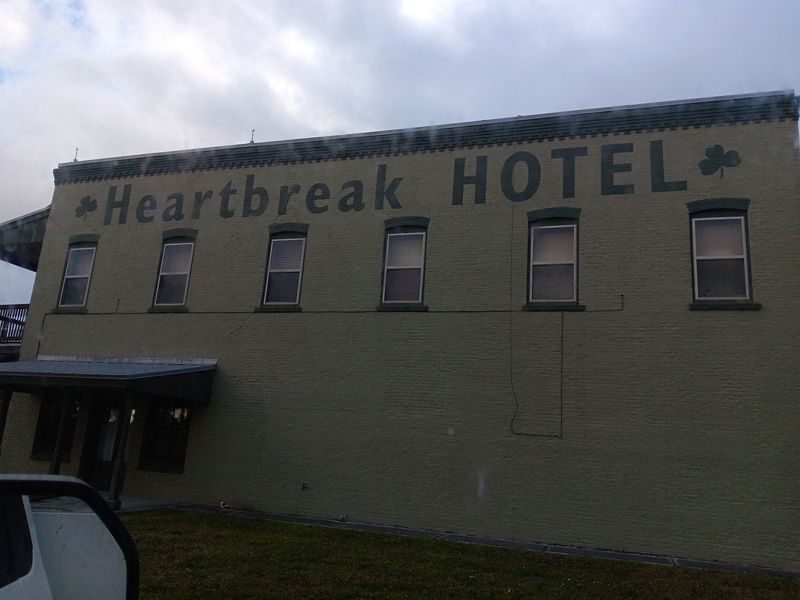
Florida is full of old buildings with stories, but few have a name that sounds like a hit record. In a tiny former cattle town in Osceola County, a two-story wooden building has carried that name in big letters for decades.
Railroad crews once slept upstairs. A general store once ran downstairs.
A preacher once painted the whole thing red. Then a rock and roll legend got pulled into its legend, even though he never checked in.
The building is not quite a ruin, and you cannot wander its halls today. It still rewards the trip, though, because the story behind it is better than most guided tours.
Keep reading for the real history, the Elvis rumor and the truth behind it, an odd detail about clovers, and the smart way to see this landmark without crossing any lines.
A Red Landmark in a Small Florida Town
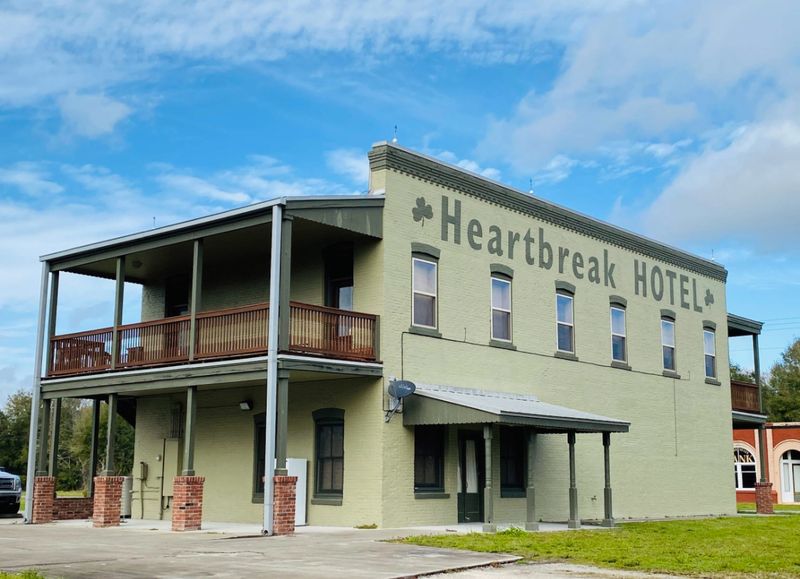
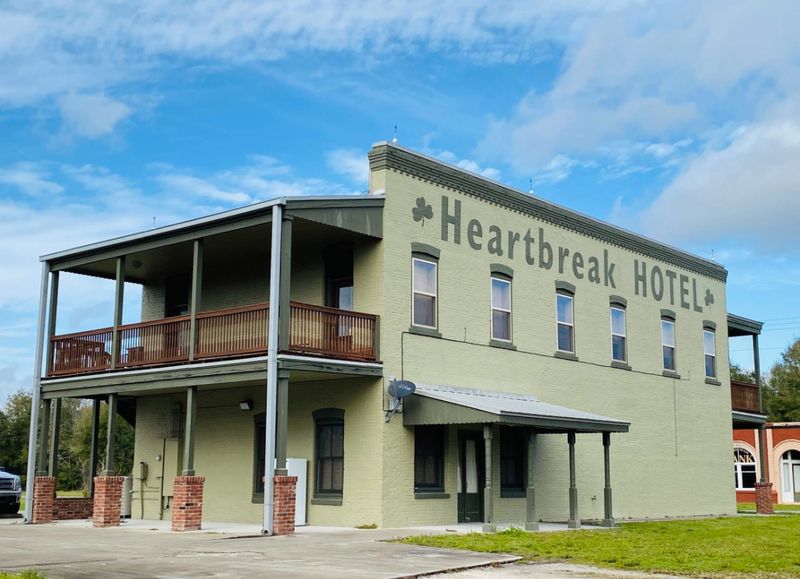
Some roadside stops need a billboard. The Heartbreak Hotel only needs its own name painted across the side.
The building sits in Kenansville, FL 34739, in Osceola County, Florida, United States. Kenansville is a small rural community, and the hotel is one of its best-known sights.
It is listed as a historical landmark rather than a working hotel. That detail matters, and it will come up again later in this story.
Kenansville began life as a cattle town on a branch of the Florida East Coast Railroad. Today it is a quiet community with several well-preserved buildings from the early 1900s.
The Heartbreak Hotel is the headliner among them. Its tall lettering makes it easy to spot, and its name makes people slow down and ask questions.
Those questions usually start with Elvis Presley. They end, quite often, with a surprise.
The real tale involves railroad workers, two brothers from North Carolina, a store, a dining room, a reverend with a can of paint, and a famous song that arrived right after the new name did.
So the building is less a hotel and more a time capsule. Its doors may be closed, but its history is wide open for anyone curious enough to read on.
Tracks That Needed a Bed
Every hotel starts with a need. Here, the need arrived on rails.
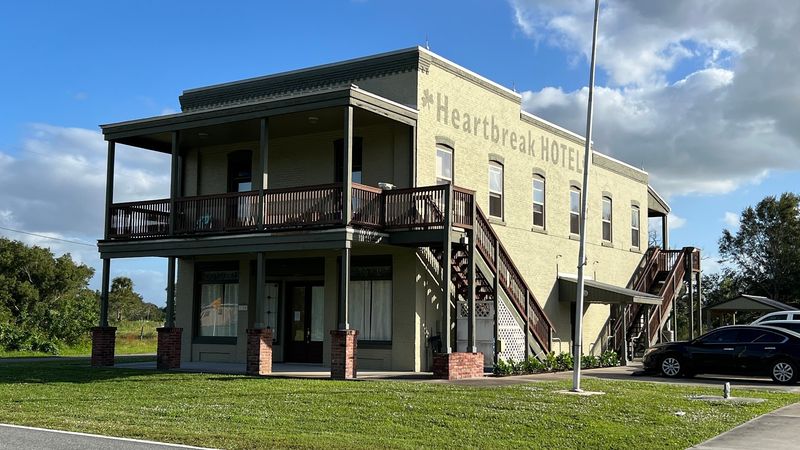
In 1915, the railroad extended its tracks through the Kenansville area. The crews building that line needed somewhere to sleep, and the area had very little to offer.
A hotel was, in plain terms, desperately needed. The answer came that same year with the building that now carries the Heartbreak name.
That timing makes the hotel a true railroad-era structure. It was not built for tourists on vacation or travelers on a road trip.
It was built for working people. Men laying track needed rest, meals, and supplies, and this building was designed to cover all three.
The railroad was part of the wider Florida East Coast system. That network shaped many Florida towns during this period, and Kenansville became a stop on one of its branch lines.
Cattle helped define the local economy. The rail connection gave the small town a link to the bigger world.
So when someone calls this place a boom-town hotel, the label fits in spirit. It rose because trains were coming, and it grew into the town’s identity once they arrived.
Not bad for a building that started as a place for tired crews to put their boots by the door.
Two Brothers From North Carolina
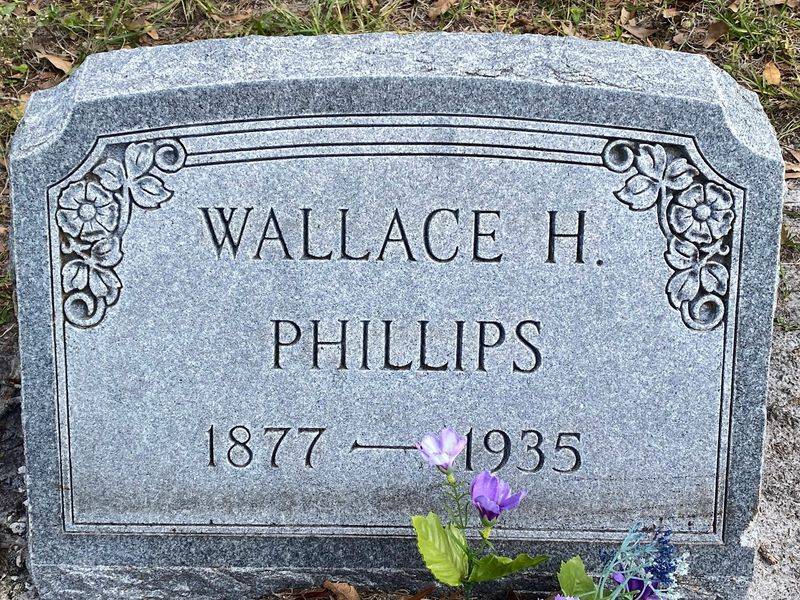
Wallace Hampton Phillips, Sr. was born on May 29, 1877, in Plateau, North Carolina. He would end up shaping a small corner of Florida history.
Wallace and his brother Robert Phillips worked as construction workers on Henry Flagler’s railroad crew. Their job brought them south, and eventually it brought them to Kenansville.
Plenty of crew members passed through towns and kept moving. The Phillips brothers did something different.
They looked at the land around Kenansville and saw a hunting and fishing paradise. So they decided to stay.
That choice turned two railroad builders into hotel builders. In 1915, Wallace and Robert built the structure that would later become the Heartbreak Hotel.
There is something fitting about it. The same men who helped lay the tracks also built the place where track workers could rest.
Wallace remained a part of Kenansville for the rest of his life. His connection to the town is part of the local record, and his name is tied to the hotel’s founding.
Many historic buildings have murky origins. This one has a clear starting point, two names, and a reason rooted in both work and a love of the outdoors.
Call it a career change with a lasting address.
Downstairs Store, Upstairs Rooms
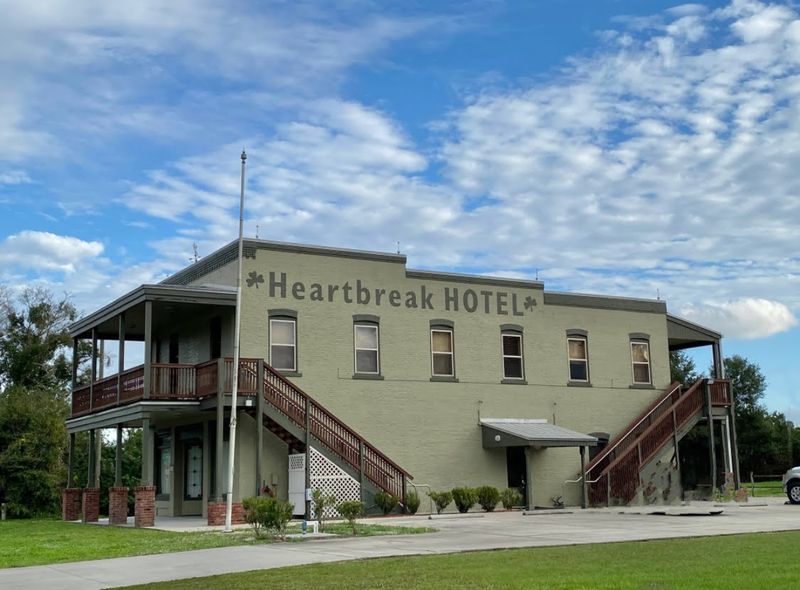
Long before any song entered the picture, the building had a much humbler name. It opened as the Piney Woods Inn.
The layout was practical and smart. The first floor held a general store, a dining room, and a kitchen.
Upstairs, there were 12 hotel rooms. That was enough space for a crew of workers, plus anyone else passing through town.
A setup like that made the inn more than a place to sleep. It worked as a supply stop, a meal stop, and a gathering point all at once.
For a small railroad town, that kind of building could serve as a hub. People had reasons to come in even if they were not staying the night.
The name Piney Woods Inn also says something about the setting. Central Florida’s pine country surrounded the town, and the name matched the land the Phillips brothers had fallen for.
Quick fact: the building’s original name had nothing to do with heartbreak at all.
It was simple, local, and tied to the landscape. The dramatic name came much later, after the building had lived a few different lives.
Twelve rooms, one store, and a kitchen. That was the full recipe for a working inn in 1915.
New Names and Lean Years
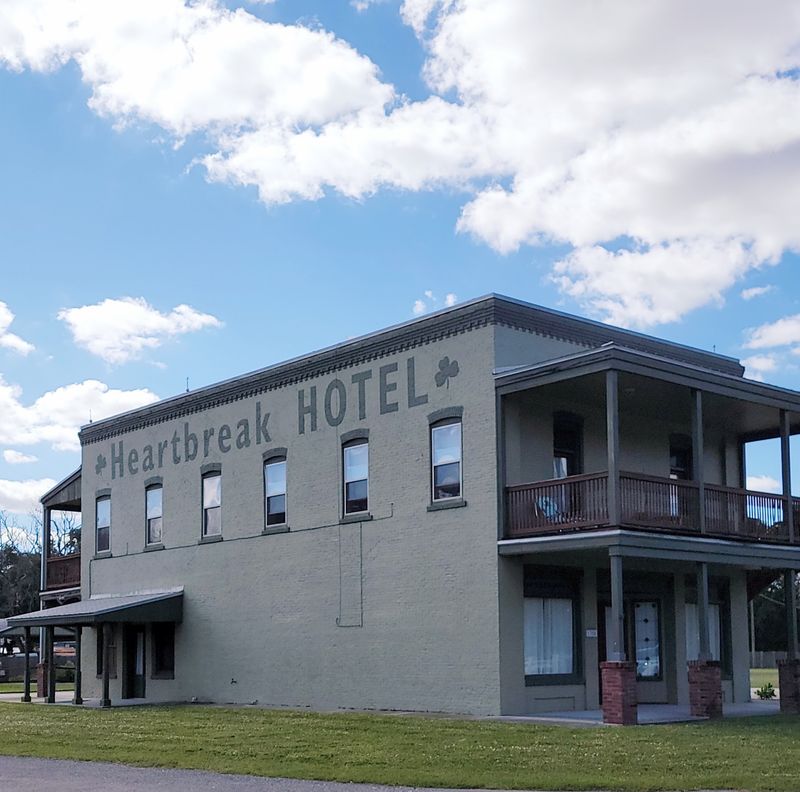
Buildings that stand for a century rarely keep one identity. This one went through at least three.
After its start as the Piney Woods Inn, the hotel was at some point called the Tropical Hotel. The exact date of that change is not well documented.
What is known is that times got harder for Kenansville. As the town’s population shrank, the hotel slid into decline.
Fewer people meant fewer guests. A building designed for a busy railroad stop now stood in a much quieter place.
That stretch of decline is where the later name begins to make sense. A hotel that once served crews and travelers was looking tired and worn.
So when people talk about the empty ruins of a boom-town hotel, this is the chapter they are hinting at. The boom faded, and the building aged along with the town.
Still, it did not disappear. Plenty of early Florida buildings were torn down during lean decades, but this one stayed on its lot.
That stubborn survival is a big reason it is a landmark today. A rundown hotel is a sad sight, but a rundown hotel that refuses to leave is the start of a comeback story.
The next owner would give it exactly that.
The Reverend Who Painted It Red
A preacher from Orlando turned out to be the hotel’s next big character. His name was James W.
Webb.
According to one account, Webb bought the building in 1955. Another local account places his ownership in the early 1940s, so the exact year depends on which history you read.
Both accounts agree on the important part. Webb owned the building, and Webb gave it the name it carries today.
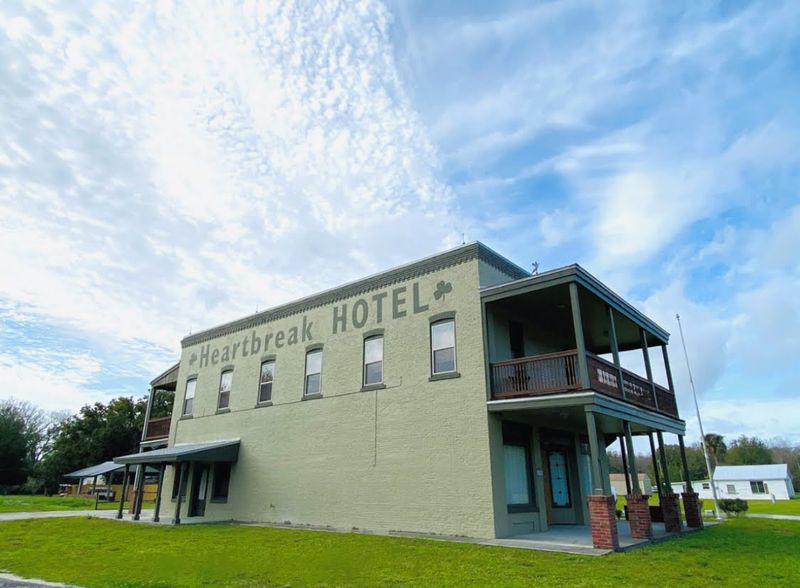
He fixed up the old hotel and painted it red. That bold color helped the building stand out in town.
Then came the name. Webb reportedly said he heard local children calling the building “The Heartbreak” because of how rundown it had become.
The nickname stuck. Rather than fight it, the new name went up on the hotel itself.
That is a rare bit of history. Most hotels choose a name to attract guests, but this one accepted a name that kids gave it as a joke about its condition.
One other version of the story says Webb picked the name after the Elvis song came out. That version is common, but the timeline in the next section complicates it in a fun way.
Either way, a reverend with a paintbrush gave a tired building its second act.
Did Elvis Ever Check In
Here is the question everyone asks first. Did Elvis Presley stay here and write his famous song?
The short answer is no.
In 1956, Elvis released “Heartbreak Hotel,” and it became his breakthrough hit. Over the years, a popular belief grew that the singer had been inspired by the hotel in Kenansville.
It is easy to see why the rumor spread. The building had the name, it was in Florida, and the song does have real Florida ties.
But Elvis never stayed at this hotel. He never visited Kenansville, and the town was not his inspiration.
The timing is what makes the story so tempting. If the 1955 date for Webb’s purchase is right, the hotel’s new name appeared right before the song hit the airwaves.
That kind of coincidence is how legends get made. Two things with the same name show up in the same state around the same time, and people connect the dots.
Some histories even reverse the order and say the hotel was named after the song. Either direction, the link is a coincidence rather than a cause.
The truth is less dramatic, but it is also more interesting. The real songwriting story has its own Florida connection, and it is waiting in the next section.
The Songwriters Behind the Hit
Music history has a cleaner answer than local rumor does. The song “Heartbreak Hotel” was written by Mae Boren Axton and Tommy Durden.
Elvis added the final touches. Then his recording turned the song into a breakthrough moment in his career.
Historians believe the songwriters drew on stories from both Texas and Florida. One of those stories involved a hotel in Tampa.
Another involved a man in El Paso named Alvin Krolik. He reportedly wrote an unpublished autobiography that he described as the story of a man who walked a lonely street.
That line reportedly sparked the idea that became the song. Fans will recognize the lonely street image from the lyrics.
So Florida does play a role in the tune’s origins. It just was not Kenansville or this particular building.
Fun fact: the hotel and the song share a name and a home state, yet they grew from completely separate stories.
That makes the Kenansville building a tribute rather than a birthplace. It shows how far the song’s reach went, all the way to a small cattle town where a red hotel carries the same words.
Many people find that version even better. A building does not need a famous guest to become part of a famous story.
The Clover Mystery
Not every question about this building involves Elvis. Some people walk away puzzled by something smaller.
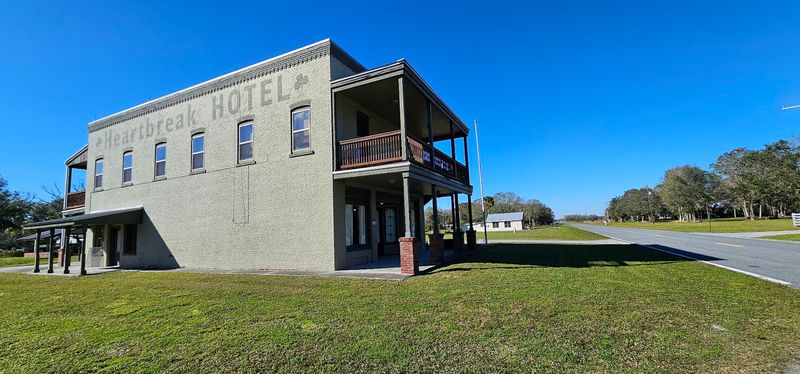
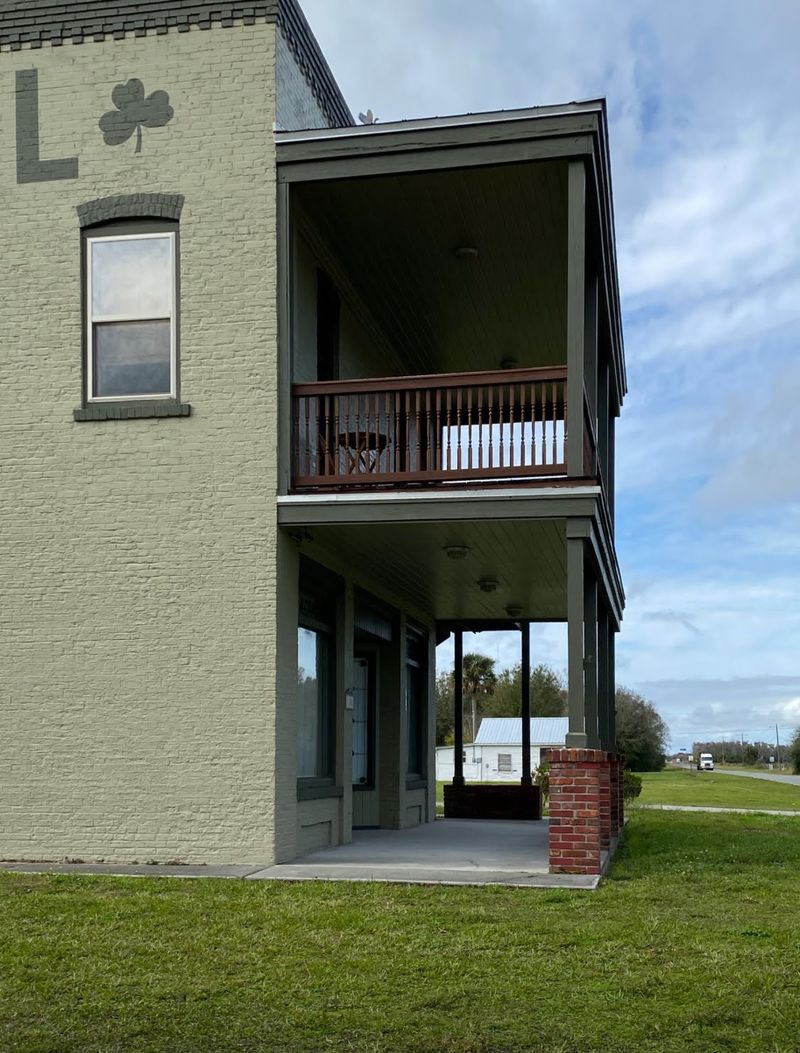
The building features clovers. Yes, clovers, on a hotel with heartbreak in its name.
The exact reason for them is not explained in the local histories. No record found here says who added them or why.
That leaves a fun little puzzle for anyone who looks closely. A building named for a broken heart decorated with a classic symbol of good luck is a curious pairing.
It would be easy to invent a backstory. It is more honest to leave it as one of the building’s open questions.
Maybe it was a design choice by a later owner. Maybe it means something to someone in town.
Either way, the clovers give the building a quirky personality. They are the kind of detail that makes people stop, look twice, and start talking.
For photographers, they add something extra to frame beyond the big lettering. For history fans, they are a reminder that small details can be just as interesting as big names.
If you happen to learn the real story, local historians would probably love to hear it. Until then, the clovers keep their secret, and the building keeps a bit of mystery.
A Town Full of Early 1900s Survivors
Kenansville is not a big place. That is part of its appeal.
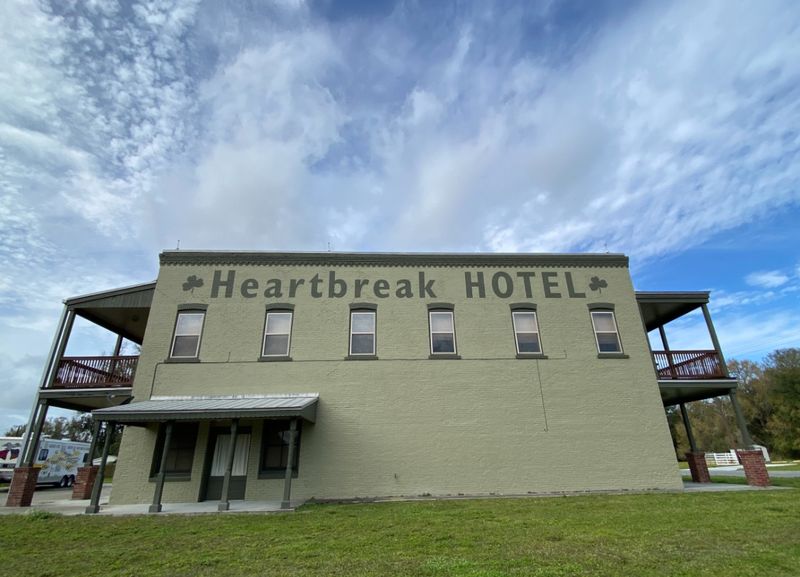
The community is small and rural, with roots as a cattle town on a branch of the Florida East Coast Railroad. It still holds several well-preserved buildings that date back to the early 1900s.
The Heartbreak Hotel is the most famous of them. Its name and its red-painted history give it star status in town.
Seeing it in this setting helps the history make sense. The hotel was not a lone building in the wilderness but part of a working railroad community.
When you look at the hotel, you are looking at the kind of building that kept a small town running. It housed workers, sold supplies, and fed people.
The quiet setting today is a big contrast with the busy rail years. Much of central Florida has changed fast, but Kenansville still feels like a smaller chapter of the state’s story.
That makes the town a good stop for people who like Florida history off the main tourist path. There are no theme park crowds here.
The point is to slow down and take in a place that grew up around trains and cattle. A short stop gives a real sense of how rural Florida looked before the big highways and the big attractions.
Fresh Paint for an Old Name
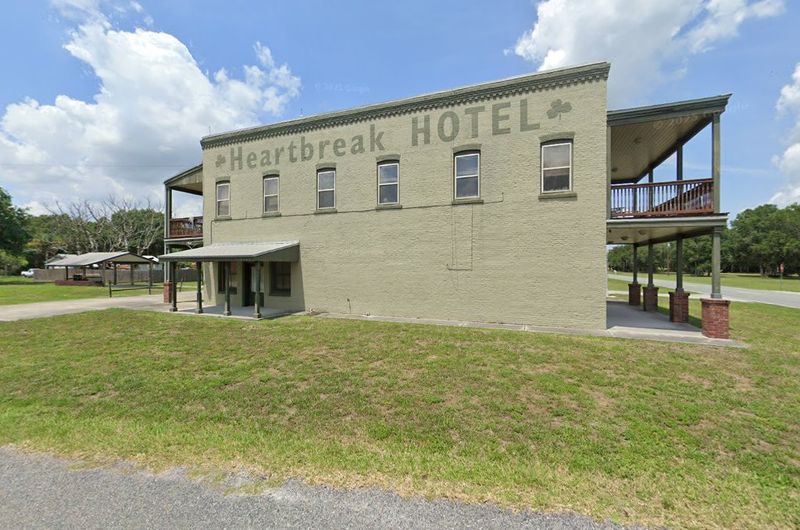
Good news for fans of old buildings: the Heartbreak Hotel is not fading away. New owners have taken over the property.
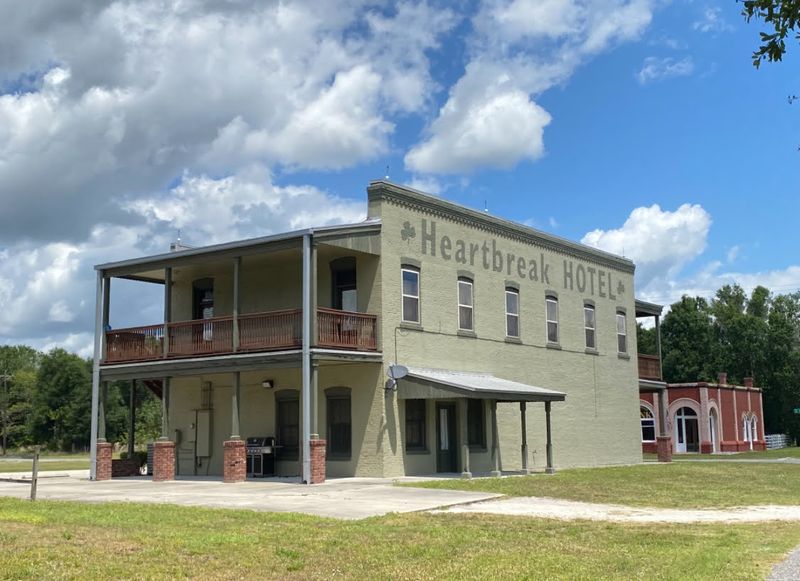
The building has been going through a major renovation. That work has included a fresh coat of paint.
Most importantly for fans, the name stayed. The words “Heartbreak Hotel” remain in large letters on the side of the building.
That choice matters a lot. Owners could have wiped the slate clean, but they kept the most famous part of the building’s identity.
The building is also described as well kept. That is a big change from the rundown years that earned it its nickname in the first place.
So the idea of empty ruins is a bit out of date. The building may be quiet, but it is cared for.
There is a nice twist in that. A name born from a building’s poor condition now sits on a structure that is in much better shape.
Renovation also means the building may look a little different depending on when you see it. Paint colors, trim, and outside details can change during this kind of work.
The heart of it stays the same, though. More than a century after the Phillips brothers built it, the old inn is still standing tall.
Look, Snap, and Respect the Fence Line
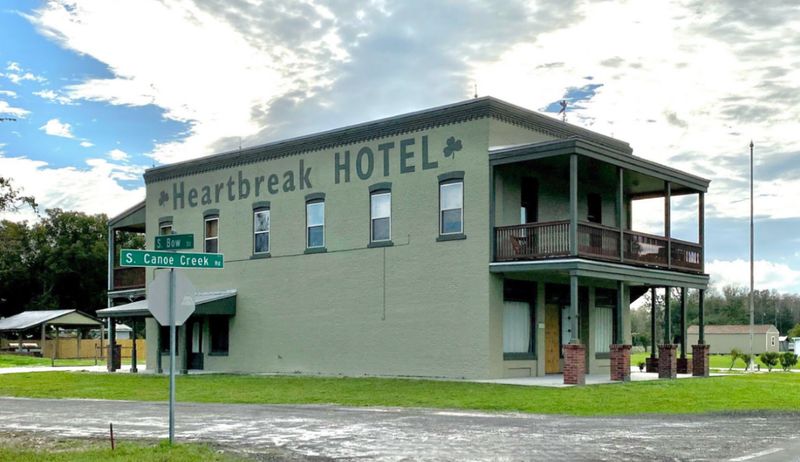
Before planning a trip, one fact needs to be front and center. This is not a working hotel anymore.
You cannot book a room here. The building is private and is not open to the public.
That means no lobby, no tours, and no walking through the upstairs halls where railroad crews once slept. Anyone hoping to explore the inside will need to adjust plans.
What you can do is view the building from public areas. The large lettering and the exterior are the main attraction anyway.
Photos from a respectful spot are the way to go. Stay off private land, do not try doors or windows, and keep the visit short and polite.
That approach protects the building and keeps good relations with the owners. It also helps keep the landmark welcoming for the next curious traveler.
Quick tip: treat this stop like a roadside history marker rather than an attraction with a gate and a ticket booth.
No official hours or entry fees apply, since there is no public entry at all. Your visit is basically as long as it takes to read the sign, snap a photo, and think about the Elvis rumor for a minute.
Sometimes the best history lessons happen from the sidewalk.
Who Will Love This Detour
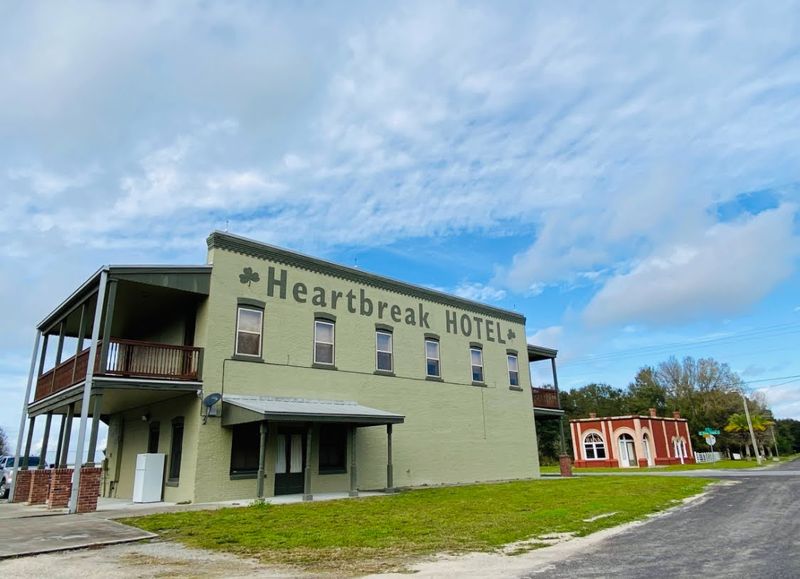
Music fans are the obvious crowd. Anyone who loves Elvis will get a kick out of seeing a real building that shares a name with his breakout song.
History buffs will get even more out of it. The railroad link, the Phillips brothers, and the 1915 build date make it a solid stop for anyone into old Florida.
Road trippers are a great match too. The stop is quick and free, and it adds a fun story to a drive through central Florida.
Friends traveling together seem to enjoy it as well. Some groups have made a night of it by staying at a hotel down the street and turning the visit into a small adventure.
Photographers will like the big lettering and the old two-story shape. The clovers are a bonus detail worth catching.
Families can turn it into a quick lesson. Kids may enjoy hearing that local children once gave the building its nickname.
It is less suited for anyone expecting a museum or indoor exhibits. There are no displays, gift shops, or guided programs here.
Go in with the right expectations, and the payoff is real. You get a true story, a famous name, and a building that has outlasted most of its neighbors from the railroad days.
Worth the Short Stop
Not every landmark needs a ticket, a tour guide, or a gift shop. Some just need a good story and a big sign.
The Heartbreak Hotel has both. It began in 1915 as the Piney Woods Inn, built by two railroad workers who fell for the local outdoors.
It served crews, ran a store, and fed people in its dining room. It became the Tropical Hotel, fell on hard times, and then got painted red by a reverend who heard kids calling it a heartbreak.
Then came the Elvis legend. The singer never stayed there, but the shared name gave the building a fame it never planned on.
Today, new owners have given it fresh paint and kept the famous name in large letters. The building is private, so the visit happens from the outside.
That is still enough. A few minutes here connect railroad history, small-town Florida, and one of the most famous songs of the 1950s.
So if you are cruising through Osceola County and want a stop with a twist, Kenansville delivers. Bring a camera, bring some curiosity, and leave the building exactly as you found it.
The hotel may not take guests anymore, but it still has plenty of company in the stories it carries.
Enjoyed this story?
Add Fast Food Club as a preferred source to see more of our reporting on Google.