


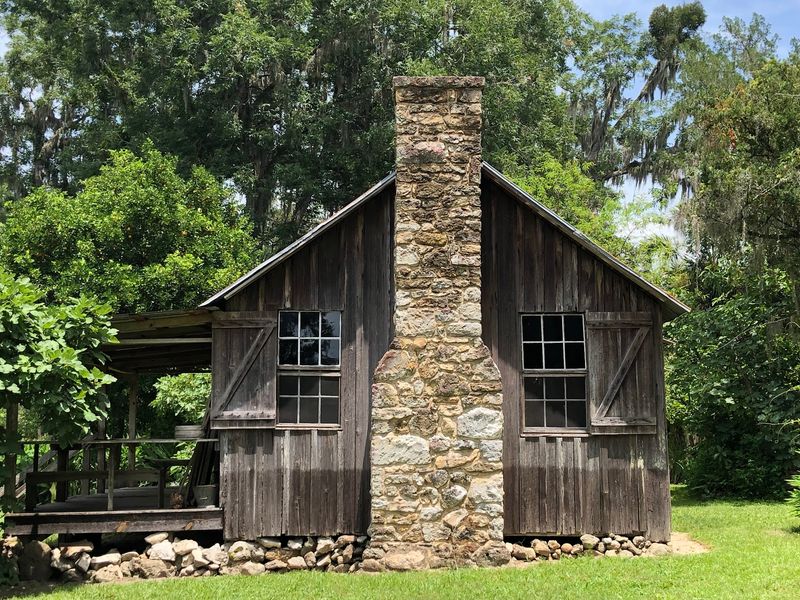
A brown state park sign on a two-lane road west of Gainesville is easy to miss at highway speed. Plenty of drivers do miss it, and that is exactly why the place behind it stays so quiet.
Past a small visitor center and a short trail sits a farmstead where three generations of one family worked the land for close to a century. The house still holds their furniture, the barns still hold their tools, and chickens still wander the yard like they own it.
There are no crowds, no screens, and no rush. Many people in North Central Florida have never set foot here, even though it is less than 10 miles off the interstate.
Keep reading to learn what waits down that trail, when to go, what it costs, and the one fall event worth planning a trip around.
A Farmstead Hiding in Plain Sight
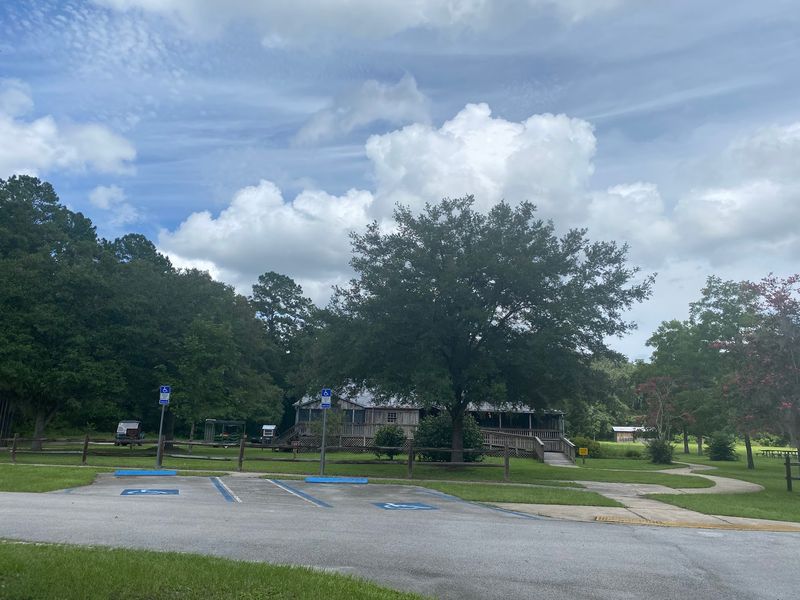
Some of Florida’s best history lessons come without a classroom. The mystery spot is Dudley Farm Historic State Park, at 18730 W Newberry Rd, Newberry, FL 32669, in Alachua County, Florida, United States.
Officially, it is listed as a historical landmark and a living history museum. In practice, it is a preserved homestead that tells the story of Florida farm life from the 1850s to the 1940s.
The park sits less than 10 miles west of Interstate 75. That makes it an easy detour for anyone heading through the Gainesville area.
Even so, it rarely feels busy. Many travelers pass the sign without a second thought, which keeps the grounds calm on most days.
The setup is simple. A visitor center greets arrivals near the parking lot, and a short walk leads to the farmstead itself.
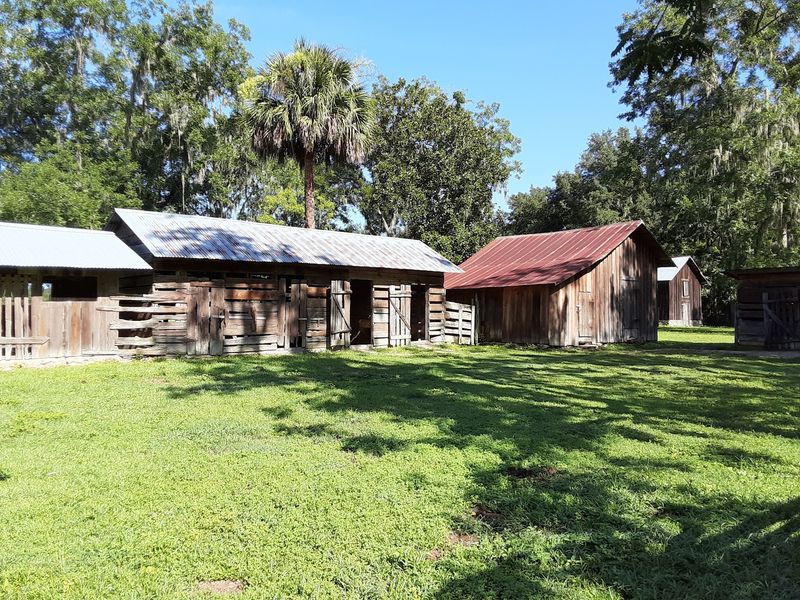
Once there, more than a dozen historic buildings sit close together. Livestock, gardens, and old farm machinery fill in the rest of the scene.
The park holds a 4.7-star average across more than 400 Google ratings. That is a strong showing for a small rural site with no flashy attractions.
So what makes a quiet old farm earn that kind of loyalty? The answer starts with the family who built it.
Three Generations of Dudleys
Family farms rarely survive this long. The Dudley farm dates to around 1850 and stayed a working operation for three generations of the same family.
Over the decades, the Dudleys grew cotton, corn, and grain. They also raised cattle on land that once covered about 900 acres.
Parcels were traded off over time. Today the property spans a little over 300 acres.
The household was a big one. Mr. Dudley raised eight daughters and four sons on this land.
The family connection lasted remarkably long. The last of the daughters lived on the property until 1996, reaching the age of 94.
That long stretch of ownership explains one of the farm’s biggest surprises. Most of the items inside the buildings came from the original Dudley family and their farm operation.
Many museums fill rooms with pieces gathered from elsewhere. Here, the furniture, tools, and household goods mostly belonged to the people who lived and worked on this very ground.
The state stepped in to preserve the property and protect it from development. The result is a homestead that looks as if the family simply stepped out for the afternoon, roughly a hundred years ago.
The Visitor Center Primer
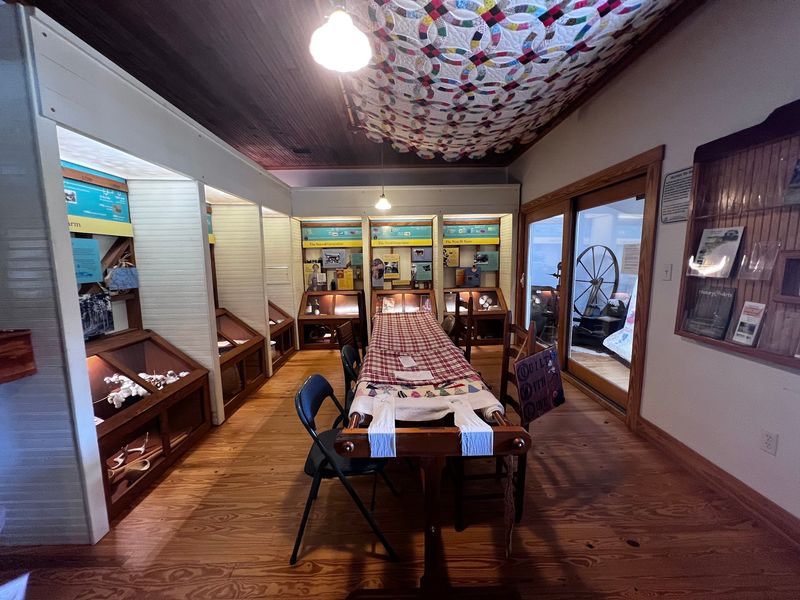
Smart explorers start indoors. The small visitor center near the parking area is air-conditioned and handicap accessible, a welcome perk during a Florida summer.
Inside, a short video lays out the story of the farm and the family. It gives helpful background before heading down to the homestead.
Display cases hold a good collection of artifacts. Panels explain how the farmstead operated and how it changed over the years.
Watching the video first pays off. Each building on the farm makes more sense once the history is fresh in mind.
Restrooms are located right by the parking lot. They are the only ones on the property, so plan a stop before setting out.
Picnic tables also sit near the visitor center. They work well for a packed lunch or a quick break between the farm and the trail.
Pet owners should note a key rule here. Pets, including service dogs, are not allowed past the visitor center toward the farmhouse.
The nature trail remains open to leashed dogs, so four-legged travelers still get a walk. Consider the visitor center the opening chapter, with the main story waiting just down the path.
Down the Path to 1900
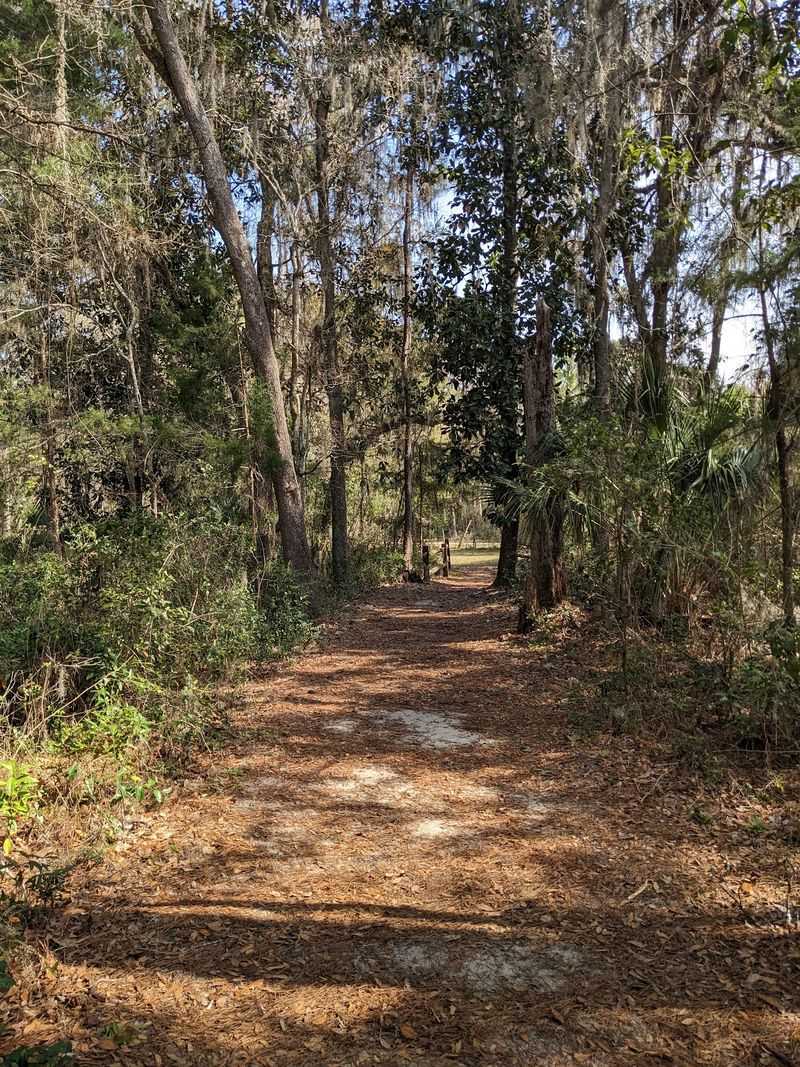
The walk is short, but the shift is huge. A path leads from the visitor center to the farmstead in just a couple of minutes.
Many people describe that stroll as a kind of time machine. Modern Florida fades out, and a working farm from another century comes into view.
Plenty of shade trees line the grounds. They make warm afternoons far more manageable than the open fields of many rural parks.
Once at the farm, the buildings sit close to one another. There is no long trek between stops.
That compact layout suits a wide range of ages. Kids, older adults, and school groups can all move through at their own pace.
Comfortable shoes are still a good idea. Between the farmstead, the gardens, and the trails, the steps add up.
Bringing water is wise too, especially on hot days. A small snack in the bag never hurts either.
Parents should keep an eye on little ones near the edges of paths. Thorny vines grow low around the ground in some spots.
Small details aside, the walk sets the tone perfectly. Arrival at the farm feels earned, even if it took only a few minutes.
More Than a Dozen Buildings to Explore
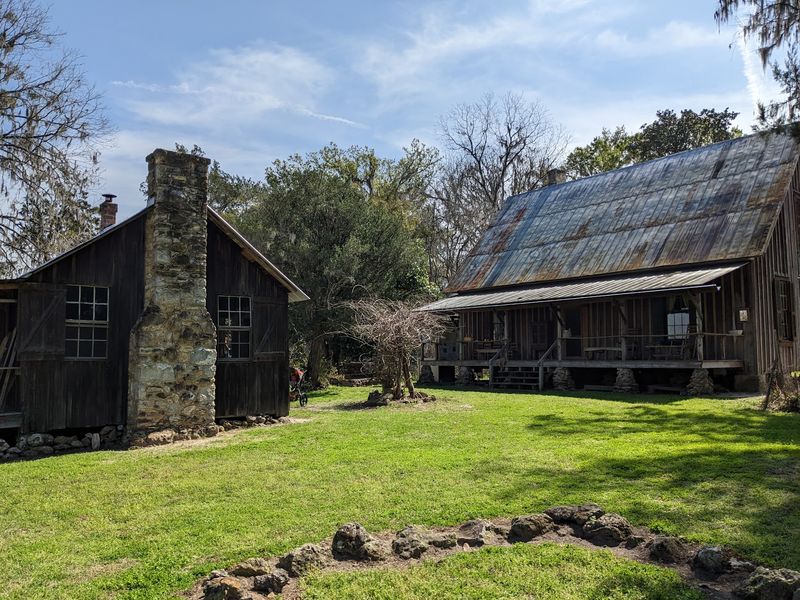
Count them up and the list runs past twelve. The farmstead holds more than a dozen historic structures, each with its own job in daily farm life.
The farmhouse is the centerpiece. Its rooms show how a large family lived without electricity-era conveniences.
A separate kitchen building stands nearby. Early Florida homes often kept cooking apart from the main house, and this one follows that pattern.
A smokehouse and a root cellar are part of the tour as well. Both reveal how families stored food long before refrigerators.
Barns and work buildings round out the collection. Old-fashioned equipment and machinery fill many of them.
Seeing the tools in place helps connect the dots. Plows, implements, and household items make it clear how much labor a single day required.
Fun fact for history buffs: the property also includes a store building that once served the area. That ties into a modern shop experience covered a little later.
The buildings are close enough together to explore in any order. Many people spend one to two hours at the farm, while those who read every sign may stretch that past two hours.
Roosters, Turkeys, and a Few Horses
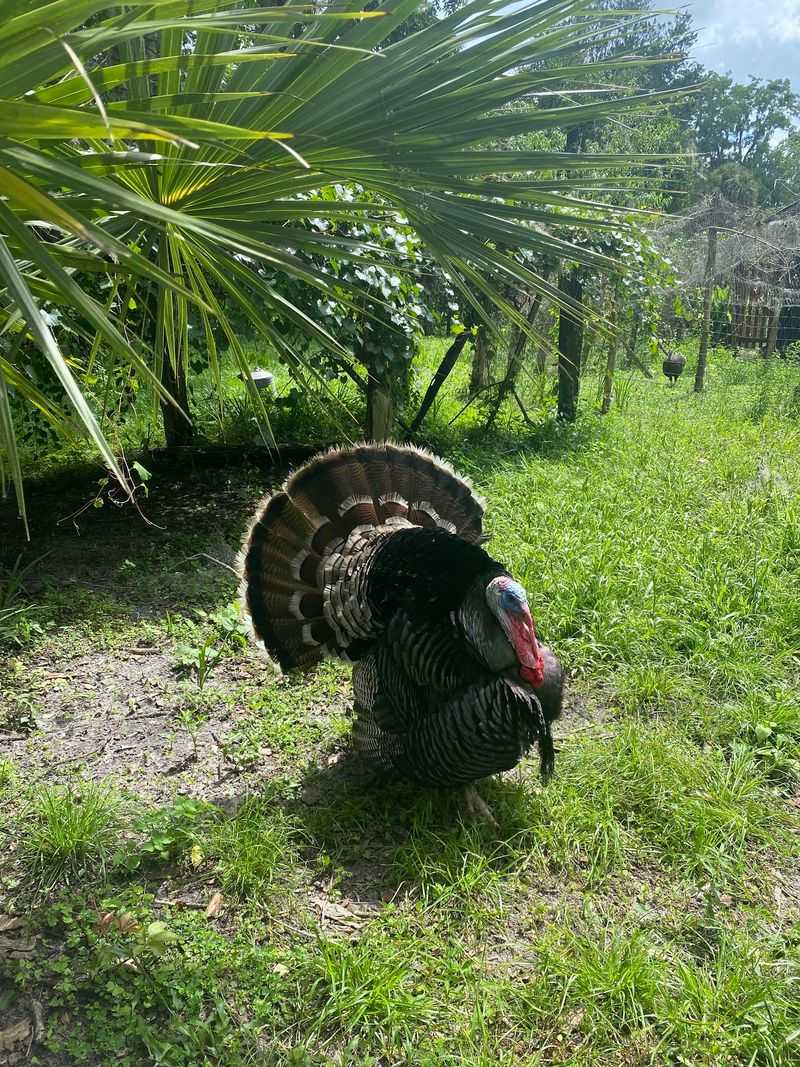
Not every exhibit stands still. Dudley Farm keeps live animals on the grounds, which makes it much more than a static museum.
Chickens and turkeys roam the farmyard. Roosters strut around as if they are the official tour guides.
Cows and horses are also part of the farm. Their presence reflects the livestock that once supported the family.
Kids especially enjoy this part. Seeing animals on a real farm makes the history lesson stick.
The gardens deserve attention too. Banana plants, fig trees, ginger, and roses grow on the property, along with many other plants.
These gardens show what a Florida farm family could grow close to home. They also add plenty of photo opportunities around the buildings.
Here is the part many people do not expect. The farm is still worked year-round, so volunteers handle chores even on quiet days with no special events.
That means the animals are fed, the gardens are tended, and the grounds are maintained daily. Historic farms do not take days off, and neither does this one.
Volunteers in Period Attire
History is easier to grasp when someone can answer follow-up questions. At Dudley Farm, volunteers and park rangers fill that role well.
Many volunteers dress in period attire. They share stories about the Dudleys and explain how the farm ran.
The staff earns consistent praise for being friendly and knowledgeable. Group tours led by rangers are a popular choice for church groups and senior outings.
Live demonstrations are a highlight on certain days. Weekends are the best bet for catching them in action.
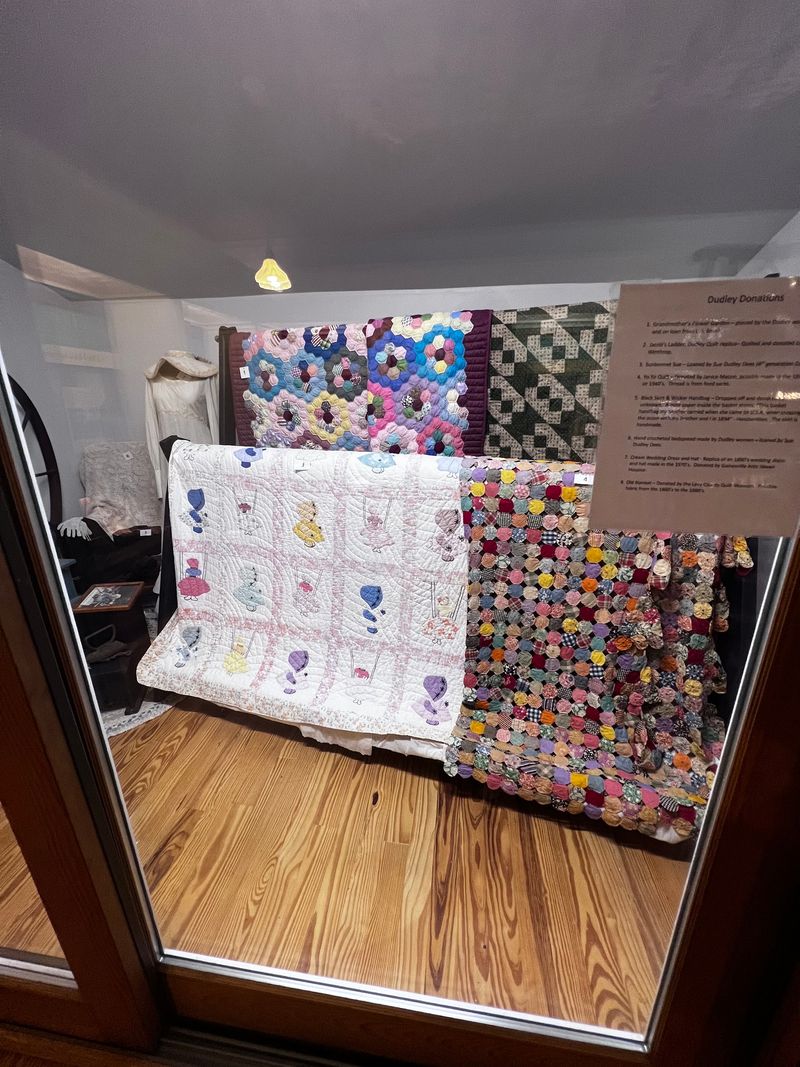
Past demonstrations have included sewing and quilting. The volunteers also help others learn these traditional skills.
On some days, a fiddle player has performed for guests. Moments like that add a lively touch to the experience.
Saturday visits tend to offer the most interaction. Longtime volunteers often share deep knowledge of the family and the property.
There is another quiet bonus here. People actually sit and talk, without anyone glued to a phone, which feels refreshingly old-fashioned on a farm built for an older era.
Thursday trips can be calmer with fewer demonstrations. Pick the day based on whether conversation or quiet matters more.
The Pause and Ponder Trail
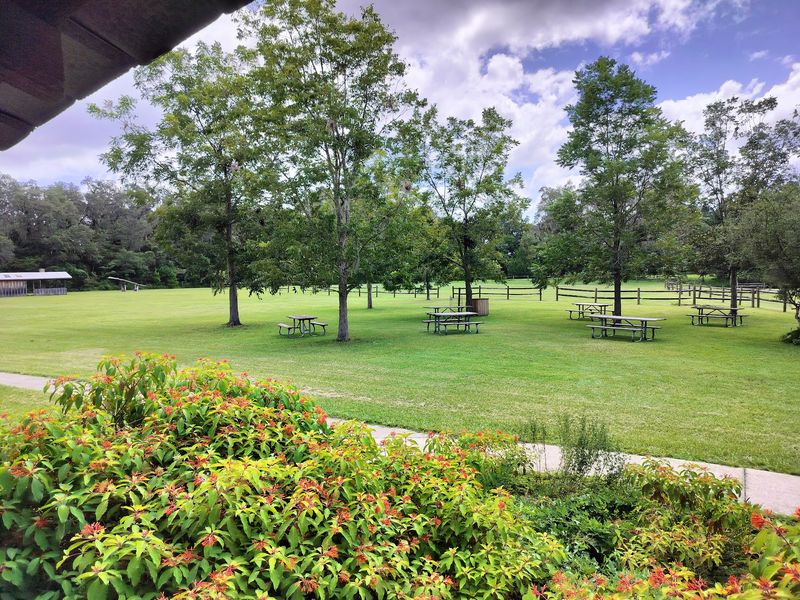
Sometimes the best part of a historic park is the part with no buildings at all. The Pause and Ponder Trail offers exactly that kind of break.
The name is fitting. Many people use it to slow down after touring the farm.
The walking trail is a short, natural loop. It can be finished quickly or enjoyed at a leisurely pace.
It is easy to navigate, which suits families with younger children. Open grassy areas around the property add more room to roam.
Dog owners get good news here. Leashed pets are welcome on the nature trail, even though they cannot go to the farmhouse.
Accessibility is another strength. The trails are well kept, and a sand-capable wheelchair has been available for use on site.
Park staff have even loaned an off-road wheelchair to group members who needed one. That kind of help makes the property open to more people.
Some come for a couple of hours of calm and leave feeling far less stressed. A small fee for that kind of reset is a pretty good trade.
Commissary Finds and a Fall Cane Tradition
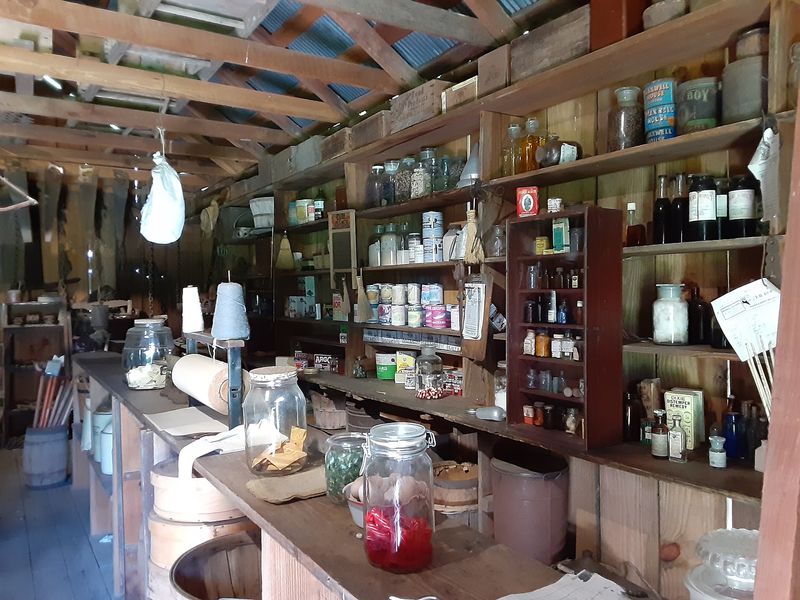
Every good farm trip ends with a stop at the store. The commissary near the visitor center works like an old-time general store.
Shelves hold regionally made preserves and other local goods. Local honey and handmade gifts are also among the finds.
Drinks are sold there too. Hours for the shop can vary, so it may not be open every time the park is.
A nursery offers native plants for sale. Gardeners can take home a small piece of Florida landscape.
Now for the event worth circling on the calendar. The sugarcane event in the fall is one of the park’s most popular gatherings.
Each November, the farm demonstrates how cane syrup is made. Volunteers explain how cane sugar was produced on farms like this one.
Other public events take place throughout the year. The official park website lists the schedule, so checking ahead is the smart move.
A quiet weekday trip and a busy event day feel very different. Choosing between them depends on whether the goal is solitude or a full living history show.
Hours, Fees, and a Gentle Verdict
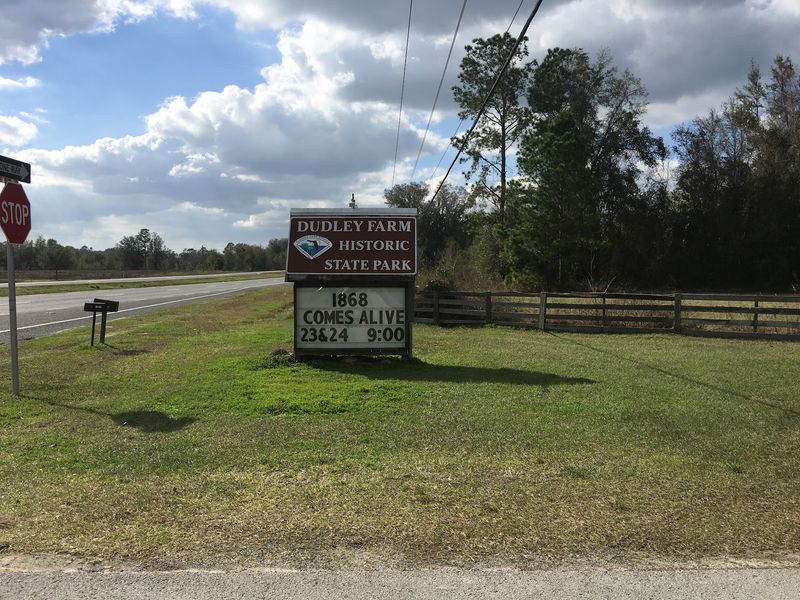
Planning is simple, but timing matters. Dudley Farm is open Wednesday through Sunday from 9 AM to 4 PM.
The park is closed on Mondays and Tuesdays. Plenty of people have pulled up on those days, so double-check before driving out.
Entry has been $5 per car, paid on the honor system. The ticket goes on the rearview mirror.
Some mention an $8 per car rate, and annual state park pass holders get in without the fee. Confirm current fees on the Florida State Parks website before the trip.
Parking is plentiful. Restrooms are clean and located by the lot.
Plan on one to two hours, or a bit more for those who linger. Comfortable shoes, water, and snacks make the outing smoother.
So who will enjoy it most? History fans, families, school groups, and anyone curious about old Florida will find plenty here.
Repeat trips can feel familiar since the exhibits do not change much. Event days help keep things fresh.
For a small fee and a short drive from the interstate, the farm delivers a calm, honest look at the past. Only a handful of people take the turn, and that may be the best reason to join them.
Enjoyed this story?
Add Fast Food Club as a preferred source to see more of our reporting on Google.