


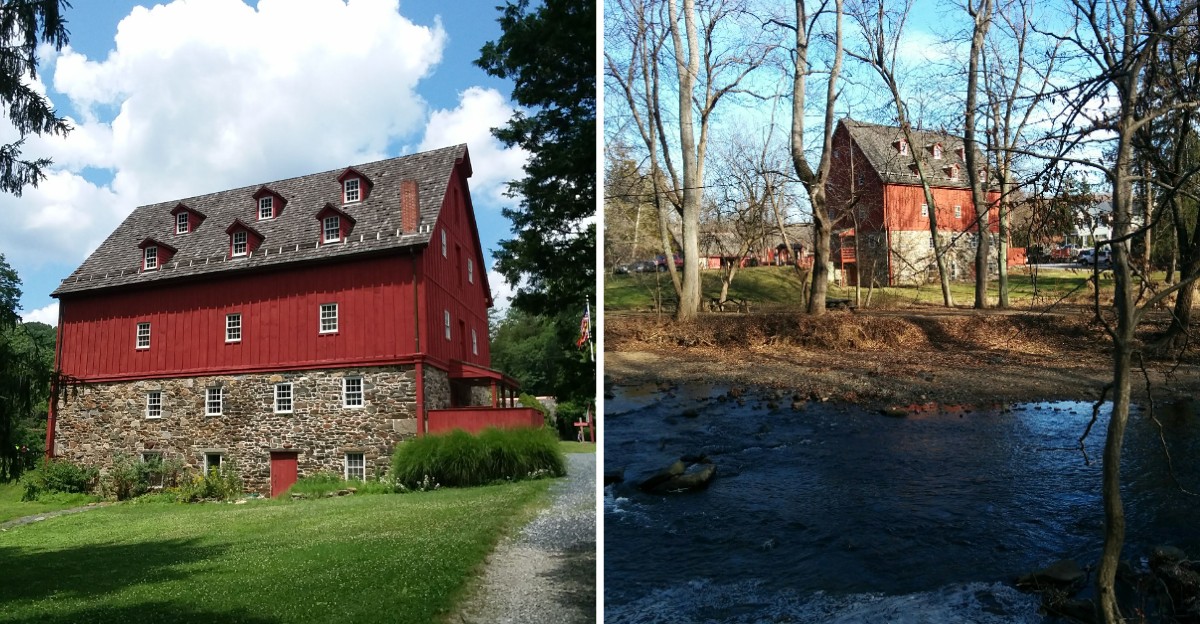
Some people drive past this spot for years and never notice it sits just off the road. Tucked into the woods of northeastern Maryland, a small village from the 1700s still stands beside a winding creek, with a mill, a blacksmith shop, and a stone house that refuse to retire.
When the leaves fall in autumn, the old buildings come into full view, and the whole place starts to look like a page from a history book. Trails loop through the forest, a covered bridge waits down the path, and on certain Saturdays a blacksmith fires up the forge.
Admission is free, the parking is free, and the history runs deep. Keep reading to learn what makes this quiet corner of Gunpowder Falls State Park worth the drive, when to go, and how to make the most of a visit.
A Quaker Village Hiding Off Jerusalem Road
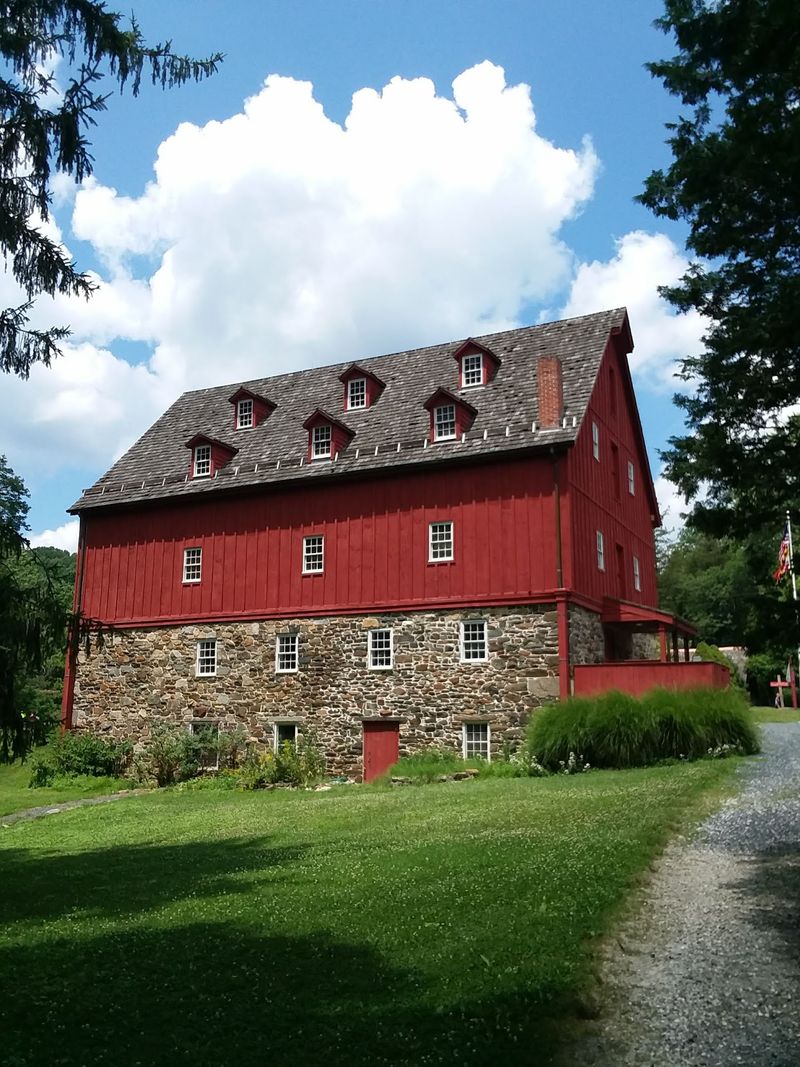
Hundreds of drivers pass this place without a second glance, and that is part of its charm. The village is Jerusalem Mill, found at 2813 Jerusalem Rd, Kingsville, MD 21087, in the United States.
It sits inside Gunpowder Falls State Park in Baltimore County, Maryland. The site is a preserved and restored 18th-century Quaker village.
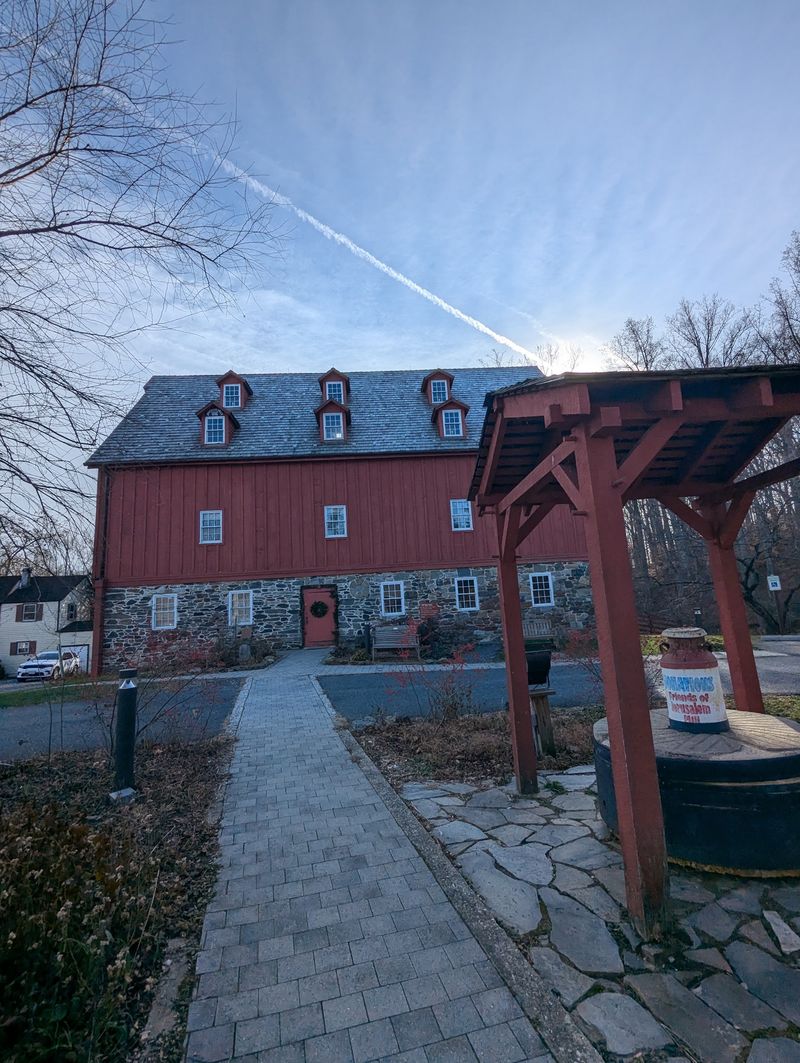
The property is officially listed as a historical landmark. Its grounds include a mill, a blacksmith shop, a stone house, and several other old structures.
Getting there is simple for folks in the Baltimore area. The village is just minutes from Interstate 95, yet it feels tucked away in rural Maryland.
That balance matters. A short drive from the highway leads to a place that seems to run on an older clock.
The village is also well loved, holding a 4.7-star average across more than a thousand public opinions online. Many call it one of the best-kept secrets in the region.
Once the trees go bare in late fall, the buildings stand out clearly against the hillside. That is when the old village really earns its reputation for looking stuck in another century, and the next stop explains how it got that way.
Centuries Kept Alive by Volunteers
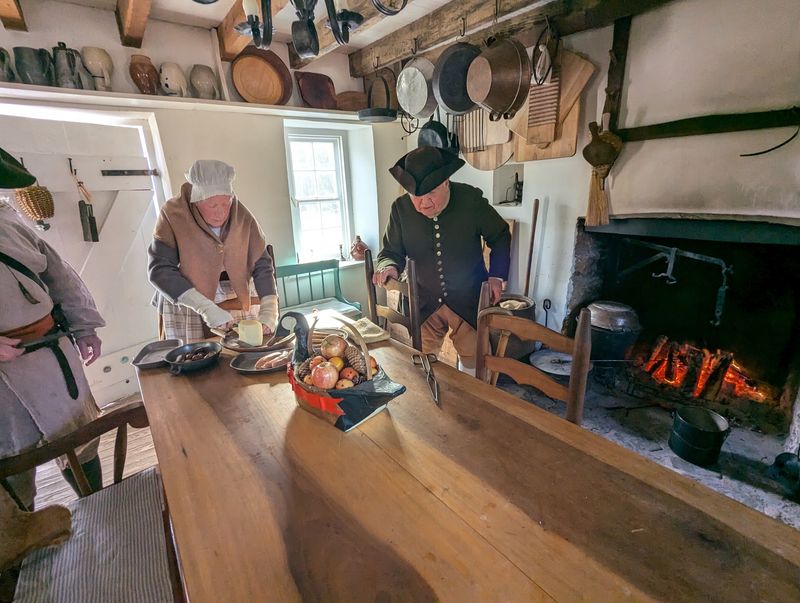
History here is not locked behind glass. The village tells a story that stretches across several centuries of American life and culture.
Restored buildings, historical interpreters, and educational exhibits all work together to share that story. The site also touches on Civil War history, which adds another layer to its 18th-century roots.
Much of the work comes from volunteers and locals. They maintain the buildings and keep the history alive for each new group that arrives.
The volunteers are known for being knowledgeable and friendly. A quick chat in the main house can turn into a long and delightful conversation.
Guided tours and educational field trips are part of the mix too. School groups and families both use the village as an outdoor classroom.
A small museum on site explores the roots of the historic community. Its staff earns steady praise for being helpful and kind.
Most of the historic buildings are accessible, so guests can go inside and look around. A partially reconstructed barn and old farm equipment add to the rural picture.
Not every building is open every day, though. Timing a trip well makes a real difference, and the forge is the best proof of that.
Sparks at the Blacksmith Shop
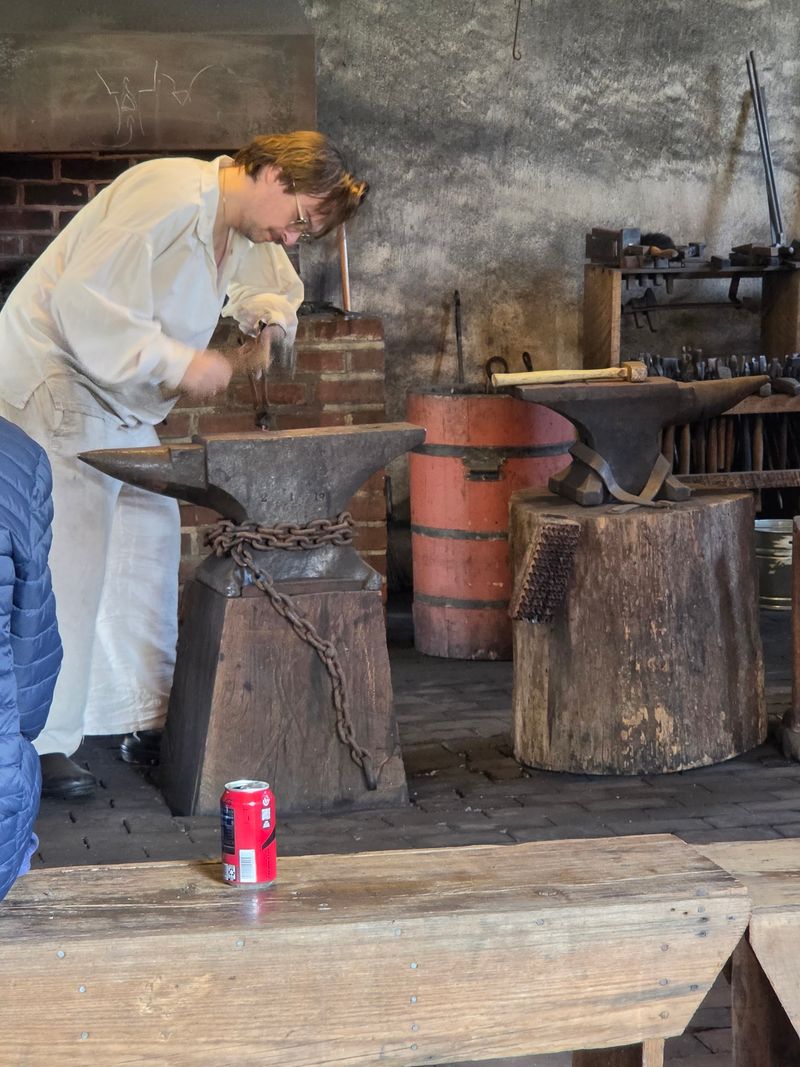
Some souvenirs come from a gift shop. At this village, a lucky few walk away with a tiny sword hammered out of a nail.
The old blacksmith shop is one of the most talked-about spots on the grounds. On Saturdays, it often opens for live demonstrations.
A working blacksmith turns plain metal into small, useful, or just plain fun objects. Kids tend to stay glued to the doorway the whole time.
Demonstrations depend on the day and season. Weekday trips may find the doors closed, so weekends are the safer bet.
Early spring can also be quieter for living history. Activity tends to pick up as the warmer months arrive.
The shop is a reminder that villages like this ran on hands-on skills. Tools, hinges, and hardware all had to be made locally.
Watching the craft up close turns a history lesson into something memorable. It is hard to forget seeing iron bend under a hammer.
Plan for a Saturday stop if the forge is a must. Then follow the creek for the next highlight, which waits about half a mile down the path.
The Covered Bridge Down the Trail
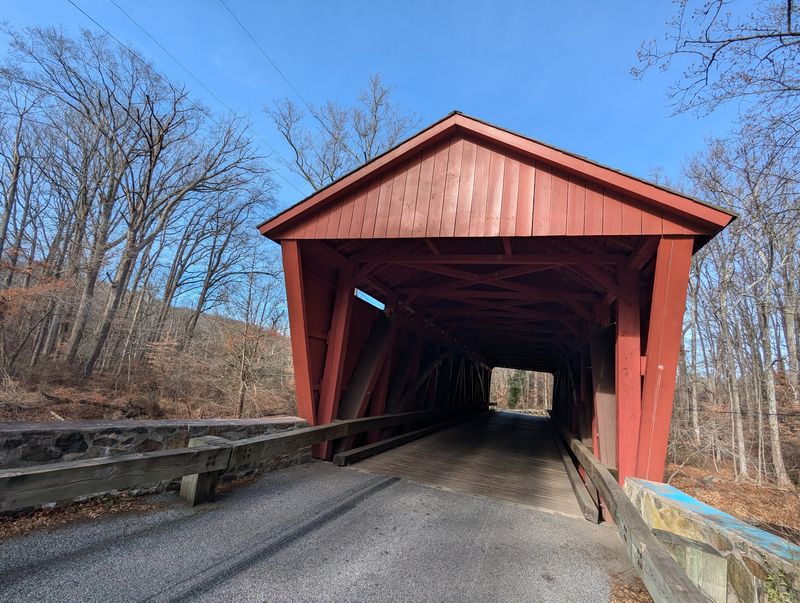
Half a mile is all it takes to reach one of the most photographed structures in the area. A covered bridge from the late 1800s crosses the water down the trail from the village.
The walk there follows well-maintained paths through the woods. Many people make a loop, heading out on the trail and returning through the bridge itself.
That loop crosses a wooded ridgeline and passes over the water. It is relatively short, which makes it friendly for most ages.
The bridge also draws plenty of cameras. Graduation photos and professional shoots are a common sight here.
A word of caution is worth sharing. The road near the bridge is a single lane that carries two-way traffic.
Some people wander into that road for a closer look or a better photo angle. Sticking to the trails keeps everyone safer and keeps traffic moving.
In fall and winter, the bare branches open up the view. The bridge becomes easier to spot from the path.
Bring patience on busy weekends, since the bridge is a popular stop. The trails beyond it, however, tell a quieter story.
Blue Blazes, White Blazes, and Muddy Boots
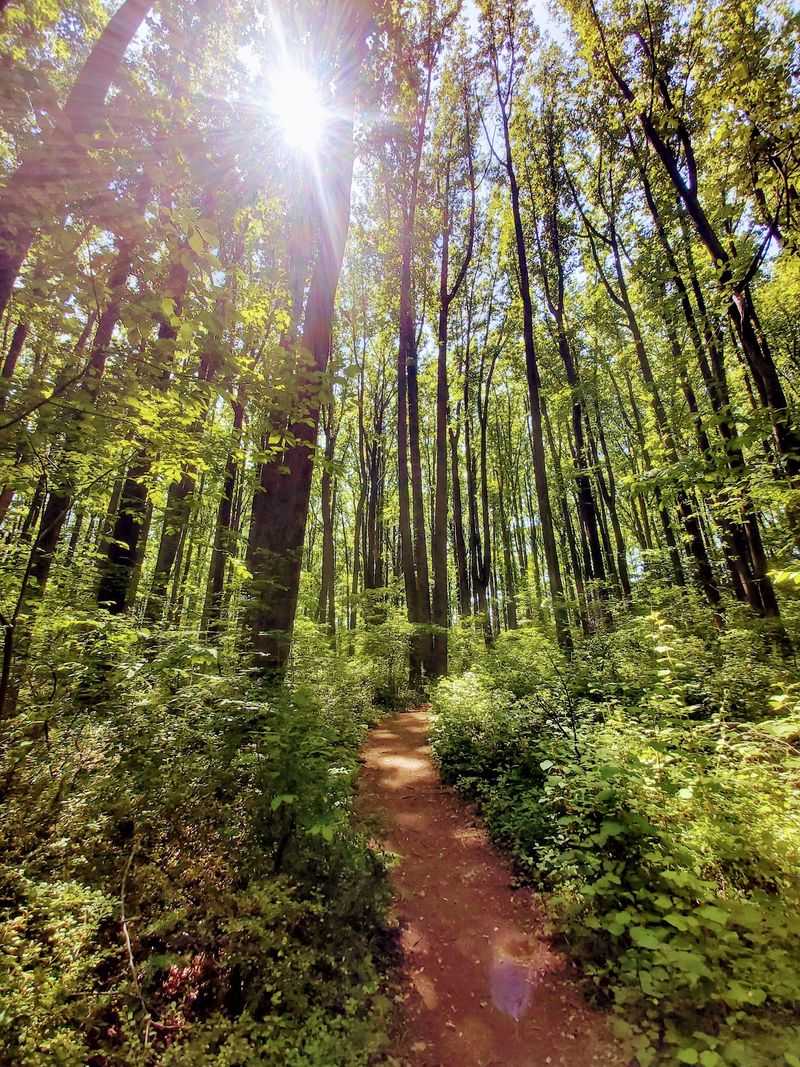
Hiking is the number one reason people show up, with trail talk outnumbering every other topic by a wide margin. The paths connect directly to the larger Gunpowder Falls State Park system.
A popular choice pairs the blue and white trails. They connect to form a small loop that most people find fairly easy.
Expect some hills, rocks, and small creek crossings. The total elevation change on the trails around the mill is about 200 feet.
Much of the route sits under shade. Trail markers are clear and frequent once the hike gets going.
Getting started can be the tricky part. The maps are a bit rough, and finding the trailhead confuses some first-timers.
At splits without signs, look a little down each path for the right colored marker. That small habit saves a lot of backtracking.
Another option heads north from the parking area for a 2.5-mile loop. Some trails are also friendly to horses and bikes.
Mud is a real factor in fall and winter, and near the river after rain. Sturdy footwear is a smart call, and the pun writes itself: these trails reward those who stay grounded.
Creekside Wading and Fishing Spots
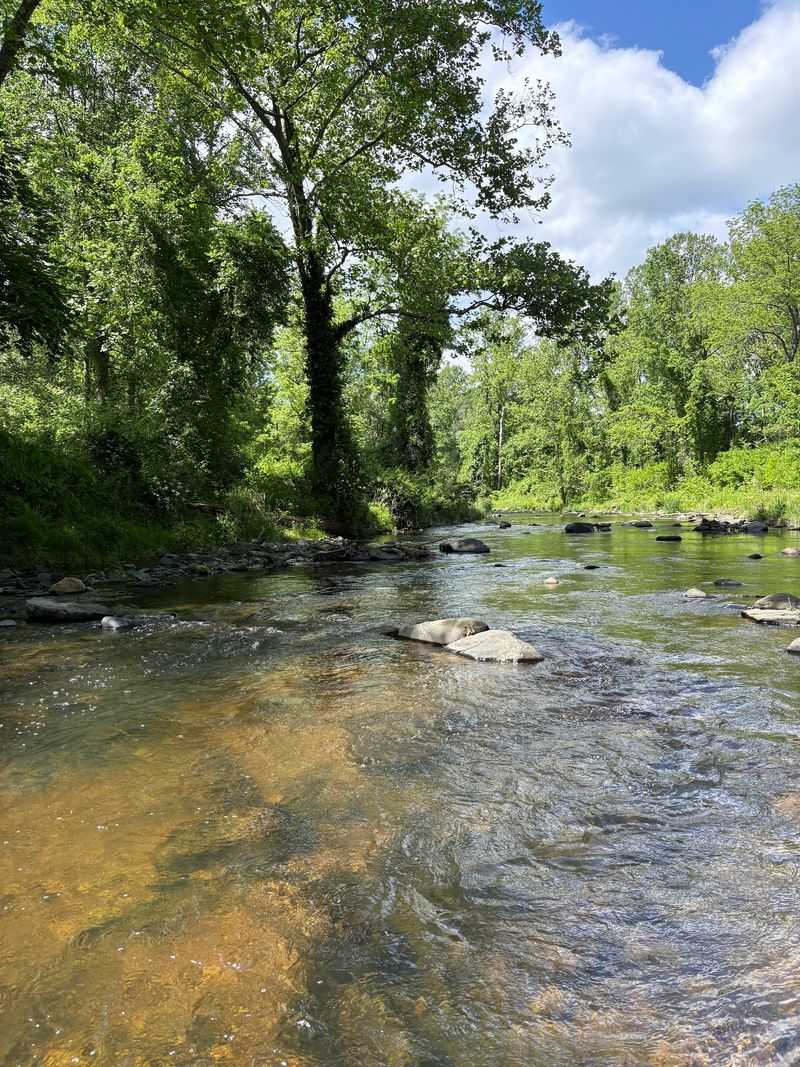
The Little Gunpowder Falls flows right past the historic buildings, and it is more than a backdrop. The creek gives the village much of its everyday appeal.
A rocky beach area sits by the bridge. People use it for wading and swimming during warmer months.
Water shoes are a wise addition to the bag. The rocks can be uneven underfoot.
Fishing is another favorite pastime here. Anglers come for the quiet stretches along the water.
Picnic tables near the creek make it easy to stay a while. Families often settle in for an afternoon by the water.
Summer brings the biggest crowds around the parking lot and museum. Even then, the trails nearby tend to stay calm.
In the colder months, the creek becomes more of a scenic companion for hikers. The river walk turns into a peaceful stroll rather than a splash zone.
That shift is part of what makes autumn special. Fewer people at the water means more room to slow down, and slowing down is exactly what the picnic grounds encourage.
Picnic Tables, a Pavilion, and Plenty of Room
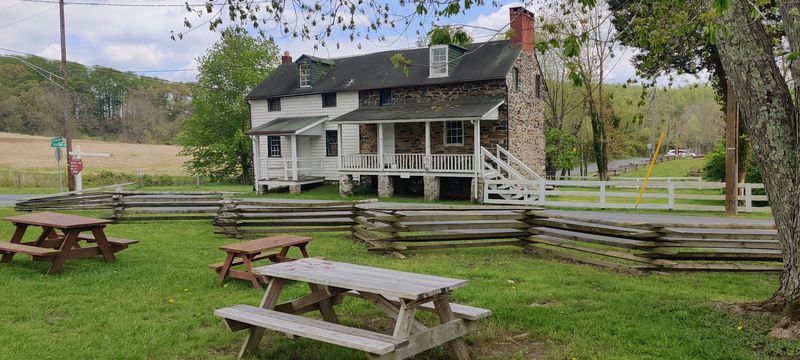
Picnic tables come up more often than almost anything except hiking. That says a lot about how people like to spend their time here.
The grounds are wide and open, with plenty of benches scattered around. A pavilion offers another gathering spot for groups.
The setting suits many kinds of outings. It works for a family lunch, a casual date, or a break between trail loops.
Kids have room to roam, and adults have room to relax. The atmosphere stays calm and peaceful on most days.
Practical comforts help too. Indoor bathrooms and a water fountain are available at the welcome center.
A couple of portable toilets also sit behind a fence near the parking lot. That helps when the welcome center is closed.
The grounds have even hosted meaningful gatherings, such as memorial ceremonies. The space adapts to both happy days and reflective ones.
Pack a basket, find a table, and settle in. When evening comes around on certain dates, the lawn turns into something else entirely.
Concerts, Jousting, and Holiday Cheer
Close to a thousand people once packed the grounds for an evening show by A Flock of Seagulls. Few expect that kind of crowd at an 18th-century village.
The site hosts events throughout the year. An outdoor stage brings live music on certain evenings, including Sunday nights.
Classic rock shows by groups like Rich and the Roadrunners have drawn big turnouts. One such concert carried a $10 admission.
Guests bring chairs, snacks, and non-alcoholic drinks. Even with large crowds, there is usually plenty of space.
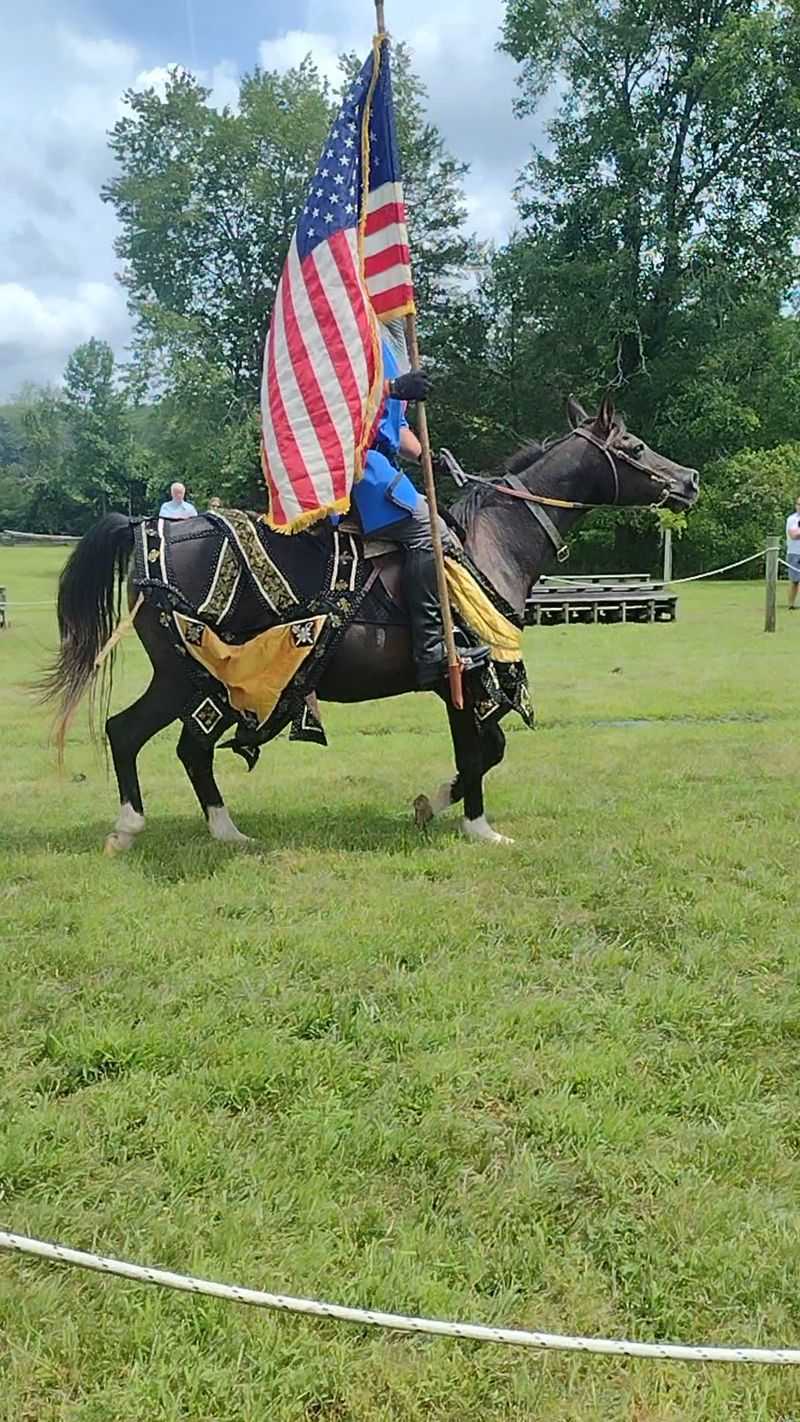
History lovers get their own events. Reenactments and occasional jousting take place, with a jousting field used for summer events.
The holiday season adds another layer. A Christmas display with a decorated tree has wowed guests in the main house.
During that time, volunteers have even roasted chestnuts over a fire in one of the buildings. It is a scene that fits the old village perfectly.
Checking the official website before a trip is the best way to catch an event. Speaking of planning, the next section covers the nuts and bolts.
Hours, Parking, and Smart Timing
Good news first: the grounds are free to visit. Parking is free too, though donations are welcome.
The site is open daily from 7 am to 7 pm. That schedule runs the same every day of the week.
The museum and gift shop keep shorter schedules. Both are mainly open on weekends, so a Wednesday trip may find them closed.
Saturdays tend to be the liveliest for living history. That is when the blacksmith shop and other buildings are most likely to be open.
Parking includes designated lots and an overflow area. On a beautiful weekend, the main lots can fill quickly.
Arriving early on a sunny Saturday is a smart move. Late risers may end up in the overflow lot.
On-site guidance is limited, so a little homework helps. Checking the official website at jerusalemmill.org before going makes a big difference.
Setting expectations helps as well. This is a peaceful historic park, not a busy theme attraction, and it shines brightest for those who plan a bit ahead.
Why the Bare Trees Make It Better
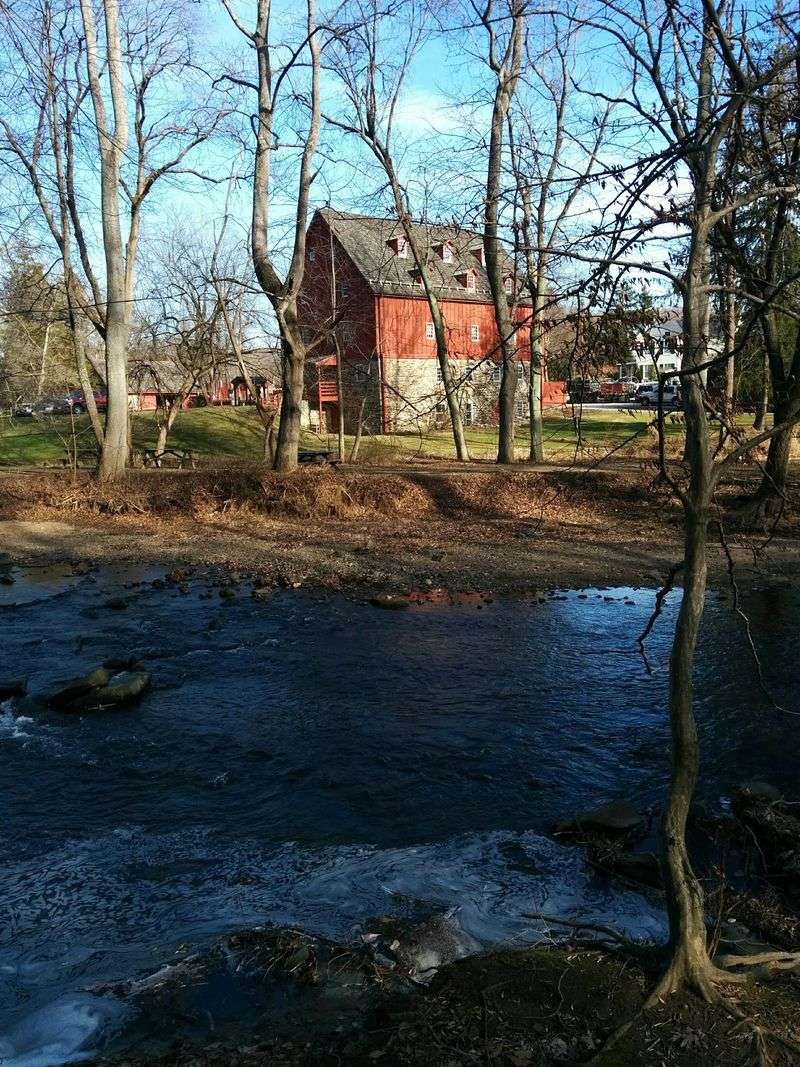
Autumn strips away the leafy curtain, and the village steps forward. Old stone walls and wooden roofs become the main show.
Summer crowds fade by then, especially around the parking lot. The trails were already quiet, and they get quieter still.
That calm suits the place. A peaceful atmosphere is one of the things people mention most.
The trade-off is mud. Fall and winter bring soggy stretches, so boots matter more than ever.
Holiday decorations and seasonal demonstrations can add warmth to colder trips. A weekend visit gives the best chance of finding buildings open.
Hikers, history fans, photographers, and families all find something here. It suits first-time trail walkers just as well as longtime regulars who have come for decades.
Some people grew up nearby and only discovered it later. Many of them say it is worth the drive back.
So when the leaves drop, consider this quiet village on Jerusalem Road. A few hours here feel like borrowing time from the 1700s, and the loan comes with no late fees.
Enjoyed this story?
Add Fast Food Club as a preferred source to see more of our reporting on Google.