


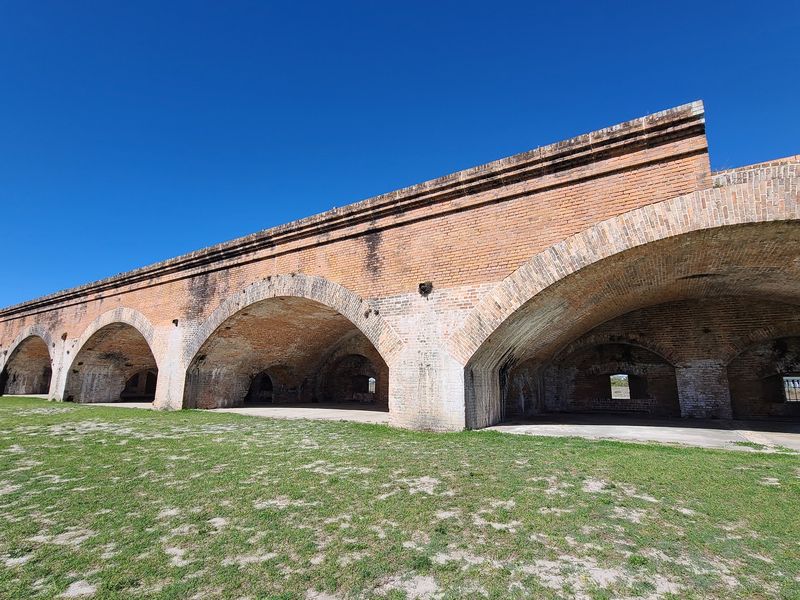
At the far western tip of Santa Rosa Island, a huge brick fort sits quietly between the Gulf and the bay. Its walls have watched over Pensacola Bay since the 1830s and 1840s, and parts of it have slowly worn away over time.
Today anyone can climb its steep stairs, wander its dark tunnels, and stand beside a cannon perched high on the wall. Stick around, because this fort has jets overhead, dolphins offshore, and a story that still surprises people who come back again and again.
A Brick Giant at the End of the Road
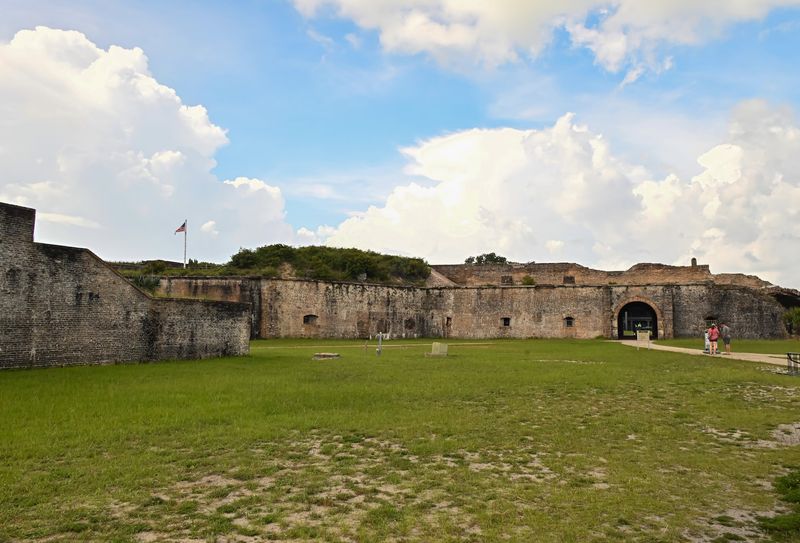
The road on Santa Rosa Island keeps going long after the hotels fade away. At the very end waits Fort Pickens, at 1400 Fort Pickens Rd, Pensacola Beach, FL 32561.
The fort is a historical landmark and part of a national park area. It was built in the 1830s to defend Pensacola Bay, and its massive brick shape still rules this stretch of the island.
Driving through the brick entrance gives a strong first impression. Turn the corner, and the first thing many people notice is a big cannon sitting on top of the wall.
The complex is large and sprawling. Some outer areas are closed to the public, yet there is more than enough open ground to keep a curious mind busy for hours.
Gulf water wraps around the area, which means history and shoreline share the same address. Few places manage to pack a military site, beaches, and nature trails into one trip quite like this.
The park holds a 4.8-star standing from thousands of people, and that number tells you something before you even park the car. The real fun, though, starts once you head inside those walls.
Built to Guard Pensacola Bay
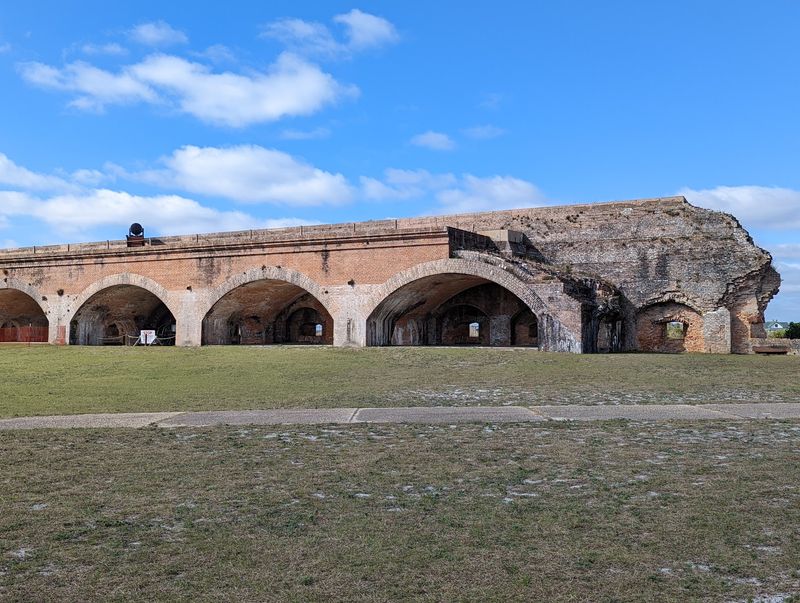
Forts do not get built on a whim. This one went up in the 1830s for a single serious job, which was protecting Pensacola Bay.
The bay mattered for trade and for the military, so a strong fort at its mouth made good sense. Work stretched into the following decade, which is why the walls carry an 1840s feel today.
Civil War history comes up again and again when people talk about this site. The story here is somber, yet it is also fascinating enough that many folks say they learn something new on every trip.
Time has not been gentle with every corner. Some walls are crumbling, and certain areas sit behind closures for safety.
That wear and tear is part of the charm. It reminds everyone that these bricks have stood through many decades of storms, salt air, and change.
Some guests feel the site could use more signs explaining what each room was for. A handy fix is a local PBS video on YouTube that runs about 30 minutes and covers a fair amount of background.
Watching it before or during the tour adds helpful context. Homework has rarely been this painless.
Tunnels, Stairs, and Shadowy Corridors
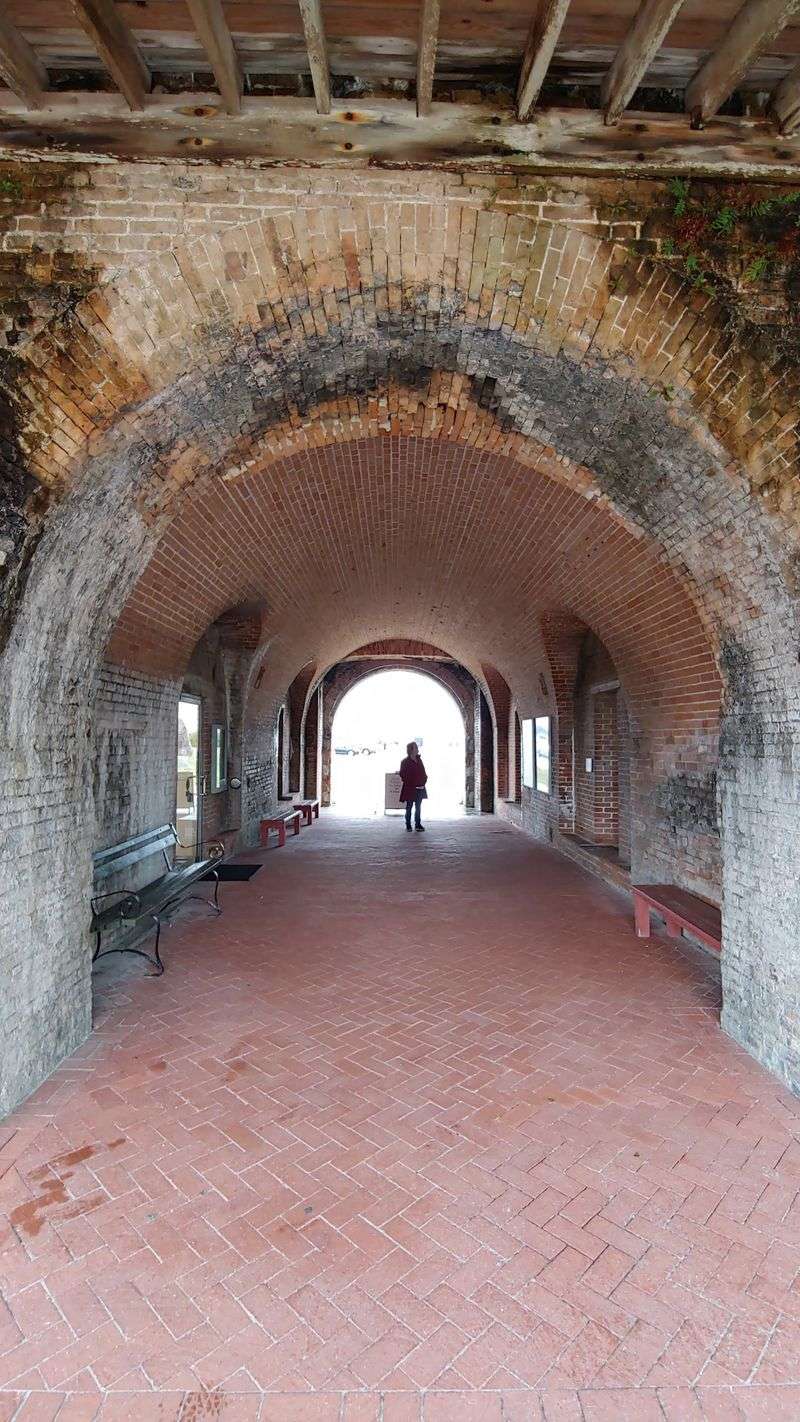
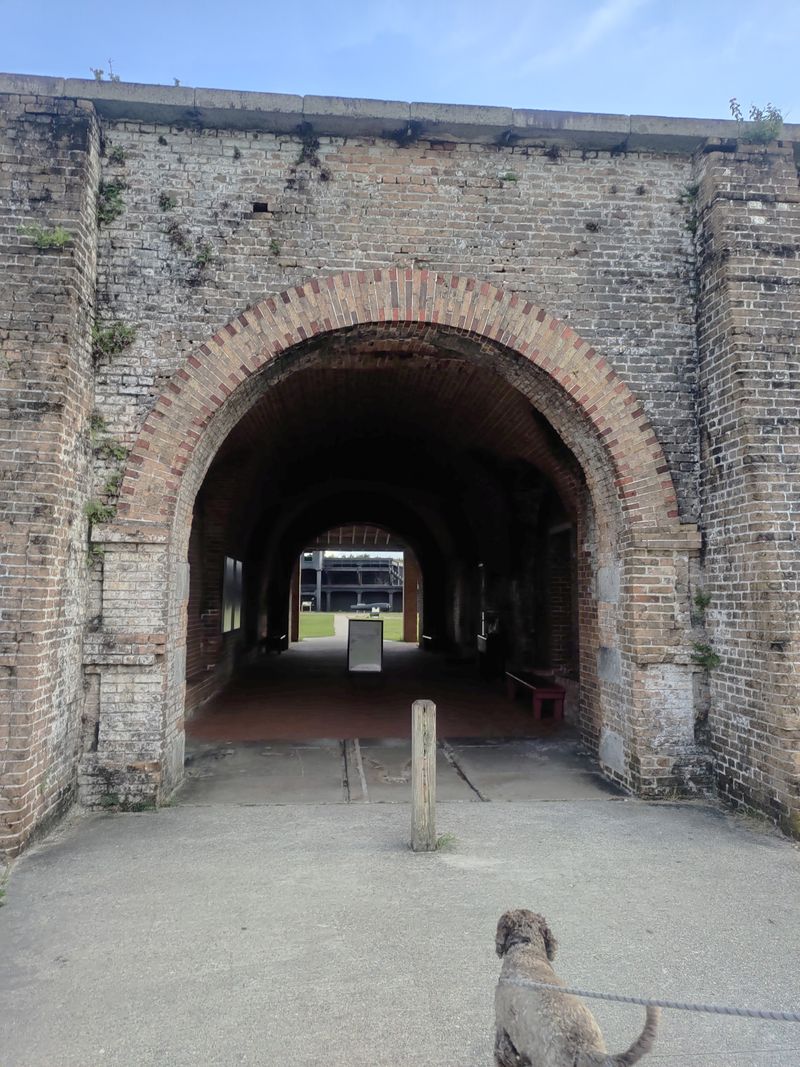
Kids and grown-ups alike tend to vanish into the tunnels within minutes. Dark passages run through the fort, and exploring them is a favorite part of the trip.
The freedom here stands out. You can walk and even crawl around much of the open space on your own, without anyone hovering nearby.
That freedom comes with a bit of responsibility. The stairs are steep, and the ground gets uneven in spots, so careful footsteps help.
Follow the posted signs and stay off anything that looks unstable. Old brick deserves a little respect.
During hot spells, the brick rooms and tunnels can feel cooler than the open grounds outside. On days near 100 degrees, that relief is a welcome bonus.
A flashlight or phone light can help in the dimmer corners. Good shoes help even more.
Families and couples both find something to enjoy in these passages. Each turn leads somewhere new, which keeps the urge to peek around one more corner alive the whole way through.
The Cannon on the Wall
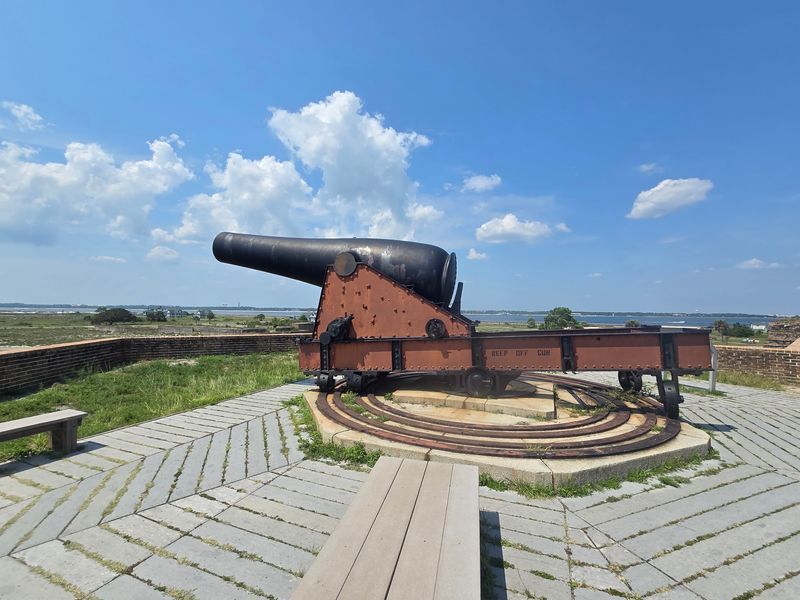
Cannons are easily the most talked-about feature of the fort. One large cannon on top of the wall grabs attention the moment people round the corner.
Getting up there requires a climb. Some serious stairs lead to the best view, and the effort pays off.
Walking the wall gives a wide look at the grounds and the water beyond. It also makes clear why the builders chose this spot to watch the bay.
The cannon itself is a natural photo stop. Expect a short line of people waiting for their turn to snap a shot beside it.
Even people who would never call themselves history buffs tend to enjoy this part. Learning happens almost by accident while you are busy exploring.
Take the stairs slowly, since they can be steep. Once you are up top, take a moment before heading back down.
History lovers will want extra time here, while casual explorers might just grab the photo and move on. Either way, nobody leaves the wall without at least one camera roll addition.
Blue Angels Over the Inlet
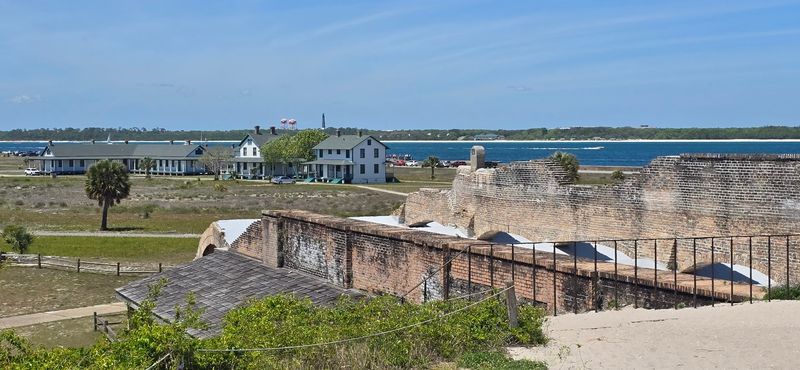
Some history lessons come with an air show. The Blue Angels practice nearby, and the fort offers great viewing of their flights.
The base sits right next door across the inlet. On practice days, jets roar over the water while people watch from the fort grounds.
Timing matters. Checking practice days online ahead of time is the smart move.
Expect company on those mornings. The wait at the gate can stretch to about half an hour, so arriving early helps.
Some people scout the park the evening before practice day to learn the layout. That way they can park quickly and catch the show without stress.
After the flights end, the fort is right there for exploring. A morning of jets followed by an afternoon of tunnels makes for a full day.
Crowds come with this experience, so patience is part of the package. For many families, though, seeing the Blue Angels near a 19th-century fort is a pairing that sticks in the memory for years.
Beaches, Trails, and Dolphins
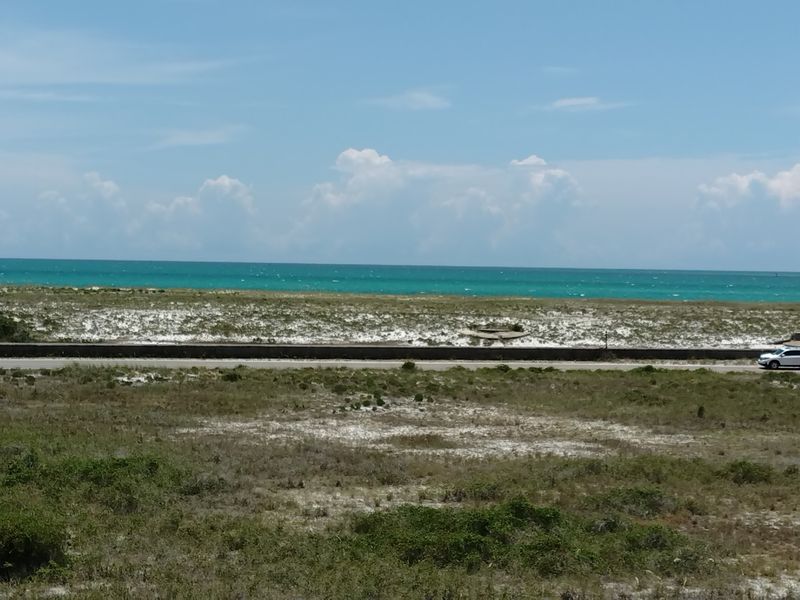
History is only half the reason people make the drive. The surrounding park holds beaches and plenty of nature trails.
Beach access is easy, and many people pack swimsuits for after the fort. Some even bring fishing gear for time near the water.
Dolphins sometimes show up in the waves. Spotting one is pure luck, but it happens.
A campground offers a nature trail about a mile long that leads to the battery. It is a handy way to see more of the area on foot.
Bikes are popular too. Roads wind all over the park, which makes pedaling between stops an easy option.
The beaches here tend to be quieter than busier spots on the island. That calm feeling is a big reason people return.
Sunset views also earn plenty of attention, though the fort itself closes at 5 PM. Plan your time on the sand accordingly, and the day can end on a peaceful note.
Rangers, Ferries, and Junior Explorers
Park rangers earn frequent praise here. Many guests catch a history talk about the fort during their trip.
Volunteers add to the experience as well. Some are deeply knowledgeable about the fort’s past and happy to share it.
A self-guided tour is the most common way to explore. A self-tour app helps tell the story, and it does an adequate job.
Families can try the Junior Ranger Program. It may work best for kids older than six, since younger children might lose interest.
The area also has a museum and a ferry. Daily ferry rides operate in the bay, adding another way to enjoy the water.
Collectors of National Park passport stamps will find one in the gift shop. It is a small detail that matters a lot to stamp hunters.
Between rangers, apps, and programs, there is a learning style for nearly everyone. Pick the one that fits your crew best.
Gift Shop and Snack Stop
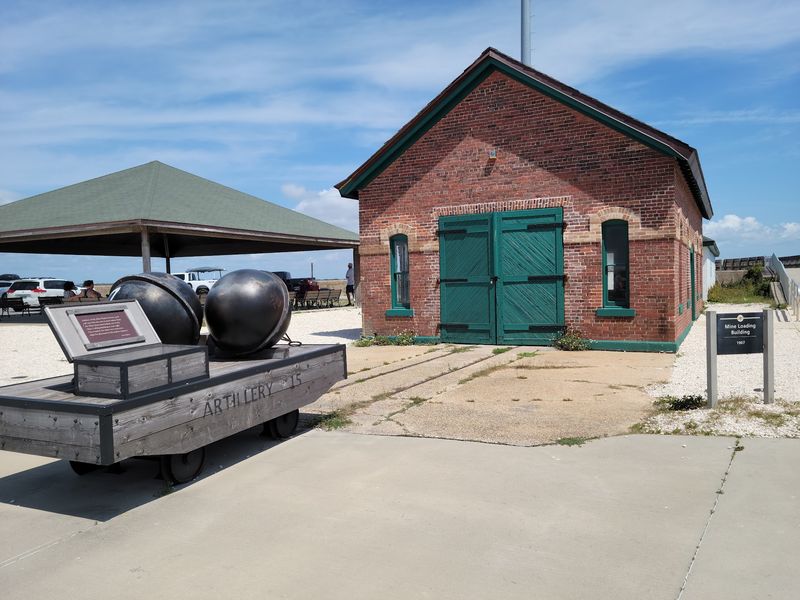
Tucked away in the front building is a gift shop that many people almost miss. It is worth finding.
Shelves hold magnets, pins, and other souvenirs. Friendly staff make the stop even nicer.
Close by, a refreshment shop offers drinks and snacks. On hot days, that matters a great deal.
There is also a spot to refill water bottles. Bringing water is still strongly recommended, since the grounds are large and summer heat is intense.
Restrooms are available, though some near the bookstore can be rough at busy times. Cleaner, less used ones sit just past the fishing pier.
One more heads-up involves the metal building addition. It can get very warm inside during summer, but stepping back outside is easy.
Many people pack a picnic lunch and head to the beach pavilion. That simple plan saves money and keeps everyone fueled for more exploring.
Hours, Fees, and Smart Planning
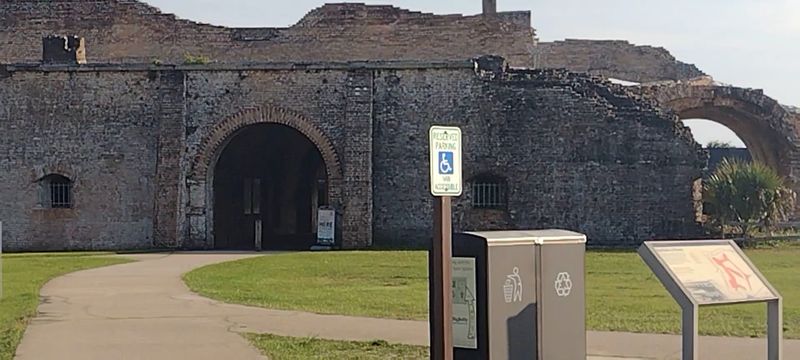
Good news first: the fort keeps steady hours. It opens daily from 9 AM to 5 PM, seven days a week.
Entry is $25 per vehicle. That pass covers a full week, so return trips are easy.
An annual option costs $45 for a year of access. Existing national park passes also work here.
Veterans can get a free lifetime pass through recreation.gov. Buying passes ahead of time can speed things up at the gate.
Road signs could be clearer in places. Taking a moment to check a map before driving helps avoid wrong turns.
Most trips take a little over an hour. Stretching it to two or two and a half hours is easy with extra exploring.
Add the beach, trails, and ferry, and a whole day fills up fast. Bring water, wear sturdy shoes, and check the park website before you go.
Worth the Drive to the Tip
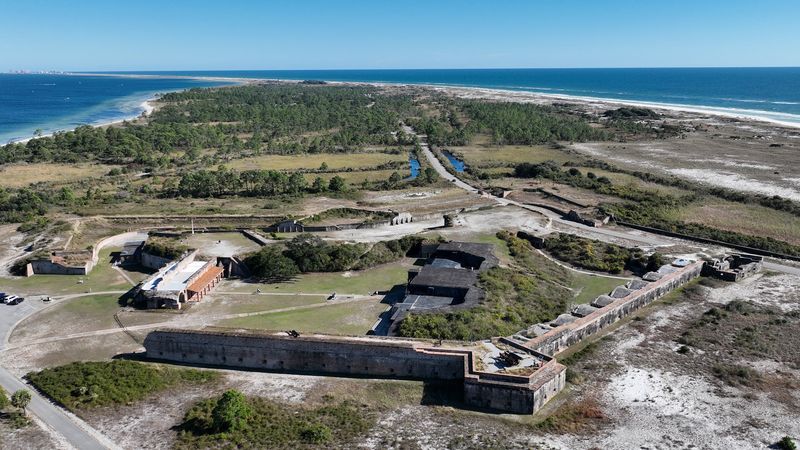
Plenty of beach towns have sand. Very few have a historic brick fort waiting at the end of the road.
Fort Pickens blends history, open space, and calm shoreline in one place. It suits history fans, families with older kids, couples, cyclists, and campers alike.
Campers love the campground, though reservations can be hard to get. Persistence tends to pay off.
People with limited mobility can still enjoy much of the site. Not every corner requires climbing.
The atmosphere is relaxed, even when crowds gather for the Blue Angels. Plenty of space means room to wander.
Many people return on every trip to Pensacola. That habit says more than any brochure could.
Pack water, plan your timing, and leave room for surprises. The crumbling walls have waited nearly two centuries, and they are still ready for the next set of explorers.
Enjoyed this story?
Add Fast Food Club as a preferred source to see more of our reporting on Google.