


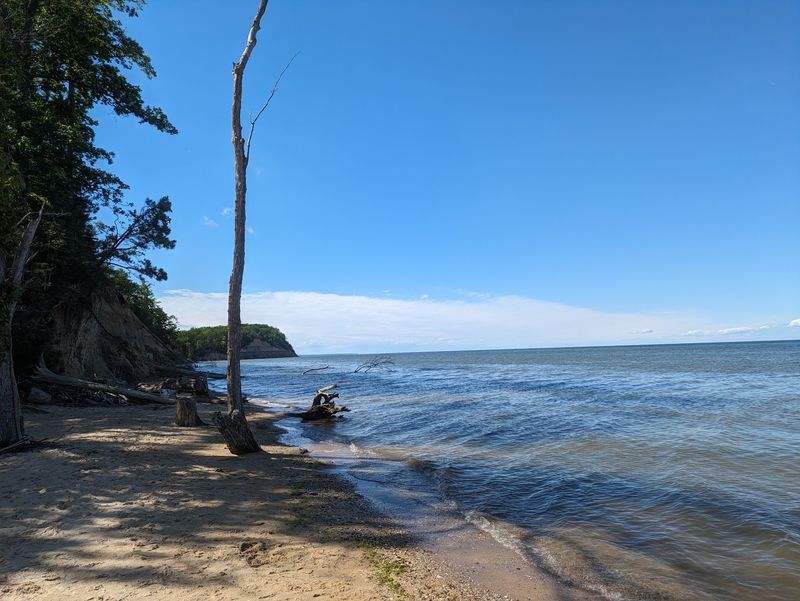
Somewhere along the Chesapeake Bay, a small beach hands out tiny ancient shark teeth to anyone patient enough to sift for them. Nobody parks next to it, though.
The sand sits at the end of a wooded trail almost two miles long, past marshland where turtles rest on logs and bald eagles watch from the trees. Mornings bring families with carts, sifters, and big hopes.
Later in the day the beach empties out, and the hunt slows into something calmer and easier to enjoy. This guide covers the trails worth taking, the tide tricks that improve your odds, the rules about the cliffs, entry fees, and the habits of the people who find teeth most often.
Pack water, bring cash, and keep reading to see why this Maryland shoreline is worth the walk.
A Southern Maryland Park With Prehistoric Bragging Rights
Some state parks are known for their views. This one is known for what turns up in the sand.
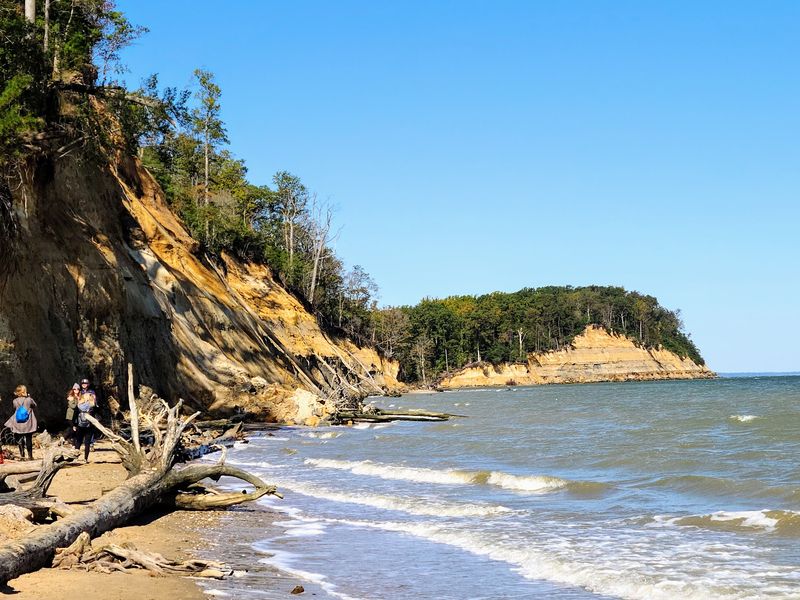
Calvert Cliffs State Park sits at 10540 H G Trueman Rd, Lusby, MD 20657, in Southern Maryland near the Chesapeake Bay. It is a cliffside recreation area with a sandy beach, hiking trails, and some of the best-known fossil hunting in the state.
The beach is the main draw. Shark teeth and other fossils wash onto the shore below tall cliffs, and people of all ages come to sift for them.
What surprises many first-timers is that the beach is not next to the parking lot. Reaching it takes a hike through woods and wetlands, and that walk shapes the whole experience.
The park has a 4.5-star average from more than 2,100 people on Google. Most of the praise mentions the beach, the fossils, and the trail.
Hours are simple to remember. The park is open seven days a week from 7:30 AM to 7:30 PM, which leaves plenty of time to beat the crowds in the morning or outlast them in the afternoon.
Cliffs That Changed The Rules
Longtime fans of the park remember a different setup. Decades ago, people could drive right down to the beach and the cliffs.
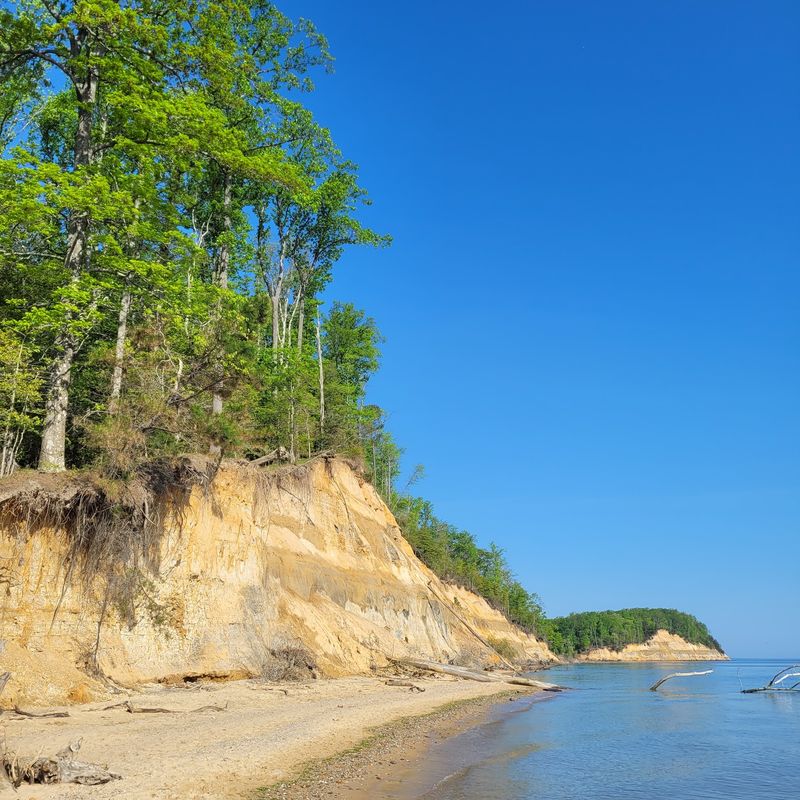
That is no longer the case. Now the shoreline is reached only on foot, and the cliffs are closed to the public.
Erosion explains the change. Landslides are frequent, especially after heavy rain, and the areas above and below the cliffs are blocked off to keep people safe.
The cliffs can still be seen and photographed from the beach. You just cannot climb them, dig into them, or stand at their base.
Erosion also makes the fossil hunting work. As the cliffs wear down, ancient material drops toward the shore, and the bay waves carry it onto the sand.
So the same process that keeps people back is the one that fills the beach with treasures. The rules can feel strict, but they protect the visitors and the source of the fossils.
The Red Trail And Its Famous 1.8 Miles
Almost everyone heading to the beach ends up on the same route. The red trail is the most direct path from the parking area to the shoreline.
It covers about 1.8 miles each way, so a round trip comes to roughly 3.6 miles. Most people need about 40 minutes to reach the beach at an easy pace.
The trail is mostly shaded and not very hard. Many families pull wagons or carts loaded with gear, and a few people even manage strollers.
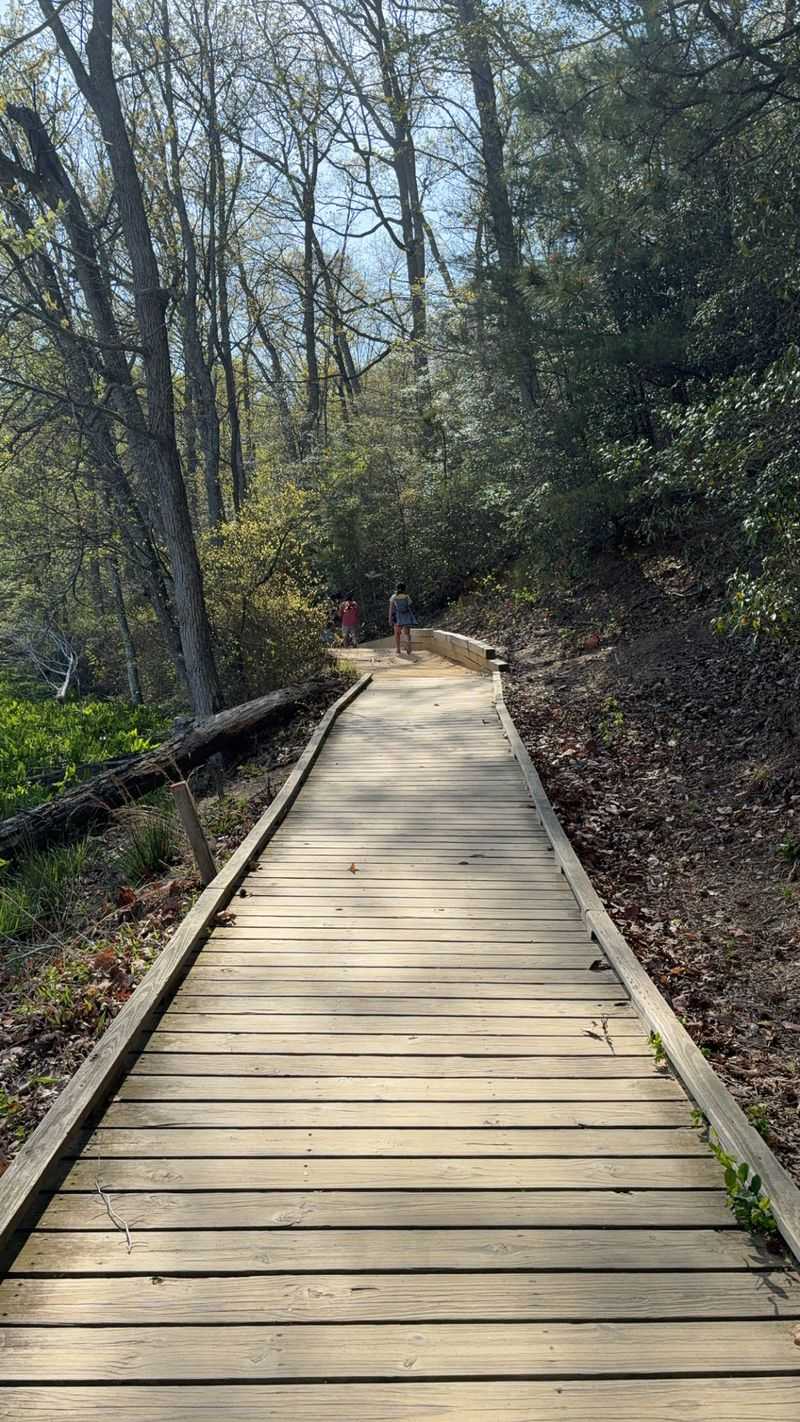
It is not paved, however. The surface mixes sandy natural ground, gravel, boardwalk, grass, and dirt, and some spots have uprooted sections to watch for.
Blazes and mileage markers are clearly posted, so getting lost is unlikely. Pacing is the bigger issue, especially with kids who will start asking how much farther long before the halfway point.
The best advice is simple. Bring water, keep expectations realistic, and treat the walk as part of the outing.
Boardwalks Over The Wetlands
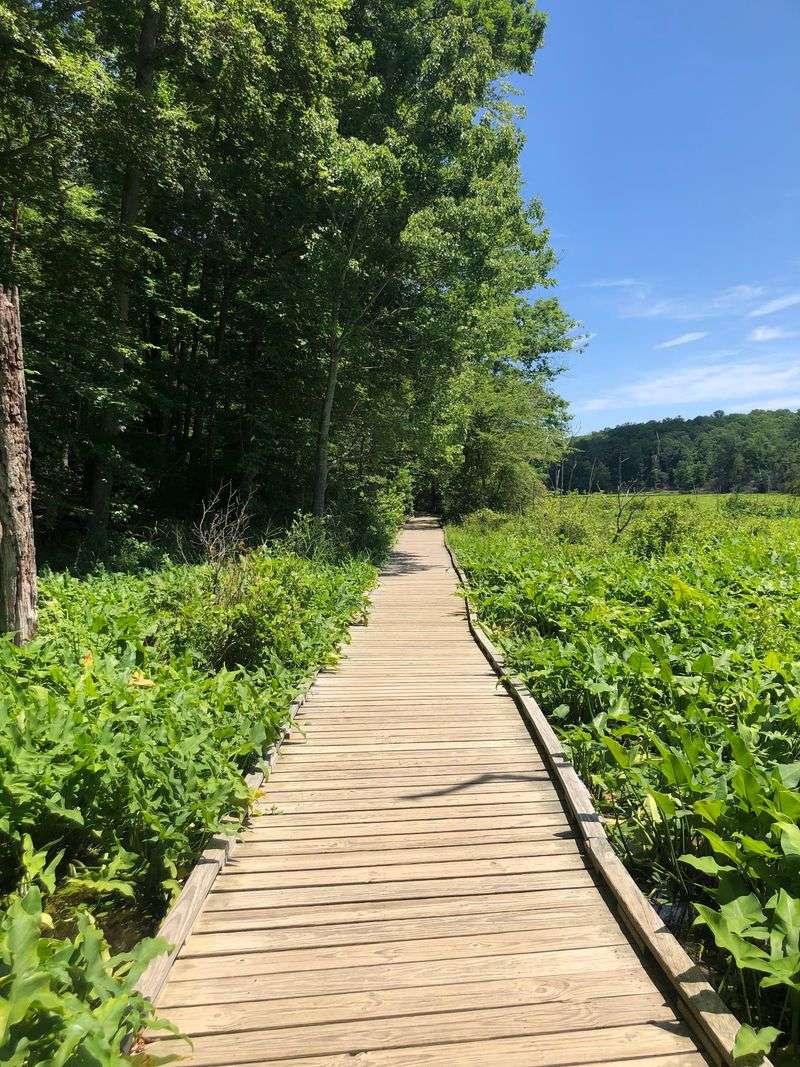
The final stretch to the beach may be the best part of the hike. Near the end of the red trail, a boardwalk crosses open wetlands.
This section offers some of the best photo spots in the park. Even hikers who skip the rest of the red trail often say the boardwalk is worth it.
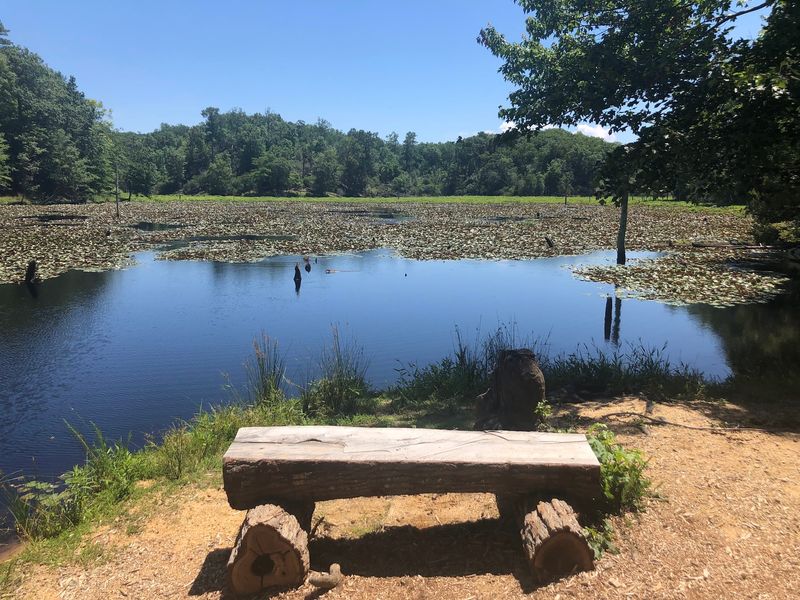
The marsh is full of wildlife. Turtles rest on logs, bald eagles perch in the trees, and ducks paddle around the water nearby.
The wetlands also give the walk some variety. The scenery changes from forest to bog to open marsh before the bay finally comes into view.
For families, the wildlife works as a built-in distraction. Counting turtles can make the last half mile go by faster for tired kids.
Take your time here. The wetlands deserve more than a quick pass on the way to the sand.
Detours On The Orange And Blue Routes
The red trail gets most of the traffic, but it is not the only option. The park has several color-coded trails that can be combined for more distance or variety.
The orange trail climbs through the woods and shows off more of the park’s elevation. Experienced hikers recommend it for anyone who wants more than the straight shot to the water.
The terrain here is more varied than what much of Maryland’s Eastern Shore offers. Trails are generally wide and flat, with noticeable climbs on the orange route.
The blue trail is another option for the return trip. It is quieter, but some hikers wish it had more signs near the end.
Runners like the park’s total mileage. Combining routes makes it easy to put together a longer workout.
One caution applies to the northern section. A hunting club operates at the north end, so wearing a safety vest during hunting season is a smart choice.
Shark Teeth, Patience Required
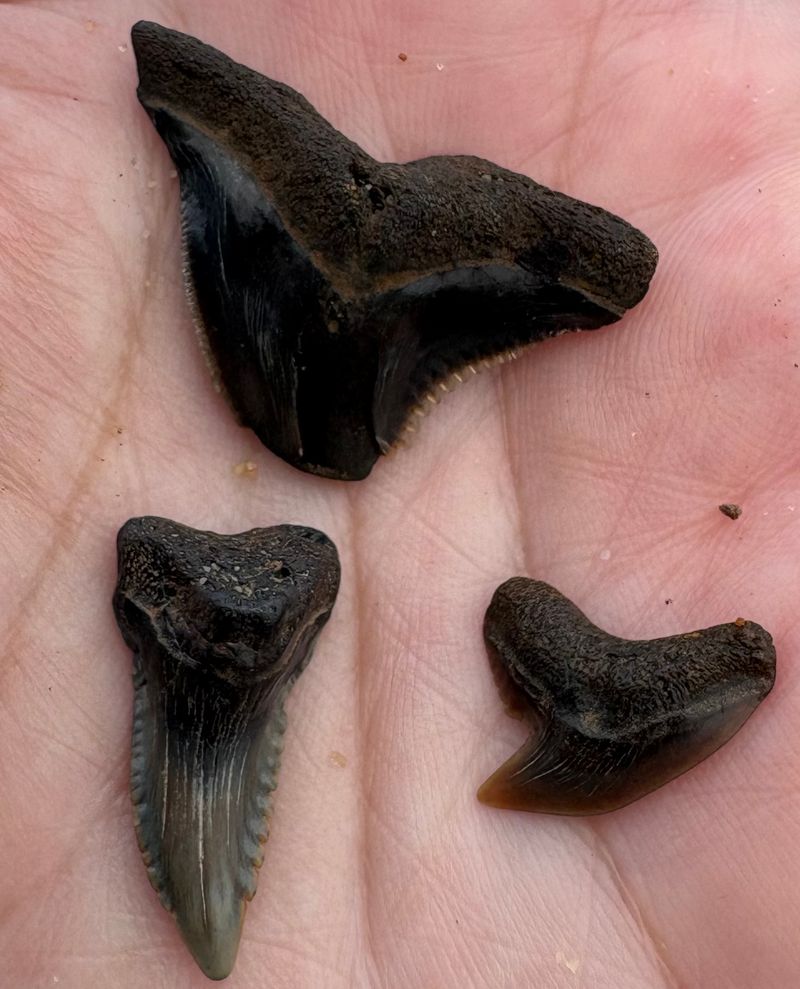
Shark teeth are the reason most people make the hike. They come up in conversations about this park more than almost anything else.
Some people expect teeth scattered everywhere, but that is not quite how it works. A good day might turn up three to five real teeth, while other trips end with one tooth or none.
Plenty of families still leave happy. Kids often find shells along with teeth, and the search itself is part of the fun.
Fossil hunting is allowed only on the small beach, never at the cliffs. That limit keeps everyone in the same area and adds some friendly competition.
Luck matters, but so does persistence. Sifting slowly through one spot usually works better than racing across the sand.
Treat any find as a bonus. The teeth here are ancient, and holding even one tiny tooth gives the walk back a little extra spring.
A Box Of Borrowed Sifters
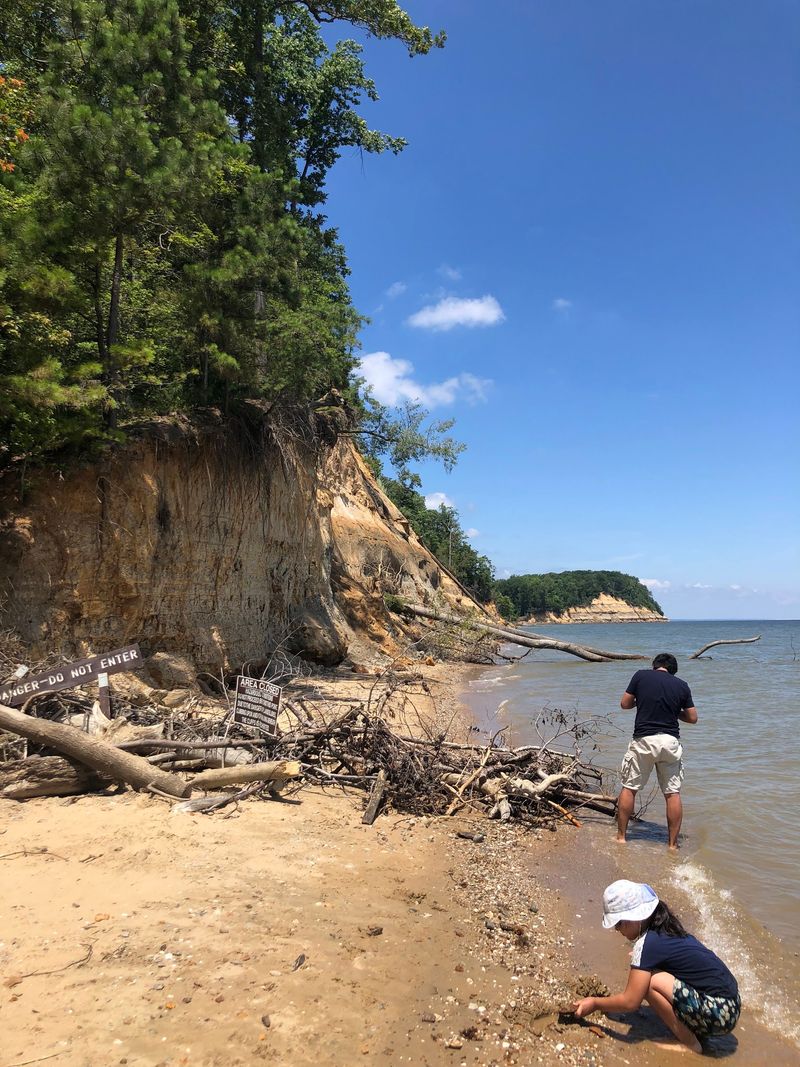
Forget your gear and the park may still have you covered. At the end of the trail, near the beach, sits a box of donated scoops, strainers, and sifters.
The park also keeps a bin of panning trays for people to use. It is a small detail that gets a lot of appreciation.
The tools are meant to be shared. Use what you need, then return it so the next family can sift too.
Bringing your own sifter is still a good backup plan. On busy days, the borrowed tools may already be in use.
A sifter with a fine mesh matters because many teeth are tiny. Without one, it is easy to miss them in the gravel.
Since the box runs on donations, leaving behind a spare scoop is a nice way to help the next visitor.
Tides, Storms, And Better Odds
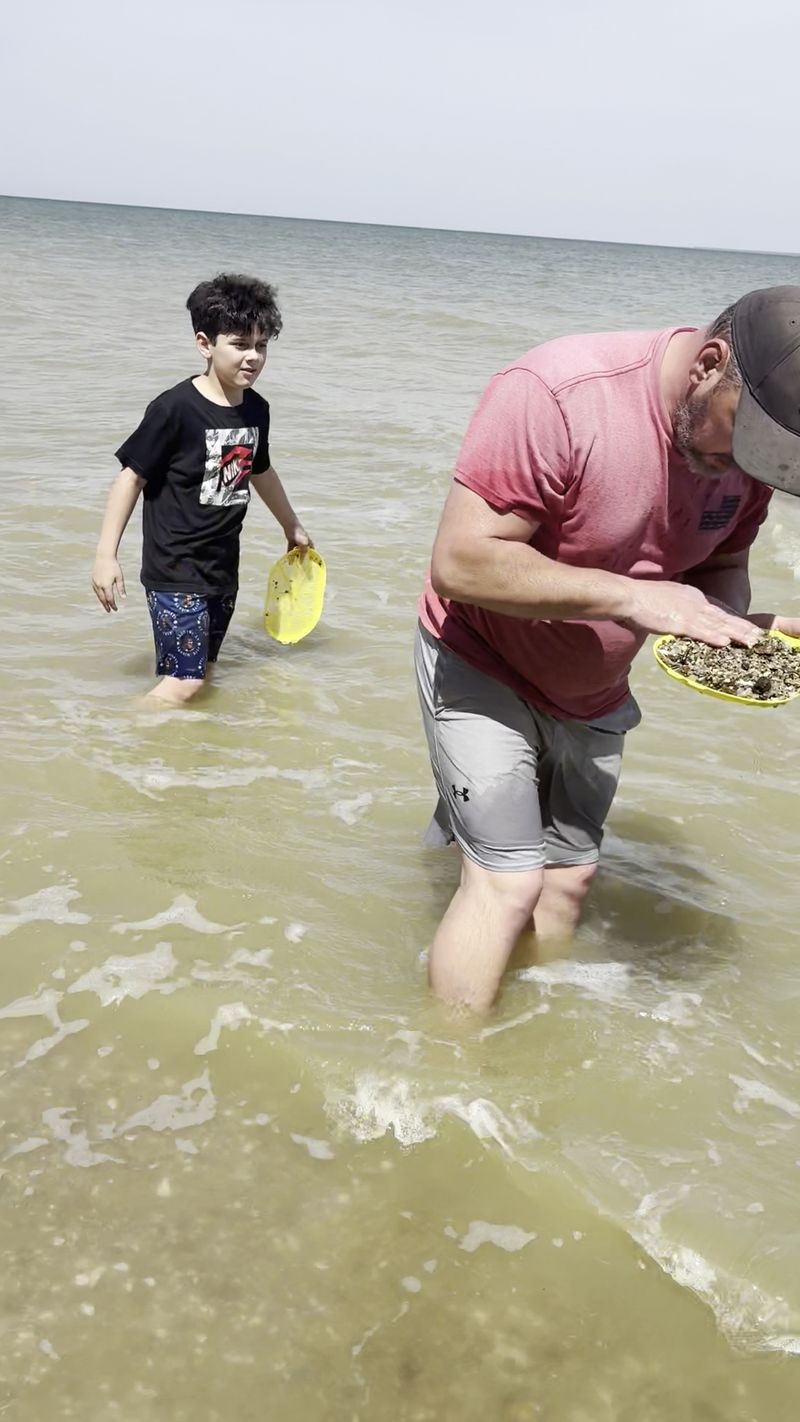
Experienced fossil hunters plan around the bay. Checking the tide before you go is one of the most common tips for finding more shark teeth.
Low tide exposes more of the shoreline. That gives you more ground to search before the water returns.
Weather matters too. Going after a strong rainstorm improves your chances, since fresh material often washes up on the beach.
The water near the shore is rough underfoot. The bay floor close in is covered with rocks and sharp shells, so wading can be uncomfortable.
Farther out, the bottom becomes sandier and easier to walk on. Water shoes help a lot in that rocky first stretch.
Jellyfish can also appear in the water. Keep an eye out when wading, and let the tide schedule decide when you arrive.
Small Beach, Big Morning Rush
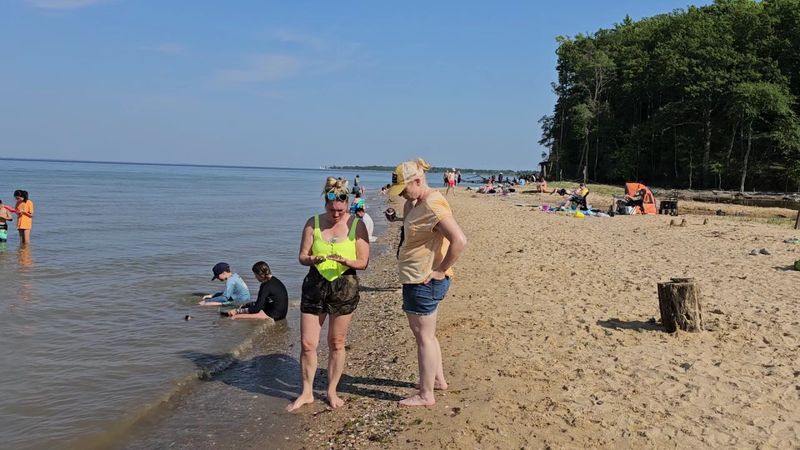
Space on the shore is limited. Because the areas above and below the cliffs are closed, only a small stretch of beach is open.
That small area fills up fast. Even people who arrive right at the 7:30 AM opening notice how quickly the sand gets crowded.
Warm weekends, even in late March, can bring heavy crowds. The parking lot overflows on busy days, and rangers sometimes direct cars to a field.
Arriving early has its benefits. You can claim a shady spot and get first pick of the fresh sand.
Late afternoon offers a different plan. As morning crowds head home, the beach becomes calmer and much easier to share.
With the park open until 7:30 PM, staying later is a real option. The quieter hours make the hunt feel slower and more personal.
Not Your Typical Beach Day
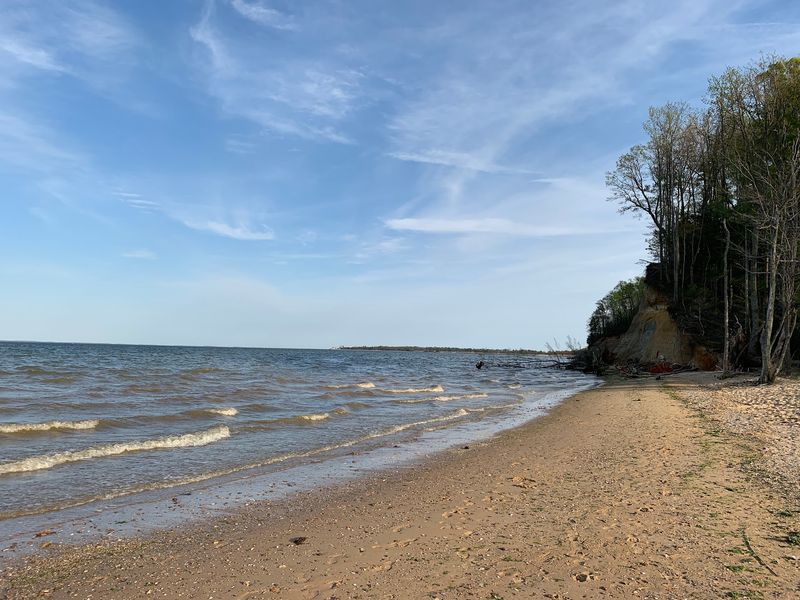
Leave the giant umbrella at home. This is not a beach for long sunbathing sessions or a full day of swimming.
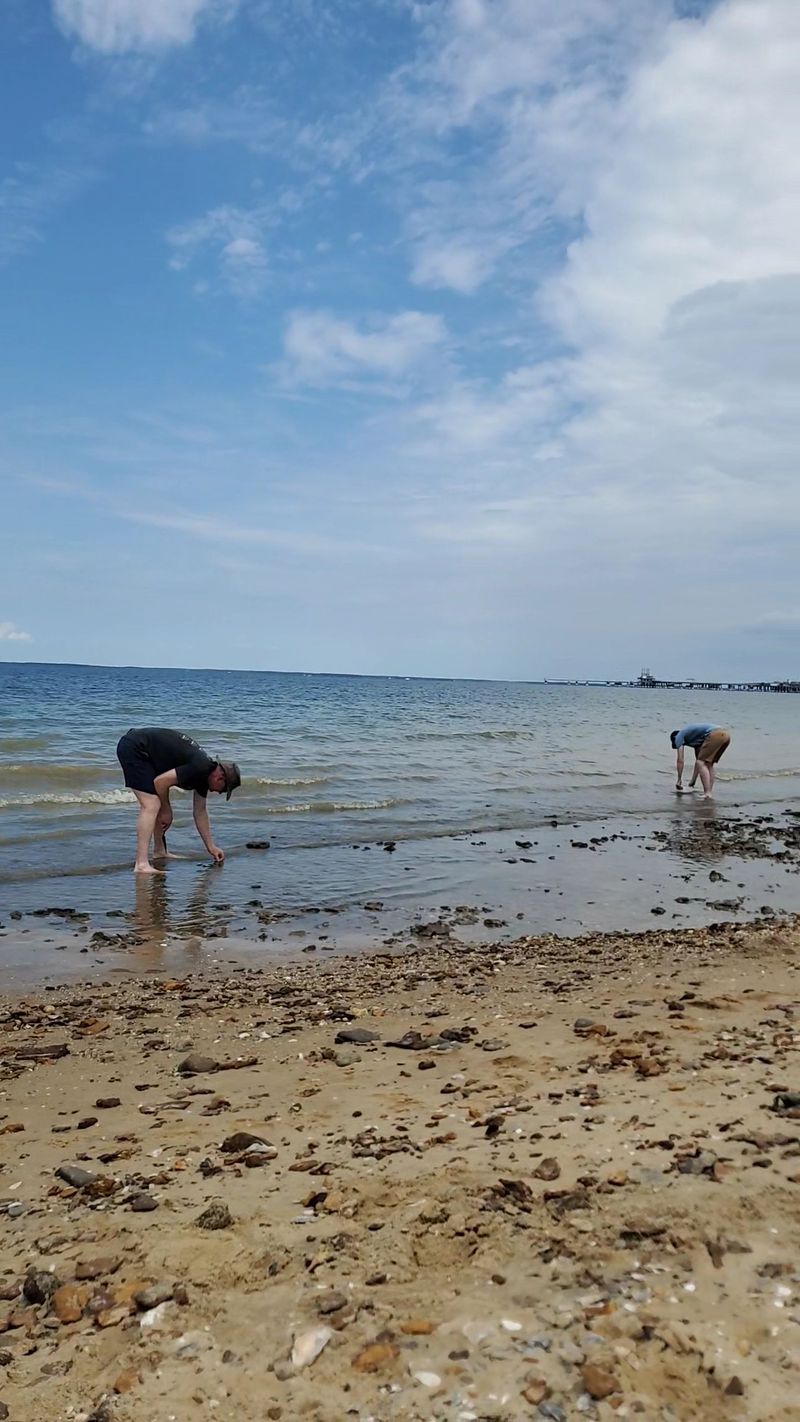
The shoreline is made for searching. Most people spend their time bent over sifters instead of lying on towels.
Some areas allow swimming, and many people wade near the edge. Still, the beach is generally treated as a fossil spot rather than a swimming destination.
The sand is darker and muddier than many people expect. Anyone hoping for soft, white sand might want a different beach.
Still, many people find the shoreline relaxing. Sitting near the edge of the bay is one of the simplest ways to enjoy the place.
A breeze off the bay can make the beach noticeably cooler than the trail. That extra cool-down feels like a nice reward after nearly two miles of walking.
Rules Worth Packing
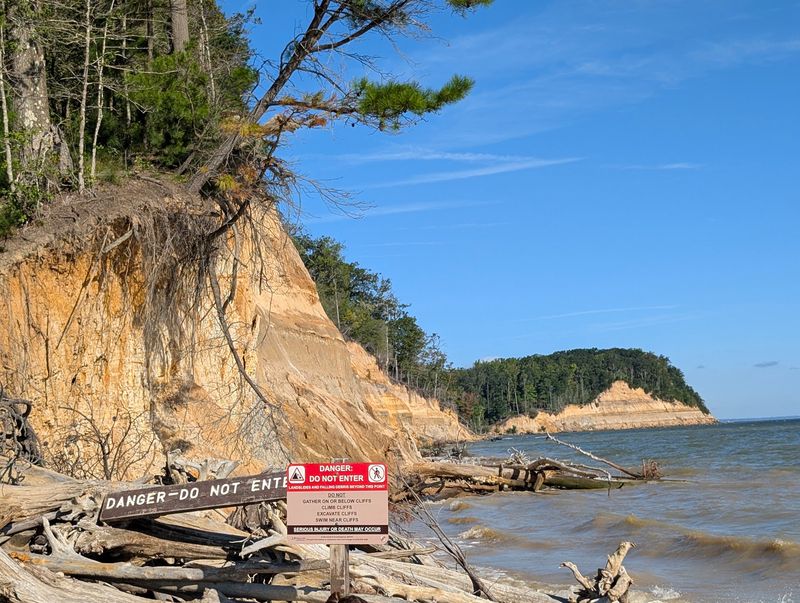
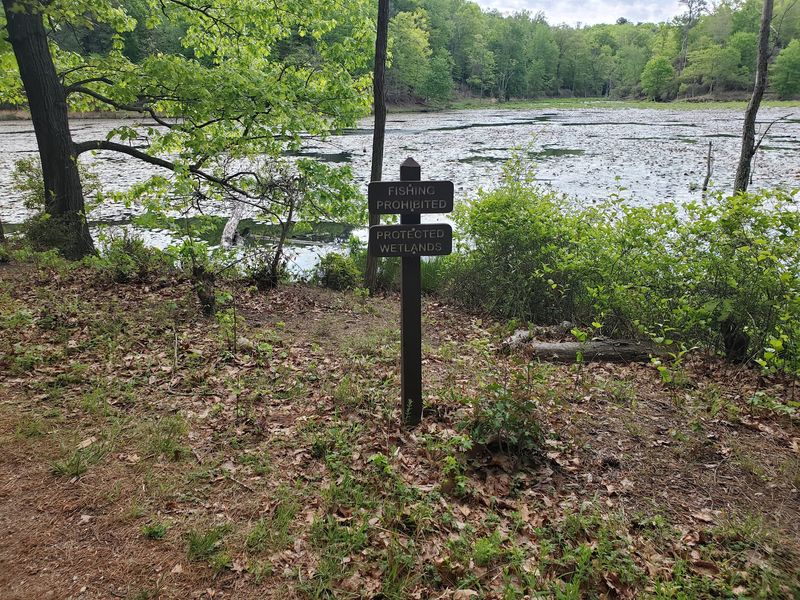
A few rules here catch people off guard. Fishing is prohibited, and metal detecting is not allowed.
Climbing or digging on the cliffs is also off-limits. Fossil hunting happens only on the open beach.
Dogs are welcome, which makes the trails popular with dog walkers. Plan ahead, though, because trash cans are hard to find.
That means visitors should carry out everything they bring in, including pet waste and picnic trash. A spare bag in your backpack solves the problem.
Wildlife can be close by. Deer sometimes appear on the trails, so give them plenty of space.
Following these rules keeps the beach clean and the cliffs protected. Pack your manners along with your sifter.
Playgrounds, Picnics, And Restrooms
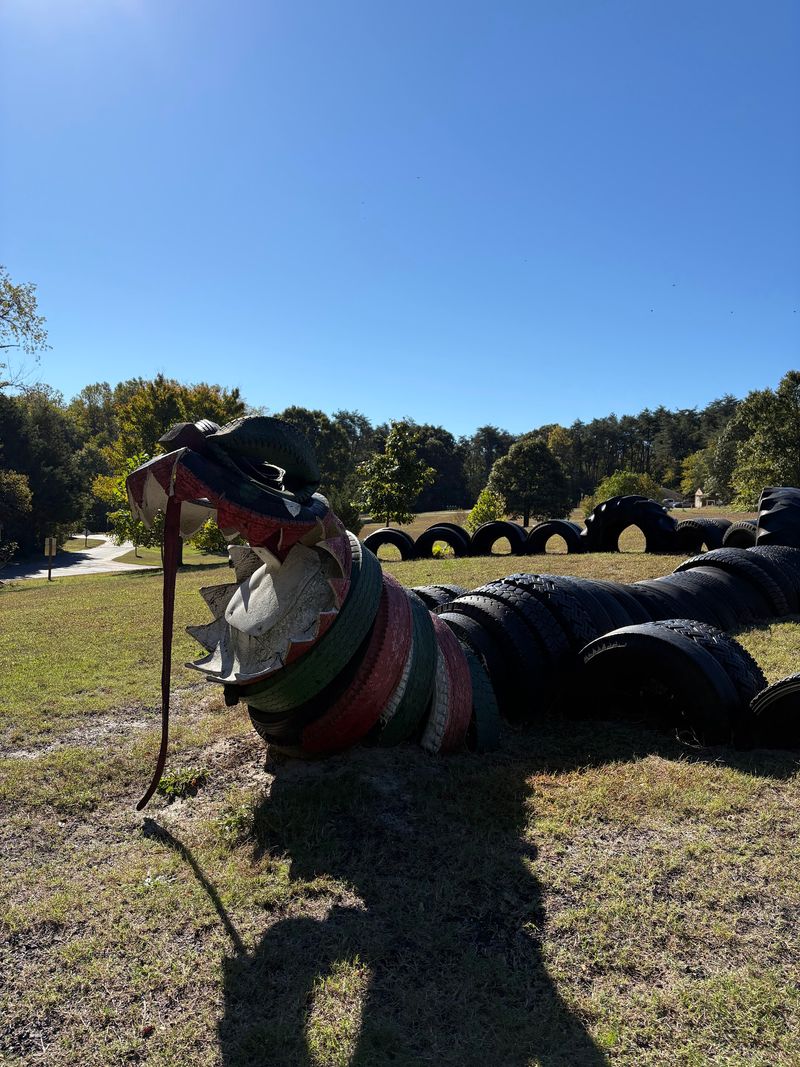
Not everything happens at the beach. Near the parking area, families can use picnic tables and a playground.
Some people visit just for the trails and the play area. For local families, it works well as an easy outdoor outing.
Restrooms are at the park entrance and are generally kept in good shape. Portable toilets are located near the beach, close to the end of the trail.
The beach itself has very few amenities. There are only a couple of picnic tables and no concessions.
That means you need to carry snacks and water with you. A small cooler in a wagon can make a long beach visit much easier.
With the right supplies, families can spend about four hours on the sand without feeling rushed.
Fees, Hours, And Getting In
Bring some cash. Entry costs $5 per vehicle for Maryland residents and $7 for out-of-state visitors, and some people have found cash to be the only accepted payment.
Frequent visitors may want a Maryland state park pass. You can buy one online and hang it from your mirror.
The park is open daily from 7:30 AM to 7:30 PM. The main lot has a lot of space, but it can still fill up on busy weekends.
When that happens, rangers may send cars to park in a field. Some people say parking near the entrance itself is limited.
There is no gate, so visitors do not have to worry about being locked in at dusk. Still, it is best to plan the walk back before evening.
Solomons, just a few minutes away, is a handy stop for dinner after the hike.
A Verdict Written In Sand
So is the walk worth it? For most people, the answer is yes, as long as they know what to expect.
This is a hiking trip with a fossil hunt at the end, not a classic beach vacation. The trail is long, the beach is small, and the cliffs are closed.
Families with energetic kids, patient searchers, runners, and nature photographers usually enjoy it most. Anyone hoping for a big swimming beach may leave a little disappointed.
Timing makes a huge difference. Early mornings bring the eager crowds, while late afternoons often feel calm and quiet.
Check the tide, bring cash and water, and pack a sifter. Then take your time on the boardwalk.
Whether or not you find a shark tooth, a quiet hour on this shoreline is a reward of its own.
Enjoyed this story?
Add Fast Food Club as a preferred source to see more of our reporting on Google.