


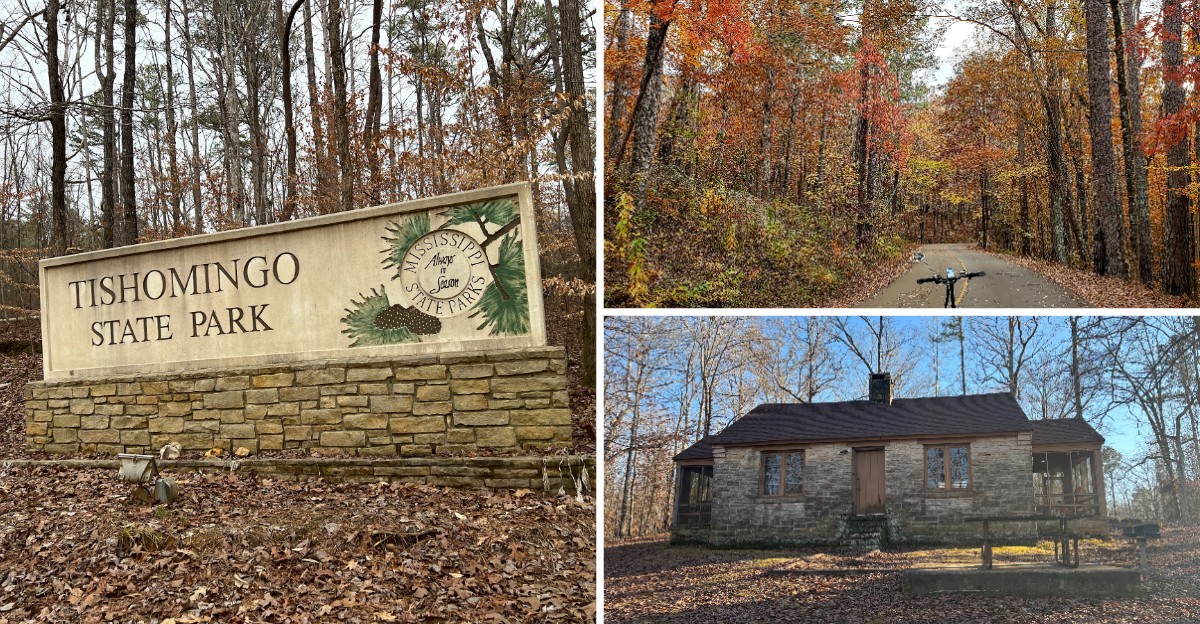
Most people think of Mississippi as flat farmland and slow rivers. Then they find a corner of the state where granite outcroppings jut from the hillsides and a cable bridge sways over moving water.
The trails here climb, dip and wind past rock formations that seem to belong in another state entirely. Add stone cabins built in the 1930s, a lake with a dock and a disc golf course tucked into the woods, and the surprise only grows.
Plenty of drivers on a famous scenic parkway roll right past the turnoff without a second glance. The ones who do pull in often end up staying an extra night.
Keep reading for the full story, including the trail tips, the campsite numbers worth knowing and the honest notes that help set expectations before the trip.
A Rocky Surprise in Northeast Mississippi
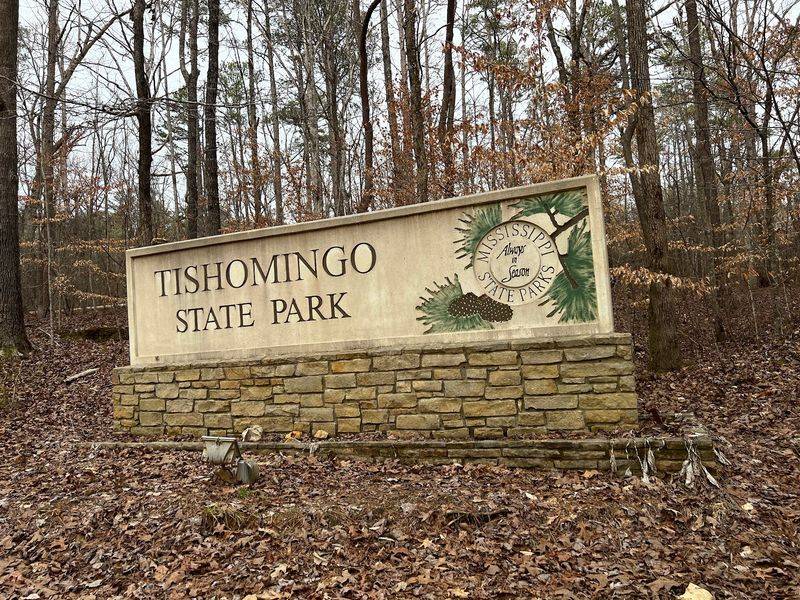
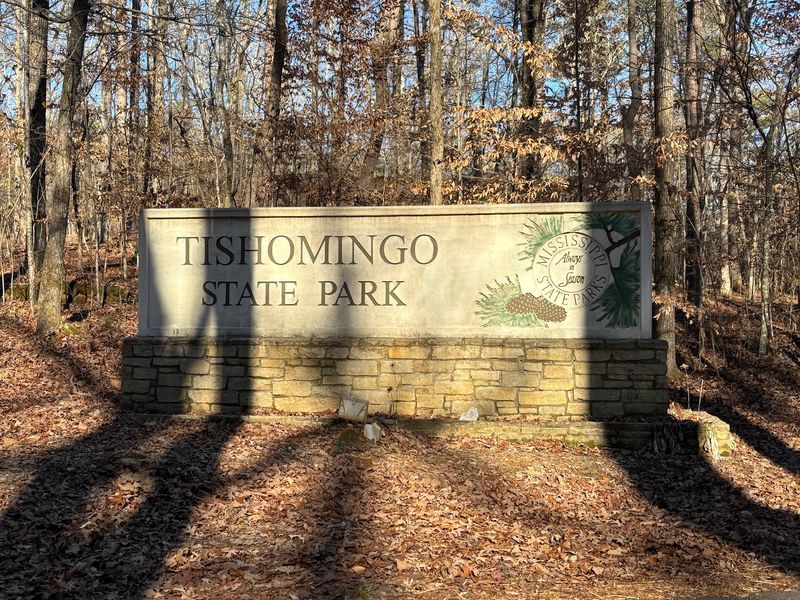
Tishomingo State Park sits at 105 Co Rd 90, Tishomingo, MS 38873, in the far northeast corner of Mississippi. It spreads across roughly 1,530 acres of hilly woodland, which is plenty of room to get pleasantly lost on purpose.
The park is known for ancient rock formations, a wide variety of plant species, a stocked lake, hiking trails and camping. That combination makes it stand out in a state better known for river deltas than boulders.
Hills and outcroppings here make it hard to believe the map still says Mississippi. Many first-timers arrive expecting a quick look and leave planning a return trip.
The park is open 24 hours a day, every day of the week, so arrival times are flexible. Campers and day hikers alike can find something to do from morning into evening.
Its reputation among Mississippians is strong, and it is often described as one of the most unique places in the state. Few spots in the region pack this much variety into a single stop.
Consider this the starting line for everything else in the story.
Right Off the Natchez Trace
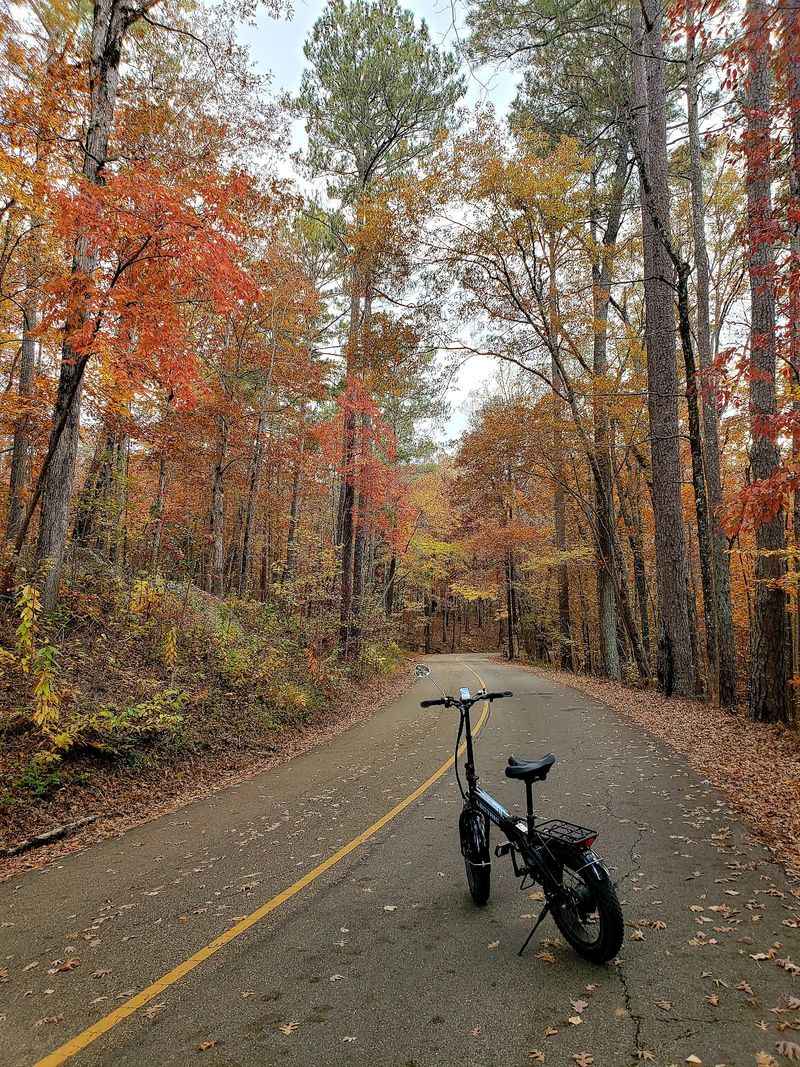
Plenty of people find this park by accident. The Natchez Trace Parkway runs right past it, and travelers on that scenic route often turn in just to look around.
Some of those curious drivers end up so impressed by the campsites that they go back to fetch their motorhome. That is a pretty strong endorsement for a spontaneous detour.
The parkway itself makes a handy companion to a stay. After a morning on the trails, a slow drive along the Trace offers more scenery without much effort.
For road trippers working their way through the South, the park works well as an overnight stop. It also works as a longer base for people who want to explore the area at a relaxed pace.
The location means the park rarely feels like a destination people plan months ahead for. Instead, it tends to be the happy discovery of a trip, the one mentioned first when friends ask about the highlights.
Keep an eye out for the exit. Missing it would mean skipping one of the more interesting landscapes along the whole route.
Built by the Civilian Conservation Corps
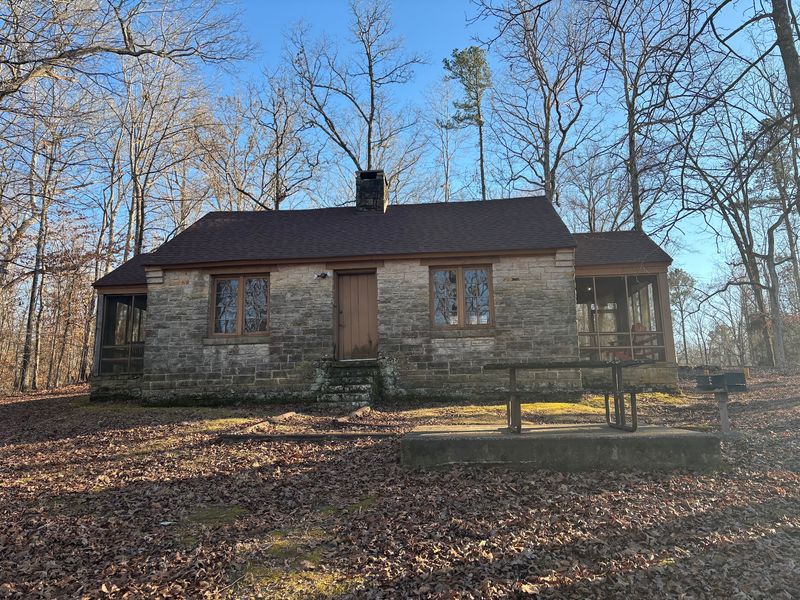
History runs through the stonework here. Several of the park cabins were built by the Civilian Conservation Corps in the 1930s, part of the national program that put young workers to building parks across the country.
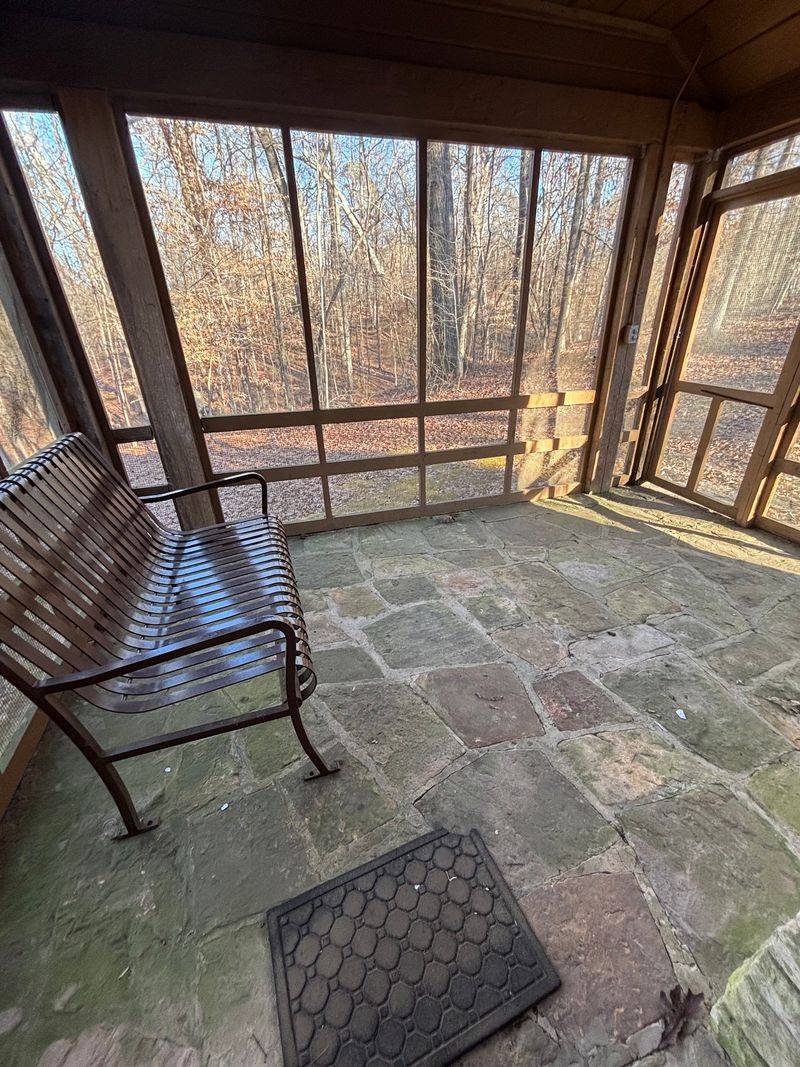
Those cabins still stand, complete with screened-in patios. They give the park a sturdy, old-fashioned character that newer facilities rarely match.
An old pioneer cabin also sits in a pretty roadside area of the park. It is currently boarded up, so the inside is off limits, but the exterior is still worth a stop.
Many guests wish they could learn more about that structure and its past. Its closed doors leave a bit of mystery hanging over the clearing.
The overall sense of history is a big part of the appeal. The park is frequently praised for its scenery and its heritage in the same breath.
Walking among buildings that have lasted nearly a century adds weight to an ordinary hike. The past is never far off the trail.
The Famous Swinging Bridge
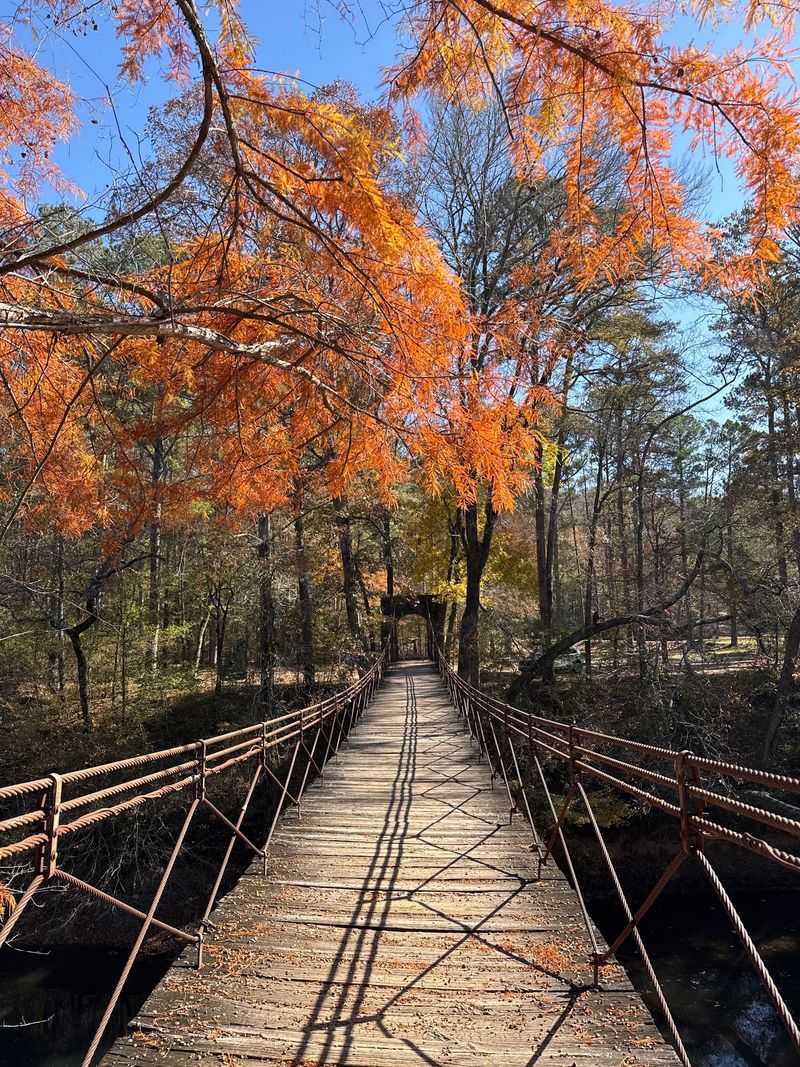
Ask around about the park’s signature feature and one answer keeps coming back. The swinging bridge is the star of the show.
It stretches over the water along one of the trails, and it is often named as a favorite part of any trip. Crossing it is a small adventure that fits easily into a short hike.
Many people like to linger near the bridge and simply sit by the water. The setting is described again and again as peaceful.
The bridge also pairs well with the river views nearby. Hikers who reach it tend to slow down, snap a few photos and soak in the surroundings.
Families, couples and solo hikers all seem to make it a must-see. It is the kind of landmark that earns a spot on a postcard.
Some of the park’s smaller bridges show their age, so watching footing is wise. Still, the main event delivers a swing-worthy moment that sticks around long after the trip ends.
Seven Trails, Many Moods
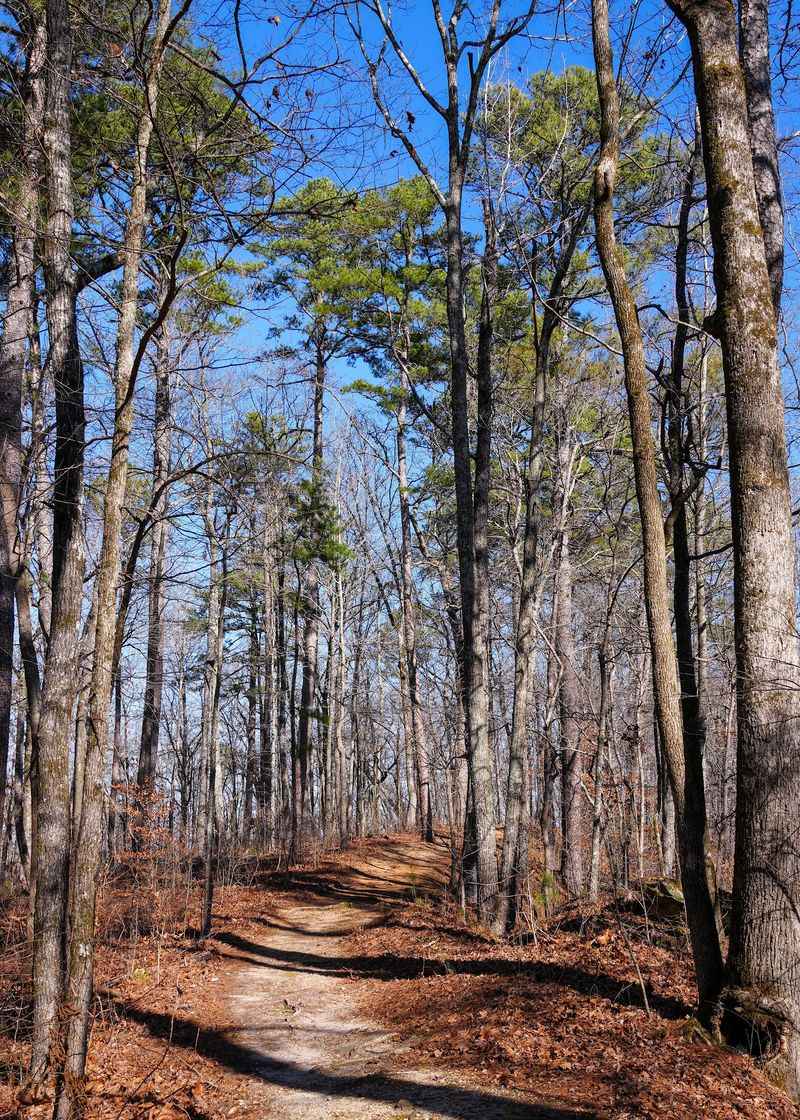
Seven trails wind through the park, each with its own length and difficulty. They range from easy strolls to moderate hikes with some elevation change.
Only trail number seven is a true loop. Hikers who want a circuit can connect a few of the others to make their own route.
Trail markings are a helpful touch. Look for medallions on the trees to stay on course, which keeps navigation simple even for newcomers.
The paths offer a mix of textures underfoot, from smooth stretches to rockier sections. That variety keeps a long walk from feeling repetitive.
Thick forest cover shades much of the trail system. Even on hot days, the canopy makes hiking more comfortable than the forecast might suggest.
Conditions can vary, and some trails may have fallen trees after storms. Checking with staff before heading out is a smart move.
With this many options, there is a trail for nearly every energy level. Choosing just one may be the hardest part.
Granite Outcroppings and Ancient Stone
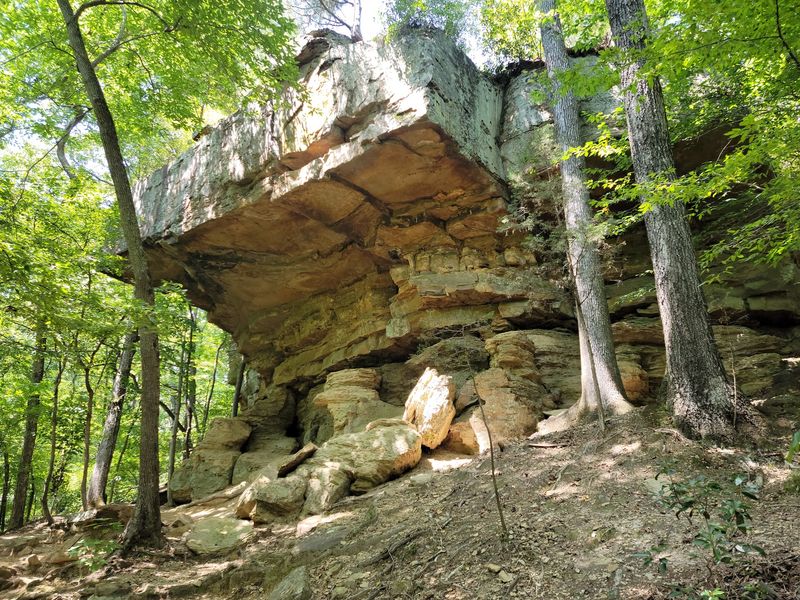
Boulders are the unexpected headliners in this corner of Mississippi. Ancient rock formations rise from the forest floor and hillsides throughout the park.
The granite outcroppings are some of the most celebrated features on the property. They give the trails a rugged look that surprises nearly everyone.
Not every formation requires a long trek. Some are reachable right from the road or with a short, easy hike, which makes them accessible for many ability levels.
An outcroppings trail focuses on these stone features for those who want a closer look. It is a fine choice for anyone curious about the geology.
The park is also said to offer good rock climbing. Climbers may want to ask staff about current guidelines before planning a session.
Natural springs appear among the rocks as well. Together, stone and water create scenes that feel far removed from the surrounding farmland.
These rocks have been here a very long time. A few hours among them is a solid way to spend an afternoon.
Creeks, Springs and a Hidden Waterfall
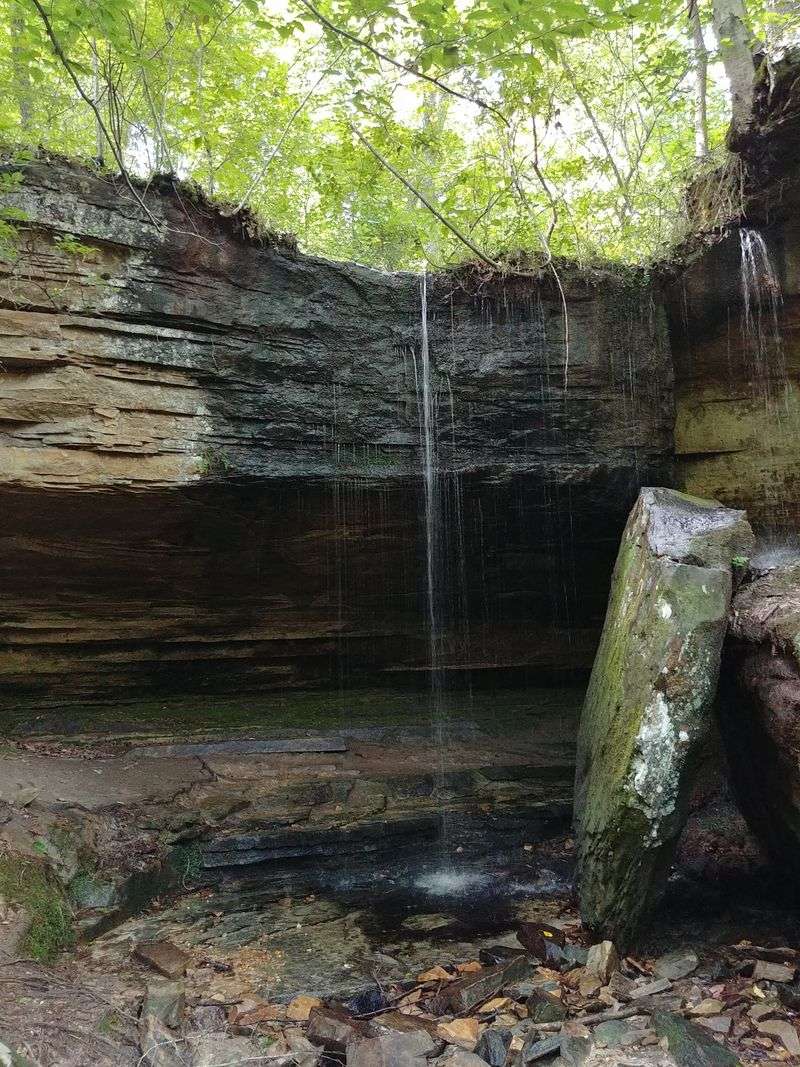
Water shapes much of the scenery here. Creeks, a river and natural springs thread through the park’s rocky terrain.
A waterfall hike is among the trails worth seeking out. It often ends up on the list for next time when guests run short on hours.
The river earns plenty of praise of its own. Its views from the trail pair nicely with the swinging bridge nearby.
Water levels change with the weather. After heavy rain, the river can run high and muddy, so plans may need some flexibility.
Natural springs add another quiet highlight along the way. They are often mentioned alongside the granite outcroppings as standout features.
Hikers chasing waterfalls should plan for a bit of extra time. Rushing defeats the purpose when the payoff is a relaxed moment beside moving water.
For many, this is where the park really flows into its best self, one creek crossing at a time.
Paddling and Fishing on the Water
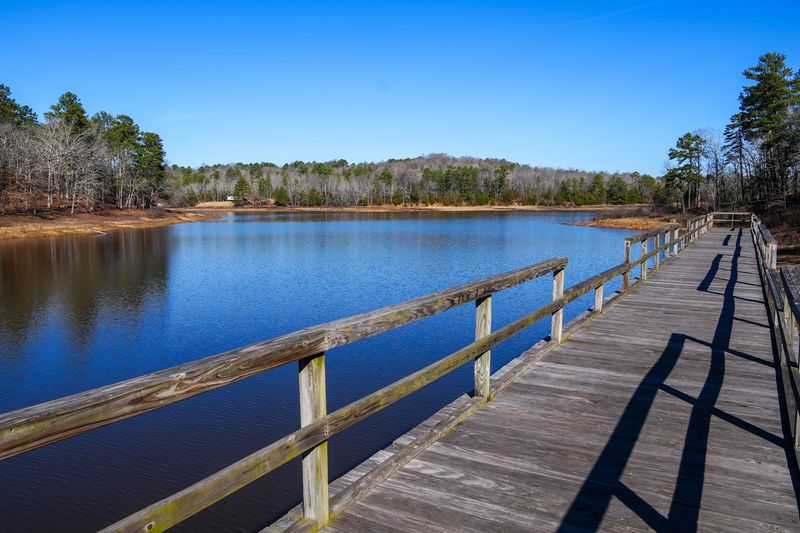
Canoeing is one of the most popular activities in the park. The lake and river give paddlers options for an outing.
The lake comes with a dock and a boat ramp, which keeps launching simple. It is also stocked for fishing.
Anglers have pulled small bass from the waters near the premium campsites. Reaching the shore can mean wading through some grass and mud, so sturdy shoes help.
One rule to note: fishing the lake from the campground area is reserved for those renting a campsite. Day users should plan to fish from other access points.
Swimming is a different story. It is not allowed in the lake, so the water is strictly for boating and fishing.
The lake has shrunk over the years due to leaks, but it remains a scenic centerpiece. Many campsites look right out over it.
A quiet paddle here can reset a busy week. It is a fine reason to bring the canoe along.
Disc Golf in the Woods
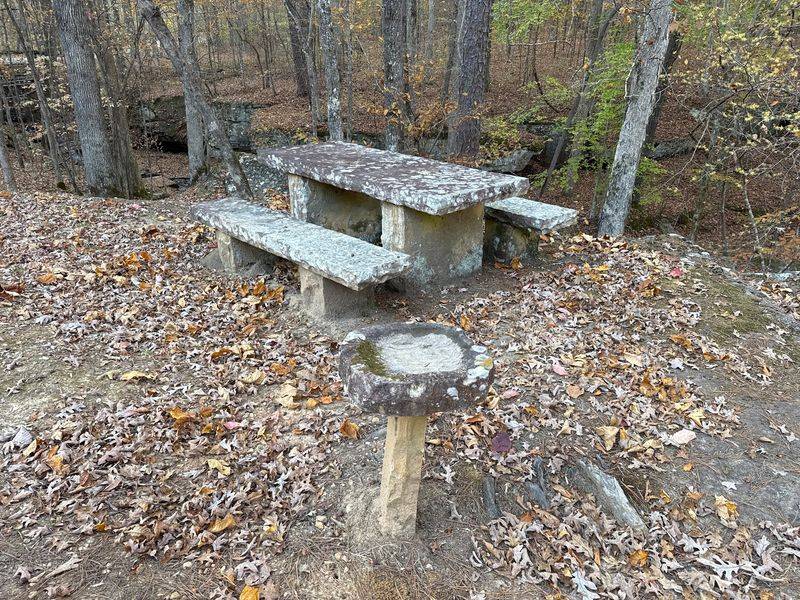
Not every adventure here involves a backpack. The park also has a disc golf course, and it gets a fair amount of attention.
It is a good fit for groups that want something active but less demanding than a long hike. Friends and families can spread out and play at their own pace.
The course adds variety to a stay. Mornings on the trail and afternoons tossing discs make for a balanced day.
Disc golf is often listed right alongside hiking, camping and canoeing as a reason people keep coming back. That says something about how well it fits into the park’s mix.
Bringing your own discs is the practical plan. Players new to the sport can learn as they go without much fuss.
Wooded holes add a little challenge, since trees have a way of catching stray throws. Consider it part of the fun.
Whether the scorecard looks good or not, the setting makes every round a win.
Campground Sites Worth Booking
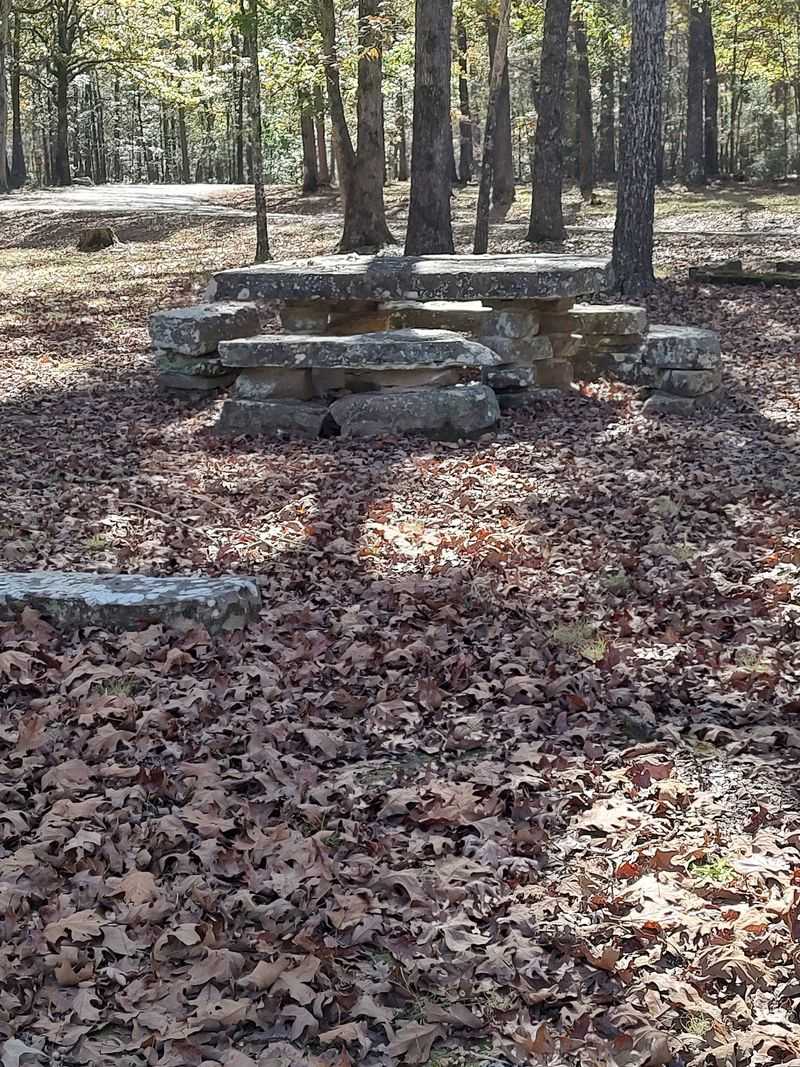
Camping draws a big crowd, and the newer section of the campground gets the loudest praise. Sites in roughly the 38 to 62 range are paved, spacious and landscaped.
Many of those sites look out over the lake, especially the ones around the circle at the back. Each comes with a charcoal grill and a stone fire ring.
Full hookups, including sewer, are available in the newer section. The older section offers water and electric sites, many of them shaded.
There is a catch. Restrooms and showers sit in the older section, so campers in the newer loop may need to drive to reach them.
Lower-numbered sites, such as site four, can have the fire pit and picnic table down a slope from the pad. Calling the park ahead of time helps if that matters.
A dump station is on site, and extending a stay can be done online. Ice and firewood are also sold.
Choose wisely and the campsite becomes a highlight in its own right.
Stone Cabins and Group Stays
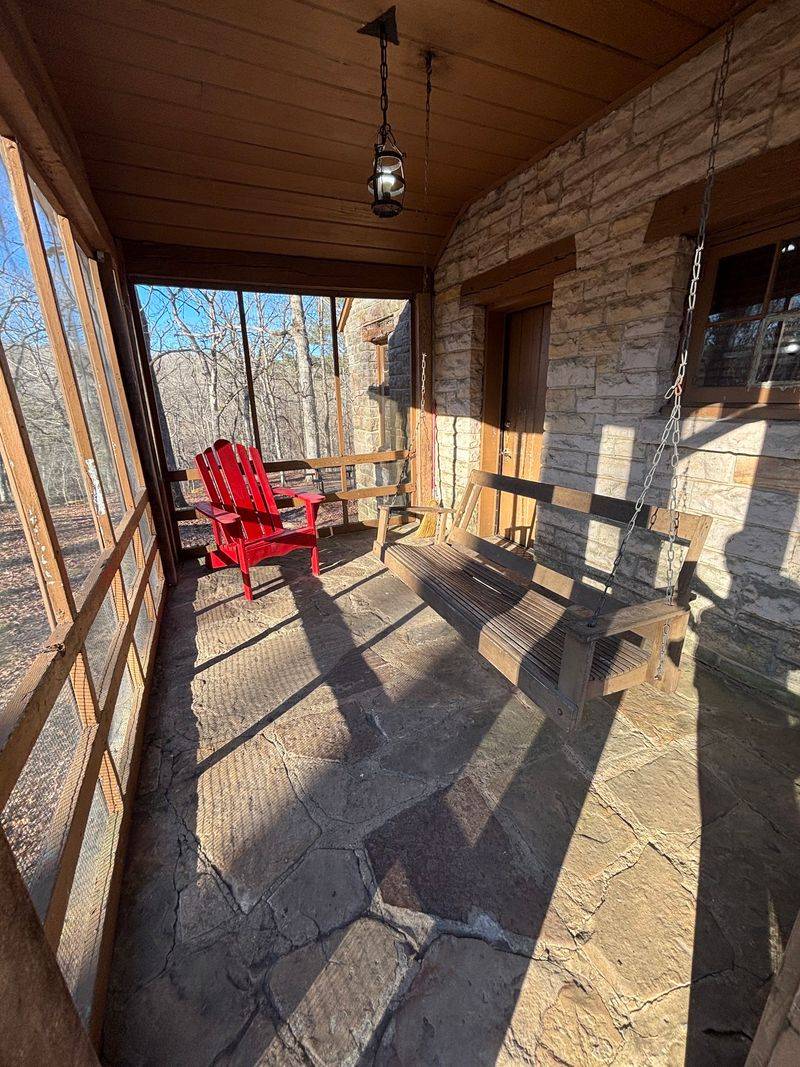
Cabins are one of the most talked-about lodging options in the park. Many are classic stone structures with screened-in patios.
They offer a cozy alternative to tents and RVs. For travelers without camping gear, they open the door to an overnight stay.
A cluster of cabins is part of the group camp. That setup would work well for a family reunion or a gathering of friends.
One practical warning comes with the stone walls. During freezing weather, these cabins can be very hard to heat, so packing extra layers in winter is wise.
The trade-off is plenty of historic character. Staying in a building with roots in the 1930s adds something special to a weekend.
Booking ahead is a good idea for popular dates. Group stays especially benefit from early planning.
Stone cabins, old trees and quiet evenings make a fine combination. It is lodging with a story built right into the walls.
Quiet Seasons and Friendly Faces
Winter might be the park’s best-kept secret. Cold-season hikers often feel as though they have the whole place to themselves.
Warmer months likely bring more company, but the forest shade helps on hot days. Each season offers its own kind of trip.
The overall atmosphere is very quiet. Many people describe the park as peaceful, a spot for simply being out in nature.
Staff consistently earn kind words. They are described as friendly, helpful and hard working, even clearing leaves from campsites.
There is also a local celebrity of sorts. A friendly Labrador Retriever from a nearby home has been known to wander the park and charm guests.
Cell service and wifi are limited or absent in much of the park. That can be a drawback or a welcome break, depending on the traveler.
Fewer distractions leave more room for the trails. Sometimes unplugging is the whole point.
Honest Notes Before You Go
Every great park has its rough edges, and this one is upfront about needing some care. Parts of the property show their age.
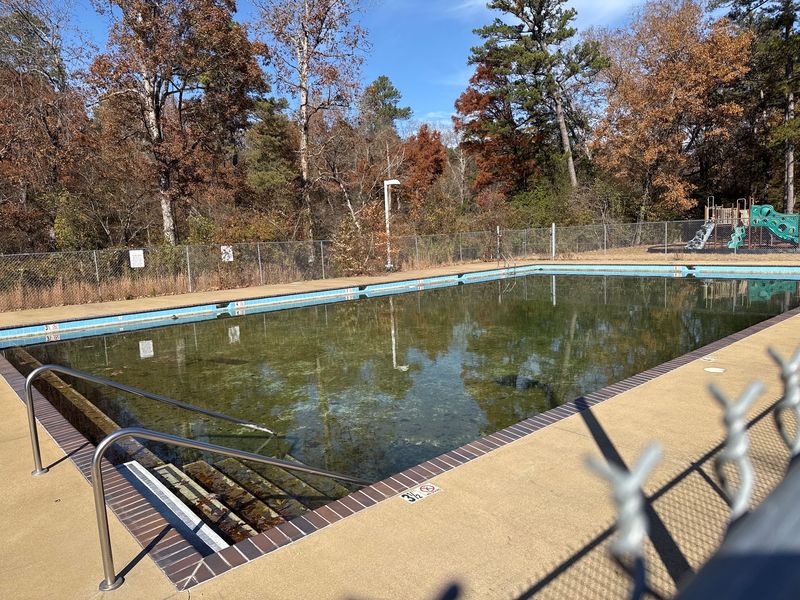
The swimming pool has been out of service for a long time. Some older buildings are closed, and the playgrounds are dated.
Restroom access can be limited, with some areas lacking a nearby facility. The restrooms in the older section are kept clean, though they are old.
Some roads could use repaving, and lighting is sparse at night. A flashlight or headlamp is a smart addition to the packing list.
Pavilions remain usable for picnics and gatherings. The campground itself is generally maintained, with the newer section in especially good shape.
None of this outweighs the scenery for most guests. Many hope for more funding, believing the park could become a crown jewel of the state system.
Going in with realistic expectations makes the beautiful parts shine even brighter.
Planning the Trip and a Final Word
Logistics are refreshingly simple. The park is open 24 hours a day, seven days a week.
Details on campsites, cabins and current conditions are available through the Mississippi Department of Wildlife, Fisheries and Parks website. Online booking makes extending a stay easy.
Nearby extras can round out a trip. Old Bridge Beach sits about nine minutes away for $5 per car, and a small, free Lock and Dam museum is also close by.
Pack for limited cell service and bring layers in cold weather. Sturdy shoes are useful on the rocky trails and muddy shorelines.
Some see the park as a one-night stop while traveling through. Others plan multiple nights and still leave things unexplored.
The verdict is simple. With a swinging bridge, boulder-lined trails, a quiet lake and history in the stonework, this park rewards anyone willing to take the exit.
Mississippi keeps a surprise up its sleeve here, and it is well worth uncovering.
Enjoyed this story?
Add Fast Food Club as a preferred source to see more of our reporting on Google.