


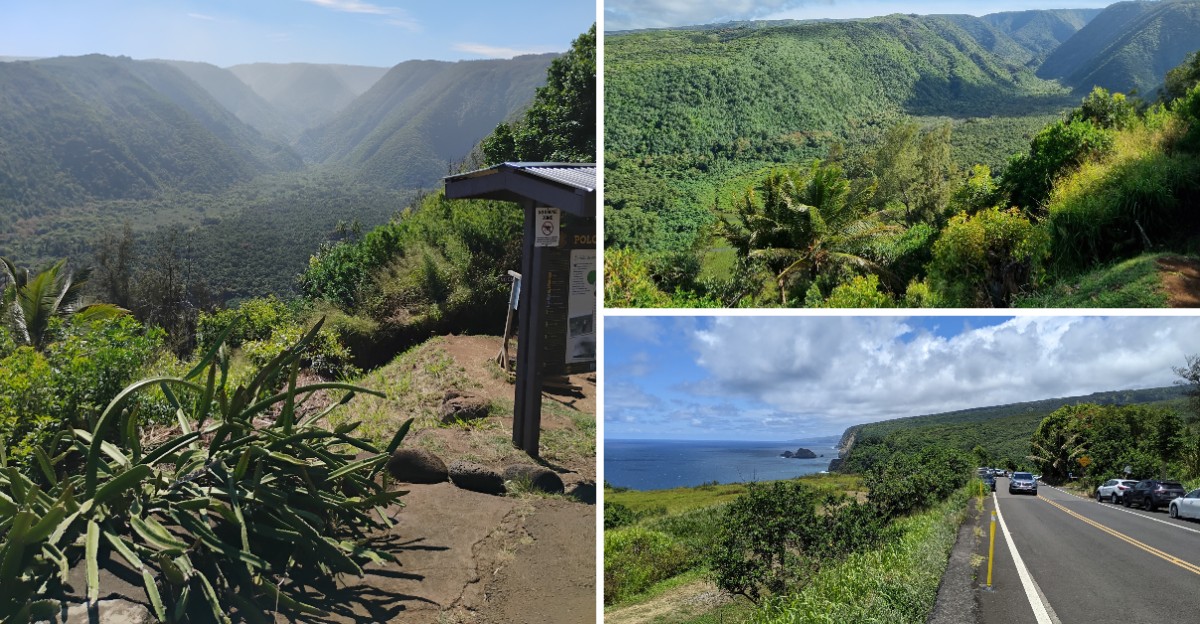
The highway on the northern tip of Hawaii’s Big Island simply stops. There is no town past this point, no gas station, and no cell signal.
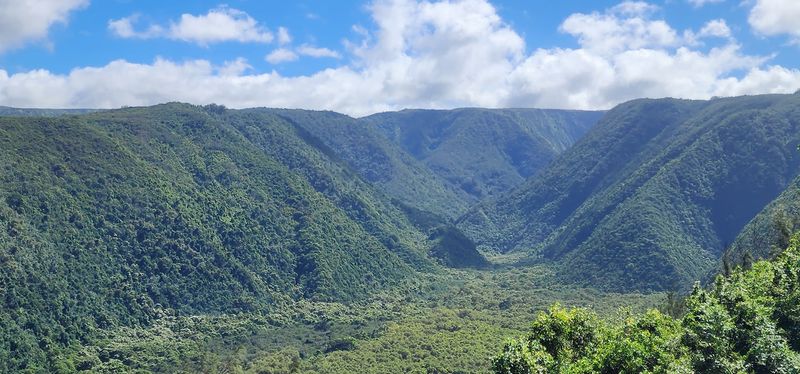
What waits at the end of the pavement is a cliff edge, a deep green valley, and a black sand beach far below. Most travelers chasing valley views on this island head to the famous lookout further down the coast, and plenty never make the long drive north at all.
That is a shame, because this spot offers something rare: a free trail you can actually hike to the bottom. The path is short but steep, the staff at the top keep a careful head count, and the payoff is a quiet cove framed by sea cliffs.
Here is everything worth knowing before you go, from parking tricks to trail tips.
A Lookout Where the Highway Gives Up
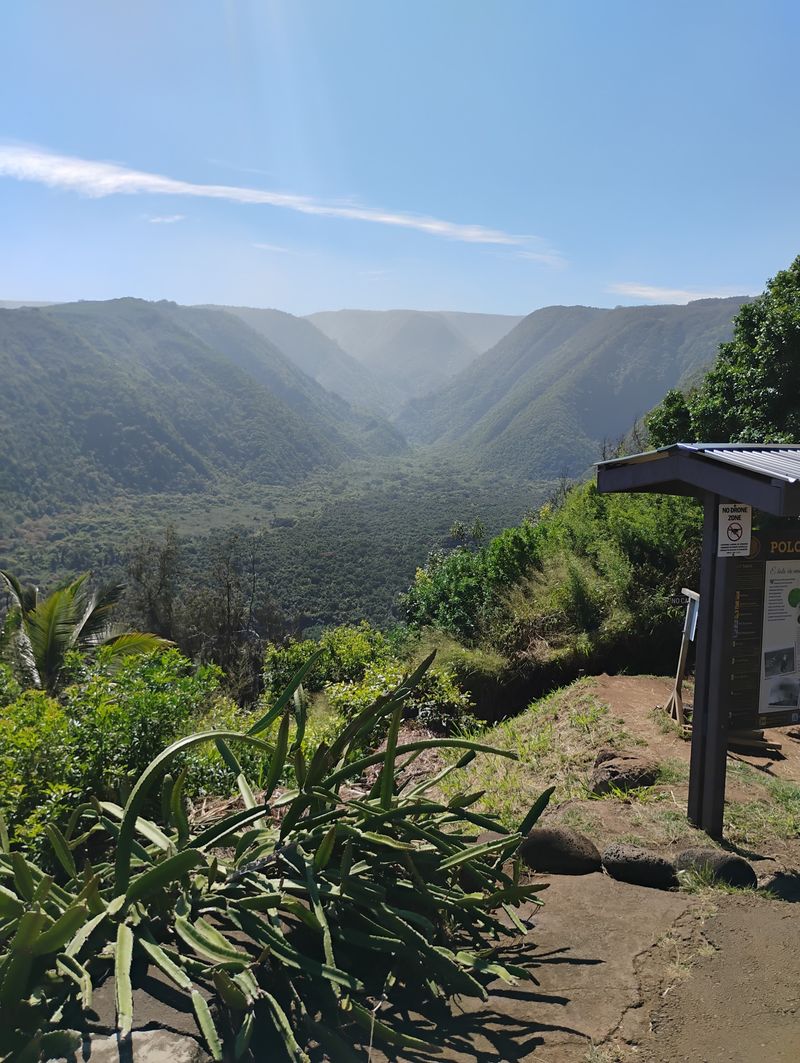
Every road has to end somewhere, and this one ends in grand style. Pololū Valley Lookout sits at 52-5100 Akoni Pule Hwy, Kapaau, HI 96755, on the North Kohala coast of Hawaii’s Big Island.
Akoni Pule Highway runs out of road right here. Past the lookout, the only way forward is on foot.
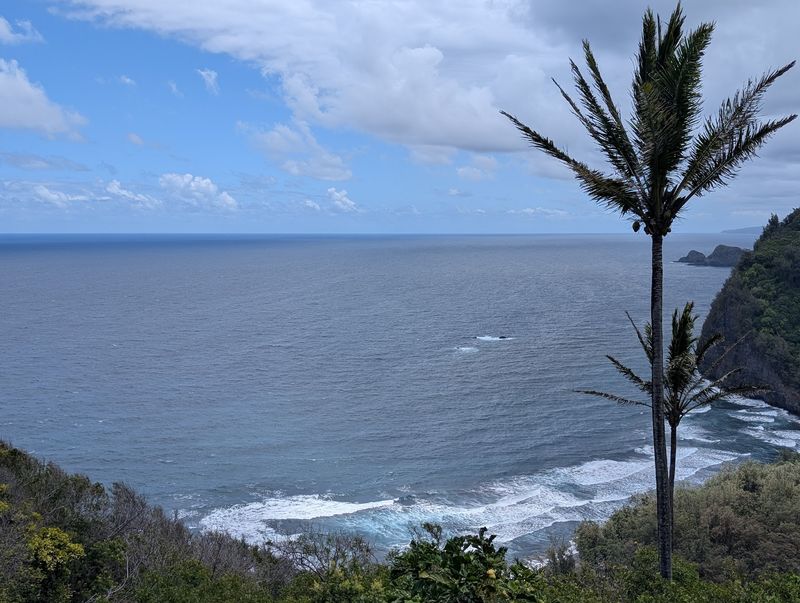
The spot is officially a scenic lookout with trail access. From the railing, the view opens onto the Pololū Valley, a line of sea cliffs, and the Pacific stretching out to the horizon.
A steep path leads from the top down to a black sand beach on the valley floor. That trail is the main reason many people make the trip, though plenty are happy just to stand at the overlook and take it in.
The place has earned a 4.8-star average across more than 2,280 Google ratings. That is a high score for a spot that requires a long detour to reach.
Entry costs nothing. There is no ticket booth and no gate fee, which makes this one of the better bargains on the island.
Getting oriented is simple, since there is nowhere else to go once the asphalt stops.
The Famous Cousin Down the Coast
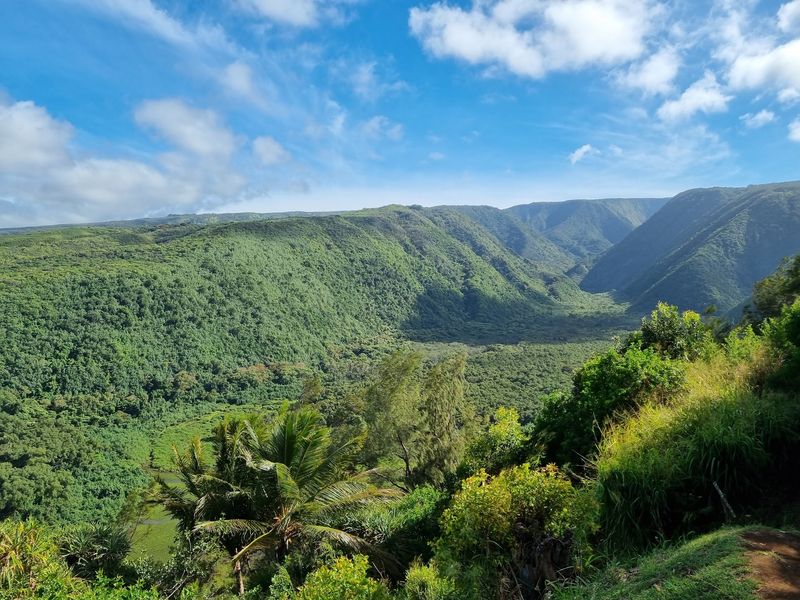
Waipio Valley gets the postcards. Its lookout is one of the best-known viewpoints on the Big Island, and it draws a steady stream of tour vans.
Pololū sits at the opposite end of the same rugged stretch of coastline. Both valleys cut deep into the land and open onto the sea, and both offer dramatic cliff views from above.
The big difference comes down to access. At Waipio, many travelers end up staying at the top, since getting to the bottom is not a simple walk.
Pololū flips that script. A half-mile trail leads right down to the valley floor and the beach, so the view from above turns into a hike you can actually finish.
That makes the northern valley a smart choice for anyone who wants more than a quick photo. The overlook alone is worth the stop, yet the trail adds a second chapter to the visit.
Distance keeps the crowds thinner. The drive takes a while from most parts of the island, which filters out casual sightseers.
Call it the quieter sibling that happens to have the better backyard.
Getting There Is Half the Story
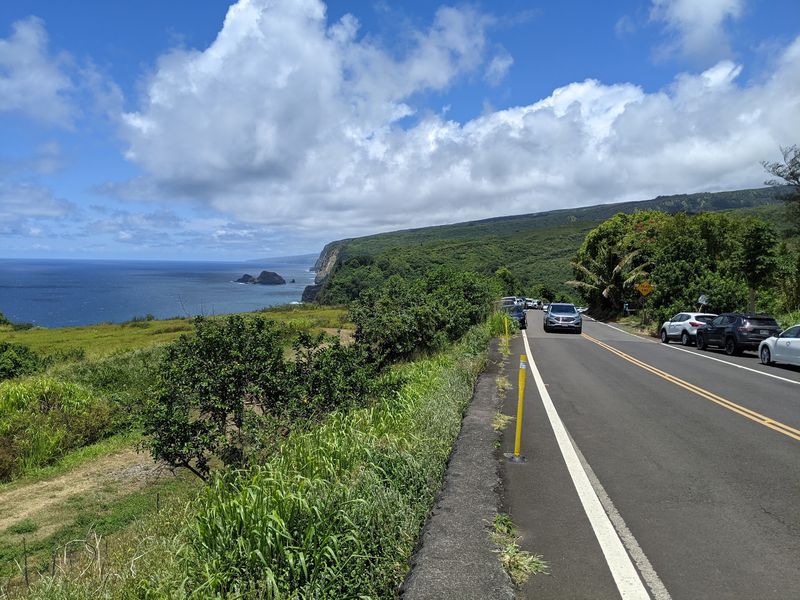
Nobody stumbles onto this lookout by accident. It sits at the far northern end of the island, and it takes a real commitment to reach.
From Kona or Waikoloa, the coastal route next to the ocean is the recommended choice. That drive is scenic in its own right and makes the long trip feel shorter.
Some find the final stretch a little uneventful. Others call it one of the most memorable drives they have ever taken, so opinions clearly vary on the road itself.
Either way, the trip eats up time. Planning the lookout as one stop within a longer day around the island makes the most sense.
A popular pairing is lunch in Waimea followed by the drive north. That combination turns the outing into a relaxed afternoon rather than a rushed dash.
Allow a few hours on site if the hike is on the agenda. Somewhere between two and six hours covers most visits, depending on how long you linger on the beach.
Once the car is parked, the hard part of the journey changes from steering wheel to hiking boots.
Ten Minutes at the Top
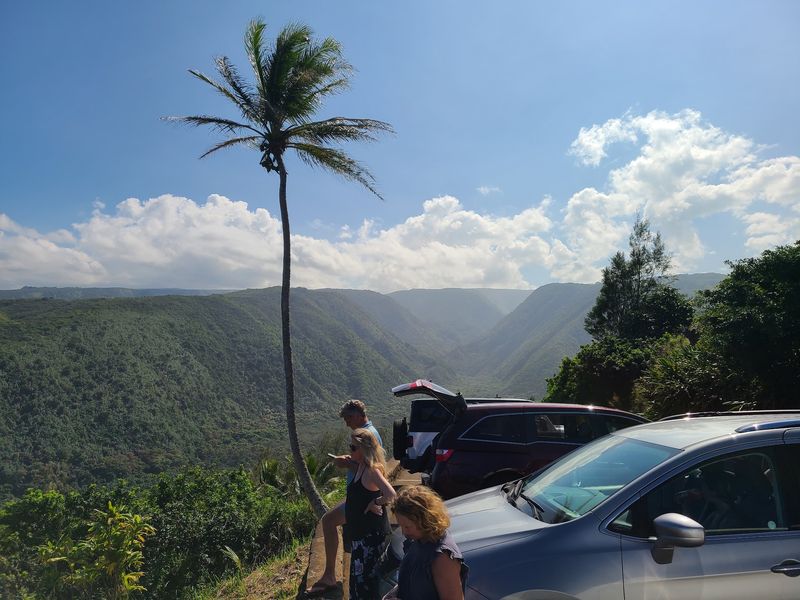
Parking here works on a split system, and knowing it ahead of time saves a lot of circling.
The small lot at the lookout is for short visits only. Cars there get roughly ten to fifteen minutes, which is enough for photos and a good look at the valley.
Hikers need to park along the side of the road leading up to the lookout. That roadside parking is free, but spaces are limited.
On busy days, finding a spot can be a real challenge. The lot can fill up suddenly, though turnover is quick because many people only stay a few minutes.
Staff at the top help direct both hikers and quick-stop sightseers. When things are slow, the ten-minute limit may stretch a bit.
A weekday visit tends to mean fewer cars. Arriving earlier in the day also improves the odds of a good roadside spot.
Quick tip: decide before arriving whether you plan to hike. That one choice determines exactly where you should park.
Get the parking right, and the rest of the visit runs smoothly.
The Aunties and Uncles at the Trailhead
Before anyone heads down the trail, there is a friendly checkpoint. Local staff, often called aunty or uncle, stand at the trailhead and keep a count of everyone going into the valley.
The reason is practical. They want to make sure every person who goes down comes back up.
Check-in is required for hikers. The staff give specific instructions about the trail, the beach, and conditions for the day.
Many people walk away from that check-in with more than directions. The staff often share a short history lesson about what this valley means to Hawaiian history.
That small talk turns a simple trailhead into something more meaningful. It is a reminder that this land carries cultural weight beyond its good looks.
The team also serves as a lifeline. Cell service disappears once you start down, and the staff at the top carry satellite phones to call for help if needed.
A donation jar sits at the entrance. Funds go toward keeping the trails clean and maintained.
Dropping in a few dollars feels like a fair trade for such a warm welcome.
Half a Mile, Nearly a Thousand Feet
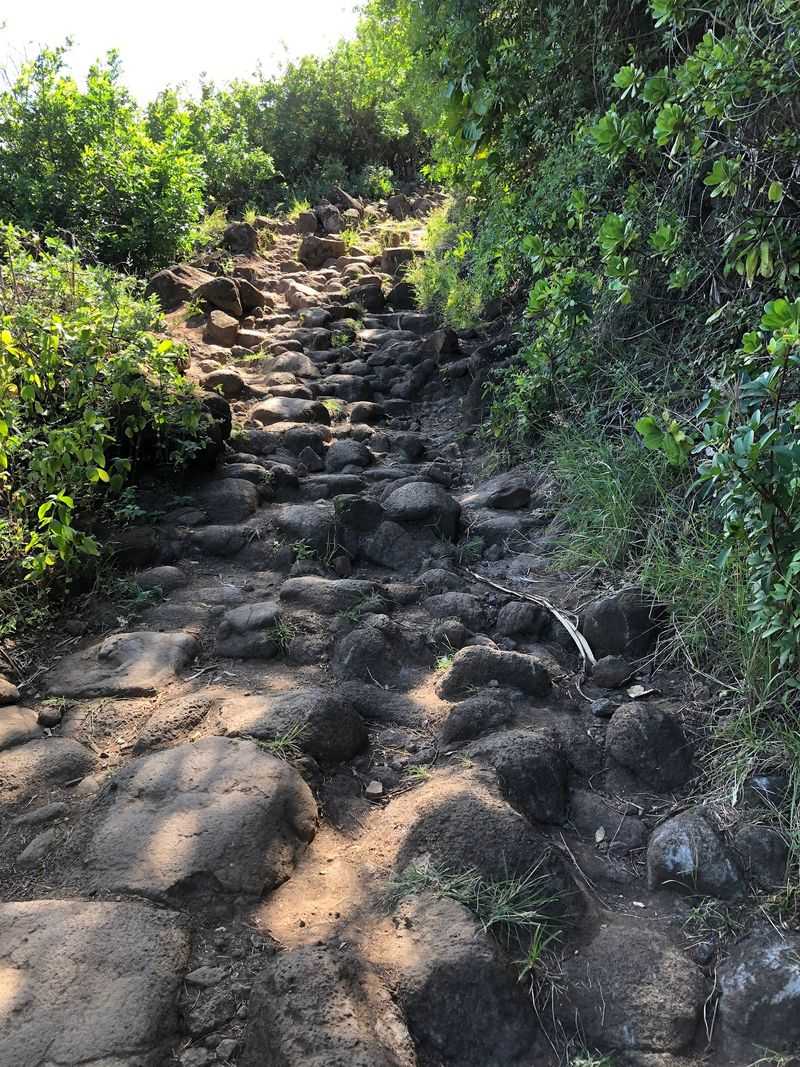
Numbers on paper can be deceiving. The trail runs only about 0.6 to 0.7 miles from top to bottom, which sounds like a stroll.
Then comes the elevation. The path drops close to 1,000 feet, with some sections reaching grades of up to 50 percent.
The route is a series of switchbacks with plenty of shade from the trees. Several lookout points appear at the turns, so the views keep coming on the way down.
Underfoot, expect rocks and large tree roots growing across the path. Watching every step is the smart approach.
Going down is usually quicker, though some find it trickier on the knees. Coming back up is where the real effort kicks in, and many describe it as a serious leg workout.
The climb out takes roughly 20 minutes for many hikers. Frequent breaks help, and some people bring a towel to sit on a rock while catching their breath.
Not everyone needs to reach the beach. Hiking partway down still delivers a fine view of the valley.
Short trail, big payoff, and a pair of tired legs as proof.
When Rain Changes the Rules
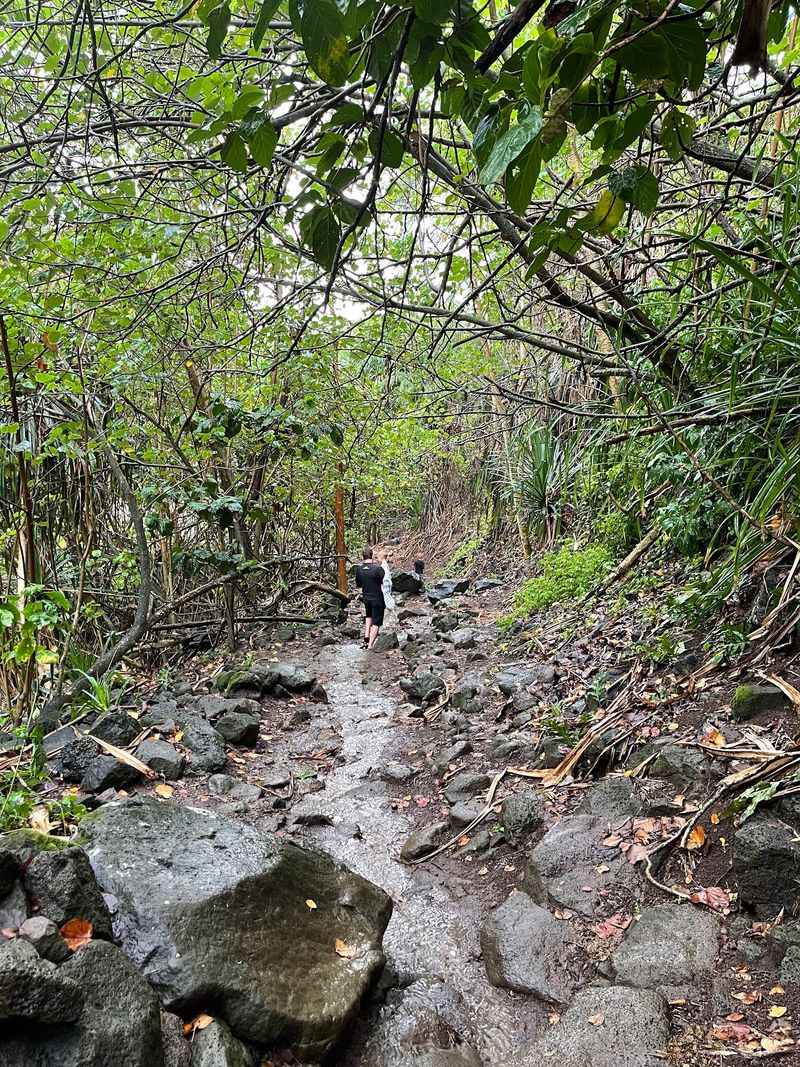
Weather plays a big role on this trail. A dry day and a wet day can feel like two different hikes.
After rain, the path gets slippery and muddy. Wet leaves pile on top of rocks, which makes footing tricky.
The first section of the trail is especially known for being slick. Many hikers recommend skipping the descent entirely when conditions are wet.
The trail has had its own share of trouble over the years. At one point it was damaged by an earthquake and closed, and it has since reopened and is working again.
Even on a dry day, care matters. The well-groomed sections can still hide patches of mud.
Checking the weather before the drive is a good habit. Given how far the lookout is from most towns, it would be a shame to arrive and find the trail too slick to try.
The view from the top holds up in any weather, so a rainy day still has something to offer.
Let the sky decide how far down you go.
Black Sand at the Bottom
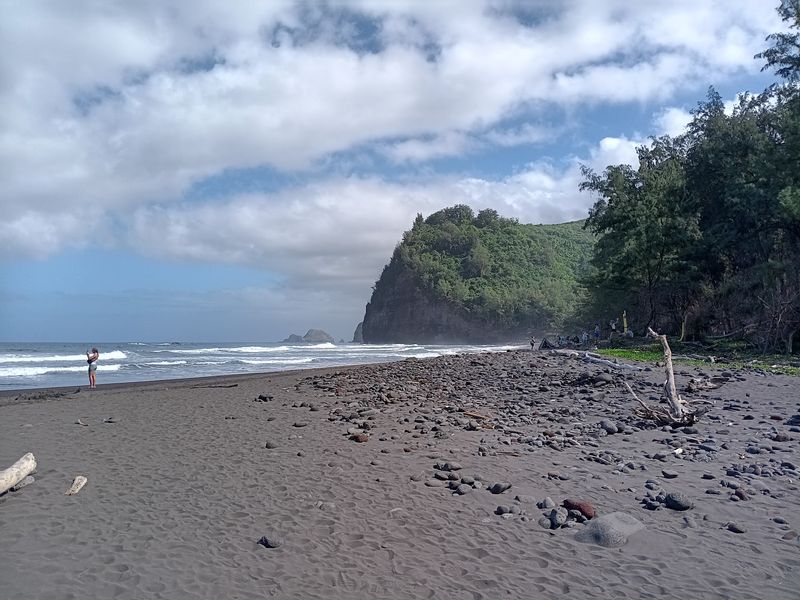
All that effort leads to the star of the show. The valley floor opens onto a black sand beach set inside a protected cove.
Tall cliffs frame the shoreline on both sides. The contrast of dark sand, blue water, and green slopes makes this one of the most photographed corners of the North Kohala coast.
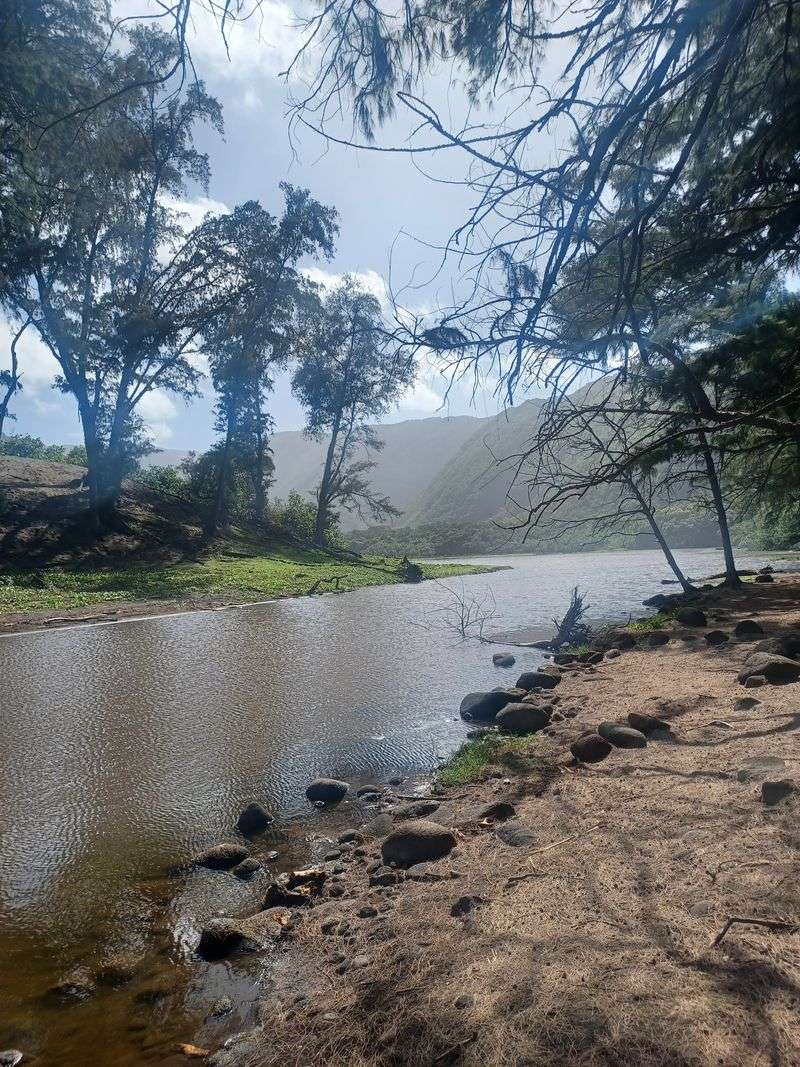
Before reaching the sand, a small trail winds through the trees on the valley floor. Tiny crabs sometimes scuttle along the water’s edge.
Here is the catch: swimming is not a good idea. The current is strong, the water is often rough, and staff at the top advise against going in.
Tides can also change how much of the beach is usable. Relaxing on shore and watching the waves is the safer plan.
There are no lifeguards or workers stationed at the bottom. Hikers are on their own once they leave the trailhead.
Camping is not allowed in the valley, so this is strictly a day trip destination.
Bring a towel for sitting, not for swimming.
Whales, Sunrise, and Big Sur Vibes
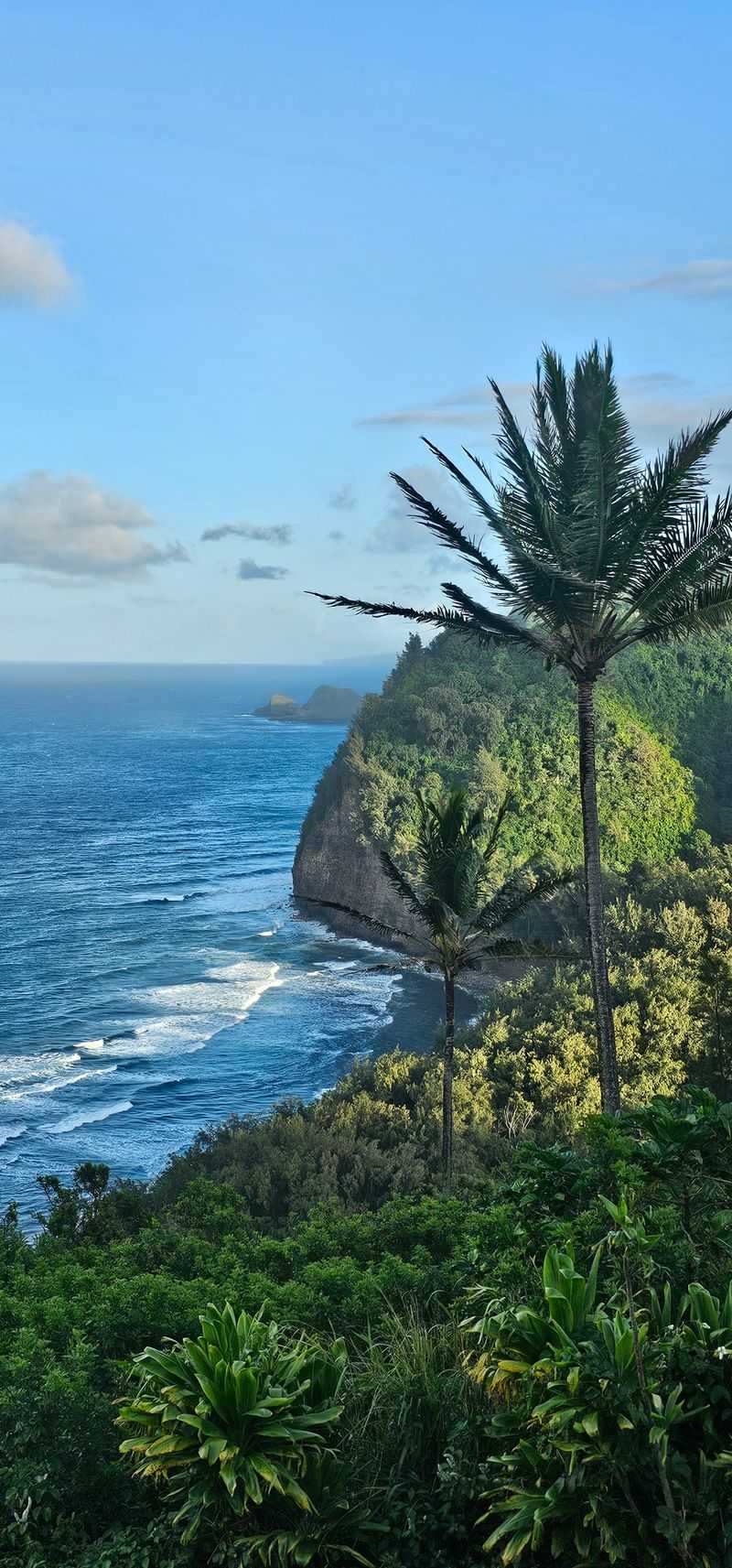
Some people compare the coastline here to California’s Big Sur. Steep green cliffs plunge straight into the sea, one after another, along the northern shore.
The lookout delivers that scene without any hiking at all. Coastline and mountain scenery fill the frame from the railing.
Wildlife can steal the show too. Whales have been spotted from the lookout several times during the right season.
Early risers sometimes come for sunrise. Clouds can roll in and block the view, so it is a gamble, but the overlook still impresses on gray mornings.
Many agree the view holds up regardless of weather. Overcast skies change the mood rather than ruin it.
The trail adds extra viewpoints along each switchback. Every turn reveals a slightly different angle on the valley and the cliffs beyond.
Kayakers sometimes paddle to this stretch of coast at certain times of year. Large marine life, including tiger sharks, lives in these waters, so caution is essential for anyone on the water.
Keep the camera handy, because the ocean has a habit of surprising people.
Who Should Make the Trek
Here is the honest truth: the hike is not for everyone, and that is perfectly fine.
People who enjoy a short, tough workout tend to love this trail. Fit hikers often describe it as easy on the way down and demanding on the way up.
Those with limited mobility can still have a wonderful visit. Many skip the hike entirely and spend their time at the lookout, and they leave just as happy.
Families and casual walkers might choose the middle ground. Going halfway down gives a solid view without the full climb back.
The atmosphere stays relaxed and unhurried. Thanks to the limited parking and remote setting, crowds rarely reach the levels seen at bigger attractions.
Weekdays tend to be calmer. Many people who visit then find the trail and beach pleasantly uncrowded.
Travelers looking for a quiet, low-cost outing that mixes scenery with a bit of culture will feel right at home.
Pick your own adventure level, because the valley rewards every version of the visit.
Packing for a Place With No Signal
Preparation makes the difference between a great day and a rough one. The lookout is remote, and there are no shops at the bottom of the valley.
Water tops the list. Bring plenty, and consider saving some for the climb back up when you will need it most.
Footwear matters just as much. Sandals are a poor choice, and sturdy shoes or boots with good traction are strongly recommended.
A walking stick helps on the steep, rocky sections. Snacks like protein bars or apples are handy for an energy boost.
Timing helps too. Starting early in the morning avoids the hotter part of the day.
Restroom note: there are no facilities at the trailhead itself, but a portable restroom sits a short way up the road.
Remember that cell service drops out on the trail, and even emergency calls may not go through. Letting someone know your plans and checking in with staff are both smart moves.
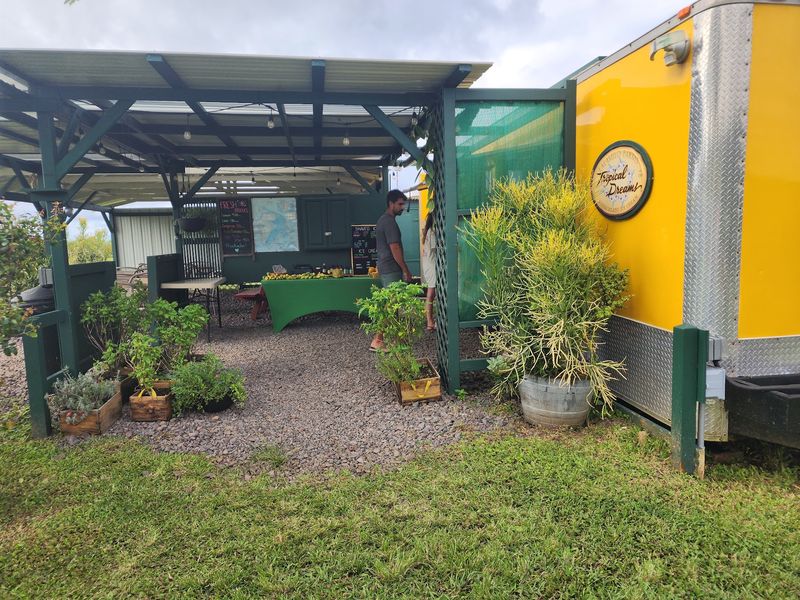
Near the trailhead, a small spot called Ke Aloha Wagon sells snacks and drinks, with tables set among flowers.
Pack light, pack smart, and leave room for the view.
The Verdict at Road’s End
So is the long drive worth it? For most who make it, the answer is a clear yes.
The lookout combines several things that rarely come together. It is free, it offers a trail that actually reaches the bottom, and it stays calmer than the island’s more famous valley viewpoint.
The staff at the top add a personal touch. Their head counts, safety tips, and short history lessons give the place a sense of care.
The trail asks for effort and respect. Steep slopes, rocky ground, and slick conditions after rain mean it should never be taken lightly.
Those who skip the hike still get a stunning reward from the railing. A ten-minute stop can be enough to make the drive feel worthwhile.
Many call it a highlight of their Big Island trip. Others simply describe it as a special place they keep thinking about long after leaving.
Plan for the distance, respect the ocean, and drop a little something in the donation jar.
The road may end here, but the memories tend to keep going.
Enjoyed this story?
Add Fast Food Club as a preferred source to see more of our reporting on Google.