


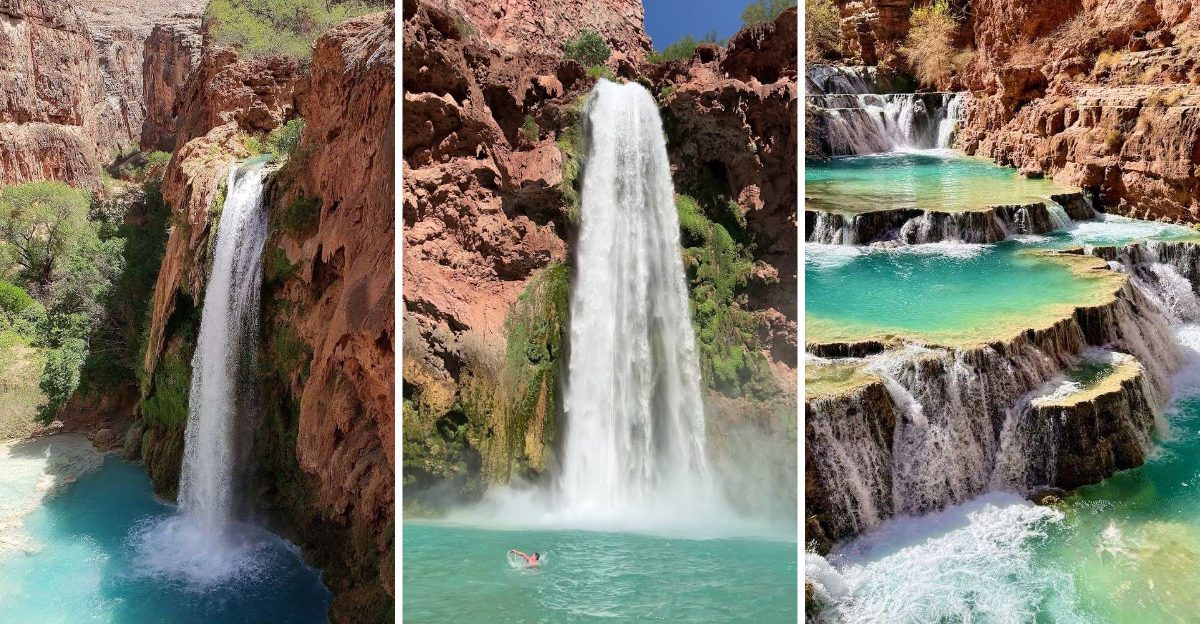
Arizona might not be the first place you think of when you picture waterfalls, but this desert state is full of surprises. Hidden among red rock canyons, lush forests, and ancient tribal lands are some of the most stunning waterfalls in the entire country.
From turquoise pools to roaring cascades, these natural wonders are waiting to be explored. Pack your hiking boots and get ready to discover a side of Arizona that will completely blow your mind.
Havasu Falls Trail – Arizona
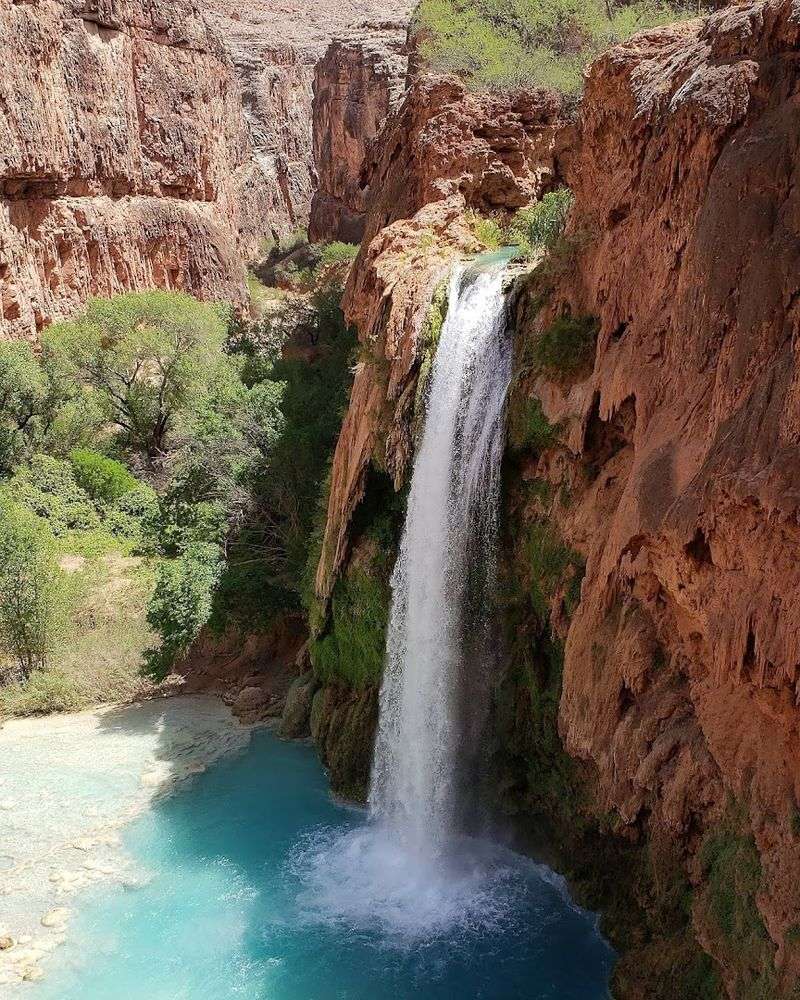
Nothing quite prepares you for the moment Havasu Falls comes into view. The water is an almost unreal shade of turquoise-blue, created by high mineral content in the water.
It tumbles roughly 100 feet down into a glittering pool below.
Getting here requires a 10-mile hike into Havasupai tribal land, so a permit is absolutely required. Book early because spots sell out fast.
The effort is 100% worth every step you take.
Mooney Falls – Supai, Arizona
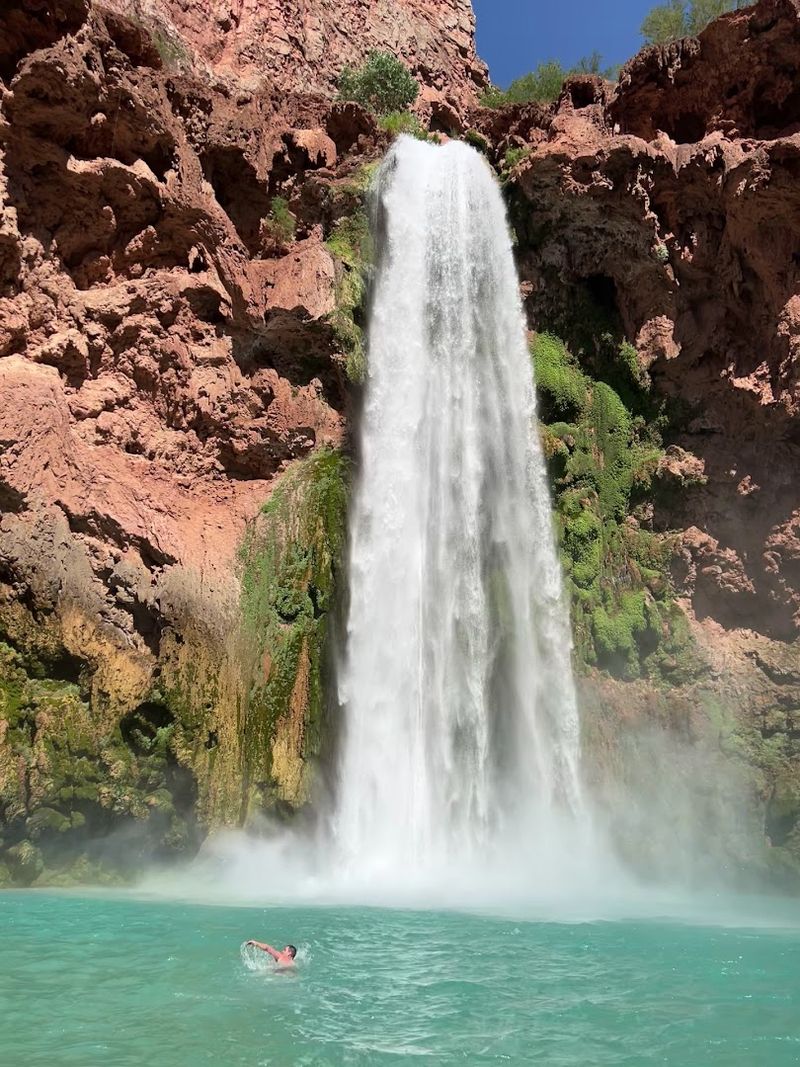
Standing at over 200 feet tall, Mooney Falls is actually taller than Niagara Falls. That fact alone makes it worth the trip to Supai, Arizona.
The waterfall is named after a prospector who met an unfortunate end here in the 1880s.
Reaching the base involves climbing down chains and through narrow tunnels carved into the cliff face. It feels like a real adventure rather than just a hike.
The reward is one of the most jaw-dropping swimming holes you will ever find.
Beaver Falls – Supai, Arizona
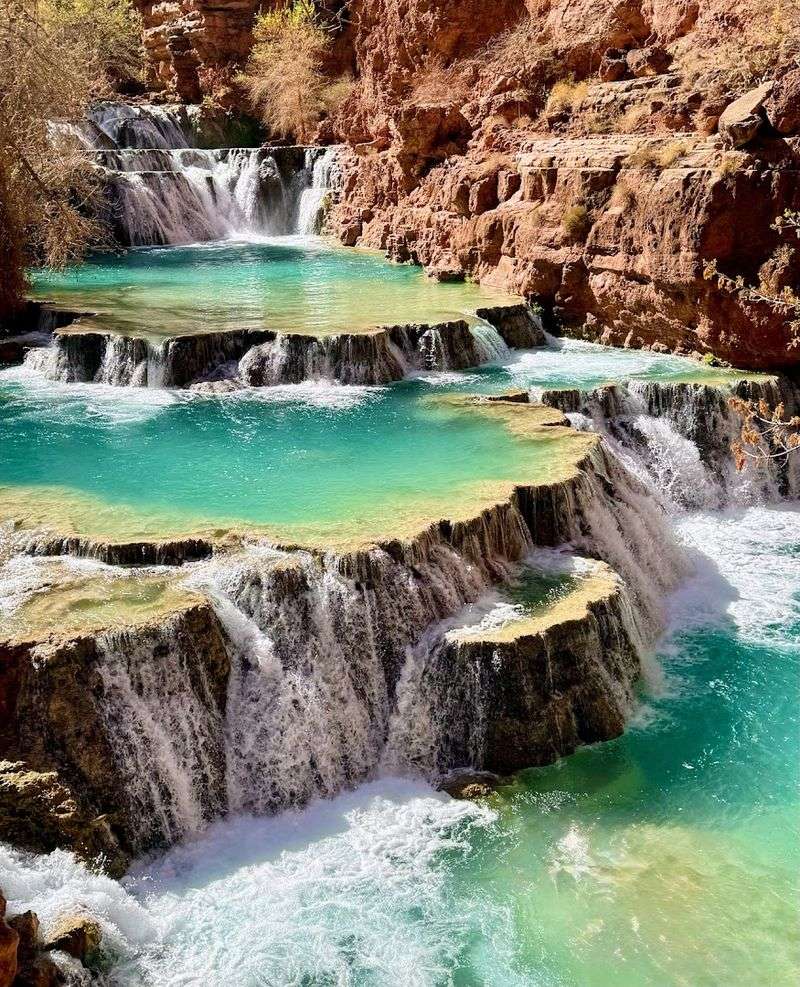
Beaver Falls is a series of cascading drops rather than one single plunge, giving it a layered and almost magical look. The travertine rock shelves create natural terraces that the water flows across beautifully.
Many visitors say it feels like stumbling onto a hidden paradise.
Located past Mooney Falls, this spot adds extra miles to an already long journey. Most hikers combine it with a multi-day camping trip in the canyon.
Bring plenty of water, snacks, and a fully charged camera for this one.
Little Navajo Falls – Supai, Arizona
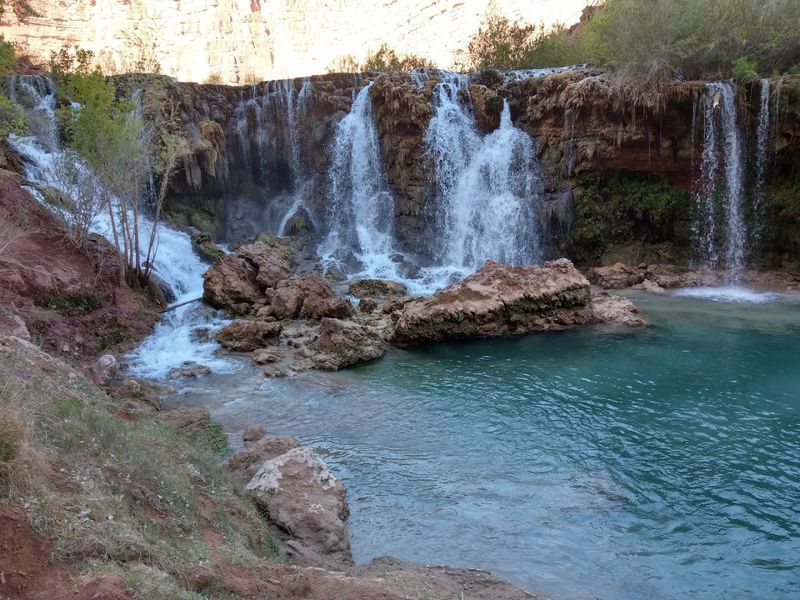
Little Navajo Falls has a fascinating backstory. Before a major flood reshaped the canyon in 2008, the original Navajo Falls looked completely different.
What visitors see today is actually a newer waterfall that formed after that dramatic flood event.
Wide and gentle compared to its towering neighbors, this waterfall has a relaxed and welcoming energy. It is often the first waterfall hikers encounter after arriving at Supai village.
Cooling off in the shallow pool here is the perfect way to start your canyon adventure.
Ribbon Falls – Arizona
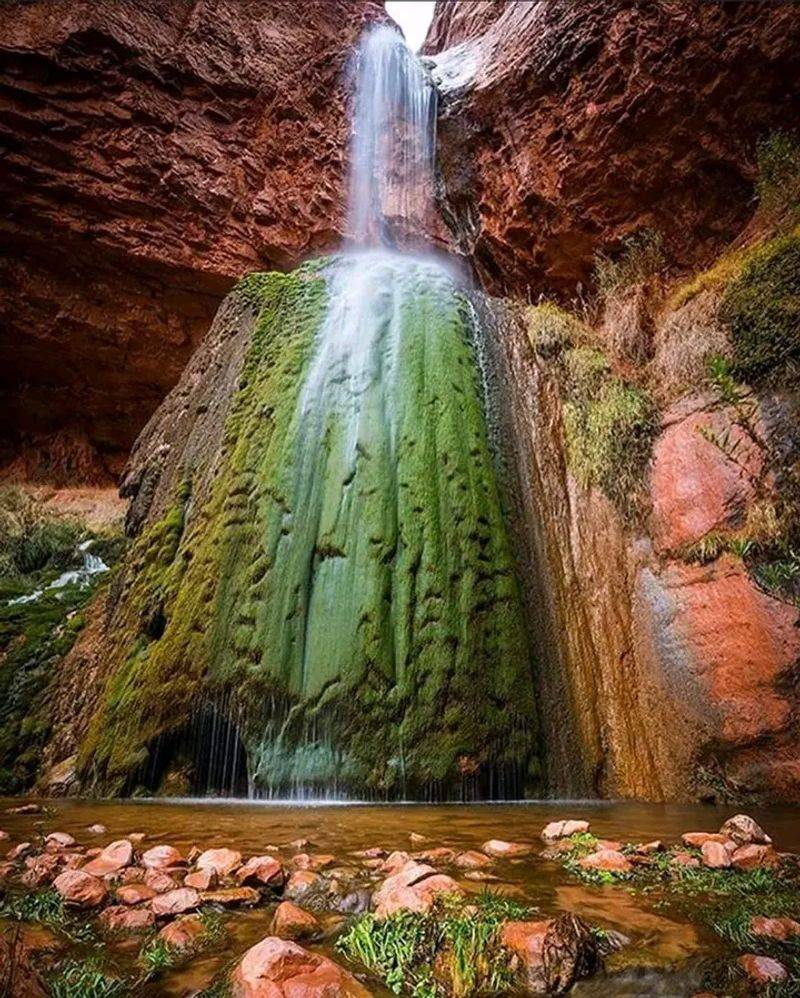
Ribbon Falls earns its name from the way water streams down in a thin, elegant ribbon from high above. What makes it truly unique is the mossy green travertine mound it falls onto, creating a lush island of green in the middle of the dry canyon.
It almost looks like something from a fantasy movie.
Reaching it requires a long hike through the Grand Canyon, typically via the North Kaibab Trail. The journey is challenging but incredibly scenic.
Hikers who make it here rarely forget the experience.
Grand Falls, Arizona – Arizona
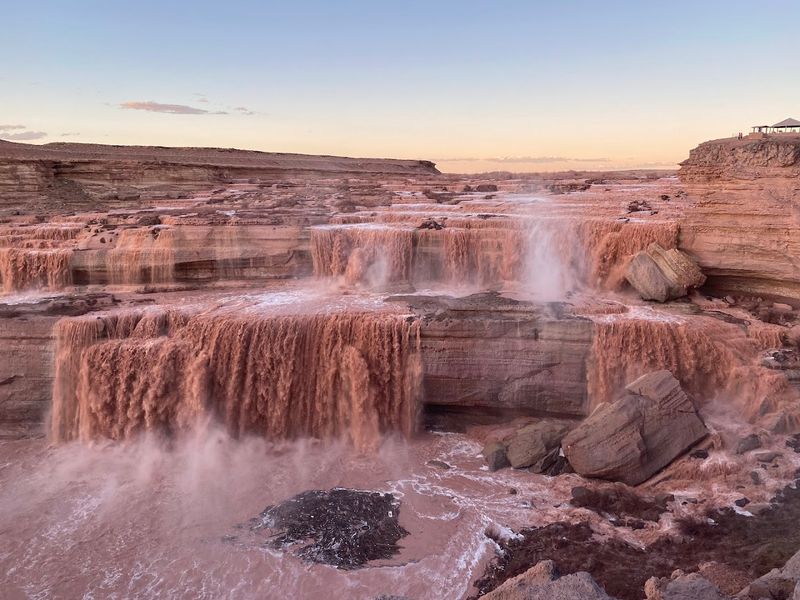
Nicknamed the Chocolate Falls, Grand Falls earns that title because of its thick, muddy brown water that roars over volcanic rock. It is actually wider than Niagara Falls when running at full flow.
The catch is that it only runs seasonally, typically after heavy snowmelt or monsoon rains.
Located on Navajo Nation land northeast of Flagstaff, this waterfall is totally free to visit. The surrounding landscape is wide open and dramatic.
Timing your visit right means witnessing one of Arizona’s most powerful and underrated natural spectacles.
Fossil Creek Waterfall – Camp Verde, Arizona
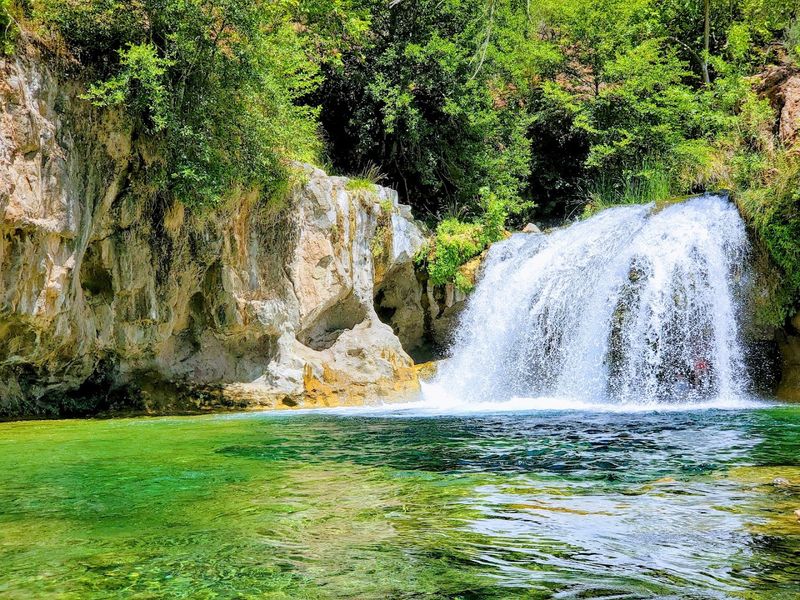
Fossil Creek is one of only two free-flowing perennial streams left in all of Arizona, which makes it incredibly special. The water stays a constant cool temperature year-round thanks to natural springs.
That consistency has allowed a rich ecosystem of plants and wildlife to flourish here.
A permit system is required to visit during peak season, so planning ahead is a must. The hike down to the waterfall is moderate and well worth the effort.
Snorkeling in the crystal-clear pools is a popular and unforgettable activity at this hidden gem.
Seven Falls – Tucson, Arizona
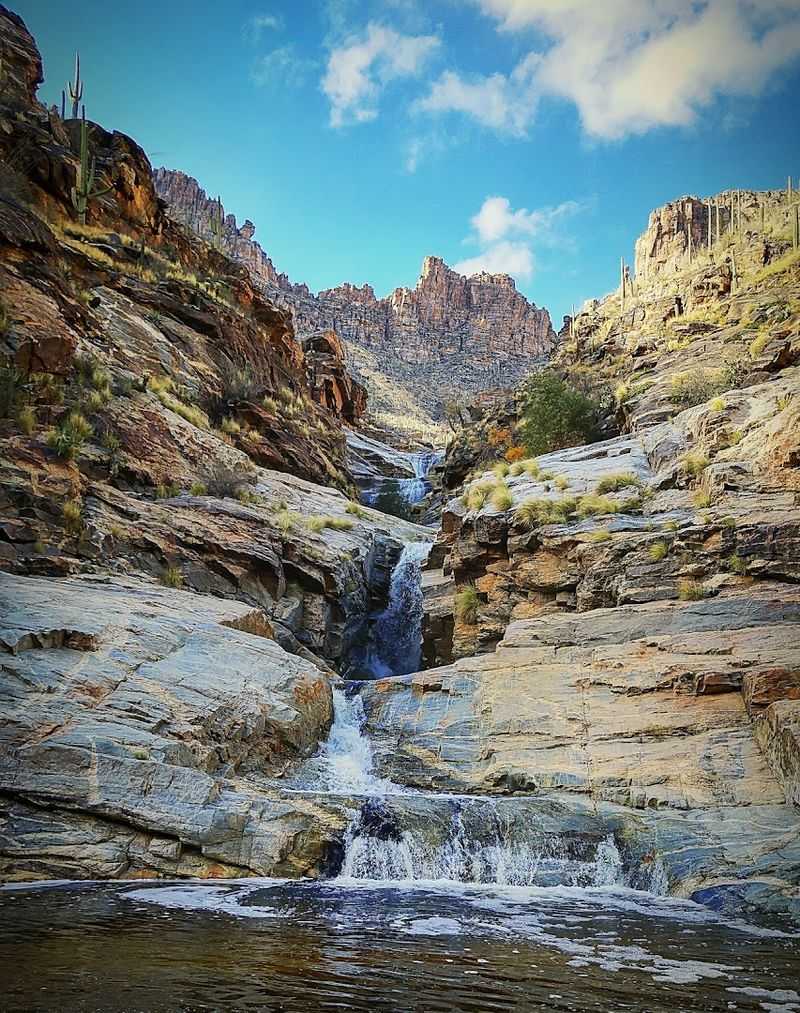
Seven Falls might be the most uniquely Arizonan waterfall experience on this list. You hike through a classic Sonoran Desert landscape filled with towering saguaro cacti before arriving at a series of seven stacked waterfalls.
The contrast between the desert surroundings and the flowing water is absolutely stunning.
Located inside Sabino Canyon Recreation Area near Tucson, the trail is about 9 miles round trip. Crossing the stream multiple times adds a fun splash to the journey.
After monsoon season, the falls run strongest and the scenery is at its very best.
Apache Falls – San Carlos, Arizona
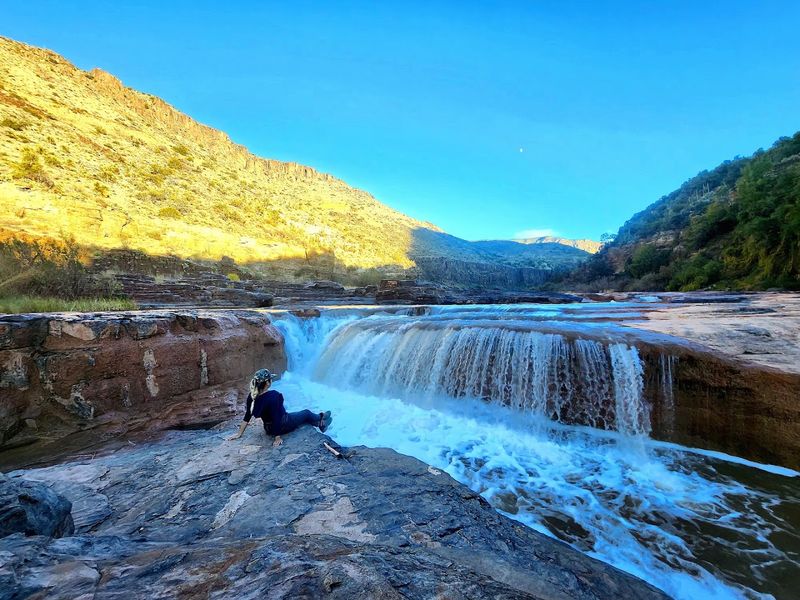
Apache Falls sits on the San Carlos Apache Tribe’s reservation, making it one of Arizona’s most culturally significant waterfall destinations. The land here has deep historical and spiritual meaning, so visitors are expected to show genuine respect.
A tribal recreation permit is required before entering the area.
The falls drop dramatically into a cool, deep pool perfect for swimming. Surrounded by pine trees and rugged mountain terrain, it feels far removed from the desert below.
Fewer tourists make it here, giving Apache Falls a quiet and almost sacred atmosphere that is hard to find elsewhere.
Tanque Verde Falls Trail – Arizona
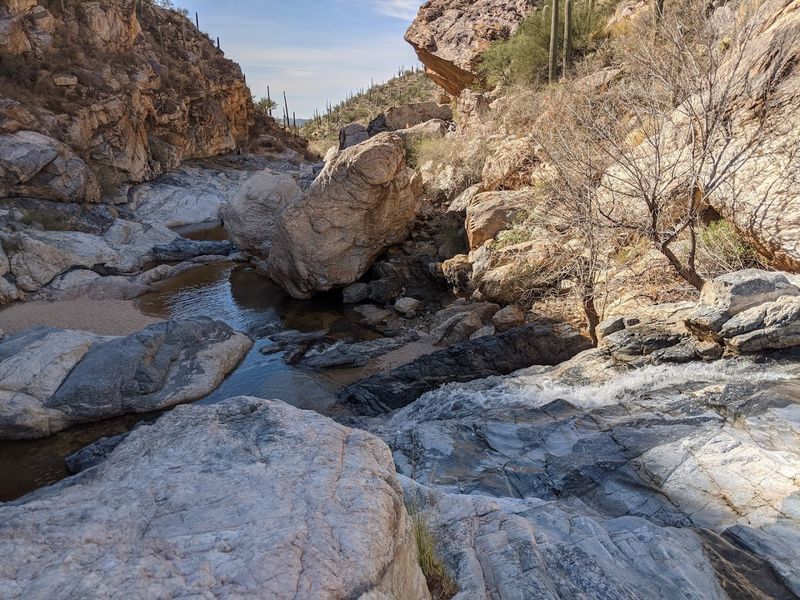
Tanque Verde Falls is a local favorite tucked inside the Rincon Mountain District of Saguaro National Park near Tucson. The falls tumble over wide granite boulders in a series of tiers that create multiple swimming holes.
On a hot Arizona day, this spot feels like pure paradise.
The trail is roughly 4 miles round trip and rated moderate difficulty. Flash floods can make the creek crossing dangerous, so always check weather forecasts before heading out.
Spring and late summer after monsoons are the best times to catch the falls at their most impressive flow.