


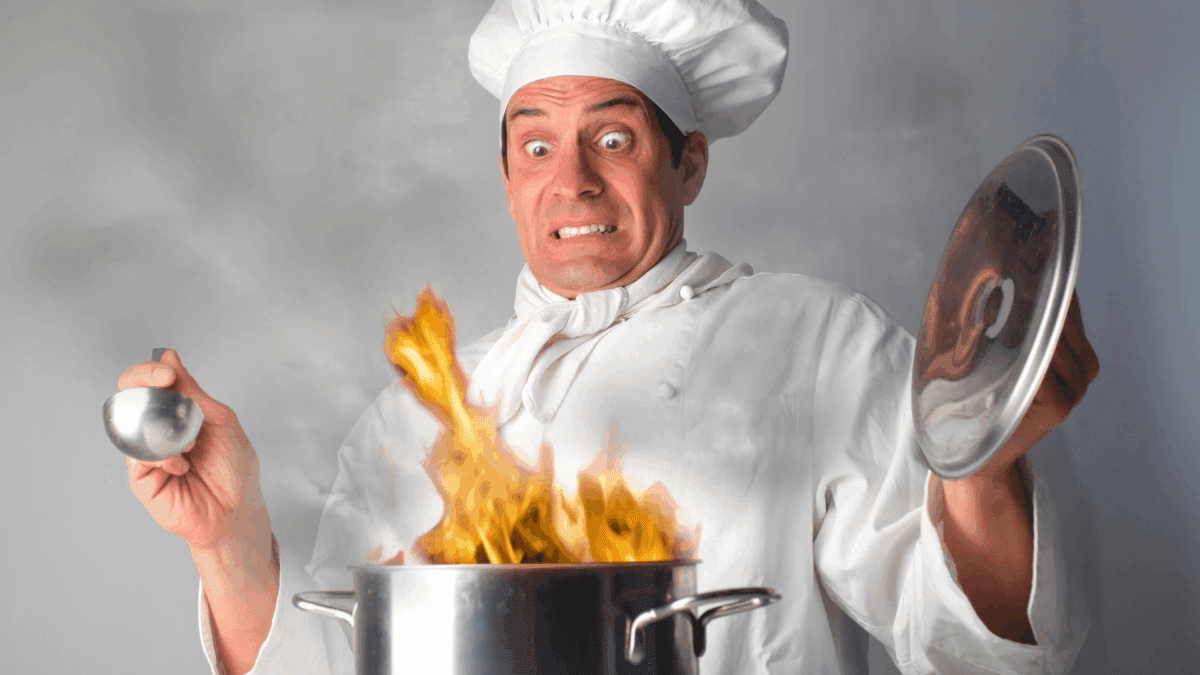
Practice makes perfect in cooking, but some recipes are a real challenge, testing the limits of even the most seasoned chefs. These dishes demand patience, precision, and understanding of complex techniques. Yup, we’re talking about those ancient preservation methods to those that bear modern molecular gastronomy. In this list, we explore 15 of the most difficult food recipes ever.
15. Century Eggs

You’ve probably heard of the Century Egg, which is a Chinese delicacy that takes over three months to make. Its process involves a duck egg preserved in a mixture of ash, lime, salt, and tea for about 100 days. This process turns the white egg into a translucent and amber-colored jelly, while the yolk turns dark and creamy. While the process of making it is easy, it’s the patience and precision that make it worthy of being labeled as challenging.
14. Confit de Canard

Confit de Canard is a French dish that transforms duck into a melt-in-your-mouth food. First, the duck is cured in salt for around 24 hours to draw out its moisture. It’s then submerged in its own rendered fat and cooked at a low temperature for six hours. The slow and gentle cooking is meant to tenderize the meat. The last step is to perfectly crisp the skin into golden brown before serving.
13. Buddha Jumps Over the Wall

This Chinese dish is actually a shark fin soup that requires two full days to prepare. It also involves 30 ingredients, which include the luxurious abalone, sea cucumber, and quail eggs. The controversy of this shark’s fin soup has made it rare and expensive, especially since it requires a chef with organizational skills and dedication.
12. Hand-Pulled Noodles

This noodle doesn’t involve a pasta machine. Authentic Hand-Pulled Noodles or La Mian is an art form that requires years of practice. It involves a single piece of dough repeatedly stretched, folded, and twisted until it becomes uniform noodles. The dough must have elasticity, and the chef must have muscle memory to execute complex techniques flawlessly.
11. Croquembouche

This dish is a staple in French weddings and celebrations. Croquembouce is a cone-shaped mountain of cream that’s filled with choux pastry puffs that are held together by caramel. The name means “crunch in the mouth,” with the challenge involving uniform choux puffs and constructing the tower. Also, the caramel must be at the perfect temperature to serve as a glue and decoration.
10. Turducken

The Turducken is a poultry trifecta that involves a deboned chicken stuffed inside a deboned duck. It is then stuffed inside a partially deboned turkey. Yup, the deboning process requires “surgical precision” to avoid tearing the skin. The challenge lies in ensuring that the three birds are cooked to perfection without drying out the outer turkey layer. It was popularized by Cajun chef Paul Prudhomme, who is one test of a chef’s butchering and roasting skills.
9. Hot Water Crust Pastry

The Hot Water Crust Pastry features a pliable dough made of melted lard in boiling water, which is then mixed with flour. The result? A sticky and dense dough that’s hand-molded to create freestanding meat pies in British cuisine. The challenge actually lies in working with the hot and sticky dough to create a structure strong enough to hold a filling without a pie tin support.
8. Spherification

Spherification is a technique that turns liquid into caviar-like pearls. It was pioneered by chef Ferran Adrià at elBulli. The process involves a chemical reaction between sodium alginate and calcium chloride. The liquid to be spherified is mixed with sodium alginate and dropped into a bath of calcium chloride. The challenging part is that the pH of the liquid, concentration, and timing must be perfect.
7. Laminated Dough

You wouldn’t dare make your own croissant and puff pastry. Thanks to those paper-thin layers in these pastries, we’re better off buying them at bakeries. The laminated dough involves enclosing a large block of butter within a lean dough and repeatedly rolling and folding it into paper-thin layers. The lamination process is time-consuming and requires a precise temperature to make. If you get the butter warm, it will melt into the dough and break. It’s a true test of a baker’s patience and precision.
6. Soufflé

Its process is as hard as its name. The soufflé’s secret lies in the egg whites, which must be whipped to a perfect consistency to get enough air. After, gently fold them into the base to maintain that aeration. The slightest disturbance, like a draft, cold air, or an oven door slammed too hard, will cause the dessert to deflate.
5. Béarnaise Sauce

The Béarnaise is a classic French steak sauce that is notorious for its emulsified emulsion. It’s made by whisking clarified butter in a reduction of vinegar, w*ne, shallots, and tarragon. They’re all held together by the delicate egg yolks. The sauce is then cooked in a bain-marie (a hot water bath), and the temperature is just right. If it’s too hot, the eggs will scramble, and if it’s too cold, they will separate into grease.
4. Gateau Saint Honoré

The Gateau Saint Honoré is a dessert named after the French patron saint of bakers and pastry chefs. It features an assembly of puff pastry, choux pastry, and caramel. There are also two kinds of cream, which are crème Chiboust (a lightened pastry cream) and Chantilly cream. Each treats are made from scratch and must be executed perfectly to make the assembly work. Also, the gateau is like racing against time since the caramel can be sticky and the cream can lose its texture.
3. French Macarons

The French Macarons are delicate cookies that are notoriously difficult to perfect. They’re these are meringue-based sandwich cookies made out of almond flour, egg whites, and sugar. The challenge is achieving the signature “feet,” which is the ruffled ring at the base of each cookie, along with a smooth shell. You must “macaronage” the batter as overmixing will make it too runny. Meanwhile, undermixing the cookie base will turn out lumpy.
2. Consommé

Consommé isn’t just a clear broth, but it’s one of the most technically demanding dishes. This classic French cuisine involves a clear but flavorful soup achieved through clarification using a “raft.” It’s made out of egg whites, lean ground meat, and mirepoix or finely chopped vegetables. The raft must float on top of the simmering stock to trap the impurities. The process goes slowly and is in need of attention. The heat must also be controlled to prevent the raft from breaking and clouding the soup.
1. Sous-Vide Egg

The sous vide egg is no ordinary egg. The main goal is to cook an egg in its shell in a precisely controlled water bath. The result? A texture wherein the yolk is thick and creamy like a custard, while the white is barely set. The water batch must be controlled in a fraction of a degree with the cooking time at an exact time. You will need specialized equipment for cooking this one.