


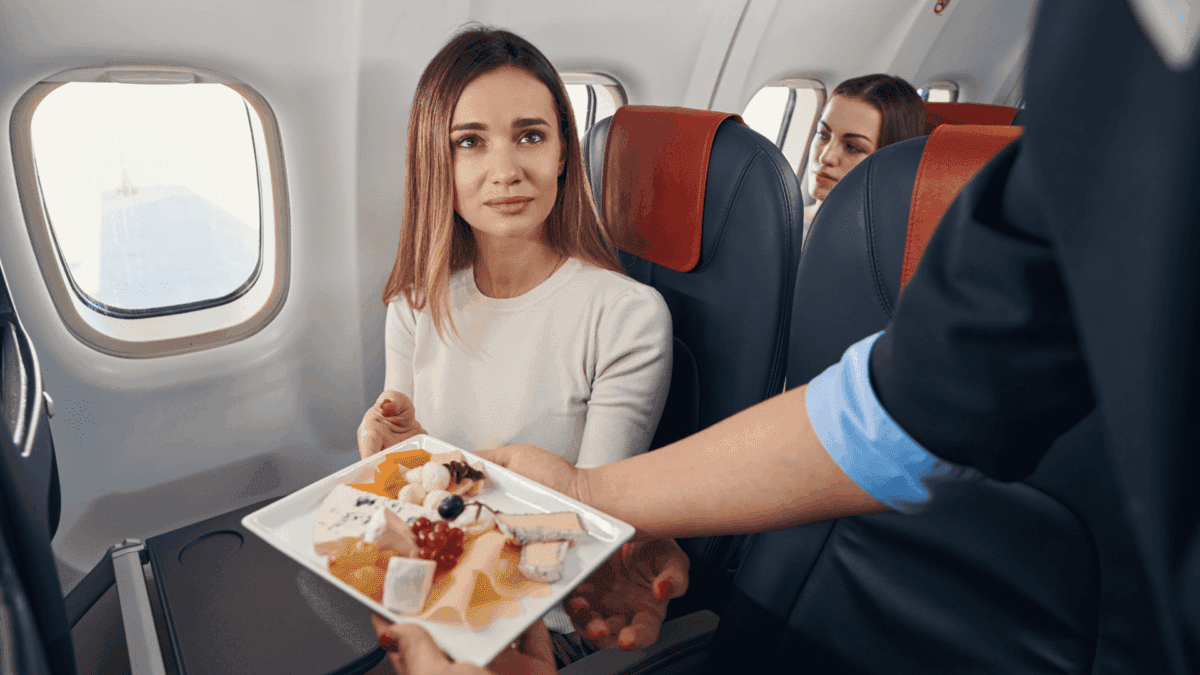
Of course, flying at 35,000 feet comes with its own unique dining challenges. Frequent flyers are familiar with altered taste buds, while those who work in aircraft know about logistical nightmares. While airplane food has earned their reputation for good reasons, there’s more to the story than meets the eye. Today, we’re bringing you the 15 insider secrets involving airline cuisine.
8. Special Meals Get Priority Treatment

Passengers with special dietary needs, like vegetarian or gluten-free, are served with better quality meals than regular meals. Why? They’re prepared in smaller batches and are loaded onto the plane first. They’re also served first during meal service. With this, flight attendants recommend ordering a special meal for you, even if you don’t have dietary restrictions.
7. The Dreaded Middle Seat Gets Fed Last

There’s a specific meal order that flight attendants follow. Usually, passengers in the middle seats are served last during meal distribution. Flight attendants distribute from the window to the aisle or vice versa. Those passengers seated in the middle have a higher chance of missing out on their opted meal choice in cases where the flight runs out.
6. Tomato Juice Tastes Better at Altitude

While most foods taste dull during flight, those with tomato juice taste better in the air. The reason behind this is that the umami flavors in tomatoes are enhanced through cabin conditions. It explains why tomato juice is popular on flights, compared to ground or restaurant consumption. Frequent flyers know this stuff.
5. Business Class Food Isn’t Always Better

While business class meals cost airlines money, it doesn’t mean that they’re of better quality. The main difference is seen through larger portions and better presentation. It also involves using real cutlery and more courses. They use the same cooking methods and timing constraints as economy class food.
4. Airplane Ovens Can’t Actually “Cook”

Unlike your home ovens, airplane ovens can’t actually cook. They’re only used to reheat food and not cook it from raw. They operate at a much lower temperature than regular ovens just to reheat your pre-cooked airplane food. Well, this actually impacts food quality and is the reason why you’ll never get that “fresh-cooked” meal when travelling.
3. Your Meal Was Cooked Days Ago

Yup, those “fresh” meals were prepared 12 to 72 hours ago before your flight. They were prepared in their catering facilities and chilled in refrigerated trucks. The crew would later reheat your meal in aircraft ovens. This is the reason why airplane food is popular for its rubbery texture and dried-out proteins.
2. Ice is Often Dirtier Than Toilet Water

Yup, your ice may contain more bacteria than toilet water in airplane lavatories. It’s the same case with fast food, wherein ice machines are difficult to clean properly. They aren’t sanitized as frequently, especially when the plane has continuous flights from here and there. Some flight attendants know this, which is why they opt for drinks without ice during their shifts.
1. Your Taste Buds Are Working Against You

The dry cabin air and low pressure at cruising altitude actually diminish your sense of taste and smell by up to 30%. This means that food needs to be heavily seasoned and more flavorful than normal just to taste ordinary. Airlines compensate by adding extra salt, spices, and umami-rich ingredients like tomatoes and mushrooms to make meals more palatable in the sky.