


Choosing the right tree for your Florida front yard can feel overwhelming, especially when you want something that looks great without taking over your space. Small trees are the perfect solution because they add beauty, shade, and curb appeal without growing into a giant that blocks windows or lifts sidewalks.
Florida’s warm, sunny climate actually makes it easier to grow a wide variety of compact trees that thrive year-round. Whether you want colorful blooms, interesting foliage, or low-maintenance care, there is a small tree out there that fits your yard perfectly.
Crape Myrtle (Lagerstroemia indica)
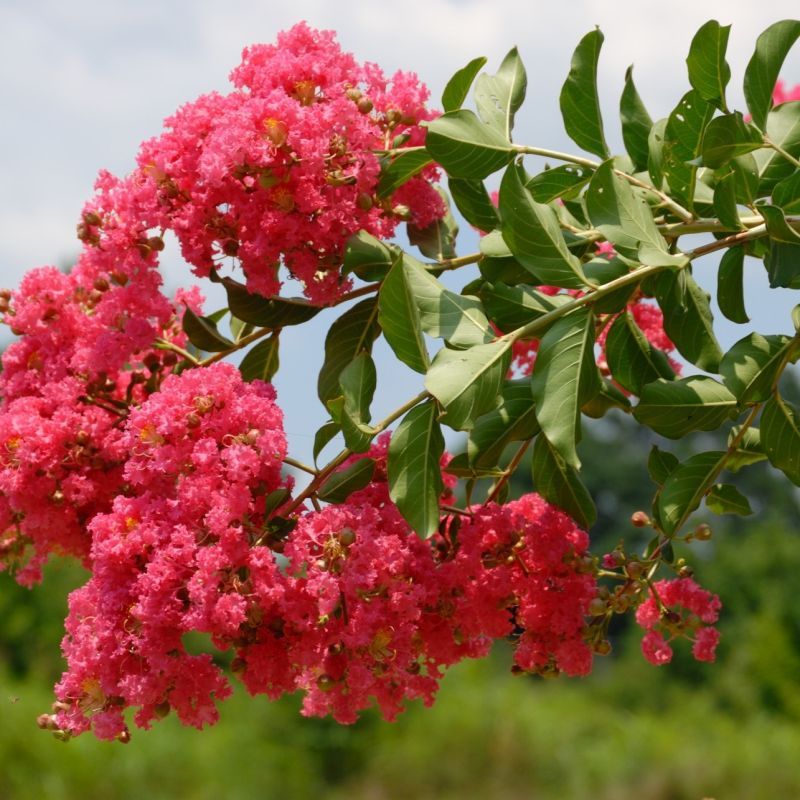
Few trees put on a show quite like the Crape Myrtle. Known for its stunning summer blooms in shades of pink, red, purple, and white, this tree is a Florida front yard favorite for good reason.
It tops out at around 10 to 15 feet, making it easy to manage.
Crape Myrtles love full sun and handle Florida heat like a champ. They are drought-tolerant once established, so you will not be running the hose every day.
Minimal pruning keeps them looking tidy and healthy all season long.
Simpson’s Stopper (Myrcianthes fragrans)
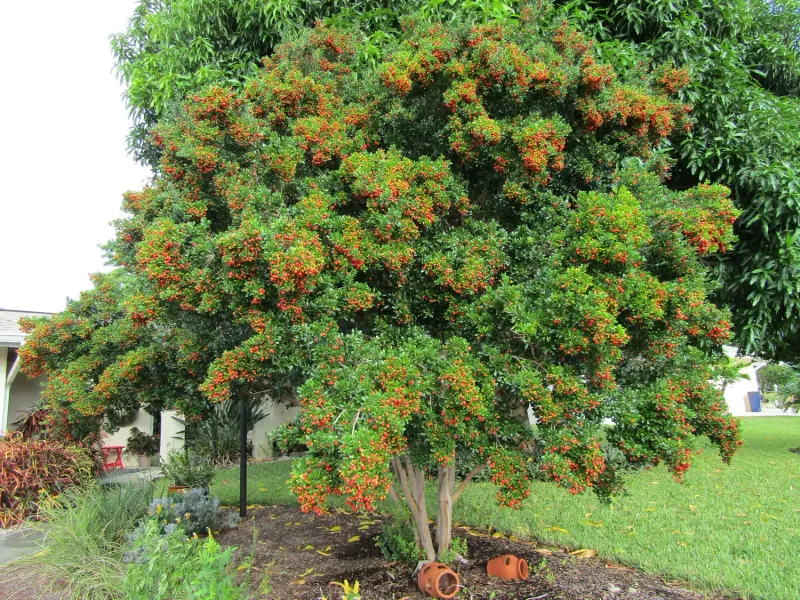
Native plants do not get more charming than Simpson’s Stopper. This Florida native grows slowly to about 10 to 15 feet tall, making it a naturally tidy choice that rarely needs heavy trimming.
Its glossy leaves, fragrant white flowers, and bright orange-red berries give it year-round visual interest.
Birds absolutely love the berries, so your yard becomes a mini wildlife haven. It tolerates drought, salt air, and sandy soil with ease.
For a low-fuss, gorgeous front yard tree, this one earns its spot every time.
Japanese Blueberry Tree (Elaeocarpus decipiens)
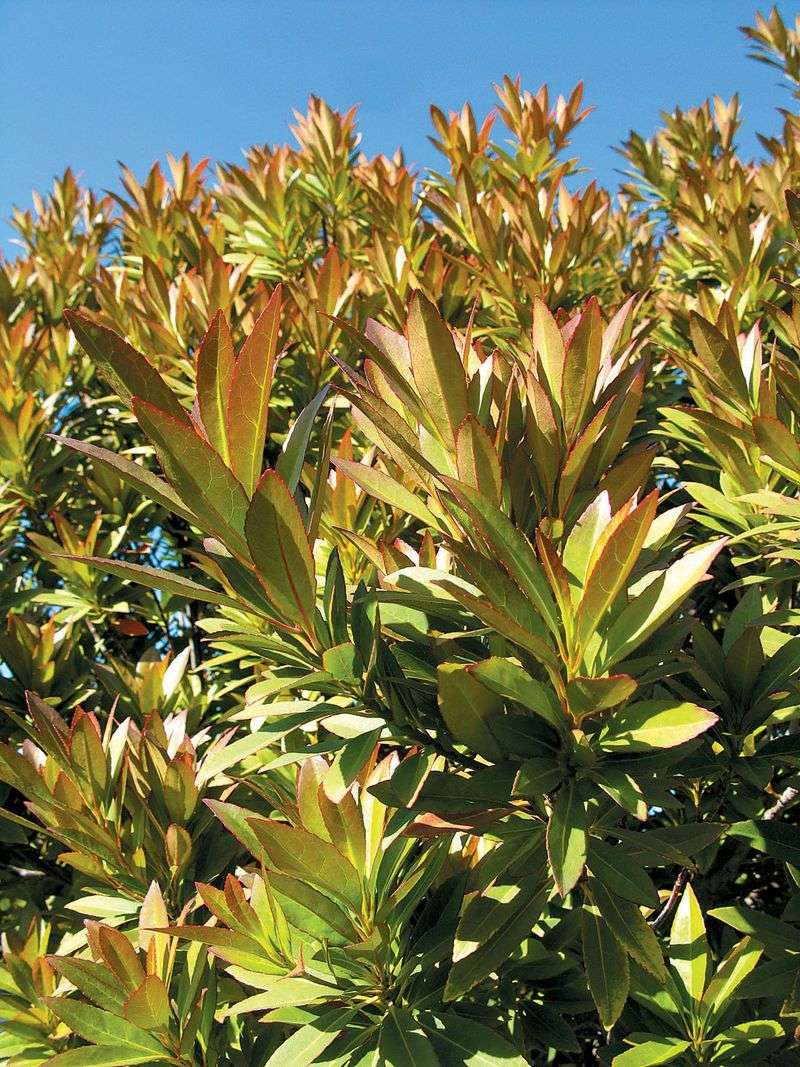
If you love the look of a formal, polished front yard, the Japanese Blueberry Tree delivers exactly that. It grows in a naturally columnar shape, meaning it stays narrow and upright without much fussing on your part.
Heights typically range from 20 to 25 feet, but its slim profile keeps it from feeling overwhelming.
New leaf growth flushes red before turning deep green, adding seasonal color without flowers. It handles Florida heat, humidity, and occasional drought surprisingly well.
Homeowners adore it for its clean, architectural look along driveways and entranceways.
Ligustrum (Ligustrum japonicum)
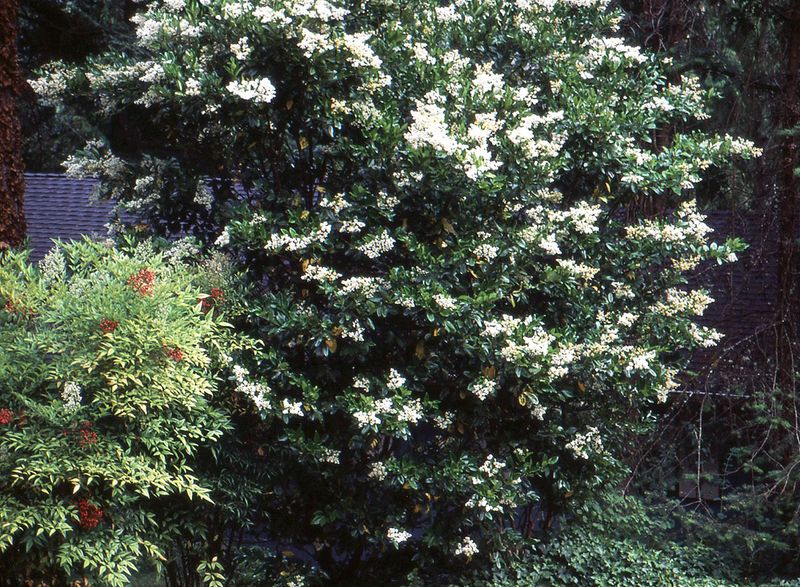
Ligustrum is the kind of tree that neighborhood landscapers quietly rely on because it almost never lets anyone down. Trained into a standard tree form with a round, lollipop-shaped canopy, it brings a classic, tidy elegance to any front yard.
It stays compact at around 8 to 12 feet when properly pruned.
Fragrant white flower clusters appear in spring, filling the air with a sweet scent. Ligustrum handles full sun, partial shade, heat, and occasional drought without complaint.
Versatile and reliable, it suits both modern and traditional Florida home styles beautifully.
Dwarf Magnolia (Magnolia grandiflora ‘Little Gem’)
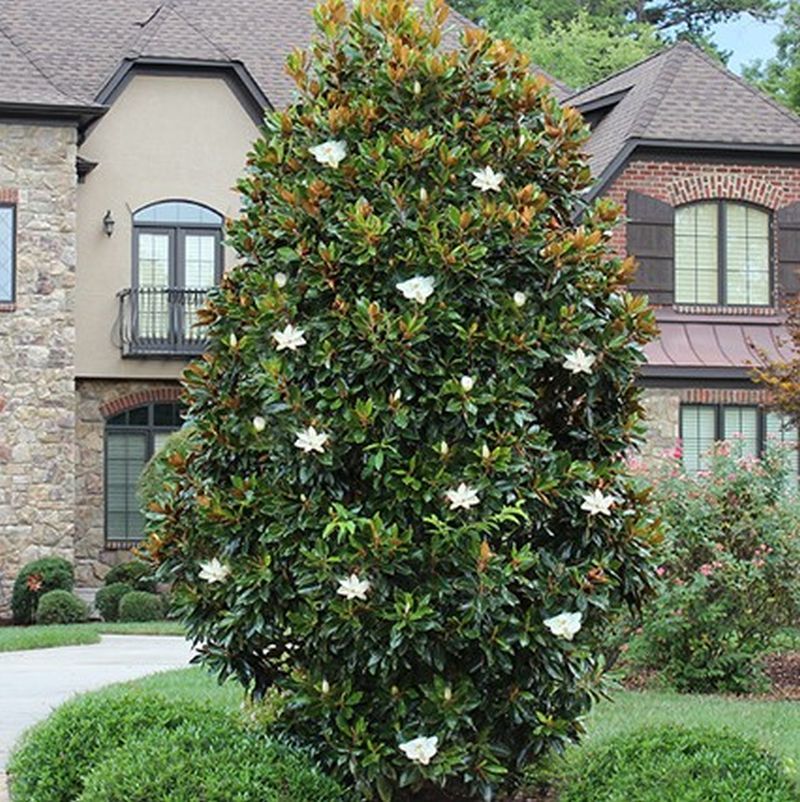
Southern Magnolias are iconic, but their massive size makes them tricky for smaller yards. Enter ‘Little Gem,’ the compact version that gives you all the drama without the sprawl.
This dwarf variety grows slowly to about 15 to 20 feet, staying narrow enough for tight spaces.
Its oversized white blooms are genuinely breathtaking, and the glossy leaves with coppery undersides look gorgeous year-round. It blooms repeatedly from spring through fall, which is far longer than its full-sized cousin.
Plant it where guests can admire it up close.
Buttonbush (Cephalanthus occidentalis)
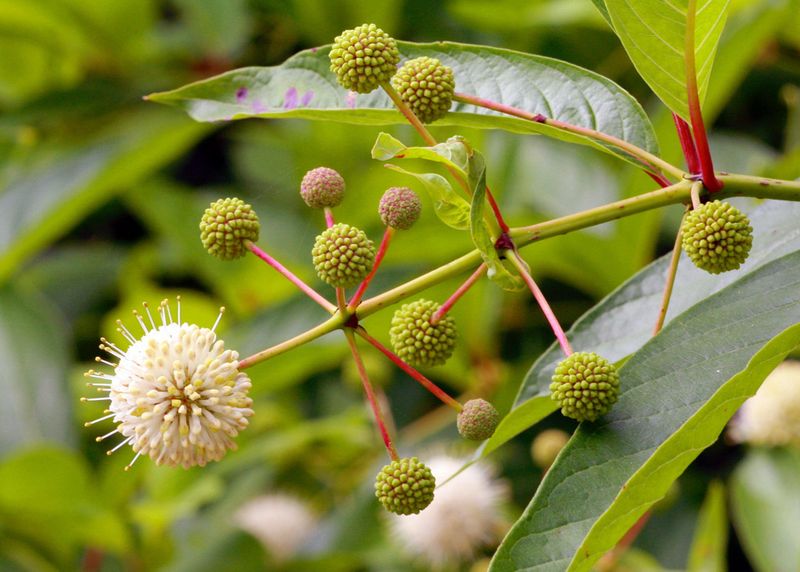
Buttonbush is the quirky, conversation-starting tree you never knew your front yard needed. Its round, pincushion-shaped white flowers are unlike anything else in Florida landscaping, and they attract butterflies, bees, and hummingbirds in impressive numbers.
It typically stays between 6 and 12 feet tall, making it very manageable.
This native tree thrives in moist or even wet areas, so it is ideal if your yard has a low spot that collects water. It handles full sun to partial shade with ease.
Truly one of Florida’s most underused and rewarding small trees.
Vitex (Vitex agnus-castus)
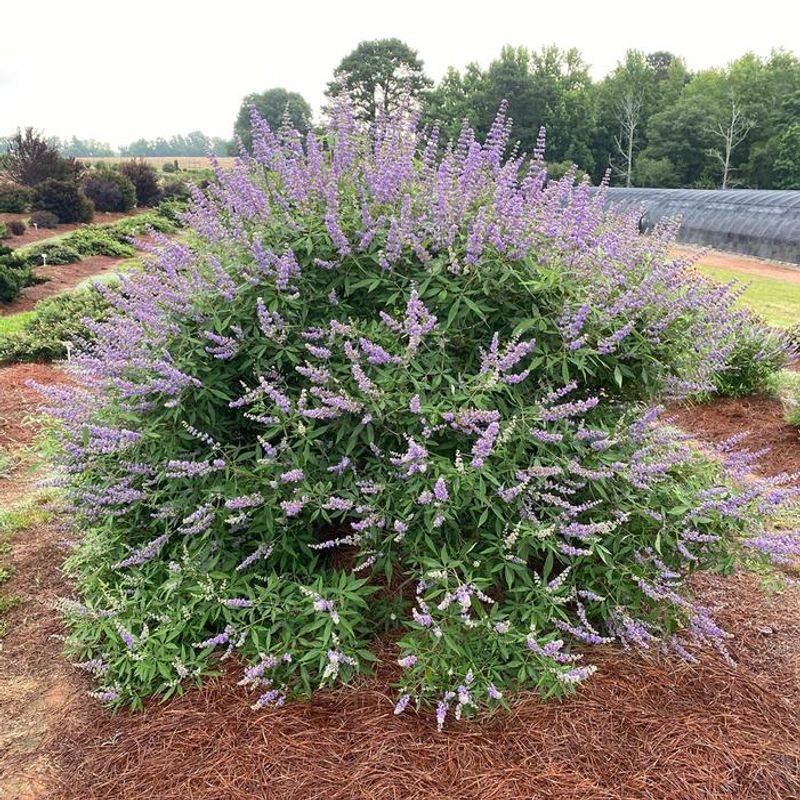
Sometimes called the Chaste Tree, Vitex bursts into bloom each summer with tall, lavender-purple flower spikes that look like something out of a Mediterranean garden. It maxes out at around 10 to 15 feet tall, and with light annual pruning, it keeps a neat, rounded shape.
The aromatic leaves add a pleasant herbal scent when brushed.
Pollinators go absolutely wild for Vitex blooms, making your yard a buzzing, beautiful ecosystem. It thrives in full sun and handles Florida’s dry spells without drama.
A truly rewarding tree that earns its space season after season.
Wild Tamarind (Lysiloma latisiliquum)
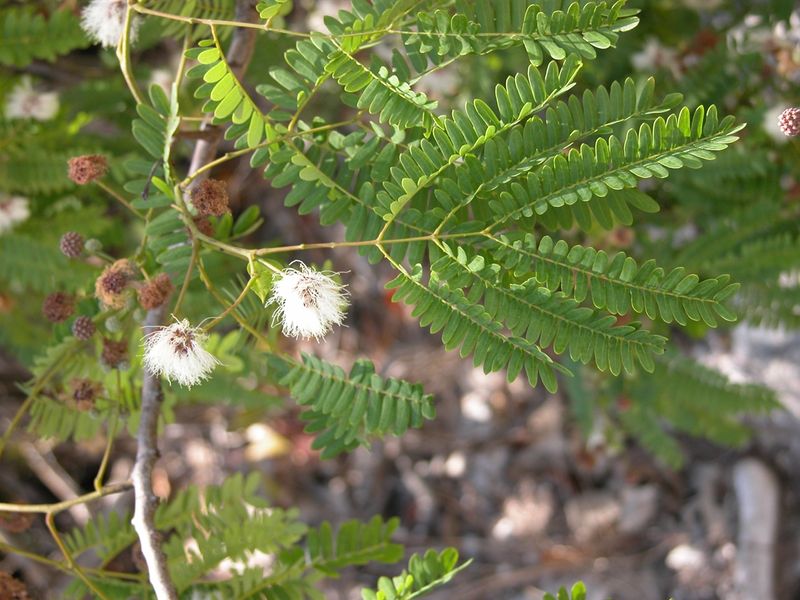
Wild Tamarind brings a tropical, airy elegance to South Florida front yards that few other trees can match. Its feathery, fern-like leaves create a soft, dappled shade without blocking light entirely, which is perfect for keeping your home bright.
It typically grows to about 15 to 20 feet in managed landscapes.
As a Florida native, it handles heat, drought, and poor sandy soils without any drama whatsoever. Small white flowers appear in spring, followed by flat seed pods that add texture.
It grows relatively quickly, so you will not be waiting years for results.