


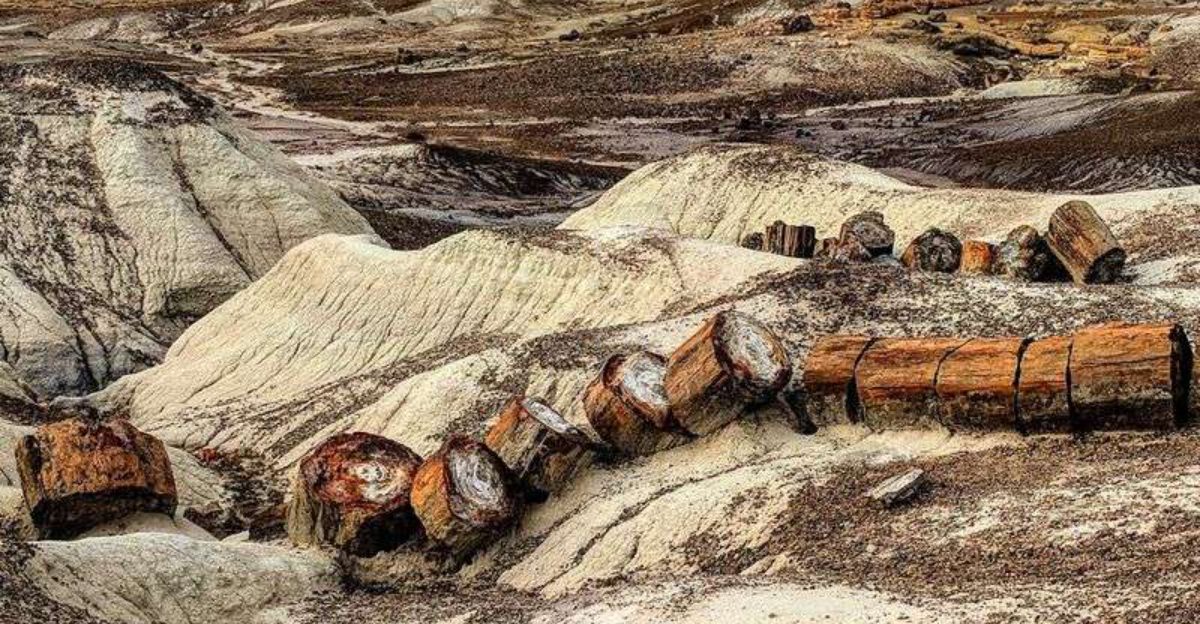
Tucked away in northeastern Arizona, Petrified Forest National Park holds one of the most surreal landscapes you’ll ever see in the United States. Ancient logs turned to colorful stone, painted desert badlands, and fossils millions of years old make this place feel like a scene from a sci-fi movie.
The Blue Mesa Trail, a roughly 1-mile loop, is the crown jewel of this otherworldly experience. If you’ve never walked across terrain that looks like it belongs on another planet, this trail will absolutely blow your mind.
The Blue Mesa Trail Overview
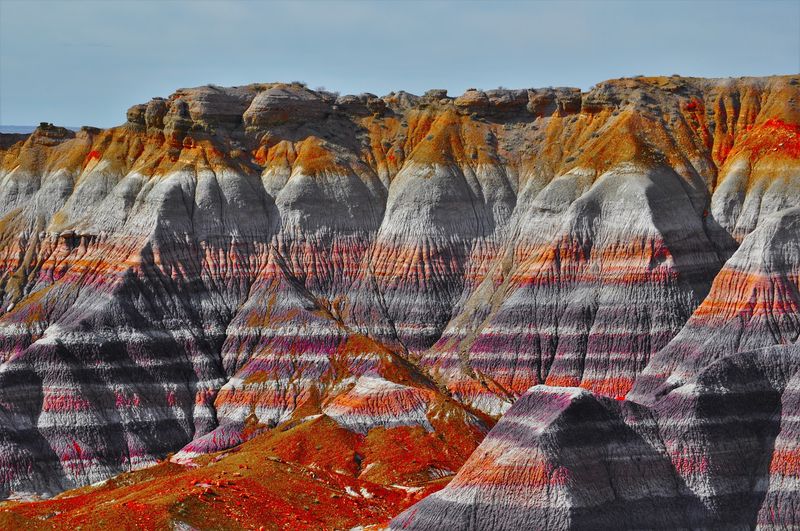
Walking the Blue Mesa Trail feels like stepping onto the surface of an alien planet. This roughly 1-mile loop sits inside Petrified Forest National Park in northeastern Arizona, at coordinates near 35.065931, -109.78204.
The trail is paved for most of its length, making it accessible to most visitors.
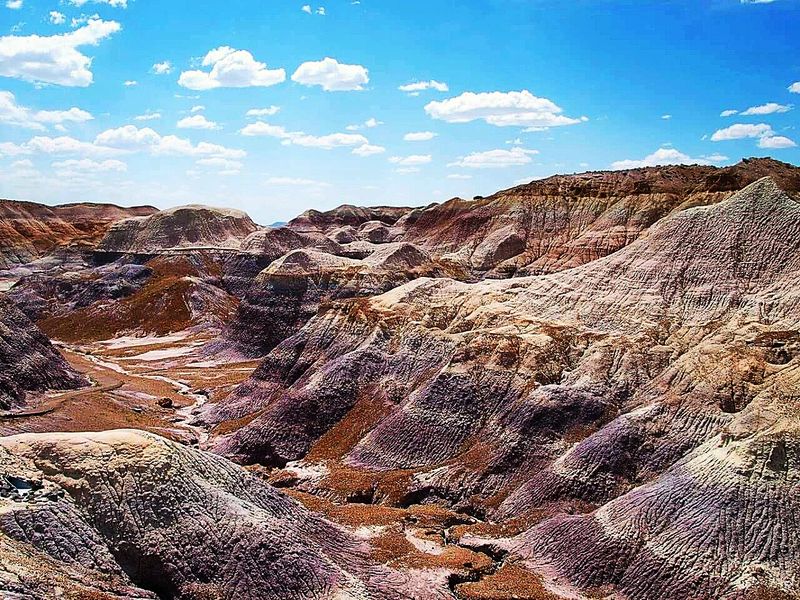
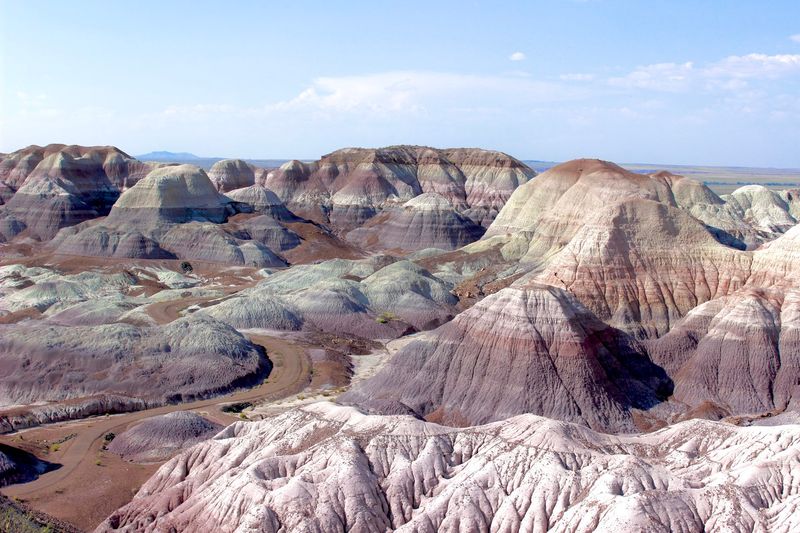
The path winds down into a basin of banded blue, gray, and purple hills called bentonite clay badlands. These mounds were formed over millions of years as ancient sediment slowly compressed and hardened.
Every step forward reveals a new color or texture that seems almost unreal.
Rangers often call this one of the most visually dramatic short hikes in the entire National Park System. Whether you’re a seasoned hiker or just visiting for the afternoon, the Blue Mesa Trail delivers an unforgettable experience without demanding much physical effort.
Pack water and a camera — you’ll need both.
Ancient Petrified Wood Scattered Everywhere
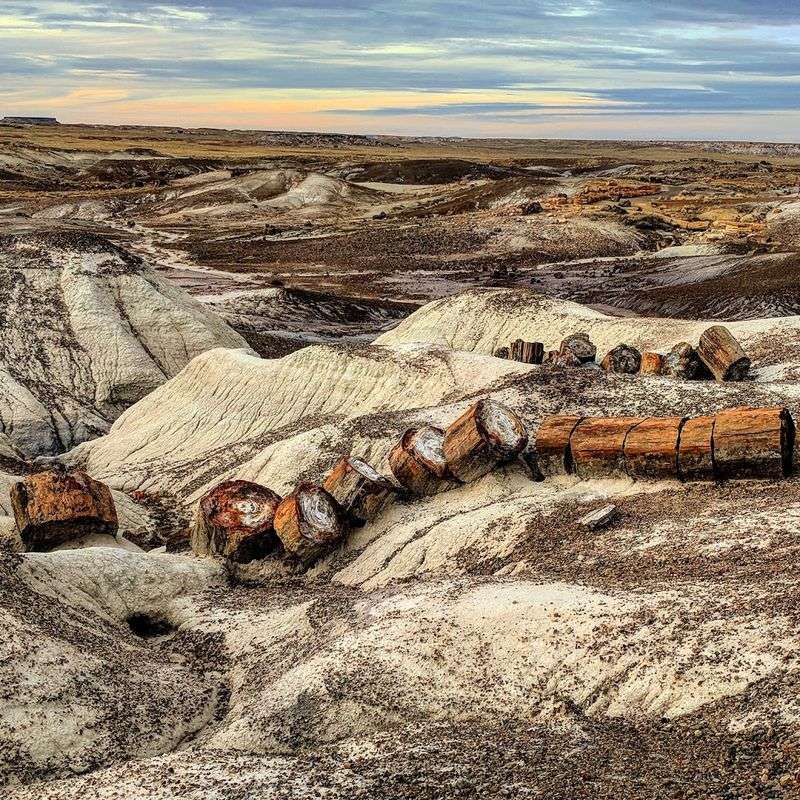
Imagine walking past giant logs that have been slowly replaced by sparkling quartz crystal over 225 million years. That’s exactly what you’ll encounter along the Blue Mesa Trail and throughout Petrified Forest National Park.
These aren’t ordinary rocks — they were once towering trees from the Triassic period.
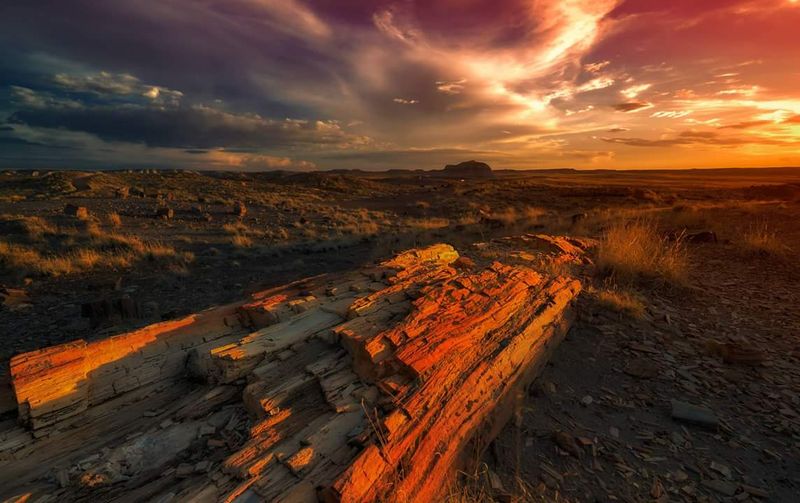
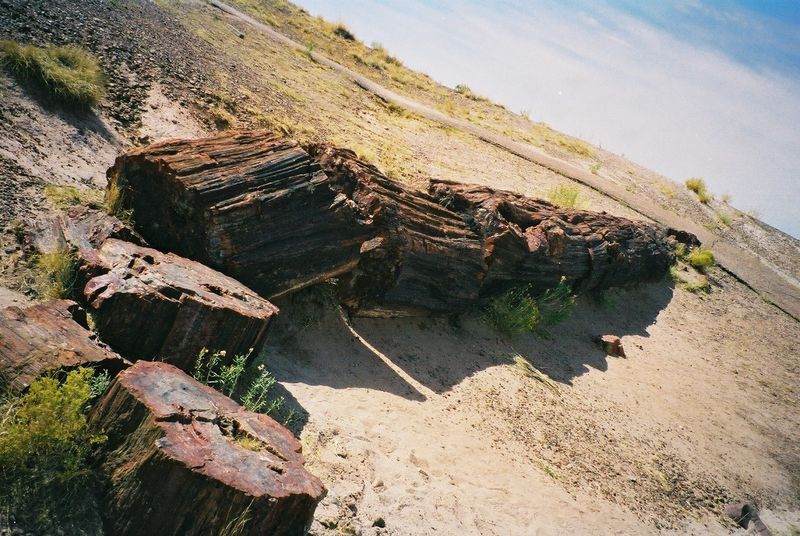
The petrification process happens when minerals like silica slowly replace organic wood tissue, preserving the original structure in stunning detail. You can still see the bark texture, growth rings, and even ancient insect damage frozen in stone.
The colors range from deep red and orange to lavender, white, and yellow depending on the minerals involved.
Picking up or removing even a small piece is strictly illegal and comes with serious fines. Rangers say that thousands of pounds of petrified wood are illegally removed each year, damaging this irreplaceable resource.
Leave every piece exactly where you find it so future visitors can enjoy the same magic.
The Badlands Geology That Creates the Alien Look
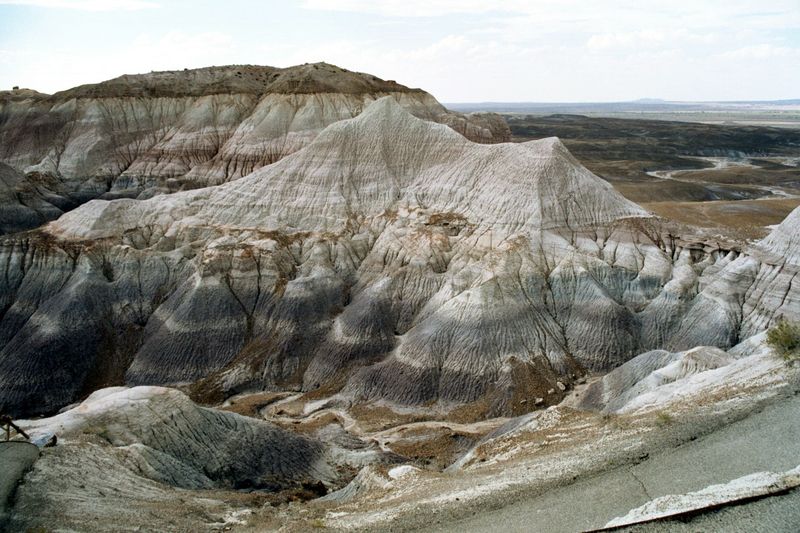
The strange, lumpy hills surrounding the Blue Mesa Trail aren’t just visually stunning — they tell a 200-million-year-old geological story. These formations are made primarily of bentonite clay, a material that swells when wet and cracks when dry.
Over time, erosion carves it into the rounded, banded shapes visitors see today.
The blue and gray tones come from ancient volcanic ash that settled here during the Triassic period. When that ash chemically breaks down, it creates the pale, ghostly hues that make the landscape look so unearthly.
Streaks of red and orange come from iron oxide minerals mixed into the layers.
Rain dramatically accelerates the erosion process here, sometimes visibly changing the landscape after a single storm. Scientists estimate the badlands erode roughly half an inch to an inch per year.
That might sound slow, but in geological terms, the Blue Mesa is constantly reshaping itself right before your eyes.
The Painted Desert Backdrop
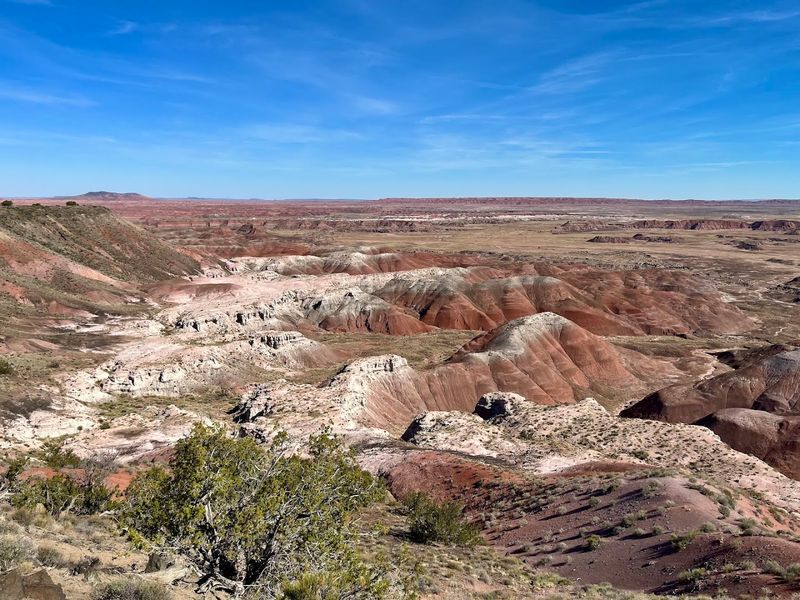
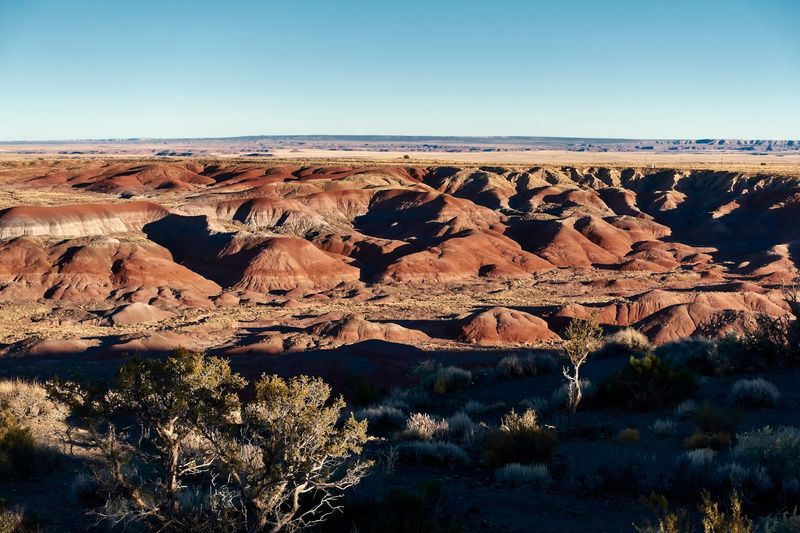
Stretching across the northern portion of Petrified Forest National Park is the Painted Desert, one of the most colorful natural landscapes in North America. From overlooks along the park road, you can see bands of red, pink, orange, lavender, and white layered across the horizon like a living painting.
The Blue Mesa Trail sits within this broader painted landscape.
The colors shift dramatically depending on the time of day and weather conditions. Early morning light turns the hills a soft golden pink, while midday sun bleaches them pale.
Sunset is widely considered the best time to view the Painted Desert, when the warm light makes the reds and oranges practically glow.
Photographers travel from around the world just to capture this landscape. Even smartphone cameras pick up the vivid natural colors beautifully.
If you plan your hike for late afternoon, you’ll get both the trail experience and a jaw-dropping sunset view on the way out.
Triassic Fossils Hidden in Plain Sight
Petrified Forest National Park isn’t just about colorful rocks — it’s one of the richest Triassic fossil sites on Earth. Fossils of ancient reptiles, early dinosaurs, and giant amphibians have been discovered throughout the park, including areas near the Blue Mesa formation.
Some of these creatures lived over 220 million years ago.
Walking the Blue Mesa Trail, you might spot small bone fragments or shell fossils embedded in the eroding hillsides. Park guidelines ask visitors not to touch or move any fossils, since even small disturbances can destroy important scientific data.
Scientists regularly conduct excavations in the park and have uncovered dozens of previously unknown species.
One famous find is Chindesaurus bryansmalli, an early dinosaur discovered right here in the park. The fossil record preserved in these badlands is so complete that researchers consider it a global treasure.
Knowing that ancient creatures once roamed this same ground makes every step on the trail feel a little more epic.
Best Time of Year to Visit
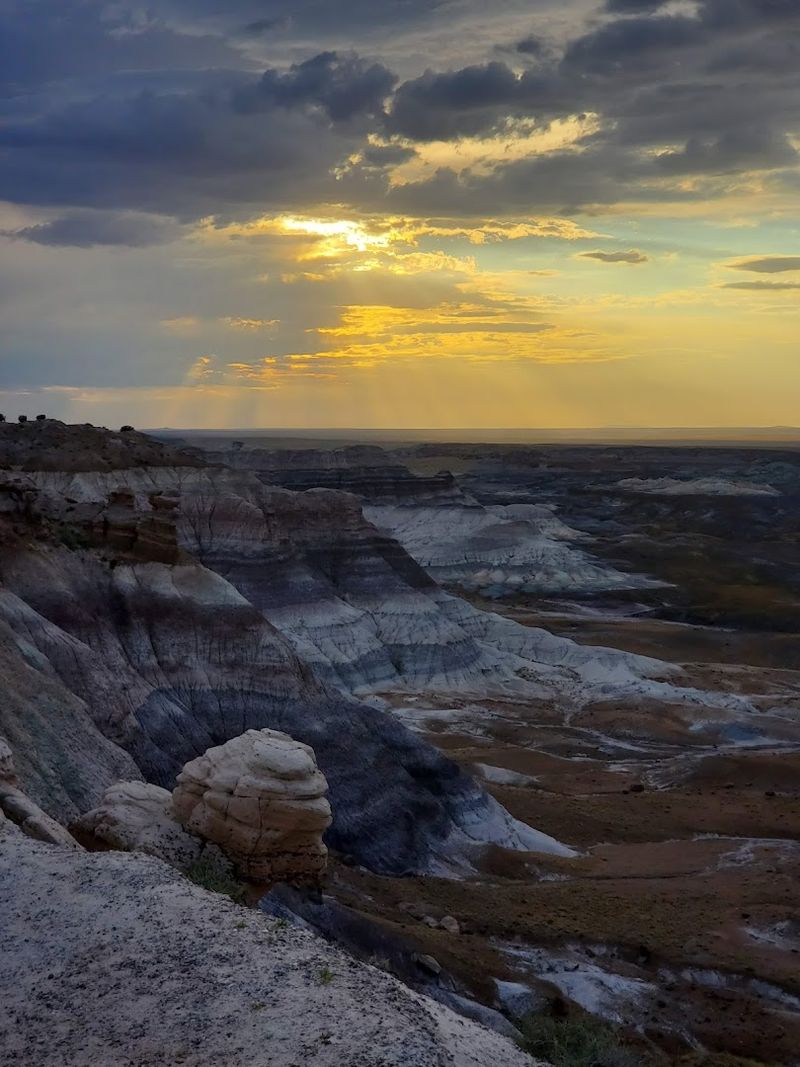
Timing your visit to Petrified Forest National Park can make a huge difference in how much you enjoy the experience. Spring, from March through May, is widely considered the best season.
Temperatures are mild, wildflowers occasionally bloom along the trail edges, and crowds are manageable compared to summer months.
Summer brings intense heat, with afternoon temperatures frequently exceeding 100 degrees Fahrenheit. If you visit between June and August, plan your Blue Mesa hike for early morning before 9 a.m.
Monsoon season also arrives in July and August, bringing brief but powerful thunderstorms that can make the clay trails temporarily slick and dangerous.
Fall is another excellent window, especially September and October, when temperatures cool and the light takes on a beautiful golden quality perfect for photography. Winter visits are possible and surprisingly peaceful, with occasional snow dusting the badlands in a surreal white layer.
The park is open year-round, so there’s never truly a bad time to go.
Wildlife You Might Spot Along the Trail
The alien-looking landscape of Petrified Forest National Park is surprisingly alive. Despite the harsh, dry terrain, the park supports a remarkable variety of wildlife that visitors often don’t expect to see.
Pronghorn antelope are among the most commonly spotted animals, frequently grazing near the road and trail areas.
Collared lizards dart across the rocky ground near the Blue Mesa Trail, their bright green and yellow colors popping against the pale clay. Ravens are almost always present, circling overhead or perched on petrified logs.
If you’re lucky, you might spot a badger, coyote, or even a golden eagle soaring above the badlands.
The park is also home to over 200 species of birds, making it a popular spot for birdwatchers. Dawn and dusk are the best times for wildlife sightings, when temperatures are cooler and animals are most active.
Always observe wildlife from a safe distance and never feed any animals you encounter.
The Dark Sky Experience at Night
When the sun goes down at Petrified Forest National Park, a completely different kind of wonder takes over. The park is officially designated as an International Dark Sky Park, meaning it has some of the least light pollution in the entire country.
On a clear night, the Milky Way stretches across the sky in breathtaking clarity.
Thousands of stars become visible to the naked eye, along with planets, meteor showers, and even distant galaxies with a basic pair of binoculars. The park occasionally hosts ranger-led stargazing programs where experts help visitors identify constellations and explain the science of the night sky.
These events are free with park admission.
Combining the otherworldly badlands landscape with a star-filled sky creates one of the most magical experiences in the American Southwest. Photographers come specifically for long-exposure night shots of the painted hills under the Milky Way.
Bring a blanket, lie on the ground, and let the universe do the rest.
Newspaper Rock Petroglyphs Nearby
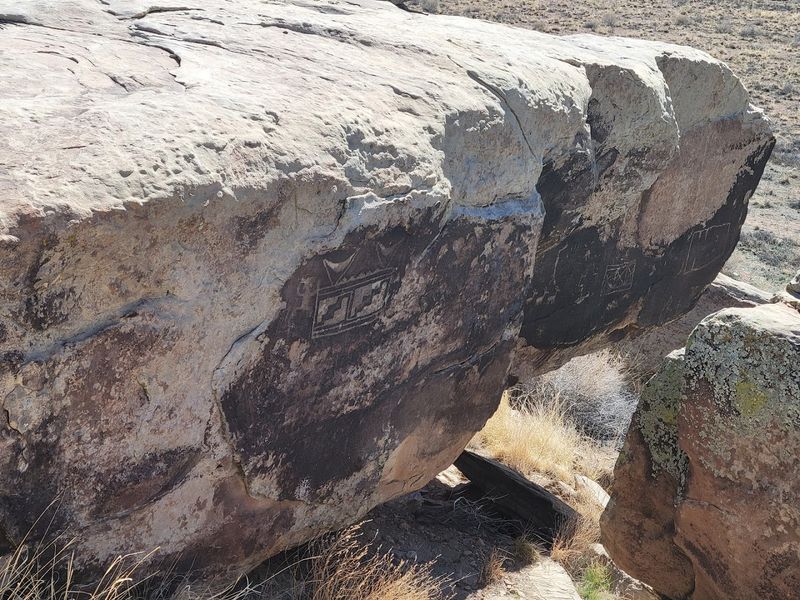
Just a short drive from the Blue Mesa Trail lies one of the most fascinating stops in the entire park — Newspaper Rock. This sandstone outcrop is covered in over 650 petroglyphs carved by the Ancestral Puebloan people who lived in this region between 650 and 2,000 years ago.
The carvings include human figures, animals, spirals, and symbols whose meanings are still being studied.
Visitors view Newspaper Rock from an overlook platform with binoculars provided on-site, since the carvings are located on a cliff face below the road. The sheer density of images on a single rock surface is remarkable — it truly looks like an ancient community bulletin board, which is exactly how it earned its nickname.
Seeing these petroglyphs puts the entire park experience into a deeper perspective. People have been drawn to this landscape for thousands of years, long before it became a national park.
Their marks on the stone are a powerful reminder that this land has always had meaning.
How to Prepare for the Hike
Even though the Blue Mesa Trail is only about a mile long, the desert environment demands proper preparation. The sun in northeastern Arizona is intense, especially between May and September, and the lack of shade on the trail means sunburn can happen fast.
A wide-brim hat, sunscreen, and UV-protective clothing are essential gear.
Hydration is the most critical factor for any visit to the park. Bring at least one liter of water per person for a short hike like Blue Mesa, and more if temperatures are above 85 degrees.
There are no water fountains or shade structures along the trail itself, so everything you need must come with you.
Wear sturdy, closed-toe shoes with good grip, since the paved sections transition to clay surfaces that can be uneven. Avoid the trail after heavy rain, when the clay becomes slippery and difficult to walk on.
Starting your hike in the morning keeps you cooler and gives you better lighting for photos.
The Park’s Incredible Size and Other Trails
Petrified Forest National Park covers over 221,000 acres, making it much larger than most people expect. The park stretches across both the Painted Desert in the north and the Rainbow Forest in the south, connected by a 28-mile scenic drive.
Blue Mesa is just one of many incredible stops along this road.
Other popular trails include the Giant Logs Trail, a 0.4-mile loop near the Rainbow Forest Museum that passes some of the largest and most colorful petrified logs in the park. The Crystal Forest Trail is another short walk famous for its dense concentration of gem-quality petrified wood.
For more adventurous hikers, the backcountry wilderness area offers miles of unmarked terrain to explore.
Planning a full day in the park lets you experience multiple ecosystems, geological zones, and historical sites in one visit. The park’s entrance fee is valid for seven days, so some visitors come back multiple times.
A single day barely scratches the surface of everything this remarkable place holds.
The Science of How Wood Becomes Stone
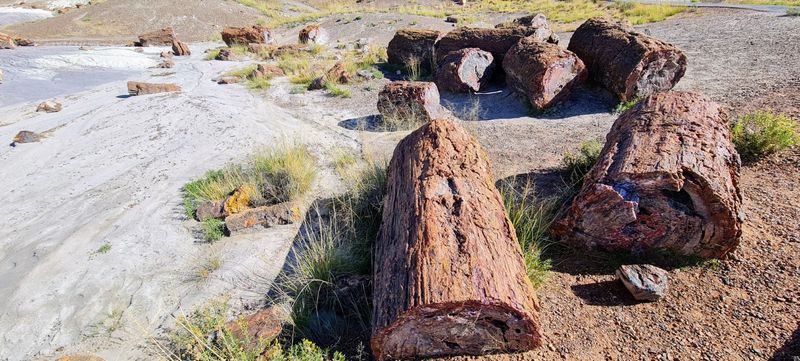
The petrification process that created this park’s famous logs is genuinely mind-blowing when you understand the science behind it. About 225 million years ago, tall trees fell into river floodplains and were quickly buried under layers of mud, silt, and volcanic ash.
This rapid burial cut off oxygen and slowed decomposition significantly.
Over millions of years, silica-rich groundwater seeped through the buried wood, molecule by molecule replacing the organic material with quartz crystal. The process preserved the wood’s original structure in extraordinary detail while completely changing its composition.
Iron, manganese, and other trace minerals added the vivid colors we see today.
The result is essentially a natural time capsule, with wood grain, bark, and growth rings preserved in stone exactly as they appeared over two centuries ago. The Petrified Forest Visitor Center has excellent exhibits explaining this process in detail.
Understanding the science makes the colorful logs on the trail feel even more incredible than they already look.
Tips for Getting the Best Photos
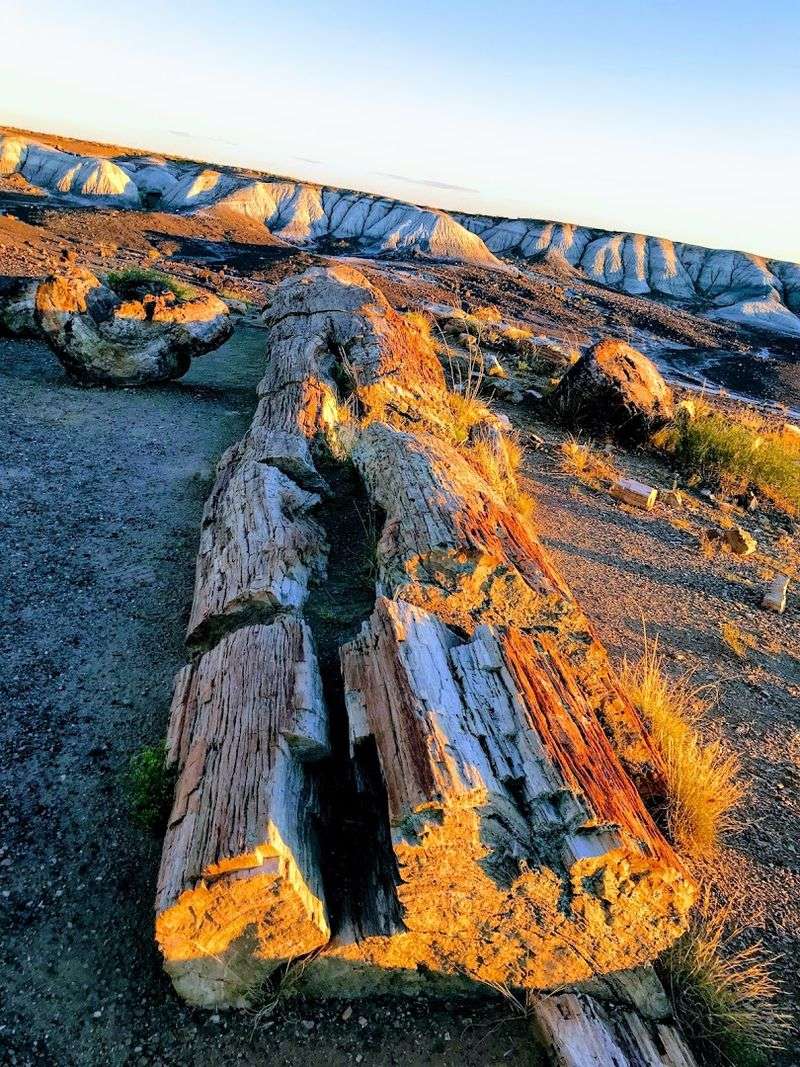
Few places in America offer as many jaw-dropping photo opportunities as Petrified Forest National Park, and the Blue Mesa Trail is the ultimate backdrop. Golden hour — the hour after sunrise and the hour before sunset — produces the most dramatic light on the banded clay hills.
The warm tones make the blues and purples glow in a way midday sun simply can’t replicate.
Get low to the ground to shoot petrified logs against the colorful hillsides for a perspective that emphasizes scale and texture. Including a person in the frame helps viewers understand just how massive some of these ancient logs truly are.
Polarizing filters are extremely useful here for cutting glare off the clay surfaces and deepening the sky’s blue tones.
Smartphone photographers shouldn’t feel left behind — the vivid natural colors in this park translate beautifully to phone cameras. Use portrait mode for close-up log shots and panorama mode for sweeping badlands views.
Early morning visits also mean fewer people in your shots, keeping the landscape feeling open and untouched.