


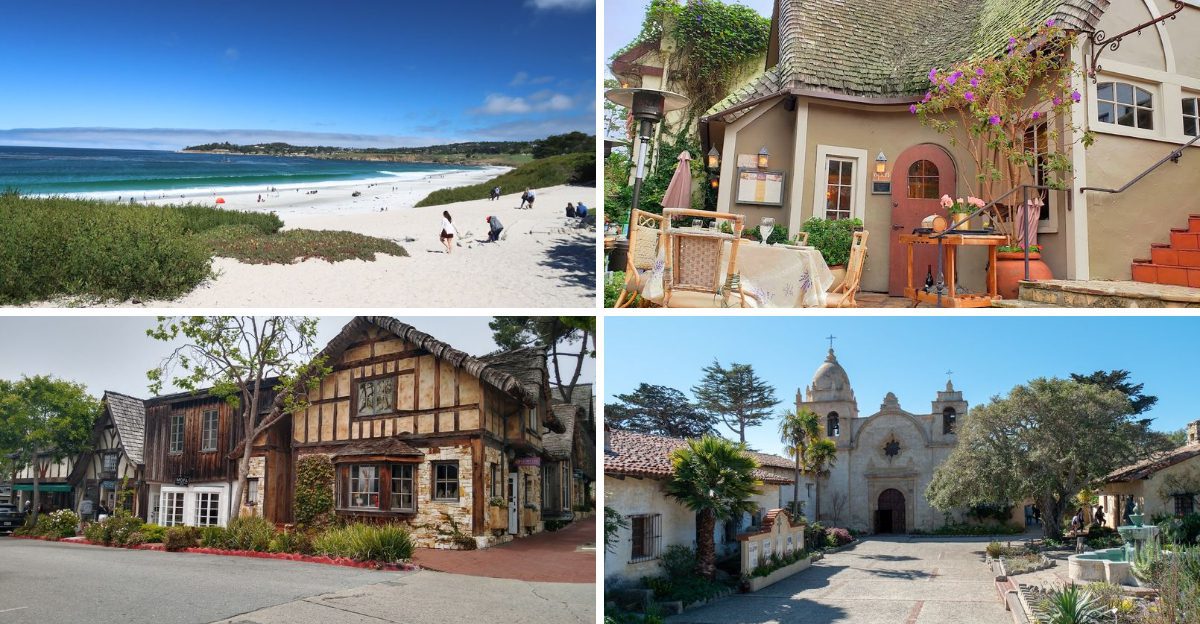
Tucked along the rugged California coastline, Carmel-by-the-Sea is the kind of town that makes you wonder why you ever put up with city traffic in the first place. With its storybook cottages, white sand beaches, and art-filled streets, this tiny gem on the Monterey Peninsula has a way of pulling people in and never quite letting go.
Whether you are dreaming of a weekend escape or a full-on fresh start, Carmel offers something rare: a place where beauty feels effortless and life slows down just enough to breathe. Here are 13 reasons why so many people fall head over heels for this magical California beach town.
Carmel Beach: Where the Pacific Puts on a Show
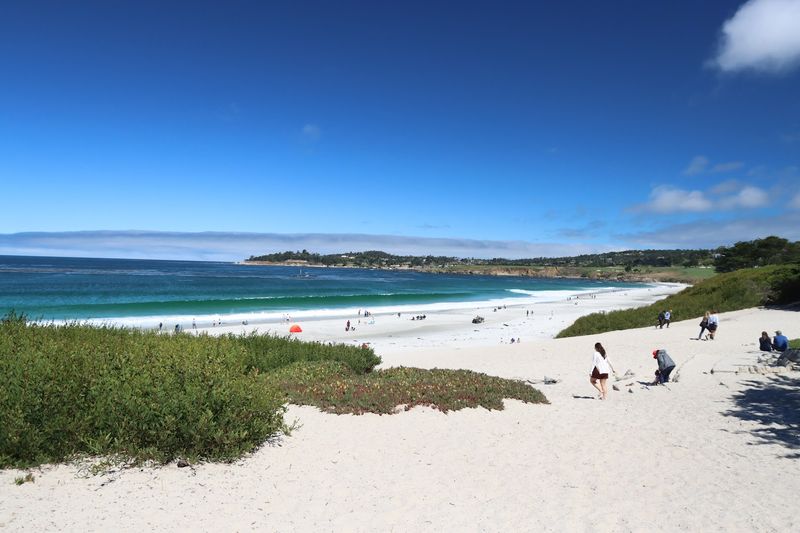
Some beaches are pretty. Carmel Beach is unforgettable.
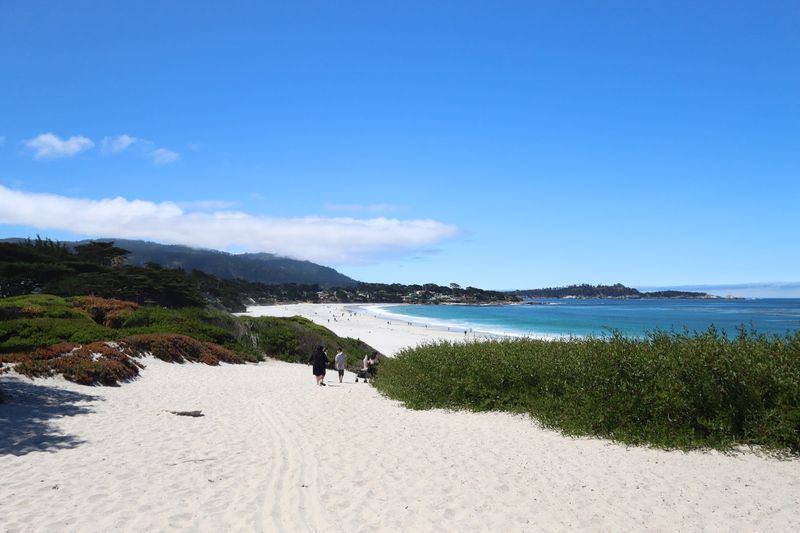
The powdery white sand stretches along the base of cypress-covered bluffs, and the water shimmers in shades of deep blue and green that seem almost too vivid to be real.
Surfers paddle out early in the morning while dogs run freely along the shore. Yes, Carmel Beach is one of the few California beaches where leashed and even off-leash dogs are welcome, making it a local favorite for pet owners.
Sunsets here are legendary. The sky turns shades of gold, orange, and pink as the sun dips behind the horizon.
Locals and visitors alike gather on the sand just to watch. If you have ever imagined yourself sitting on a perfect California beach with nowhere else to be, this is exactly that place.
Fairytale Cottages That Look Straight Out of a Storybook
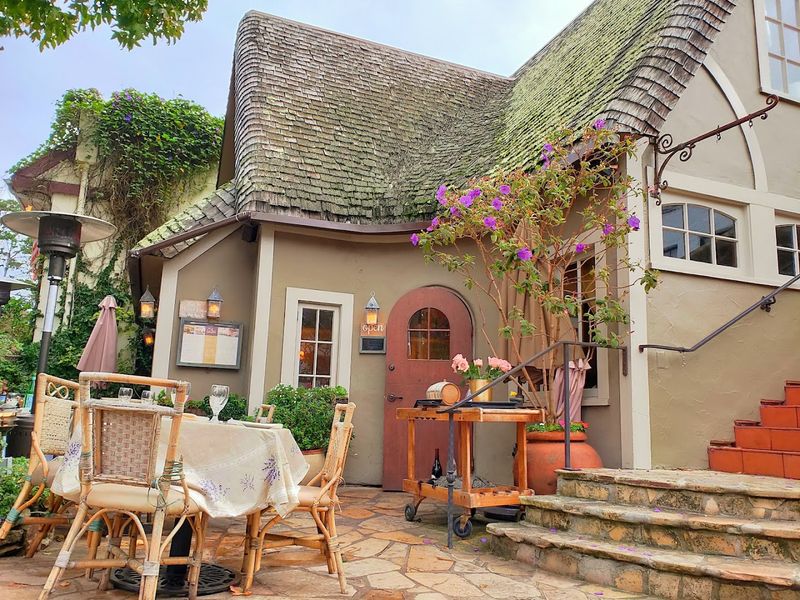
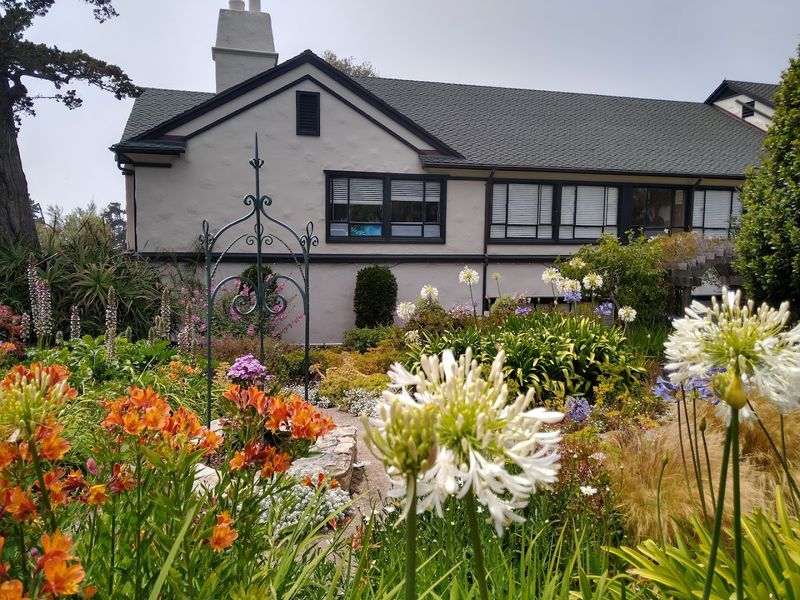
Walking through Carmel’s neighborhoods feels like stepping into a Hans Christian Andersen tale. The cottages here are genuinely whimsical, with curved rooflines, Dutch doors, stone chimneys, and gardens overflowing with roses and lavender.
Many of these homes were built in the early 1900s by artists and writers who wanted affordable, creative spaces near the sea. Builders like Hugh Comstock became famous for designing tiny, magical homes that looked like they belonged in an enchanted forest.
His most iconic creation, Hansel and Gretel cottages, still stand today.
Strolling the residential streets is a free and genuinely delightful activity. Every block offers something new to admire, from hand-painted mailboxes to hidden garden paths.
For anyone who has ever daydreamed about living somewhere truly unique, Carmel’s cottages make that fantasy feel remarkably, warmly real.
A Thriving Art Scene That Has Been Here for Over a Century
Long before Carmel became a tourist destination, it was an artist colony. Painters, poets, and writers flocked here in the early 1900s, drawn by the dramatic coastal light and the affordable land.
That creative spirit never left.
Today, Carmel is home to more than 80 art galleries packed into just one square mile, making it one of the most gallery-dense places in the entire United States. You can find everything from impressionist oils to abstract sculpture to photography that captures the wild beauty of Big Sur.
The Carmel Art Association, founded in 1927, is one of the oldest artist-run galleries in California and still showcases work by local talents. Whether you are a serious collector or just someone who appreciates beautiful things, wandering from gallery to gallery on a lazy afternoon here is genuinely one of life’s simple pleasures.
The Carmel Mission: History You Can Actually Feel
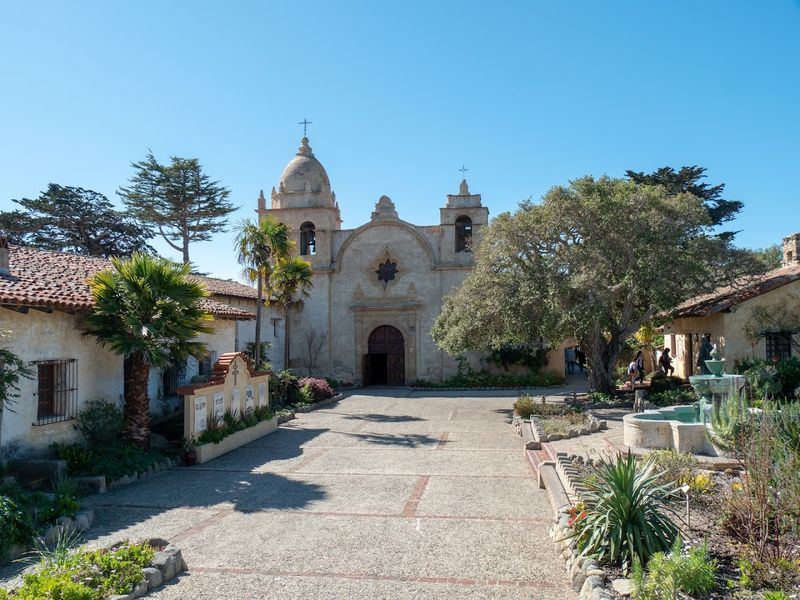
Founded in 1771 by Franciscan friar Junipero Serra, the Carmel Mission is one of the most beautifully preserved historic sites in all of California. The stone basilica, with its distinctive Moorish tower and arched doorways, sits peacefully surrounded by blooming rose gardens.
Serra himself is buried here, and the mission remains an active Catholic parish to this day. Visitors can tour the museum, which houses a fascinating collection of artifacts, artwork, and documents that tell the story of California’s Spanish colonial period in vivid detail.
There is something quietly powerful about standing inside a building that has been standing for over 250 years. The thick walls, the flickering candlelight, and the scent of old stone create an atmosphere unlike anything a city museum can replicate.
History feels alive here, not just preserved behind glass.
Point Lobos State Natural Reserve: Nature at Its Most Dramatic
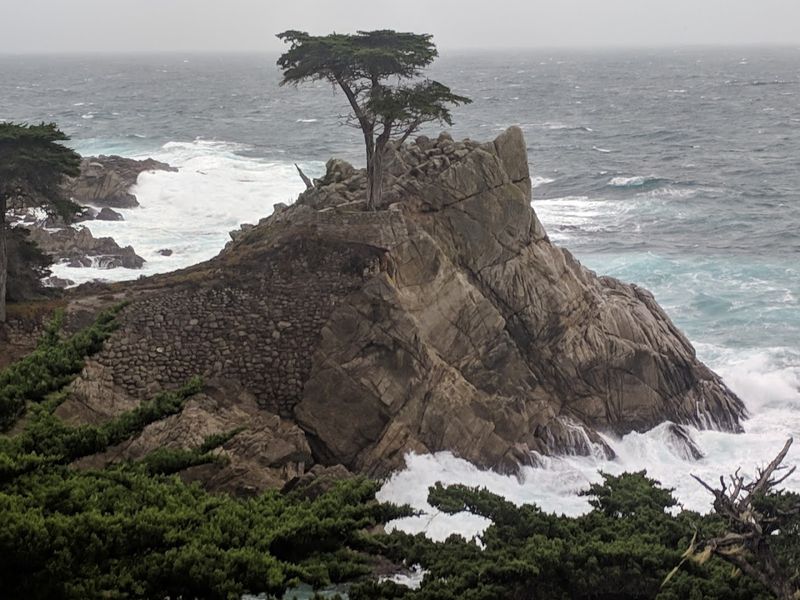
Just south of town, Point Lobos State Natural Reserve is the kind of place that stops you mid-sentence. The jagged granite cliffs, hidden coves, and ancient cypress trees create a landscape so dramatic it almost looks staged.
Wildlife is everywhere. Harbor seals lounge on sun-warmed rocks, sea otters float lazily in the kelp beds, and brown pelicans glide just above the surface of the water.
During whale migration season, you can often spot gray whales spouting offshore without any special equipment.
The reserve also has a fascinating whaling history. The old Whalers Cabin, built in the 1850s, still stands near one of the most photographed coves in California.
Scuba divers come from around the world to explore the underwater kelp forests here. Honestly, a morning at Point Lobos can completely reset your entire outlook on life.
The Scenic Bluff Path: A Walk That Clears Your Head
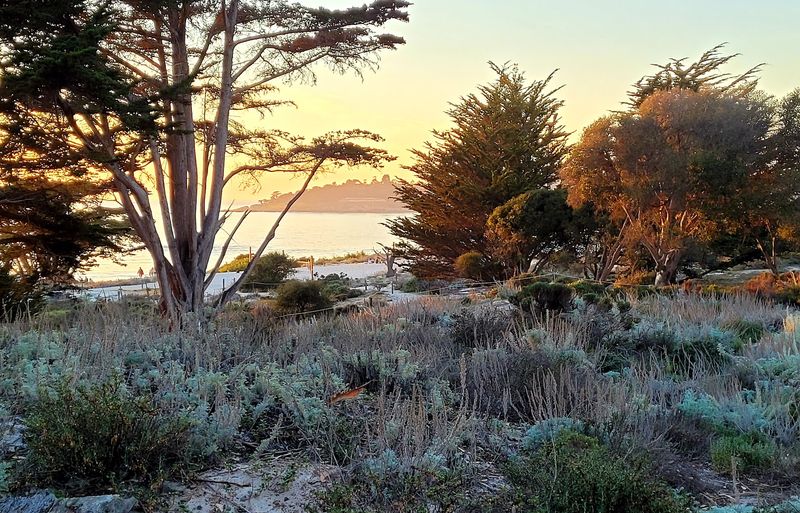
Sometimes the best thing a place can offer is a good walk, and Carmel delivers one of the finest coastal strolls in California. The Scenic Bluff Path runs along the edge of the headlands from Carmel Beach all the way to Carmel River State Beach, offering sweeping ocean views the entire way.
The path is paved and easy to navigate, making it accessible for walkers of all ages and fitness levels. Along the way, you pass cypress trees twisted into sculptural shapes by decades of sea wind, benches perfectly positioned for ocean gazing, and the occasional harbor seal lounging on the rocks below.
At the far end, Carmel River State Beach is a birding hotspot where the lagoon attracts dozens of migratory species. Bring binoculars if you have them.
The whole walk takes about 30 to 45 minutes and costs absolutely nothing.
World-Class Restaurants in a Surprisingly Small Package
For a town with no traffic lights and fewer than 4,000 full-time residents, Carmel punches well above its weight in the food department. The restaurant scene here is genuinely impressive, blending California farm-to-table philosophy with coastal freshness in ways that make every meal feel like a small event.
Seafood is naturally a highlight. Dungeness crab, Pacific halibut, and locally caught salmon show up on menus throughout town, often paired with wines from the nearby Santa Lucia Highlands or Monterey wine country.
Several restaurants have earned serious recognition from food critics and travel publications over the years.
Beyond the upscale options, Carmel also has wonderful bakeries, coffee shops, and casual spots where a bowl of clam chowder on a foggy afternoon feels like the coziest thing in the world. Food here never feels pretentious, just genuinely, deliciously good.
No Stoplights, No Street Numbers, No Rush
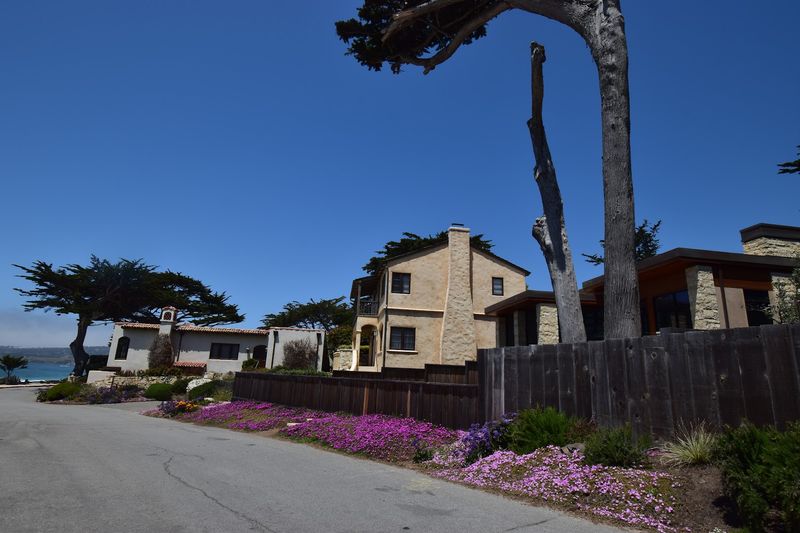
Here is a fun fact that surprises almost every first-time visitor: Carmel-by-the-Sea has absolutely no traffic lights and no street addresses. Homes are identified by names rather than numbers, and the post office is the place where everyone picks up their mail, making it a genuine community gathering spot.
This quirky setup is not an accident. Carmel has long guarded its village character through a series of unusual local ordinances designed to keep things unhurried and personal.
For decades, high heels over two inches were technically banned on city sidewalks, and ice cream could not legally be eaten on public streets. Many of those old rules have loosened, but the spirit behind them remains.
Walking through town without the constant interruption of traffic signals and honking horns creates a calm that city dwellers rarely experience. It genuinely feels like the world outside has agreed to slow down.
Ocean Avenue: The Heart of the Village
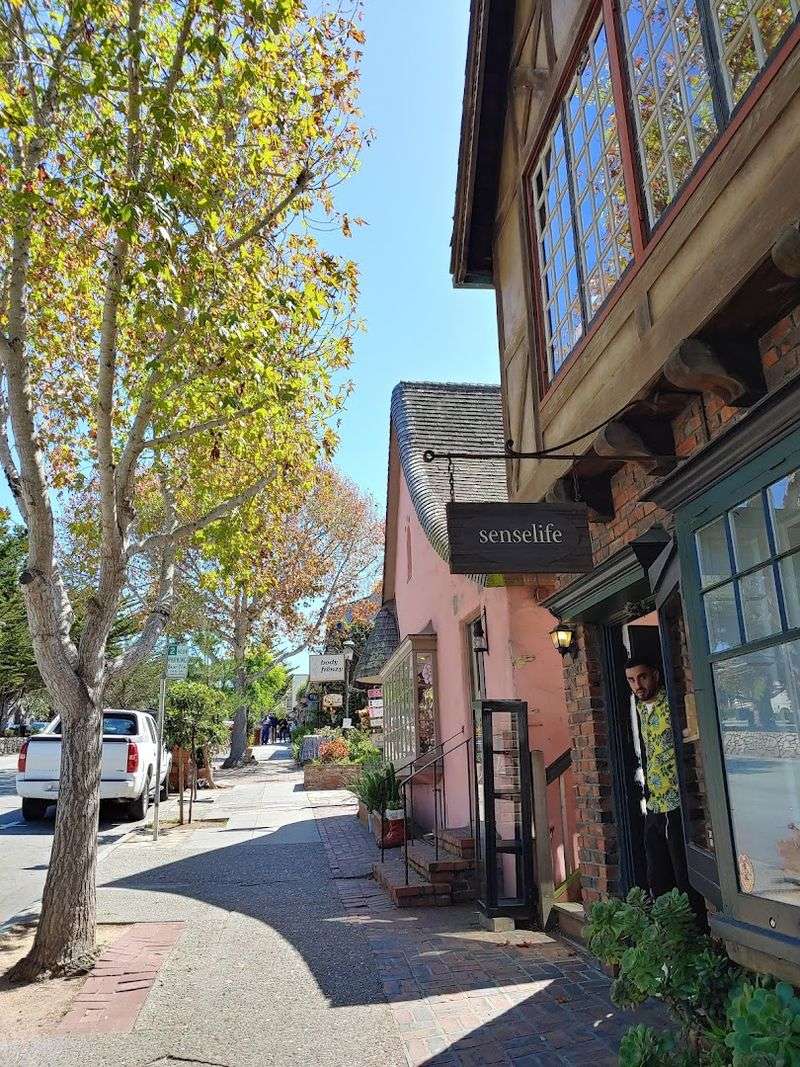
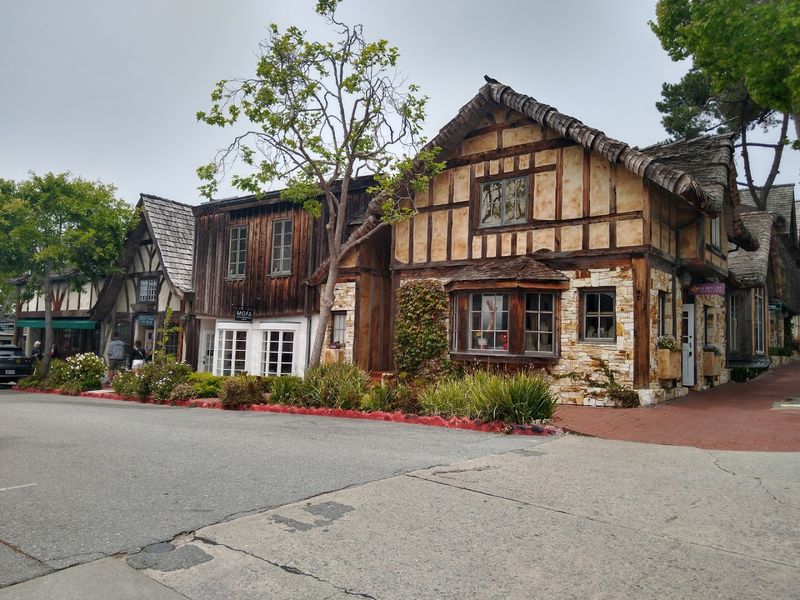
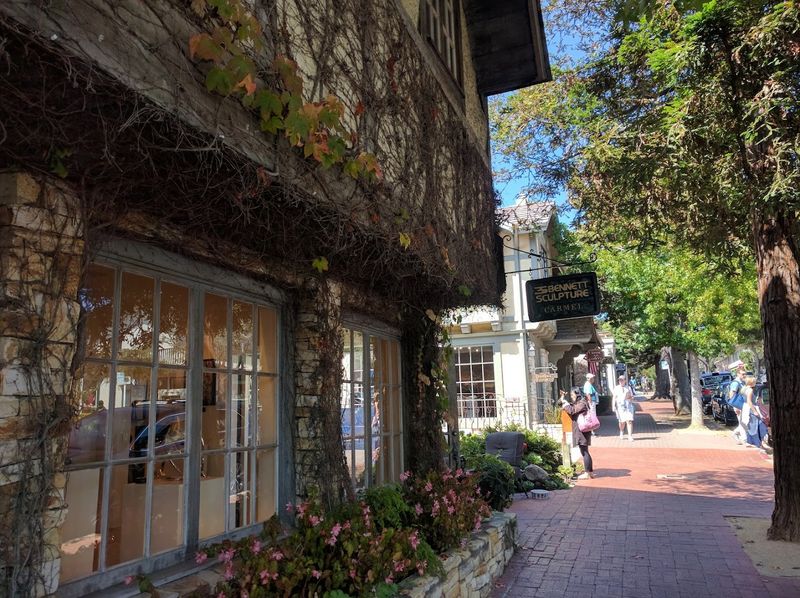
Ocean Avenue is the main street of Carmel, and it is one of the most charming commercial strips you will find anywhere in California. The street runs straight down from the village center to the beach, so at the end of every block you catch a glimpse of the shimmering Pacific waiting at the bottom of the hill.
Lined with boutique clothing shops, jewelry stores, wine tasting rooms, bookstores, and flower-filled cafes, Ocean Avenue moves at a pace that feels deliberately unhurried. Window shopping here is genuinely enjoyable, not just a filler activity.
Many of the shops are locally owned and carry things you simply cannot find anywhere else.
On weekends, the street fills with a relaxed mix of locals and visitors, all seemingly in agreement that there is no reason to hurry. Grab a latte, pick up a local art print, and just wander.
That is the Ocean Avenue way.
Clint Eastwood and the Town That Loves Its Characters
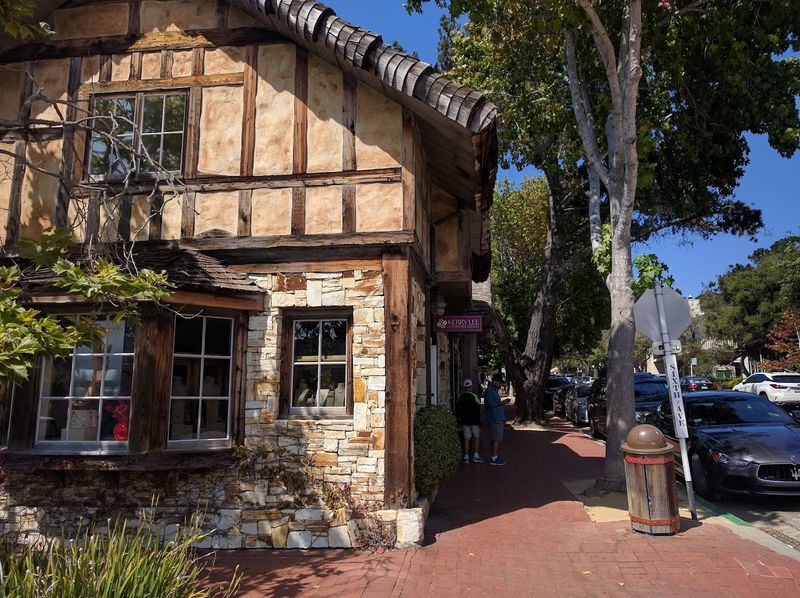
Carmel has always attracted larger-than-life personalities, and perhaps none more famous than Clint Eastwood. The Hollywood legend served as mayor of Carmel-by-the-Sea from 1986 to 1988 and owned the beloved Hog’s Breath Inn restaurant for years.
His connection to the town remains a proud part of local identity.
But Carmel’s list of notable residents and visitors goes much further back. Poet Robinson Jeffers built his famous Tor House here by hand in the early 1900s, hauling granite stones up from the beach.
The home still stands and is open for tours. Author Robert Louis Stevenson spent time in the Monterey area and was deeply inspired by the local landscape.
There is something about Carmel that seems to attract creative and unconventional souls. Maybe it is the light, the quiet, or the sense that here, you are free to be exactly who you are without apology.
Tor House: Poetry Built in Stone
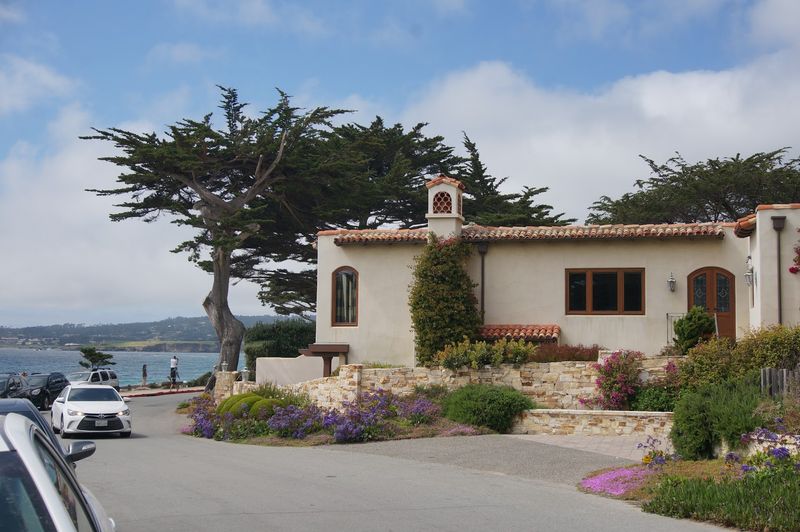
Robinson Jeffers was a poet who believed in building things to last. Between 1919 and 1962, he constructed Tor House and the adjacent Hawk Tower entirely by hand using granite boulders he carried up from Carmel Beach.
The result is one of the most extraordinary private homes in American literary history.
Jeffers used the rugged Carmel coastline as the backdrop and inspiration for his poetry, writing about nature, solitude, and the raw power of the sea in ways that still resonate today. His work helped put Carmel on the map as a place of genuine artistic significance.
The Robinson Jeffers Tor House Foundation offers guided tours on weekend mornings. Standing inside the stone tower, looking out at the same ocean Jeffers watched for decades, is a surprisingly moving experience.
It is a reminder that some of the most meaningful things in life are built slowly, with intention and with your own two hands.
Wine Tasting Rooms Right in the Village
You do not need to drive into wine country when you are staying in Carmel, because wine country comes right to you. The village is home to a surprising number of tasting rooms representing wineries from the Monterey County appellation, one of California’s most respected and underappreciated wine regions.
The cool marine climate of the Monterey Peninsula creates ideal growing conditions for Pinot Noir, Chardonnay, and Riesling. Many tasting rooms on Seventh Avenue and surrounding streets pour small-production wines that you simply cannot find at a grocery store or chain restaurant.
Spending an afternoon hopping between tasting rooms is a thoroughly enjoyable way to experience Carmel without spending a fortune. Most pours are reasonably priced, the staff are knowledgeable and enthusiastic, and the relaxed atmosphere makes even novice wine drinkers feel right at home.
Cheers to that.
The Feeling That Life Could Actually Be Different Here
Every great travel destination offers something to see. The truly special ones offer something to feel.
Carmel-by-the-Sea belongs firmly in that second category. There is a particular quality to the air here, something between the salt breeze and the cypress shade and the unhurried pace of the streets, that makes the ordinary pressures of city life seem very far away.
People come to Carmel for a weekend and start quietly doing the math on what it would take to stay. The town has a way of making that question feel less impossible than it sounds.
Remote work has made the dream more achievable for more people than ever before.
Whether you end up staying for two days or two decades, Carmel leaves a mark. It is the kind of place that reminds you what you actually want from life, which is perhaps the most valuable thing any destination can offer.