


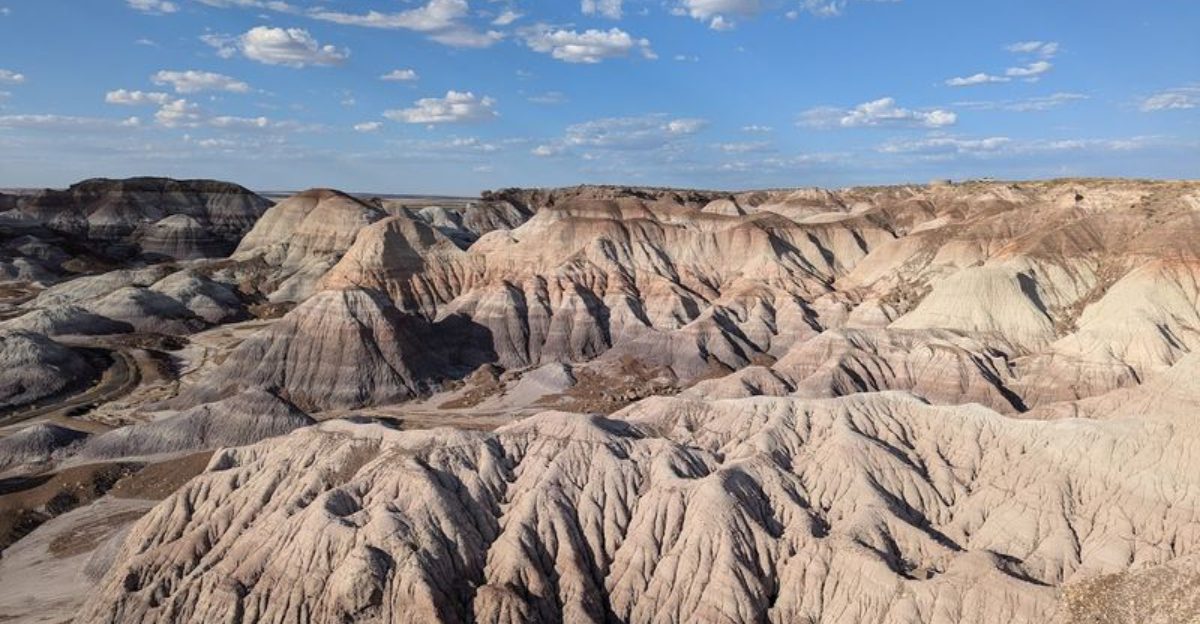
Imagine walking through a landscape where ancient trees have turned to stone and painted deserts stretch as far as the eye can see. Petrified Forest National Park in Arizona covers over 220,000 acres of jaw-dropping scenery that looks more like another planet than the American Southwest.
This extraordinary park holds some of the world’s largest and most colorful deposits of petrified wood, along with fossils, Native American ruins, and stunning badlands. Whether you are a history lover, nature fan, or just someone looking for an unforgettable adventure, this park has something truly special waiting for you.
The Petrified Wood That Started It All
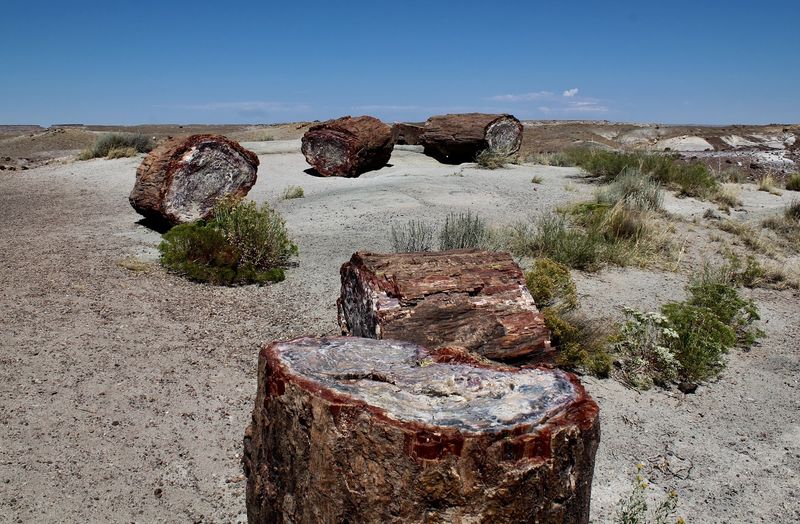
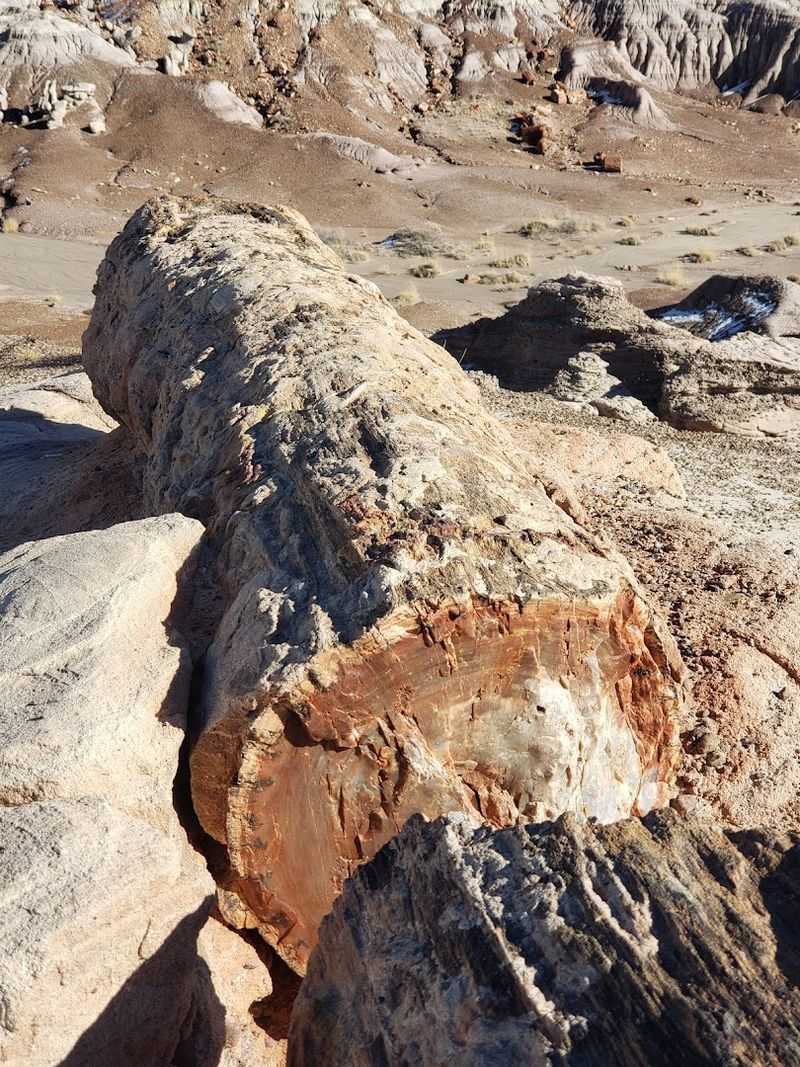
Around 225 million years ago, massive trees fell and were buried under layers of volcanic ash and sediment. Over time, minerals seeped in and replaced the wood cell by cell, creating stone logs bursting with color.
The result is something you simply have to see to believe.
The petrified logs here come in shades of red, purple, yellow, and cream, making each piece look like a natural work of art. Some logs are enormous, stretching over 100 feet long.
You can find them scattered across the park like a giant’s forgotten lumber yard.
Visitors are not allowed to take any petrified wood home, and rangers take this rule seriously. The park actually receives mailed-back pieces from guilty tourists every year.
Walking among these ancient logs feels like flipping through the pages of Earth’s oldest diary.
Painted Desert: A Masterpiece Without a Paintbrush
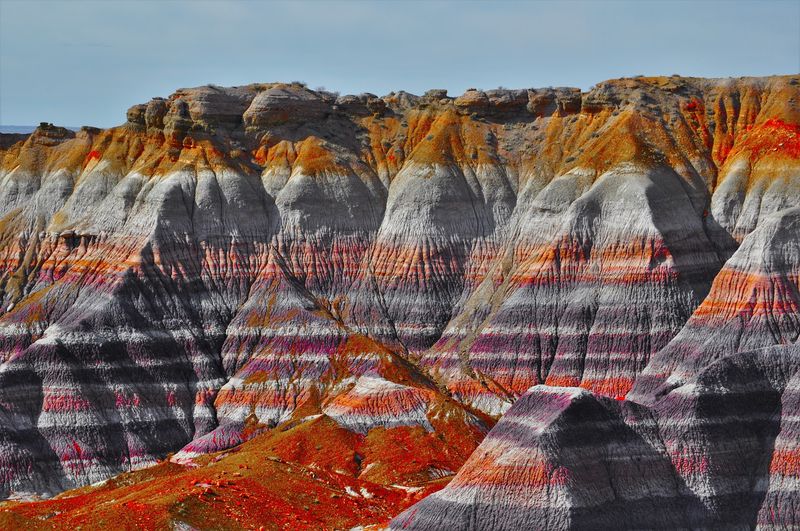
Few places on Earth match the raw visual drama of the Painted Desert. Stretching across the northern section of the park, this colorful badlands landscape shifts in hue depending on the time of day and angle of sunlight.
Morning light turns the hills soft pink; afternoon sun blazes them into deep orange and red.
The colors come from different minerals baked into the clay-rich rock layers over millions of years. Iron oxides create the reds and pinks, while manganese produces purples and blues.
Watching the desert change color as clouds move overhead is one of the park’s most meditative experiences.
Several overlooks along the northern park road give you perfect viewing spots. Tawa Point and Pintado Point are especially popular at sunrise.
Bring a camera, but honestly, no photograph fully captures what your eyes will take in standing there.
Puerco Pueblo: Voices From 700 Years Ago
Long before European explorers arrived in the Southwest, the Ancestral Puebloans built a thriving community right here in what is now the park. Puerco Pueblo was home to around 200 people who lived in a 100-room stone village near the Puerco River.
By the 1300s, they had moved on, leaving behind walls and mysteries that still fascinate researchers today.
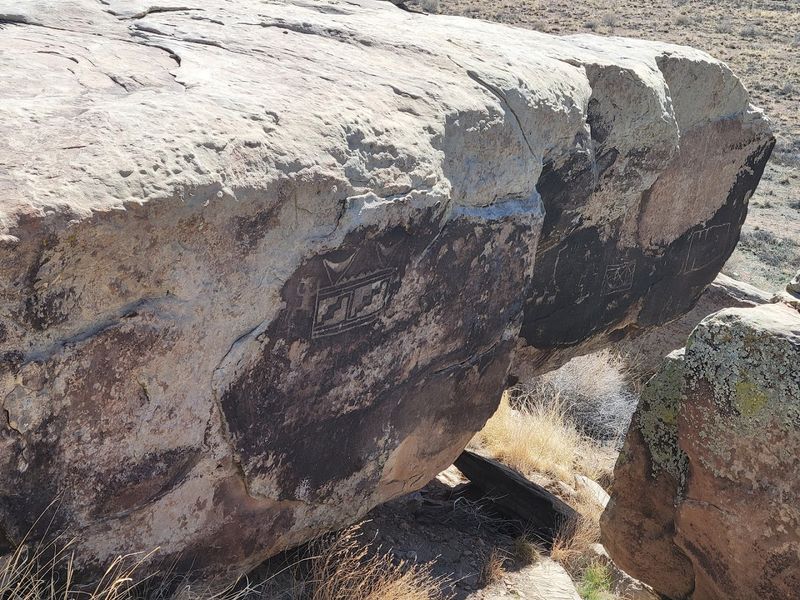
Walking the short loop trail around the ruins, you get a real sense of how cleverly these people built their lives in a challenging desert environment. The site also features petroglyphs carved into nearby boulders, including a famous spiral that aligns with sunlight during the summer solstice.
That solar calendar discovery shows just how sophisticated this ancient community really was. Visiting Puerco Pueblo connects you to human history in a deeply personal way, reminding you that this landscape has always inspired people to call it home.
Agate House: A Home Built From Gemstones
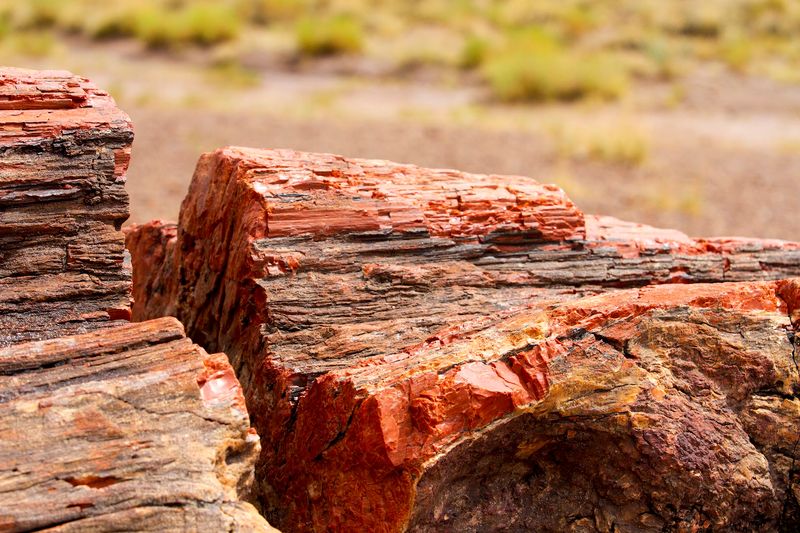
What if your house was built entirely out of gemstone-quality rock? That is exactly what ancient residents did at Agate House, an eight-room pueblo constructed almost entirely from chunks of petrified wood.
The colorful blocks give the structure a jewel-like appearance that makes it unlike any other ancient building in North America.
Archaeologists believe people lived here around 1,000 years ago, using the abundant petrified wood as a practical building material. The National Park Service has partially reconstructed some of the rooms so visitors can better visualize what the structure once looked like.
It sits at the end of a gentle 2.1-mile round-trip trail through open desert.
The hike to Agate House passes through one of the park’s richest concentrations of petrified wood. Colorful logs and fragments crunch underfoot as you walk, making the journey just as rewarding as the destination.
It is a quirky, unforgettable stop.
Crystal Forest: Where the Ground Glitters
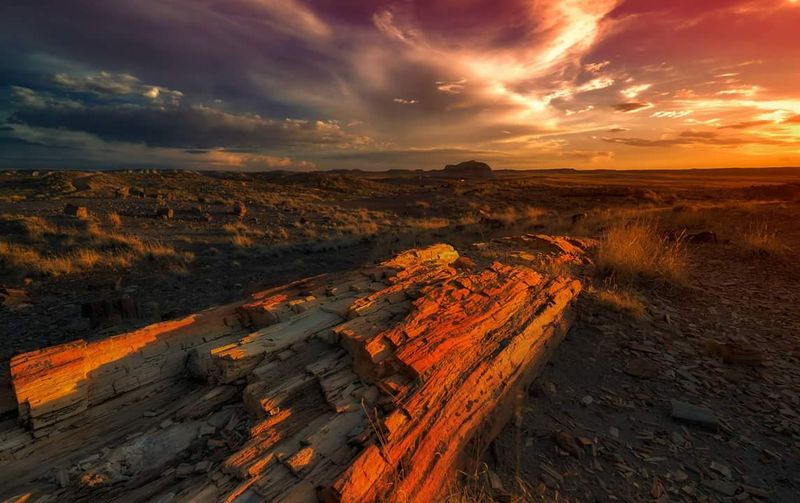
Crunching along the Crystal Forest trail feels like walking through a treasure chest. This 0.75-mile loop is one of the park’s most popular short hikes, and for good reason.
Broken petrified logs here reveal interiors filled with quartz crystals that catch sunlight and sparkle like something out of a fantasy novel.
The name Crystal Forest comes from the fact that early visitors actually chipped out crystals and carried them away by the wagonload. That kind of looting is what eventually pushed Congress to protect this area in 1906, making it one of the earliest national monuments in the country.
Today, strict rules protect every glittering fragment.
Walking the loop at midday, when sunlight hits the crystals at full strength, gives the most dramatic effect. Children especially love this trail because everything looks magical and slightly unreal.
It is a short walk with a seriously big payoff for curious explorers of any age.
Newspaper Rock: Ancient Stories Carved in Stone
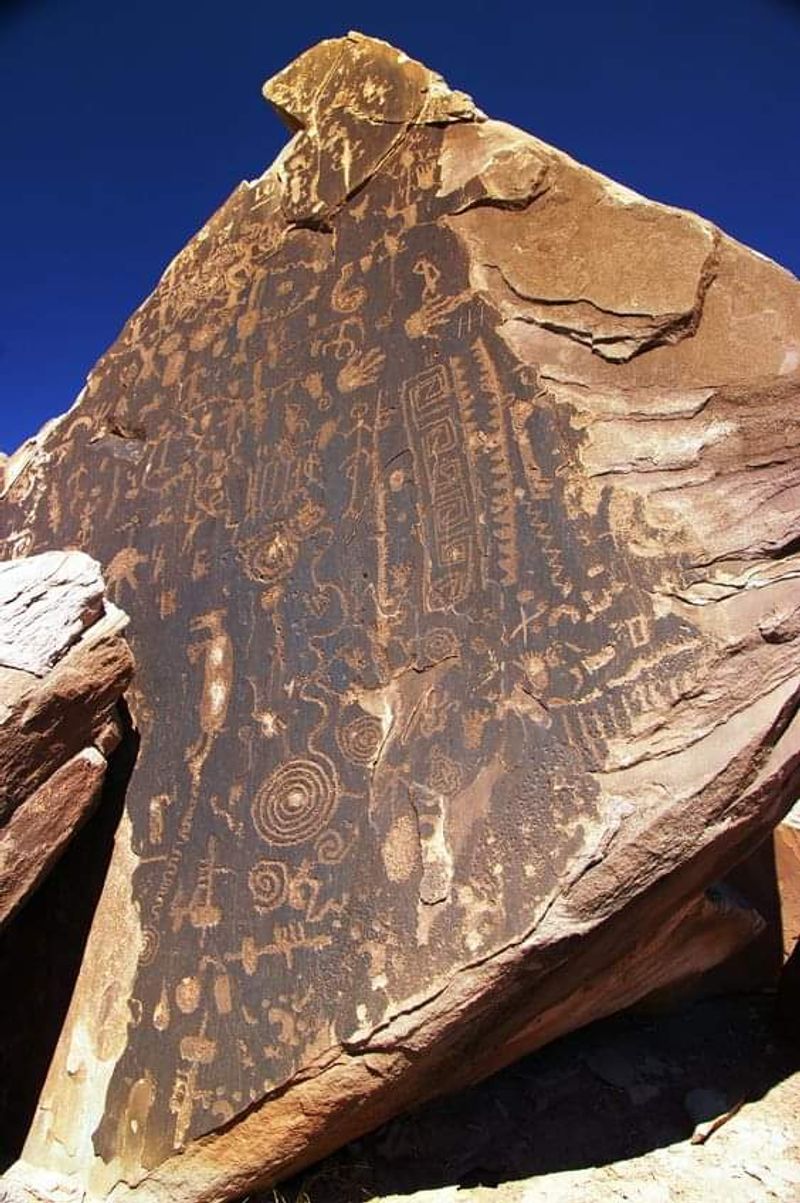
Tucked into a rocky overlook along the park road, Newspaper Rock is one of the most densely packed petroglyph panels in the entire Southwest. More than 650 individual carvings cover the surface of a large sandstone rock, left behind by people who passed through this area over many centuries.
Animals, human figures, spirals, and symbols crowd the surface in an ancient visual conversation.
Visitors view the rock from a fenced overlook using binoculars or telephoto camera lenses, since the actual rock sits about 100 feet below. The park provides viewing scopes to help you spot individual images.
Even from a distance, the sheer density of carvings is breathtaking.
Researchers are still working to fully understand what many of the symbols mean, and different groups may have added carvings at different times in history. Standing at the overlook, it is easy to feel the weight of all those untold stories waiting to be understood.
Blue Mesa: Badlands That Belong on Another Planet
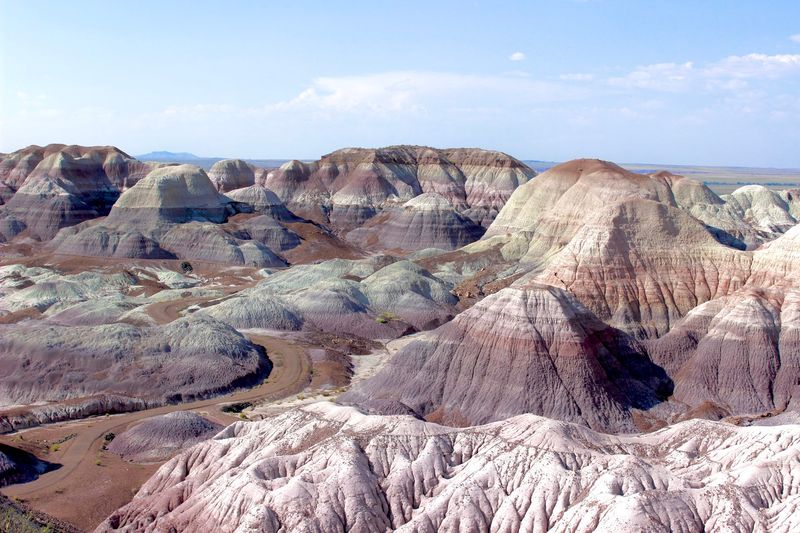
Nothing quite prepares you for Blue Mesa. The moment you crest the hill and see those pale blue-gray badlands spreading out below you, it genuinely feels like someone teleported you to Mars.
The rounded, banded hills are made of bentonite clay that expands when wet and cracks when dry, creating a constantly shifting, almost living landscape.
A 1-mile loop trail drops down into the heart of Blue Mesa, putting you right among the strange formations. Petrified logs balance on pedestals of eroded clay, looking like they might topple at any moment.
The silence down in the basin is profound, broken only by wind and the occasional raven call.
Blue Mesa looks different in every kind of light. Overcast skies make the blues pop dramatically, while golden afternoon light warms the whole scene into something almost dreamlike.
Many visitors call it the single most otherworldly spot in the entire park, and it is hard to argue with them.
The Tepees: Nature’s Own Architecture
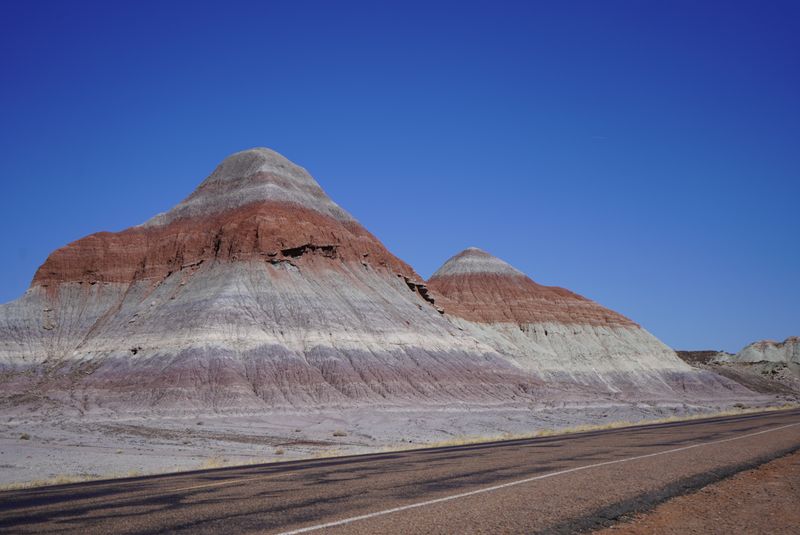
Driving along the park road, you will suddenly spot a cluster of perfectly cone-shaped hills that look like they were sculpted by a very artistic giant. These are the Tepees, colorful banded formations made from layers of bentonite clay deposited over millions of years.
The stripes of gray, red, and blue tell the story of changing ancient environments, from swampy forests to dry floodplains.
Each color band represents a different period and set of conditions, almost like reading chapters in a geology textbook. The formations get their name from their resemblance to the traditional pointed shelters used by many Native American peoples.
From the roadside pullout, they frame beautifully for photos, especially in early morning light.
What makes the Tepees extra special is how clearly you can see the layering without any hiking required. It is one of those spots where geology becomes genuinely exciting, even for people who never thought rocks could tell such vivid, colorful stories.
Jasper Forest: A Sea of Ancient Stone Trees
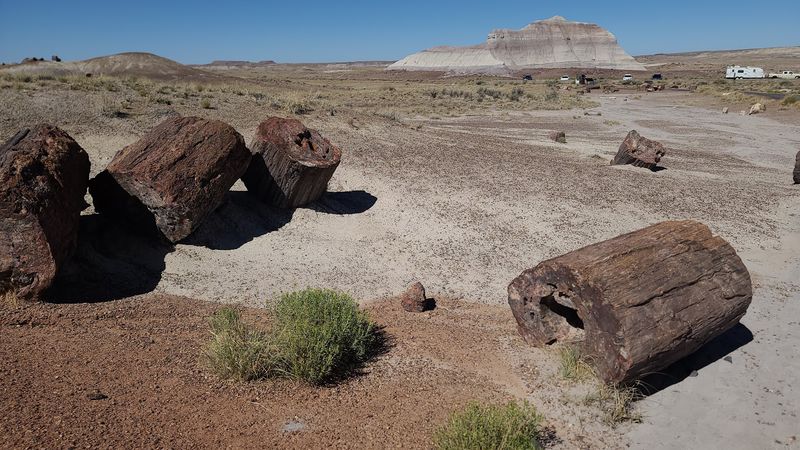
Standing at the Jasper Forest overlook feels like surveying the aftermath of an ancient catastrophe frozen in time. Hundreds of petrified log segments litter the wide basin below, scattered as if a massive forest was knocked flat overnight and then turned to stone.
The sheer number of logs visible from this one viewpoint is genuinely staggering.
The name comes from the jasper, a variety of quartz, that makes up much of the petrified wood here. Shades of red, brown, and yellow dominate, giving the valley a warm, earthy glow in afternoon sunlight.
A short unpaved road leads down into the basin if you want to get closer to the logs.
Geologists believe the trees here were transported by ancient river systems before being buried and mineralized. So the logs you see are not necessarily where they originally grew, adding another fascinating layer to an already remarkable landscape worth exploring slowly.
Petrified Forest’s Dark Sky Magic: Stargazing at Its Best
When the sun goes down over Petrified Forest, a completely different kind of spectacle begins. The park is officially designated as an International Dark Sky Park, meaning light pollution here is almost nonexistent.
On a clear night, the Milky Way stretches overhead so vividly it looks like someone spilled a river of stars across the sky.
The combination of high elevation, dry air, and remote location makes this one of the best stargazing spots in the entire American Southwest. Constellations that are invisible from most cities blaze brilliantly here.
Even the planets shine with unusual clarity, and shooting stars are a regular treat.
The park occasionally hosts star parties and astronomy programs led by rangers, giving visitors a guided introduction to the night sky. Bringing a blanket and lying flat on the desert ground to watch the stars is one of those simple experiences that stays with you for the rest of your life.
Wilderness Hiking: Getting Truly Off the Beaten Path
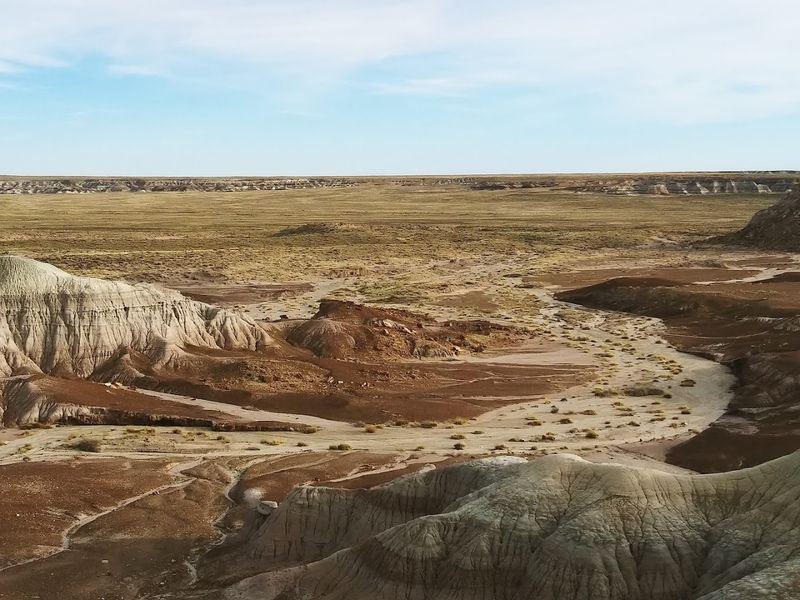
Most national parks keep visitors on established trails, but Petrified Forest does something rare and exciting. About 50,000 acres of the park are designated wilderness, and you are actually encouraged to leave the trail and explore on your own terms.
There are no marked paths out there, just open desert, ancient rock, and your own sense of direction.
Backcountry permits are free and required for overnight camping, but day hikers can simply head into the wilderness without any formal registration. The freedom is exhilarating and a little humbling.
You quickly realize how big and quiet the landscape truly is once you walk away from the road.
Navigation skills matter out here since there are no trail markers or signs. A topographic map and compass, or a reliable GPS device, are strongly recommended.
The reward for venturing out is total solitude and the chance to discover petrified wood and fossils that most visitors never get to see.
Fossils That Rewrote Prehistoric History
Petrified Forest is not just about beautiful rocks. It is one of the richest Triassic fossil sites on the entire planet.
The park has yielded fossils of ancient crocodile-like reptiles, early dinosaur relatives, giant amphibians, and bizarre armored creatures that roamed this area when it was a tropical floodplain over 200 million years ago.
Scientists have made landmark discoveries here that actually changed our understanding of how life evolved during the Triassic period. New species are still being found regularly, making this an active and exciting scientific frontier.
The park’s Rainbow Forest Museum displays many of these incredible specimens with clear, engaging explanations.
One star exhibit is Coelophysis, an early dinosaur whose remains were found nearby. Seeing these fossils up close makes the ancient world feel suddenly real and close, not just something buried in a textbook.
For anyone fascinated by prehistoric life, this park is a legitimate pilgrimage destination.
Route 66 History Running Right Through the Park
Here is something most visitors do not expect: the legendary Route 66 actually passed right through what is now Petrified Forest National Park. The famous highway, which connected Chicago to Los Angeles and became a symbol of American freedom and adventure, ran along the park’s southern edge from the 1920s through the 1970s.
A preserved section of the original alignment still exists inside park boundaries.
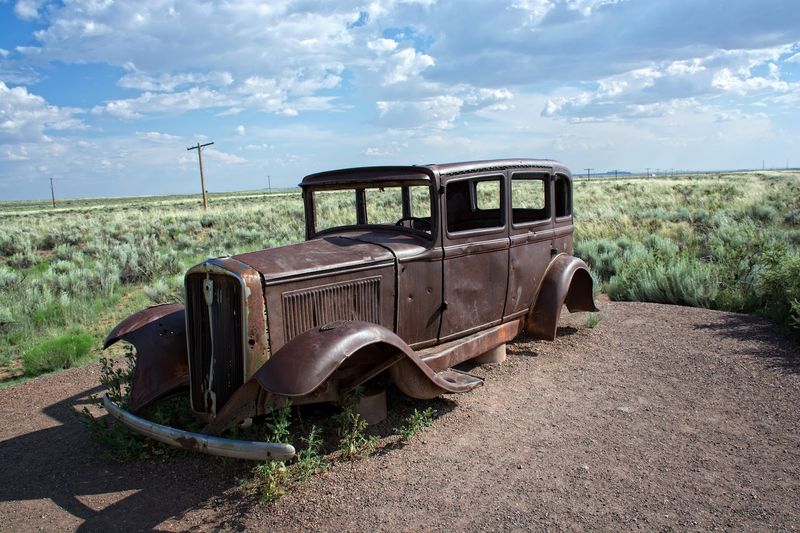
You can stand on the old road surface and imagine the thousands of travelers who rolled past these same badlands and petrified logs on their way west. A vintage Studebaker automobile sits near the historic alignment as a nod to that golden era of American road tripping.
The park’s visitor center includes exhibits about Route 66’s cultural impact and the role the park played in early American tourism. Combining ancient prehistory with mid-century Americana makes Petrified Forest a uniquely layered place, offering something genuinely unexpected around almost every corner.