


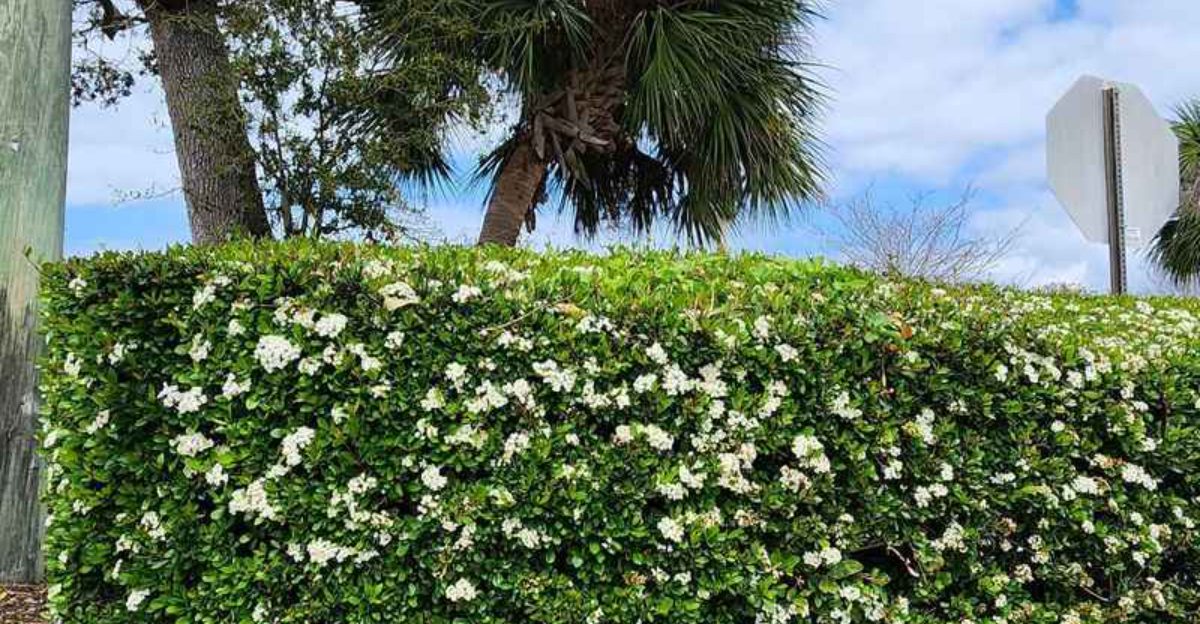
Florida yards can look amazing all year long, even without the dramatic seasonal changes seen in northern states. The secret lies in choosing the right evergreen shrubs that keep their leaves, hold their shape, and anchor your landscape no matter the season.
From coastal cottages to suburban backyards, these plants deliver reliable beauty and structure without constant fuss. Here are 20 top picks that Florida gardeners swear by for creating a polished, put-together yard every single month.
Viburnum
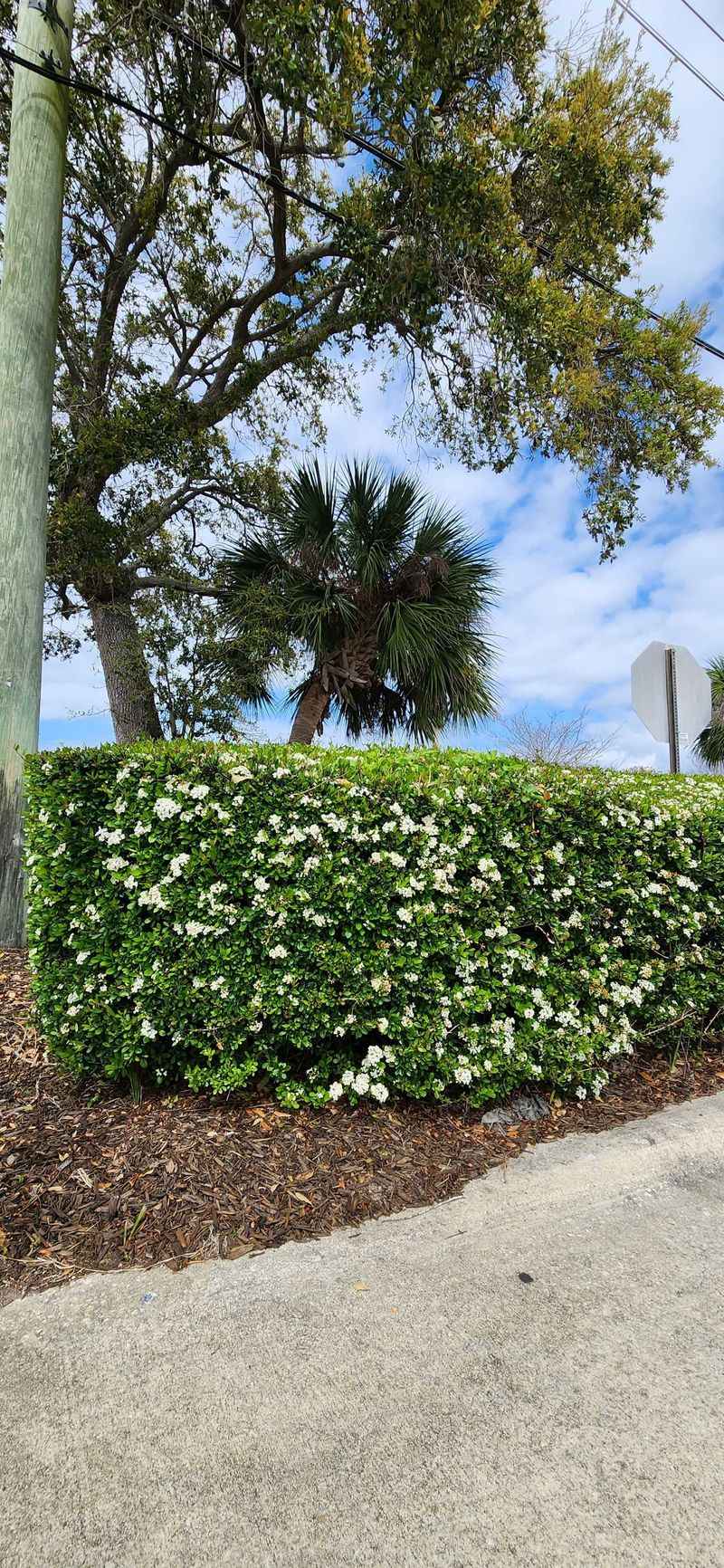
Few shrubs can match the viburnum for sheer versatility in a Florida landscape. It grows into a dense, rounded form that works beautifully as a hedge, privacy screen, or standalone focal point.
Viburnum thrives in both full sun and partial shade, making it adaptable to almost any spot in your yard. Some varieties even produce fragrant white flowers and berry clusters that attract birds.
It handles Florida heat and humidity without skipping a beat.
Wax Myrtle
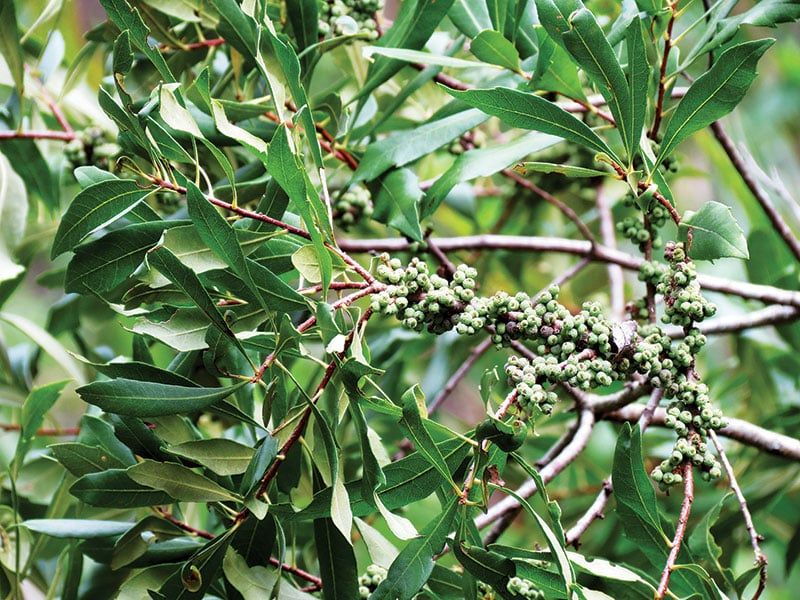
Wax myrtle is one of Florida’s most reliable native evergreens, and it earns that reputation every single year. Its aromatic, silvery-green foliage stays lush through drought, storms, and salt spray alike.
Grow it as a large specimen shrub or trim it into a tidy privacy hedge. Birds absolutely love the small waxy berries that appear in clusters along the stems.
Best of all, wax myrtle rarely needs fertilizer or extra watering once established.
Podocarpus
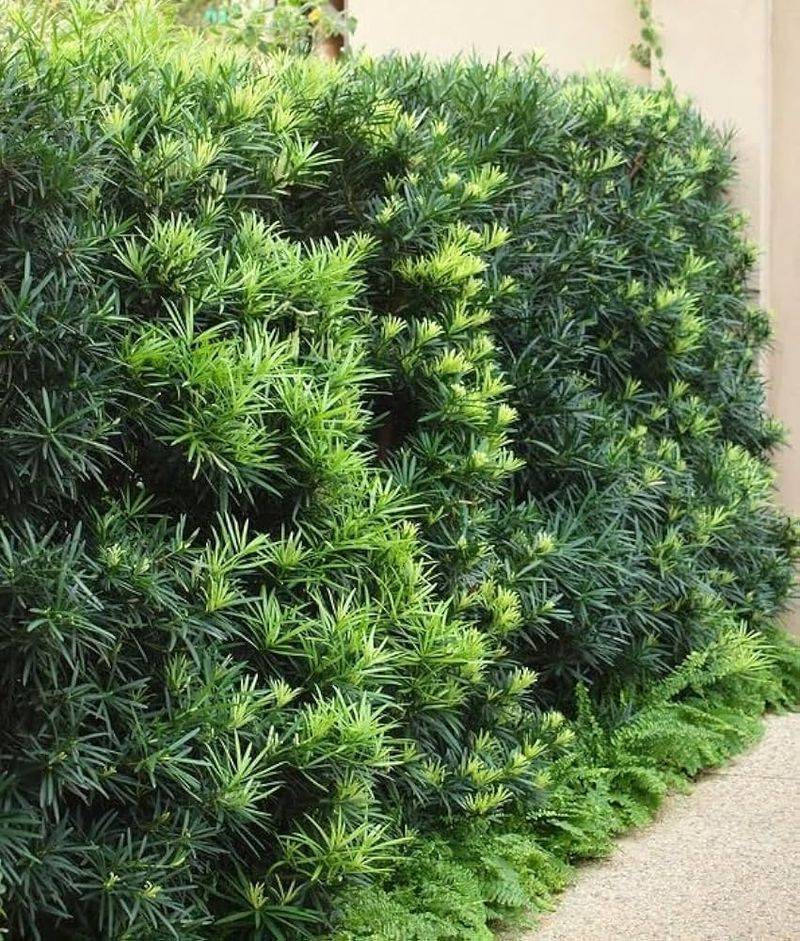
Podocarpus is the go-to shrub when you want a tall, formal hedge that stays perfectly green year-round. Its needle-like leaves give it a refined, almost architectural look that sets it apart from broader-leafed shrubs.
It grows steadily upward, making it ideal for creating privacy screens along fences and property lines. Podocarpus handles full sun and tolerates light shade.
Trimming it once or twice a year keeps it sharp and structured with minimal effort.
Dwarf Yaupon Holly
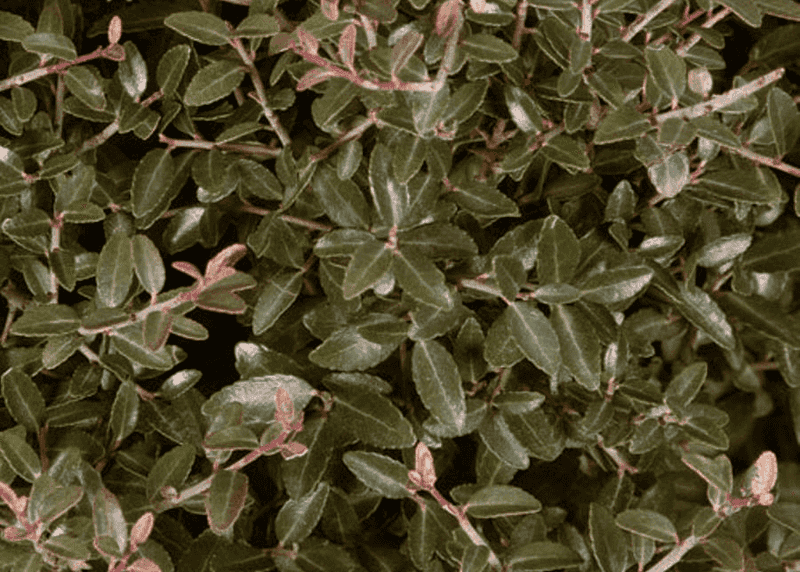
Tough as nails and compact enough for any garden bed, dwarf yaupon holly is a Florida favorite for good reason. This low-growing shrub forms a tidy mound of small, glossy leaves that stay green through every season.
It tolerates drought, salt, poor soil, and even occasional flooding, which makes it almost foolproof for beginners. Use it as a border plant or mass it together for a clean, uniform look.
Deer tend to leave it alone, too.
Firebush
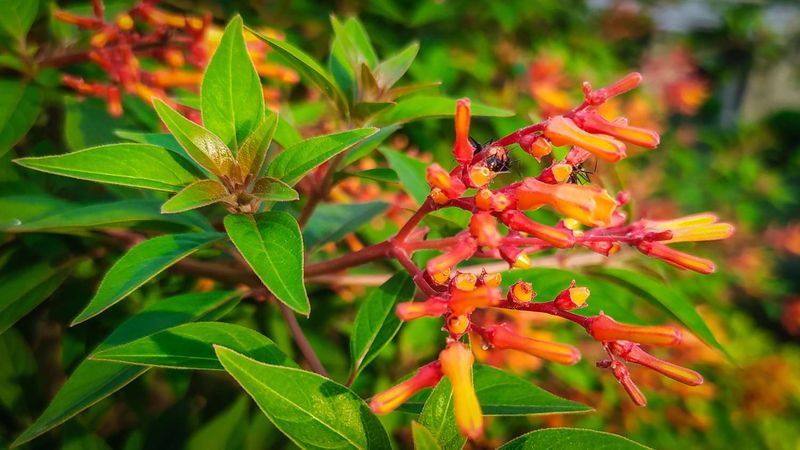
Firebush earns its name with a spectacular show of red-orange tubular flowers that seem to glow against its dark green foliage. Hummingbirds and butterflies treat it like an all-day buffet, so planting one near a porch is always rewarding.
While technically semi-deciduous in North Florida, it stays evergreen in Central and South Florida year-round. It thrives in full sun with minimal water once established.
Firebush grows quickly, filling gaps in the landscape with bold color and life.
Simpson’s Stopper
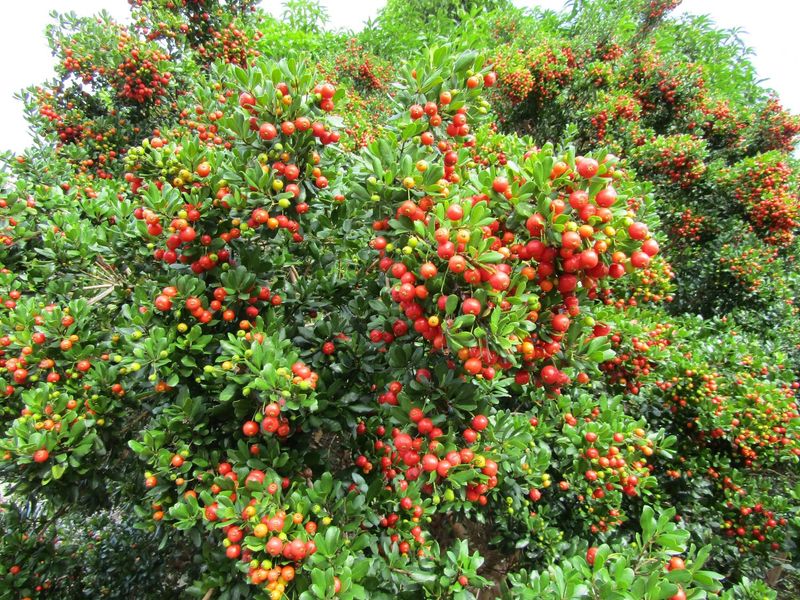
Not every shrub announces itself loudly, and Simpson’s stopper is proof that quiet elegance has real power in the landscape. This Florida native grows into a graceful, multi-stemmed shrub covered in small, leathery dark green leaves.
Tiny white flowers appear seasonally, followed by red berries that draw in mockingbirds and waxwings. It adapts well to shade, making it one of the few evergreen shrubs that truly thrives under tree canopies.
Drought tolerance is another major bonus.
Cocoplum
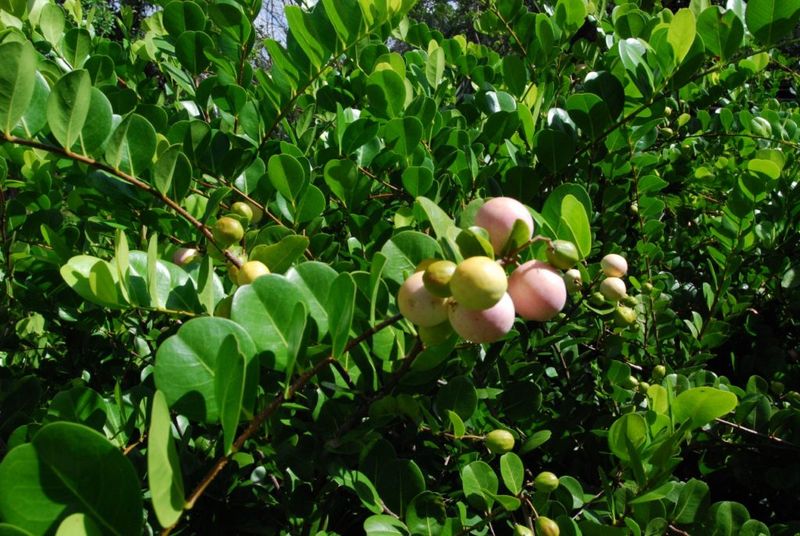
Cocoplum has been shaping Florida landscapes for generations, and it still earns its place in modern yards without hesitation. Its round, glossy leaves create a lush, tropical look that pairs well with palms and ornamental grasses.
It produces small edible plum-like fruits that wildlife and even humans enjoy. Cocoplum tolerates salt spray, making it a top choice for coastal properties.
Trim it into a formal hedge or let it grow naturally into a sprawling, wildlife-friendly shrub.
Pittosporum
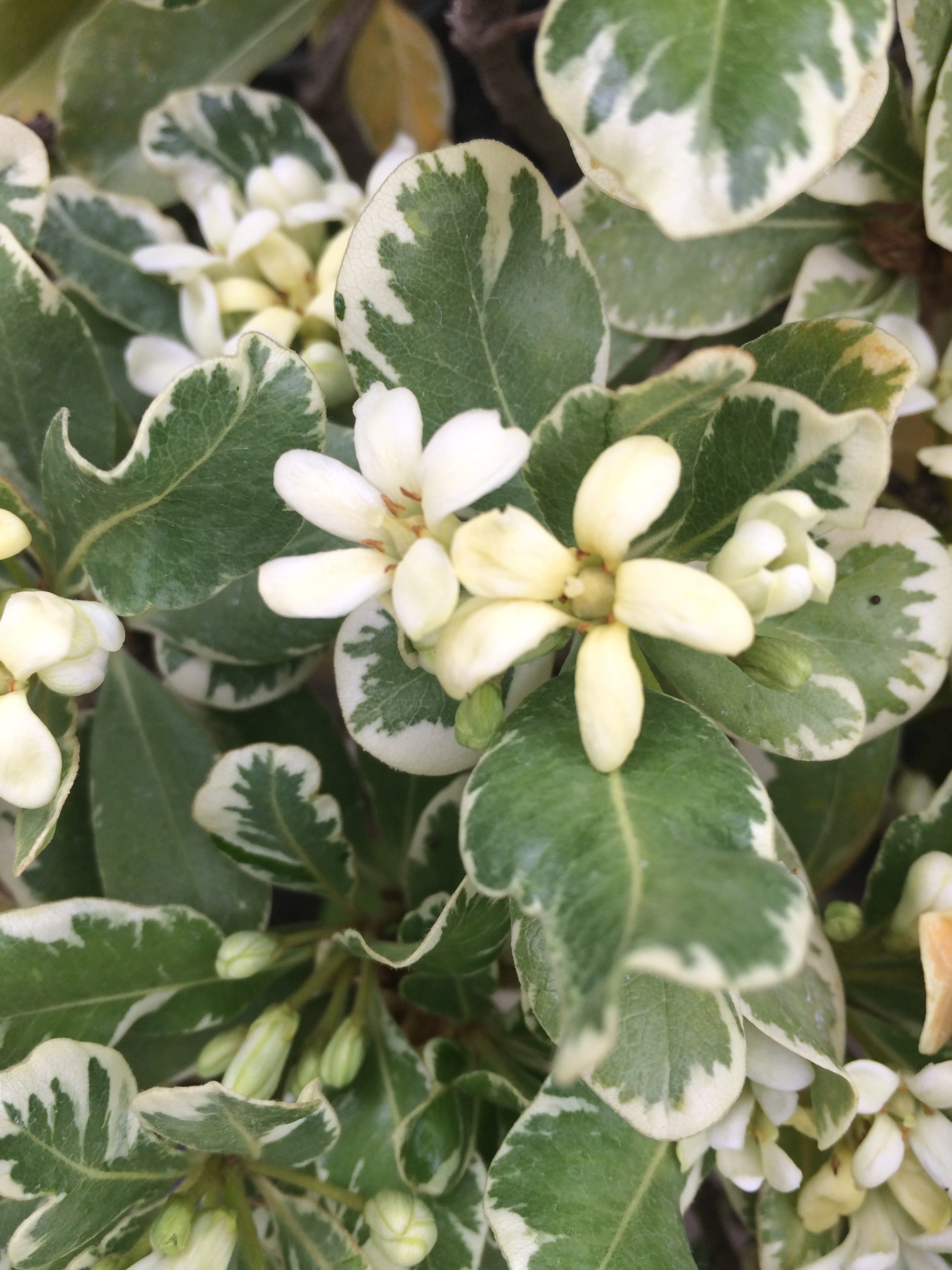
Walk past a pittosporum hedge and you might catch a faint, sweet fragrance drifting from its tiny hidden flowers. This shrub is a classic choice for Florida foundation plantings because it grows dense, stays tidy, and tolerates heat without complaint.
Variegated varieties add a splash of creamy white to the green, brightening shady corners beautifully. It responds well to shearing, so shaping it into neat hedges or topiaries is straightforward.
A little afternoon shade helps it stay its best during peak summer heat.
Walter’s Viburnum
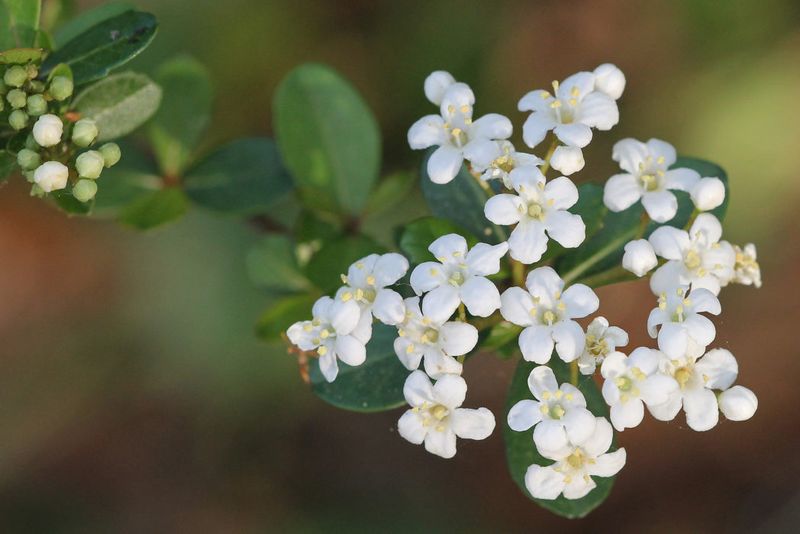
Walter’s viburnum is the native cousin to the more commonly planted viburnum species, and it brings something extra to the Florida yard. Clusters of small white flowers appear in spring, followed by dark berries that birds eagerly devour.
This shrub handles both wet and dry conditions, which is a rare and valuable trait in Florida’s unpredictable climate. It grows naturally into an upright, multi-stemmed form that looks great without heavy pruning.
Wildlife gardeners consider it an absolute must-have plant.
Clusia
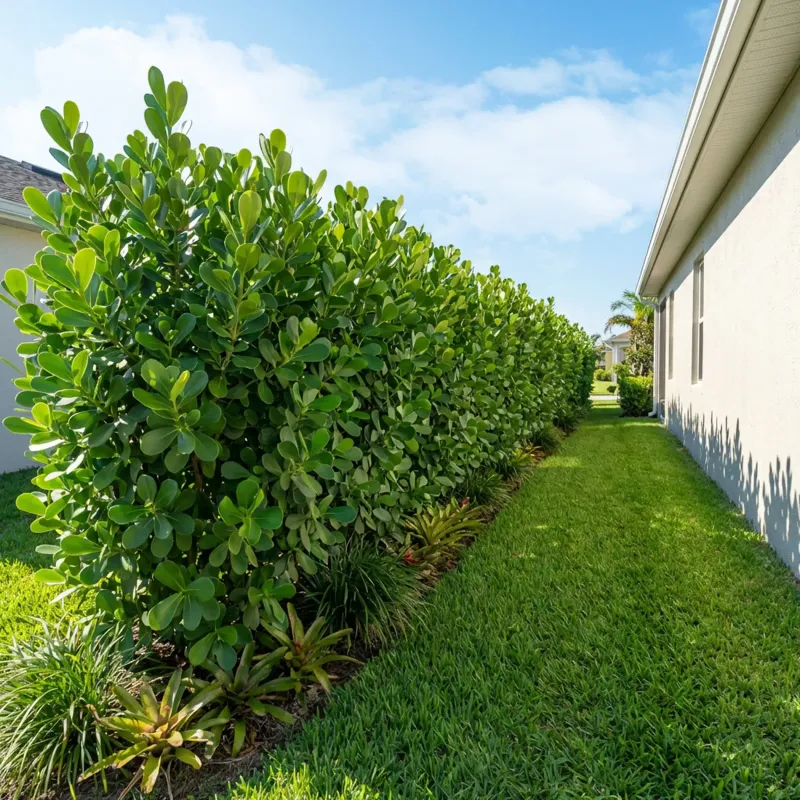
Clusia, sometimes called autograph tree, has leaves so thick and waxy you could practically write on them. That toughness translates directly into the landscape, where clusia performs as one of Florida’s most salt-tolerant and wind-resistant hedges.
It grows into a dense, impenetrable wall of dark green foliage that provides serious privacy. Clusia thrives in full sun and sandy coastal soils where other shrubs struggle.
Once established, it needs very little care beyond occasional trimming to maintain its shape.
Loropetalum
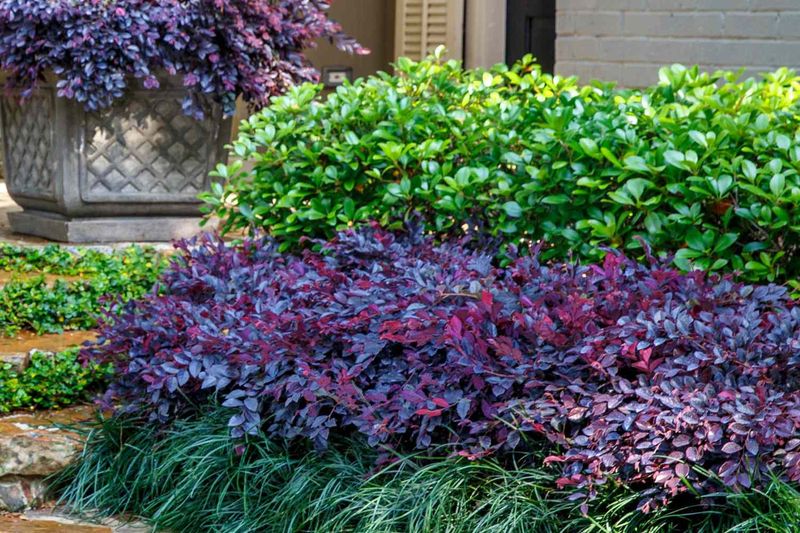
Purple foliage in a Florida yard? Loropetalum makes it happen in the most eye-catching way possible.
Its deep burgundy leaves hold their rich color year-round, creating a striking contrast against green lawns and light-colored homes.
In spring, the shrub erupts in fringe-like pink flowers that add another layer of drama to the display. It prefers slightly acidic soil and good drainage, which fits many Florida landscapes perfectly.
Loropetalum grows quickly and responds beautifully to light shaping after each bloom cycle.
Indian Hawthorn
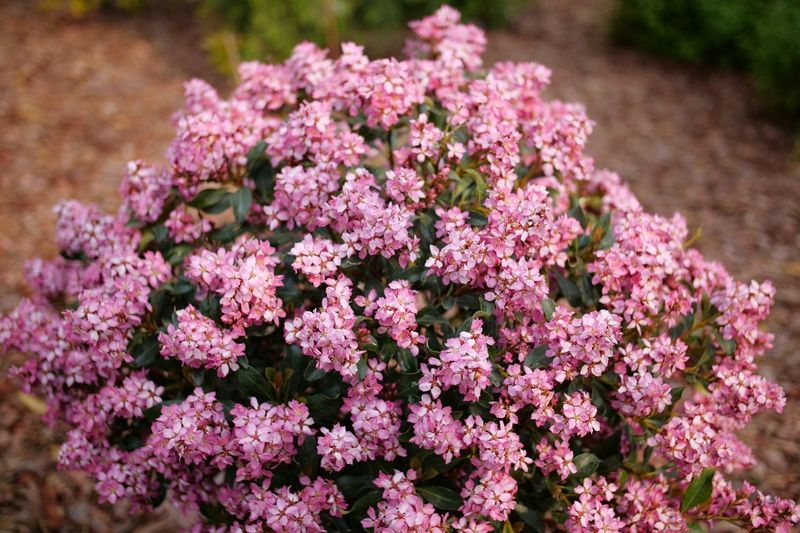
Indian hawthorn is that reliable, low-maintenance shrub that makes the front yard look polished without demanding much attention. Its compact, rounded form fits neatly into garden beds, borders, and foundation plantings across Florida.
Clusters of pink or white flowers bloom in spring, and small dark blue berries follow later in the season. It handles heat, drought, and salty coastal air with impressive ease.
Planting it in full sun with good drainage gives you the healthiest, most floriferous results.
Buttonbush
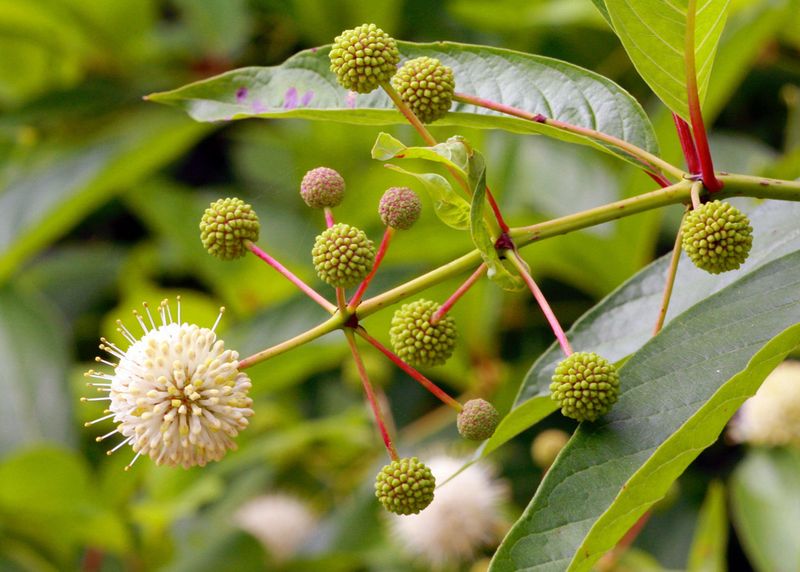
Buttonbush earns serious admiration from anyone who has ever watched a butterfly or bee circle its unique spherical white flower heads. Those globe-shaped blooms are genuinely unlike anything else in the Florida shrub world.
This native shrub thrives in wet or seasonally flooded areas, making it perfect for pond edges, rain gardens, and low-lying spots that other plants avoid. It stays evergreen in South Florida and semi-evergreen further north.
Pollinators rely on it heavily during the summer months.
Muhly Grass (Shrub Form)
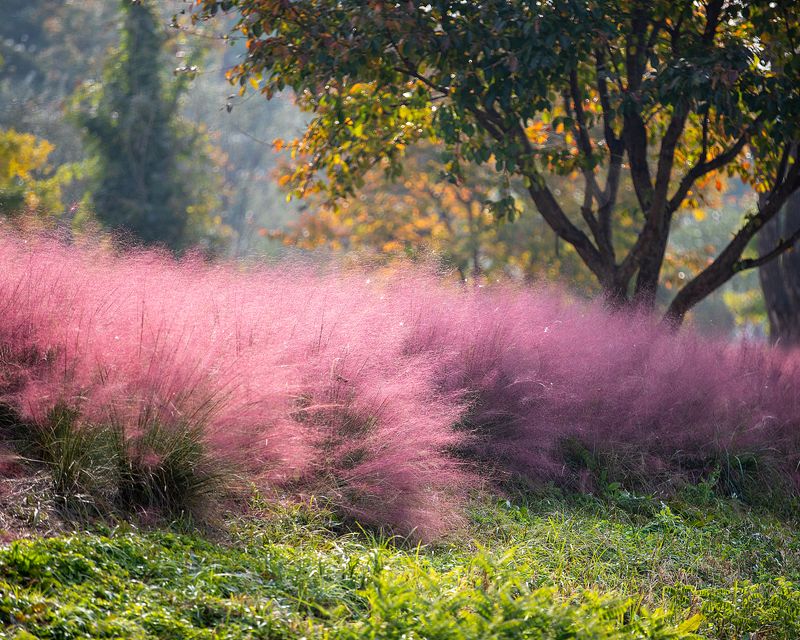
Technically a grass but used exactly like a structural shrub, muhly grass delivers one of the most spectacular autumn displays in any Florida yard. In fall, it explodes into a cloud of pink-purple plumes that catch the light like nothing else.
The rest of the year, its fine-textured green blades hold a neat, fountain-like form that adds softness to harder landscape elements. It thrives in full sun with very little water.
Cutting it back in late winter keeps it looking fresh and full each season.
Bottlebrush
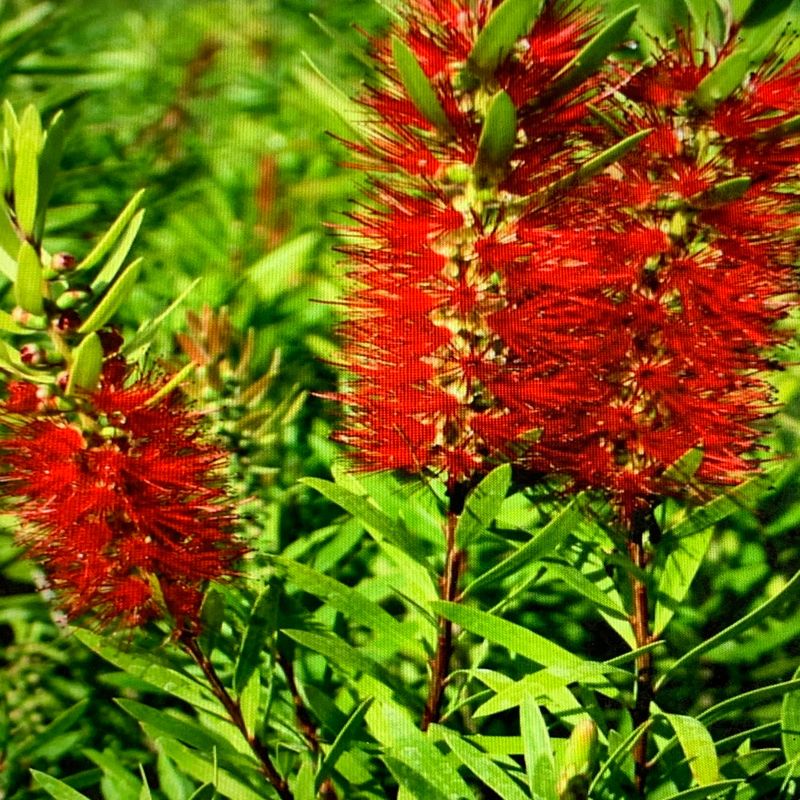
Bright red flower spikes shaped exactly like old-fashioned bottle brushes make this shrub one of the most recognizable in any Florida neighborhood. Hummingbirds are practically obsessed with those blooms, hovering around them from early spring through fall.
Bottlebrush grows into a large, upright shrub or small tree depending on how you train it. It handles heat, drought, and sandy soil without much fuss.
Planting it near a porch or patio gives you a front-row seat to all the hummingbird action.
Nandina (Heavenly Bamboo)
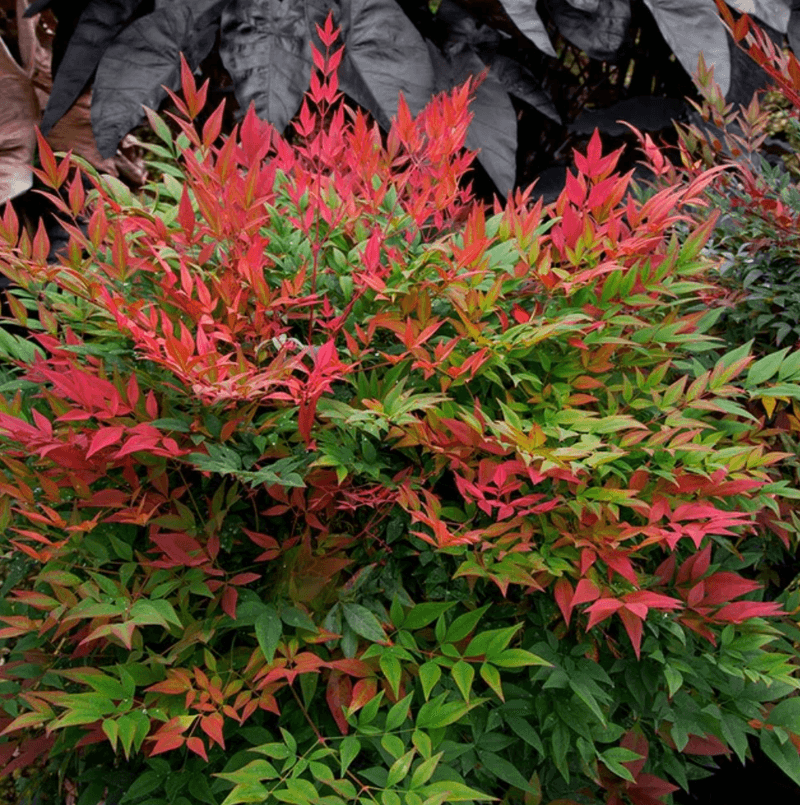
Nandina pulls off a neat trick by changing leaf color with the seasons while technically staying evergreen throughout the year. New growth flushes red in spring, matures to green in summer, then turns fiery red or orange again as temperatures drop in winter.
It grows in an upright, airy form that adds vertical interest without taking up much horizontal space. Clusters of bright red berries persist through winter, adding color when most plants look dull.
Compact varieties work especially well in smaller Florida gardens.
Dwarf Bougainvillea
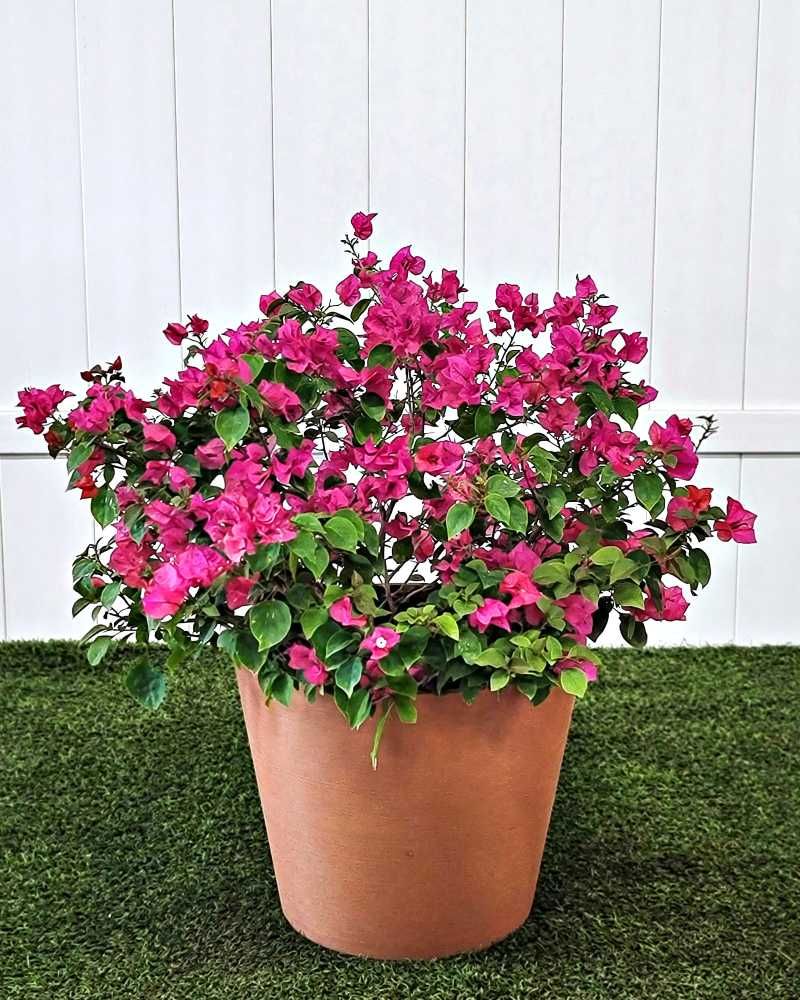
Few plants throw color around as boldly as a dwarf bougainvillea in full bloom. The papery bracts in shades of magenta, orange, pink, and red are so vivid they practically stop traffic when planted along a walkway or driveway.
Unlike its climbing cousins, the dwarf form stays manageable and works well in large containers or garden beds. It needs full sun and well-drained soil to perform its best.
Allowing it to dry out slightly between waterings actually encourages more spectacular blooming cycles.
Ixora
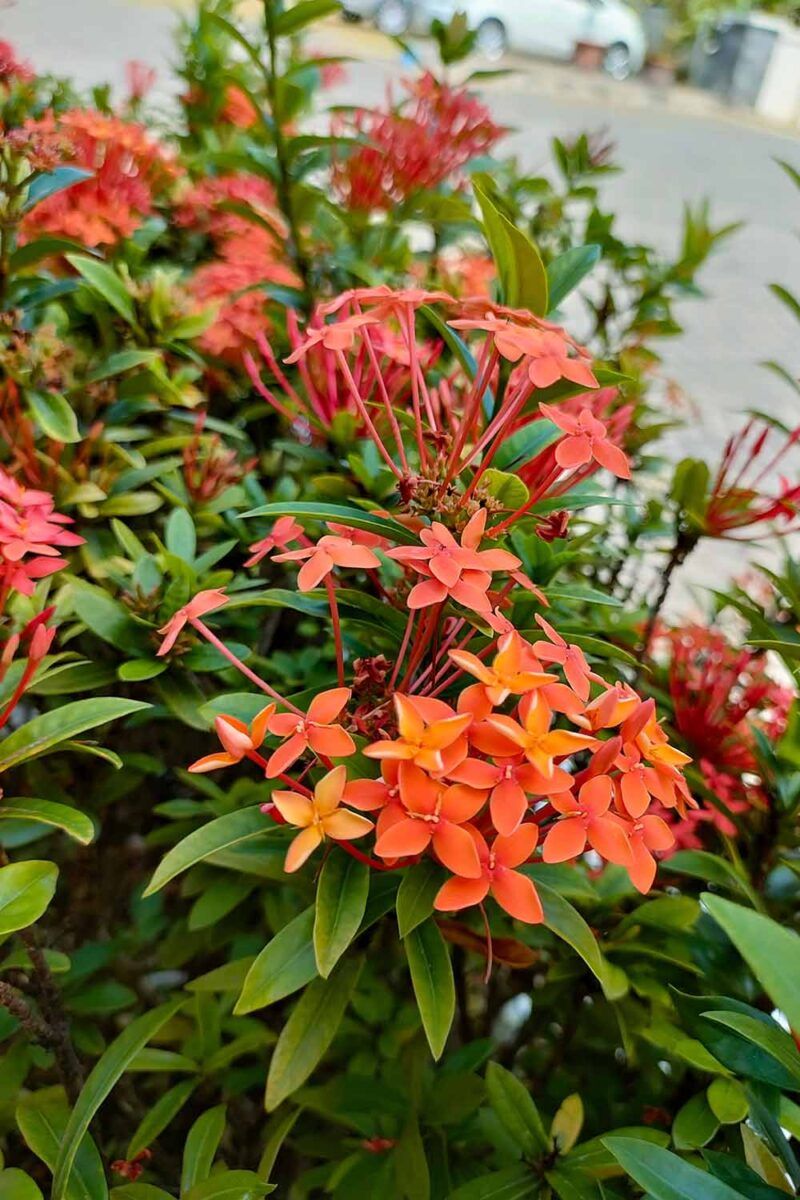
Ixora is practically synonymous with tropical Florida landscaping, and once you see it in full bloom you understand why. Dense, round clusters of tiny flowers in blazing shades of red, orange, yellow, and pink sit right on top of the glossy dark green foliage.
It blooms most heavily in warm months but can flower year-round in South Florida. Ixora loves acidic soil and full sun, so amending the soil with sulfur at planting time pays off quickly.
Compact varieties are perfect for low borders and container gardens.
Coontie
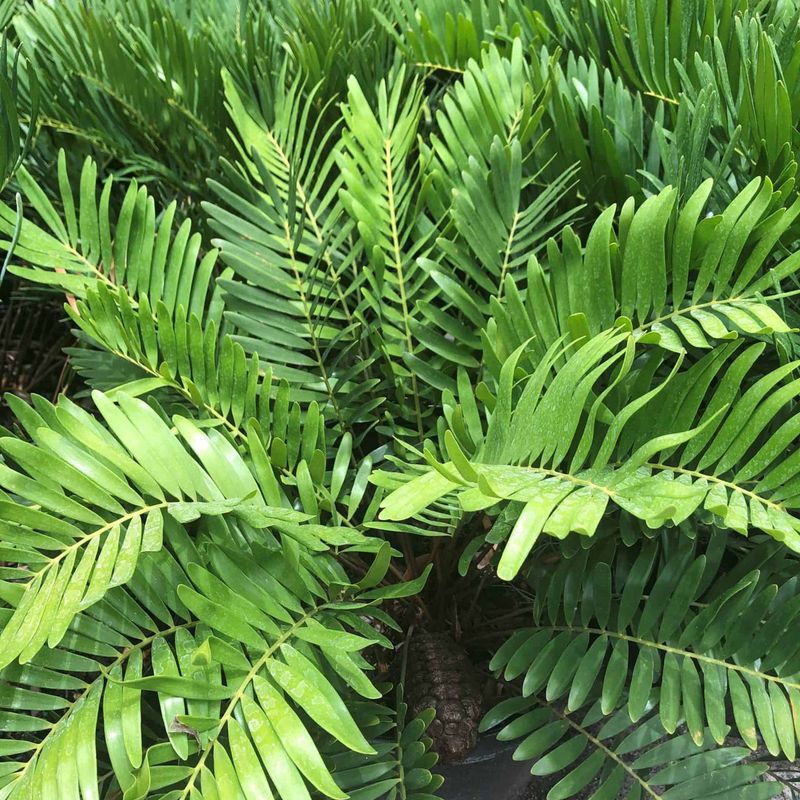
Coontie is not technically a shrub but a cycad, yet it fills the exact same role in the Florida landscape with remarkable effectiveness. Its dark, glossy, fern-like fronds create a lush, prehistoric look that works beautifully under pine trees and in shaded beds.
As Florida’s only native cycad, coontie is the exclusive host plant for the beautiful atala butterfly, which makes planting it an act of conservation. It tolerates drought, shade, and sandy soil.
Growth is slow but the payoff in structure and wildlife value is enormous.
Snowbush
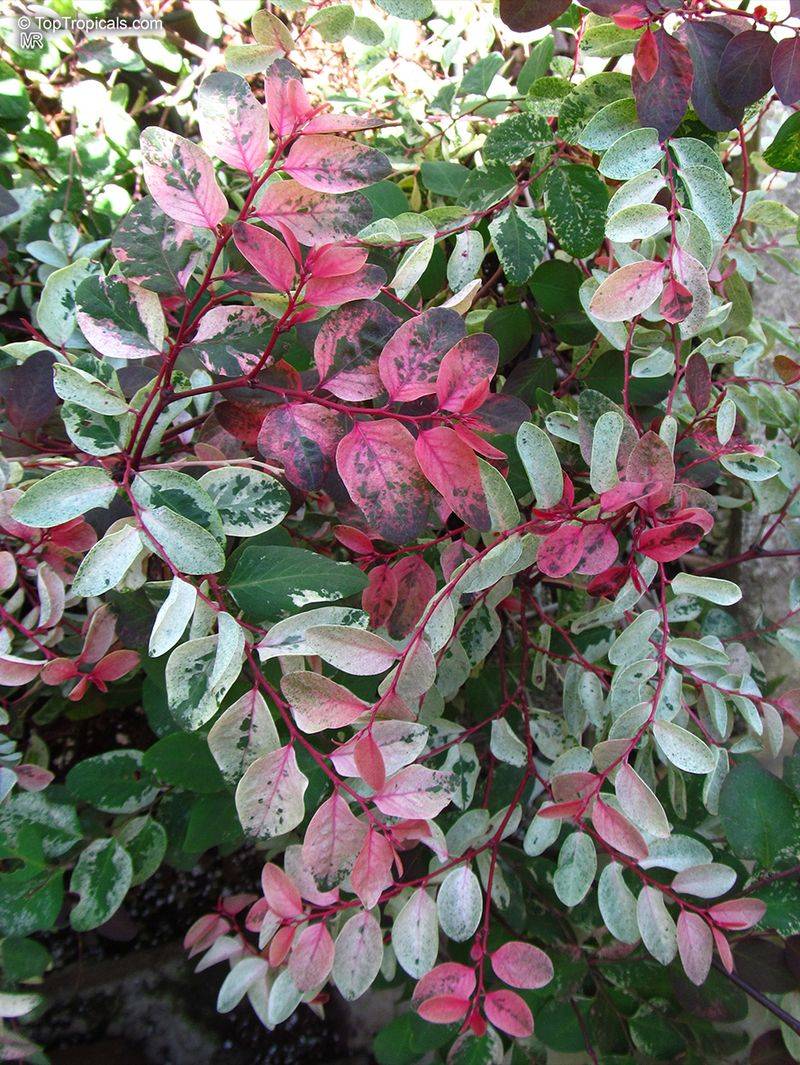
Snowbush looks like someone splashed white and pink paint across its leaves, and that wild variegation is exactly what makes it such a fun landscape plant. The foliage shifts in intensity with light levels, glowing almost neon-bright in full sun.
It grows quickly into a rounded, bushy form that fills garden beds with eye-catching color even when nothing else is in bloom. Snowbush prefers well-drained soil and full to partial sun.
Pinching back the tips occasionally encourages denser, more compact growth throughout the season.
Enjoyed this story?
Add Fast Food Club as a preferred source to see more of our reporting on Google.