


Living in Florida means you get to enjoy warm weather and sunshine almost year-round, which is great news for your yard. Even if your outdoor space is on the smaller side, the right plants can make it look lush, full, and surprisingly spacious.
Florida-friendly plants are chosen because they thrive in the heat, handle humidity well, and often need less water and care. Whether you are a beginner gardener or just looking for fresh ideas, these 23 plants are a fantastic place to start.
Dwarf yaupon holly
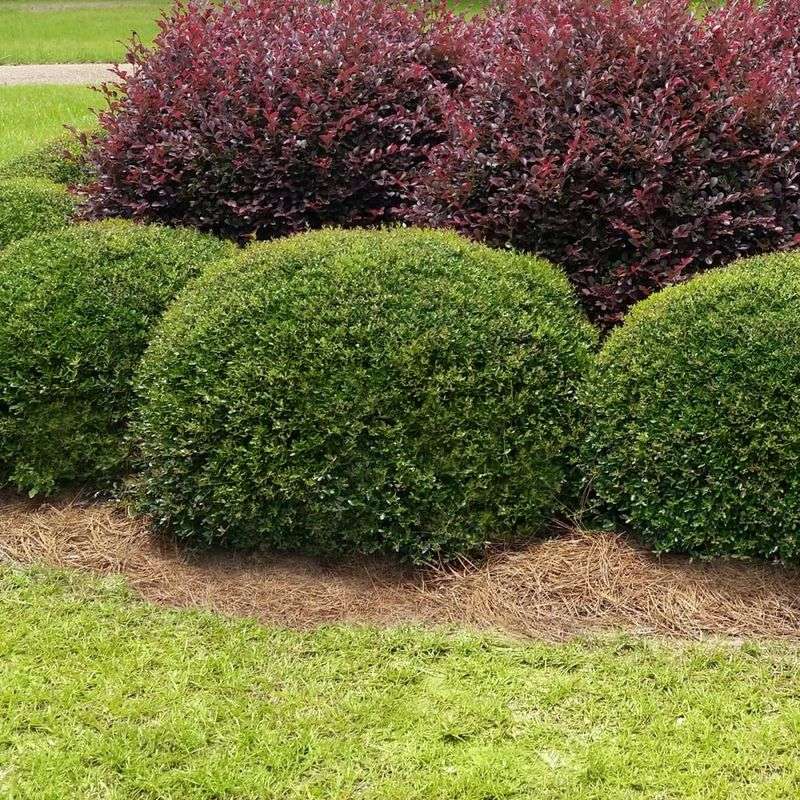
Tough, tidy, and surprisingly charming, the dwarf yaupon holly is one of Florida’s most reliable small shrubs. It stays compact without much pruning, which makes it ideal for tight spaces near walkways or fences.
Native to the southeastern United States, this plant handles drought, salt spray, and poor soil like a champ. Birds love its tiny red berries, so you get a little wildlife action too.
Plant it once and enjoy it for years with almost zero fuss.
Coontie
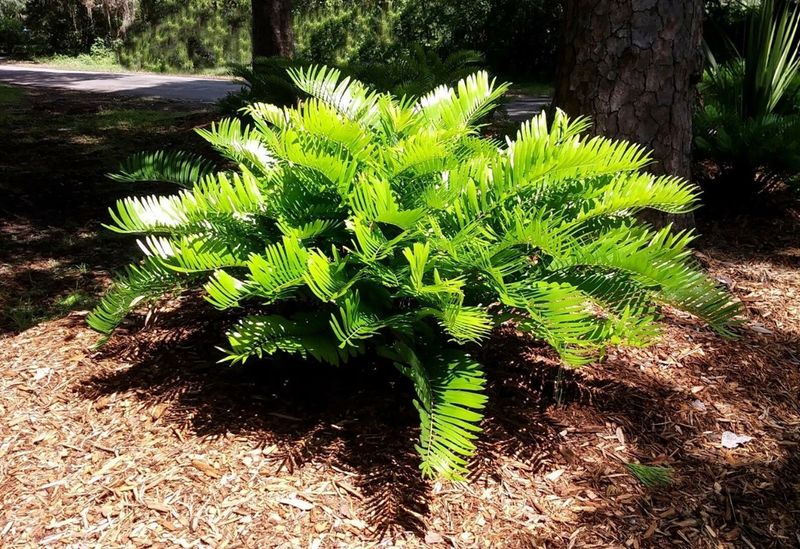
Meet Florida’s only native cycad — the coontie. It looks like a small palm but stays low and tidy, rarely growing taller than three feet.
That makes it a natural fit for compact yards where you want texture without bulk.
Coontie is the host plant for the rare atala butterfly, so planting it actually helps local wildlife. It tolerates drought and shade, which means you can tuck it almost anywhere.
Old-Florida charm wrapped in a tough, dependable package.
Muhly grass
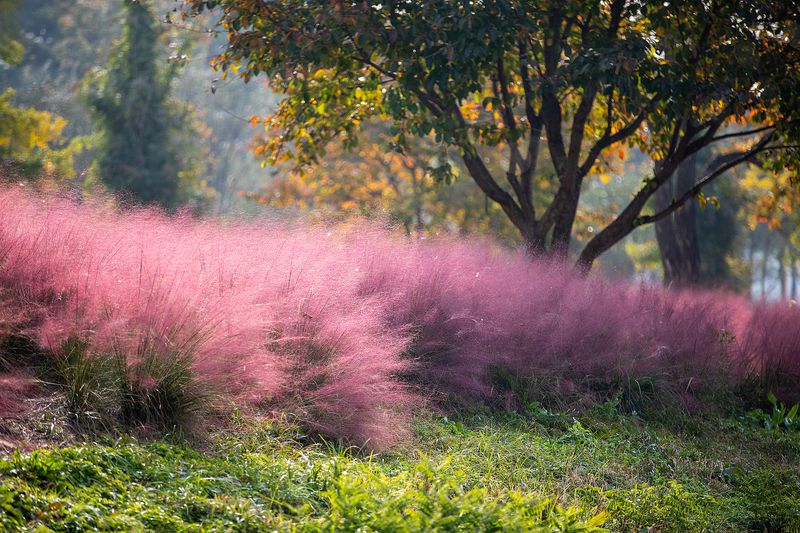
Every fall, muhly grass puts on a show that stops people in their tracks. Its soft, cotton-candy-pink plumes rise up like a cloud above the green blades, creating a dramatic effect that makes any small yard look like a curated garden.
Beyond the beauty, muhly grass is incredibly low-maintenance. It thrives in full sun, resists drought once established, and does not need much fertilizer.
Cut it back in late winter and it bounces back every season without complaint.
Blue daze
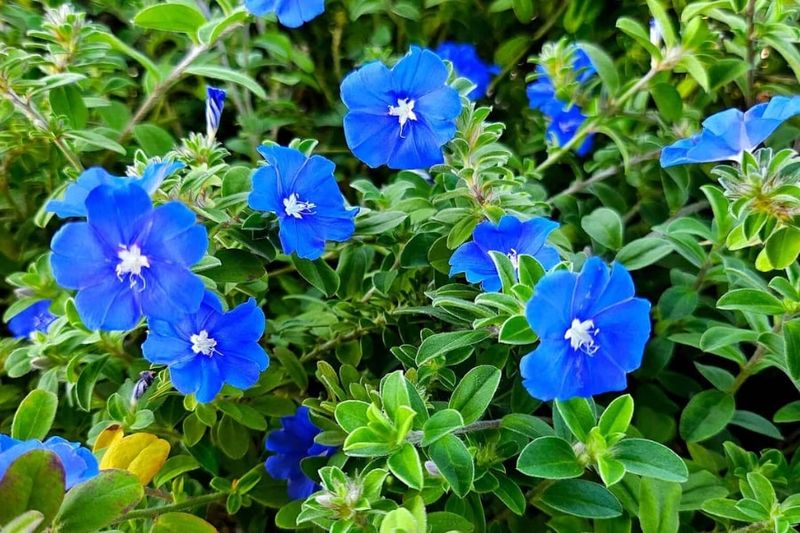
If a plant could bottle up a Florida sky, it would look like blue daze. Those delicate, sky-blue flowers open each morning and create a soft, spreading carpet of color that makes small garden beds feel wide and airy.
Blue daze loves full sun and handles heat and humidity without breaking a sweat. It works beautifully as a ground cover, spilling over the edges of garden beds or containers.
Just give it well-drained soil and it will reward you all season long.
Society garlic
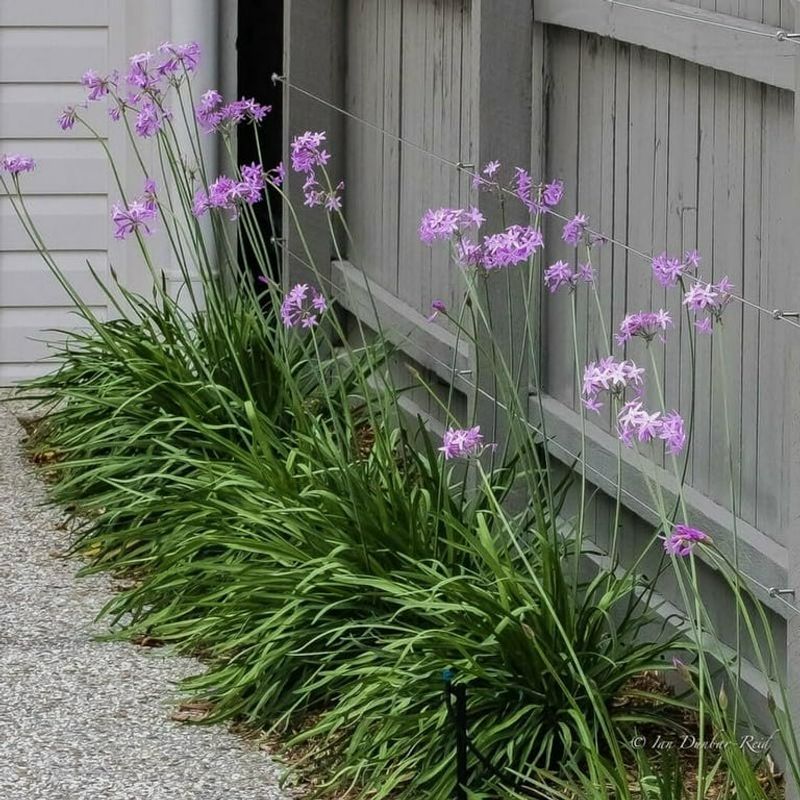
Society garlic has a fun backstory — it smells like garlic when you brush against it, but the flowers are so pretty that people still wanted it at fancy garden parties, hence the name. The lavender-purple blooms sit on tall, slender stalks and add elegant vertical interest to small yards.
It thrives in full sun with minimal water and actually repels mosquitoes and other pests naturally. For a Florida yard, that is practically a superpower.
Plant it along borders for long-lasting color and function.
Liriope
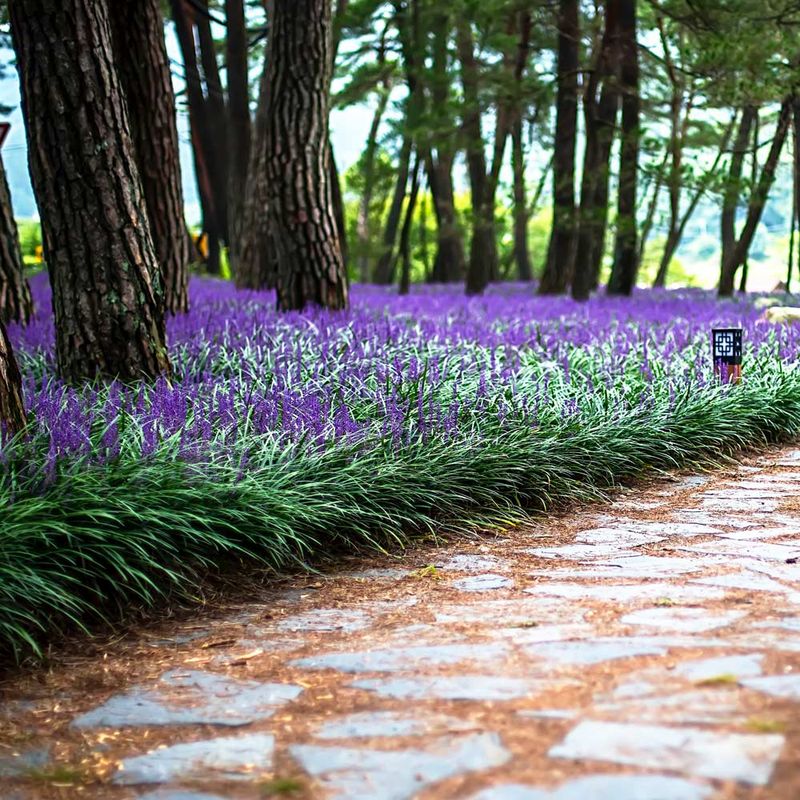
Liriope is the unsung hero of Florida landscaping. Often used as a border or edging plant, its grass-like leaves stay green year-round and create clean, defined lines that make small yards look more organized and intentional.
In late summer, it sends up small spikes of purple or white flowers that add a quiet, understated charm. It tolerates shade, drought, and even poor soil — basically the conditions that would defeat most plants.
Liriope does not demand attention; it just quietly gets the job done.
Dwarf mondo grass
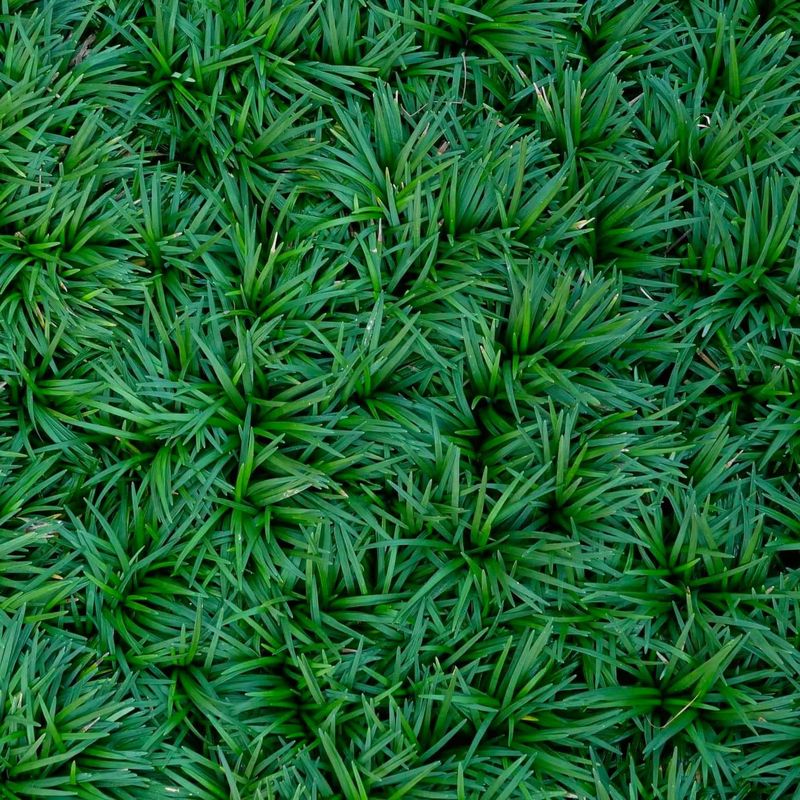
Think of dwarf mondo grass as the miniature version of a lawn that never needs mowing. It grows only a few inches tall and spreads slowly to form a dense, dark green mat that looks polished and tidy between stepping stones or under trees.
Shade is where this plant truly shines — it handles low light far better than most ground covers. Maintenance is nearly nonexistent once it is established.
For small shaded yards that feel bare and dull, dwarf mondo grass is a quiet game-changer.
Sunshine mimosa
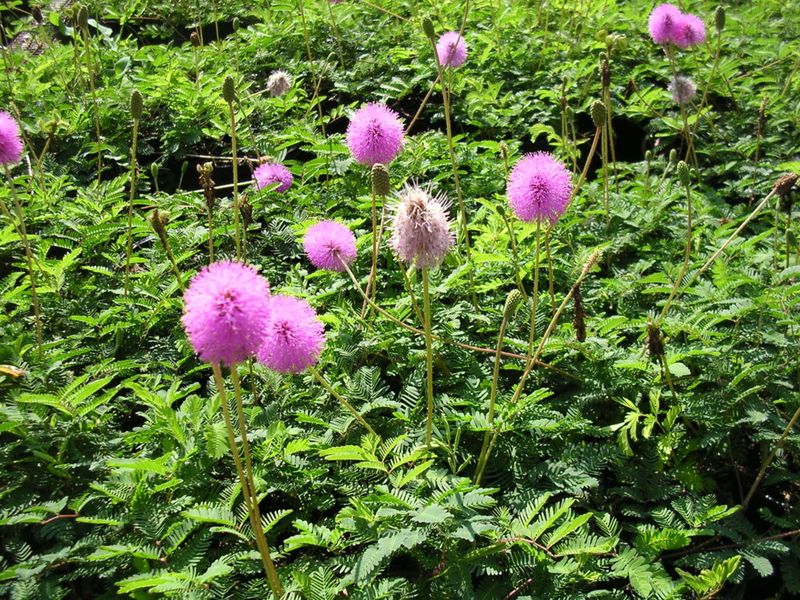
Touch the leaves of sunshine mimosa and they fold up like tiny sleeping hands — which is endlessly fascinating, especially for kids. This native Florida ground cover spreads low and wide, covering bare patches with feathery green leaves and cheerful pink pompom flowers.
It handles full sun and dry conditions remarkably well, making it a smart choice for areas where grass struggles to grow. Pollinators absolutely love it.
For a small yard that needs a fun, eco-friendly ground cover, sunshine mimosa delivers personality and practicality in equal measure.
Asiatic jasmine
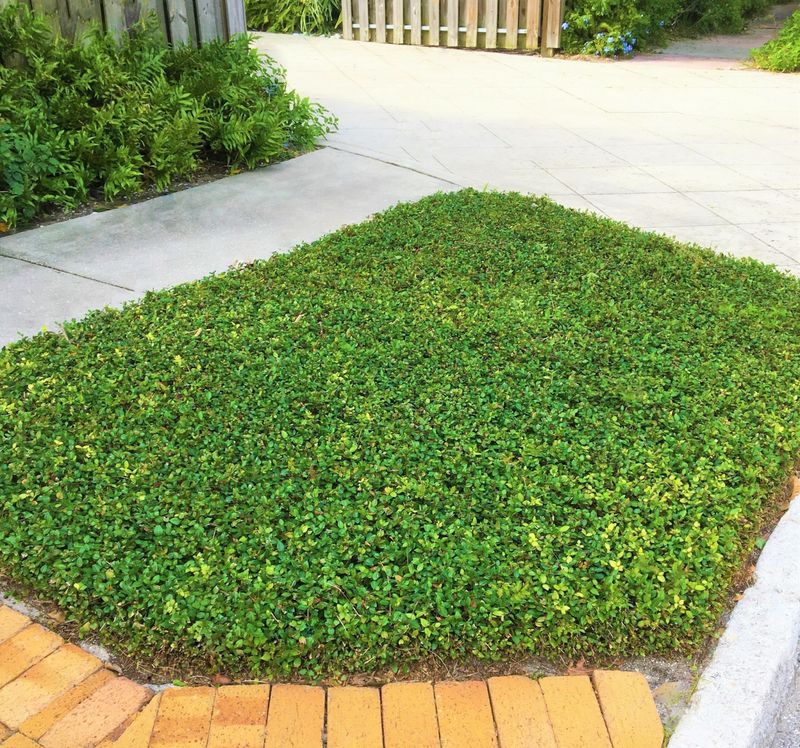
Asiatic jasmine is the dependable workhorse of Florida ground covers. It forms a thick, glossy carpet of small dark green leaves that chokes out weeds and fills in bare spots under trees or along slopes where grass refuses to grow.
Unlike some jasmine varieties, this one does not produce a strong scent, but it does stay evergreen and requires very little water once established. It spreads steadily without becoming invasive.
For a low-care, high-impact ground cover in tight spaces, Asiatic jasmine is hard to beat.
Bromeliad
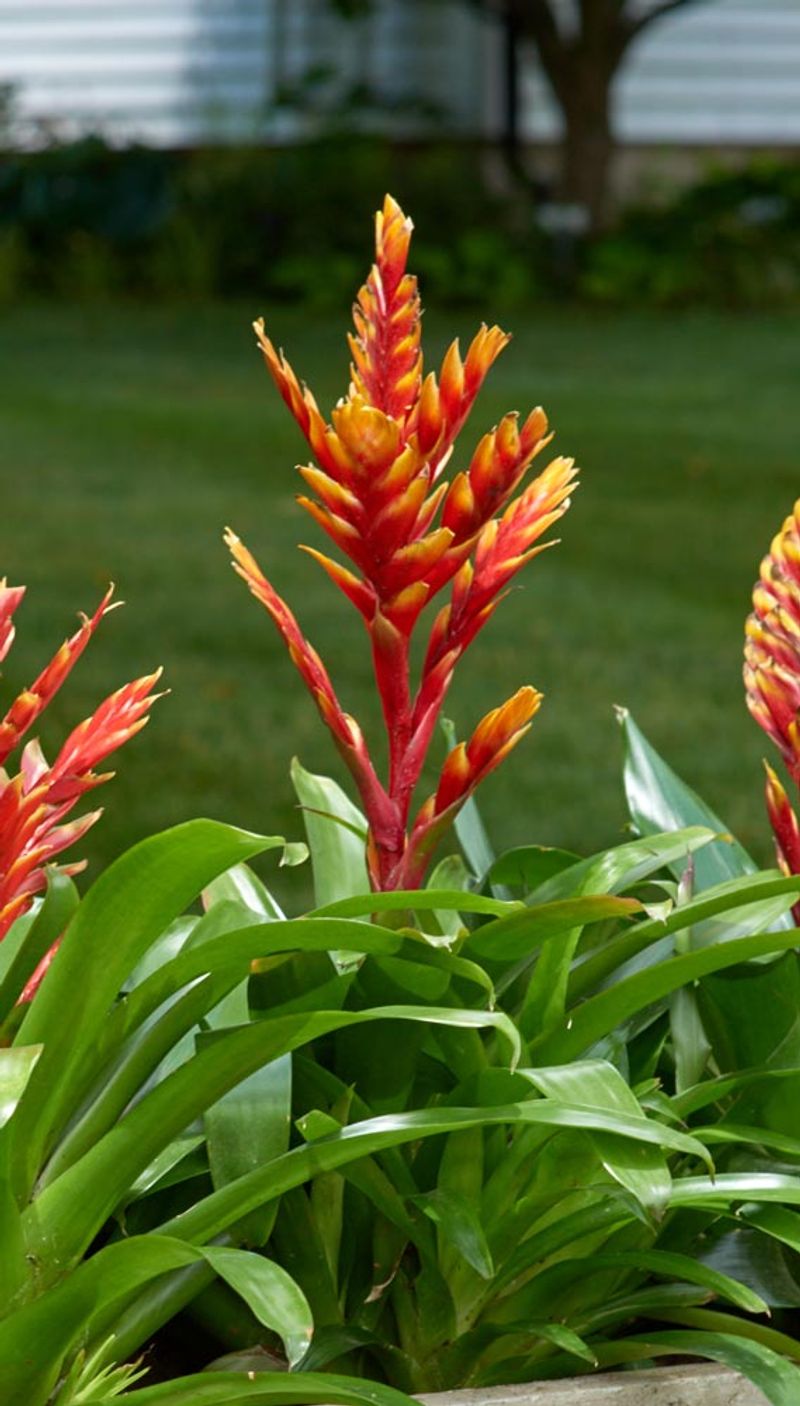
Bromeliads are the tropical showstoppers of the Florida garden world. Their bold, cup-shaped rosettes come in every color imaginable — blazing red, sunset orange, electric pink — and they hold their color for months at a time without any special care.
They thrive in shade or partial sun, which makes them perfect for small yards where big trees block direct light. Most varieties need almost no soil to survive and can even grow on tree branches or decorative logs.
Pure tropical drama with minimal effort.
Caladium
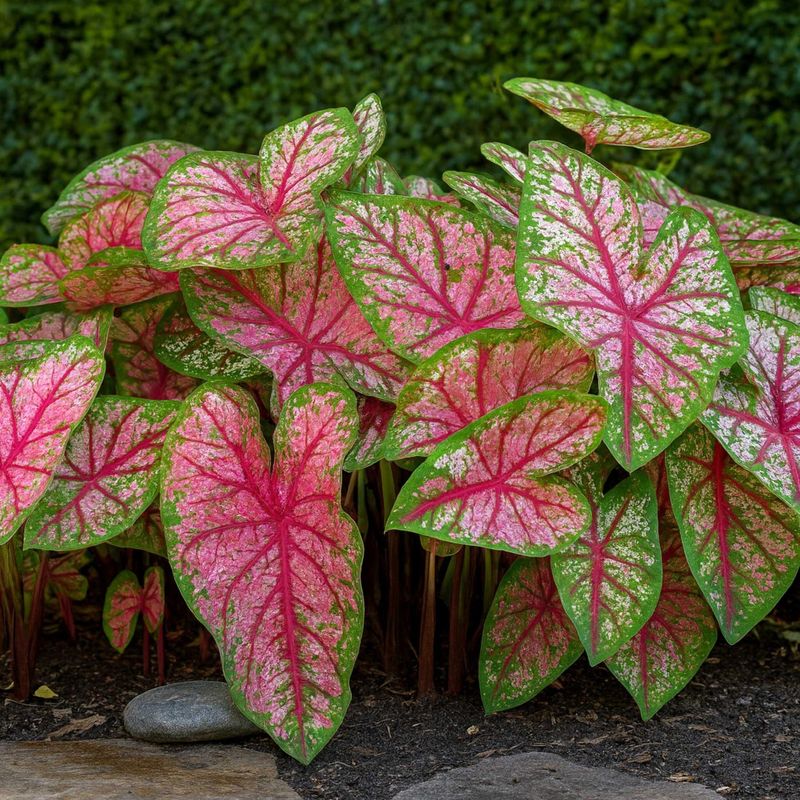
Few plants can match the caladium for sheer leaf drama. Those enormous heart-shaped leaves come painted in combinations of white, pink, red, and green that look almost too perfect to be real.
In shaded Florida gardens, they light up dark corners like living art.
Caladiums grow from bulbs and come back year after year in Florida’s warm climate. They prefer shade or filtered light and need consistent moisture to look their best.
Pair them with ferns or bromeliads for a layered, lush tropical look that makes small spaces feel like a jungle retreat.
Cast iron plant
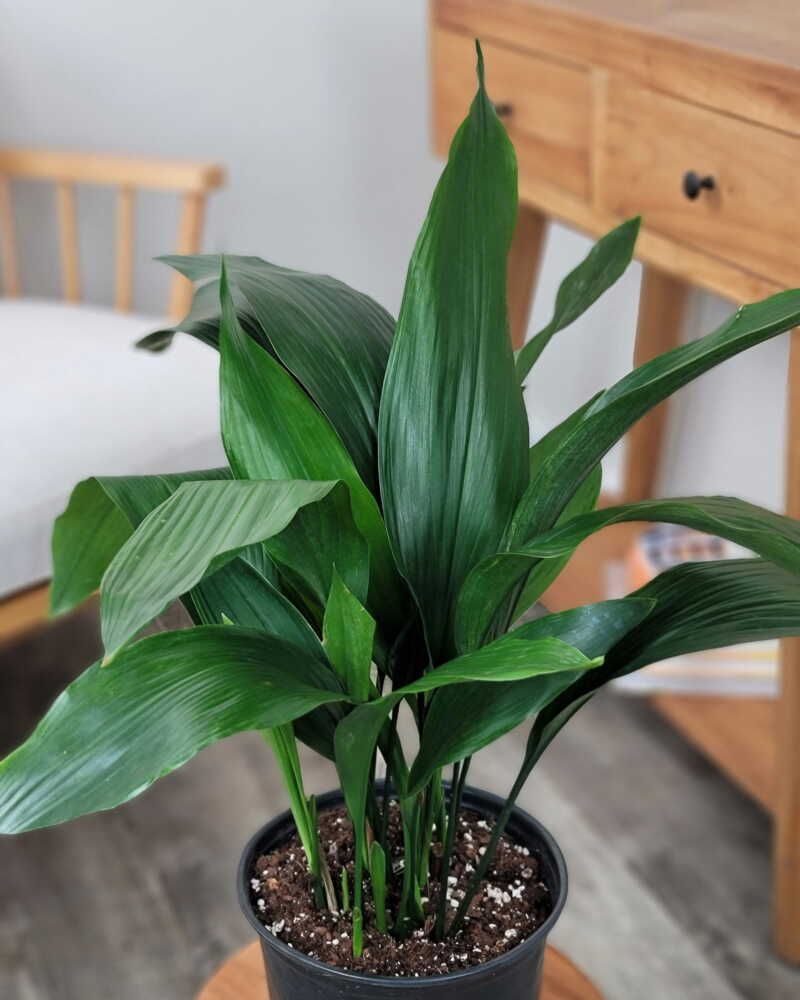
Its name says it all. The cast iron plant is practically indestructible — it handles deep shade, drought, poor soil, and neglect with zero complaints.
For those shady corners of a small yard where nothing else seems to grow, this plant steps up without hesitation.
The long, arching dark green leaves create a bold, architectural look that adds structure and depth to any garden space. It grows slowly, which is actually a bonus in tight areas since it will not take over.
Plant it once, forget about it, and enjoy the results for decades.
Dwarf firebush
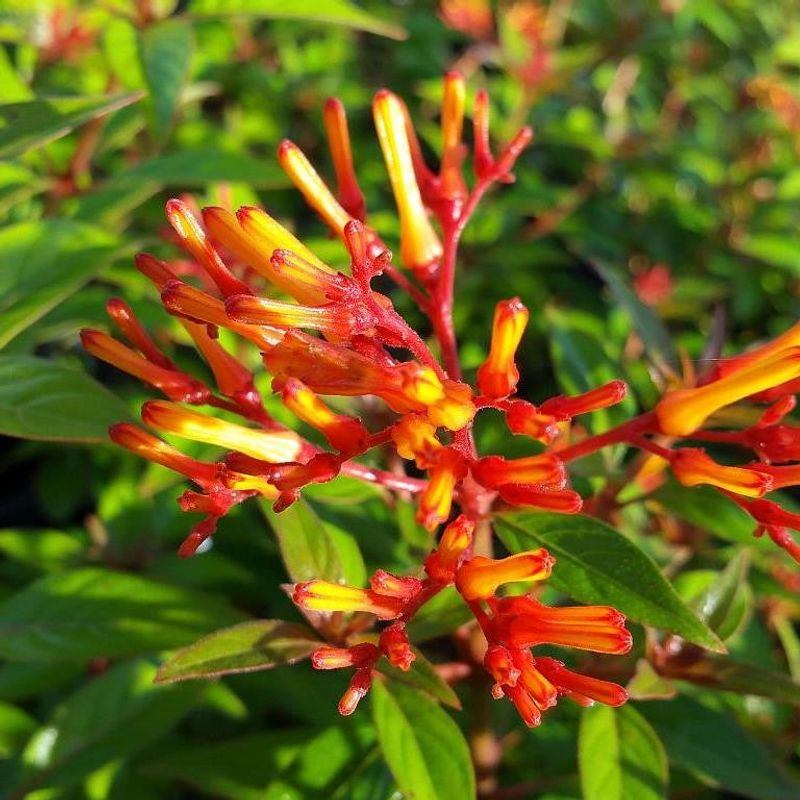
Hummingbirds and butterflies treat dwarf firebush like their personal favorite restaurant. The tubular orange-red flowers bloom almost nonstop in Florida’s warm climate, creating a constant buzz of winged visitors that bring a small yard to life in the best possible way.
Unlike the full-sized firebush, the dwarf variety stays compact and manageable — usually under four feet tall. It loves full sun and handles heat and drought with ease.
For a wildlife-friendly, low-maintenance pop of color in a small Florida yard, few plants compete with this one.
Dwarf ixora
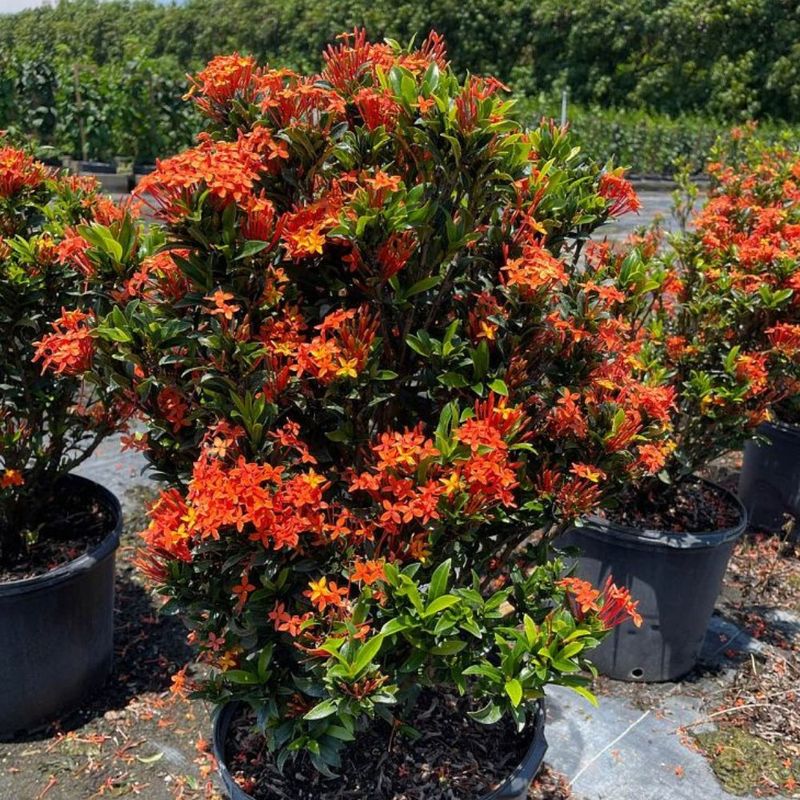
Walk past a dwarf ixora in full bloom and it is hard not to stop and stare. The tightly packed clusters of tiny flowers in shades of red, orange, or yellow sit against shiny dark green leaves, creating a contrast that is genuinely eye-catching in any garden setting.
Staying under three feet tall, this compact shrub is well-suited for small yards, foundation plantings, and container gardens. It prefers acidic, well-drained soil and full to partial sun.
Regular light trimming keeps it looking neat and encourages even more blooms throughout the year.
Compact podocarpus
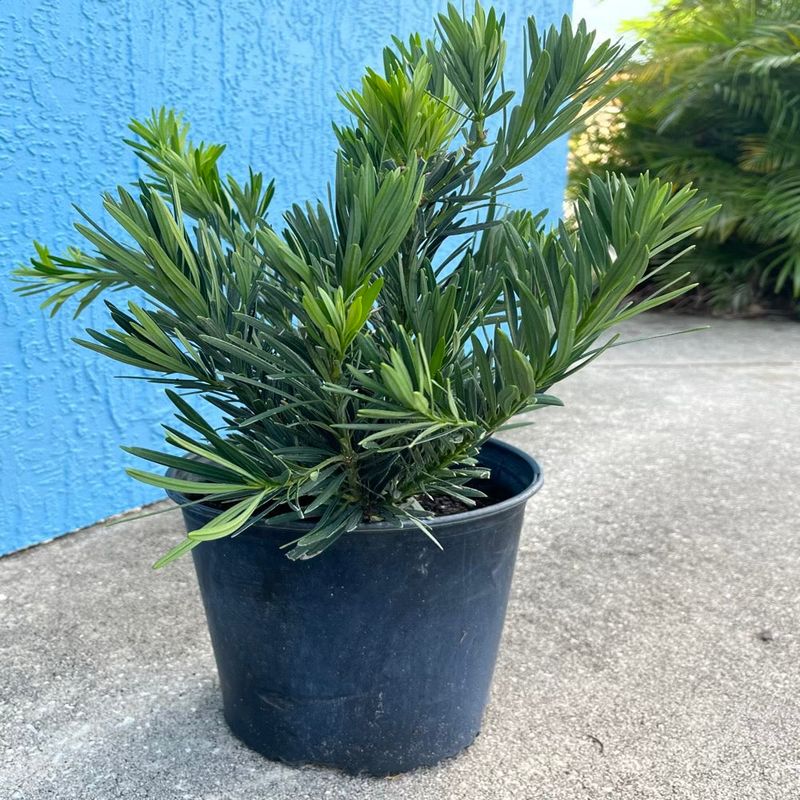
Compact podocarpus is the plant that quietly defines a space without stealing the spotlight. Its dense, fine-textured dark green foliage responds beautifully to shearing, making it one of the best choices for formal hedges, privacy screens, or shaped topiaries in small Florida yards.
It tolerates shade, salt, and drought far better than many traditional hedge plants. Growth is moderate, so it stays manageable without constant trimming.
For homeowners who want clean lines and a polished, structured look in a limited space, this plant is a reliable and elegant solution.
Plumbago
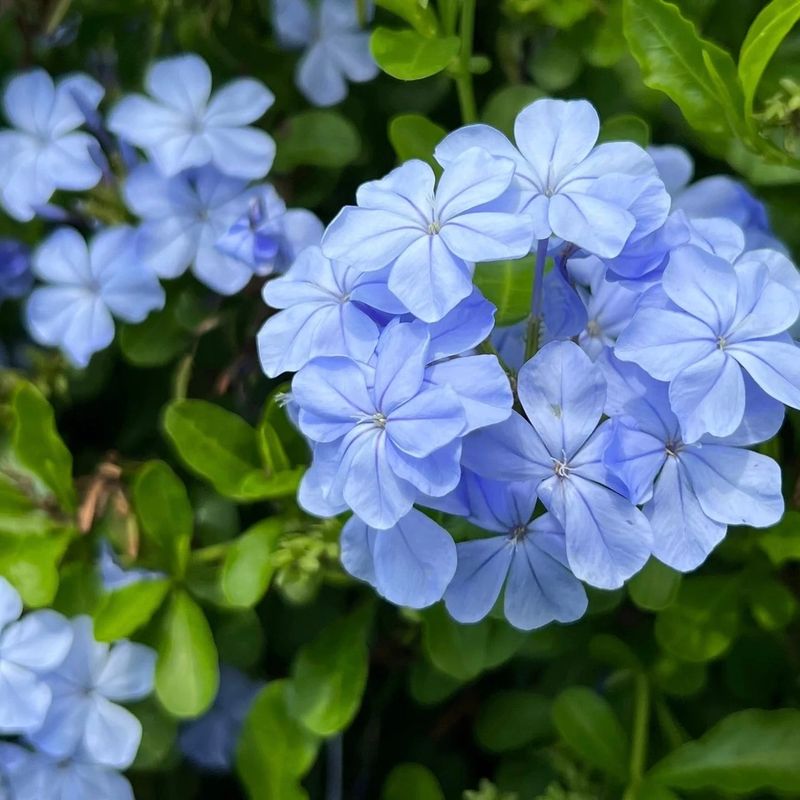
There is something almost magical about plumbago in full bloom. Those clusters of pale sky-blue flowers seem to float above the foliage, creating a soft, dreamy effect that makes even a small garden feel open and breezy.
It blooms for months and months in Florida’s long warm season.
Plumbago grows vigorously in full sun and handles heat with ease. It can be kept as a tidy shrub with occasional pruning or allowed to sprawl slightly for a more relaxed look.
Either way, the butterflies will find it and you will be glad you planted it.
Mexican heather
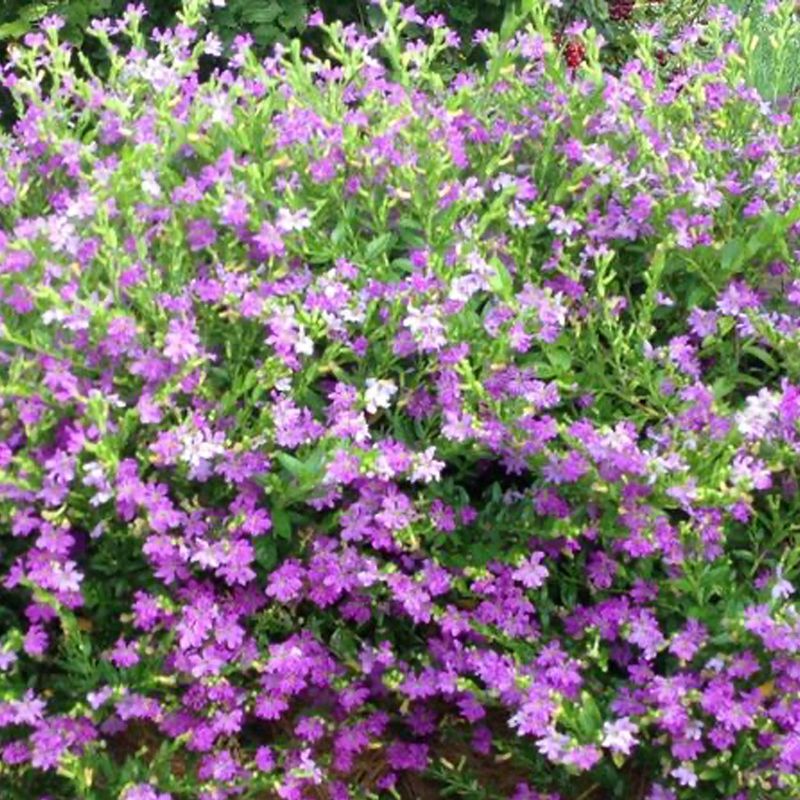
Mexican heather earns its keep by blooming almost constantly throughout Florida’s growing season. Its tiny purple, pink, or white flowers are dainty and delicate, but they show up in such numbers that the plant always looks like it is celebrating something.
It stays low — usually under two feet — making it a natural choice for front borders, edging, or filling gaps between larger plants. Full sun and good drainage are all it really asks for.
Butterflies adore it, and it pairs beautifully with blue daze or society garlic for a colorful combination.
Cuphea
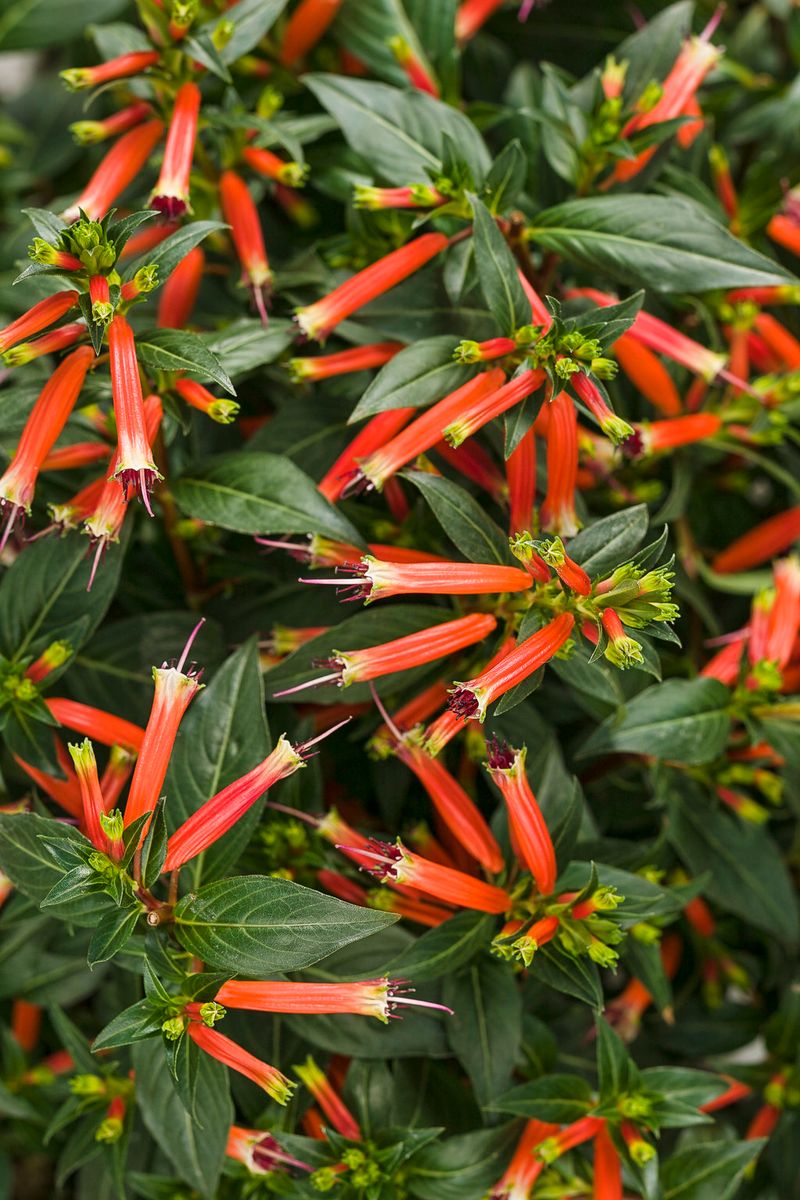
Hummingbirds cannot resist cuphea, and once you see this plant in action, you will understand why. The tiny tubular flowers — often called cigar plants because of their shape — bloom in bright shades of red, orange, and purple practically nonstop from spring through fall.
Cuphea stays compact and bushy, usually topping out around two feet, which is ideal for small yards and container gardens. It thrives in full sun and handles Florida’s heat without wilting.
For a plant that combines wildlife value, long bloom time, and easy care, cuphea checks every box.
Bird’s nest fern
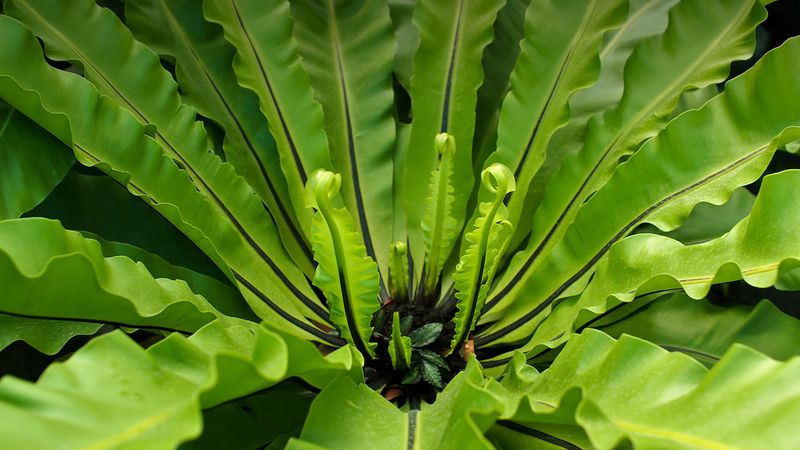
Imagine a plant that looks like a giant, perfectly arranged bouquet sitting on the forest floor — that is essentially a bird’s nest fern. The wide, wavy, bright green fronds unfurl from a central rosette in a way that feels both dramatic and surprisingly elegant.
It thrives in shade and humidity, which means it is practically made for Florida’s shadier garden spots. Indoors or on a covered patio, it looks stunning in a hanging basket or large pot.
Keep the soil consistently moist and avoid direct sun to keep those gorgeous fronds looking their best.
Foxtail fern
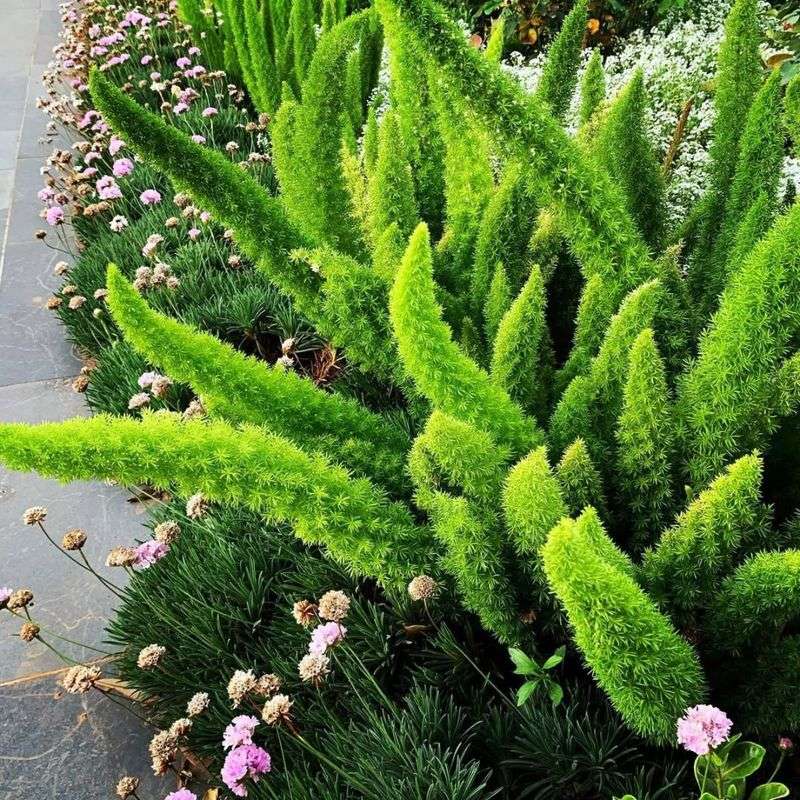
Foxtail fern does not look like a typical fern — and that is exactly what makes it so interesting. Its arching stems are covered in dense, bright green needle-like leaves that bunch together into soft, cylindrical shapes that genuinely resemble a fox’s tail.
The texture is unlike almost anything else in the garden.
It handles sun or partial shade and is surprisingly drought-tolerant once established. Use it as a focal point in a container, a textural accent in a garden bed, or a cascading element over a wall.
It adds a playful, unexpected quality to small Florida landscapes.
Oyster plant
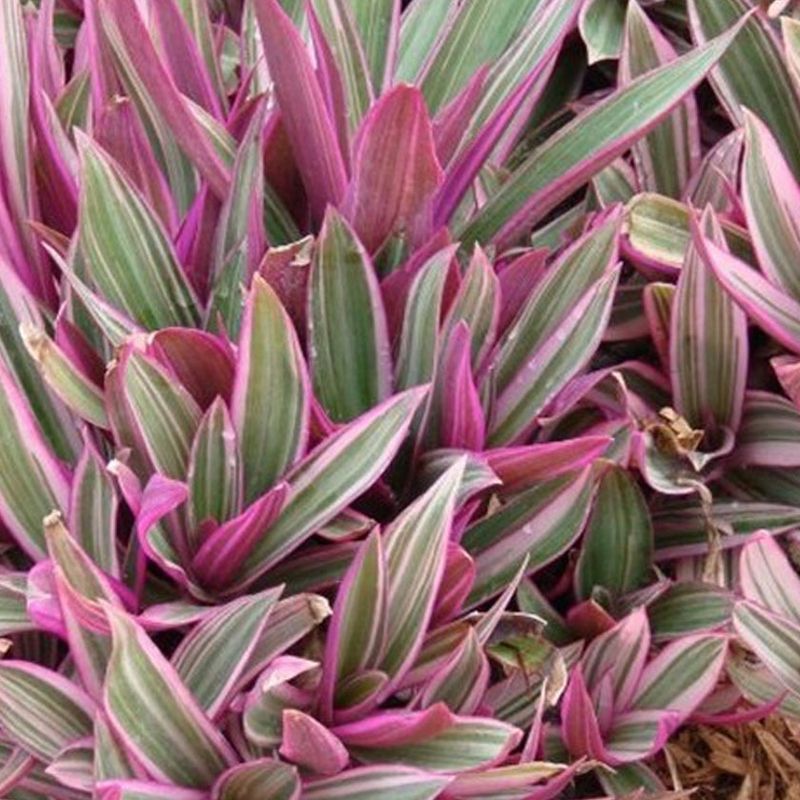
Flip an oyster plant leaf over and you find a rich, jewel-toned purple that looks almost painted on. The top side is deep green, creating a two-toned effect that gives garden beds a layered, sophisticated look without any extra effort.
It is one of those plants that rewards close inspection.
Also called Moses-in-the-cradle, it spreads steadily to form a dense ground cover that suppresses weeds effectively. It tolerates shade, drought, and heat — a true Florida survivor.
Pair it with caladiums or bromeliads to create a bold color combination that transforms even the smallest garden corner.
Persian shield
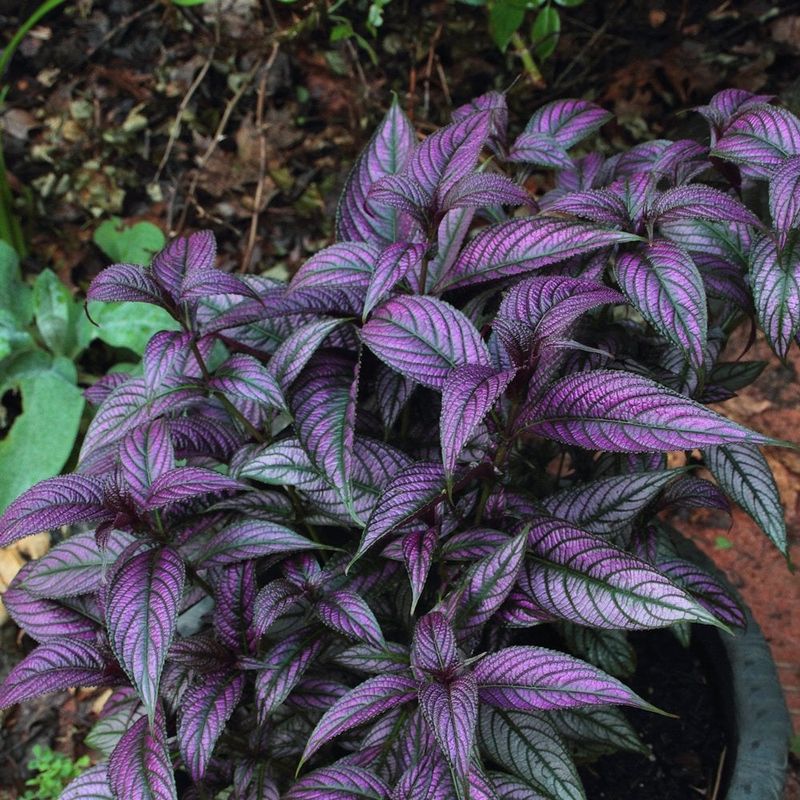
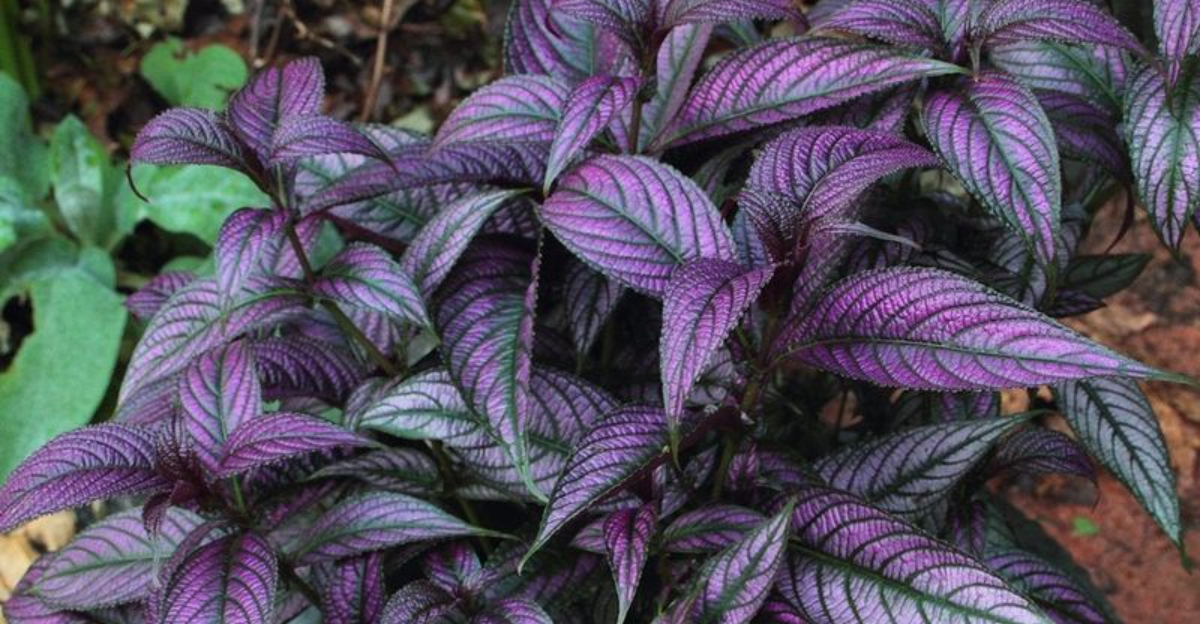
Persian shield is the plant that makes people stop mid-stride and ask, is that real? The leaves shimmer with an iridescent purple and silver sheen that shifts in the light like oil on water.
No filter needed — this plant is genuinely that striking straight from the garden.
It prefers partial shade and consistent moisture, which fits perfectly under Florida’s larger trees or on a shaded patio. It works beautifully in containers or as a bold accent among green-leafed plants.
Just one or two specimens can completely transform the visual impact of a small yard.
Miniature agave
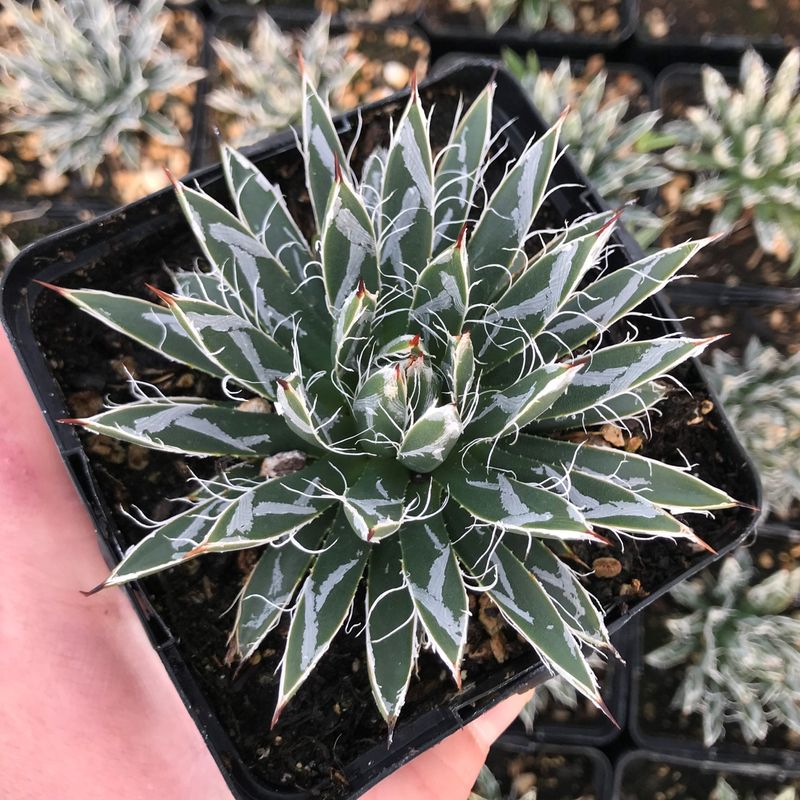
For a small yard that needs a sculptural, architectural focal point, the miniature agave delivers big impact in a tiny footprint. Its tight rosette of thick, pointed leaves has a geometric perfection that looks almost designed rather than grown.
It brings a bold, desert-meets-tropics aesthetic to Florida gardens.
Full sun and excellent drainage are its only real requirements. It is incredibly drought-tolerant and virtually pest-free, making it one of the lowest-maintenance plants on this list.
Use it in rock gardens, raised beds, or decorative containers for a sleek, modern look that stands out all year.
Enjoyed this story?
Add Fast Food Club as a preferred source to see more of our reporting on Google.