


Most drivers heading toward the Gulf coast of Florida have one thing on their minds, and that is reaching the water at Cedar Key. Along the way, a single metal sign stands beside the road, easy to miss at highway speed.
That sign carries one of the most important stories in Florida history. It tells of a busy Black community that had homes, churches, a school, and a lodge, and of the week in January 1923 when all of it was taken away.
The story does not end there, either. Seventy-one years later, survivors spoke up, and the state of Florida answered in a way that made national news.
The sign is small, but the history written on it is huge. Here is what the marker says, why it matters, and how to plan a respectful stop on your next trip to the coast.
A Sign on the Road to Cedar Key
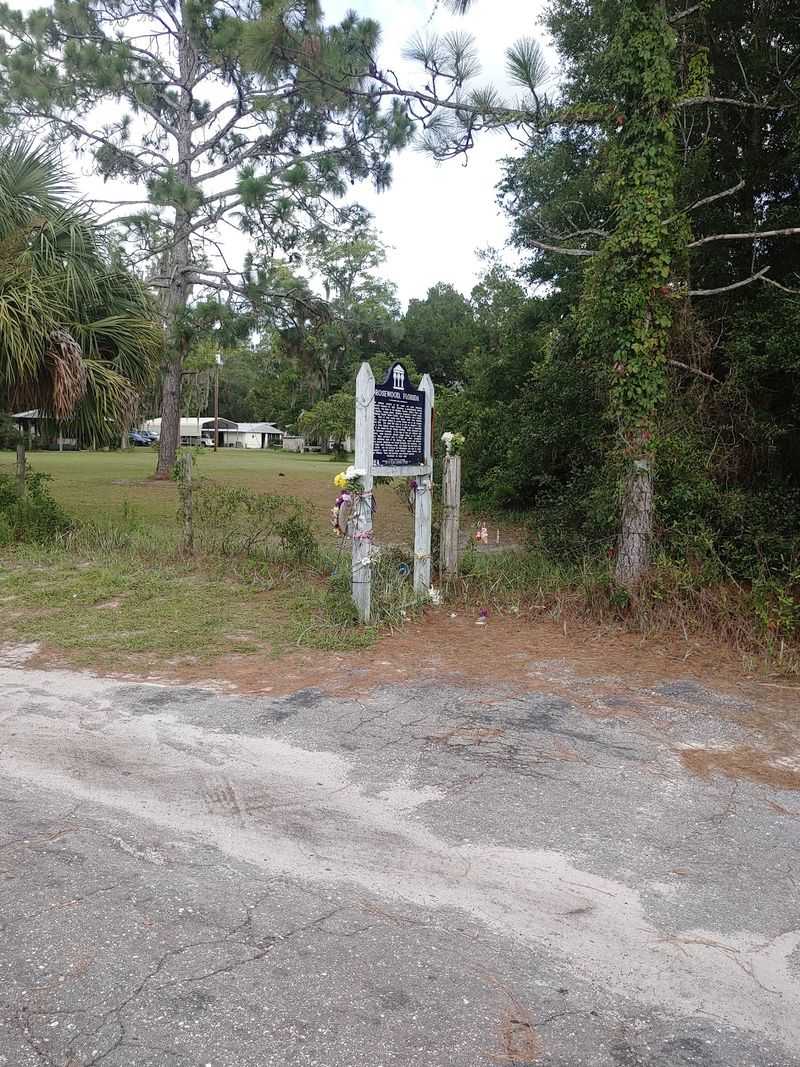
Plenty of travelers roll past it without slowing down. The Rosewood Historic Marker sits along the route toward the coast, with an address listed as Cedar Key, FL 32625, in Levy County, Florida, United States.
It is a roadside historical landmark, not a museum or a visitor center. There is no ticket booth, no gift shop, and no staff waiting at a desk.
What you will find is an official Florida historical marker with text on both sides. One side explains what happened in Rosewood in January 1923.
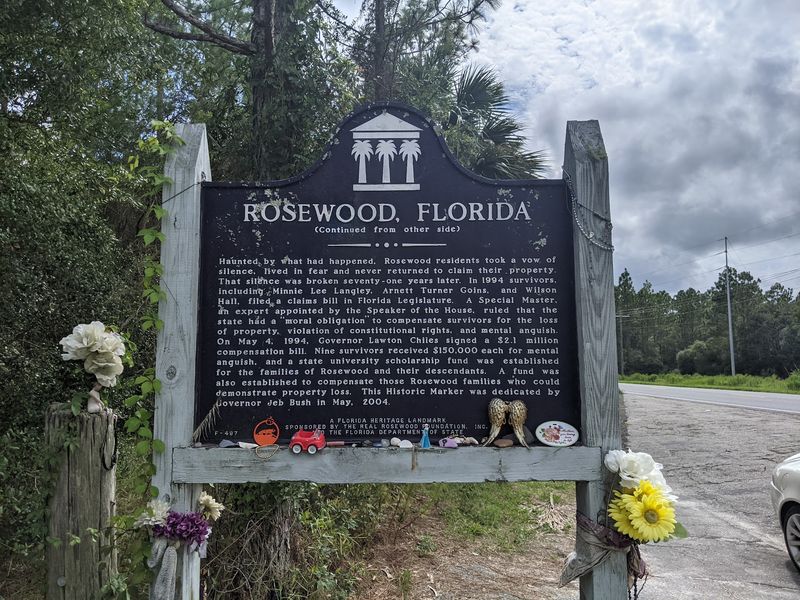
The other side tells the story of what came after, including a landmark decision by the state decades later.
The marker is listed as number F-407. It was put up in 2004 by The Real Rosewood Foundation, Inc. together with the Florida Department of State.
Many people stop because they are already heading to or from Cedar Key. That makes it an easy detour to fit into a coastal day trip.
Still, calling it a quick photo stop would sell it short. Most people who pull over end up reading every line on both sides, and many leave with far more questions than they arrived with.
Those questions start with the town itself.
Rosewood Before 1923
Long before anyone needed a marker to remember it, Rosewood was simply home. The marker describes it as a small and quiet community, made up mostly of Black families.
Families named on the sign include the Bradley, Carrier, Carter, Goins, and Hall families, among others. These were real neighbors with real routines.
The town supported a school taught by Mahulda “Gussie” Brown Carrier. Residents also had three churches and a Masonic lodge, which says a lot about how organized and connected the community was.
Many residents owned their own homes. Some ran businesses, while others worked in nearby Sumner and at the Cummer Lumber Mill.
Put simply, Rosewood was doing well. It had schooling, faith, work, and property, the building blocks of a stable life in early 20th century Florida.
Many who visit today say that this part of the story is the one that sticks with them. Standing where a thriving community once grew brings a sense of pride in what these families built for themselves.
That pride makes the next chapter on the marker even harder to read.
The Week of January 1-7, 1923
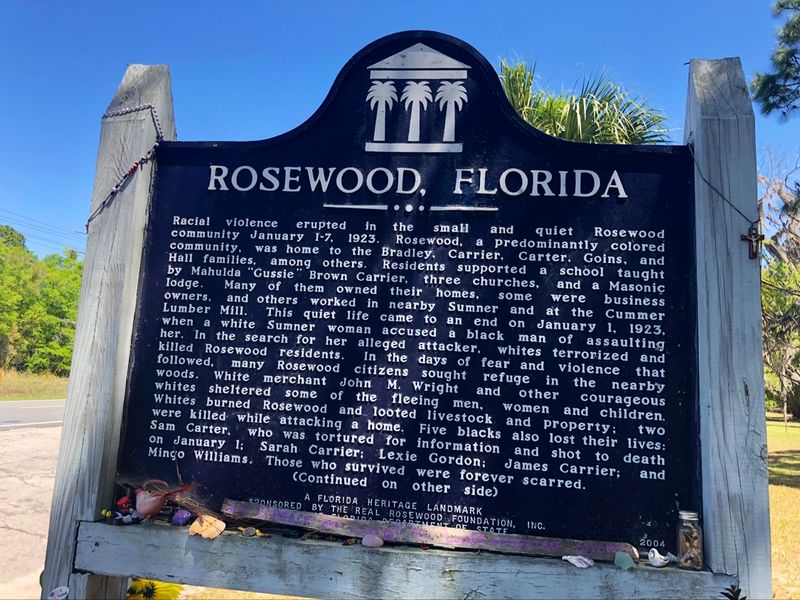
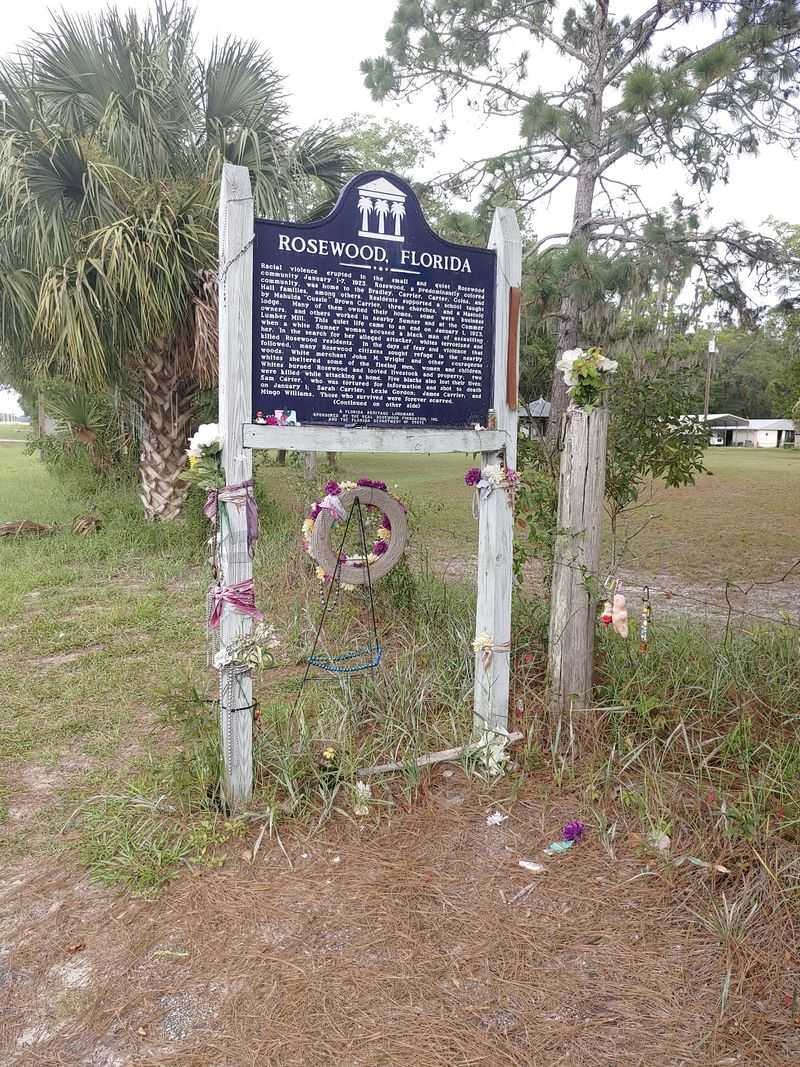
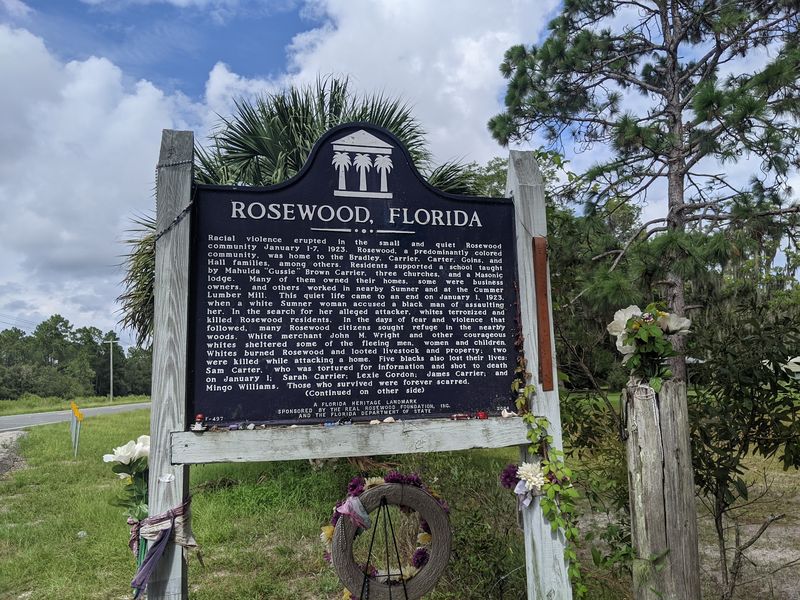
Everything changed on New Year’s Day. According to the marker, on January 1, 1923, a white woman in Sumner accused a Black man of assaulting her.
During the search for her alleged attacker, white mobs terrorized Rosewood residents. Racial violence continued through January 7.
Many residents fled into the nearby woods to hide. The marker notes that Rosewood was burned, and that livestock and property were looted.
The sign names five Black residents who did not survive: Sam Carter, Sarah Carrier, Lexie Gordon, James Carrier, and Mingo Williams. It also records that two attackers did not survive while attacking a home.
There were people who tried to help. White merchant John M.
Wright and other white residents sheltered some of the fleeing men, women, and children.
The marker ends this side with a simple line stating that those who made it through were forever scarred.
Reading it on the roadside is a sobering moment. Many people describe the stop as surreal, and some find it hard to put their feelings into words at all.
Yet the back of the sign holds a turn in the story that few people expect.
Seventy-One Years of Silence, Then a Claims Bill
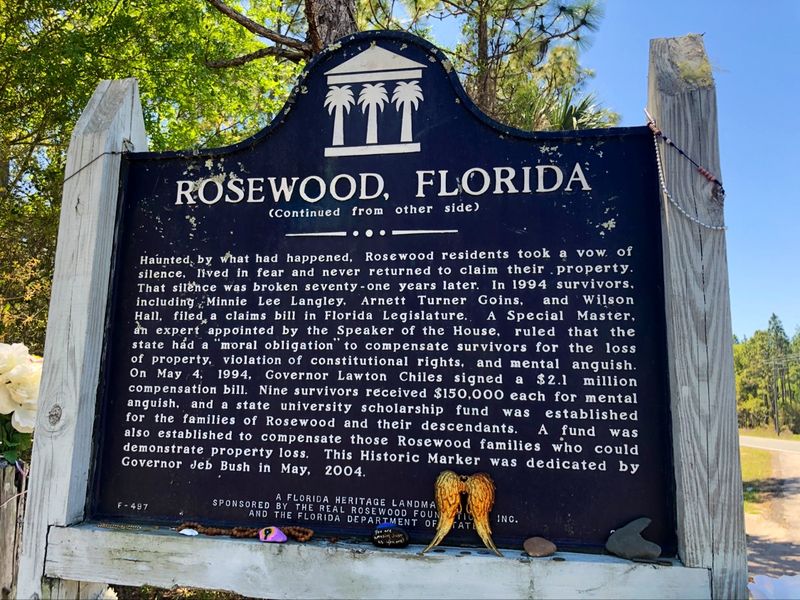
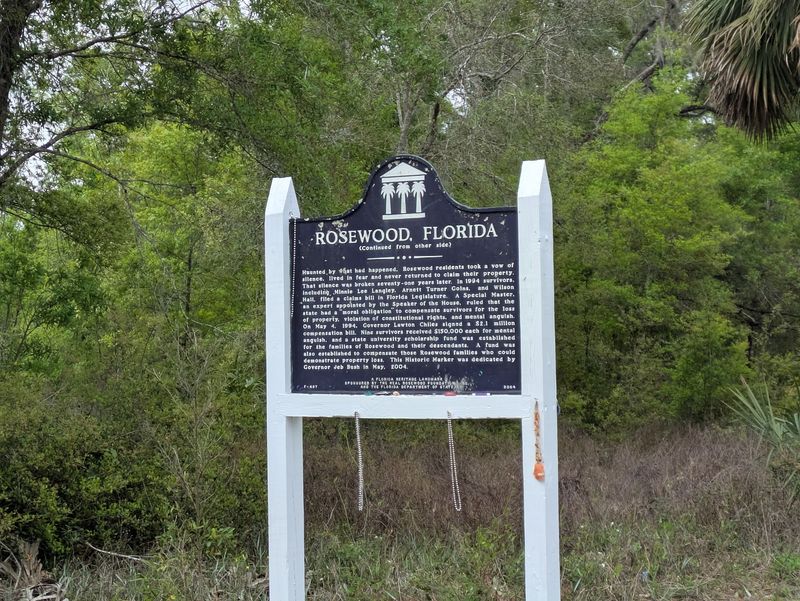
Silence lasted a very long time. The reverse side of the marker explains that Rosewood residents took a vow of silence, lived in fear, and never returned to claim their property.
That silence broke in 1994. Survivors, including Minnie Lee Langley, Arnett Turner Goins, and Wilson Hall, filed a claims bill in the Florida Legislature.
A Special Master, an expert appointed by the Speaker of the House, reviewed the case. The ruling stated that the state had a “moral obligation” to compensate survivors.
That compensation covered loss of property, violation of constitutional rights, and mental anguish. It was a remarkable outcome for events that had happened more than seven decades earlier.
On May 4, 1994, Governor Lawton Chiles signed a $2.1 million compensation bill. Nine survivors received $150,000 each for mental anguish.
A state university scholarship fund was also created for Rosewood families and their descendants. Another fund was set up for families who could show property loss.
For many readers, the governor’s role is one of the most memorable parts of the marker. It shows that speaking up, even after 71 years, can still change the record.
What Still Stands Nearby
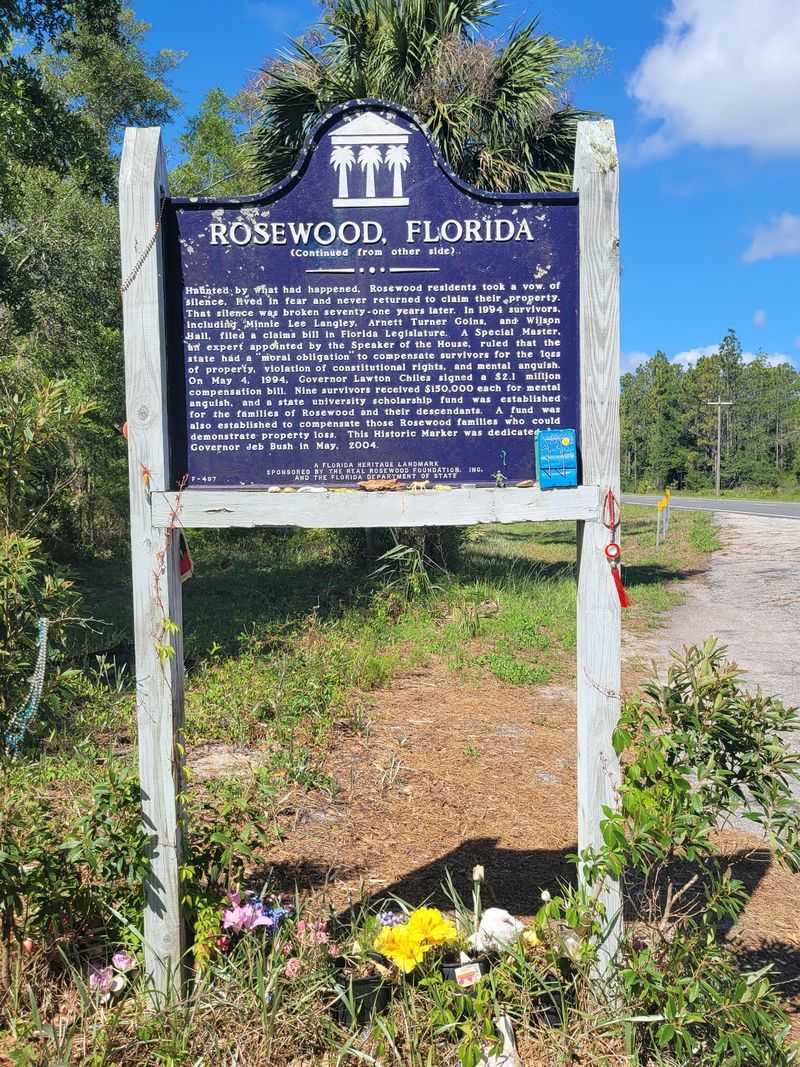
Very little of the original town remains, and that fact shapes the whole visit. Many people point out that one home and this marker are about all that is left of Rosewood.
That surviving house is often called the Doctor’s house. Some people have stopped there and received a history lesson from a knowledgeable woman connected to the site.
Others have taken photos in front of Rosewood Baptist Church nearby. Pairing the marker with these nearby spots helps turn a single sign into a fuller picture.
A few have even had the chance to meet Lizzie Robinson Jenkins, a descendant of a survivor. Her family connection brings the story out of the past and into the present.
These meetings are not scheduled attractions, so there is no guarantee of finding someone to talk with. When it happens, though, people describe it as educational and deeply personal.
Treat any nearby homes as private property unless you are clearly invited. Viewing from the road is the respectful choice.
Even without a guide, knowing that a piece of Rosewood still stands adds weight to every word on the sign.
From Hollywood to the Highway
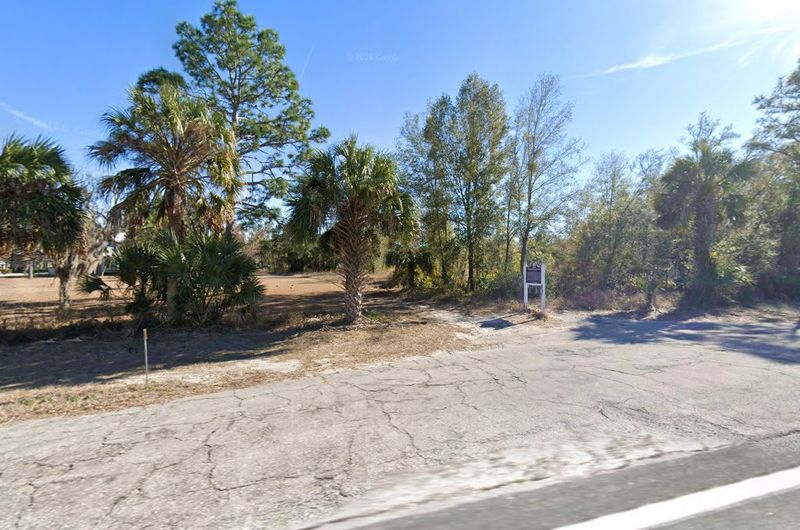
Some travelers first heard the name Rosewood in a movie theater. Director John Singleton made a film about these events in the 1990s.
For many people, that movie was their introduction to this chapter of Florida history. It brought the story to audiences across the country.
Seeing the actual marker is a different experience from watching a film. The sign uses real names, real dates, and real places, with no dramatic additions.
Some people worry that without places like this, the story could fade into something only remembered through old movies. That concern is part of why the marker matters so much.
Rosewood is also often mentioned alongside other thriving Black communities that were destroyed, such as Tulsa’s Black Wall Street. Placing these stories side by side helps people understand a wider pattern in American history.
If you have seen the film, a stop here offers a chance to compare it with the official historical record. If you have not, the marker is a solid starting point before you watch.
Either way, the roadside sign does something a screen cannot. It plants the story on the actual ground where it happened.
The Mood at the Marker
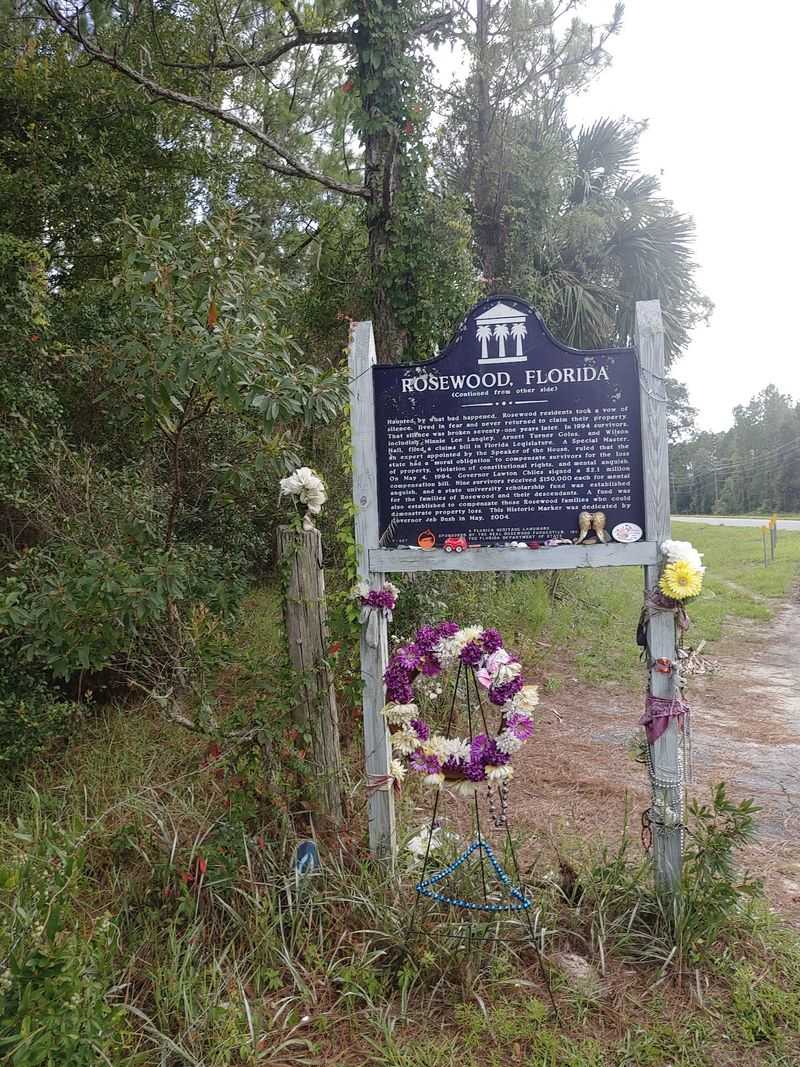
Nobody comes here for thrills. The mood around the marker is quiet and reflective, and most people treat the stop as a moment to pay respects.
Reactions run strong. Some describe a feeling of heartbreak, while others feel proud of what the Rosewood families accomplished before 1923.
There is also frustration in the mix. A common feeling is that the people of Rosewood deserve more than a roadside sign, and that the site should be bigger or better represented.
Others take a more hopeful view. If people keep telling the story, the families of Rosewood will not be forgotten, and the marker helps make that happen.
One small, almost odd detail pops up too. A group once mentioned that their phones froze while they were at the site, which only added to an already memorable trip.
The stop suits history lovers, families teaching children about civil rights, and road trippers who want more than beaches from their Florida travels.
It is less suited to anyone looking for exhibits or activities. The value here is in reading, thinking, and remembering, and that is plenty.
Practical Notes for a Respectful Stop
Good news for flexible planners: the marker is listed as open 24 hours, seven days a week. There is no admission fee mentioned, since this is a public roadside sign.
The easiest approach is to fold it into a drive to or from Cedar Key. Plan a few extra minutes so you can read both sides of the sign without rushing.
Daylight is the smart choice. Reading the text and spotting nearby sites is much easier when the sun is up.
A thoughtful tip comes up among those who care about the site. People sometimes leave mementos, but those items can blow away and end up as litter in the surrounding land.
Instead, consider simply touching the memorial, saying a few words, or taking a quiet moment. Some suggest scattering wildflower seeds as a gentler tribute.
Take your trash with you and keep the area tidy for the next person. Be careful of traffic when parking and crossing near the roadway.
For deeper background before you go, the Rosewood history website at rosewoodflorida.wordpress.com offers more context. Reading up ahead of time makes those few minutes at the sign far more meaningful.
Why It Earns a Spot on Your Route
Small sign, big story. That sums up why this roadside stop is so well regarded, holding a 4.8 star average from the people who have taken the time to visit.
Nobody claims it is grand. Some admit it is just a marker on the roadway, and a few wish the state had done much more to honor the site.
Even so, almost everyone agrees the stop is worth it. Many say it is local history that most people pass right by while staring at their phones.
The marker teaches in a few minutes what many textbooks skip. It names the families, the victims, the helpers, and the survivors who finally spoke up in 1994.
It also shows that history is not finished. The compensation bill, the scholarship fund, and the descendants who still share their stories all prove that Rosewood’s legacy continues.
So on your next drive toward the Gulf, slow down before you reach the water. Pull over safely, read both sides, and give the people of Rosewood a few minutes of your attention.
The beach will still be there when you get back on the road.
Enjoyed this story?
Add Fast Food Club as a preferred source to see more of our reporting on Google.