


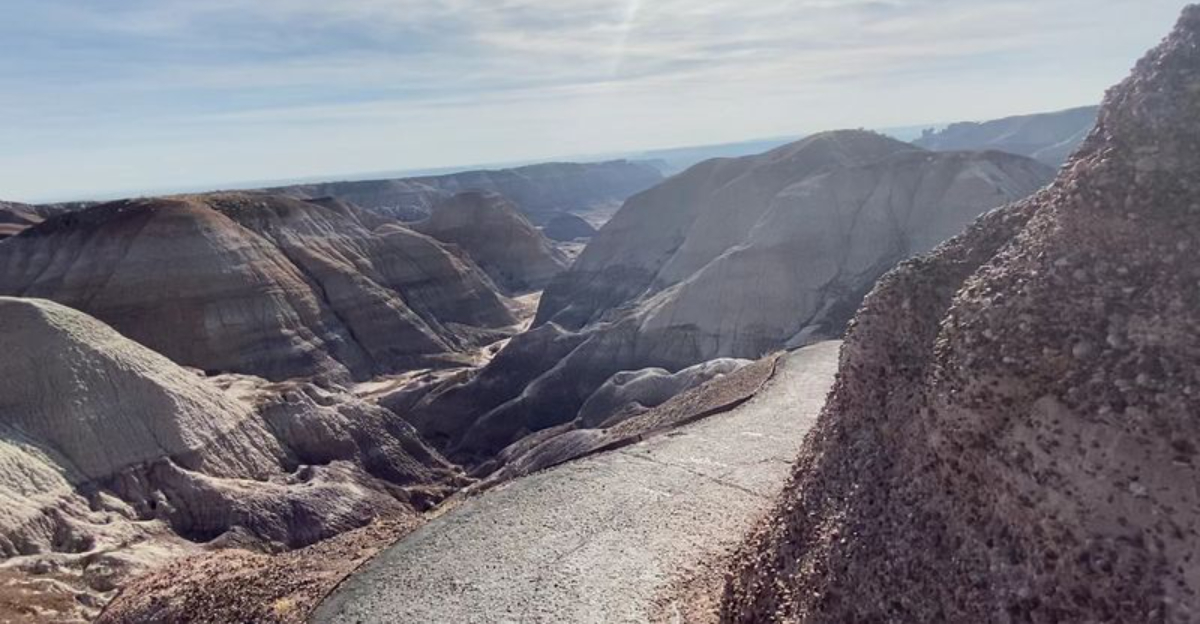
Tucked inside Petrified Forest National Park in Arizona, the Blue Mesa Trailhead offers one of the most jaw-dropping landscapes you will ever see in the United States. The trail stretches just about 1 mile, yet every single step feels like walking across another planet.
Swirling bands of blue, purple, and gray badlands rise up around you like something straight out of a science fiction movie. Whether you are a seasoned hiker or just looking for a short and stunning walk, Blue Mesa is a place that will genuinely blow your mind.
The Otherworldly Colors That Stop You in Your Tracks
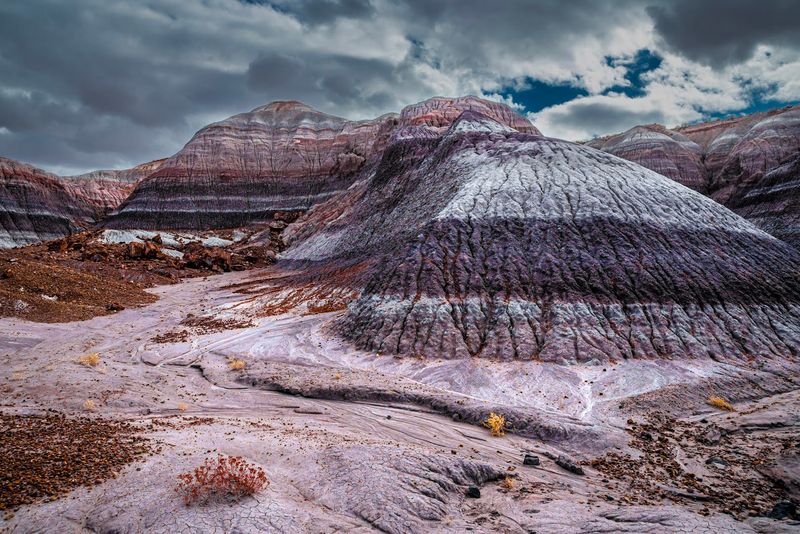
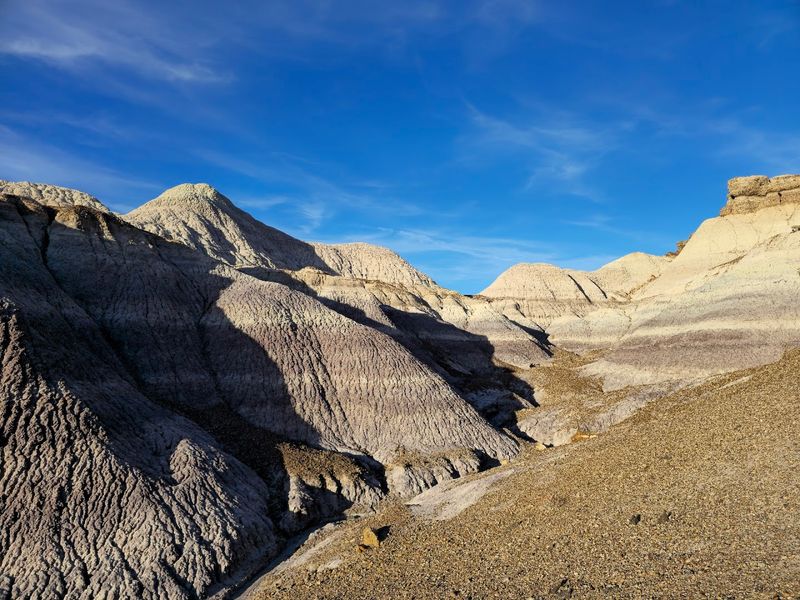
Nowhere else in Arizona will you find a landscape quite like this. The hills at Blue Mesa are painted in ribbons of blue, lavender, gray, and soft purple, created by minerals that have slowly seeped into the ancient clay over millions of years.
These colors shift and deepen depending on the time of day and the angle of the sunlight. Early morning and late afternoon light are especially magical, making the formations glow in ways that look almost too beautiful to be real.
Visitors consistently describe the scenery as surreal, otherworldly, and unlike anything they have seen before. Even seasoned travelers who have visited dozens of national parks say Blue Mesa stands out as something truly special.
Bring your camera fully charged because you will want to capture every twist and turn of this remarkable landscape.
A Short Trail That Packs a Massive Punch
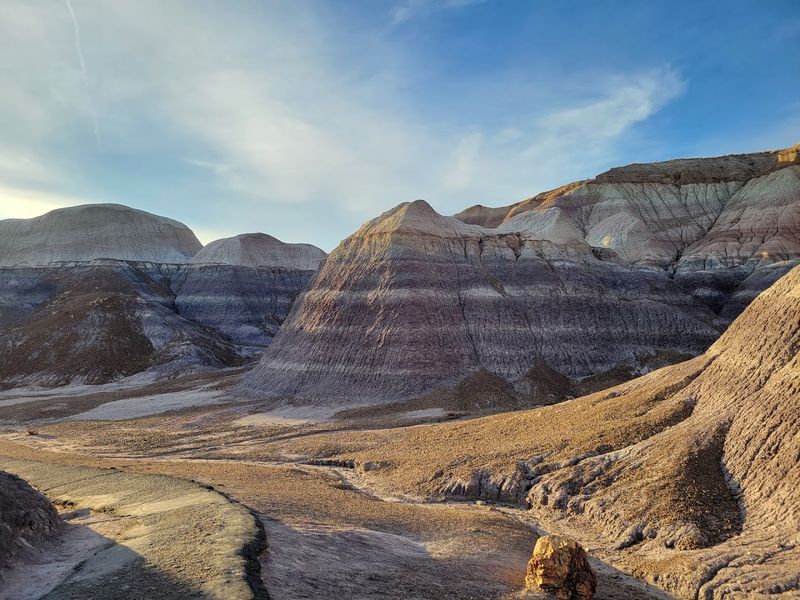
One mile might not sound like much, but the Blue Mesa Trail delivers more visual impact per step than almost any other hike in the American Southwest. The trail starts at the trailhead parking lot, heads downhill through stunning badland formations, and eventually loops back around to where you began.
Most visitors complete the full loop in about 20 to 30 minutes at a relaxed pace. The path is paved with asphalt for most of its length, making it relatively easy to follow even without hiking experience.
There is one section that involves a noticeable uphill climb on the return, so it is good to know that going in. Still, the elevation change is only about 110 feet total, which is manageable for most people.
The reward at every turn more than makes up for any effort required along the way.
Petrified Wood Scattered Right Along the Path
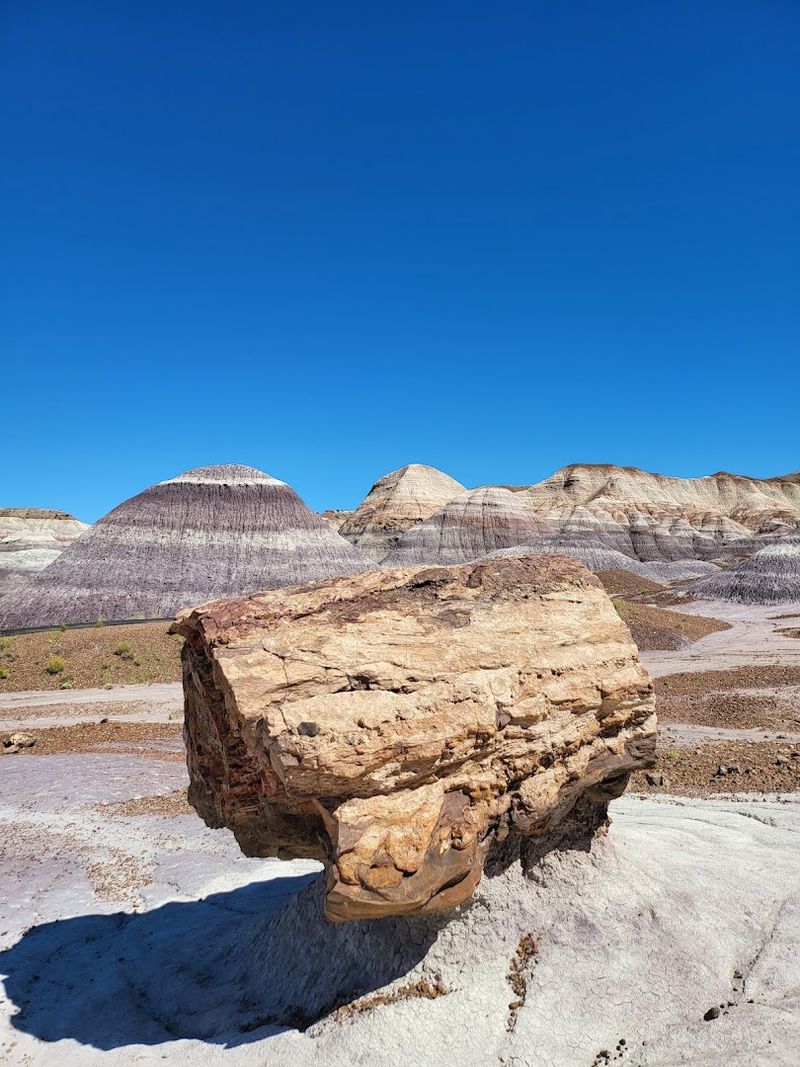
Petrified wood is the star of the entire national park, and at Blue Mesa you get to see it up close without traveling far from the trailhead. Ancient logs that once belonged to a lush tropical forest have slowly turned to stone over roughly 225 million years, preserved in vivid reds, yellows, and browns.
Some pieces are displayed almost like outdoor museum exhibits, propped up so visitors can get a clear look at the internal crystal structure. Others are scattered naturally across the hillsides, peeking out from the clay as if they just fell there yesterday.
Looking closely at the ground near the base of the hills reveals dozens of small fragments that most people walk right past. It is a genuinely humbling experience to hold your hand near a log and realize you are touching something older than the dinosaurs.
Keep your eyes wide open throughout the walk.
The Badlands Feel That Rivals South Dakota
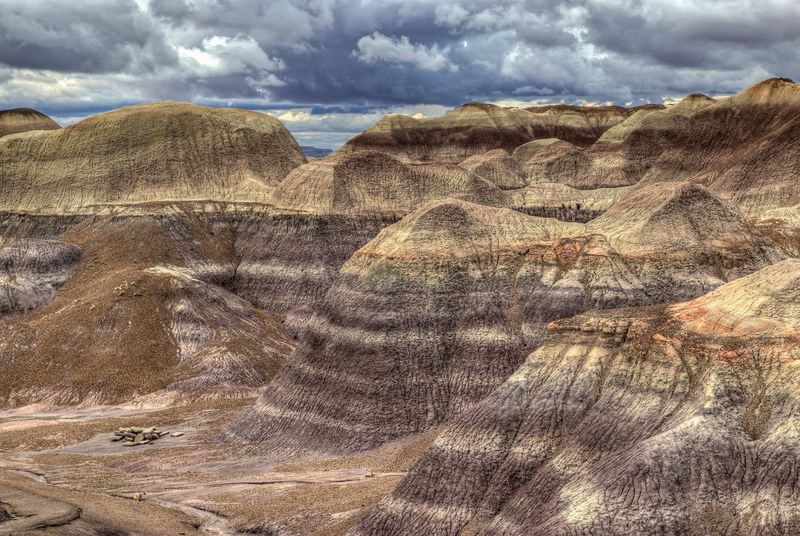
Several visitors have drawn direct comparisons between Blue Mesa and the famous Badlands National Park in South Dakota, and honestly the resemblance is striking. Both locations feature deeply eroded clay hills with dramatic layering, sharp ridges, and a stark, windswept beauty that feels prehistoric.
What makes Blue Mesa unique, though, is the color palette. While the South Dakota badlands lean toward tan and rust tones, Blue Mesa leans cooler with its signature blue-gray and purple hues that give the landscape a more otherworldly feel.
Standing at the rim of the trail and looking out across the formations really does feel like gazing at an alien terrain. If you have been to the Badlands and loved them, Blue Mesa will absolutely be your next obsession.
And if you have never visited either, starting here is a very good idea for your national park bucket list.
Photography Heaven at Every Angle
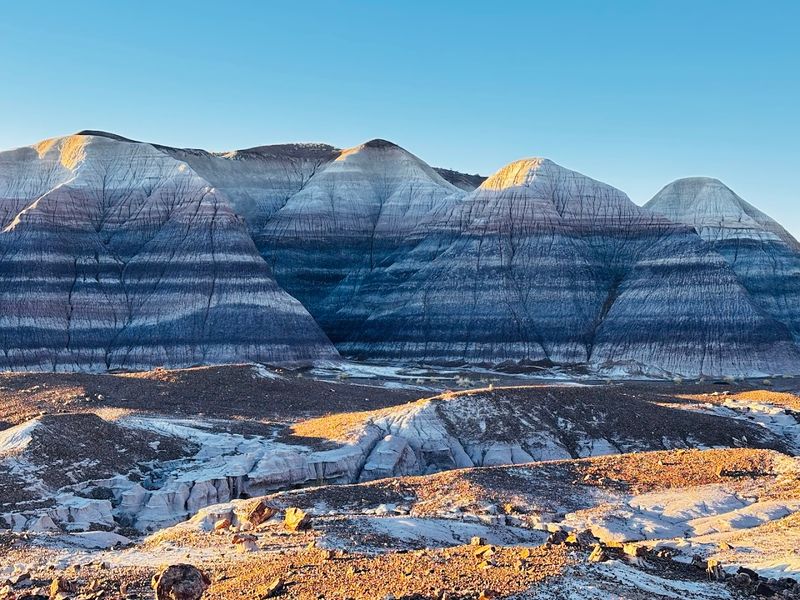
Photographers absolutely love Blue Mesa, and it is easy to see why. The layered hills create natural lines and textures that look incredible in both wide landscape shots and tight detail photos.
The contrast between the colorful clay formations and the wide open Arizona sky gives every image a dramatic, cinematic quality.
Golden hour, which is the hour just after sunrise or just before sunset, is widely considered the best time to shoot here. The low-angle light rakes across the ridges and pulls out every shade of blue, purple, and gray in vivid detail.
Even smartphone photographers come away with stunning shots that look professionally taken. The trail itself provides multiple natural vantage points that frame the landscape beautifully.
One reviewer described the sunset here as simply mesmerizing, and that word feels completely accurate. Come with a full battery and extra storage space because you will not stop shooting.
What to Know Before You Arrive at the Trailhead
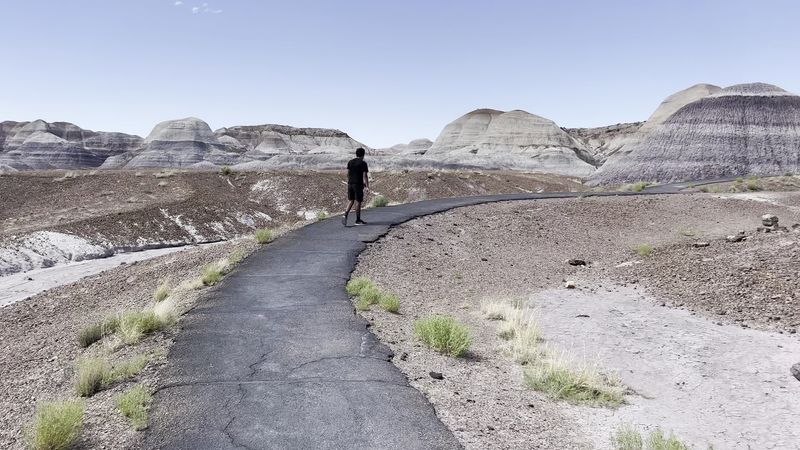
Planning ahead makes a big difference at Blue Mesa. Parking spaces at the trailhead are limited, so arriving early in the morning or later in the afternoon helps you avoid the busiest crowds.
The trailhead is located along a short side road off the main Petrified Forest park highway, making it easy to spot if you are following the park map.
There are no restroom facilities directly at the Blue Mesa Trailhead, so plan accordingly before you head down the trail. The park closes in the evening and rangers actively patrol to ensure all visitors are back in their vehicles before closing time, usually around 6:30 PM depending on the season.
Admission to Petrified Forest National Park requires an entrance fee or a valid America the Beautiful pass. Checking the official National Park Service website before your visit gives you the most current hours, fees, and any trail closures that might affect your plans.
Bringing the Right Gear for a Comfortable Hike
Even though Blue Mesa is a short trail, the Arizona desert environment demands some basic preparation. The trail has no shade whatsoever, meaning the sun beats down directly on you for the entire walk.
Wearing a wide-brimmed hat and applying sunscreen before you start is genuinely important, not just a suggestion.
Carrying water is equally critical. The desert heat can dehydrate you faster than you expect, especially in the summer months when temperatures regularly climb above 90 degrees Fahrenheit.
A standard water bottle per person is a smart minimum to bring along.
Sturdy walking shoes with good grip are helpful for the steeper sections of the trail, even though most of the path is paved. Wind can also pick up significantly in this area, as several reviewers have pointed out.
A light windbreaker tucked in your bag is a practical addition that takes up almost no space and could save your comfort on a breezy day.
The Drive Along the Blue Mesa Loop Road
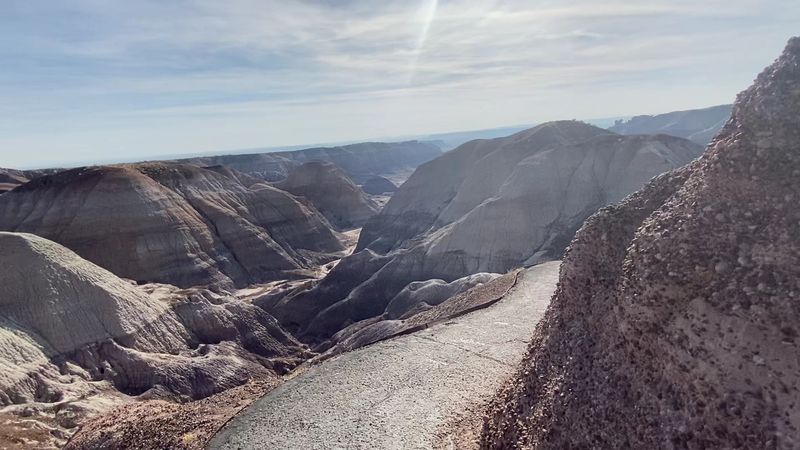
Not everyone realizes that Blue Mesa can actually be experienced two different ways. Beyond the walking trail, there is also a short scenic loop road that winds through the area and offers elevated views of the formations from the comfort of your car.
The drive is only a few miles long and features several pull-out areas where you can stop, step out, and take in the panoramic views from above. This option is great for visitors who may have mobility challenges or simply want a different perspective on the landscape before or after their hike.
Seeing the formations from above first and then descending into them on foot creates a really satisfying sense of scale. You realize just how vast and deep the badlands actually are once you are standing among them at trail level.
Many visitors do both the drive and the walk, and nearly all of them say it is worth every extra minute spent.
Why This Trail Feels Like Stepping Into a Natural Museum
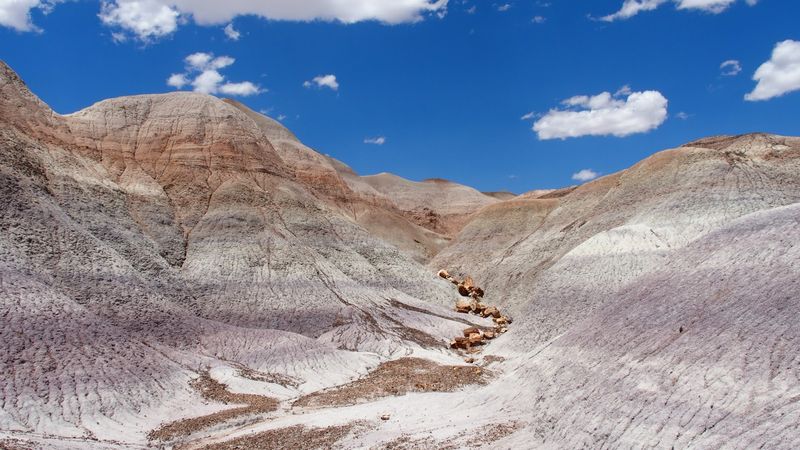
Walking the Blue Mesa Trail genuinely feels like moving through a living, open-air natural history exhibit. The geological layers visible in the hillsides tell a story spanning hundreds of millions of years, from the time when this region was a warm, wet floodplain teeming with ancient life to the dry desert landscape it is today.
Interpretive signs along the trail help explain what you are seeing, making the experience educational as well as visually stunning. Kids especially tend to get excited when they learn that the colorful rocks around them are actually ancient trees turned to stone by mineral replacement over unimaginable stretches of time.
One reviewer perfectly captured the feeling by saying the entire walk felt like stepping into a natural museum. That description is spot on.
Every rock, every ridge, and every fragment of petrified wood is a piece of Earth history preserved in extraordinary detail, just waiting for curious eyes to appreciate it.
Visiting Blue Mesa in Different Seasons
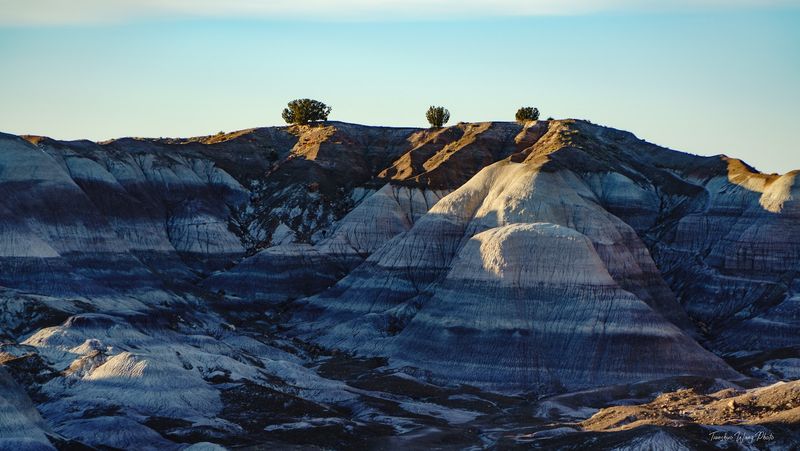
Blue Mesa is open year-round, and each season brings its own unique atmosphere to the trail. Summer visits mean intense heat and blazing sunshine, which actually intensifies the color contrasts in the formations and creates that signature glowing effect that photographers love.
Starting early in the morning helps beat the worst of the heat.
Fall is widely considered one of the best times to visit. Temperatures cool down to a comfortable range, crowds thin out compared to summer, and the softer light gives the landscape a warm, almost golden quality that feels completely different from midday summer visits.
Winter visits are surprisingly peaceful and dramatically uncrowded. Snow occasionally dusts the formations, creating a breathtaking contrast between the white powder and the blue-gray clay hills.
Spring brings mild temperatures and occasional wildflowers blooming near the trailhead. Every season offers a reason to visit, and each one feels like a completely fresh experience of the same remarkable place.
Accessibility and Trail Conditions Worth Knowing
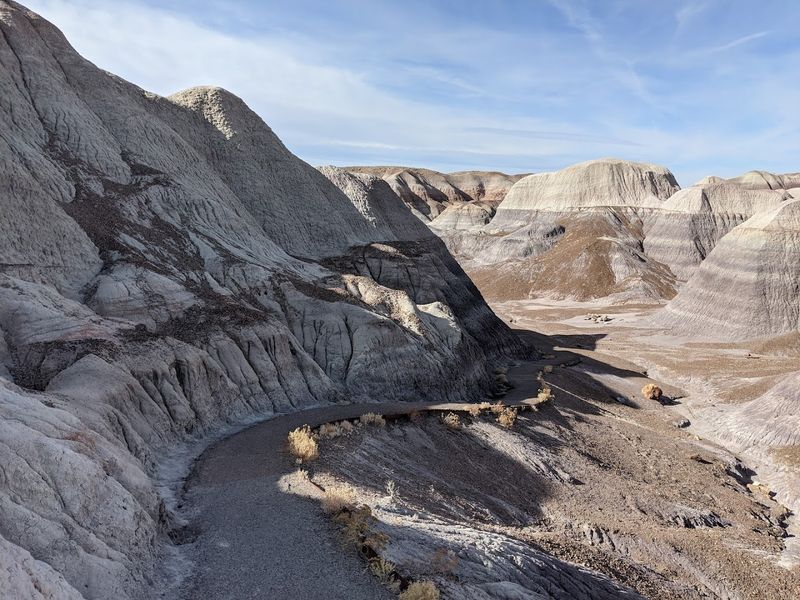
The Blue Mesa Trail is paved with asphalt along most of its length, which led park rangers to describe it as wheelchair accessible. However, the reality is a little more nuanced than that simple label suggests.
One reviewer noted that pushing a wheelchair up the steeper 35-degree hill section was physically demanding even for a strong adult.
For most able-bodied visitors, the trail is genuinely easy and well-suited to families with children, older adults, and casual walkers. The elevation change is modest at around 110 feet, and the paved surface keeps footing predictable for the majority of the route.
Unpaved pull-out areas near the trailhead offer additional viewing spots that do not require walking the full loop. Visiting on a weekday morning typically means fewer people on the trail, which makes the experience feel more personal and allows you to linger at your favorite formations without feeling rushed by crowds behind you.
The Teepee Formations That Define the Landscape
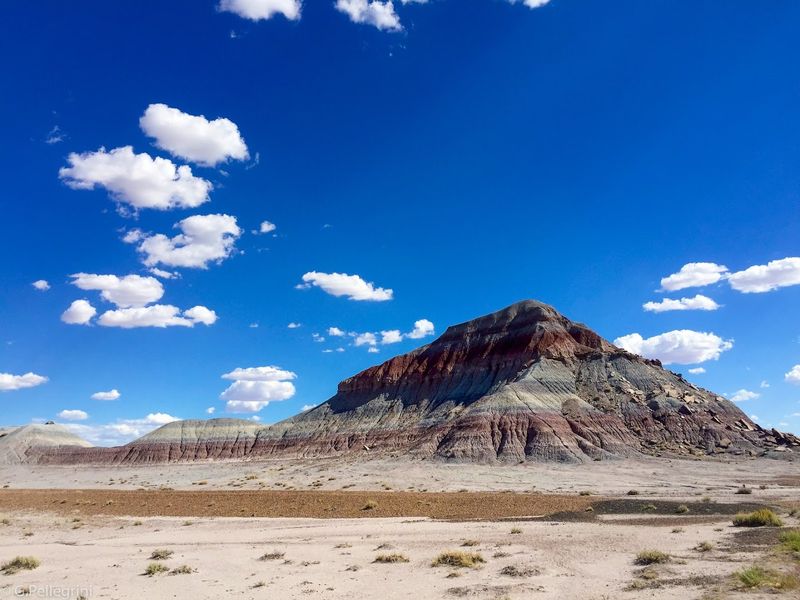
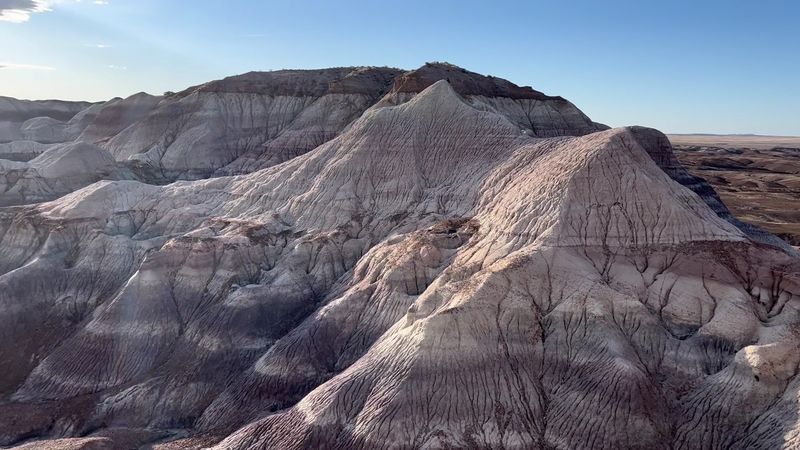
Among the most recognizable features along the Blue Mesa Trail are the pointed, cone-shaped formations that visitors often call teepees. These sculpted clay hills form when harder rock layers cap softer material beneath, protecting it from erosion while the surrounding clay wears away, leaving sharp pointed peaks standing alone.
Multiple reviewers specifically mentioned that Blue Mesa offers the best views of these teepee formations anywhere in Petrified Forest National Park. Standing among them at trail level makes them feel even more dramatic and impressive than they appear from the road above.
The layering inside each formation is clearly visible up close, with distinct bands of blue, gray, purple, and sometimes reddish-brown stacked like pages in an ancient book of Earth history. Geologists call these formations part of the Chinle Formation, deposited during the Late Triassic period roughly 225 million years ago.
Few places on Earth offer such a clear and accessible window into deep geological time.
Making the Most of Your Full Day at Petrified Forest
Blue Mesa is genuinely a highlight of Petrified Forest National Park, but pairing it with other nearby stops makes for an unforgettable full-day adventure. Crystal Forest, located just a short drive down the main park road, is widely recommended as the best place in the entire park to see spectacular petrified wood specimens up close.
The Painted Desert area at the northern end of the park offers sweeping panoramic views of vivid red, orange, and pink badlands that complement the cooler tones of Blue Mesa beautifully. Visiting both areas in one day gives you a complete picture of just how diverse and stunning this national park really is.
Ending your day back at Blue Mesa for sunset is a popular choice among visitors who plan their timing carefully. Watching the fading light transform those blue and purple hills into something glowing and dreamlike is the kind of experience that sticks with you for years after you leave.
Enjoyed this story?
Add Fast Food Club as a preferred source to see more of our reporting on Google.