


Some Florida springs fill up with towels and coolers before lunch. Others stay so calm that the people you meet are wearing scuba tanks, not floaties.
Out in the rural stretch of north Florida near Live Oak, there is a state park where most guests arrive to explore underwater caves instead of to splash around. That leaves the swimming spot oddly peaceful, with steps into the water, goggles-worthy views, and trails that wind past sinkholes and quiet woods.
The catch is that this place has rules, moods, and a few surprises, from duckweed days to an honor-box parking system. Keep reading for the full rundown on where to swim, what to pack, and when the water is worth the drive.
A Spring Park Off 180th Street
Down a long, narrow road in Suwannee County sits Wes Skiles Peacock Springs State Park. The official address is 18532 180th St, Live Oak, FL 32060, in the United States.
The park is a natural area known for wildlife, sinkholes, and large underwater cave systems. Diving, swimming, and wildlife watching are the main draws here.
Getting there takes a little attention. Some navigation apps have pointed drivers to an incorrect entrance in the past, so following the brown state park signs is the safer bet.
The drive to the parking area is long and very narrow, which helps explain the hush once you arrive. This is not a roadside stop with a gift shop and snack bar.
Instead, the park feels tucked away, with three spring areas, a network of trails, and plenty of trees between you and the outside world. Mayo is less than 15 minutes away, across a striking blue metal bridge, which makes it an easy day trip from nearby towns.
The road in may be slow, but the payoff waits at the end of it.
Three Springs, One Swimming Hole
Here is the twist most first-timers miss. The park has several spring areas, yet only one is really set up for swimmers.
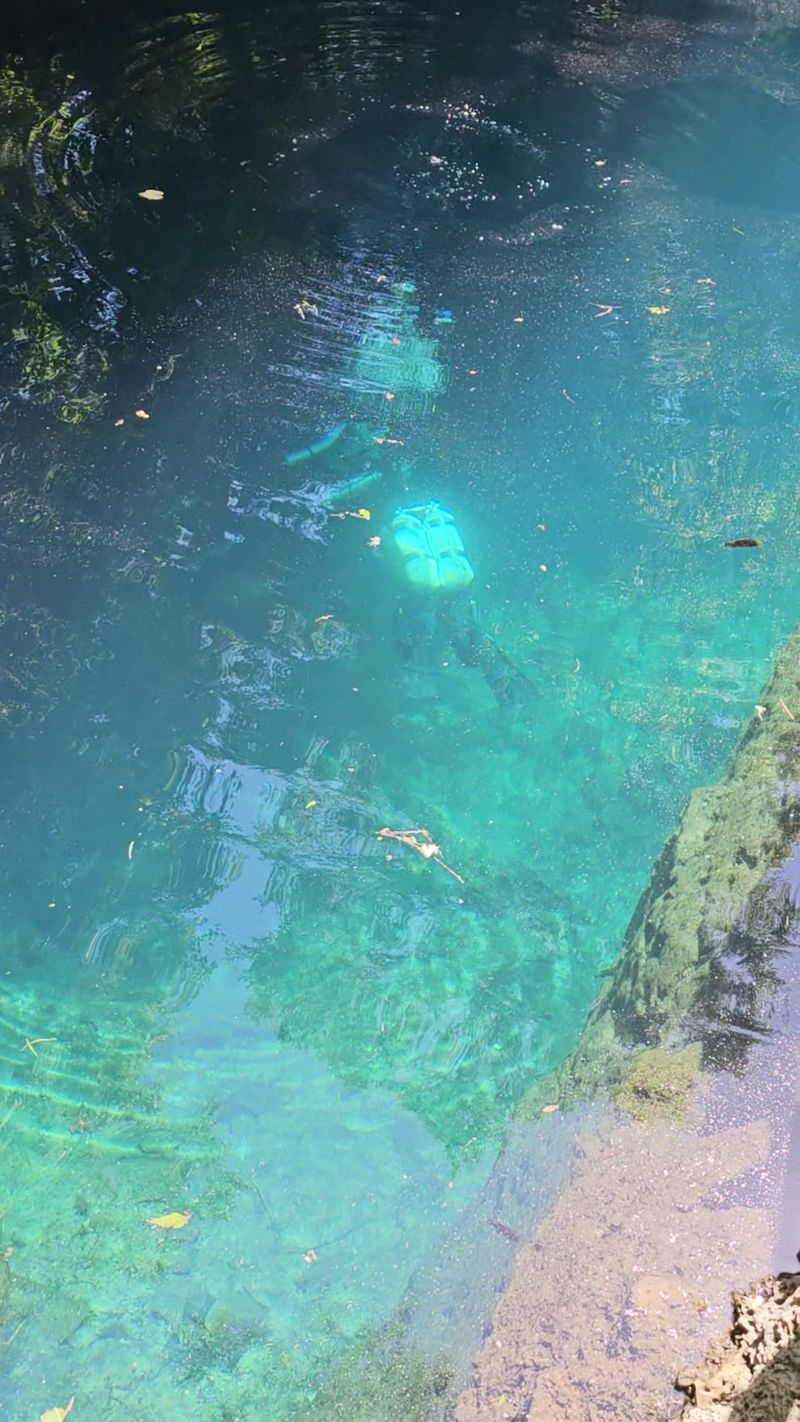
The front spring mostly belongs to deep divers. The spring at the far end of the boardwalk is also a diver spot.
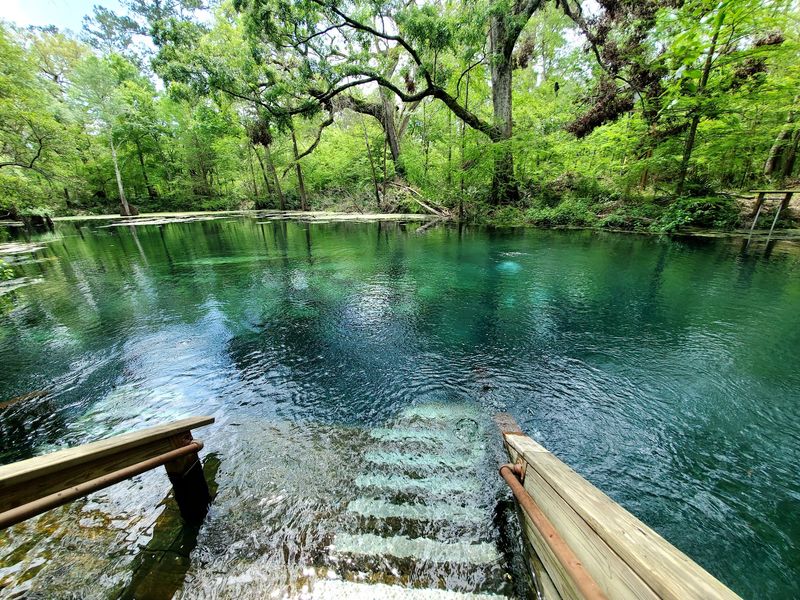
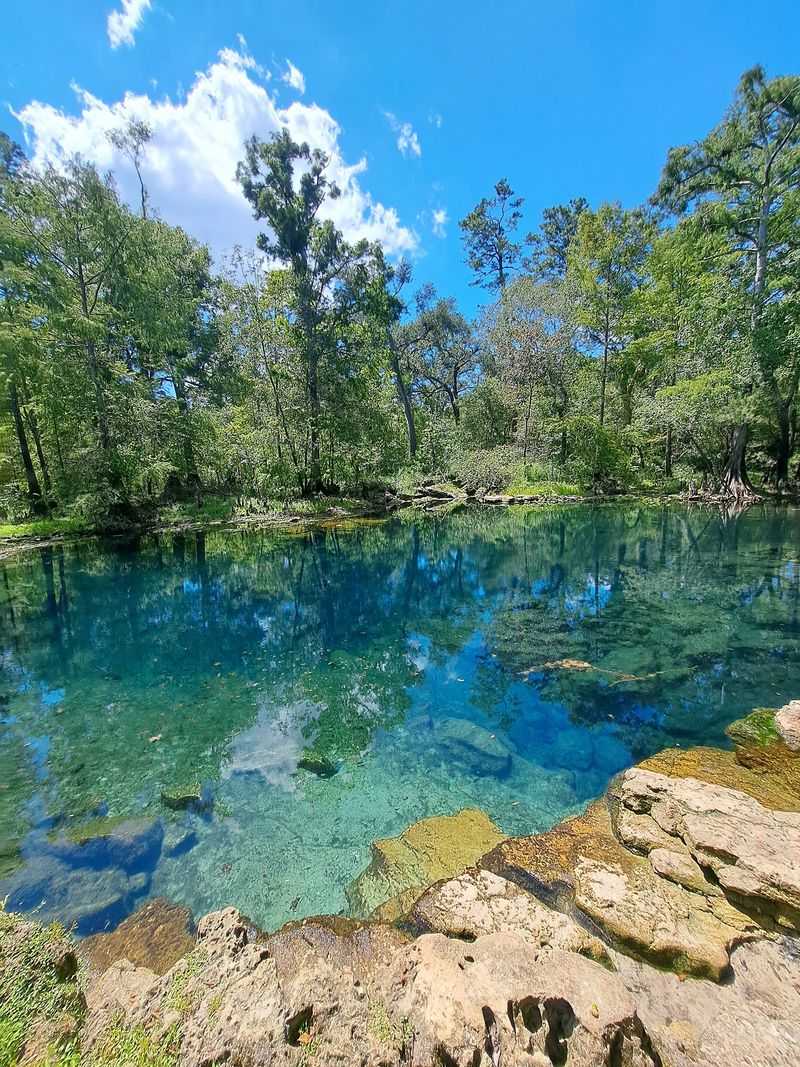
The middle spring is where the snorkelers and swimmers gather. It sits near the end of the road leading to the other two springs.
For the other two areas, a cave diving certification is required. So the casual swimmer has one main pool to enjoy, and that is part of its charm.
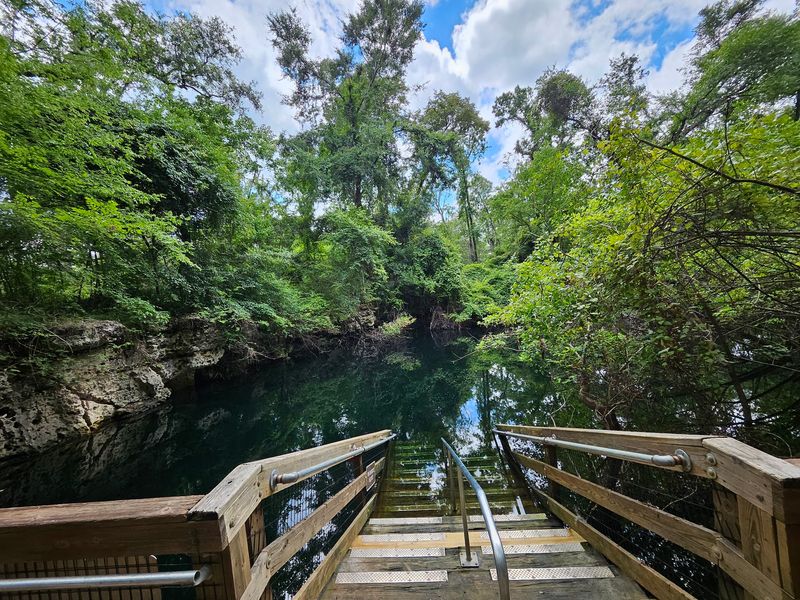
Two entry points exist and they do not connect. One has steps into the water and a smaller swim area.
The entrance is rocky and a little slippery, so careful footing matters. Water shoes are a smart idea for that first step down.
Fewer swimmers means more room to float, look around, and take your time. It is a small pool with a big personality.
Cave Divers Rule the Roost
Ask who owns the parking lot on a typical day, and the answer is clear. Cave divers do.
The park is a supremely popular spot for cave diving, and the facilities reflect it. Pavilions, a changing area, portable toilets, and many tables and benches give divers space to prep their gear.
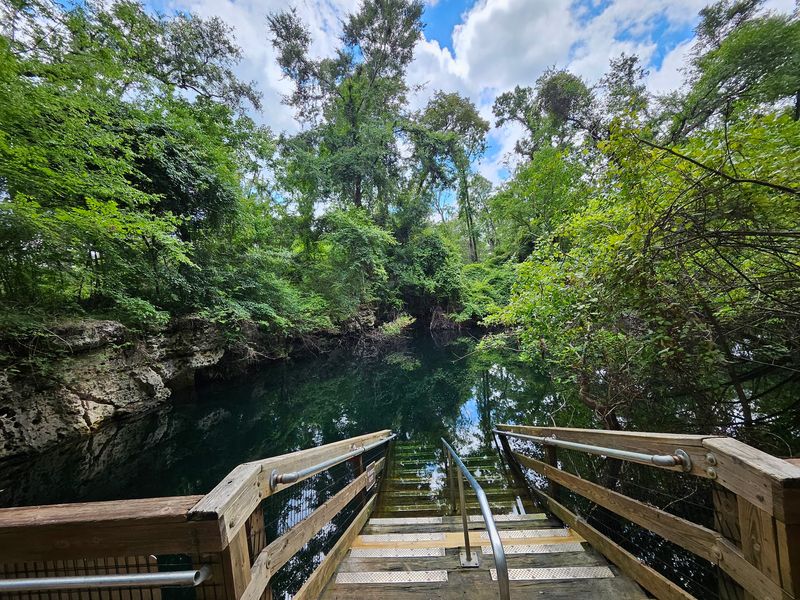
Steps lead down to the springs, making entry easier for those hauling equipment. The bench areas near parking spaces are mainly for divers getting ready.
Plenty of days pass with almost nothing but scuba crews on site. Some trips turn up no children, no dogs, and no picnickers at all.
That diver culture has a friendly side. Divers are often happy to explain how the cave system works, which turns a short visit into a quick science lesson.
Non-divers should remember that the underwater caves require proper certification. This is serious diving territory, not a place to improvise.
Watching the gear checks and briefings is entertainment on its own, even for land lovers.
Goggles Make the Difference
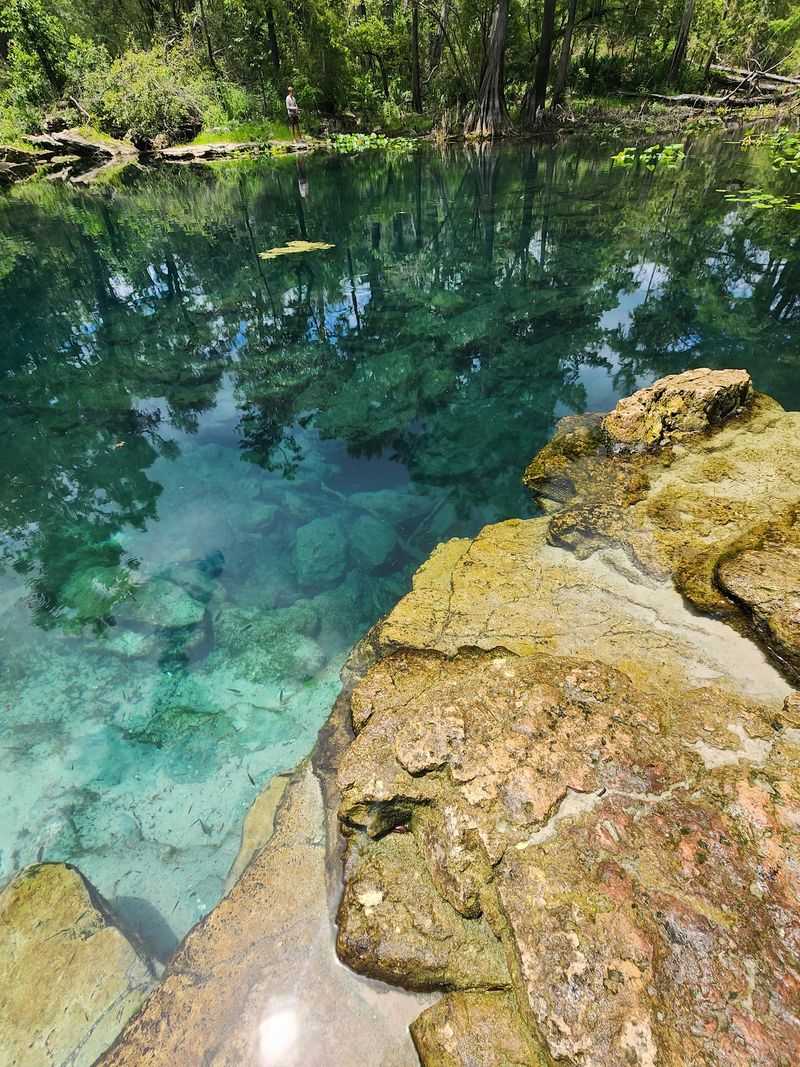
Bring goggles. That single tip may matter more than anything else on your packing list.
The swimming spring is small but beautiful, and a snorkel or simple goggles let you see clearly beneath the surface. On good days, the clean, clear water shows fish moving through their habitat.
Snorkeling is the main activity at the middle spring. It suits swimmers who want to explore without a full scuba setup.
Even those who skip the water can enjoy the view from the edge. The fish and the clear pool are visible from outside on calm days.
Keep expectations flexible, though. Conditions change, and the spring does not always look the same from one visit to the next.
A mask, fins if you like them, and patience are all you need here. The rest is just you and the spring having a quiet chat.
Chilly Water, Fair Warning
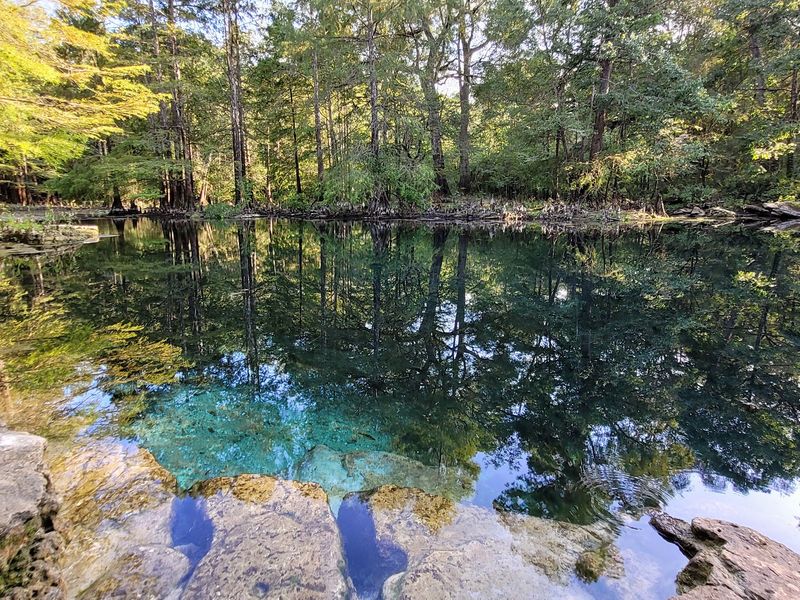
Nobody calls this a hot tub. The water runs cold, and plenty of people decide against swimming once they test it.
Winter and early spring trips often turn into hiking trips instead. In February, for example, some find it far too cold to swim.
The park is known among locals as a cold swimming hole. That makes it especially welcome on steamy Florida days.
For a more comfortable dip, warmer months are the better choice. A towel and dry layers waiting in the car are wise in any season.
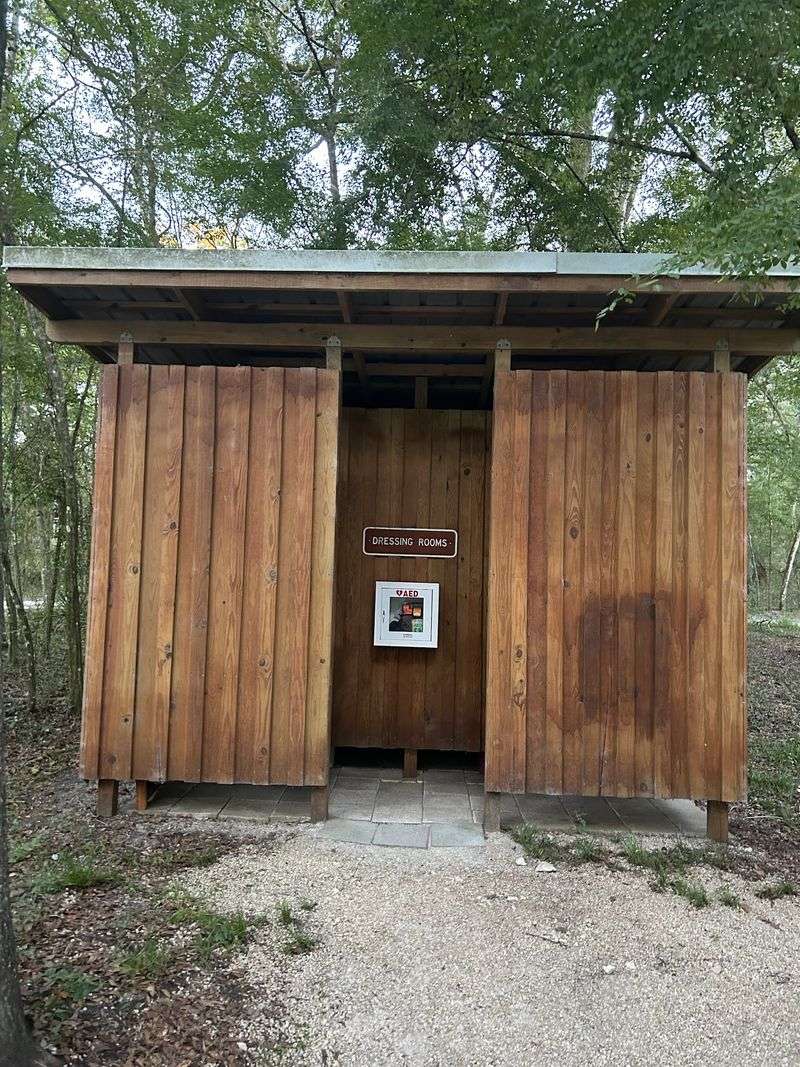
Changing rooms sit at each spring location, which helps after a quick plunge. There is one portable toilet at each spot as well.
Brave the chill or admire from the steps, either works. The spring will not judge.
Duckweed, Brown Outs, and River Moods
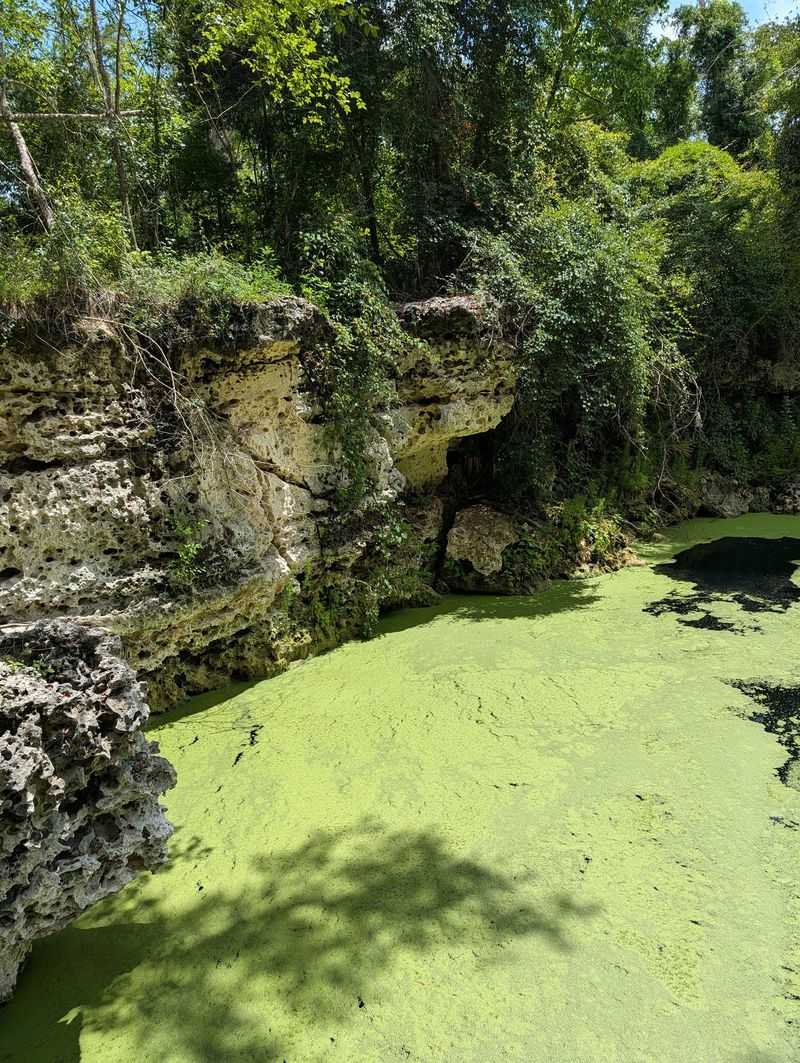
Springs have bad hair days too. At this park, the culprit is often duckweed or a brown out.
Some days bring so much duckweed that swimming is not appealing. The water can look very dark during those stretches.
Brown outs happen when the Suwannee River rises and backs up into the springs. In May 2024, high river levels affected most of the springs.
During a brown out, the water turns murky and swimming or diving may be off the table. Low water levels have also been a concern in drier periods.
The smartest move is to call the park before driving out. Staff can confirm whether the river has gone down and the springs are visible.
A quick phone check can save a long, disappointing drive. Clear water is worth timing right.
Trails Past Sinkholes and Signs
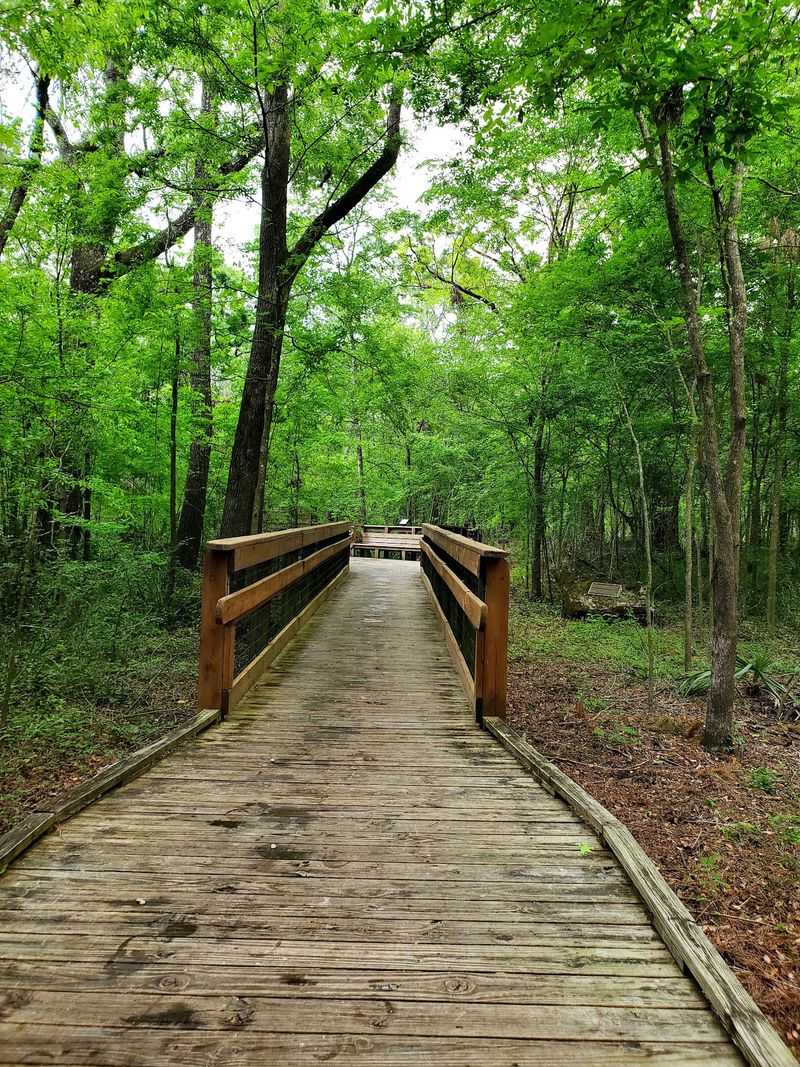
Trails are the second big reason people come, and they earn the mention. The park has plenty of paths for hiking or simply enjoying some quiet.
The interpretive trail runs about 1 mile, making it a nice short hike. Signs along the way explain the geology of the aquifer.
Other markers point out sites and different types of trees. One of the nature trails includes a boardwalk.
The path passes various plants and sinkholes, which gives a peek at what lies beneath the ground. Both springs are within decent walking distance from the entrance.
Trails are generally clearly marked and well maintained. Farther from the trailhead, though, markers can become scarce.
At times, overgrown vegetation has narrowed sections, and storm debris has appeared after hurricanes. Paths have still been kept clear in those cases.
A map photo on your phone is a smart backup before heading deeper.
Armadillos, Fish, and a Small Gator
Wildlife viewing is listed among the park’s main activities, and the locals do show up. Armadillos have been spotted along the trails.
Fish swim in the clear springs when conditions allow. Watching them from the edge is a favorite for non-swimmers.
A small alligator has also been seen near the main swimming area in the second spring. This is Florida, and the water is wildlife territory.
Caution makes sense near any spring. Scanning the water before getting in is a habit worth keeping.
Insects deserve a mention too. Bug spray is strongly recommended, and some hikes have been cut short without it.
Bring repellent, keep your distance from animals, and enjoy the neighbors. They were here first.
A Calm Place for Grown-Ups
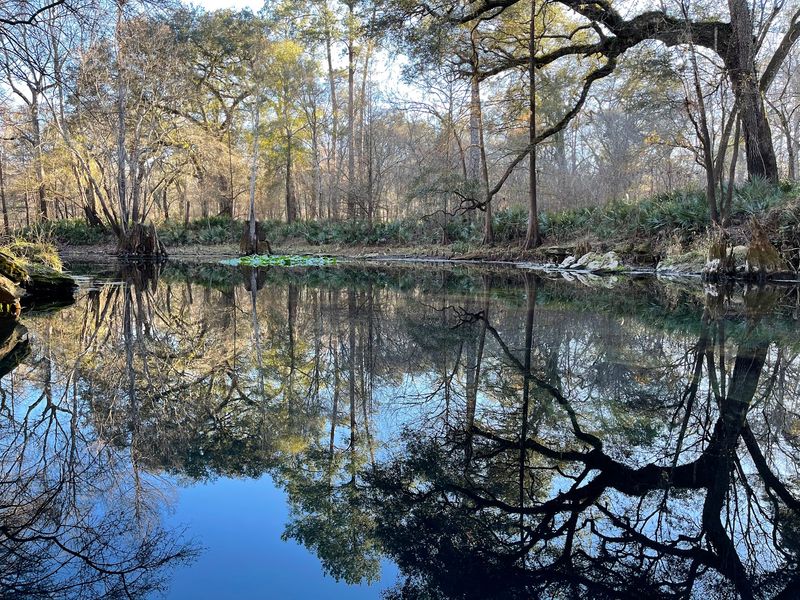
Quiet is the word that keeps coming up. The park feels secluded, tranquil, and connected to nature from the moment of arrival.
Holidays can still bring small crowds. It suits couples, friends, and anyone seeking peace.
The atmosphere leans toward relaxing for adults. The rocky, slippery entry may not be ideal for young children.
Families are rare on many days, and the scene is mostly divers. Do not expect a playground or a party vibe.
That is exactly why it works as an alternative to busier springs. The pace is slow and the space feels personal.
Leave the speakers home and bring a book. The quiet is the main attraction.
Picnic Tables and Practical Comforts
Facilities here are simple, and that is on purpose. Expect basics, not luxuries.
A covered picnic table area offers shade. Benches and tables sit near most parking spaces.
Each spring has a changing room and a portable toilet. There are no full restrooms or bigger facilities.
The park is known for being very clean. Overall cleanup efforts have improved the grounds over the years.
Parking is tight and limited. Arriving early helps, especially on busy diving days.
The road to Peacock Spring itself is dirt and can have water-filled dips after storms. Rainy days may make it tricky to reach.
Pack what you need and keep it simple. The springs handle the rest.
Hours, Honor Boxes, and Cash
Timing your trip is easy. The park opens daily from 8 am to 8 pm, seven days a week.
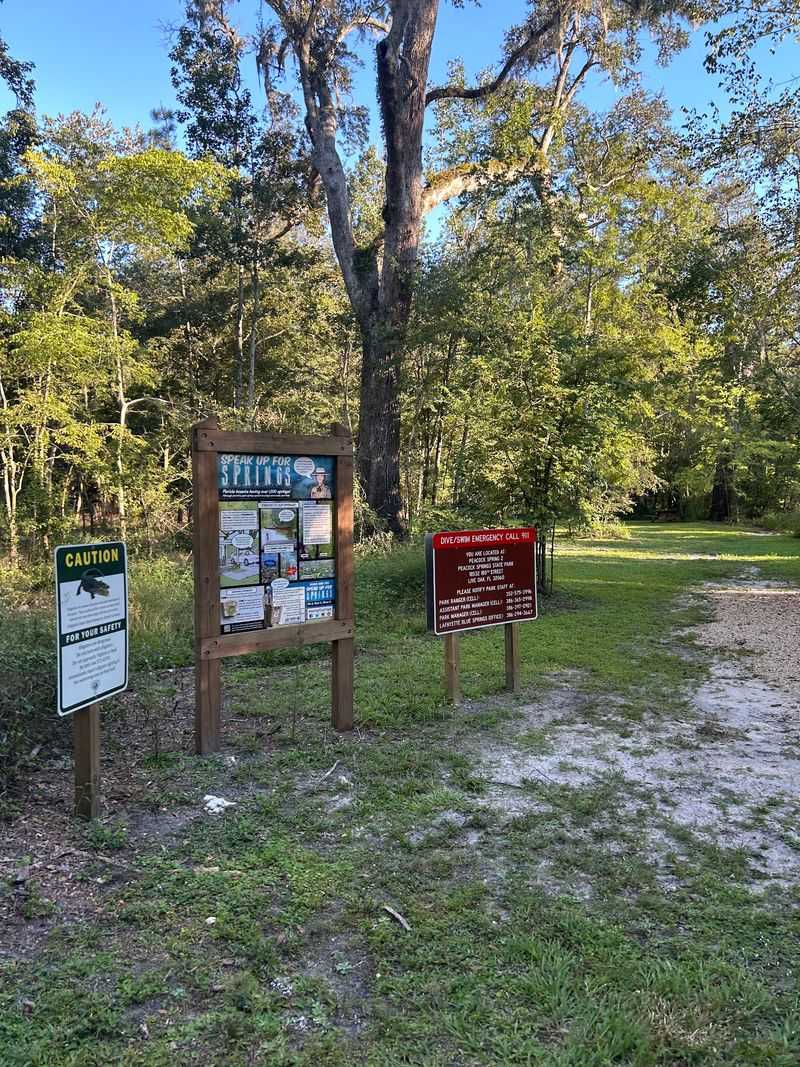
Payment works on an honor system. A blue envelope for cash is available, along with a QR code option.
The QR code does not always cooperate. Bringing cash is the safest plan.
Calling ahead at the park line is wise when river levels are high. Up-to-date info is also on the Florida State Parks website.
Mayo makes a handy base for overnight trips. The park is under 15 minutes away from there.
Remember to pack out everything you bring in. These springs are part of Florida’s drinking water supply.
Small habits keep the water clean for the next swimmer.
Worth the Narrow Road
So is it worth skipping the crowds for this quiet corner of Suwannee County? For many, the answer is a firm yes.
The park holds a 4.7-star standing from 456 Google reviews. Many call it a favorite spring in the area.
It rewards a little planning. Check water conditions, bring cash, pack bug spray, and wear sturdy shoes.
Swimmers get a calm middle spring. Divers get world-class caves, and hikers get trails with geology lessons.
It may not be for everyone, especially families with small kids. That is part of what keeps it peaceful.
Treat it with care, and the springs will be waiting for your return trip.
Enjoyed this story?
Add Fast Food Club as a preferred source to see more of our reporting on Google.