


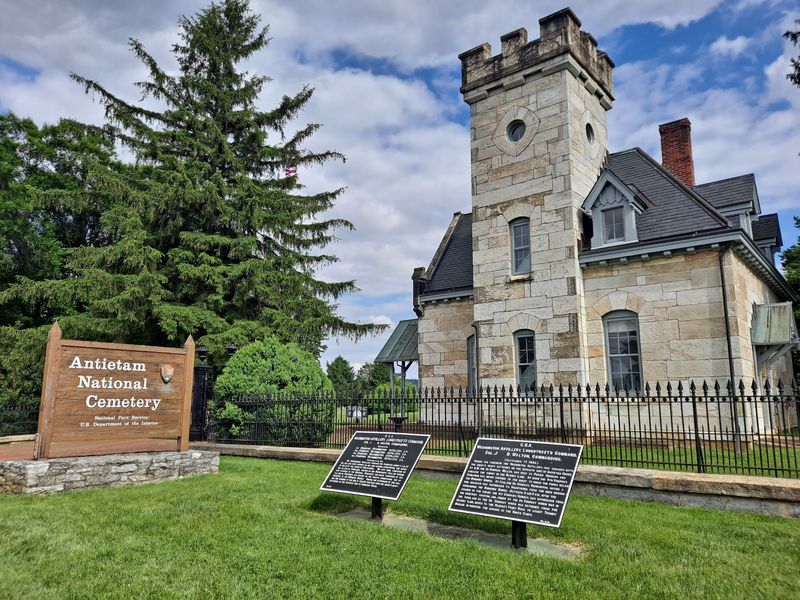
On a November weekday in western Maryland, a quiet field can teach more than a thick textbook. The tour roads go still, the trails empty out, and the farmland looks much as it did in 1862.
It is the kind of place where one short walk turns into a whole afternoon without anyone noticing the clock. This story follows a calm off-season visit through famous stops like a stone bridge, a sunken farm lane, and a tall tower with a wide view.
Along the way you will find out what to see first, how long to stay, what tickets cost, and which small details are easy to miss. Read on for a slower, smarter way to explore one of the most important spots in American history.
A Quiet Address In Sharpsburg
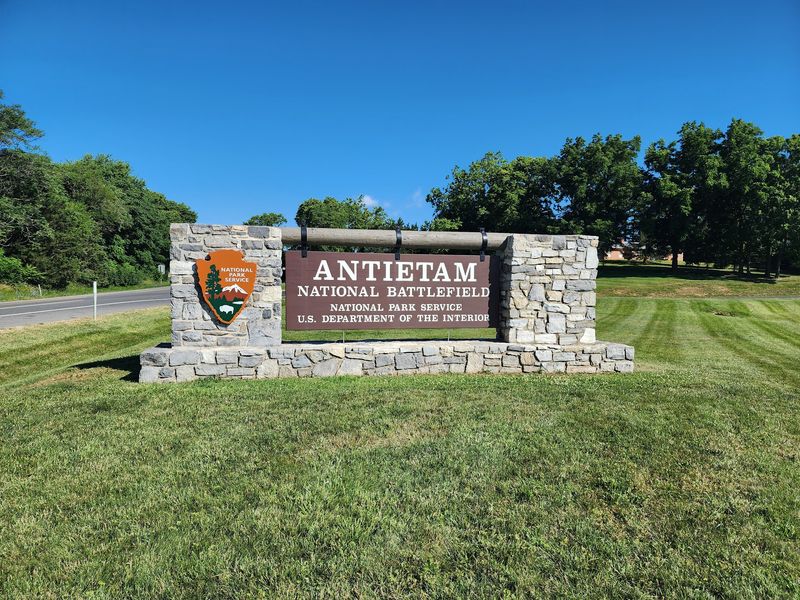
Some of the biggest chapters in American history sit at the end of very ordinary roads. Antietam National Battlefield is found at 302 E Main St, Sharpsburg, MD 21782, in the rolling countryside of western Maryland.
The National Park Service manages the site as a recreational park and historic monument. It protects the ground where a famous Civil War battle unfolded in September 1862.
Today the park offers tours, interpretive programs, and a large spread of preserved park land. The grounds cover roughly 3,000 acres, and nearly all of it is open to explore.
A November weekday is an especially easy time to arrive. The tour roads are calm, the parking lots have room to spare, and the trails rarely feel busy.
The park also has a strong reputation among people who make the trip. It holds a 4.9-star average from nearly 2,000 Google entries, which is impressive for any historic site.
Many people call it a place every American should see at least once. That is a big claim for a small Maryland town, but the fields have a way of backing it up.
The Day That Shaped The Fields
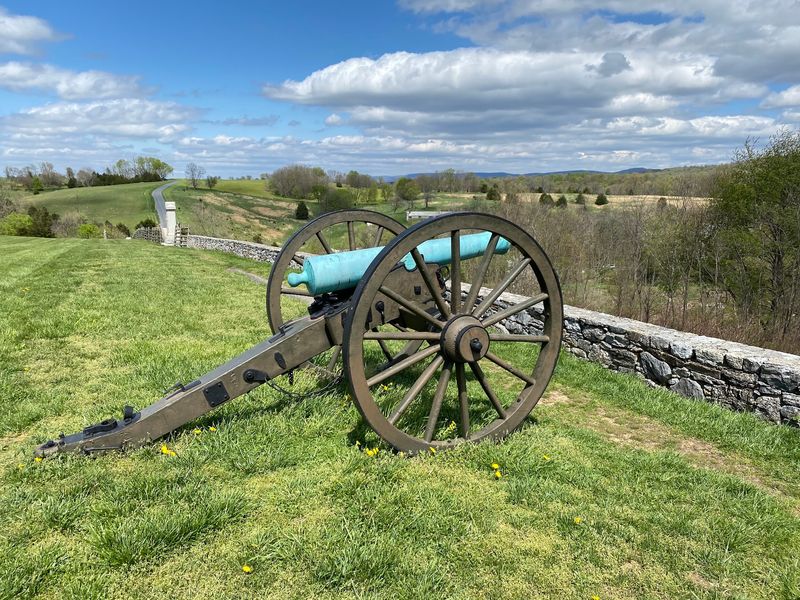
September 17, 1862, remains the bloodiest single day in American history. That fact sits quietly behind every marker and cannon in the park.
The fighting at Antietam produced about 23,000 casualties. The surprise for many first-timers is how small the area actually feels once they stand on it.
Some clashes here lasted only around 15 minutes, yet half of the soldiers involved were hurt or did not return. Those numbers change how people think about the war.
The site is often described as fascinating and difficult at the same time. It invites reflection more than celebration, and the park staff present the history with care.
That respectful tone extends to behavior on the grounds. Many people suggest keeping photo sessions short and selfies to a minimum, especially near the memorial spots.
None of this makes the visit gloomy. It simply gives each field and fence line real weight, which is exactly why the trip stays with people long after they leave.
Start Inside The Refreshed Visitor Center
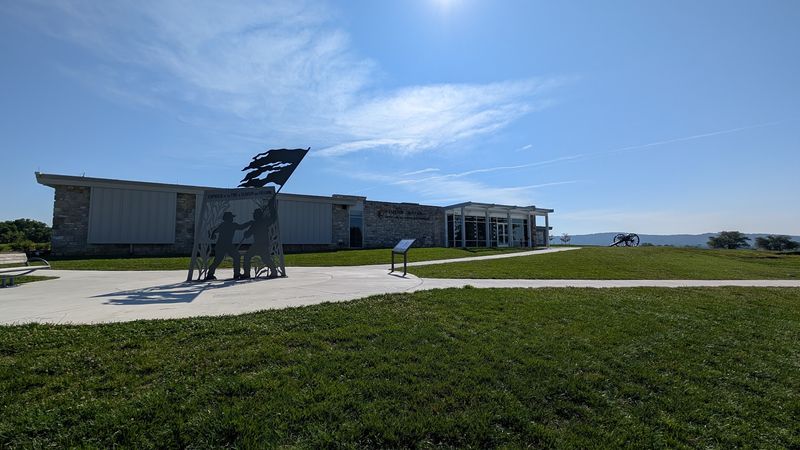
Smart explorers begin with a map, a film, and a friendly ranger. The visitor center was remodeled recently and feels almost brand new.
It opens daily from 9 a.m. to 5 p.m., including weekends. The front desk is where tickets are sold and where free paper maps are handed out.
Grab that map. It shows the walking trails and the driving routes, which helps a lot once the buildings disappear behind the hills.
A short introductory film runs about 30 minutes. It lays out the battle clearly, so the stops on the tour make far more sense afterward.
Rangers here are known for answering questions in depth, even very detailed ones. Some will share a bit of backstory with small groups before they head out.
One heads-up: some artifacts were taken off display after roof leaks following the remodel. It is a good idea to check the park website before arriving to see what is currently on view.
Two Rooms Of Remembrance And A Rooftop Room
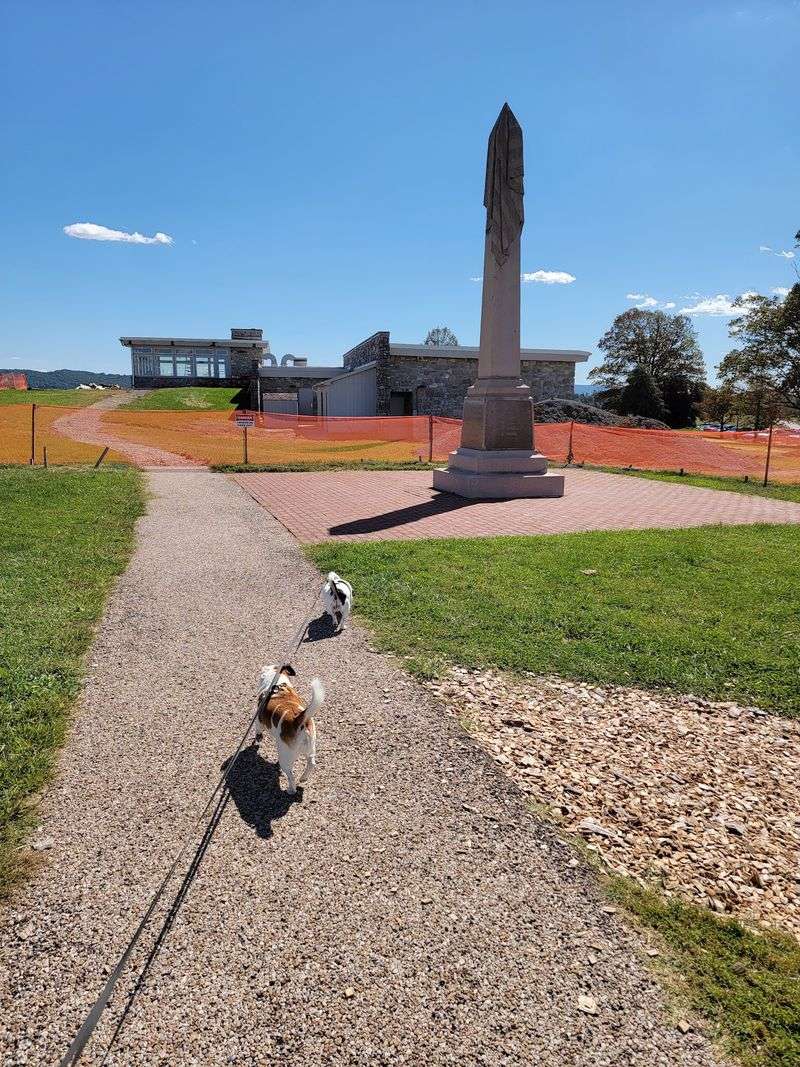
Good museums know when to stop talking. The small remembrance museum inside the visitor center fits a lot of information into just two rooms.
The amount feels manageable rather than overwhelming. Curious kids and casual history fans can move through it without feeling buried in facts.
Upstairs sits an observation room at the top of the building. Its large windows look out across the battlefield, and it is a favorite spot for photographs.
That view works as a quick preview of the day ahead. Seeing the layout from above makes it easier to follow the story once the driving tour begins.
Everything inside is kept very clean and tidy. The building feels like a calm launch pad rather than a crowded gift shop stop.
On a November weekday, there is often plenty of space to linger by the glass. A few extra minutes up there can save a lot of map-turning later.
Ten Stops Along The Blue Line
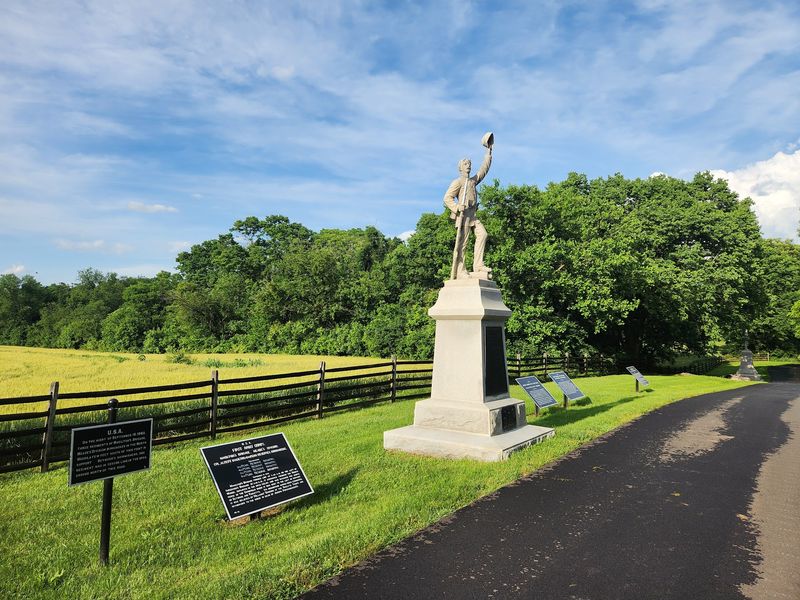
Road trips rarely come with this much purpose per mile. The self-guided driving tour follows a route marked in blue on the park map.
It includes 10 stops, and many of them have pull-offs for walking, reading markers, or simply looking out over the fields. The route is easy to navigate, even for first-timers.
Statues, plaques, and monuments appear along the roadsides throughout the drive. Small black signs add detail, though they work best with the map close at hand.
Directions like northeast on those signs can be tricky without a compass. Keeping the paper map open on the dashboard solves most of the confusion.
Traffic is usually light, and the drive can feel almost private. On a quiet weekday, it is common to have long stretches of road to yourself.
The final stop is the Antietam National Cemetery. It is a fitting, thoughtful way to close the loop before heading back toward town.
A Small White Church With A Big Story
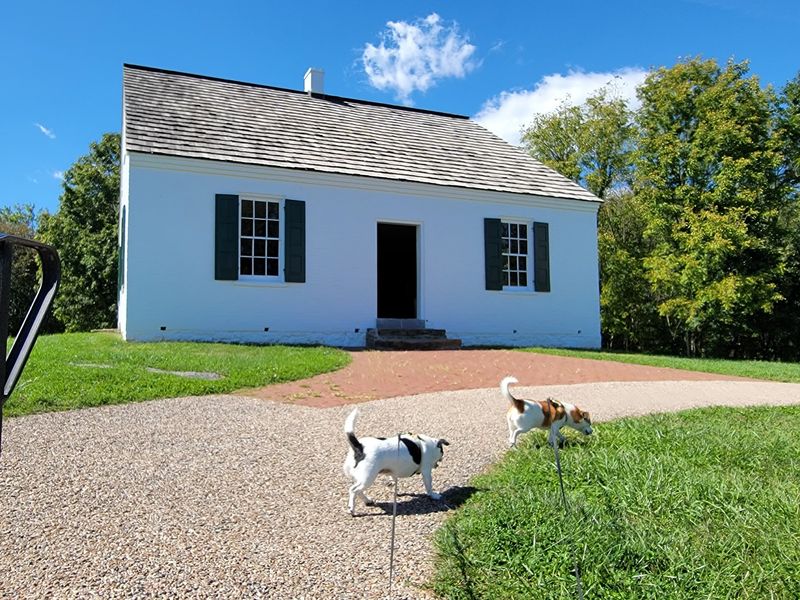
Modest buildings sometimes hold the most surprising secrets. The Dunker Church is a small, plain structure, yet it ranks among the best-known stops in the park.
Abraham Lincoln visited this area after the battle. Standing near the church means walking in some of the same footsteps he took.
Here is a detail many people miss. Behind the church, a hand-carved message can be found on the original windows, so it pays to walk around to the back.
Volunteers sometimes lead talks at the church. They are known for being friendly and well informed, and their stories add a lot to a short stop.
The building also makes a natural pause point early on the tour. It is close to the Cornfield, so the two pair nicely in a single stretch of walking.
A few quiet minutes here can set the tone for the rest of the day. Not every landmark needs to be grand to leave a mark.
Rows Of History In The Cornfield
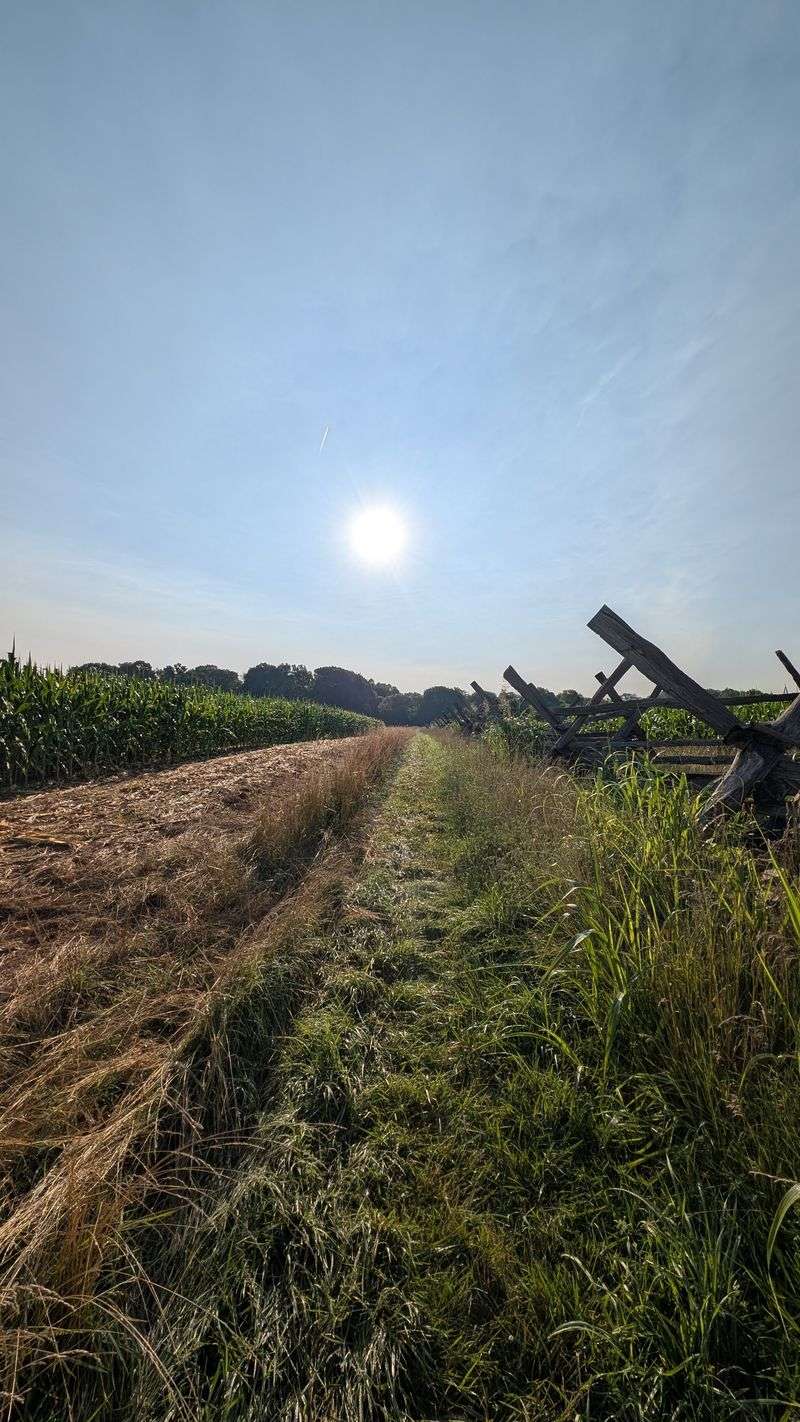
Farm fields usually tell stories about harvests. At Antietam, one field tells a very different tale.
The Cornfield ranks as a must-see on almost every list of highlights. It was the setting for some of the earliest and fiercest fighting of the day.
Today it looks like peaceful farmland, which is part of what makes it so striking. The park keeps much of the ground close to how it appeared in 1862.
That untouched quality is a big reason people praise the battlefield. Many areas look much as they did during the battle, without modern buildings crowding the view.
Markers and monuments nearby help explain which units moved where. Reading a few of them before walking out gives the open space more meaning.
In November, the field often sits bare after harvest. That plain look strips away distractions and lets the history speak for itself, which may be the strongest lesson the season offers.
The Sunken Road Called Bloody Lane
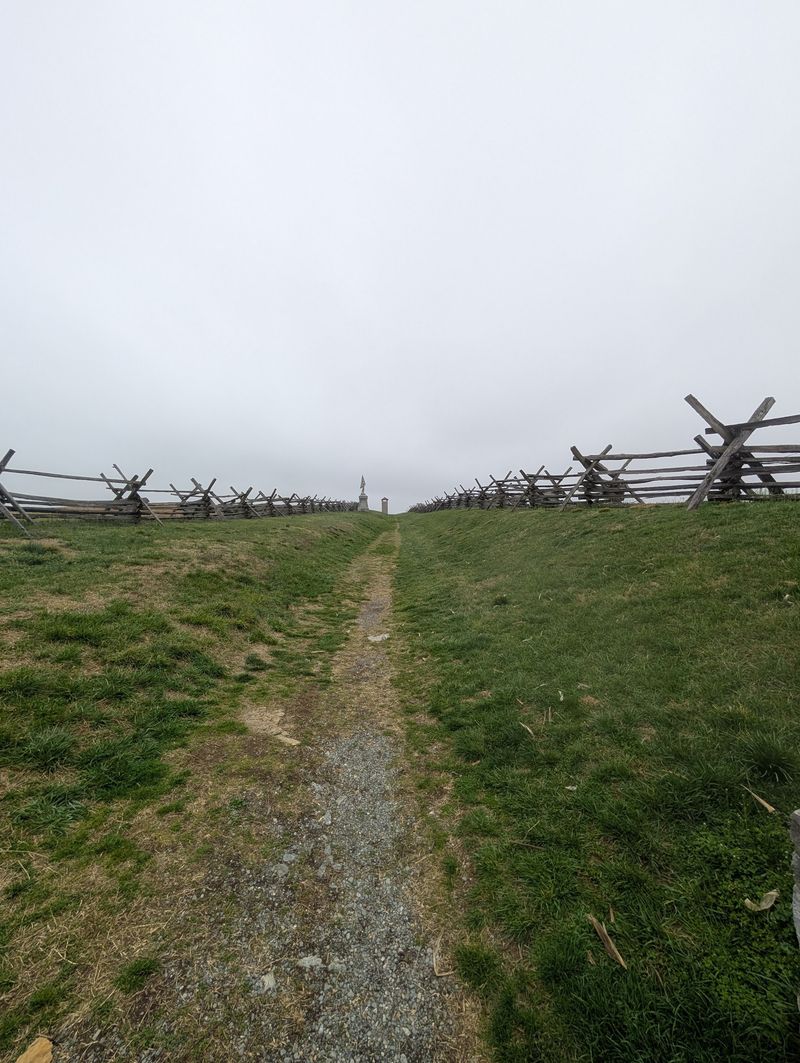
Old farm lanes were built for wagons, not for history books. The Sunken Road changed that forever and is now remembered as Bloody Lane.
It is one of the most mentioned stops in the park. Walking the lane itself is strongly recommended over simply viewing it from the car.
The worn path sits lower than the surrounding fields. Seeing that dip in person helps explain why the spot became so important during the fighting.
Fences along the edges and nearby markers guide the way. The lane connects easily to other trails, so it works well as part of a longer walk.
For extra time, a side trip back to the Roulette farm is worth considering. It adds more context to the story of this section of the field.
Few stops in the park feel quite as heavy. Even so, a quiet weekday walk here tends to become one of the most memorable parts of the whole trip.
Climbing The Observation Tower
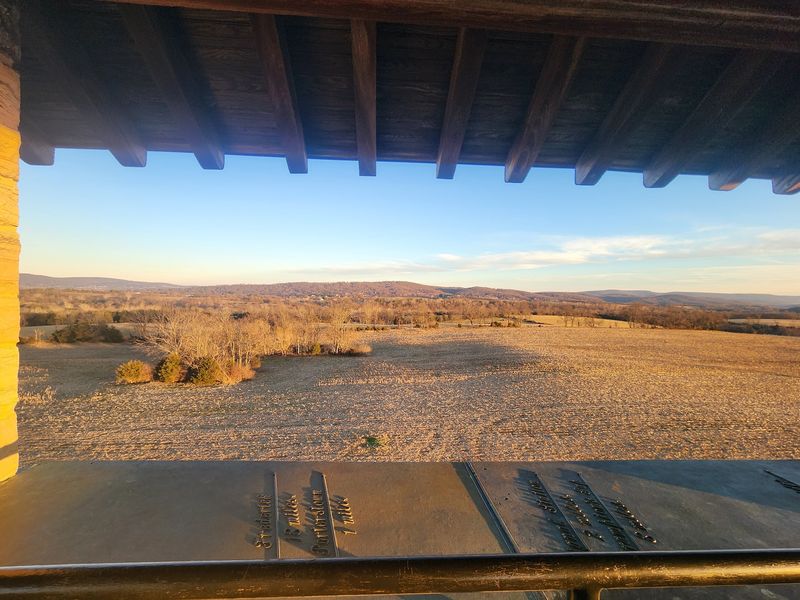
Sometimes the best way to understand a battle is to rise above it. The Antietam Battlefield Observation Tower is the single most talked-about feature in the park.
It stands off one of the tour roads and comes up naturally along the blue route. The tower is open until 5 p.m., so later arrivals should plan accordingly.
Climbing to the top offers a bird’s-eye perspective of the fields below. Many people say that view puts the entire battlefield into context.
From up there, the distances between key stops suddenly make sense. The small scale of the fighting becomes much easier to grasp.
The climb counts as a must for most first-timers. Comfortable shoes help, since stairs are the only way up.
On a crisp late-autumn weekday, the tower is rarely crowded. That means more time at the railing and less waiting at the bottom, a fair trade for a few flights of steps.
Stone Arches At Burnside Bridge
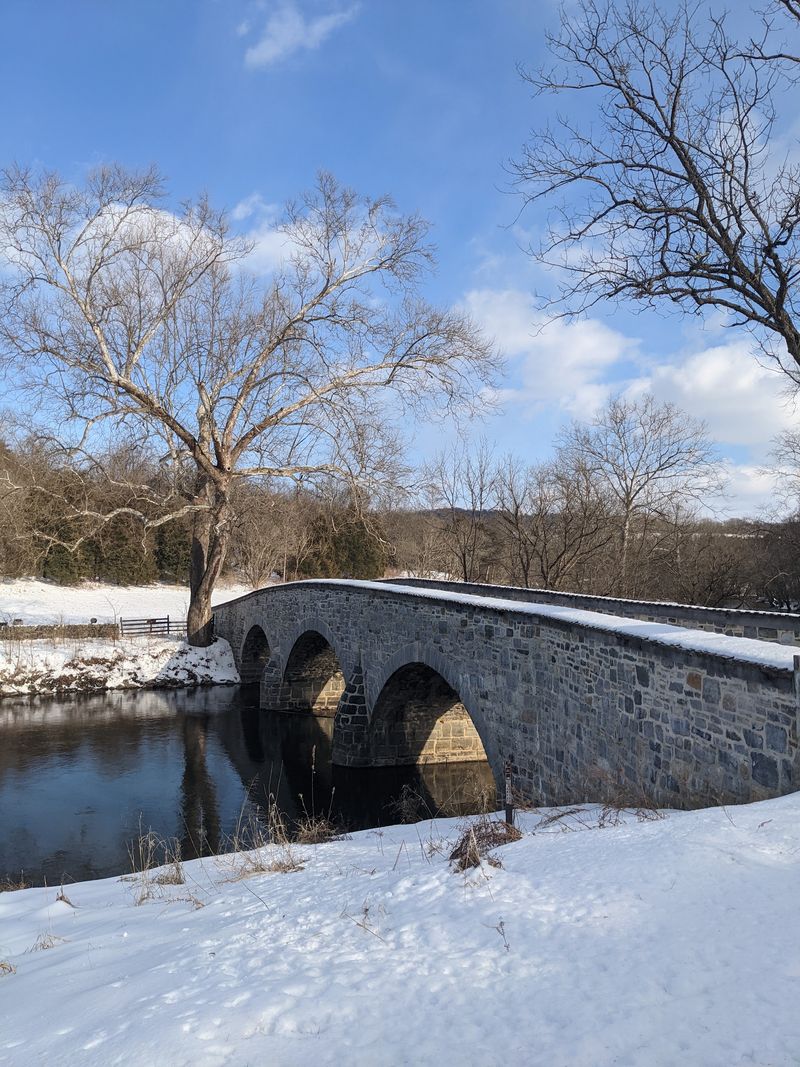
Plenty of people save the best for last, and the tour route agrees. The Historic Burnside Stone Bridge comes as a highlight near the end of the drive.
It is often named a favorite stop, and it is easy to see why. The old stone arches span Antietam Creek in a setting that feels calm today.
That calm hides a tense chapter of the battle. Markers near the bridge explain the fighting that took place on and around its crossing.
Short trails lead to and around the bridge. Walking across and along the banks gives a better look than viewing it from the parking area.
Photographers tend to spend extra time here. Autumn trees around the creek make it one of the most scenic spots in the park.
A respectful approach still applies, even with the pretty backdrop. Take the photos, then take a moment, and the bridge tends to repay both.
Trails, Bluebirds, And Open Miles
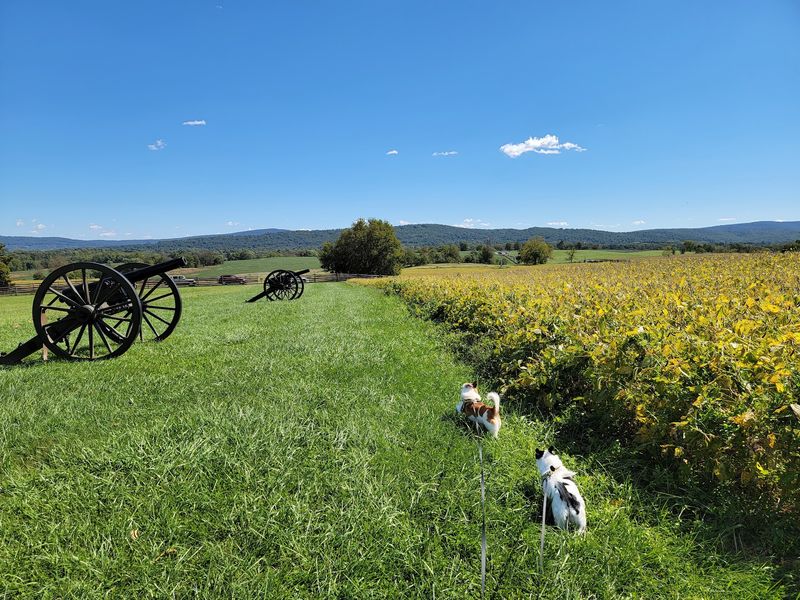
Not every visit has to happen behind a steering wheel. Miles of trails run across the battlefield, and walkers can see the main sites on foot.
The park also works well for running and biking. Some people stick to the main road, while others follow the many historical trails.
Here is a fun fact for nature fans. The park is home to what is described as the longest bluebird trail of birdhouses.
Volunteers from the Maryland Ornithological Society have tracked nesting birds in those boxes since the 1970s. Blue jays, cardinals, and even the occasional Baltimore oriole turn up here too.
Groundhogs are another common sight, scurrying across the grass between monuments. Families with kids often enjoy spotting them along the paths.
Bring water on longer walks, and bug spray during warmer months. A picnic is also an option, since a small store and cafe sits just outside the park for grabbing supplies.
Guided Tours Worth Booking
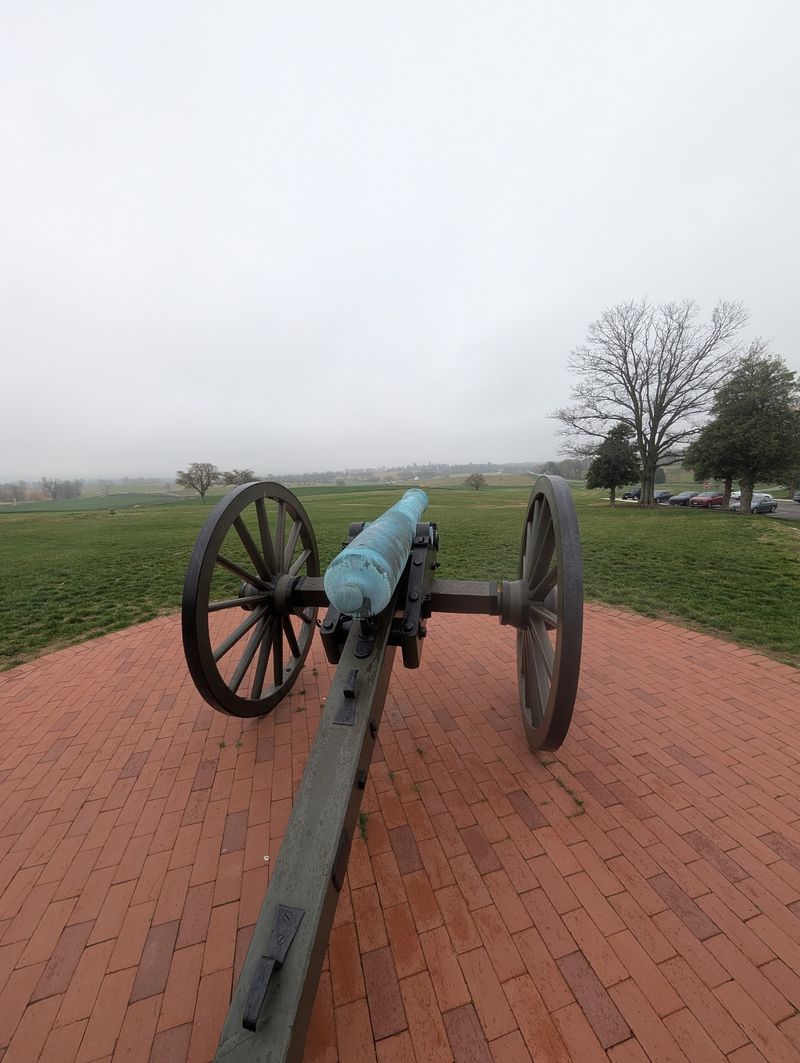
A good guide can turn a field into a full story. Antietam offers several guided options for anyone who wants more than signs and maps.
Private guides can ride along in your own car and stop at key spots. One three-hour tour cost $120 for two people, and many consider that length just right.
Shorter two-hour tours are also available. Some guides have led tours here for nearly two decades and recite details from memory.
Period photographs are a common part of these tours. Holding an old image up against the real landscape makes the history feel much closer.
Volunteers add another layer of learning at places like the Dunker Church. One volunteer known for explaining artillery in kid-friendly terms has even written a book on the subject.
Tour options and booking details are listed on the National Park Service website. Checking there ahead of time helps lock in a spot, though quieter weekdays often leave more room on the schedule.
Hours, Fees, And Timing Tips
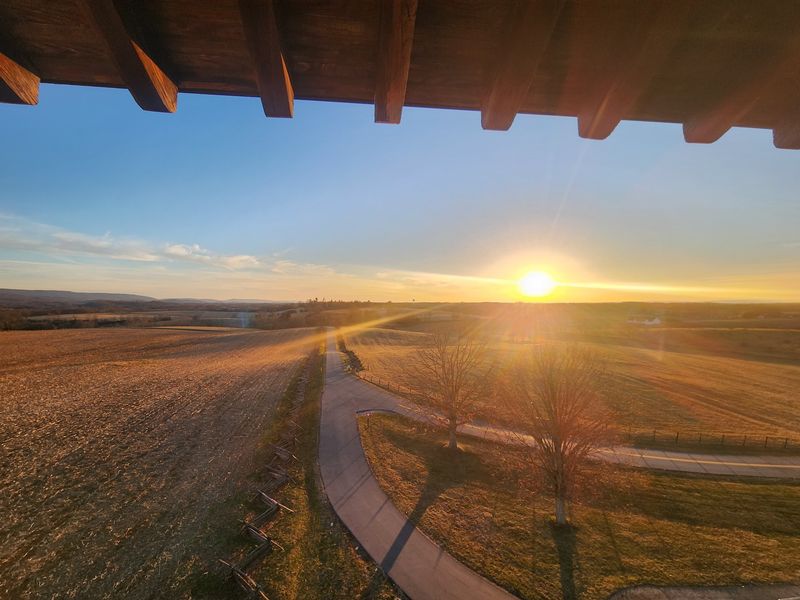
A little planning goes a long way on a battlefield this size. The visitor center is open every day from 9 a.m. to 5 p.m.
The grounds stay open until about 10 minutes after sunset. Even a 3 p.m. arrival can leave time for a trail, the museum, and the driving tour.
Entry costs $10 per person or $20 per vehicle, paid at the front desk. Some first-timers are surprised by the fee for driving the tour, so it helps to know in advance.
How long should you stay? About two and a half to three hours covers the highlights for casual history fans.
Serious history lovers often spend four to seven hours and still want more. A full day, or even two, is not unusual for exploring the trails and monuments.
November shortens the daylight, so an earlier start is wise. The park website lists current updates, and the phone line at the visitor center can help with questions about programs.
Why A Quiet Weekday Wins
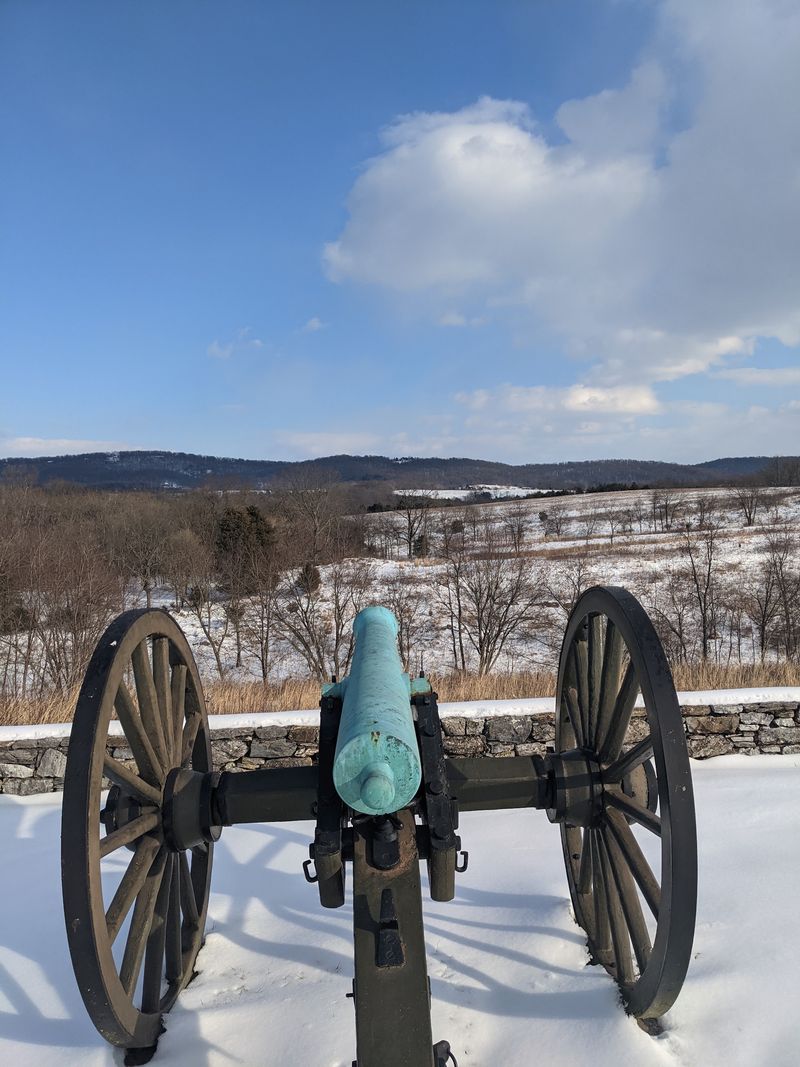
Crowds come and go, but the fields at Antietam stay patient. A November weekday lets that patience rub off on anyone who visits.
The park suits history buffs, families, walkers, runners, and bird watchers alike. It is easy to drive, generally uncrowded, and enjoyable for all ages.
Those who stay nearby can also seek out other Antietam Campaign sites in the surrounding area. They add more pieces to the same story.
Early December brings a special event worth marking on the calendar. On the first Saturday of the month, a luminaries memorial fills the fields with thousands of candles, and some families travel across the country to attend.
Until then, a quiet autumn walk may be the best introduction. Fewer cars, open trails, and unhurried stops leave plenty of space to think.
History here is not loud or flashy. It simply waits along the lanes and bridges, ready for anyone willing to slow down and listen.
Enjoyed this story?
Add Fast Food Club as a preferred source to see more of our reporting on Google.