


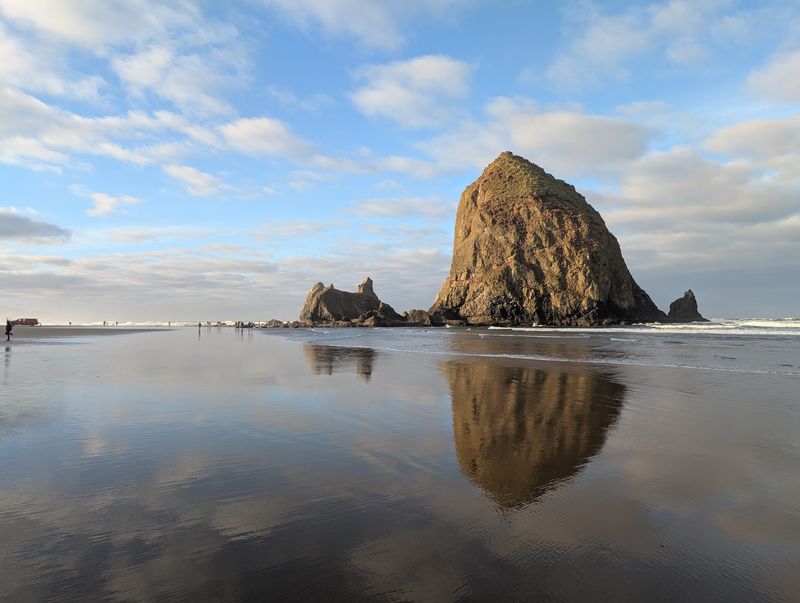
Summer on the north Oregon coast means full parking lots, packed sidewalks, and a long line of cameras pointed at one famous shoreline. Locals in Cannon Beach tend to save their tide pool time for the slower months, when the beach empties out and the low tides still uncover sea stars, anemones, and scuttling crabs.
The landmark behind all this attention has starred in a classic adventure film, sheltered nesting puffins, and drawn more than ten thousand glowing write-ups online. It also has a history that involves ancient lava, stranded climbers, and a dose of dynamite.
Keep reading for the full story, the best ways to time the tides, where to park without losing your patience, and why the quiet season might be the smartest season of all.
A Monolith on the Edge of Cannon Beach
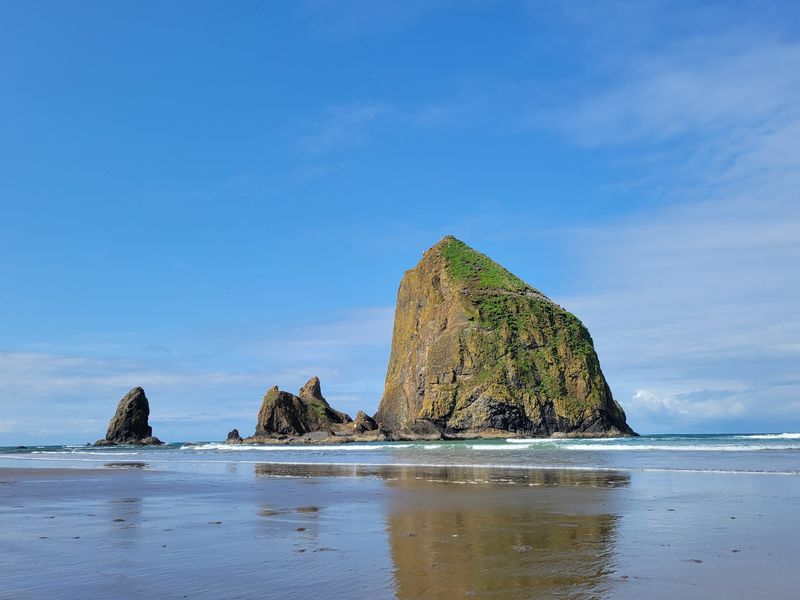
Some landmarks hide behind gates and ticket booths, but this one sits right on a public beach. Haystack Rock stands at US-101, Cannon Beach, OR 97110, on the north Oregon coast of the United States.
The giant basalt formation rises straight out of the surf line, dotted with patches of greenery along its ledges. Smaller sea stacks cluster nearby, adding to the dramatic shoreline that has made this spot one of the most photographed places in Oregon.
Officially, it is listed as a tourist attraction. Unofficially, it is the reason many road trips along US-101 make a detour into town.
The rock carries a 4.8-star average from more than 10,800 online write-ups, which is a remarkable showing for a pile of ancient stone. Most of that praise centers on three things: the tide pools, the seabirds, and the sheer scale of the formation.
Access is simple and free in the sense that there is no gate to the beach itself. The real trick lies in timing, because the ocean decides how close anyone can get.
At high tide, the base of the rock sits surrounded by water. At low tide, the sand stretches out to its edges and the pools around it open up for exploring, which is where the real fun begins.
Lava, Stranded Climbers, and a Little Dynamite
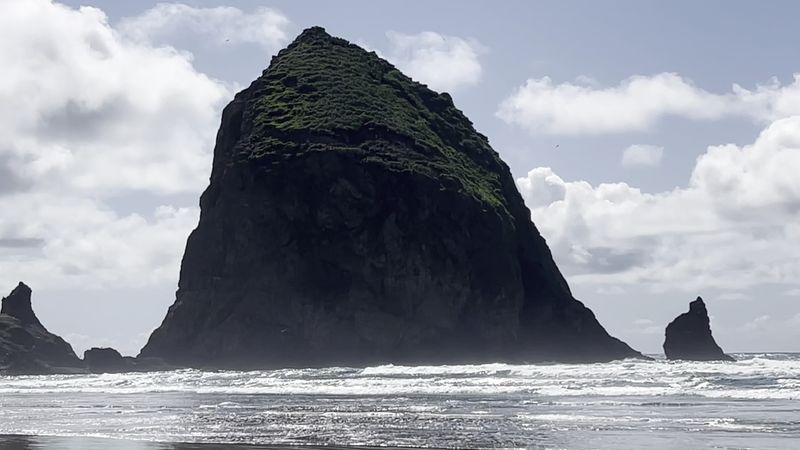
Long before anyone parked a car in Cannon Beach, molten rock was doing the heavy lifting. Haystack Rock formed from ancient lava flows, which explains its dark, rugged basalt body.
The more recent history is a bit more human, and a bit more chaotic. People once climbed the rock freely, and many of them ended up stranded when the high tide rolled back in.
Those situations required a long string of rescues. To discourage climbing, the lower portion of the rock was dynamited, which helped create the steep monolith shape that stands there now.
Today, climbing is off the table for good reason. The rock and its surroundings are protected as a marine garden and wildlife refuge, so the creatures living on and around it get priority over anyone hoping for a summit selfie.
That protected status shapes the whole experience. People can walk up to the base and peer into the pools at low tide, but the habitat itself is treated as something to observe, not disturb.
It is a neat twist in the story. A rock that once needed rescue crews now serves as a rescue zone of its own, sheltering seabirds and sea life on a coast that gets plenty of foot traffic.
The Tide Pool Treasure Hunt
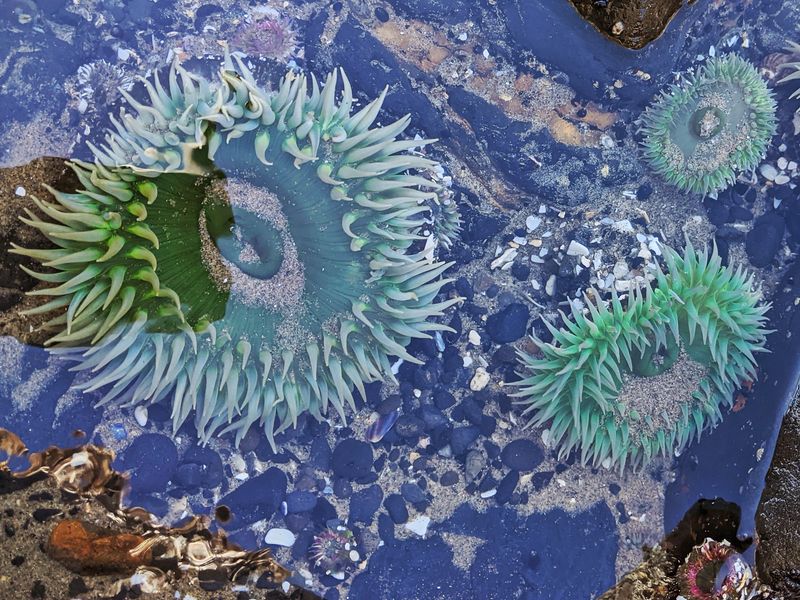
Ask anyone who has spent an afternoon here what stole the show, and the answer usually lives in a puddle. The tide pools around the base of Haystack Rock are the most talked-about feature of the entire beach.
At low tide, the receding water reveals clusters of sea stars clinging to the rocks. Some are caught in the middle of a meal, slowly working over whatever they have latched onto.
Green anemones fill the crevices, and tiny crabs dart between the stones. Hermit crabs make appearances too, hauling their borrowed shells around the shallow water.
One surprise for first-timers is the number of jellyfish eggs that can show up on the sand. Many people have never seen them before and end up spotting them all over the beach.
The key rule is simple: low tide is necessary. Without it, the pools stay underwater and the rock remains out of reach.
Checking a tide chart before heading out saves a lot of disappointment. Morning low tides tend to pair nicely with fewer people, giving everyone more room to crouch down and look closely.
Kids and adults get equally hooked on the hunt. There is something about finding a sea star tucked under a ledge that turns grown-ups back into curious ten-year-olds.
Why the Off-Season Wins
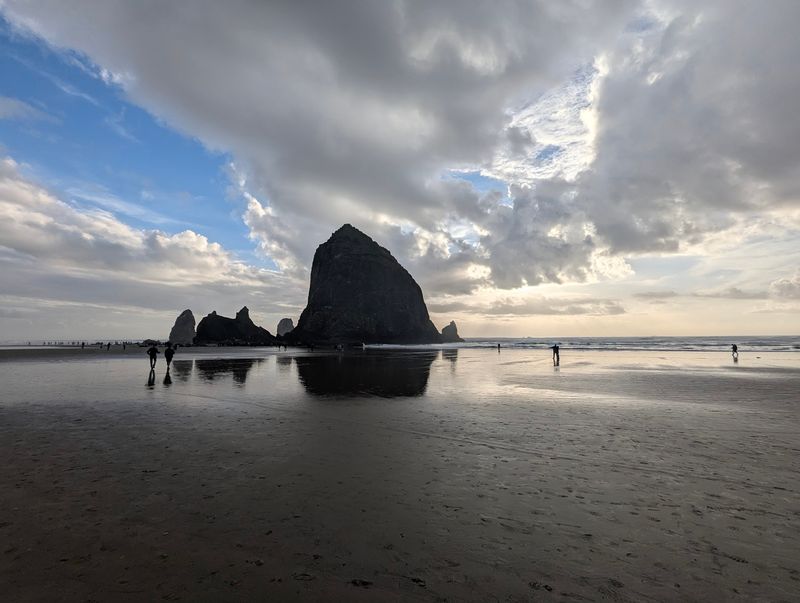
Crowds are the one complaint that keeps coming up about this beach. Summer weekends bring busy streets, a scramble for parking, and plenty of company around every tide pool.
The quieter months change that math. In mid-September, parking near the beach can open up nicely, leaving room for a relaxed walk down the shore to the rock.
Fair warning, though: the off-season is not a guaranteed ghost town. Some late-season trips still find the town busy, because Haystack Rock pulls people in year-round.
Still, locals understand the logic of waiting for slower stretches of the calendar. Fewer people around the pools means more space to explore the base of the rock at low tide without bumping elbows.
Misty, overcast, and drizzly days are common on this coast, and they hardly slow anyone down. Plenty of people say the gray weather made the scene feel otherworldly, almost like standing at the edge of another world.
The trade-off is the puffins. Those seabirds arrive to nest in spring, so a winter trip focuses more on the pools, the beach walk, and the quiet.
For anyone who values elbow room over a packed itinerary, the slow season makes a strong case for itself.
Puffin Season on the Ledges
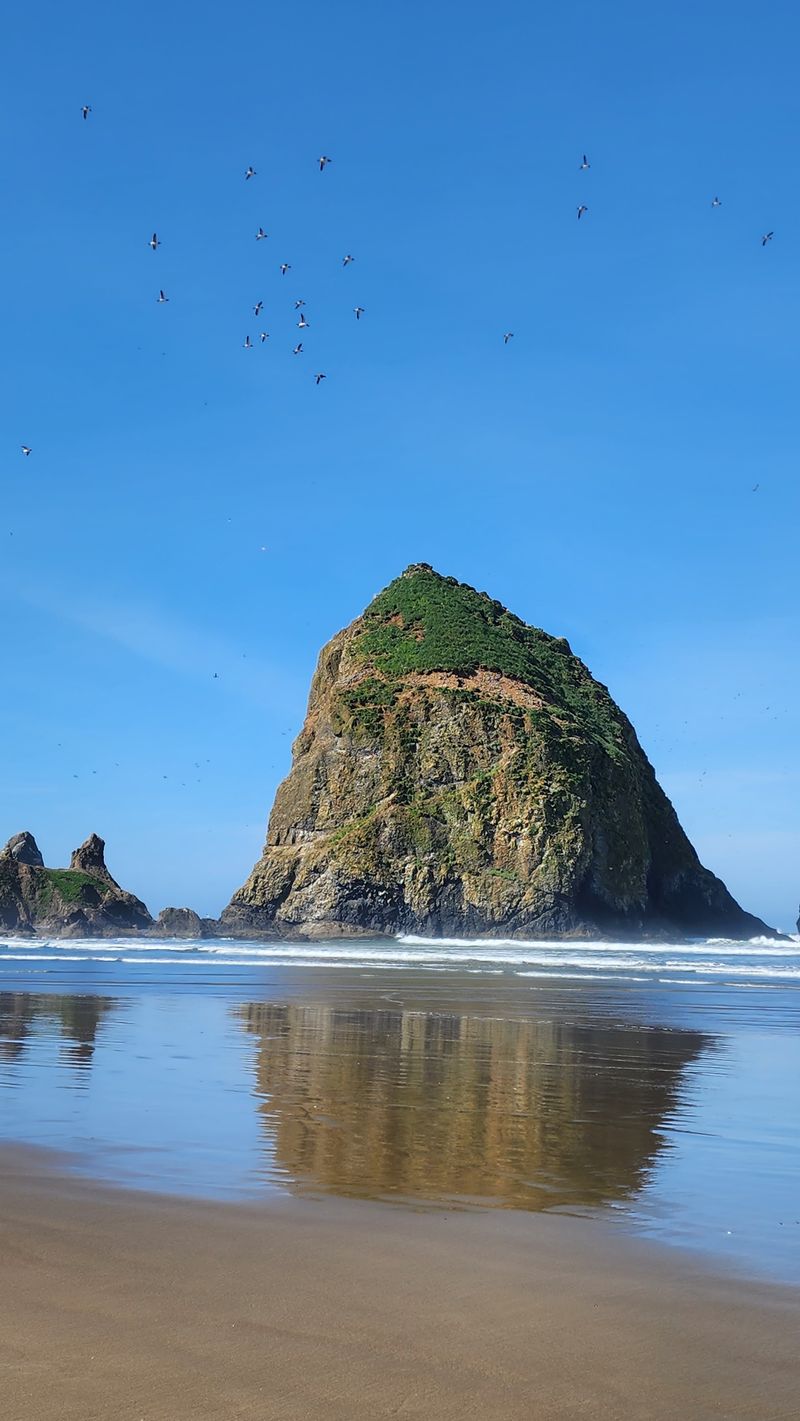
Few birds have a fan club quite like the tufted puffin. Every spring, these striking seabirds come to nest on Haystack Rock, turning the formation into one of the best-known puffin viewing spots on the Oregon coast.
The nesting window is short, which adds to the excitement. Late May tends to deliver plenty of action, with puffins circling the rock again and again.
Getting a clear photo is a challenge, since the birds move fast and stay high. Even dedicated birders sometimes walk away with great sightings and blurry pictures, which is still a win in most books.
Puffins are not the only residents. Cormorants, common murres, gulls, and harlequin ducks also show up around the rock and its neighboring sea stacks.
Low tide helps here too. It lets people stand closer to the base for better views while staying respectful of the wildlife refuge.
Birders treat this place as a bucket-list stop, and casual watchers often leave with a new hobby. A little patience, a good lens, and a willingness to look up can turn an ordinary beach day into a full-blown birding session.
Spring belongs to the puffins, so plan accordingly if they top the wish list.
Volunteers in Vests and Binoculars on Loan
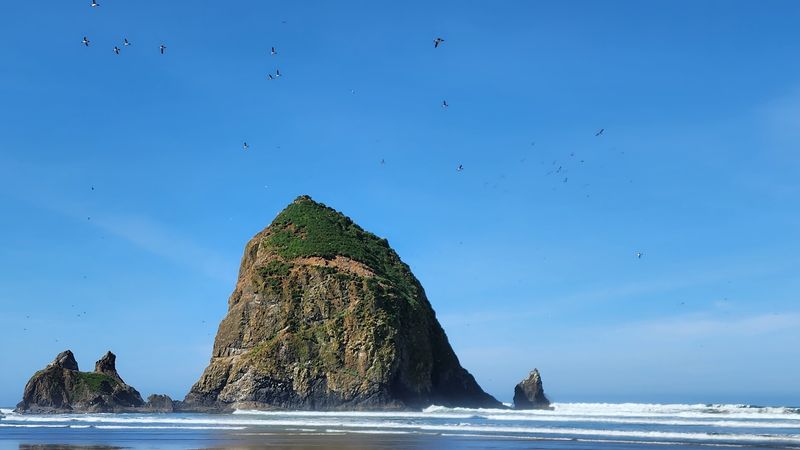
Out on the sand near the rock, a few people stand out from the crowd thanks to their vests. They are volunteers, and they play a big role in how this beach works.
Their job covers a little of everything. They answer questions about the creatures in the pools, keep an eye on how people interact with the habitat, and help protect the ecosystem from careless boots.
They also lend binoculars for bird viewing around the rock. That small gesture makes a huge difference during puffin season, when the birds are perched far above the beach.
Informational signs placed around the area help with identification as well. Anyone unsure whether that blob is an anemone or just a wet rock can usually find an answer nearby.
The volunteer presence also helps keep the beach clean, which explains why so many people describe the shoreline as tidy and well cared for.
Wildlife lovers appreciate this setup most of all. Seeing people actively protecting the pools adds a layer of meaning to the visit, and it keeps the habitat in good shape for the next group of curious explorers.
A quick chat with a volunteer often turns a casual glance into a real lesson.
Hollywood Has Been Here Too
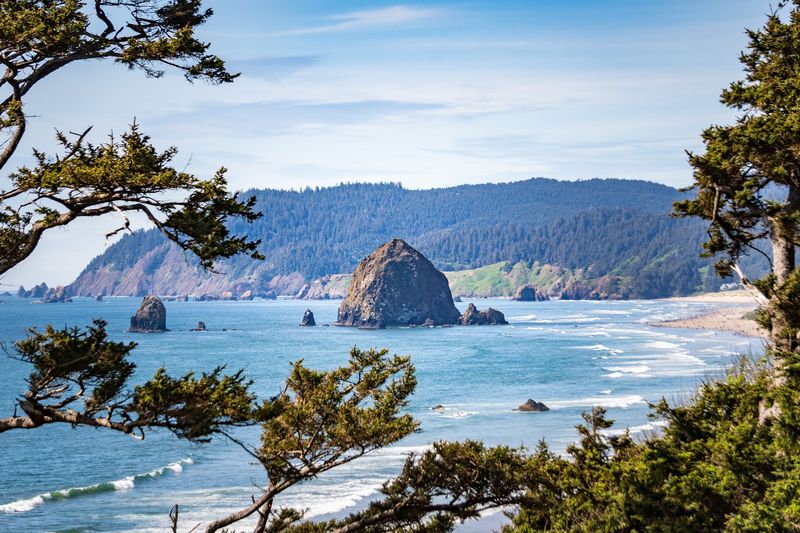
Movie buffs recognize this shoreline before they even step onto it. Haystack Rock appears in The Goonies, the 1980s adventure film that still draws fans to the Oregon coast.
The rock comes up again and again in conversations about the beach, with fans treating a stop here as a must on any Goonies-themed road trip.
A second fan base arrives with a different movie in mind. Twilight fans make the trip too, eager to stand near a view tied to the series.
Rainy days do not bother this crowd one bit. Some fans say the drizzle only made the setting feel more fitting for the franchise.
Not a movie person? No problem.
The scenery holds up on its own, and plenty of people with zero interest in film history still call it one of the highlights of their Oregon trip.
Still, it is fun to know the backstory. Standing on the sand and recognizing a location from the screen adds a small thrill to the walk, the kind that turns a beach stroll into a bit of a scavenger hunt.
Bring the movie trivia, or leave it at home. The rock is happy to perform either way.
Sunsets, Driftwood, and Evening Bonfires
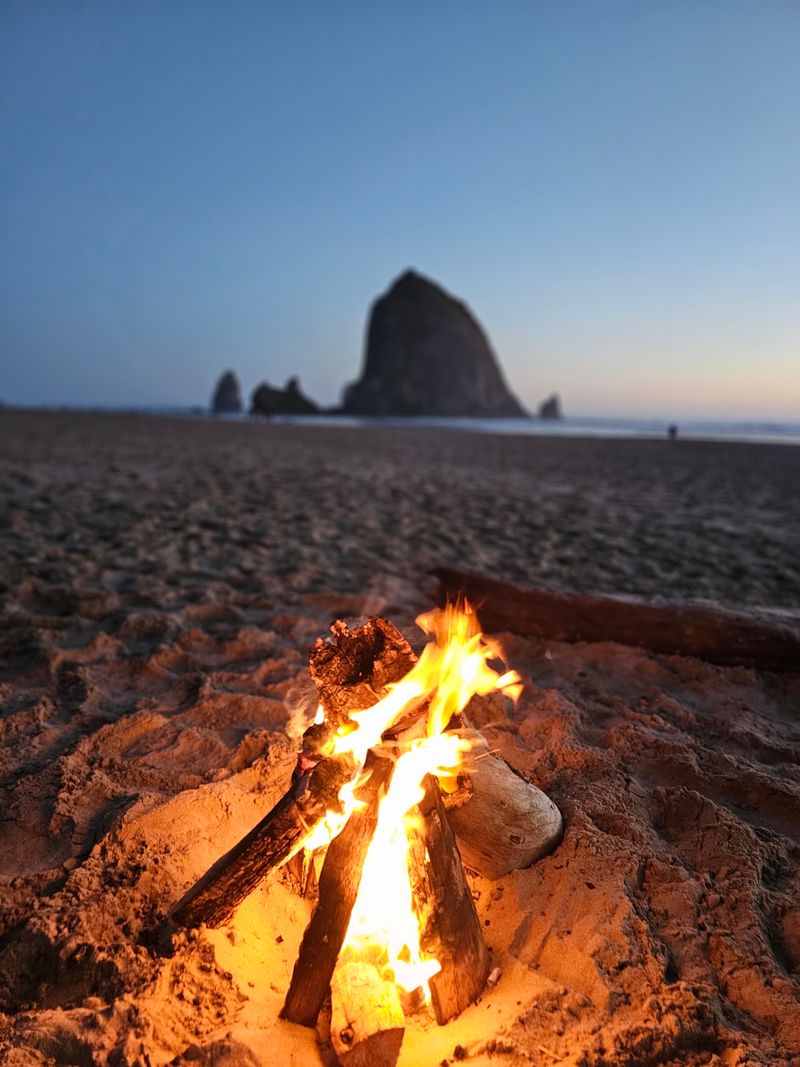
When the tide pools go back underwater, the beach simply switches to its evening program. Sunset is a favorite time here, with the rock silhouetted against the sky and reflections spreading across the wet sand.
Photographers love this setup. Phones and professional cameras alike come away with strong shots, especially during sunrise and sunset.
Driftwood scattered along the shore makes a handy seat. It also tends to sneak into some of the most memorable candid photos of the trip.
Small bonfires are part of the evening routine on this beach, and many families make s’mores as the light fades. That tradition gets a lot of love, and it gives the place a cozy, social mood after dark.
Parking also gets easier later in the day. Arriving in the evening can mean finding a spot without circling the block several times.
Overcast evenings are no reason to stay away. Sometimes the setting sun breaks through a gap in the clouds at the last minute, giving patient watchers a fine payoff.
A morning visit for the pools and an evening visit for the sunset make a smart two-part plan. The rock looks like a different landmark at each end of the day.
Parking, Restrooms, and Other Practical Puzzles
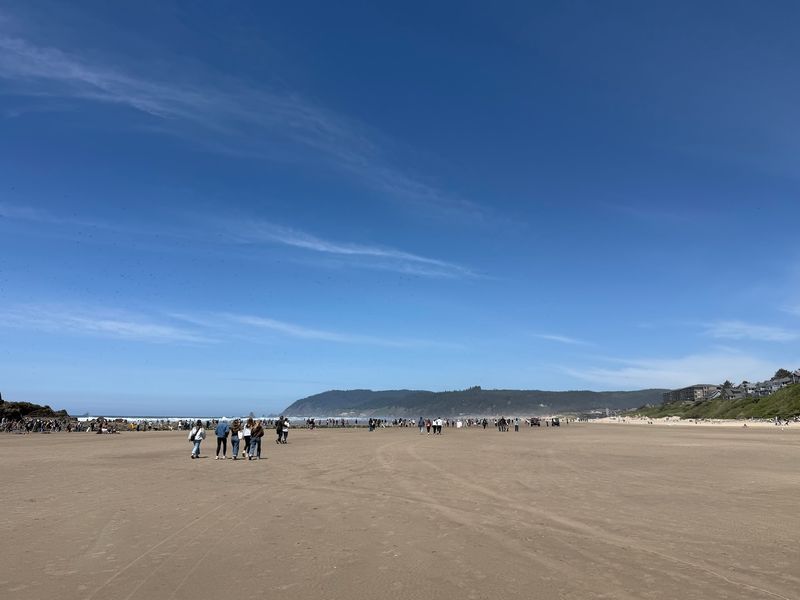
Here comes the least glamorous part of the trip, and also the most useful. Parking is the biggest headache at Haystack Rock, especially on busy summer days.
Cars are not allowed on the beach, so everyone parks nearby and walks in. The easiest route starts at a parking lot near the rock, then crosses the street past the public restrooms and homes to land right in front of the formation.
When that lot fills up, the Tolovana Beach State Recreation Site offers a larger lot. Non-residents pay $12 to park there through QR codes, and the walk to the rock runs about a mile each way.
Side-of-the-road parking is another option when spaces open up. Beach entrances are well marked, so finding the sand is not hard once the car is settled.
The restrooms sit a fair walk from the beach, and a rinse station is right beside them. That comes in handy after poking around tide pools in damp sand.
The ocean temperature stays low even in summer, so anyone tempted to swim should bring a wetsuit or a warm blanket. Small flies near the shoreline can be a nuisance, so plan for a few uninvited guests.
A Soft Verdict for Slow-Season Explorers
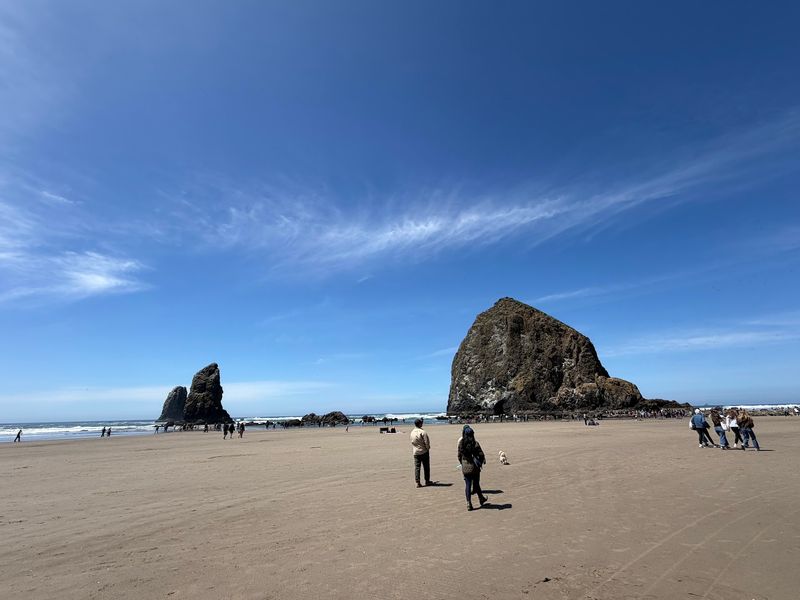
After all the tide charts, parking strategies, and puffin math, the takeaway is pleasantly simple. Haystack Rock rewards anyone who shows up at low tide and takes their time.
The long beach invites a walk in either direction. Locals jog and walk their dogs along the sand, and dogs are welcome on this stretch of shore.
On a clear day, the Tillamook Rock Lighthouse can be spotted offshore. Early risers sometimes catch a glimpse of elk too, which adds a bonus round to the morning.
Beyond the beach, the town of Cannon Beach offers shops, cafés, and restaurants within easy reach. A stop at nearby Ecola State Park can fill the gap while waiting for a parking spot or a better tide.
For the full puffin experience, spring is the season to target. For quiet tide pools and more breathing room, the slower months make a lot of sense, which is exactly why locals keep that timing in their back pocket.
Either way, the rock delivers. Pack a tide chart, some patience, and a camera, then let the Pacific set the schedule for one of the most rewarding beach days on the Oregon coast.
Enjoyed this story?
Add Fast Food Club as a preferred source to see more of our reporting on Google.