


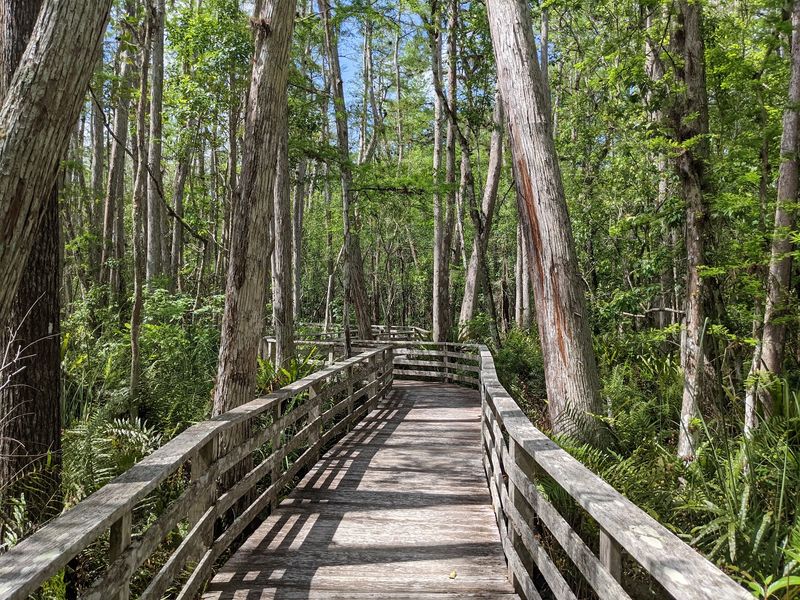
Some trees in Southwest Florida were already growing for centuries before the first highway reached Naples. A short drive inland from the beaches, a wooden path winds for more than two miles through one of the state’s few remaining old growth forests.
Alligators rest below, raccoons wander along the edges, and herons and hawks perch in the branches overhead. It is quiet, it is wild, and it is surprisingly easy to explore, even with kids or a wheelchair.
The sections below cover the history behind this protected swamp, the wildlife worth watching for, the best times to go, and the practical details that make a morning here go smoothly. There is also an honest heads up about a certain biting insect that catches plenty of people off guard in spring.
A Sanctuary Hiding Inland From Naples
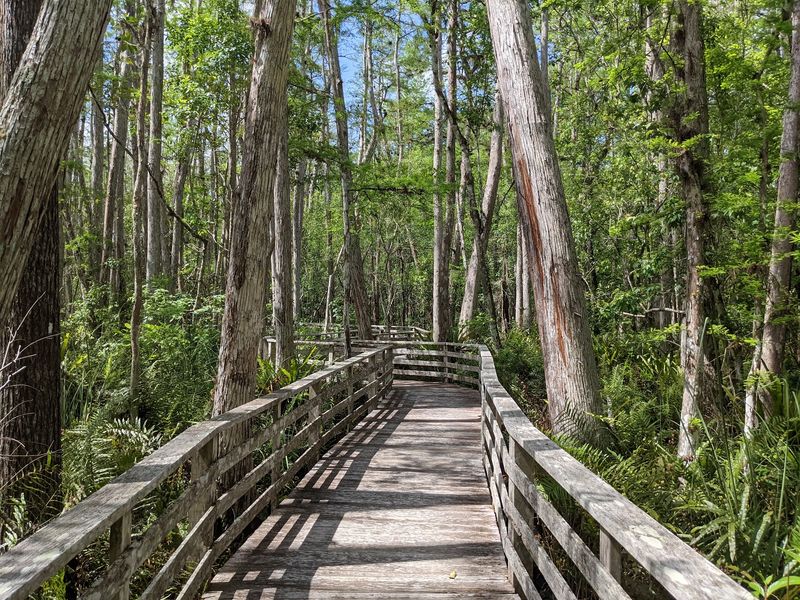
Most trips to Naples point toward the Gulf, but one of the area’s most memorable stops sits well away from the sand. Audubon Corkscrew Swamp Sanctuary is located at 375 Sanctuary Rd W, Naples, FL 34120, in Southwest Florida, United States.
The property is a natural, protected wetland area. Its main features are a boardwalk trail, an observation tower, and a long list of native wildlife.
Calling it a park is fair, though it works more like an outdoor classroom with a front row seat to the swamp. Signs, lookout points, and staff help guide the way from start to finish.
The sanctuary keeps morning hours. It is open daily from 8 AM to 1 PM, so this is an early riser’s kind of outing.
Plenty of on-site parking makes arrival simple. A visitor center greets guests before the boardwalk begins, and staff often explain the layout of the path when tickets are purchased.
That quick orientation matters. Once the trail starts, the swamp takes over, and the only real decision is how fast or slow to move.
Seventy Years of Protection
Back in 1954, a decision was made that still shapes this corner of Collier County today. That was the year the sanctuary was established.
Here is a detail many people get wrong. Corkscrew is not part of the Florida State Parks system.
Instead, the 13,000-acre sanctuary is owned and managed by the National Audubon Society. It ranks among the largest tracts of privately owned conservation land in Florida.
That ownership explains a lot about the experience. Education sits at the center of the mission, and local events are held with that goal in mind.
The protection also explains why the forest still looks the way it does. Much of Southwest Florida has been shaped by development, yet this swamp offers a break from the manicured landscapes found closer to town.
Supporting the sanctuary through admission or an annual membership helps keep that work going. For a place that has stayed wild for seven decades, a ticket feels less like a fee and more like a vote.
Giants of the Old Growth Forest
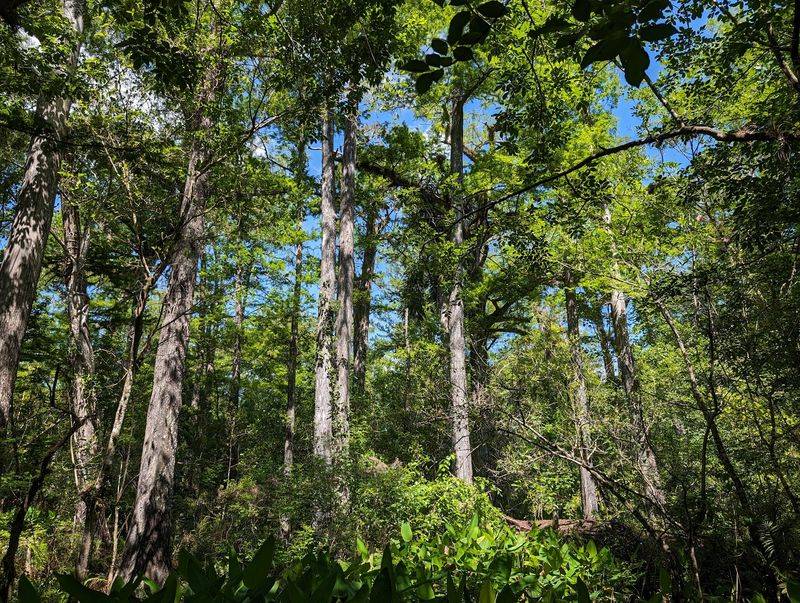
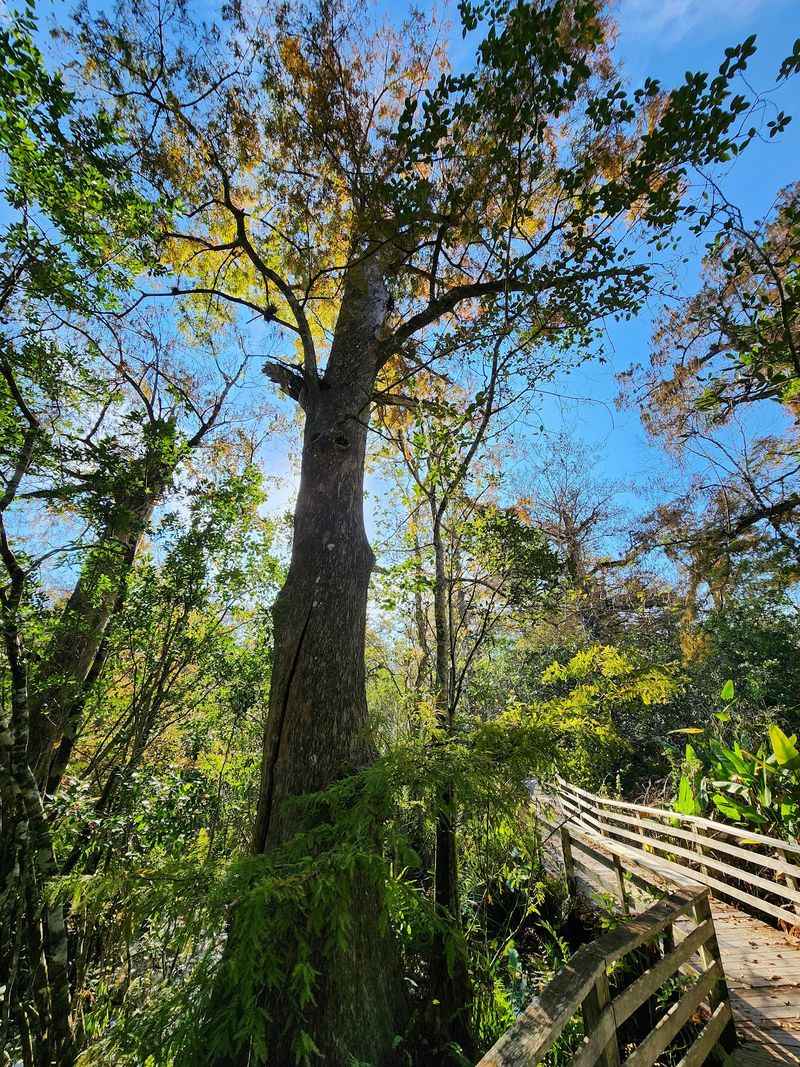
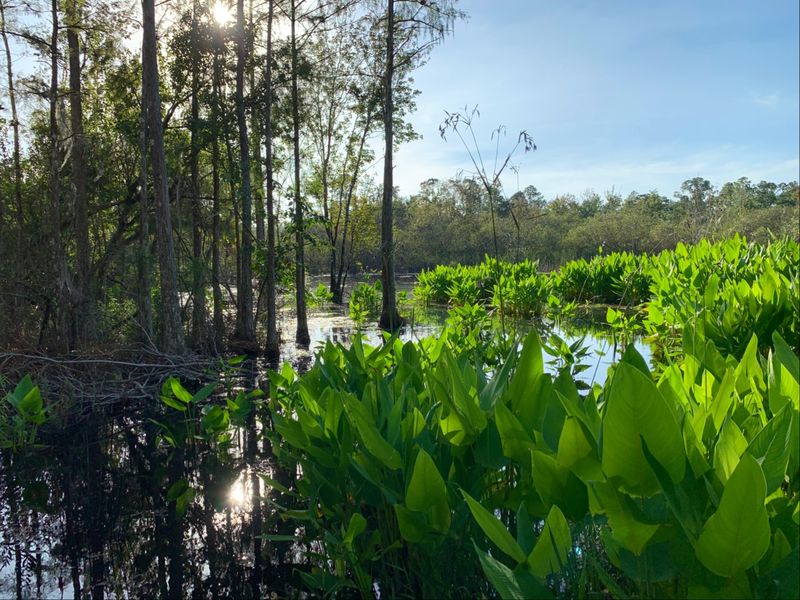
Hundreds of years old and still standing tall, the bald cypress trees are the true headliners here. They are the reason the sanctuary is often described as one of Florida’s few remaining old growth forests.
Many people come for the alligators and leave talking about the trees instead. Their height alone is enough to make a group stop mid-sentence.
The boardwalk weaves right among them. That means the trunks are close enough to study, while the canopy stays far overhead.
Old growth forests like this are rare in the state. Seeing one in person helps explain what much of the region may have looked like long ago.
Photographers tend to slow down in these stretches. The repeating lines of trunks rising from the wetland make strong compositions without much effort.
Visiting after a rainstorm is a popular tip, since the whole swamp looks more lush when it is wet.
Some trees have simply been around a lot longer than the rest of us. These cypress giants wear that seniority well.
Two and a Quarter Miles of Planks
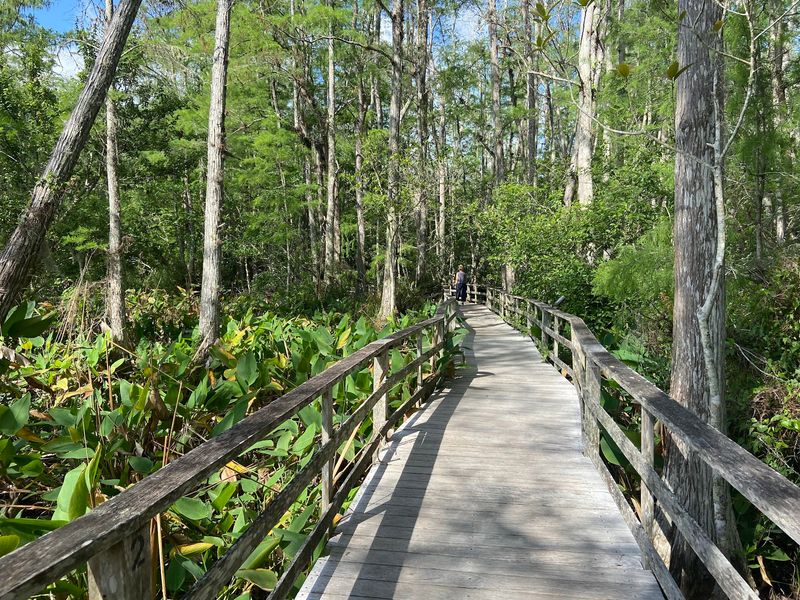
Exactly how long is the walk? The full boardwalk runs 2.25 miles, almost entirely on wooden planks, with one very short paved section.
A shorter route is also available for those who want a quicker loop. Either way, the path is well maintained and sturdy.
Allow roughly 90 minutes to two hours for the full route. Many people find the distance passes faster than expected because there is so much to look at.
Signage along the way is excellent. Lookout points are clearly marked, so getting turned around is not a real concern.
Several covered areas with seating are spread out along the trail. They serve as rest stops and as shelter if a sudden rain shower rolls through.
The seating areas also double as observation spots. Sitting still for a few minutes often reveals more wildlife than walking quickly ever could.
One practical note deserves attention. There are no restrooms once the trail leaves the visitor center, so plan accordingly before heading out.
Gator Spotting Without the Airboat
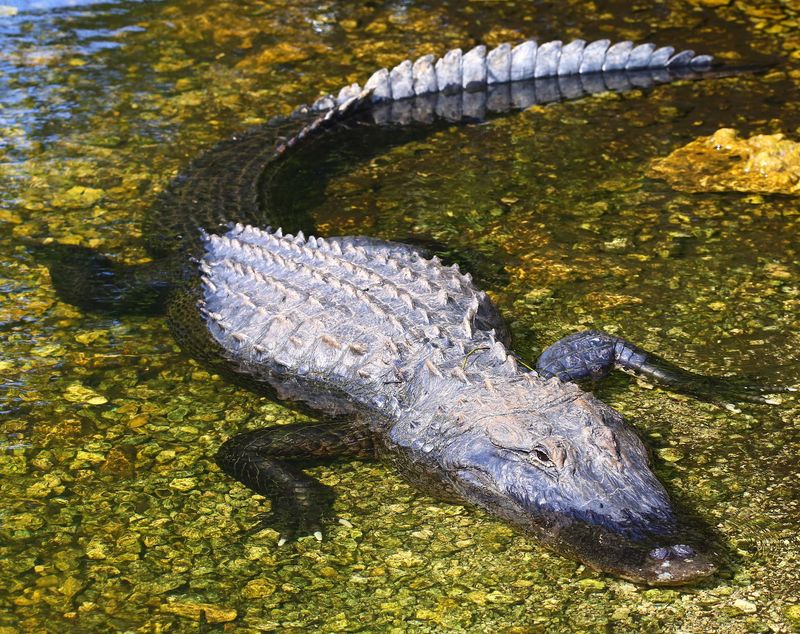
Alligators are easily the most talked-about residents of the swamp. Plenty of trips end with at least one sighting, and some end with several.
Some days bring a huge gator resting in the water. Other days bring something more dramatic, like an alligator hunting and eating.
Of course, wild animals keep their own schedules. A few groups walk the whole loop without spotting one, so patience is part of the deal.
The boardwalk keeps everyone at a safe distance above the wetland. That setup makes gator viewing comfortable even for families with young children.
Turtles and snakes also appear along the route. They make a good consolation prize when the big reptiles are being shy.
Slowing down helps a lot here. Scanning the water’s edge and the shallow pools often turns up a gator that a faster walker would miss entirely.
In short, these reptiles do not perform on command. When one finally shows up, it tends to be the moment everyone remembers on the drive home.
Birders Bring Binoculars Here
Bring binoculars. That single piece of advice comes up again and again for good reason.
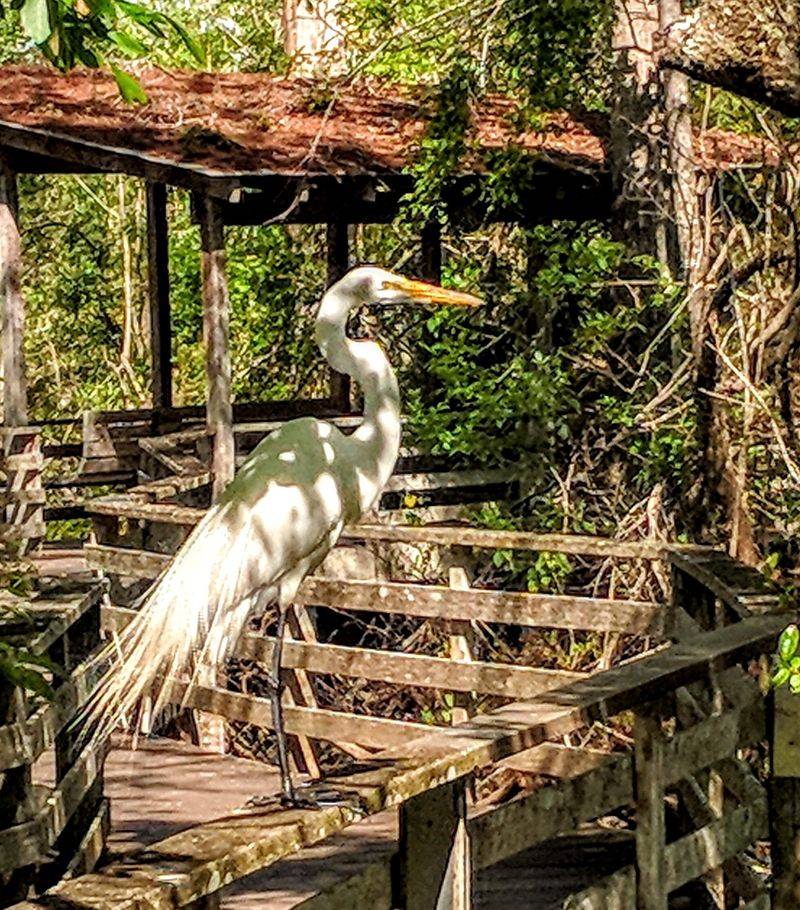
Bird watching is one of the biggest draws at the sanctuary. Red-shouldered hawks, little blue herons, limpkins, egrets, ibises, anhingas, and woodpeckers have all been spotted from the boardwalk.
The colorful painted bunting is another bird that people hope to find. Its appearance is a highlight for many birders.
A chalkboard near the start lists what others have seen earlier the same day. It is a handy preview, though sightings vary from hour to hour.
The shorter walk toward the swampy area is often recommended for bird activity. That stretch tends to offer the most feathered company.
Birds can show up within the first hundred yards. Others save themselves for the final hour, so giving up early is never a good plan.
Serious birders call it a must-see. Casual walkers usually leave with a few new names to look up later.
Raccoons and a Summer Orchid
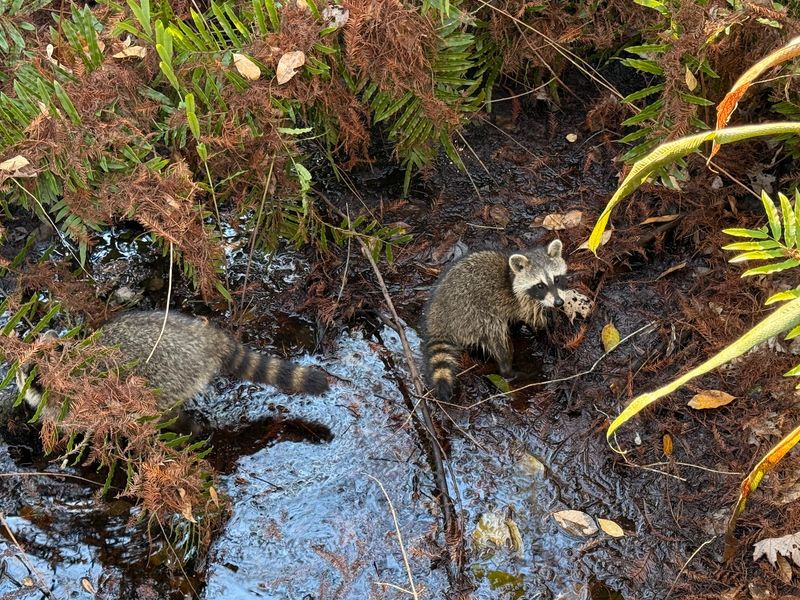
Raccoons may not get top billing, yet they show up often enough to become local celebrities. Many people are surprised by how frequently these masked residents appear near the trail.
They roam along the edges of the boardwalk and through the trees. Spotting one is a common part of the day.
Then there is the ghost orchid. This rare flower blooms high above the boardwalk during the summer months, and the sanctuary is known as its home.
Because it grows so high up, finding it takes a little effort. Binoculars or a long camera lens help a great deal.
Beyond the famous names, the swamp holds a wide mix of plants and flowers. Wetland vegetation fills the spaces between the cypress trunks.
The variety is part of the appeal. A single loop can include mammals, reptiles, birds, and plants, all within a fairly compact area.
For anyone keeping score, raccoons win on frequency. The ghost orchid wins on bragging rights.
A Quiet Place Worth Protecting
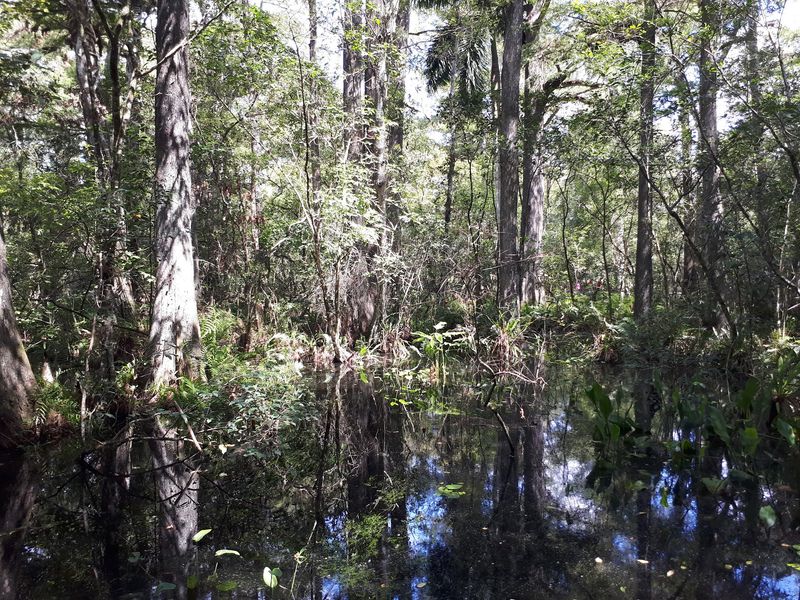
Quiet is not just a mood here. It is part of the etiquette.
Keeping voices low is a widely shared request. Respecting the space helps both the wildlife and everyone else on the boardwalk.
The sanctuary has a reputation for being peaceful and relaxing. Many people describe a sense of tranquility that is hard to find elsewhere in the region.
That calm offers a real contrast to the busy roads and developments of Southwest Florida. It feels like real nature rather than a landscaped version of it.
Crowds can affect the experience, though. Weekday mornings can still get busy, which sometimes means spacing out on the trail to find a little solitude.
Some people return in the later part of the morning, after an early rush, to find things a bit calmer. Arriving right at opening is another common strategy.
Staff and volunteers add to the welcoming tone. They are known for being friendly, helpful, and happy to chat about what people have spotted.
The swamp rewards those who move slowly and speak softly.
Easy Going for Kids and Wheels
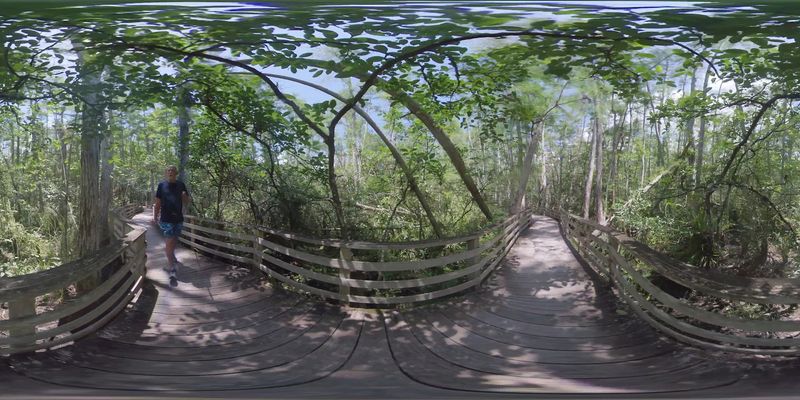
Families with small children tend to leave happy. The trail works well even for little legs, and the setting feels safe.
Kids may receive a map and a pen to mark off the animals and plants they find. The sanctuary calls it a scavenger hunt, and it keeps young explorers busy for the whole walk.
Shade covers much of the route. That helps on bright Florida days, and covered shelters handle the rain.
Accessibility is another strong point. The boardwalk suits strollers and wheelchairs, and some groups have pushed wheelchairs the entire 2-plus miles.
The flat, organized route keeps things manageable. There are no steep climbs or tricky terrain to navigate.
Seating areas give everyone a chance to rest. They also make good spots for kids to pause and look for wildlife.
All in all, the sanctuary makes nature feel approachable. A family outing here asks for comfortable shoes and curiosity, not hiking experience.
The Yellow Fly Warning
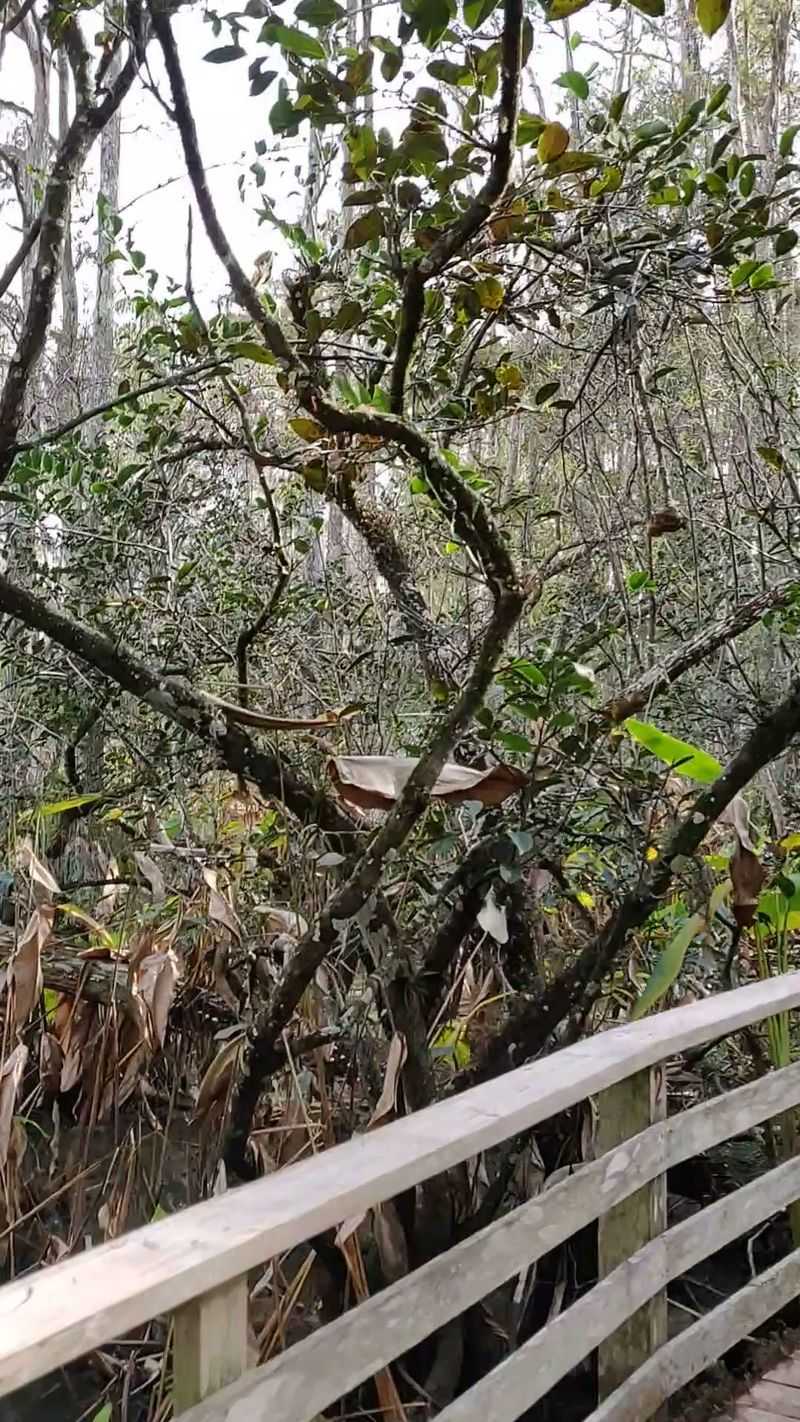
Here comes the fine print that nobody wants but everybody needs. From April through June, biting yellow flies, sometimes called deer flies, can be active in the sanctuary.
Shorts and a t-shirt are not the right outfit during that window. Plenty of people learn this the hard way.
DEET-based repellent may not do much against these particular flies. Several groups have found that spraying alone was not enough.
The sanctuary’s own advice is simple. Wear long sleeves and long pants, and keep moving along the boardwalk.
The good news is that the flies are a temporary, seasonal issue. Outside of that stretch, the bugs are far less of a concern.
Bugs in general can be more active in the warmer months. Planning around that makes the day far more comfortable.
Even those who got bitten often say the trip was still worth it. Dressing smart simply lets the swamp get all the attention.
Gift Shop, Cafe, and Discovery Center
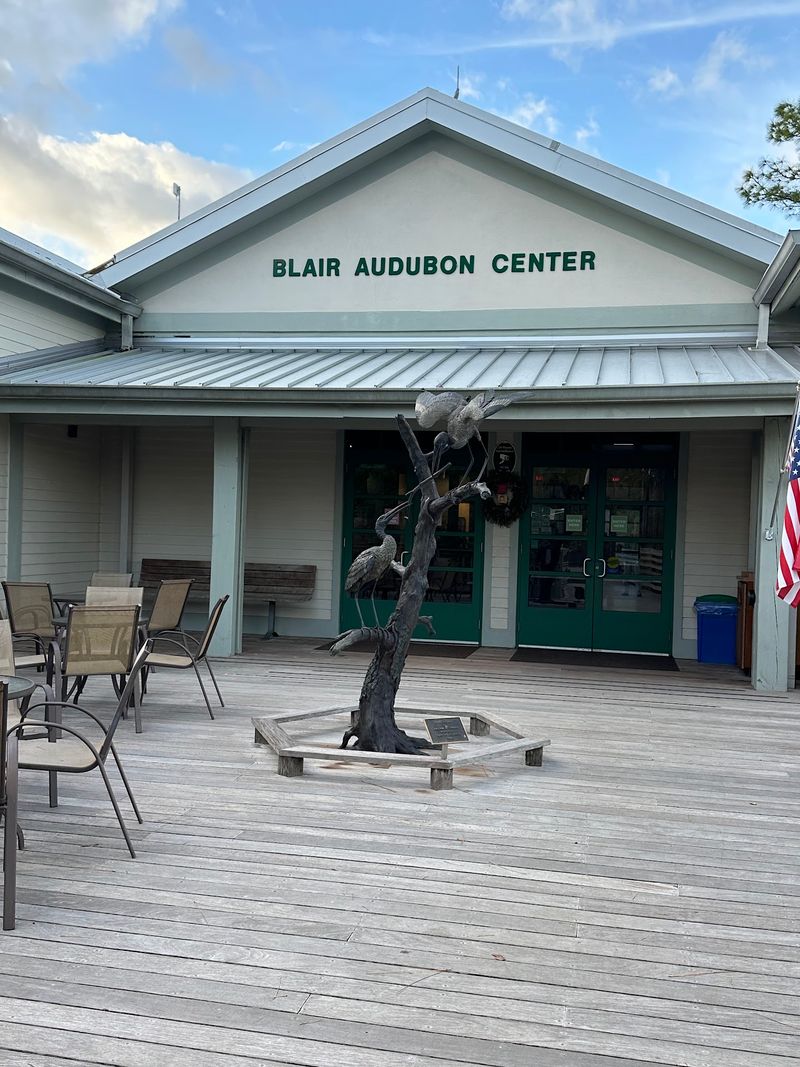
Before and after the walk, the visitor center earns its own share of attention. It holds a gift shop, a discovery center, and a small cafe.
The gift shop is frequently called beautiful and well stocked. It carries some unique items that are hard to find elsewhere.
The small cafe offers water and snacks to bring along on the trail. That is handy, since there are no services once the boardwalk begins.
Restrooms at the visitor center are clean and plentiful. Use them before setting out, because there are none along the trail.
Seating is also available around the facilities. It is a comfortable place to regroup or plan a route.
Staff at the front desk and in the shop are known for being warm and welcoming. Audubon representatives are sometimes out on the trail too, asking what people have seen.
A browse through the shop makes a fitting finale. It is the one spot where taking something home is encouraged.
Planning a Morning in the Swamp
Timing is everything at a place that closes at 1 PM. The sanctuary is open every day from 8 AM to 1 PM, so an early start pays off.
Arriving early also means fewer people. Outside of winter, it helps avoid the heat as well.
Adult admission has been about $17. Some feel that price is steep, while many others call it fair for the old growth trees and the swamp.
Frequent guests might consider an annual membership. Supporters say it is worth it for those who live nearby.
Allow 90 minutes to two hours for the full loop. Pack binoculars, wear comfortable shoes, and dress for bugs in spring.
Ample on-site parking keeps arrival stress-free. Staff can explain the trail layout at the ticket desk.
As a final verdict, Corkscrew offers a calm, accessible look at a rare Florida forest. The cypress trees have waited centuries, and they will still be standing tall when the next visit comes around.
Enjoyed this story?
Add Fast Food Club as a preferred source to see more of our reporting on Google.