


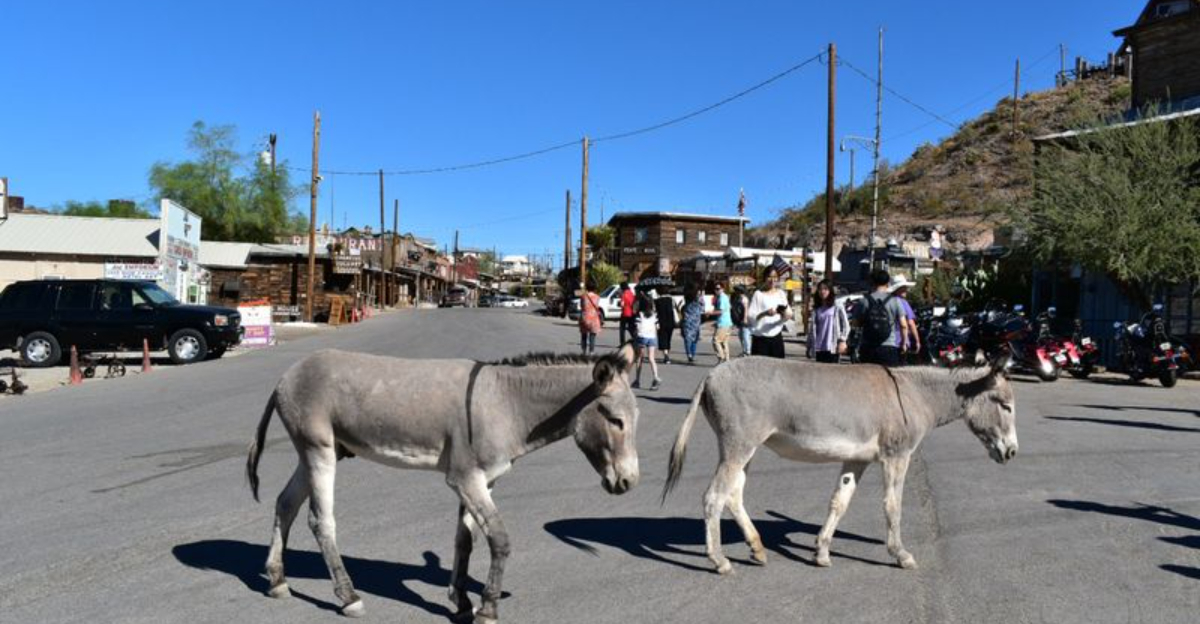
Tucked away in the rugged Black Mountains of western Arizona, Oatman is a quirky little ghost town that feels like a step back in time. Once a booming gold mining camp, this colorful Route 66 stop is now best known for the wild burros that roam freely through its dusty streets.
Visitors from all over the world come to feed, pet, and snap photos with these surprisingly friendly animals. Whether you love history, adventure, or just want a one-of-a-kind road trip experience, Oatman has something truly special waiting for you.
The Wild Burros of Oatman
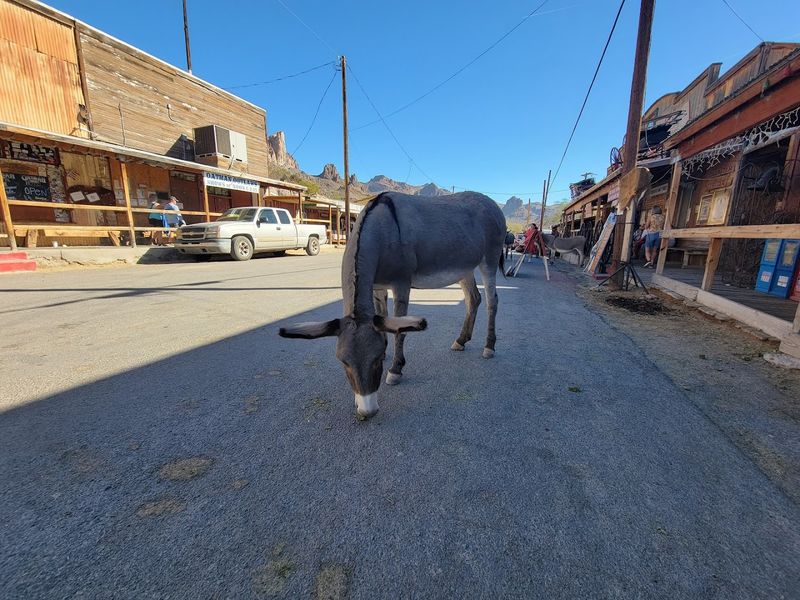
Picture walking down a sun-baked street and suddenly finding yourself face-to-face with a curious donkey sniffing your pockets for snacks. That is a perfectly normal Tuesday in Oatman, Arizona.
The wild burros here are descendants of pack animals left behind by gold miners in the early 1900s.
Over generations, these sturdy animals adapted to desert life and made the town their permanent home. Today, dozens of burros wander freely through the streets, stopping traffic and charming every visitor they meet.
They are not shy at all.
You can buy hay pellets from local shops to feed them, though vendors remind guests not to offer human food. Getting a selfie with one of these adorable animals is practically a rite of passage.
Their relaxed, friendly attitude makes every encounter feel surprisingly personal and memorable.
Route 66 History Running Through Town
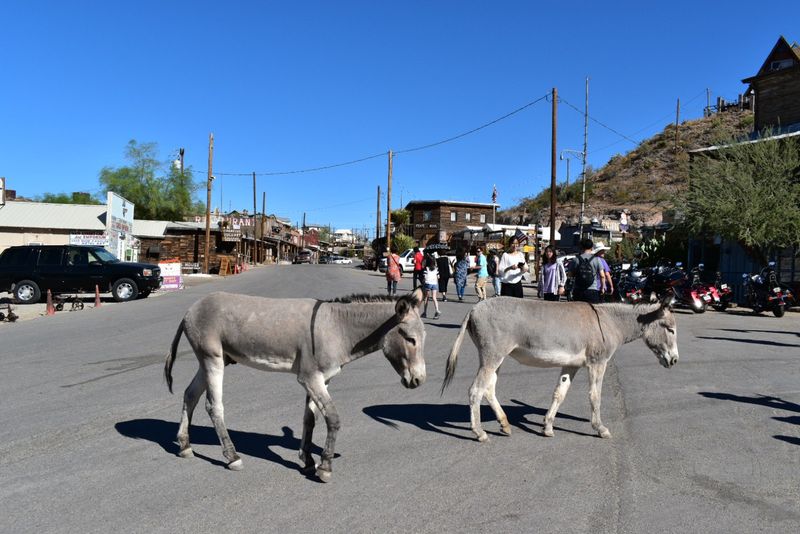
Before interstate highways changed American travel forever, Route 66 was the road that connected dreams from Chicago to Los Angeles. Oatman sat right along this legendary stretch, and the town proudly wears that history like a badge of honor.
Old-school diners, vintage signs, and weathered storefronts all tell the story of a golden era of road tripping.
The winding section of Route 66 that passes through the Black Mountains near Oatman is considered one of the most dramatic and scenic drives on the entire historic highway. Sharp curves and steep grades make it thrilling for drivers who appreciate the original path.
Many classic car enthusiasts make it a special pilgrimage.
Walking through Oatman feels like flipping through a living history book of American road culture. Every cracked sidewalk and hand-painted sign carries a story worth hearing.
Route 66 nostalgia runs deep here.
Oatman’s Gold Mining Origins
Back in 1915, two determined prospectors struck gold in the Black Mountains and changed this corner of Arizona forever. Their discovery launched a mining boom that pulled thousands of hopeful workers into the harsh desert.
At its peak, Oatman was producing millions of dollars worth of gold each year.
The town grew fast, with hotels, saloons, and shops springing up to serve the flood of new residents. By the 1930s, Oatman had become a thriving community with a population of around 10,000 people.
That kind of growth in the middle of the desert was nothing short of remarkable.
When gold production slowed and eventually stopped, people left almost as quickly as they had arrived. The town shrank dramatically, leaving behind empty buildings and faded memories.
Today, those origins give Oatman its rugged, authentic character that history lovers find absolutely fascinating to explore.
The Oatman Hotel and Its Famous Guests
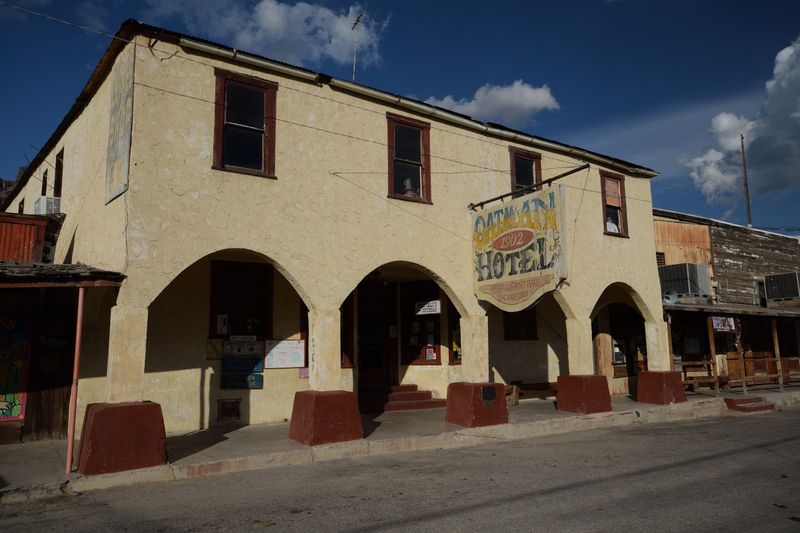
Hollywood royalty once slept in this small desert town, and the Oatman Hotel is where it all happened. Clark Gable and Carole Lombard famously spent their honeymoon here in 1939, making the old hotel one of the most talked-about landmarks in Arizona.
The building still stands today, and visitors can tour the room where the famous couple stayed.
Built in 1902, the hotel is the oldest two-story adobe structure in Mohave County. Its walls are covered with dollar bills left by tourists over the decades, a quirky tradition that gives the interior a wonderfully eccentric look.
The lobby feels like a museum and a time capsule rolled into one.
Even though the hotel no longer rents rooms, its restaurant and bar remain open to the public. Grabbing a meal here while soaking in all the memorabilia on the walls is a genuinely unforgettable experience for any first-time visitor.
Gunfight Reenactments on Main Street
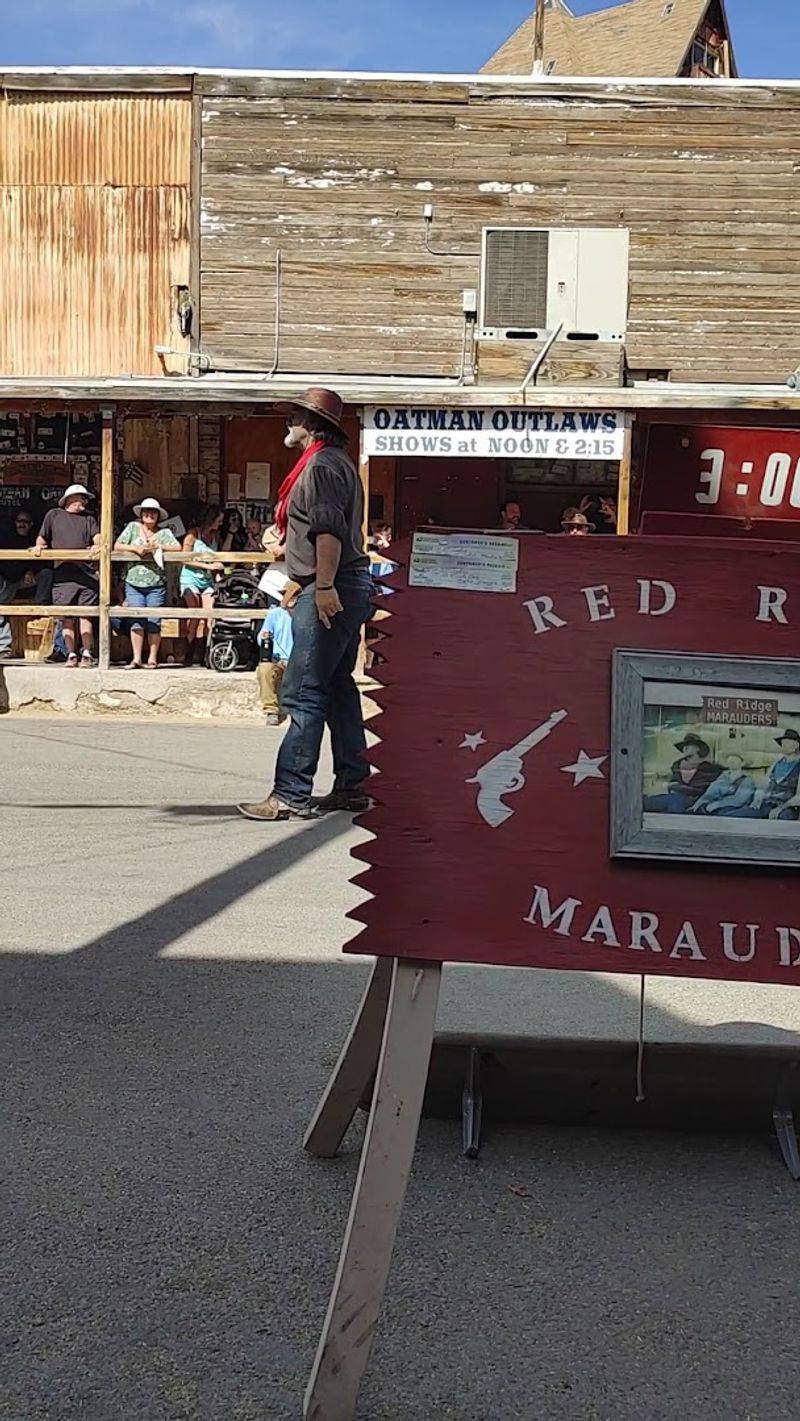
Every weekend, the streets of Oatman transform into a Wild West showdown that draws crowds of wide-eyed visitors. Local performers dressed in period costumes act out dramatic gunfight scenes right in the middle of the road.
The shows are theatrical, loud, and a whole lot of fun for families and history buffs alike.
These reenactments tap into the real frontier spirit that once defined life in mining towns across the American Southwest. Outlaws, sheriffs, and saloon characters all make appearances, bringing the rough-and-tumble 1900s back to life in vivid detail.
Kids especially love the dramatic flair and the interactive moments performers often create with the audience.
The shows happen multiple times throughout the day on Saturdays and Sundays, so timing your visit for a weekend is a smart move. No tickets are needed, and the entertainment is completely free.
Standing on that dusty street watching it unfold feels genuinely cinematic.
The Quirky Shops and Souvenirs Along Main Street
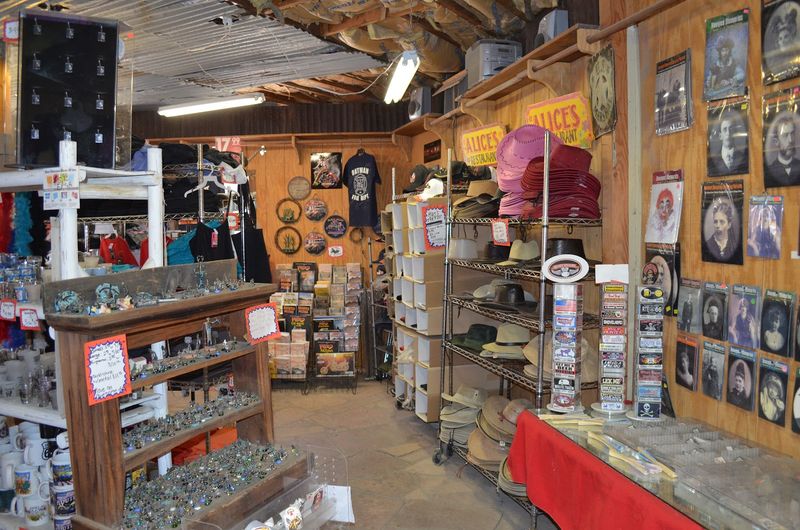
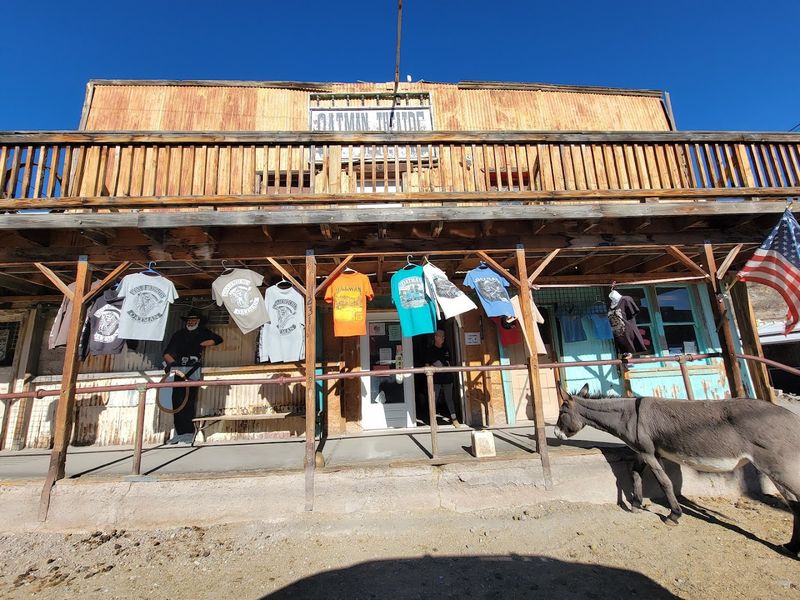
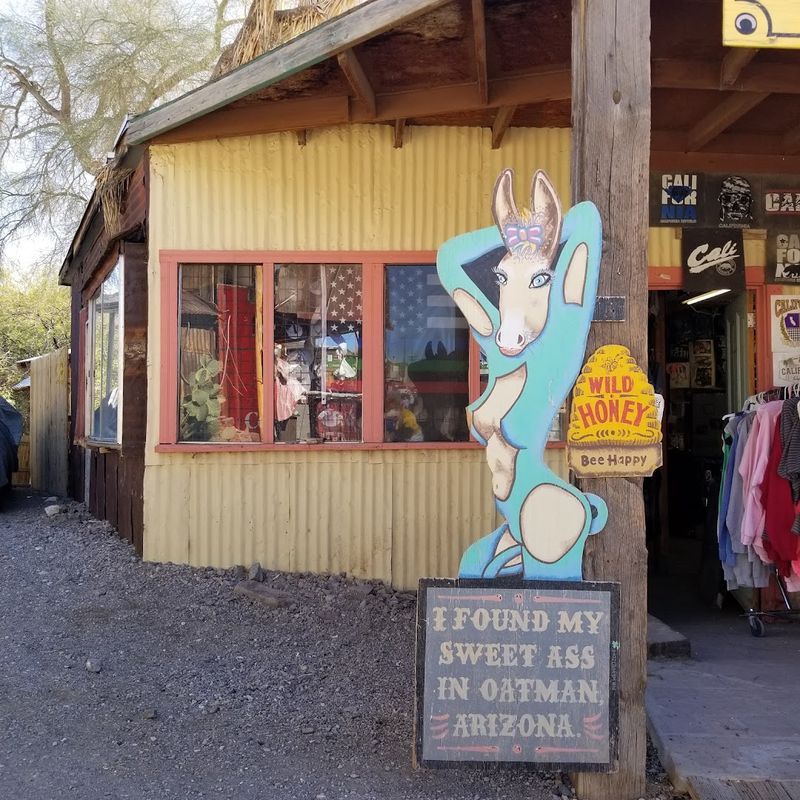
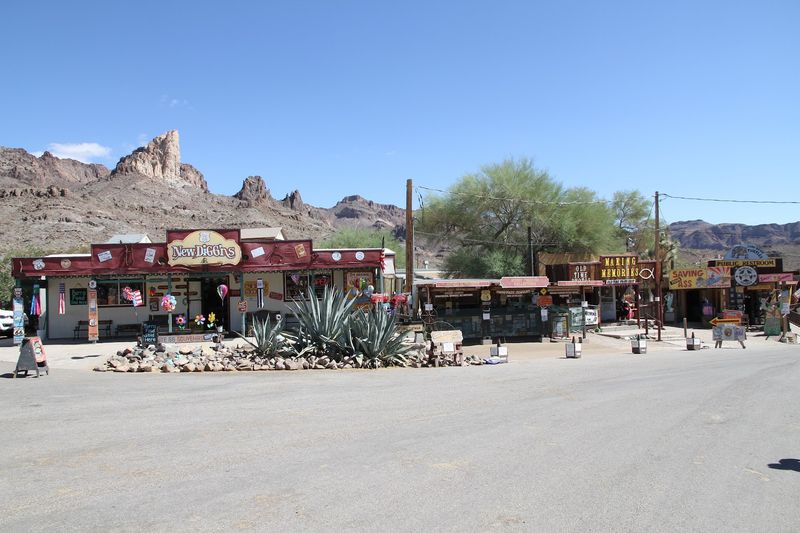
Oatman’s main street is a treasure trove of weird, wonderful, and totally one-of-a-kind souvenirs. Shops here sell everything from hand-stamped leather goods and turquoise jewelry to gold-panning kits and Route 66 memorabilia.
Browsing the storefronts is an adventure in itself, with each shop offering its own quirky personality.
Many of the buildings look like they have barely changed since the mining days, which adds to the authentic, slightly untamed atmosphere of the whole strip. Wooden facades, swinging saloon doors, and hand-painted signs make the shopping experience feel more like a movie set than a commercial district.
That rustic charm is completely intentional and deeply loved by regulars.
Picking up a small gold nugget souvenir or a hand-crafted piece of local art makes for a meaningful keepsake. Supporting the small business owners who keep Oatman alive is also a genuinely rewarding part of any visit here.
Gold Panning Experiences for Visitors
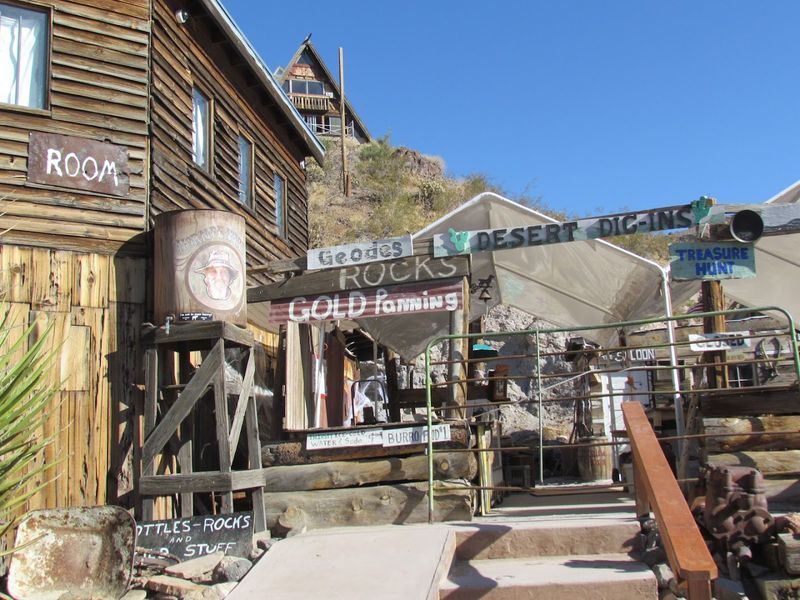
There is something thrilling about swirling a pan of gravel and water in hopes of spotting a glittering flake of real gold. Oatman offers visitors the chance to try gold panning firsthand, connecting them directly to the town’s rich mining heritage.
Even beginners can pick up the basic technique in just a few minutes.
Several spots in and around Oatman offer guided panning experiences where staff members walk you through the process step by step. Finding even a tiny speck of gold sends an unexpected rush of excitement through just about everyone who tries it.
It taps into that same adventurous spirit that drove prospectors here over a century ago.
Gold panning is a fantastic activity for kids and adults equally, making it a solid choice for families looking for something interactive. Taking home a small vial of gold flakes as a souvenir adds a tangible, personal connection to Oatman’s legendary past.
The Stunning Black Mountains Scenery
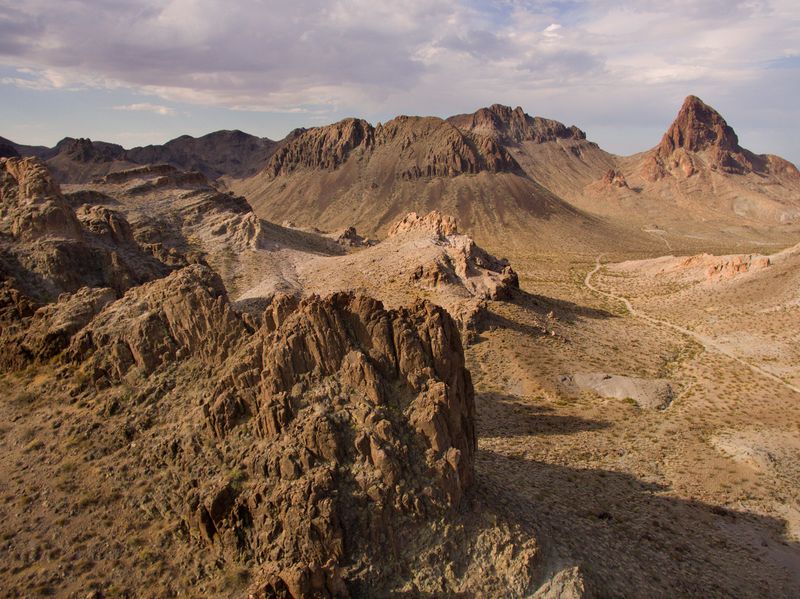
Sitting at an elevation of 2,710 feet, Oatman is wrapped in some of the most dramatic desert mountain scenery in all of Arizona. The Black Mountains rise sharply around the town, creating a backdrop that looks almost too cinematic to be real.
Sunrise and sunset here paint the rocky peaks in shades of orange, purple, and deep red.
Hiking trails in the area offer adventurous visitors a chance to explore the rugged terrain up close. The landscape is home to desert wildlife including roadrunners, coyotes, and various reptiles that thrive in the rocky, arid environment.
Spotting a Gila woodpecker or a red-tailed hawk soaring overhead is a common and delightful occurrence.
Even just driving through the mountains on the old Route 66 road provides breathtaking views around every sharp curve. Photographers particularly love the golden hour light that falls across the canyon walls.
The scenery alone makes the detour absolutely worthwhile.
Annual Oatman Sidewalk Egg Frying Contest
Every Fourth of July, Oatman hosts one of the most delightfully absurd competitions you will ever witness: a sidewalk egg frying contest. Contestants use only solar energy, no stoves or flames allowed, to try and cook a raw egg on the scorching pavement.
Temperatures in Oatman regularly exceed 115 degrees Fahrenheit during July, making this challenge surprisingly competitive.
The event draws crowds of curious onlookers who cheer on participants armed with nothing but raw eggs, aluminum foil, and creative contraptions designed to maximize heat concentration. Judging is based on how thoroughly cooked the egg becomes within a set time limit.
The creativity people bring to this challenge is genuinely impressive.
This quirky tradition perfectly captures Oatman’s irreverent, fun-loving spirit. It has been running for decades and remains one of the most talked-about annual events in the entire region.
Visiting on the Fourth of July guarantees an experience you simply cannot find anywhere else.
The Ghost Town Atmosphere and Abandoned Structures
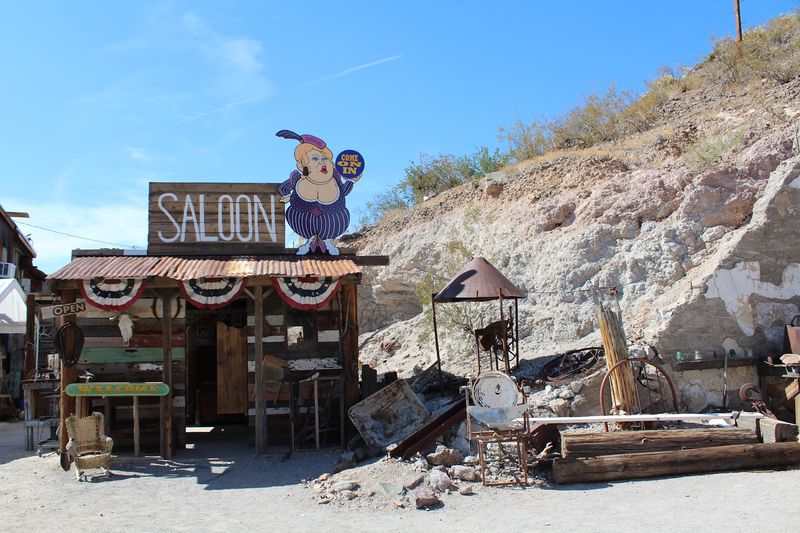
Walking the edges of Oatman feels like stepping into a place time forgot. Beyond the busy main street, crumbling adobe walls and weathered wooden structures stand as quiet reminders of the thousands of people who once called this place home.
There is a haunting beauty to the decay that photographers and history enthusiasts find deeply compelling.
Ghost town explorers love Oatman because it strikes a rare balance between preservation and authentic abandonment. Some buildings have been lovingly restored, while others remain exactly as they were left when the mining boom ended.
That contrast makes the town feel layered and genuinely complex rather than overly polished or touristy.
Local legends about the town’s past add an eerie dimension to any evening stroll through the quieter parts of Oatman. Some visitors even claim the old hotel has a ghost or two still wandering its halls.
Whether you believe in that or not, the atmosphere is undeniably electric.
Feeding the Burros: What You Need to Know
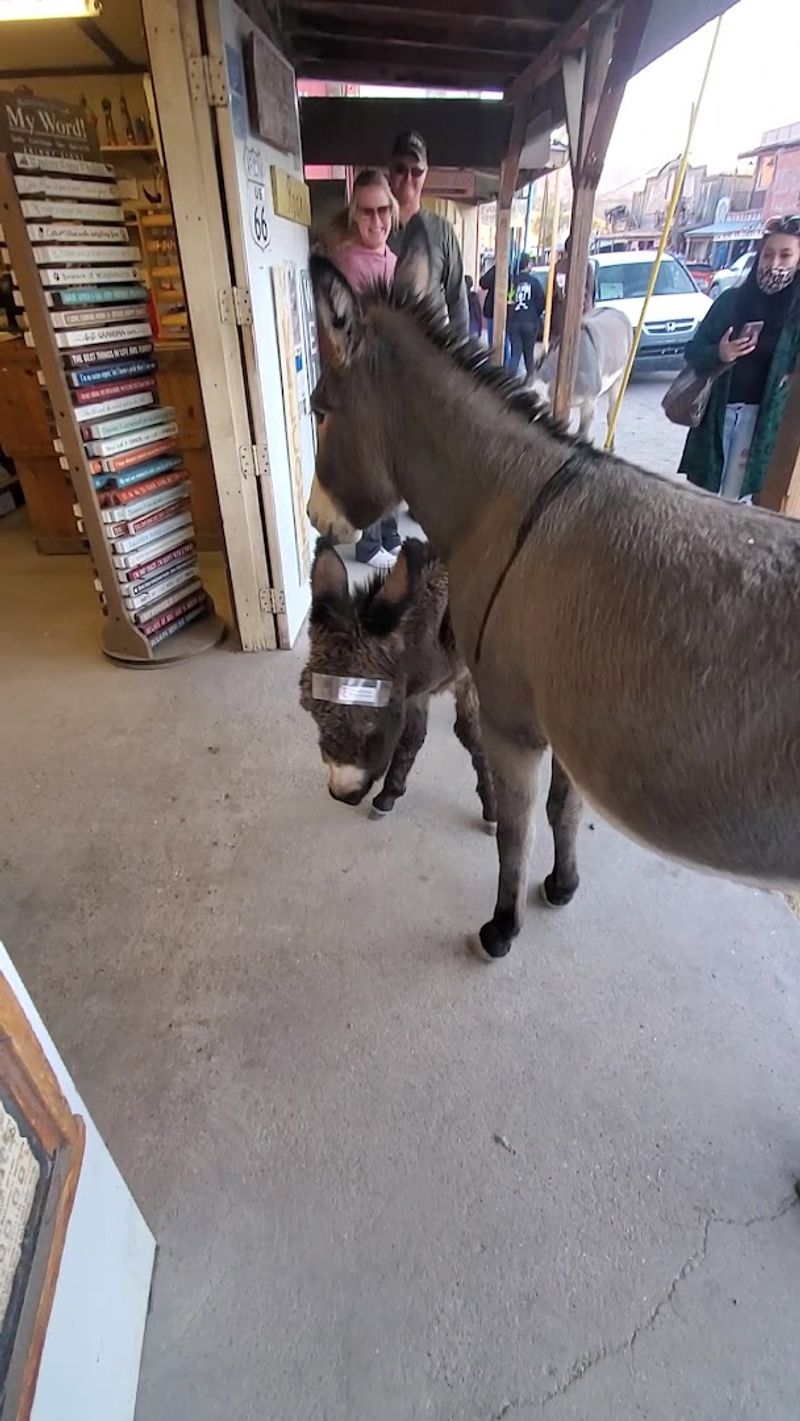
Feeding the burros is hands-down the most popular activity in Oatman, but doing it responsibly makes a big difference for the animals’ health. Hay pellets sold by local vendors are the approved food, specifically chosen because they are safe and nutritious for the donkeys.
Carrots are also acceptable in small amounts, but sugary or salty snacks should always be avoided.
The burros are not domesticated, which means they can be unpredictable despite their generally relaxed behavior around people. Approaching them calmly and slowly is recommended, and reaching toward their faces too quickly can startle even the friendliest ones.
Children should always be supervised closely during any interaction.
Respecting the burros also means not blocking traffic or encouraging them to enter shops where they do not belong. These animals are a protected part of Oatman’s identity, and the community takes their wellbeing seriously.
Treating them with care ensures they remain a beloved part of the town for generations to come.
How to Get to Oatman from Nearby Cities
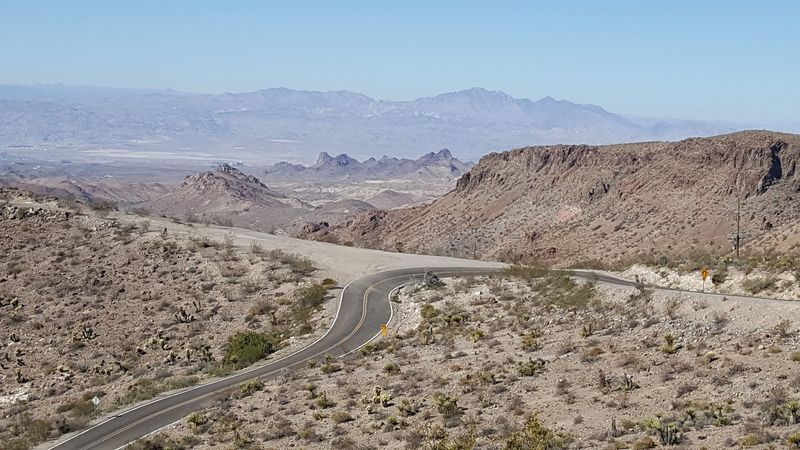
Oatman sits in a surprisingly accessible location despite its remote, off-the-beaten-path feel. From Kingman, Arizona, the drive takes about 30 minutes heading southwest along Route 66 through the Black Mountains.
The road itself is an attraction, offering tight switchbacks and jaw-dropping views that make the journey part of the fun.
Travelers coming from Las Vegas can reach Oatman in roughly two hours by heading south through Laughlin, Nevada, and crossing into Arizona. From the Phoenix area, expect about a four-hour drive heading northwest on Interstate 40.
Checking your vehicle’s brakes and coolant levels before tackling the mountain road is a genuinely smart precaution.
Parking in Oatman is limited, especially on busy weekends and holidays. Arriving early in the morning helps you snag a good spot and enjoy the town before the afternoon crowds arrive.
A GPS signal can be spotty in the mountains, so downloading an offline map beforehand is a helpful move.
Best Times to Visit Oatman, Arizona
Timing your trip to Oatman can make a huge difference in how much you enjoy the experience. Spring and fall are widely considered the best seasons, with mild temperatures that make walking around town genuinely pleasant.
October and November are particularly popular because the desert light is golden and the summer crowds have thinned out considerably.
Summer visits are possible but require serious preparation for extreme heat, often exceeding 110 degrees Fahrenheit in July and August. Bringing plenty of water, wearing sun-protective clothing, and planning outdoor activities for early morning hours are all essential strategies.
The burros tend to seek shade during peak afternoon heat, so morning visits yield the best animal encounters.
Winter days in Oatman are surprisingly mild and comfortable, though evenings can get cold quickly at the higher elevation. Weekdays throughout the year offer a quieter, more relaxed atmosphere compared to weekends.
Planning around the town’s special events calendar adds an extra layer of excitement to any visit.
Enjoyed this story?
Add Fast Food Club as a preferred source to see more of our reporting on Google.