


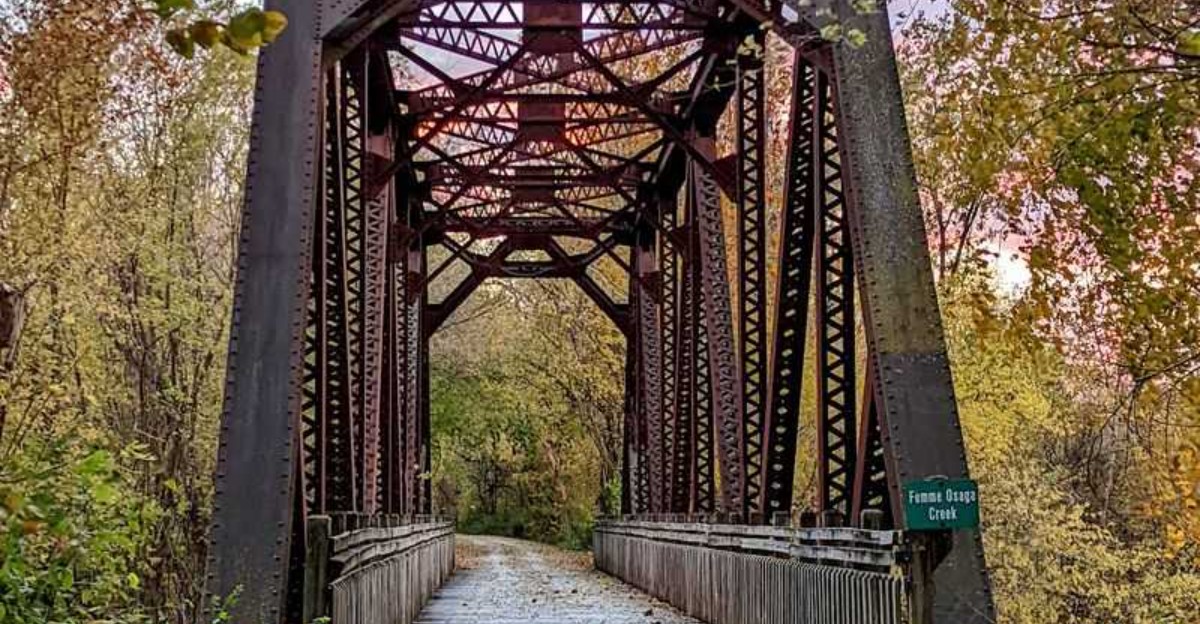
Every October, a ribbon of crushed limestone winds past towering rock walls and a wide, slow river, drawing walkers and cyclists who chase the season’s brightest colors. Golden maples and rust-red oaks lean over the path, while the water reflects the show in soft, glassy strokes.
This is no ordinary walkway. Stretching 240 miles across the middle of the state, it holds the title of the longest developed rail trail in the entire country.
Autumn transforms it into one of the finest places to watch the leaves turn, with quiet trailheads, restored depots, and river views around nearly every bend. Keep reading to learn where the color peaks, what makes the setting so special, and how to plan a visit that lands you right in the heart of the display.
A Ribbon of Limestone Across the Show-Me State
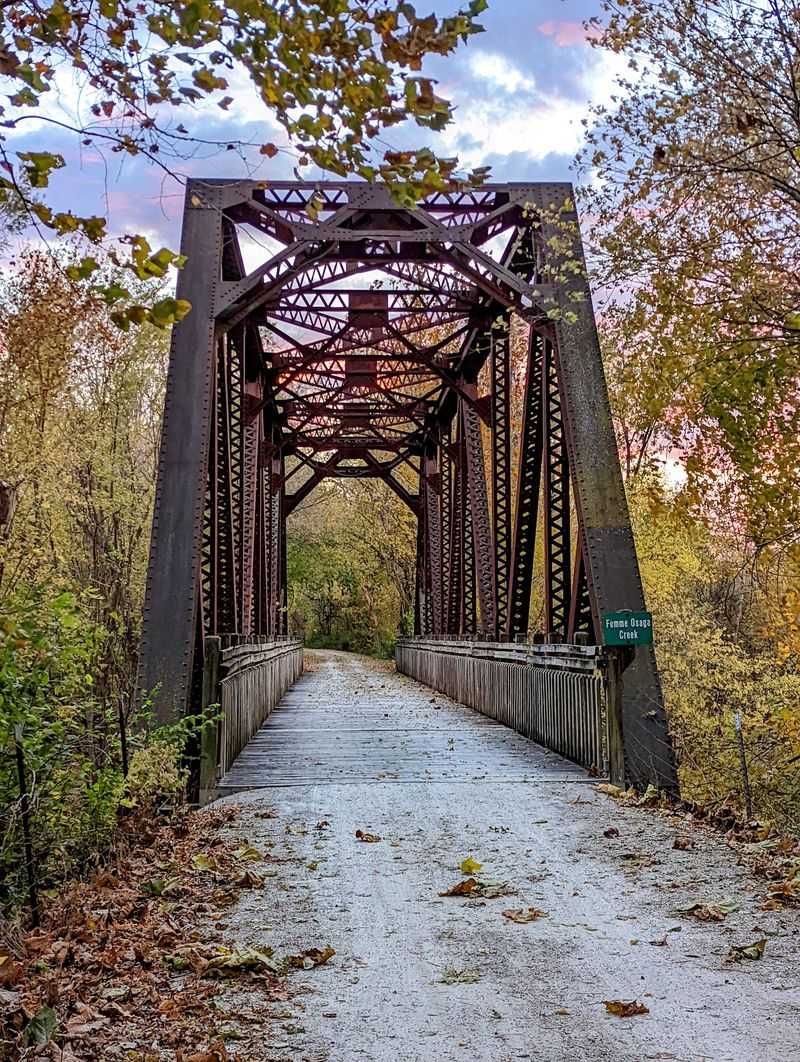
Running the width of Missouri, the Katy Trail unfurls as a 240-mile path built along an old rail corridor. Its official address is simply the state of Missouri, since it threads through farmland, small towns, and river bluffs from one end to the other.
The route earned national fame as the longest developed rail trail in the United States. Twenty-six trailheads and four restored depots dot its length, giving travelers plenty of places to hop on and off.
Because the trail follows a former railway, the grade stays gentle and even. That flat surface makes it welcoming for casual walkers and serious cyclists alike, no matter their pace.
Fall gives the whole corridor a fresh personality. The bluffs that shadow parts of the path frame the changing leaves, and the nearby river carries reflections of the color right alongside the trail.
It is a setting that rewards anyone willing to slow down and look around.
From Rail Line to Recreation Corridor
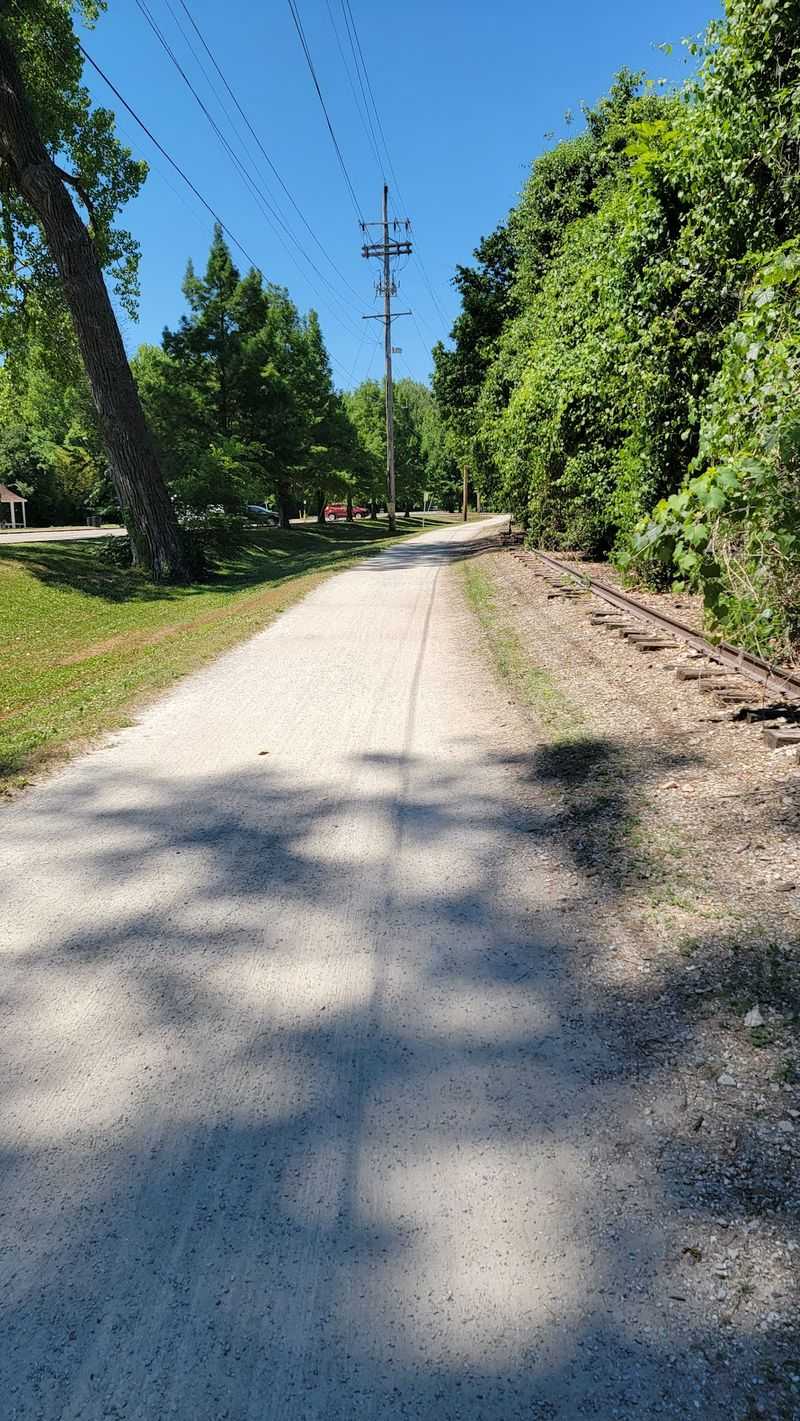
Long before cyclists rolled across it, this corridor carried trains as part of the Missouri-Kansas-Texas Railroad, nicknamed the Katy. When rail service faded, the land found new life as a public trail rather than fading away.
The conversion turned an industrial route into a recreation corridor that stitches together dozens of communities. Four restored depots stand as reminders of the busy railroad days, now serving as landmarks and rest points instead of ticket stops.
History hides in plain sight along the way. Old mile markers, bridges, and station buildings hint at the era when steam and steel defined this stretch of Missouri.
Preserving that story matters as much as preserving the scenery. Walking or riding here connects visitors to a piece of the state’s past while they enjoy the leaves overhead.
The blend of heritage and open air is a big part of the trail’s charm. Every restored depot feels like a small chapter in a much longer story that keeps unfolding season after season.
Where Bluffs Rise Above the Water
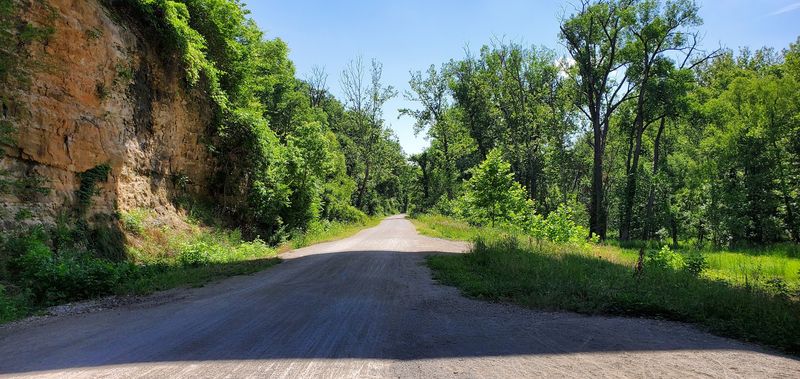
Some of the most striking scenery arrives where sheer rock walls climb straight up beside the path. These bluffs tower over the trail, giving parts of the route a dramatic, sheltered feel.
The river runs close by along many of these stretches, so the water and the stone share the frame. That pairing of high cliffs and moving water is exactly what the article title celebrates.
Autumn dresses the scene in warm tones. Trees rooted in the cracks and ledges of the bluffs turn shades of gold and copper, dotting the gray rock with color.
The contrast between the pale limestone and the bright leaves gives photographers plenty to work with. Morning light tends to soften the whole picture, making early starts worthwhile.
Sections that hug the bluffs feel especially memorable in fall. The height of the rock and the reflection on the water combine to make these the postcard moments of the entire route.
Timing the Peak Color
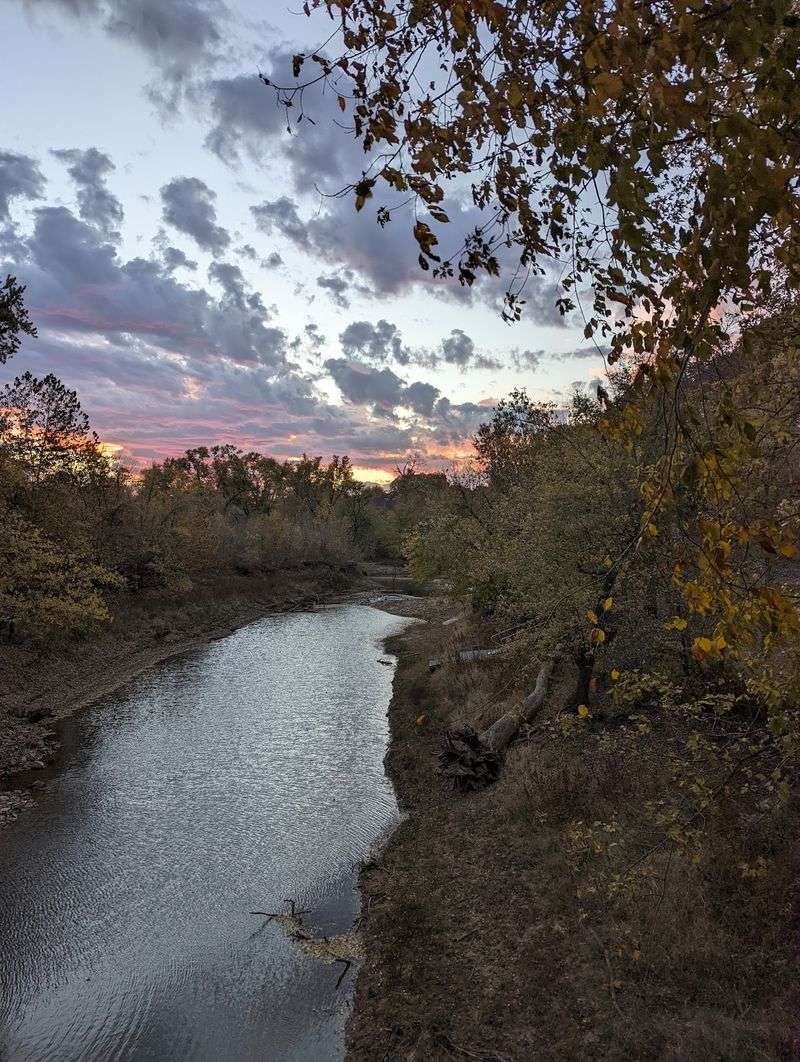
Chasing peak color takes a little planning, and mid to late October usually delivers the strongest display across much of the trail. Cooler nights push the leaves toward their brightest reds and yellows.
Timing shifts slightly depending on the weather each year and the exact stretch you choose. Sections shaded by bluffs and lined with hardwoods often hold their color a touch longer.
Weekday visits during peak season tend to feel calmer than weekends. Fewer people on the path means more room to pause and take in the scenery.
Early morning offers another advantage beyond softer light. Mist over the river can add a quiet mood before the day warms up and the crowds arrive.
Watching local foliage updates helps you catch the exact window. A well-timed trip lands you right when the maples and oaks are showing off their best autumn wardrobe.
Two Wheels or Two Feet
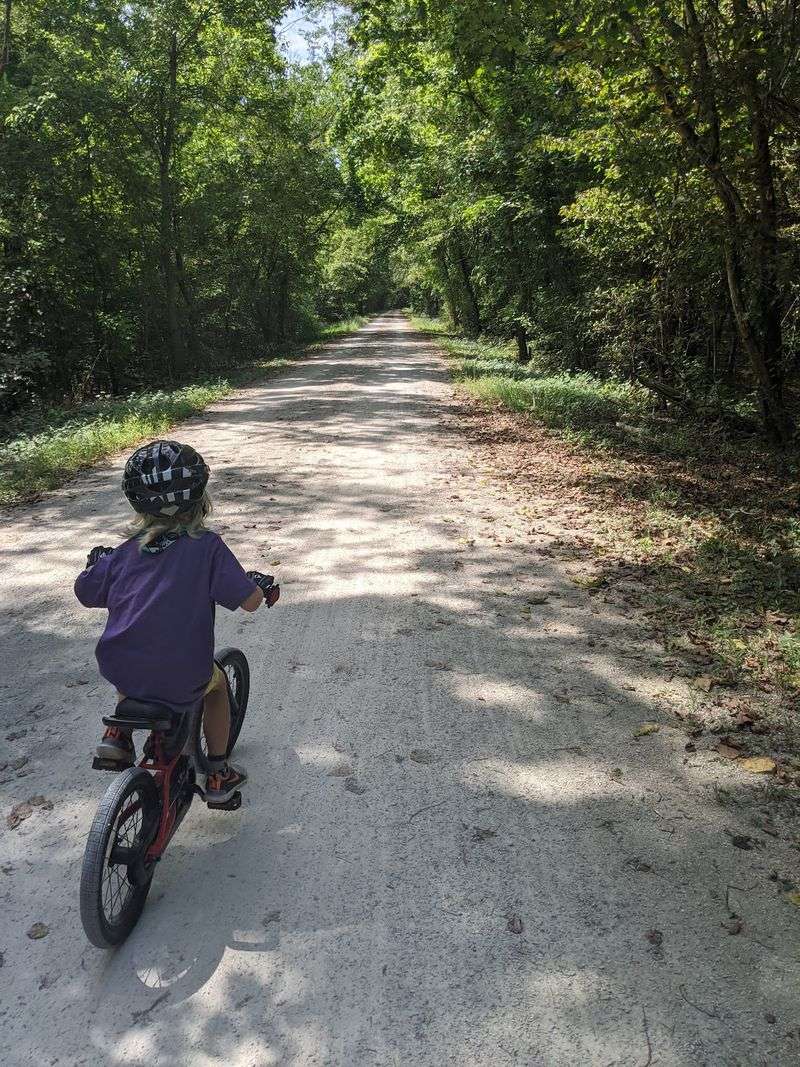
Cyclists claim much of the trail, and for good reason. The flat, even surface left behind by the old railroad makes for smooth, comfortable riding across long distances.
Walkers and runners share the same welcoming grade. Because there are no steep climbs, people of many fitness levels can enjoy a stretch of the path without feeling worn out.
The 26 trailheads make it easy to design a trip that fits your energy. You can pedal a short loop between two towns or link several segments into a longer autumn adventure.
Renting a bike is a popular option for those without their own gear. Nearby towns cater to trail traffic and keep the route accessible for first-timers.
However you choose to travel it, the pace stays relaxed. The trail rewards steady movement and frequent stops far more than speed, which suits leaf-peeping perfectly.
Small Towns Along the Route
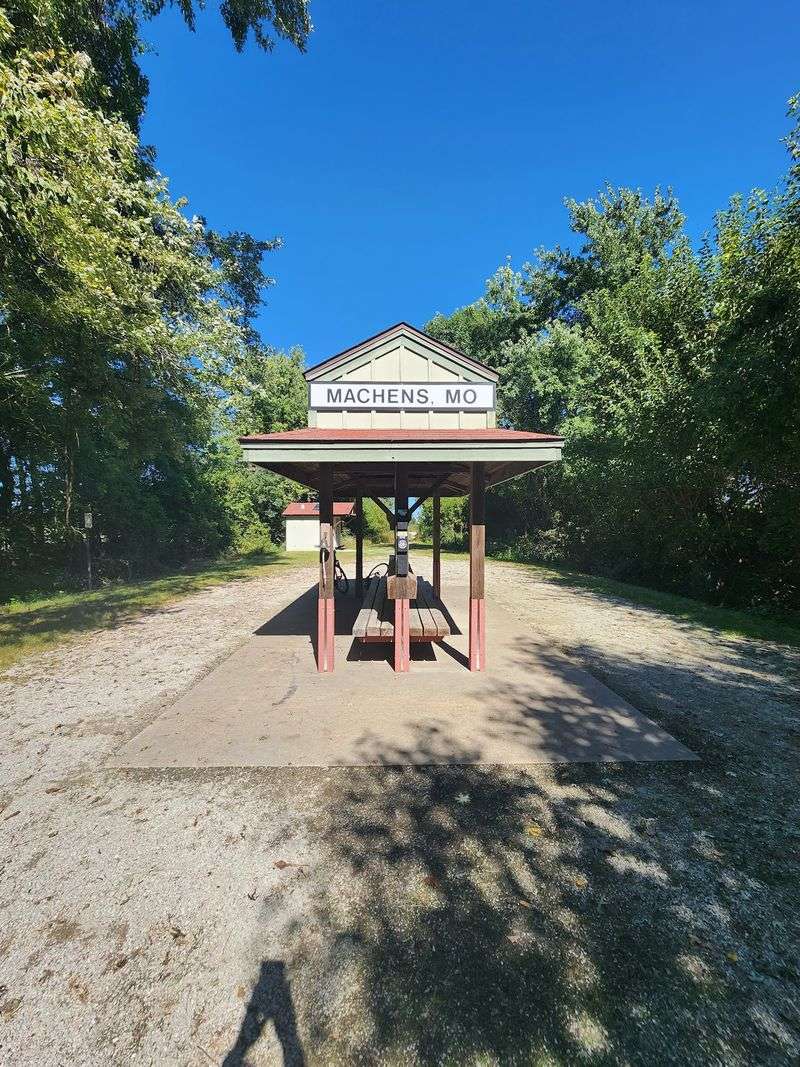
Dozens of small towns line the corridor, each offering a friendly place to pause. These communities grew up alongside the old railroad and now welcome trail travelers instead of train passengers.
Trailheads often sit within easy reach of a town center. That makes it simple to step off the path, refuel, and stretch before continuing on.
Local shops and cafes give the journey a sense of place. The rhythm of stopping in one town, riding to the next, and repeating becomes part of the fun.
Fall brings a cozy energy to these stops. Autumn decorations and seasonal charm add to the welcome as the leaves turn overhead.
The mix of open trail and small-town hospitality keeps the experience varied. You are never far from a place to rest, which makes multi-day trips feel manageable and inviting.
Planning Your Visit
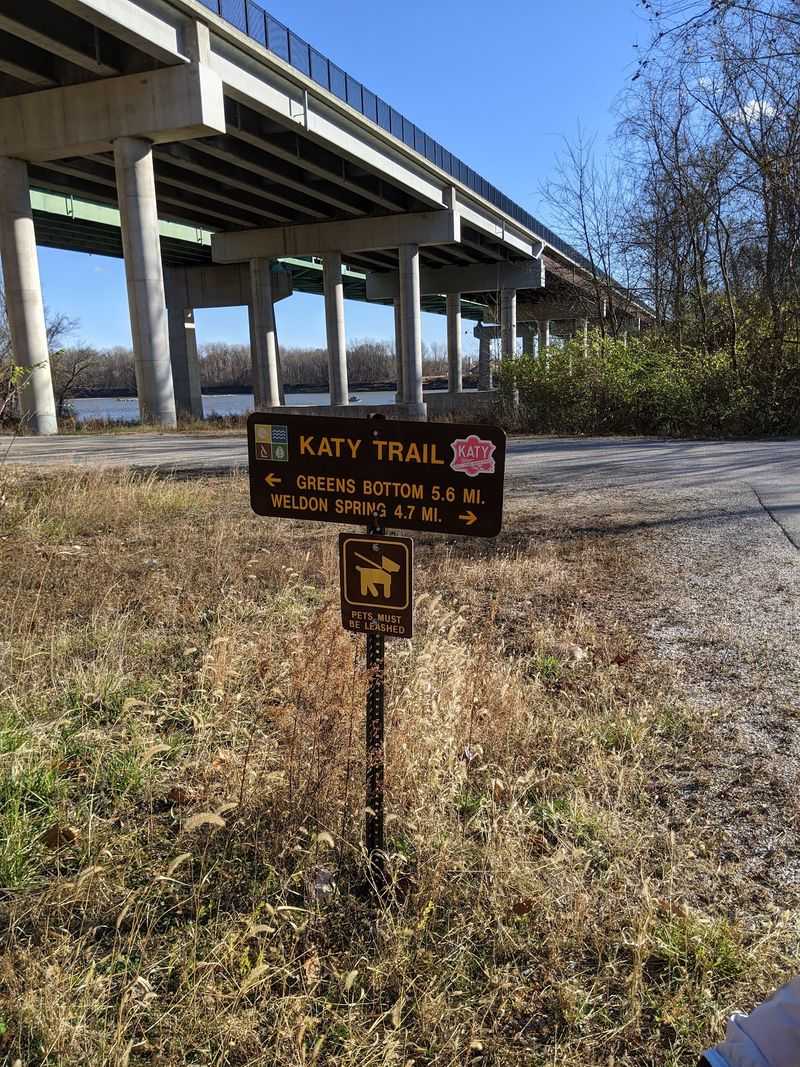
Getting to the trail is refreshingly simple. As a public rail trail managed as a state park, it stays open year-round with no admission fee to walk or ride.
With 26 trailheads spread across Missouri, access points are plentiful. Many include parking, which makes it easy to start wherever the color looks best.
Restrooms and water can vary by location, so a little preparation goes a long way. Packing snacks, water, and layers helps you stay comfortable on cooler autumn days.
The four restored depots serve as helpful landmarks for orientation. They make natural meeting points and rest stops along longer routes.
Checking trail conditions before you head out is always smart, especially after rain. A quick look at the segment you plan to explore ensures a smooth day surrounded by fall color.
Why Autumn Belongs Here
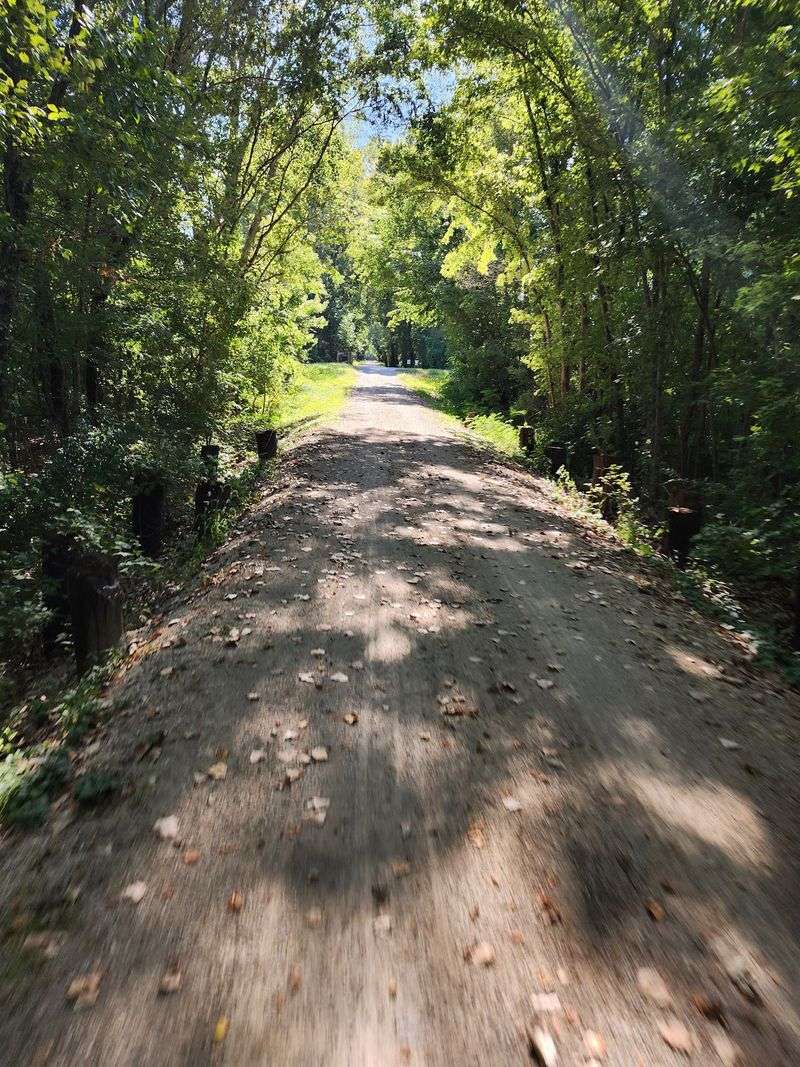
Few places gather so many ingredients for a great fall outing in one long, easygoing corridor. The bluffs, the river, and the changing leaves come together to make October truly special here.
The gentle grade means the scenery does the heavy lifting while you simply enjoy the ride or walk. That balance makes it welcoming for families, solo travelers, and everyone in between.
As the longest developed rail trail in the country, it offers endless ways to tailor a trip. Short strolls and long expeditions both find a home along its 240 miles.
When the maples flare red and the oaks turn gold, the whole route feels like a celebration of the season. The reflection on the water only doubles the effect.
For anyone hoping to catch Missouri at its most colorful, this trail delivers a memorable outing that lingers long after the last leaf falls.
Enjoyed this story?
Add Fast Food Club as a preferred source to see more of our reporting on Google.