


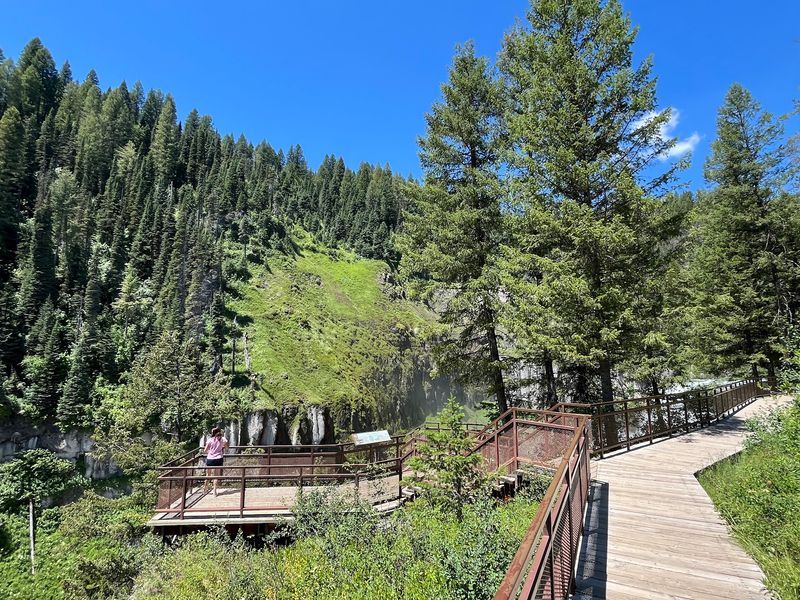
Most people only see this waterfall in summer, from a paved boardwalk a few minutes from the car. Come winter, the road closes, the snow piles up, and the only way in is by snowmobile, skis, or snowshoes.
Folks who make that trip often call the falls even more amazing in the cold months. Here is what makes this spot in eastern Idaho worth the effort, plus the practical details you need before you go.
A Ten-Story Drop in Eastern Idaho
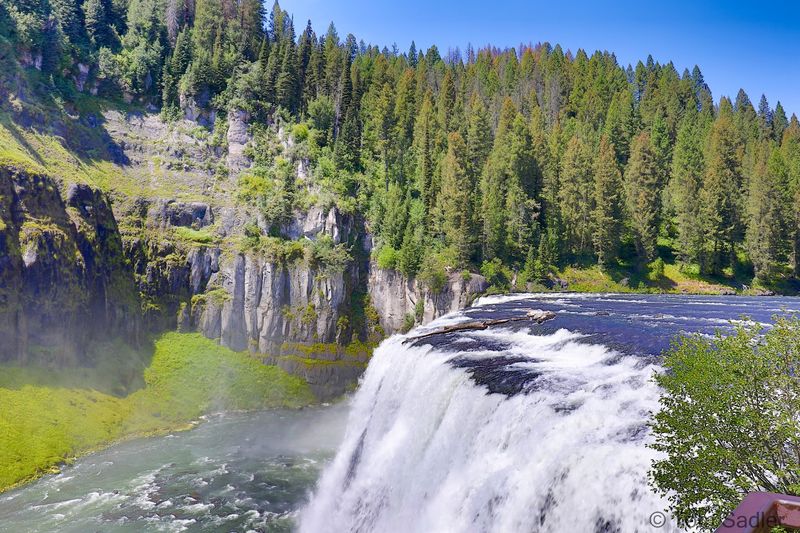
Some waterfalls trickle politely, but this one makes a grand entrance. Upper Mesa Falls sits in Idaho, United States, along the Snake River system near Ashton and Island Park.
The falls drop roughly the height of a ten-story building. A viewing platform puts you close to all that moving water, so the scale is hard to miss.
Many travelers find it while heading toward West Yellowstone. Others make a detour on the way to Salt Lake City and end up glad they did.
The site has two parts worth knowing about. There are upper and lower waterfalls, and short trails connect the area for anyone with extra time.
Its standing with travelers is remarkably high, with nearly perfect marks from hundreds of people. That kind of agreement is rare for any roadside stop.
Still, few people realize the place has a second personality. Summer is the easy version, and winter is the adventure, which is where the story gets interesting.
Winter Access by Snow Machine
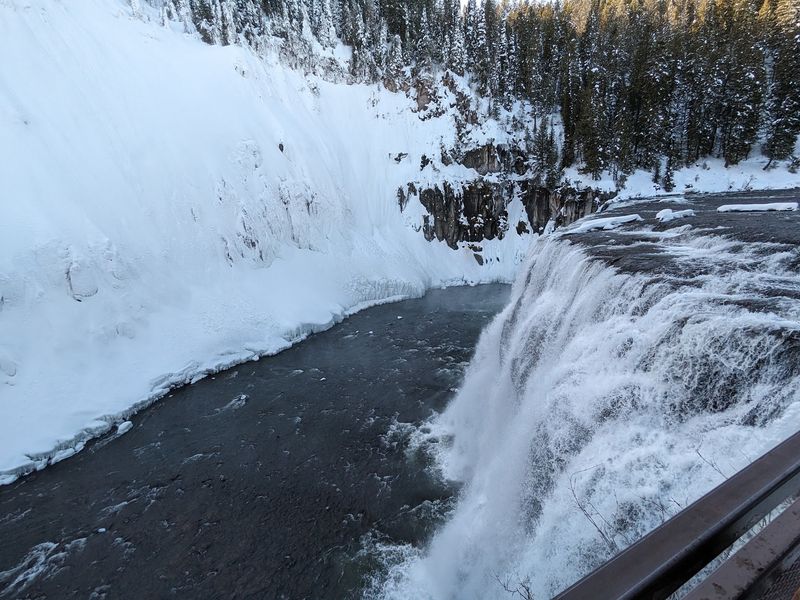
Once the snow arrives, your car stays behind. In winter the falls are reachable only by skis, snowshoes, or a snow machine.
The closest winter access point is Bear Gulch. Another option is parking at Osborn Bridge and riding in from there.
That ride turns a quick stop into a real outing. Snowmobilers get a destination with a payoff, and the falls look different with snow and ice framing the river.
Many who have seen both seasons say the winter view is even better. Fewer people make the trip, so the platform rarely feels busy.
Planning matters here. Check trail conditions, bring proper gear, and give yourself enough daylight for the return trip.
Skiers and snowshoers can also make the journey, though it takes longer under your own power. Either way, the reward waits at the end of a snowy trail, not a parking lot.
Slippery Steps and Snowy Boardwalks
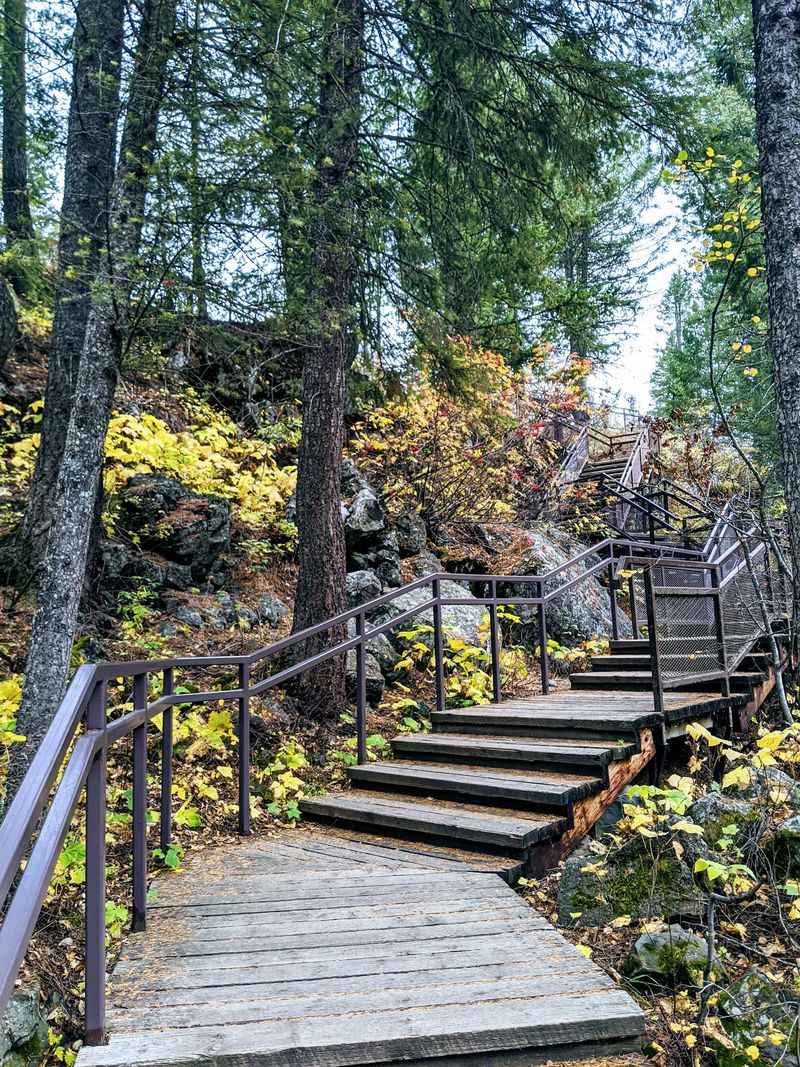
Cold-weather visits come with one honest warning. Snow on the ground can leave the walkway and stairs slippery.
Take that seriously and move slowly. Good boots with solid grip make a big difference on the wooden steps.
People who have gone in snowy conditions still call it beyond worth it. Some end up staying over an hour, just watching the water move through the white landscape.
The boardwalk has several sets of stairs. In winter, each one deserves a little extra patience.
Gloves help too, since you may want to hold a railing. A small pack with water and a snack keeps the visit comfortable.
Treat the walk as part of the experience rather than a race to the overlook. The falls are not going anywhere, and careful footing brings you home in one piece.
The Boardwalk to the Brink
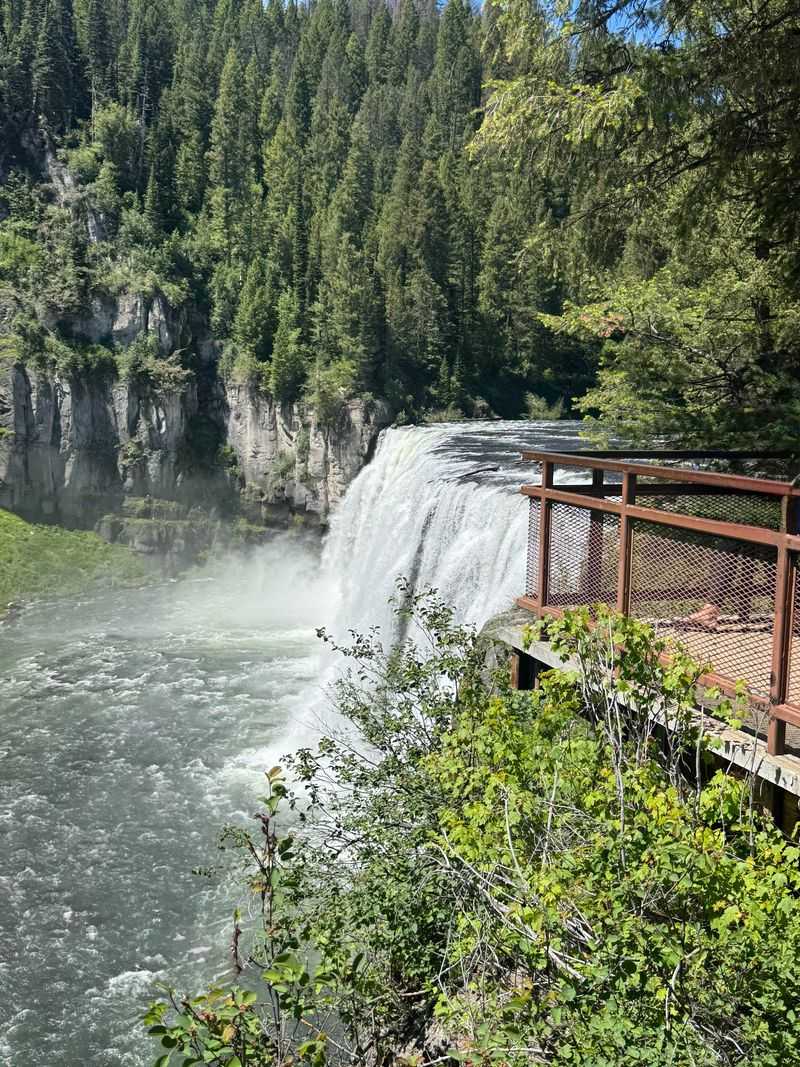
Here is the part that surprises first-timers. A paved boardwalk takes you right up to the brink of the falls.
Multiple viewing platforms offer different angles. You can move from one to the next and see the water from new spots each time.
The walk is short, about five minutes from the parking lot. Even a five-year-old can handle it without trouble.
There are some stairs along the way, so take your time if your knees prefer flat ground. The good news is that a handicap-accessible trail also leads to the falls.
The boardwalk is well built and sturdy. That makes it easy for families, older travelers, and anyone who wants big views without a long hike.
Get close enough and the mist from the falls reaches the platform. Bring a light jacket on breezy days if you would rather stay dry.
Rainbows on a Morning Schedule
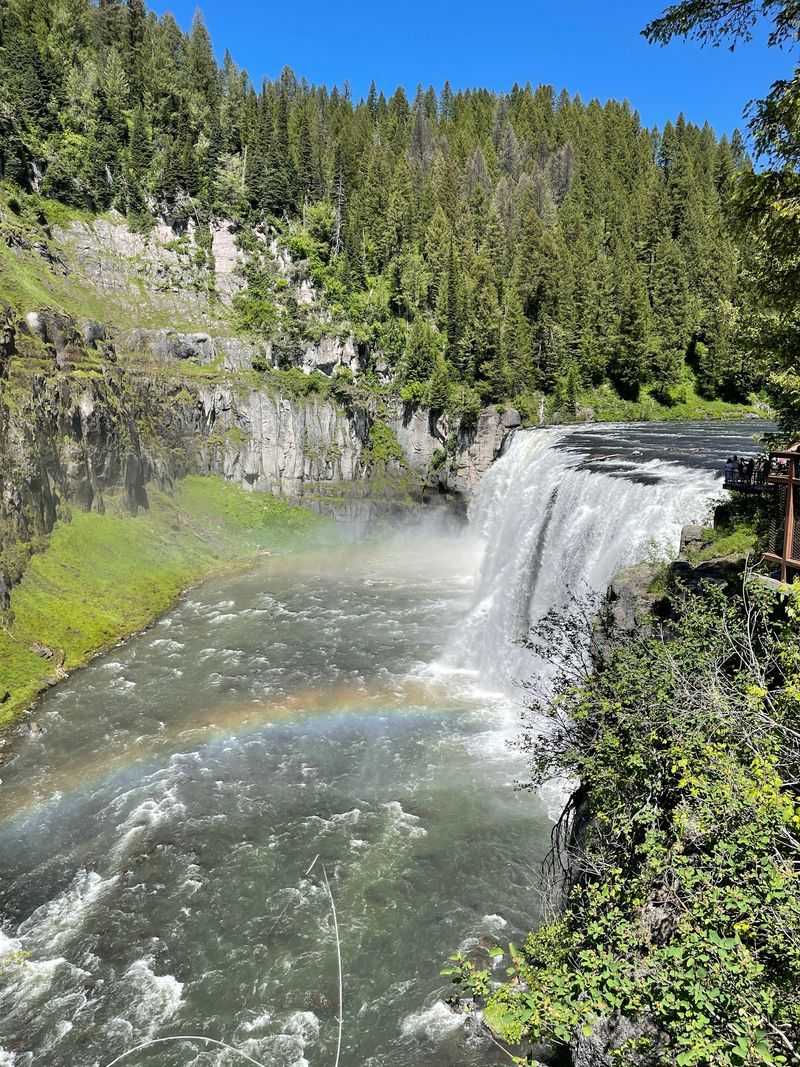
Timing can turn a nice view into a memorable one. Rainbows show up often in the mist, and they are one of the most talked-about features here.
Arriving as the sun rises behind you, while you face the falls, sets up the best conditions. Rainbows then appear across the spray.
Early hours help in another way. Around 9:30 in the morning, only a few people may be around, and crowds tend to grow by mid-morning.
Parking can fill on busy days. Going early solves both the crowd problem and the parking puzzle.
Weekdays are calmer too. Some travelers have found the upper falls almost empty on a weekday, with the area entirely to themselves.
So set an alarm and skip the snooze button. The early start pays off in color and quiet.
Trails to the Lower Falls
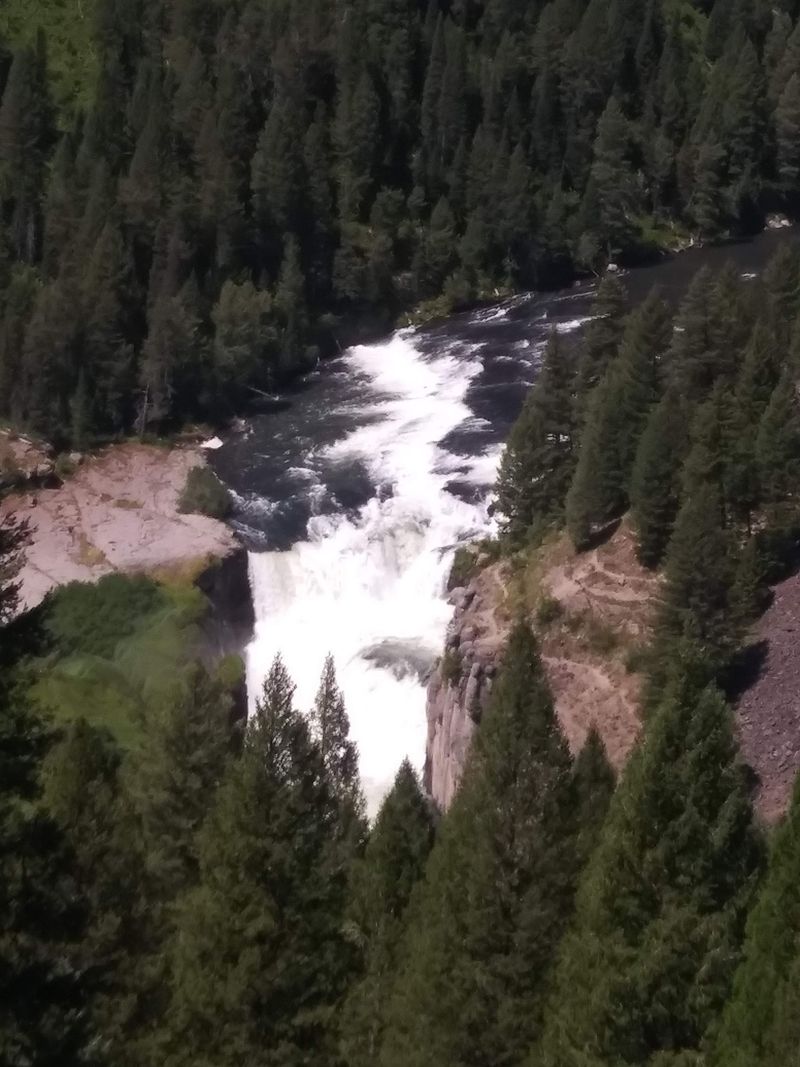
One waterfall is good, but two make a better day. The Mesa Falls area includes both upper and lower falls.
Trails connect the two areas, so hikers can see both without much fuss. A roughly two-mile hike in the area earns praise as a near-perfect trail.
Many people visit the lower falls first and then head to the upper falls. That order saves the bigger, closer view for last.
Smaller trails are also available nearby. They suit anyone who wants to stretch their legs after a long drive.
The area works well as a lunch break or a place to recharge on a road trip. Pack your own supplies, since it is a natural area rather than a busy town stop.
Families with energetic kids may find the trails a welcome bonus. A short walk here can turn into a full morning without anyone noticing.
Fees, Facilities and a 2026 Heads-Up
Bring cash, and bring the exact amount. Entry runs on a self-check-in system with a $5 vehicle fee.
You fill out a form with your vehicle details, place the cash in an envelope, and drop it in the box. No attendant is on site.
An annual national park pass covers entry at no extra charge. That is handy for travelers already touring Yellowstone.
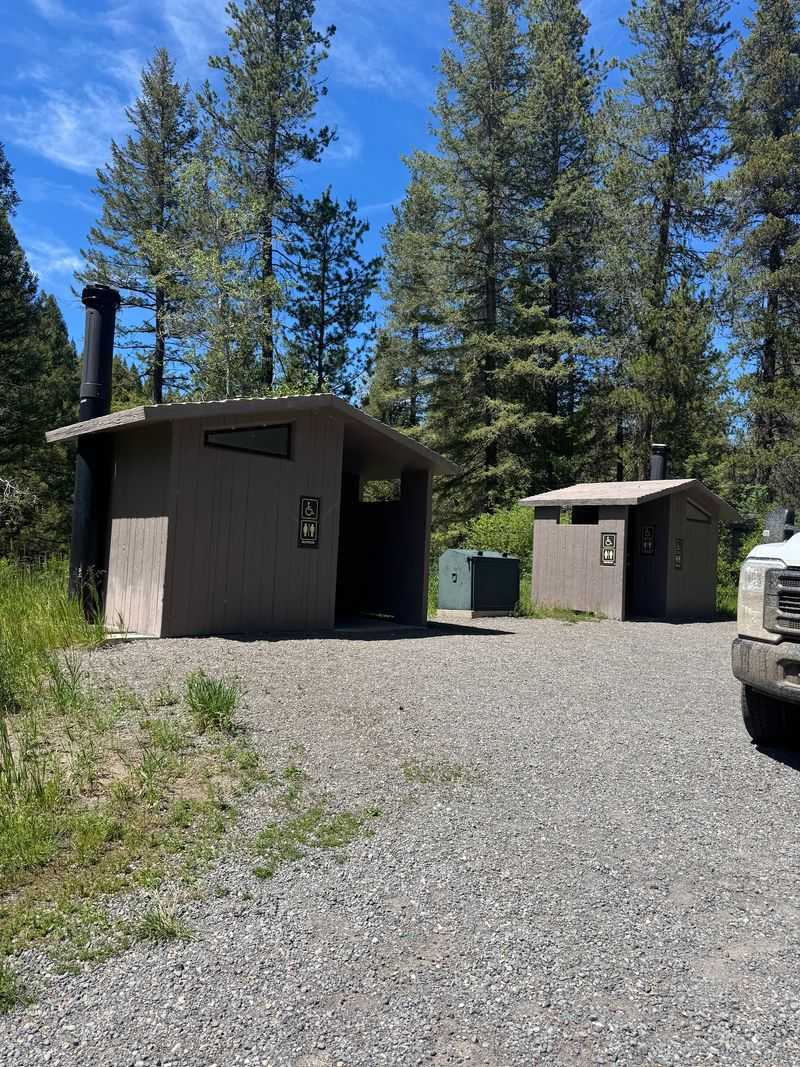
Vault toilets are available near the parking area. Some trips find them clean, with a pretty mural, while others find them low on upkeep.
A visitor center exists on site, though it may be closed when you arrive. It has offered a gift shop and a penny press in the past.
Most important, plan around construction. The falls closed early for the 2026 season, so check current status before you go, as reopening is expected in 2027.
Worth the Byway, Worth the Snow
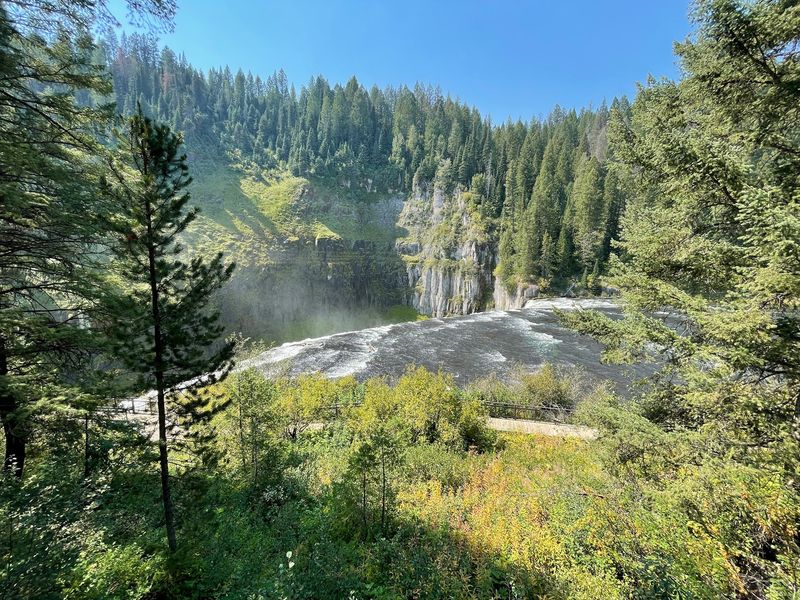
Short walks rarely deliver this much. Upper Mesa Falls packs a ten-story waterfall, rainbows, and easy access into a single stop.
The drive along the byway is part of the plan. Just know the main highway could use some work, so drive with care.
Summer and early fall suit families and casual travelers. Early October is a lovely time for a calmer visit.
Winter belongs to the adventurous. Snowmobilers, skiers, and snowshoers get a quieter, snowier version that few people ever see.
Please carry out what you bring in. Trash cans are limited, and keeping the area clean helps everyone.
Check the 2026 construction closure first, then pick your season. Whichever one you choose, the falls tend to leave people planning their next trip back.
Enjoyed this story?
Add Fast Food Club as a preferred source to see more of our reporting on Google.