


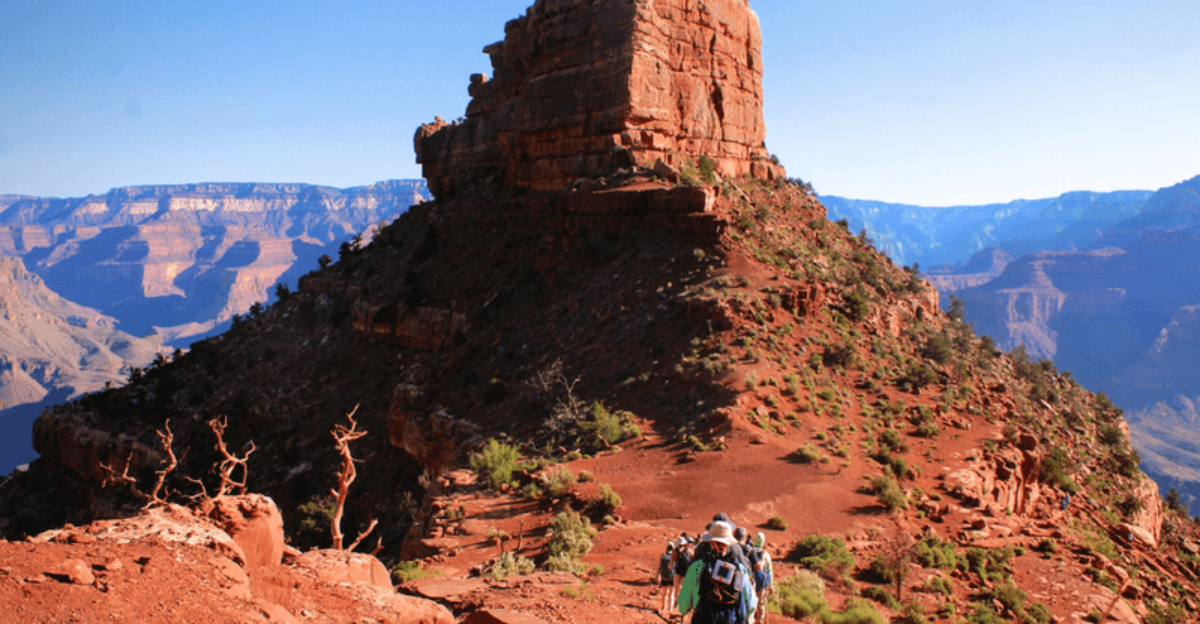
Tucked inside one of the world’s most breathtaking natural wonders, the South Kaibab Trail in northern Arizona is the kind of hike that stays with you long after you’ve returned home. Stretching along exposed ridgelines and dramatic switchbacks, this iconic route offers some of the most jaw-dropping, unobstructed views anywhere in the Grand Canyon.
Whether you’re a seasoned hiker or a curious first-timer, this trail has something truly unforgettable waiting around every corner. Lace up your boots and get ready for the adventure of a lifetime.
The Trailhead: Where the Adventure Officially Begins
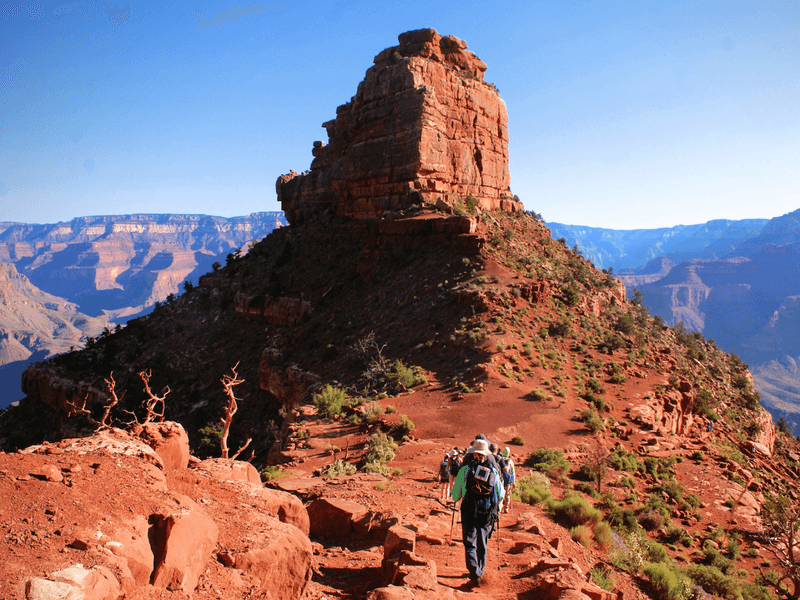
Before the first step down, the South Kaibab Trailhead already delivers a punch of excitement. Perched right on the South Rim of the Grand Canyon, the starting point greets hikers with a sweeping, wide-open view that makes your stomach drop in the best possible way.
Getting here is straightforward once you know the trick: you cannot drive directly to the trailhead. Parking is reserved near the Grand Canyon Visitor Center, and from there, you hop on the free orange East-bound shuttle bus.
The ride itself is short and scenic, building anticipation with every passing mile.
Rangers are often stationed nearby to answer questions, hand out safety tips, and remind hikers to carry enough water. Starting early in the morning, ideally before sunrise, is strongly recommended.
The cooler temperatures and softer golden light make those first steps down the canyon feel almost magical.
Ooh Aah Point: The Name Says Everything
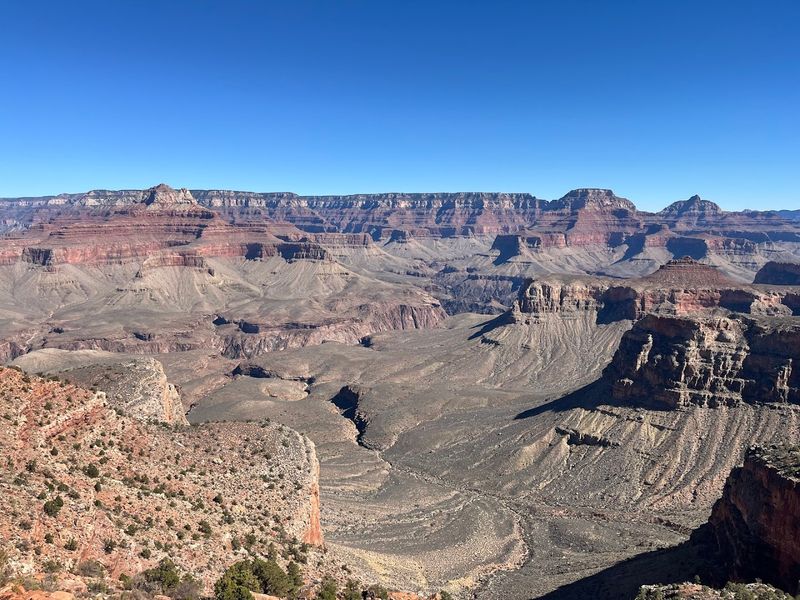
About 0.9 miles from the trailhead, Ooh Aah Point earns its playful name every single time. The moment hikers round the bend and catch their first full, unobstructed panorama of the Grand Canyon, gasps and wide eyes are practically guaranteed.
No photo fully prepares you for it.
This spot is a favorite turnaround point for casual visitors or families with younger kids who want a taste of the trail without committing to a longer haul. Even if you only make it this far, you will leave feeling like the hike was completely worth every step.
The views stretch in nearly every direction, revealing layers of rust, amber, and violet rock carved over millions of years. Bring a camera, but honestly, put it down for at least a moment and just soak it all in.
Some views deserve your full, undivided attention.
Cedar Ridge: The Halfway Hero of the Trail
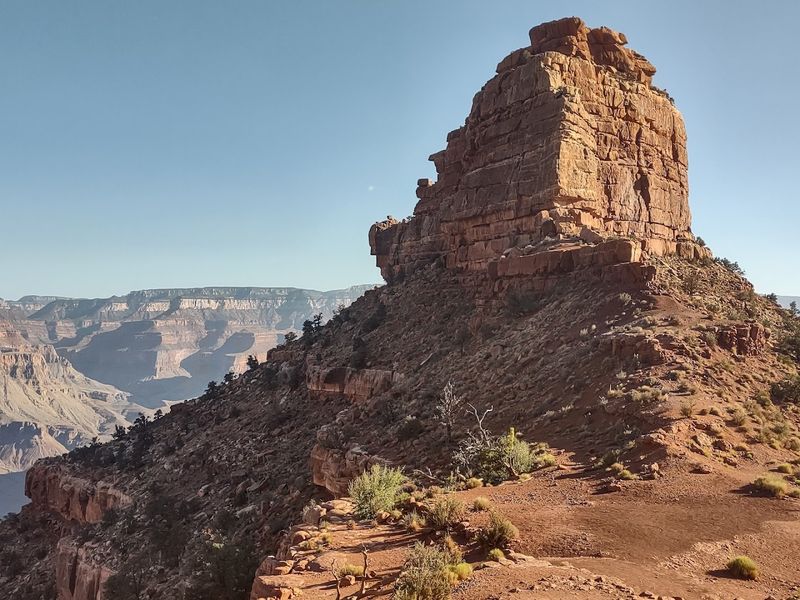
Cedar Ridge sits about 1.5 miles down the South Kaibab Trail, and for many hikers, it feels like the sweet spot between challenge and reward. By the time you arrive, your legs have gotten a solid workout, but the views waiting at the ridge make every bit of effort feel completely justified.
One of the most practical perks of Cedar Ridge is the pit toilet available here, making it the only restroom stop on the upper portion of the trail. Smart hikers plan their water and snack breaks around this checkpoint, using the flat, open space to rest before deciding whether to push further or head back up.
Wildlife sightings are common around Cedar Ridge. Squirrels, ravens, and various lizards often make appearances, adding a fun, spontaneous element to the break.
Just remember: feeding wildlife is prohibited and genuinely harmful to the animals who call this canyon home.
Skeleton Point: The Furthest Most Hikers Go
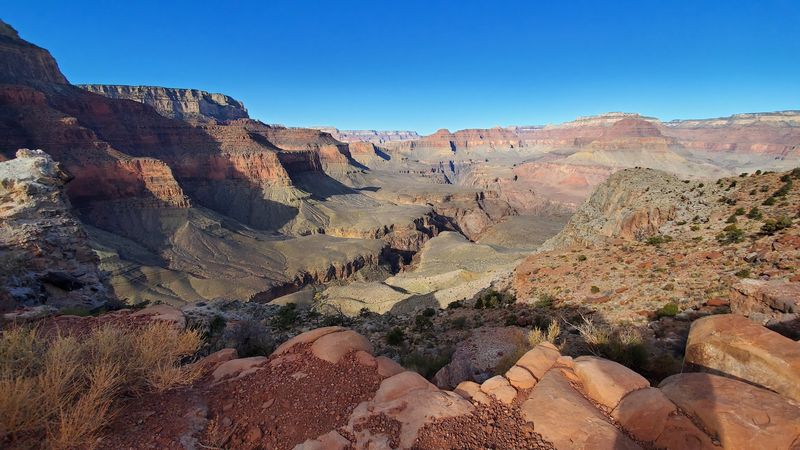
At 3 miles from the trailhead, Skeleton Point is where the Grand Canyon truly reveals its staggering depth. From here, on a clear day, you can actually spot the Colorado River snaking far below, a glittering silver ribbon cutting through ancient rock.
It is a sight that genuinely makes your heart race.
Most experienced day hikers treat Skeleton Point as their turnaround destination. The round trip clocks in at roughly 6 miles, and one reviewer shared it took just under 3.5 hours at a comfortable pace.
That said, the uphill return demands serious energy, so pace yourself on the way down.
Shade becomes increasingly scarce past Cedar Ridge, so sunscreen and a wide-brimmed hat are non-negotiable by this stage. Bringing at least two liters of water per person is the bare minimum.
The reward of standing at Skeleton Point, however, makes every careful preparation step feel absolutely worthwhile.
The Switchbacks: Where the Trail Gets Real
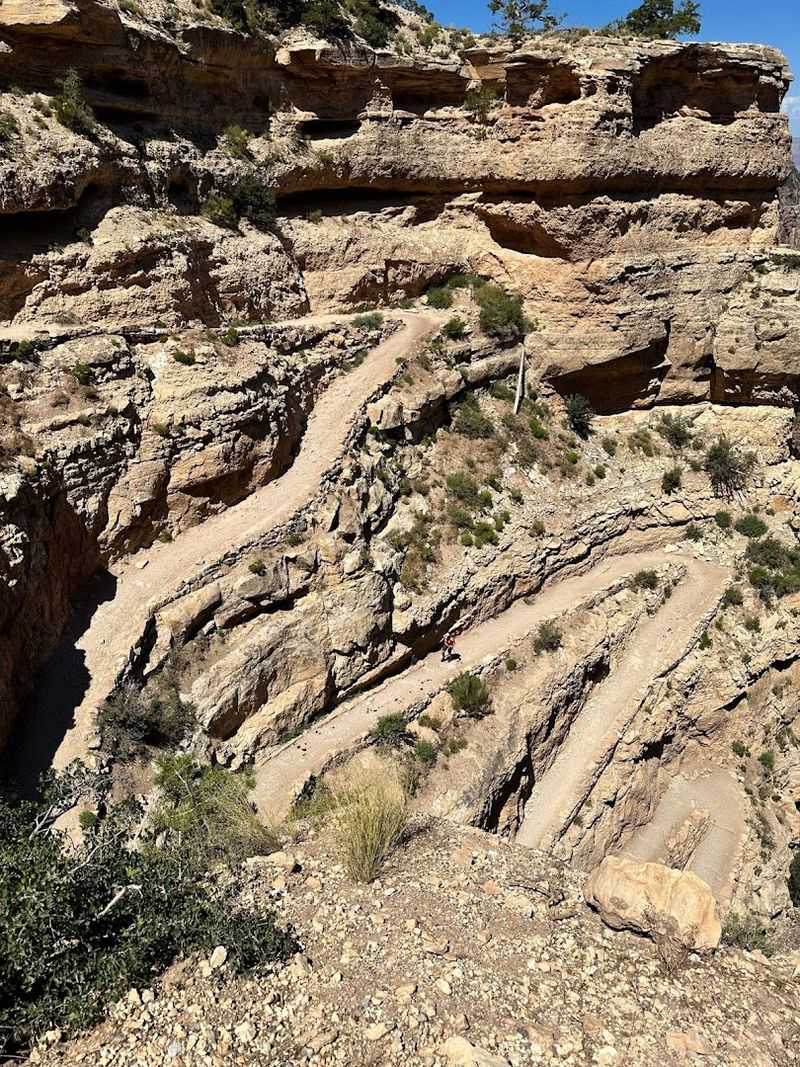
Few trail features are as instantly humbling as the tight, cliff-hugging switchbacks of the South Kaibab Trail. These sharp zigzag turns are carved directly into the canyon walls, and they demand full attention with every step.
One glance over the edge is enough to understand why focus matters here.
For hikers with a fear of heights, these sections can feel intimidating, but most people find that keeping their eyes on the path ahead rather than the drop below makes a huge difference. Trekking poles are a genuine game-changer on these stretches, offering extra stability both going down and especially coming back up.
The switchbacks, despite their intensity, also offer some of the trail’s most dramatic photography opportunities. The layered canyon walls frame each turn beautifully, and the changing light throughout the day shifts the colors from warm gold to deep crimson.
Scary and stunning at the same time, honestly.
No Water on the Trail: A Crucial Safety Reminder
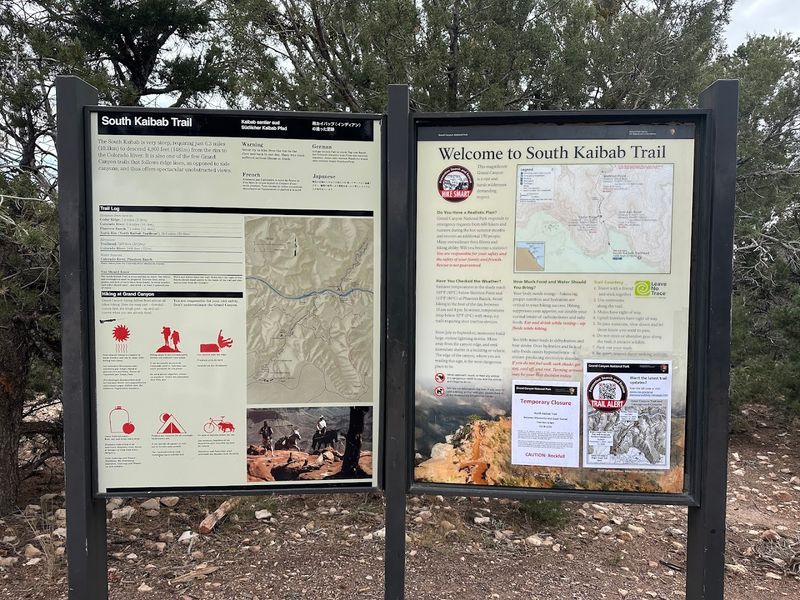
Here is one fact every hiker absolutely must know before stepping onto the South Kaibab Trail: there is zero water available along the route until you reach the valley floor near Phantom Ranch. Zero.
None. Not a single fountain, spigot, or stream between the rim and the river bottom.
Experienced hikers recommend carrying at least two liters of water per person for shorter trips and significantly more for those heading all the way to the Colorado River. Pre-hydrating the night before and drinking a large amount of water before starting the hike can also make a measurable difference in how your body handles the descent and climb.
Electrolyte packets or sports drinks are worth tucking into your pack as well. Dehydration sneaks up fast in the dry canyon air, especially when the temperature at the bottom can be 20 to 30 degrees hotter than at the rim.
Preparation here is not optional.
Sunrise Hikes: The Most Magical Way to Experience the Trail
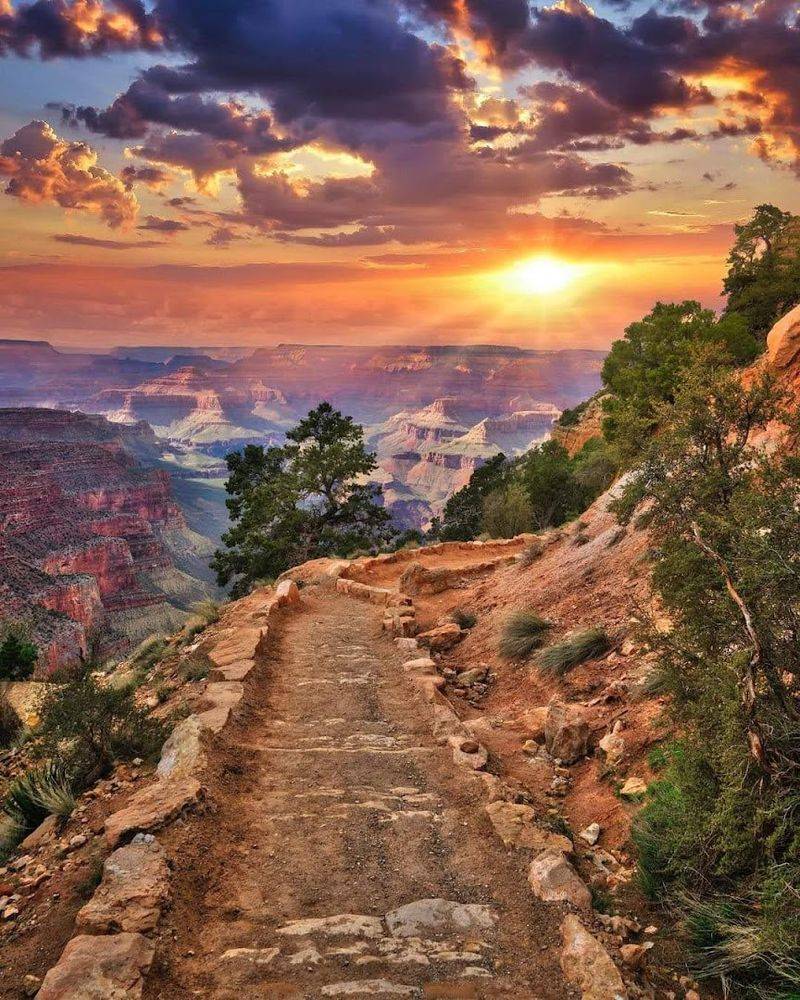
Waking up before dawn to hit the South Kaibab Trail might sound brutal, but ask anyone who has done it and they will tell you the same thing: absolutely worth it. The canyon at sunrise is something else entirely.
Soft pink and amber light pours over the layered rock walls, creating a glow that no filter could ever replicate.
One hiker shared leaving the trailhead at 5:15 AM in early April, catching a breathtaking sunrise partway down and enjoying cooler, more manageable temperatures before the desert heat kicked in. By the time they reached the canyon bottom, temperatures had climbed to around 90 degrees Fahrenheit, making that early start a genuinely smart decision.
Crowds are also dramatically thinner in the early morning hours, giving you stretches of trail that feel almost privately yours. Fewer people, better light, cooler air, and mule encounters are rarer before 9 AM.
Early risers truly win on this trail.
Mule Encounters: Sharing the Trail with Canyon Locals
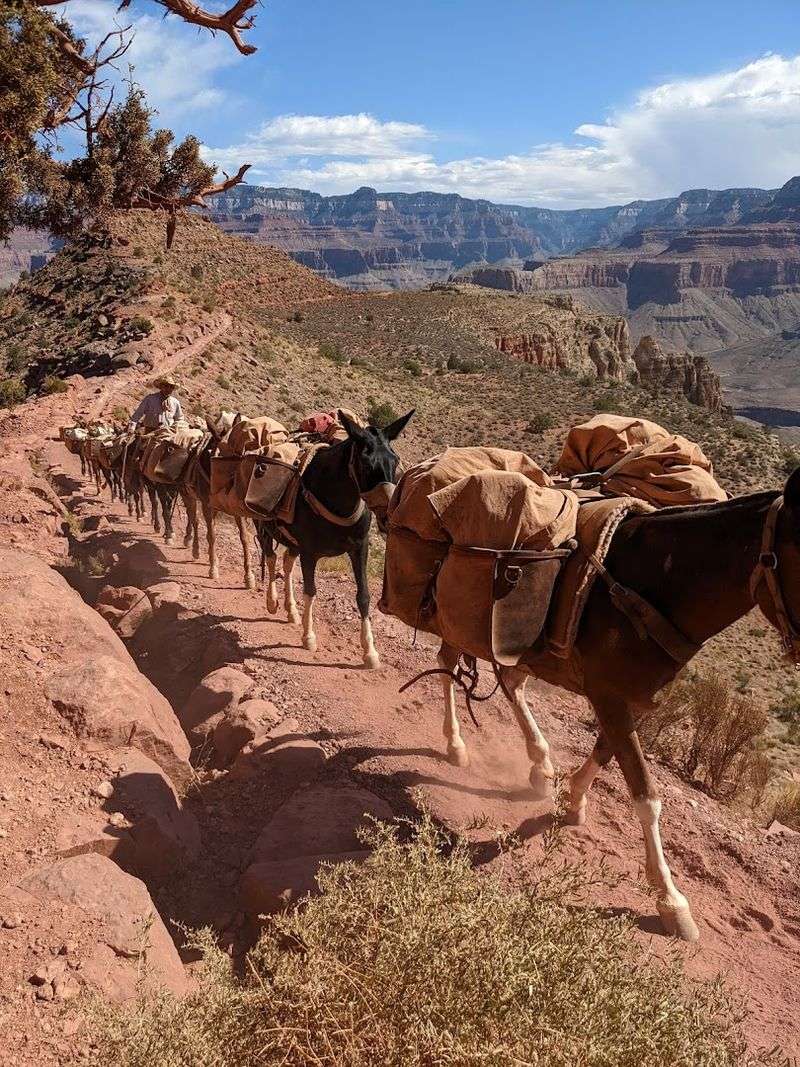
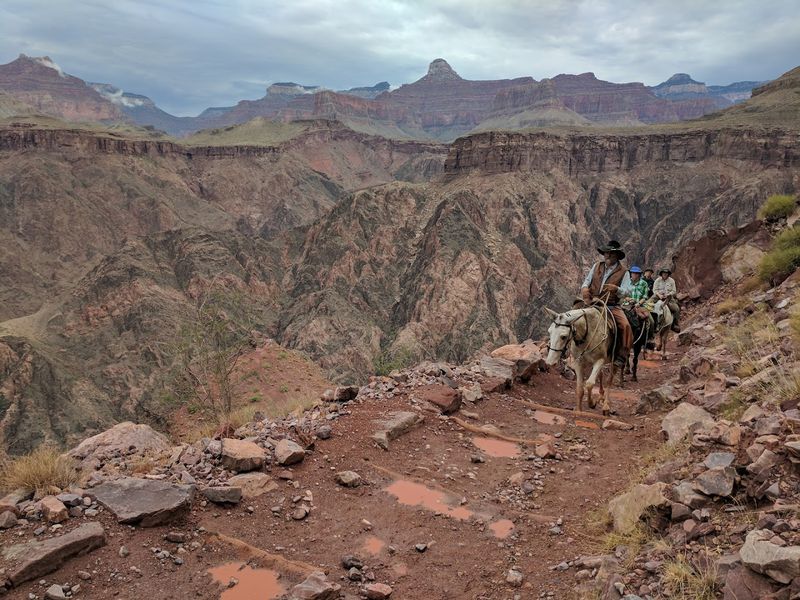
Sharing the trail with mules is one of those uniquely Grand Canyon experiences that catches first-timers completely off guard. These hardworking animals carry supplies down to Phantom Ranch, the only lodge located at the bottom of the canyon, and they follow a regular schedule that usually puts them on the trail around 9 AM.
Trail etiquette around mules is simple but important. When a mule train approaches, hikers must step to the uphill side of the trail, stand still, and remain quiet until the animals have completely passed.
Sudden movements or loud noises can spook the mules, which creates a genuinely dangerous situation on narrow cliff-side paths.
Most mule encounters are actually pretty charming once you know what to expect. The animals are calm, experienced, and used to human presence.
Watching a fully loaded mule train navigate a steep switchback with total confidence is, oddly enough, one of the more memorable moments the trail offers.
Reaching the Colorado River: The Ultimate Trail Reward
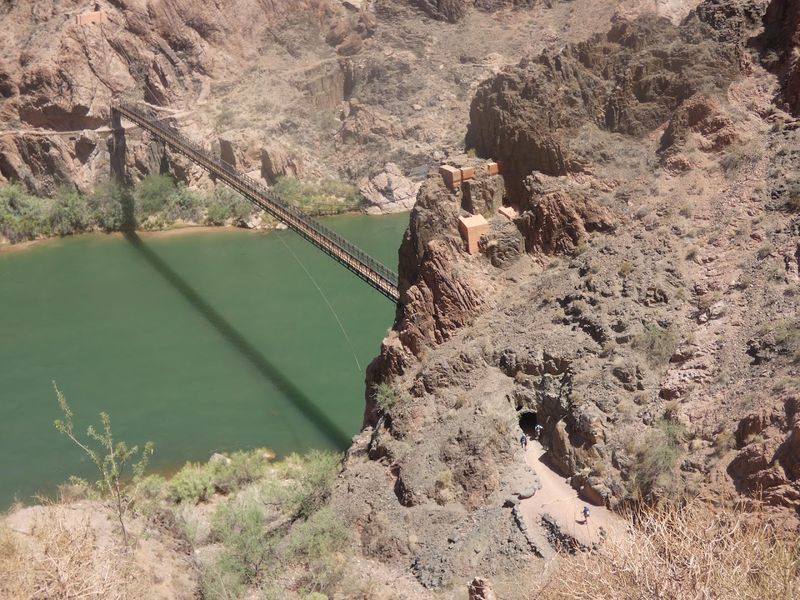
Making it all the way down to the Colorado River on the South Kaibab Trail is one of those life-list achievements that hikers carry with them forever. The 7-mile descent is demanding, relentless, and absolutely stunning from start to finish.
When the river finally comes into view, the sense of accomplishment hits like a wave.
Water is available at the valley floor near Phantom Ranch, which is the first reliable fill-up point for hikers who have made the full descent. Refilling here before the return journey is non-negotiable.
The temperature at the canyon bottom can reach 110 degrees Fahrenheit in summer, making hydration a matter of genuine safety rather than simple comfort.
Many seasoned hikers recommend combining the South Kaibab descent with an ascent via the Bright Angel Trail for a scenic loop. The round trip totals roughly 16 miles, so overnight camping with a permit is the smartest approach for most people.
Bright Angel Trail Connection: The Smarter Return Route
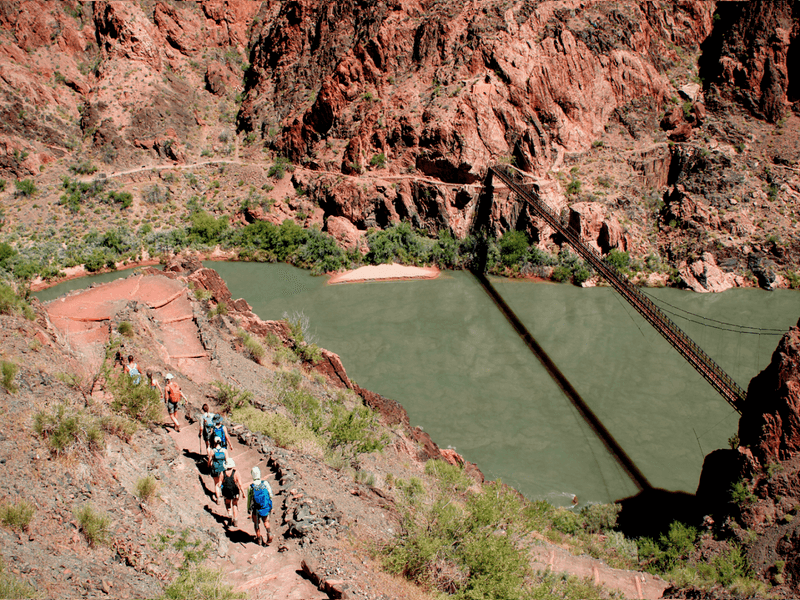
Seasoned Grand Canyon hikers have a saying: go down on South Kaibab, come up on Bright Angel. The logic behind this popular combination is simple and practical.
South Kaibab offers superior, ridge-top views on the way down, while Bright Angel provides water stations and shade-friendly creek vegetation for the brutal uphill return.
The Bright Angel Trail intersects with the South Kaibab route at the canyon floor near Phantom Ranch, making the transition between trails relatively smooth for prepared hikers. Multiple water refill stations along Bright Angel are a lifesaver, especially during summer months when temperatures at the bottom regularly exceed 100 degrees Fahrenheit.
One reviewer who completed the full loop described it as a round trip of 16.1 miles, with their personal total reaching over 17 miles due to photo stops. Camping at the bottom with a permit splits the journey into two manageable days, which most rangers and experienced hikers strongly recommend for safety.
Seasonal Considerations: Timing Your Visit Right
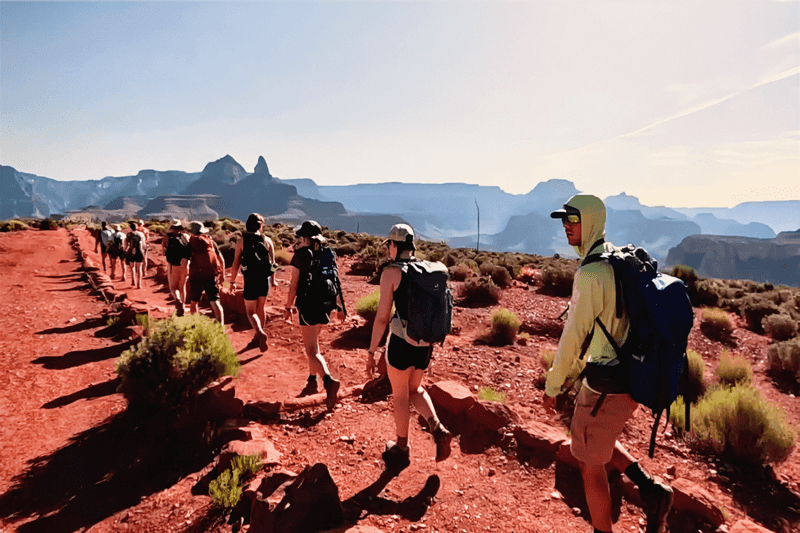
Timing a South Kaibab Trail hike correctly can mean the difference between a tough-but-joyful adventure and a genuinely dangerous ordeal. Summer temperatures inside the canyon regularly hit 110 degrees Fahrenheit or higher, and the lack of shade or water on the South Kaibab route makes mid-summer midday hiking especially risky for unprepared visitors.
Spring, particularly April and May, is widely considered the sweet spot for this trail. Temperatures are moderate, crowds are manageable, and the canyon light during these months produces stunning photography conditions.
Fall offers similar benefits, with the added bonus of fewer peak-season visitors crowding the popular viewpoints.
Winter hiking is possible but comes with its own challenges. Ice on the upper sections of the trail, especially in the first few hundred feet near the rim, has caught hikers off guard.
Microspikes or traction devices are worth packing for cold-weather visits. Whatever season you choose, early morning starts remain the gold standard.
Essential Gear and Packing Tips for a Safe Hike
Packing smart for the South Kaibab Trail is not about being overly cautious. It is about genuinely enjoying the experience rather than suffering through it.
The single most important item is water, and most rangers recommend at least two liters per person for shorter hikes, with considerably more for those heading deeper into the canyon.
Sunscreen and a wide-brimmed hat are non-negotiable once you pass Cedar Ridge, where shade disappears almost entirely. Trekking poles earn their weight many times over on the steep, rocky return climb, reducing stress on knees and improving balance on uneven terrain.
High-energy snacks like trail mix, energy bars, or salty crackers help maintain stamina and replace electrolytes lost through sweat.
Proper footwear matters enormously here. Sturdy, broken-in hiking boots or trail runners with good ankle support and grippy soles handle the rocky, sometimes slippery surface far better than casual sneakers.
Leave the flip-flops at the hotel. No trash cans exist on the trail, so pack out every wrapper.
Wildlife and Scenery: The Living Canvas of the Canyon
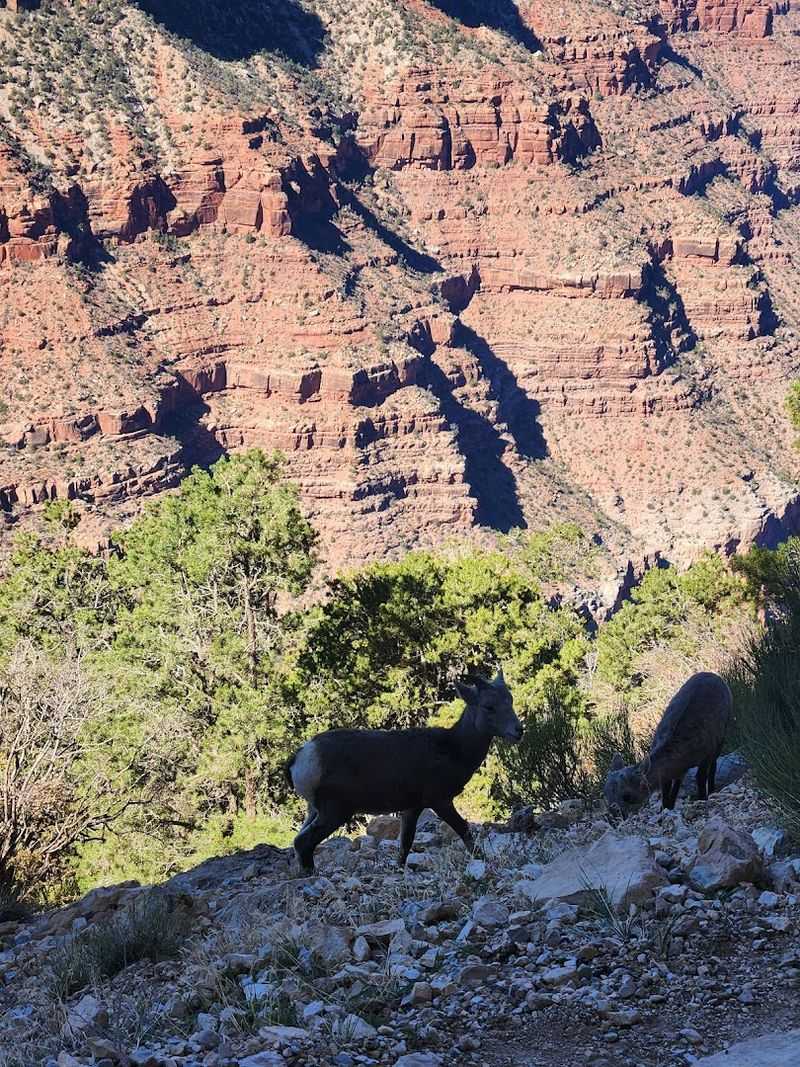
Beyond the rock formations and sweeping vistas, the South Kaibab Trail puts hikers in the middle of a thriving, surprisingly active ecosystem. Ravens circle overhead with casual confidence, often swooping close enough to inspect unattended snacks.
Mule deer sometimes appear near the rim in the early morning hours, grazing peacefully just off the trail edge.
California condors, one of North America’s most endangered and impressive birds, are occasionally spotted riding thermals above the canyon. With wingspans stretching nearly ten feet, spotting one in flight is genuinely breathtaking.
Squirrels and lizards are practically trail companions at this point, darting between rocks with impressive speed and zero concern for personal space.
The geological scenery itself reads like a textbook brought to life. Each layer of canyon wall represents a different chapter of Earth’s history, stacked in bands of red, cream, purple, and green.
Geologists estimate the deepest canyon rocks are nearly two billion years old, which puts every single step into humbling perspective.
Enjoyed this story?
Add Fast Food Club as a preferred source to see more of our reporting on Google.