


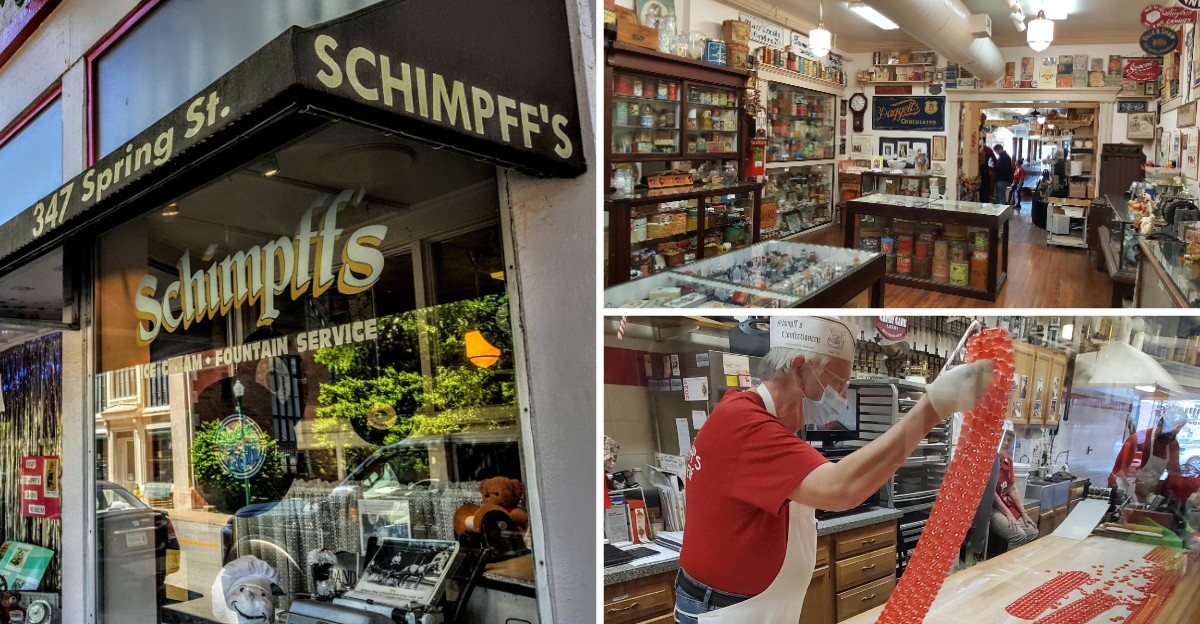
Some candy comes off a factory line by the millions, and then there is the kind still made by people who learned the craft from their own family. On a quiet downtown street in Jeffersonville, Indiana, one shop has kept a single fiery little treat in production for well over a hundred years.
The recipe is old, the tools are older, and the demonstration draws crowds who come just to watch it happen. There is also a museum, a lunch counter, and a soda fountain waiting inside.
Keep reading to learn where this place is, why a tiny red candy made it famous, and how to plan a visit that fits your schedule. The story starts in the 1800s and is still being written every single weekday.
A Storefront on Spring Street
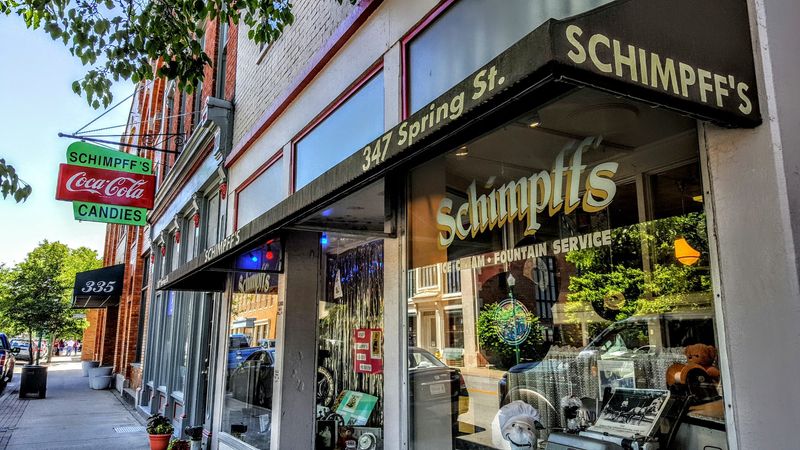
Downtown Jeffersonville holds a storefront that has outlasted trends, recessions, and several generations of sweet tooths.
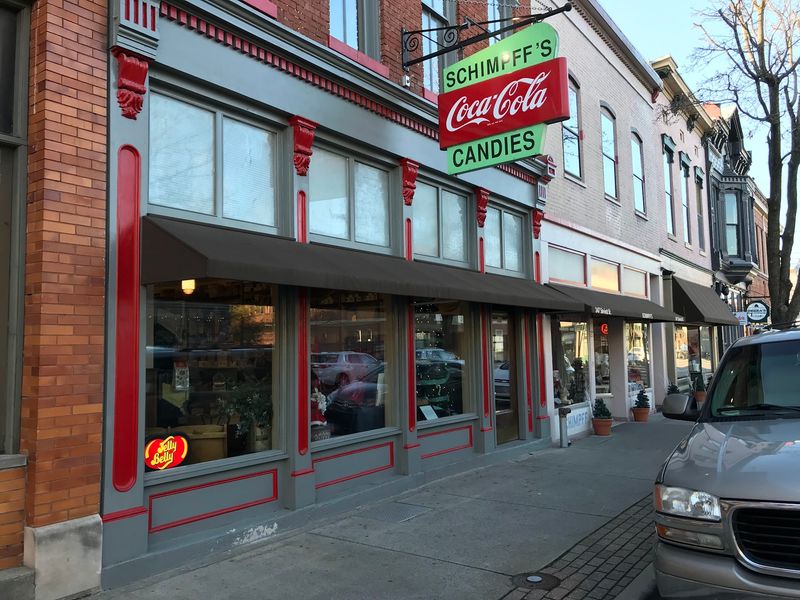
The business is Schimpff’s Confectionery, and it sits at 347 Spring St, Jeffersonville, IN 47130, in southern Indiana, just across the Ohio River from the Louisville area.
Officially, it is listed as a candy store. In practice, the building works as three places at once: a candy shop, a soda fountain, and a small candy museum.
That combination is a big part of why people make the trip. A quick stop for a bag of treats can easily turn into an afternoon of history lessons and live candy making.
The shop has earned a 4.8-star standing from well over 1,700 people, which is a remarkable number for a neighborhood confectionery.
Those numbers point to a place that keeps people coming back for more than the candy alone.
At the center of it all is a small, bright red cinnamon candy that the shop has been making by hand for more than a century.
The red hots are the headliner, and they explain why so many road trips through the region include a detour down Spring Street. The next stop in this story goes back to where it all began.
Roots Reaching Back to 1891
The year 1891 is stamped into the identity of this shop, and it shows up in nearly every conversation about it.
Benjamin Harrison was in the White House, and the soda fountain was still a newer idea in American towns. Candy was made in small batches, often by families who ran the shop and lived nearby.
Plenty of candy shops from that era have long since closed their doors. This one did not, and it still makes sugary treats in much the same way it did in the 1890s.
That staying power is the heart of the appeal.
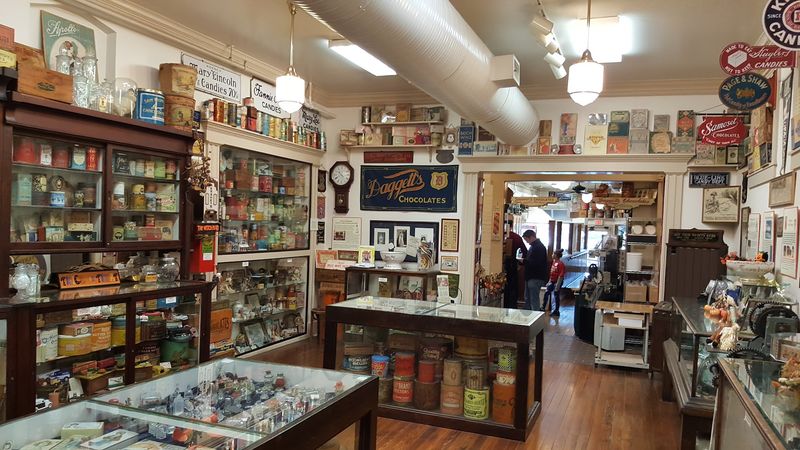
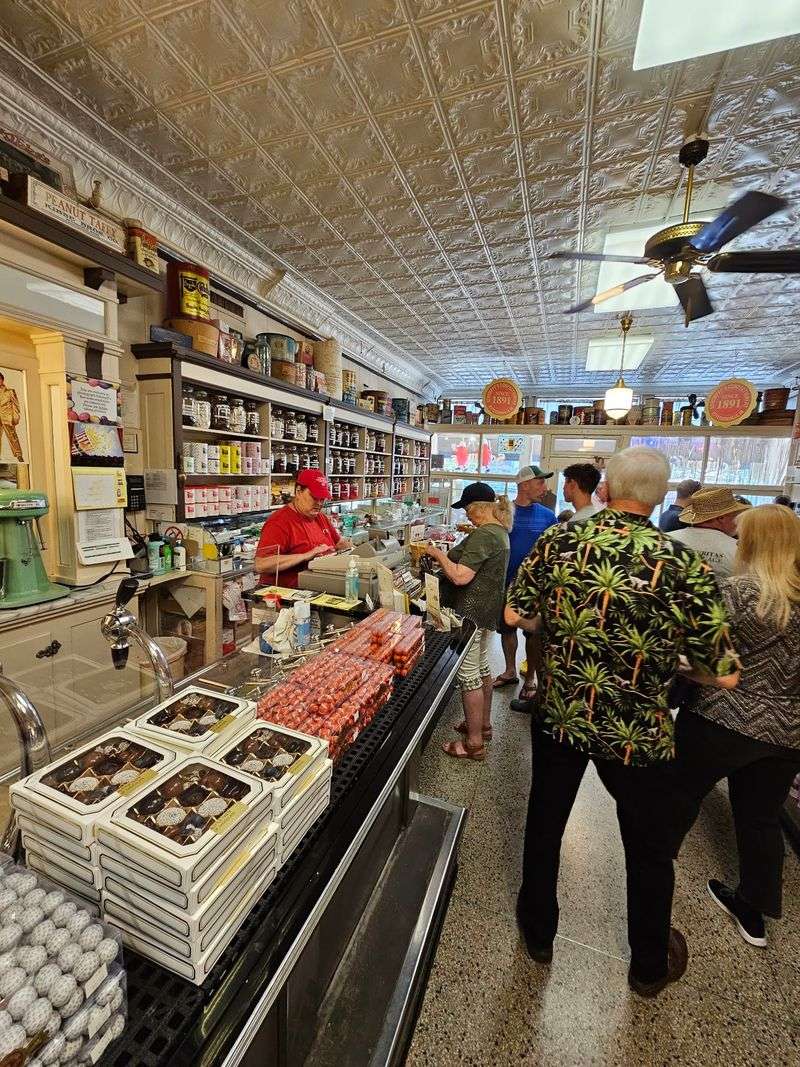
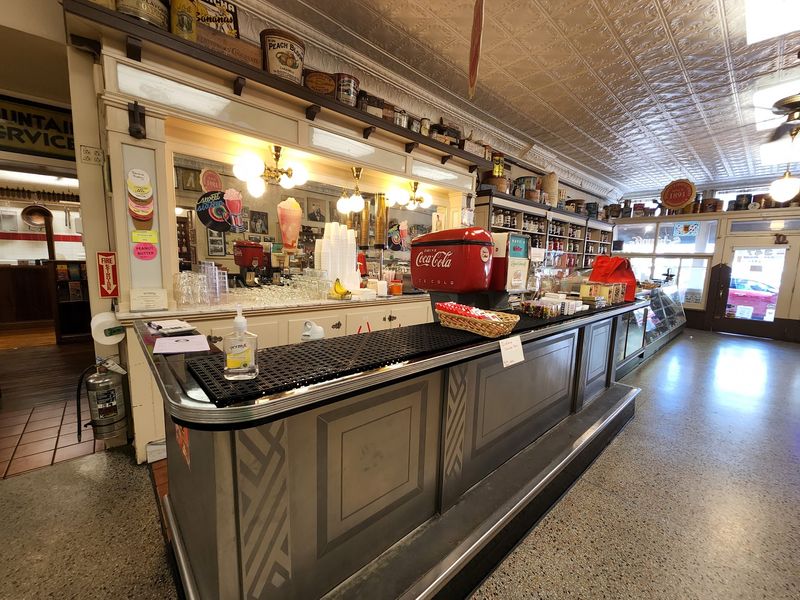
Inside, the history is not tucked away behind a single plaque. Vintage displays, old posters, antique machines, and a malt shop setup fill the space and tell the story of how Americans have enjoyed candy over the decades.
Many people describe the experience as a step back in time, and they mean it in the best possible way.
The shop feels authentic because it genuinely is old, not a modern building dressed up to look vintage.
Of course, a long history only matters if the craft survives along with the walls. Here, the craft is very much alive, and one candy in particular carries the torch.
The Little Candy with a Big Reputation
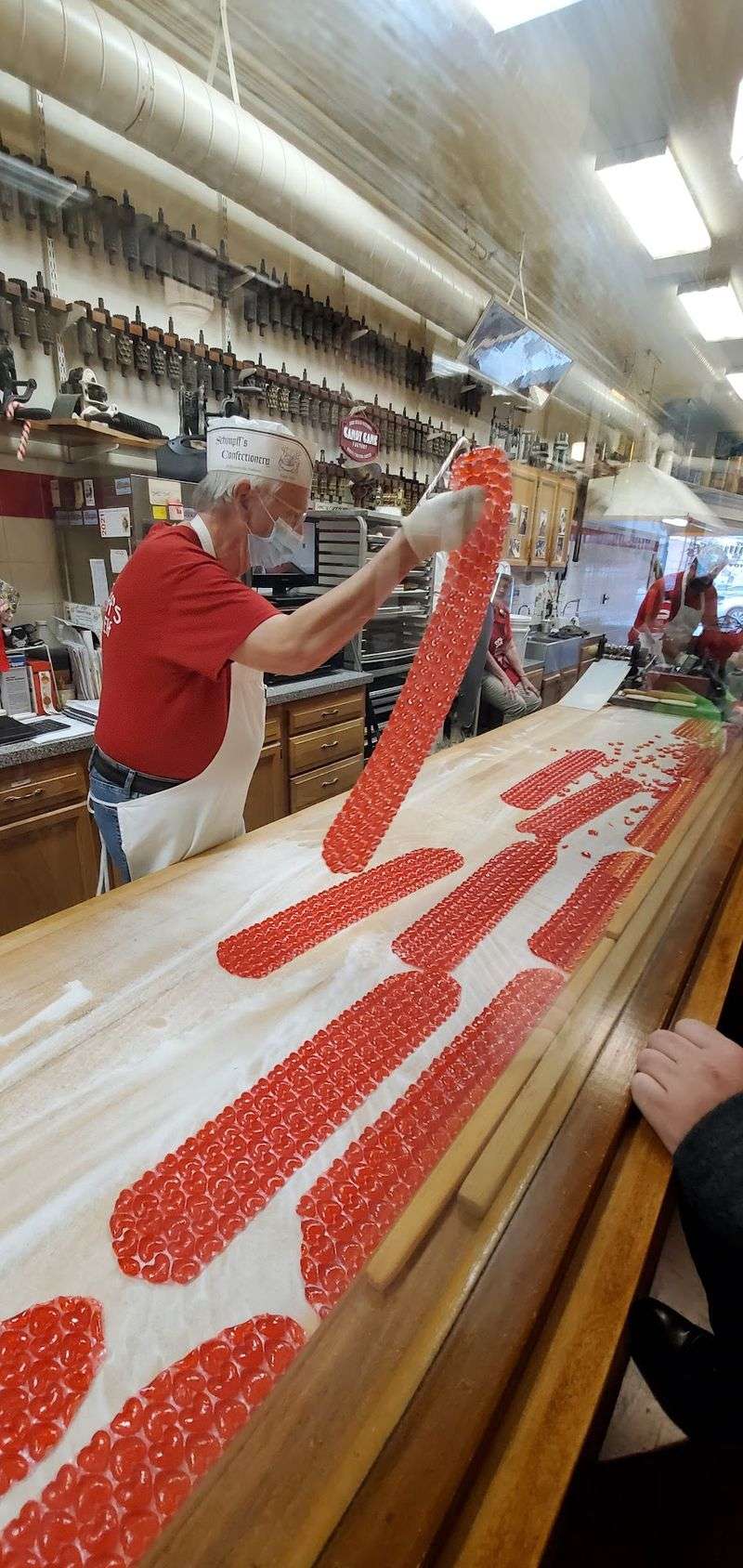
Red hots are small, round, and bright red, yet they have become the calling card of a shop that sells hundreds of different treats.
These cinnamon candies are made from scratch right in the store. They are not ordered in from a distant supplier or unpacked from a warehouse box.
Fans often call them the famous red hots, and the nickname fits.
Watching them come together is considered a stroke of luck, since the timing of each batch depends on the production schedule. Catching a red hot session feels a bit like winning a small prize before the candy even reaches your hand.
The candy is sold in containers, which makes it easy to bring a supply home. Some families buy them specifically for grandparents who have loved cinnamon red hots for decades.
That kind of loyalty says a lot.
A cinnamon candy that crosses generations is not just a snack; it becomes part of family traditions and holiday routines.
Red hots are also a popular pick for gifts. A can of them tucked into a bag is a simple way to share a piece of Jeffersonville with someone back home.
So how exactly does this fiery favorite get made in front of a live audience? That show deserves its own spotlight.
Candy Making as Live Entertainment
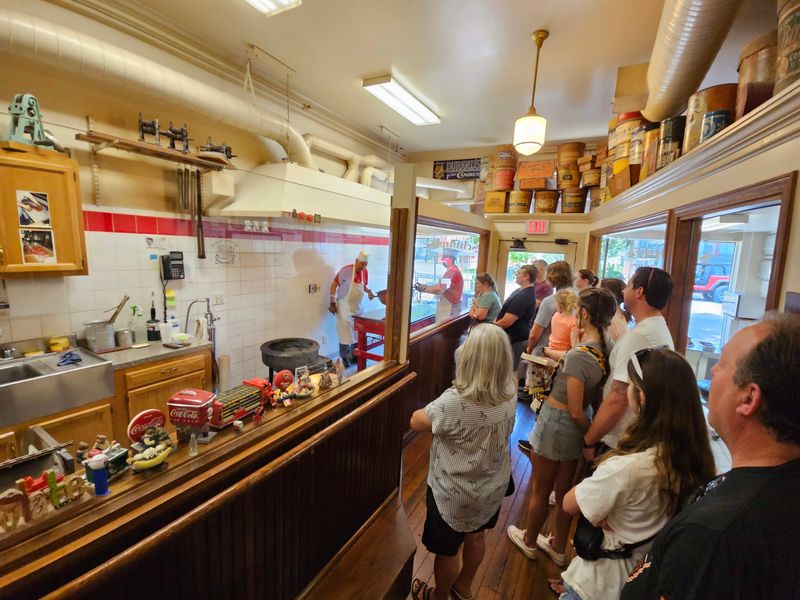
Few places turn a work shift into a crowd-pleasing show, but candy making here draws an audience almost every time it happens.
The demonstration is one of the most talked-about parts of the entire shop. People describe it as entertaining, informative, and genuinely fun, even for those who have seen it many times.
The owners bring plenty of personality to the table.
They explain each step of the process while they work, sharing the history behind the methods and the equipment. The result feels part cooking lesson, part history class, and part comedy routine.
Red hots are one of the stars of these sessions. Watching a batch of cinnamon candy go from raw ingredients to finished pieces is the moment many families plan their visit around.
Other candies rotate through the schedule as well, so each trip may bring a different demonstration.
Some regulars have watched the process a dozen times and insist it never gets old.
That is quite a statement about a show built around sugar and patience.
For first-timers, the demonstration offers a clear look at how handmade candy differs from mass-produced versions. And the best part of the show comes right at the very end.
A Reward at the Finish Line
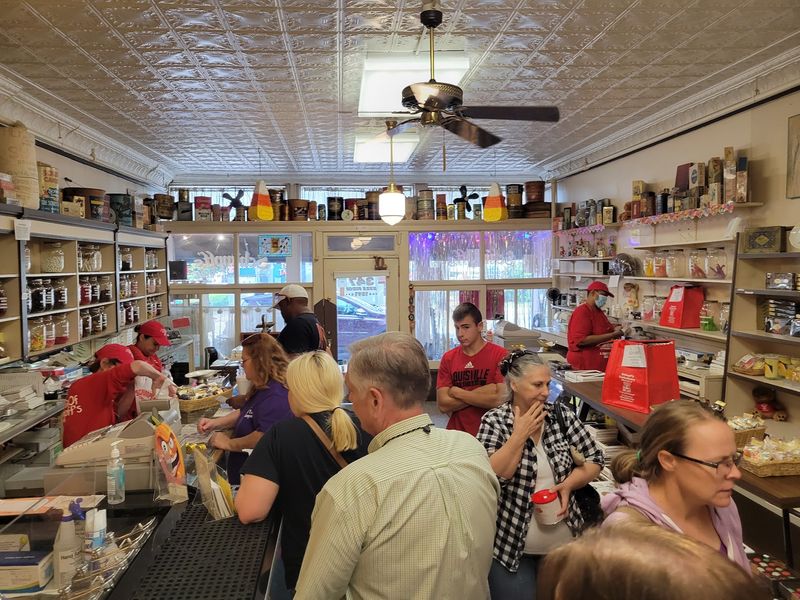
Patience pays off at the end of a candy demonstration, because the audience gets to sample what was just made.
Free samples are part of the experience. After watching a batch of red hots or another candy take shape, guests get a piece fresh off the line.
For kids, this may be the most memorable moment of the whole trip.
Trying a candy minutes after it was made is something most people never get to do. It connects the show directly to the product, and it turns a simple demonstration into a hands-on memory.
Many families describe the fresh red hot sample as unforgettable. It is also a smart way to help people decide what to buy before heading to the counter.
No guesswork required.
The samples are not limited to one candy either. Depending on the day, guests may try different in-house creations that come out of the production area.
Many people leave with more candy than they planned to buy, and some later wish they had grabbed even more.
That is the risk of a good sample.
Still, not every trip lines up with a scheduled demo. Thankfully, there is another way to see the candy makers at work.
Behind the Glass
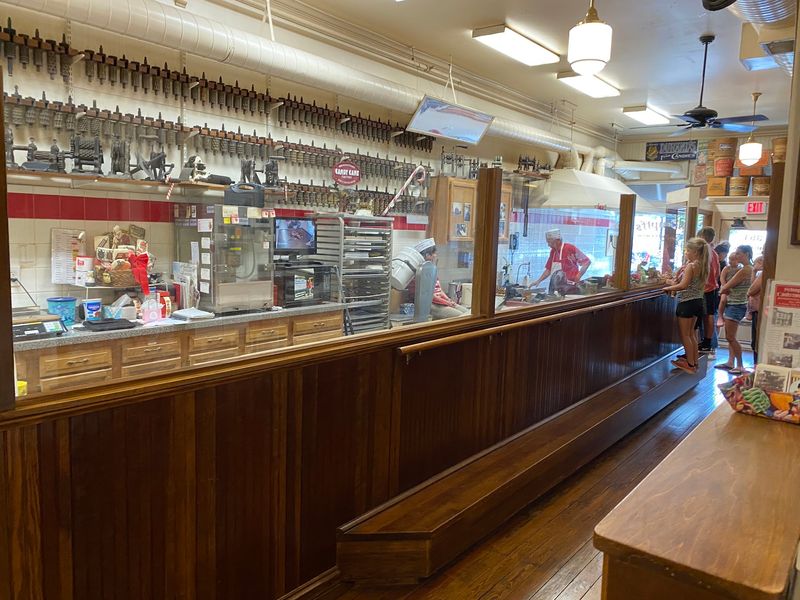
A pane of glass separates the shop floor from the candy kitchen, and it is one of the most popular spots in the building.
During certain hours, people can watch the staff make candy behind that window. It offers a clear view of the work without interrupting the process.
The glass window is a great option for those who miss a formal demonstration.
Families who drop in between scheduled shows can still catch the team shaping, cooling, and cutting candy. It is a quieter experience, but it still shows the handwork that makes this shop unique.
Chocolate production is sometimes on view as well, adding variety to what might be happening on any given day.
Timing is the key detail here.
Production does not run every minute the shop is open, so the kitchen may be quiet at times. Arriving earlier in the day and asking the staff about the schedule is a simple way to improve the odds.
The window also helps explain the claim of handmade candy. Anyone can see that the red hots and other treats are made right there on site.
Once the kitchen has been admired, there is still another room waiting nearby, and it is full of history.
A Museum Devoted to Candy
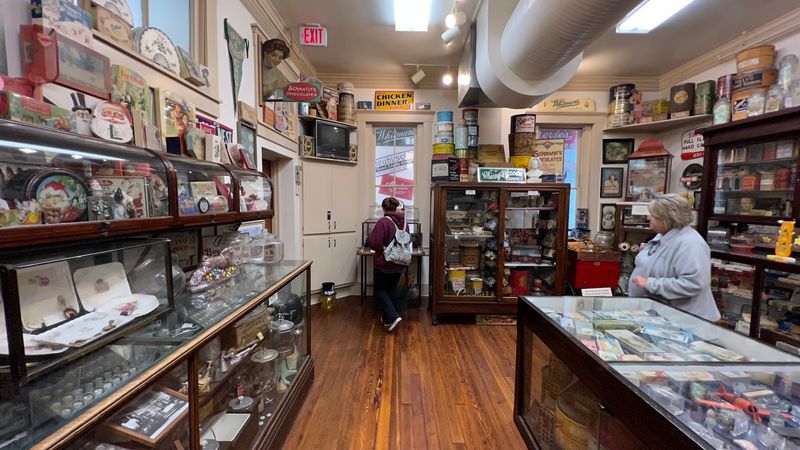
Most candy shops stop at the register, but this one keeps going into a room dedicated entirely to candy history.
The attached candy museum is small, yet it is packed with material. Old paraphernalia, vintage packaging, advertising posters, and antique equipment fill the space.
Guided tours of the museum are part of what the shop offers.
The collection traces how candy was made, sold, and marketed across different eras in the United States. It adds context to the demonstration, helping people see how the tools used in the kitchen fit into a much larger story.
Many people call the museum a genuine reason to visit, even for those who are not big candy fans.
That is high praise for a single room.
Walking through at a relaxed pace is the best approach. There is plenty to read and look at, and rushing means missing the small details tucked into each display.
Scout troops and school groups have toured the space over the years, which shows how well it works as a learning stop.
After all that reading and exploring, a break is usually in order. Luckily, the next stop inside the building handles that nicely.
The Soda Fountain and Lunch Counter
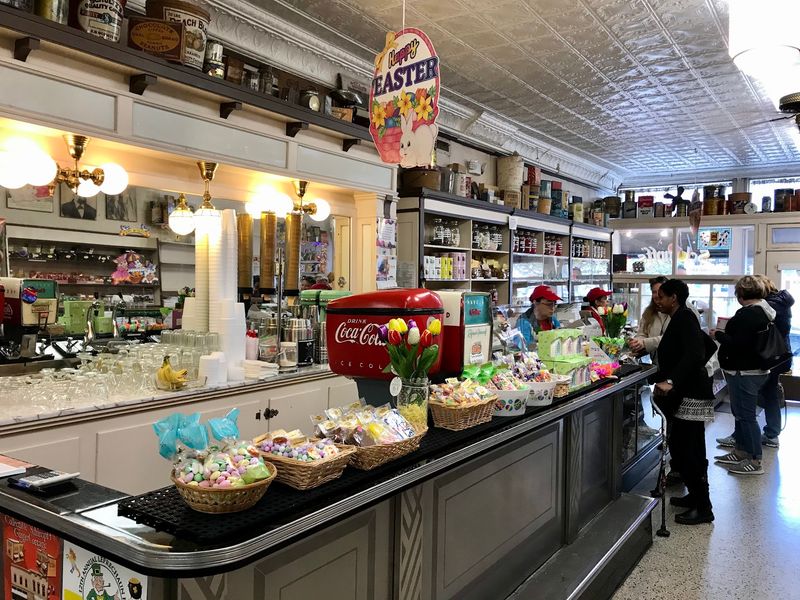
Candy may be the headliner, but the soda fountain holds its own as a reason to pull up a stool.
The shop operates a historic soda fountain with old-fashioned drinks and ice cream. The setup reflects a time when soda counters were social hubs in small American towns.
Lunch is part of the offering too.
A deli-style lunch counter serves made-to-order meals, which means a trip to the candy shop can easily double as a midday meal. Many families grab lunch after a demonstration before shopping for treats.
The dining area sits among the vintage displays, so the history lesson continues while people eat.
It makes for a relaxed break.
For locals, the lunch counter is a regular option for a quick bite downtown. For travelers, it solves the question of where to eat without leaving the building.
Even those who are not in the mood for candy often stop just for ice cream or a visit to the old-time soda fountain. The space is enjoyable to explore on its own.
And once lunch is done, the real challenge begins: deciding what candy to take home from shelves that stretch far beyond cinnamon.
Shelves Beyond the Cinnamon
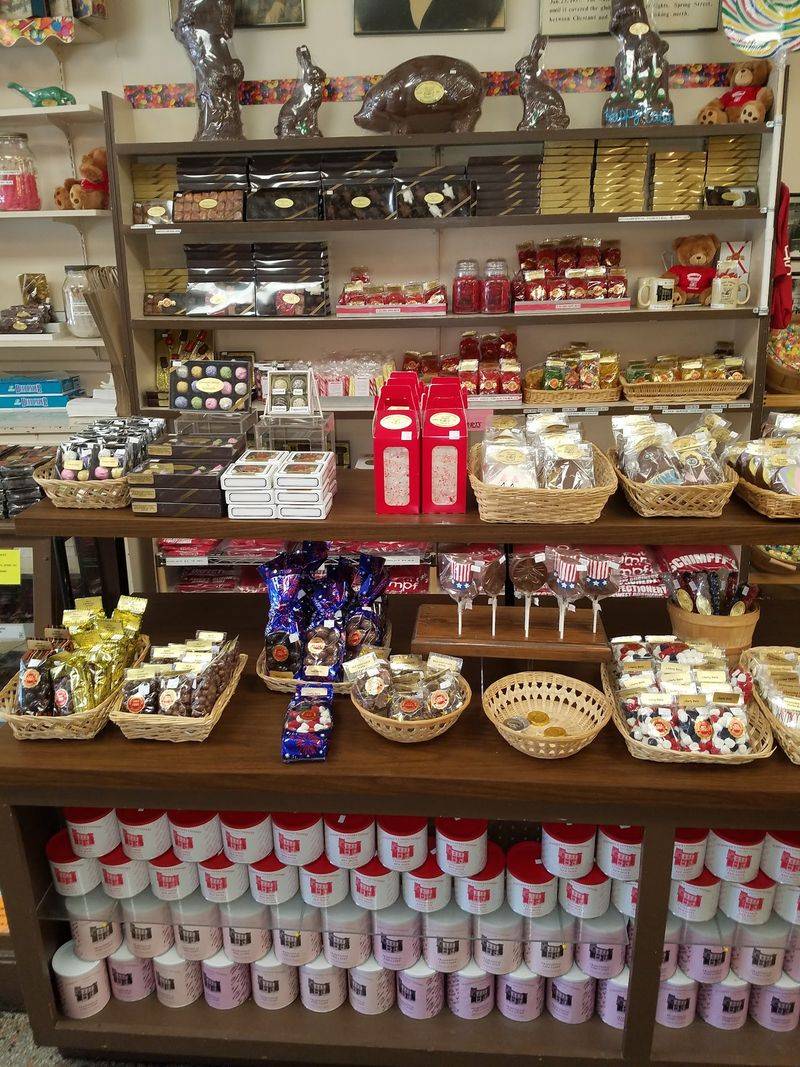
Red hots may own the spotlight, yet the rest of the shop offers a selection that can overwhelm the most decisive shopper.
Both old-fashioned and newer candies share the shelves. Classic hard candies sit near modern favorites, giving every age group something familiar.
Chocolate lovers get plenty of attention.
The shop carries milk, dark, and white chocolate in a wide range of styles. Sugar-free options are available as well, which is a helpful detail for anyone watching their sugar intake.
Kids tend to gravitate toward the novelty items, including suckers that play music. Those alone can stall a family at the counter for several minutes.
Choosing is genuinely hard.
Some grandparents give each grandchild a set number of picks, and even that turns into a serious decision-making session. The variety is part of the fun.
Seasonal candy shows up around holidays, so the lineup shifts through the year. A springtime trip may look quite different from a December one.
Tastes vary, of course, and not every item wins over every shopper. Starting with the in-house specialties, especially the red hots, is the safest bet for a first visit.
Of course, a great selection needs great people behind it.
Three Generations at Work
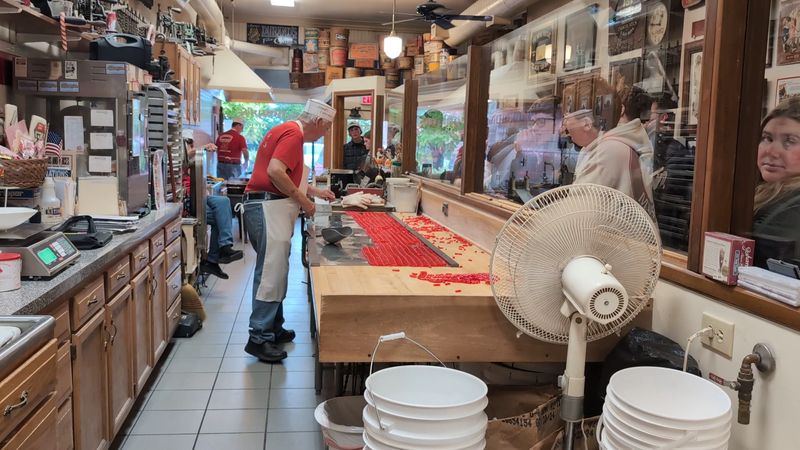
Family businesses tend to carry a certain energy, and this shop has it in abundance.
During some demonstrations, three generations of the family work side by side to pull off a batch of candy. It is a rare sight in a world where most candy comes from large corporations.
The staff earns constant praise for friendliness.
Friendly staff comes up again and again as one of the top themes tied to the shop, with well over a hundred mentions. Employees are described as kind, helpful, and genuinely happy to be there.
That attitude matters in a place built around joy.
A family feel runs through the whole operation, from the candy kitchen to the lunch counter. People often leave talking about the personalities as much as the products.
The owners’ charisma is especially visible during the live shows. Their mix of humor and knowledge keeps both kids and adults engaged from start to finish.
Passing a craft down through generations is also how the red hot recipe has survived. Each new family member who learns the process helps keep a century-old tradition going.
Word about that dedication has spread well beyond Jeffersonville, all the way to national television and beyond.
A National Spotlight
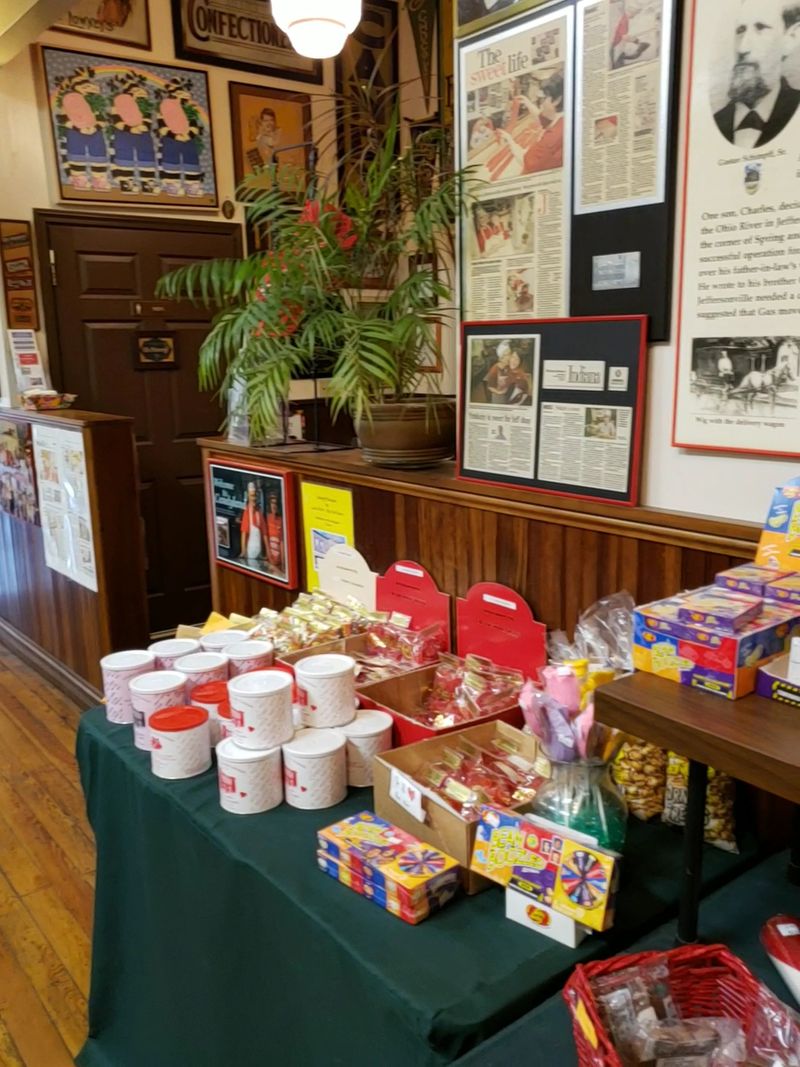
Small-town candy shops rarely land on national lists, but this one has done exactly that.
Schimpff’s was voted the number one candy store in the United States for 2025. That recognition put a fresh wave of attention on a business that has been quietly working since 1891.
Television has come calling too.
The shop has been featured on both Disney and Discovery channels. Those appearances introduced the candy making demonstrations and the red hot tradition to audiences far beyond Indiana.
National attention can sometimes change a place. Here, the core experience still centers on the same handmade methods and family involvement.
The spotlight simply brought more people to watch.
Many travelers now plan their trips around a stop at the shop after hearing about the honor. Some learn about the award while standing in line, which makes the visit feel even more special.
Recognition like this reflects more than good candy. It speaks to the combination of history, craft, and hospitality that shows up in every part of the building.
With that kind of reputation, it is fair to wonder who will enjoy a visit the most. The answer covers a surprisingly wide range of people.
Who Will Love It Most
Grandparents with grandkids in tow are practically the unofficial mascots of this candy shop.
Families make up a huge share of the crowd, and it is easy to see why. Live demonstrations, samples, and a room full of choices keep children busy and happy.
History buffs will find plenty to enjoy as well.
The museum, the vintage decor, and the story of an 1891 business give adults a lot to explore. Even people who claim not to care about candy often call the stop worthwhile.
Couples looking for a fun outing also fit right in. Some locals mark birthdays and special days with a trip to the shop.
Group outings work well too.
Scout troops have taken tours here for years, and the setup lends itself to small educational groups. The mix of hands-on viewing and reading material suits different learning styles.
Holiday seasons bring extra charm. Santa has been known to stop by, reportedly checking on his candy order for the holidays.
That kind of surprise makes a trip memorable for younger guests.
Gift shoppers get a practical bonus, since a container of red hots or a mixed bag makes an easy present. Now for the practical details that make planning simple.
Timing, Parking, and the Walk from Kentucky
Good planning can turn a quick candy stop into a full, easy day out.
The shop is open Monday through Saturday from 10 AM to 5 PM. It is closed on Sundays, so weekend trips should aim for Saturday.
Demonstration timing varies.
Candy making happens during certain hours, and red hot sessions are not guaranteed on every visit. Arriving earlier in the day gives more chances to catch production behind the glass.
Parking is simple, with spaces available along the street. The shop is easy to find in the downtown area.
Walking is another great option.
Many people cross the pedestrian walking bridge over the Ohio River from the Kentucky side. From there, the shop is only a couple of blocks away, making it a natural part of a day spent exploring both sides of the river.
Downtown Jeffersonville is pleasant to stroll through, so building in extra time is a smart move.
One more tip: look for the giant red jelly bean out front. It is a favorite photo spot and a fun way to mark the visit before heading inside.
With the logistics sorted, all that remains is deciding whether this stop belongs on your list.
A Sweet Verdict on Spring Street
After more than a century, the red hot is still the reason many people cross a river, drive across a state, or plan a whole weekend around one downtown shop.
Schimpff’s manages to be several things at once. It is a candy store, a museum, a lunch spot, and a live stage for a craft that most people only read about.
That mix is hard to find anywhere else.
The handmade cinnamon candy ties it all together. Watching it being made, trying a fresh sample, and taking home a container connects every part of the visit.
Not every candy on the shelves will suit every taste, and that is perfectly fine. The in-house specialties, especially the red hots, remain the clearest reason to stop.
Families, history lovers, and road trippers all tend to leave with a bag in hand and a story to tell.
Many return again and again.
For anyone passing through southern Indiana or the Louisville area, a Monday through Saturday stop is well worth the time. Bring some patience for the demo schedule and a little extra room in your bag.
A tradition that started in 1891 is still being made by hand, one small red candy at a time, and it is waiting on Spring Street.
Enjoyed this story?
Add Fast Food Club as a preferred source to see more of our reporting on Google.