


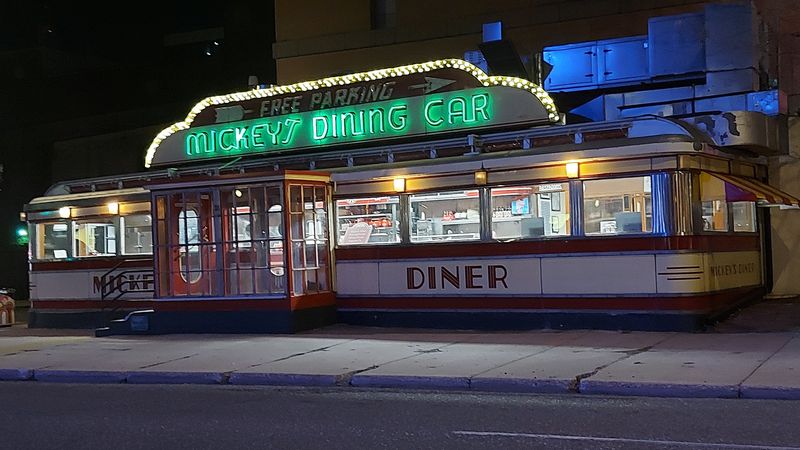
Downtown St. Paul has plenty of tall buildings, but one of its most famous spots is small enough to fit inside a railroad car. The grill sits a few feet from the counter stools, the cook often takes your order himself, and the coffee comes from an actual percolator on the griddle.
Hollywood has filmed here, families have made it a tradition across generations, and late-night crowds still find the lights on long after most kitchens close. It is not fancy, and it does not pretend to be.
What it offers is a seat inside a piece of American diner history that has been serving the city since 1937. Keep reading to learn its story, what lands on the plates, when to show up, and how to snag one of those famously limited seats.
A Railcar Parked on Seventh Street
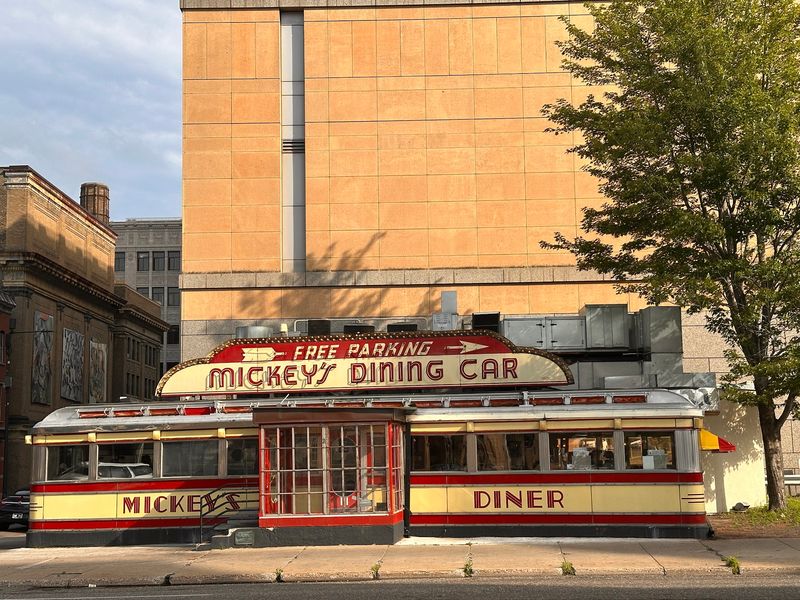
Some landmarks tower over a city. This one sits low, compact, and proud on a downtown corner.
Mickey’s Diner is located at 36 7th St W, St Paul, MN 55102, in the heart of Minnesota’s capital city. It is a classic diner housed inside a vintage dining car, the kind of building that makes people stop on the sidewalk and reach for their phones.
The place is known as an iconic spot serving traditional comfort dishes. Its reputation stretches well beyond the neighborhood, and locals regularly point out-of-town guests in its direction.
Groups in town for big events, such as the Special Olympics USA Summer Games, have made the short walk from nearby hotels after more than one resident recommended it. A ten-minute stroll from downtown lodging is all it can take.
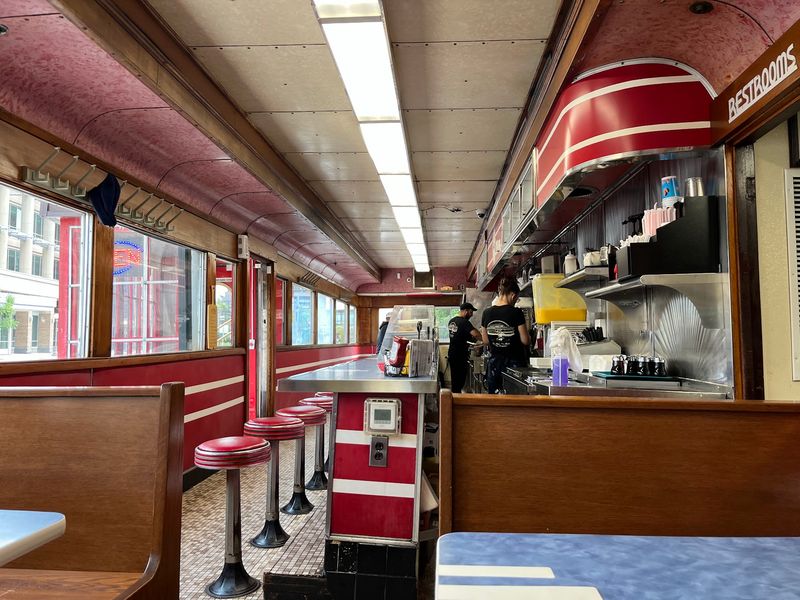
The setting is simple. There is a counter, a handful of booths, and an open grill that runs the show.
That small footprint is a big part of the charm, and also part of the challenge, which later sections will tackle. For now, the takeaway is easy: the address is central, the building is unmistakable, and the story inside goes back further than most of the skyline around it.
Built in New Jersey, Rooted in St. Paul
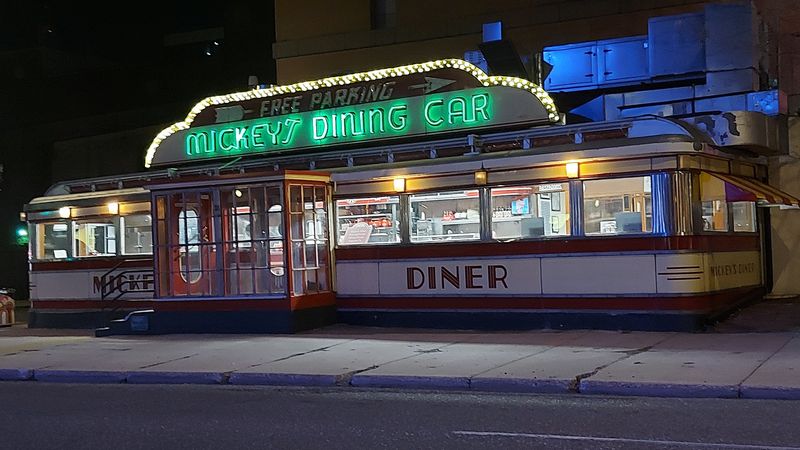
Here is a fun bit of trivia for the next trivia night: this St. Paul icon was not actually built in St. Paul.
The dining car was constructed in New Jersey and then moved to Minnesota. Prefabricated diners like this one were a popular way to open a restaurant quickly during that era, and few of them are still serving food today.
Mickey’s has been in operation since 1937. That gives it nearly nine decades of flipping, pouring, and plating on the same corner.
The diner is widely regarded as a historic place, a piece of both diner history and local history. Many people come for that reason alone, treating a meal here like a visit to a living museum where the exhibits happen to include breakfast.
The building has also had chapters of change. It closed for a time and later reopened under new ownership, which brought both returning fans and some debate about how the modern version compares to the old days.
Through every chapter, the railcar itself has stayed put. That staying power is exactly why so many folks consider a stop here a must when passing through the Twin Cities.
The Famous Front-Row Counter
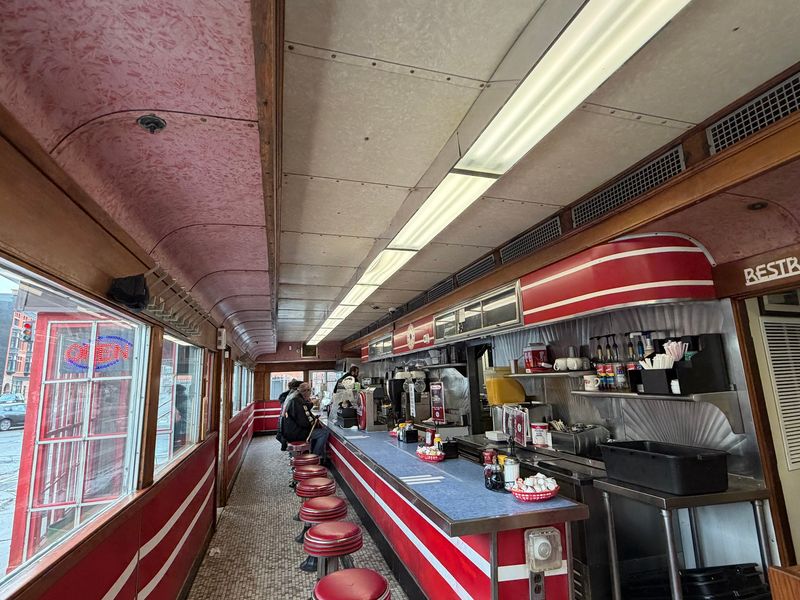
Front-row seats usually cost extra. At Mickey’s, they come free with every order.
The counter is the star of the room. Sit there and you are literally right next to the flat top, close enough to watch every pancake get flipped and every order come together.
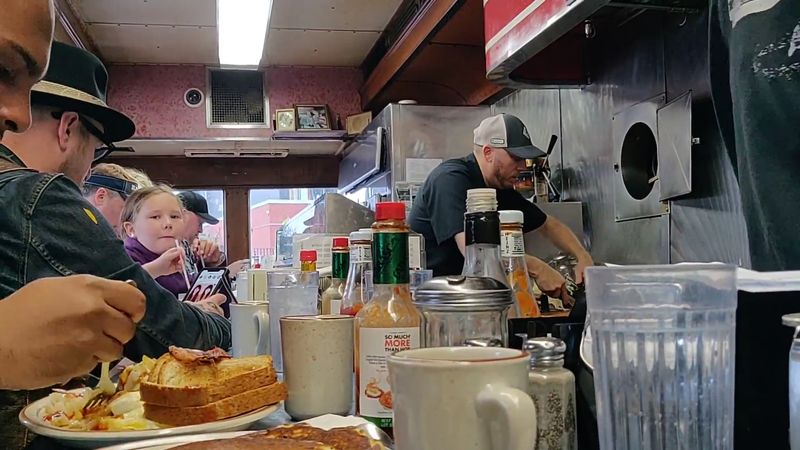
Kids especially love the counter stools. Families mention their little ones choosing the counter over a booth just for the view of the action.
The cook often handles a lot at once. Orders may be taken, cooked, and even rung up by the same person, all on one grill, and the focus required is something guests notice and admire.
Hash brown flipping has earned its own small fan club. Watching a skilled cook handle a full griddle during a rush is part of the entertainment.
Food is made from scratch right in front of guests. There is no hidden kitchen and no mystery about how the meal is put together.
For solo diners, the counter is also the friendliest seat in the house. The owners have said they love that anyone can come in alone and still feel like family is around.
Coffee From a Griddle Percolator
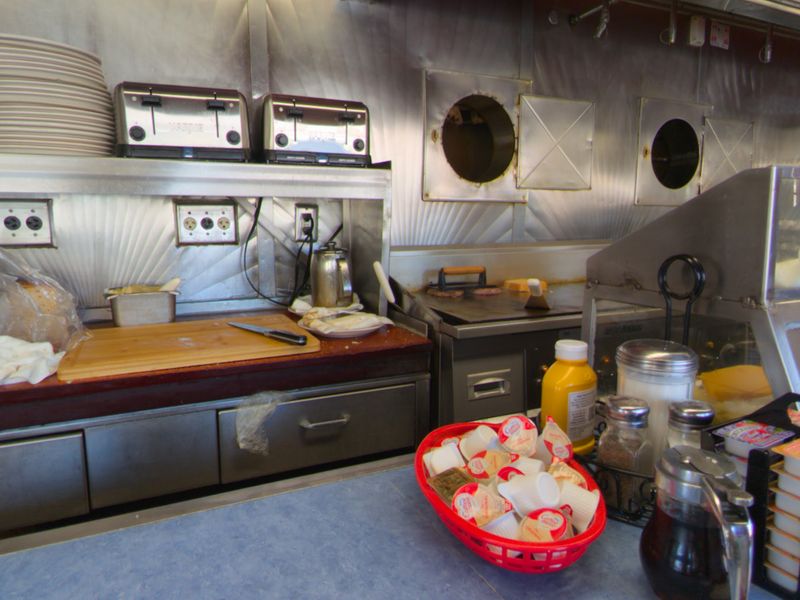
Modern coffee shops have sleek machines and long menus. Mickey’s has a percolator sitting right on the griddle.
That old-school setup surprises plenty of first-timers. Seeing a real percolator still in daily use feels like a small throwback that most people never expected to witness in person.
Refills tend to come regularly, with cups kept filled during meals. It is the kind of no-fuss coffee service that matches the room.
A couple of notes are worth knowing before ordering. Decaf has not always been available, so caffeine-sensitive guests may want to plan ahead.
There is also a machine-made latte option on the menu. Its price has raised some eyebrows, so anyone after a fancy espresso drink may be happier sticking with the percolator classic.
Honestly, the percolator is the better story anyway. It fits the railcar, the counter, and the whole idea of eating somewhere that has refused to chase trends.
Grab a mug, settle onto a stool, and enjoy a brew made the way diners did it generations ago.
Plates Built for Big Appetites
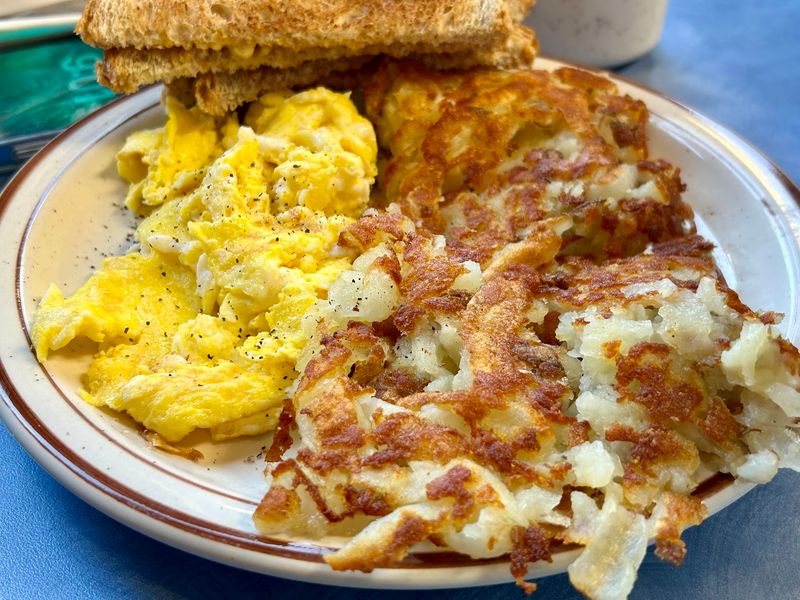
Nobody walks into a railcar diner expecting tiny portions, and Mickey’s does not disappoint on that front.
The menu sticks to traditional comfort dishes. Breakfast and lunch both get attention, with the classic diner lineup of griddle favorites, sandwiches, burgers, and shakes.
Portions are hefty. Some guests share or scale back their orders once they see how large certain items arrive.
Cooked-to-order is the rule here. Plates come together on the same grill in full view, which means guests get exactly what they asked for.
Opinions on the food itself vary. Many call it good, honest diner cooking, while others describe it as average and a bit greasy, which is pretty much the definition of a greasy spoon.
One detail surprises newcomers: the menu skips pork. Beef and turkey alternatives fill those spots, so traditionalists should adjust expectations.
The best approach is to come for the full experience. The meal is part of it, but the setting and the show on the grill are what make the trip memorable.
A Star of Screen and Story
There is a decent chance you have already seen this diner without realizing it.
Mickey’s is famous as a filming location, showing up in movies and television over the years. Plenty of people stop in specifically to sit where Hollywood celebrities once had a meal.
Even longtime Twin Cities residents are sometimes surprised by this fun fact. It is possible to work in the area for a year and never know the little railcar downtown has a screen career.
That fame adds a certain energy to the room. Guests often look around, trying to place the booths and counter in scenes they remember.
Not everyone finds the magic intact. Some feel the glory days are behind it, while still hoping the place finds its footing for the future.
Others describe it as a time machine and a legend, the kind of stop worth making even with only one meal to spare in town.
Either way, sitting at that counter puts you inside a set that never needed to be built. It was already there, serving breakfast.
Generations at the Same Tables
Some restaurants get visited. Others get inherited.
Mickey’s falls firmly into the second category for many Minnesota families. Adults who came here as kids are now bringing their own children, and those kids are becoming fans too.
That kind of loop says a lot about what the diner means to St. Paul. It is less a restaurant than a shared memory that keeps getting new chapters.
Nostalgia runs deep inside these walls. Plenty of guests call it their favorite go-to place in the city, and the long history only adds to that feeling.
The atmosphere is retro, cozy, and decorated in a way that leans into its past. The inside is often described as charming, a small room packed with personality.
Friendly staff help make it work. Servers and cooks are regularly singled out by name for keeping things moving and making the experience warmer.
Not every returning fan feels the same, and some miss the earlier era. Still, for families building new traditions, the counter is ready to welcome another generation.
Small Room, Big Lines
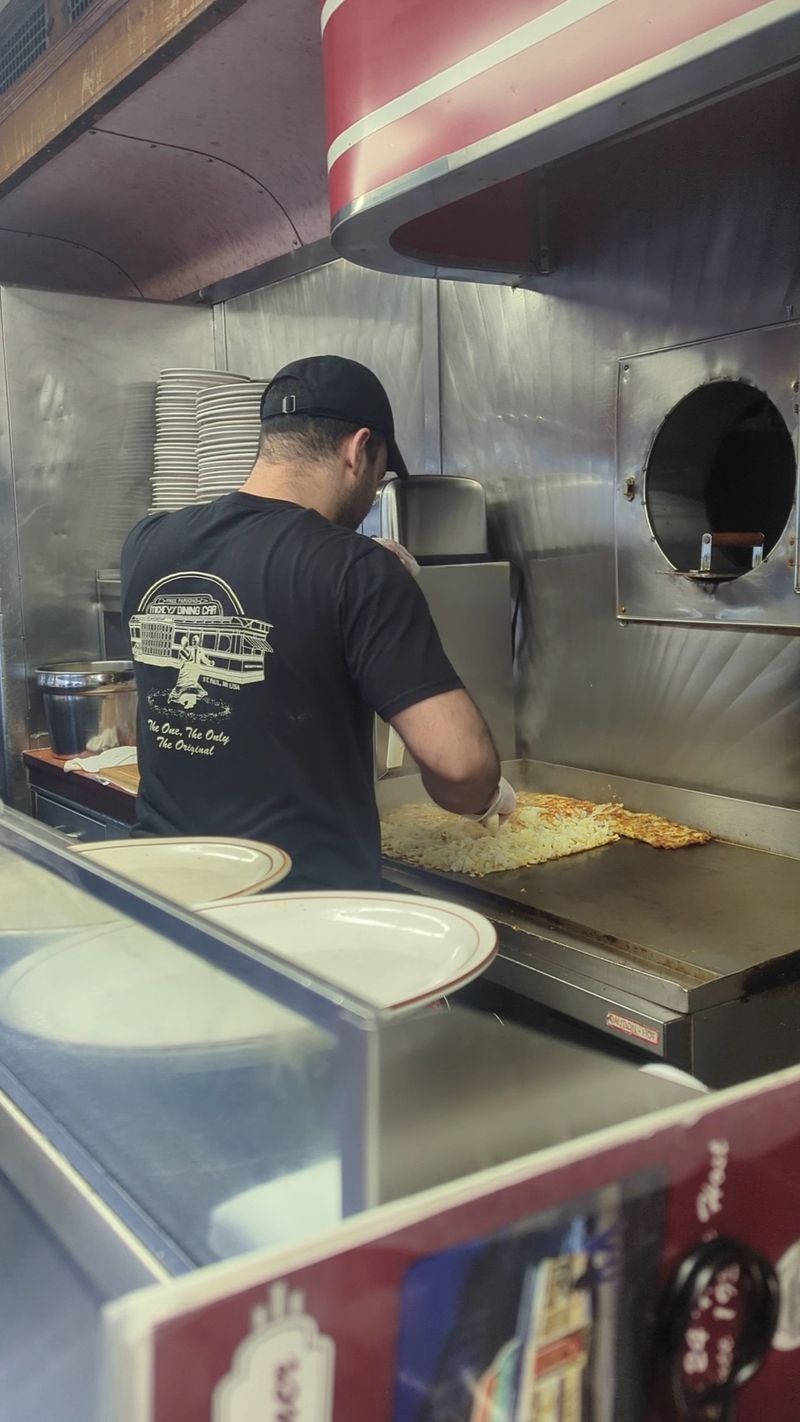
Let’s be honest about the square footage. The railcar is tiny.
Seating is limited, and the room fills quickly during busy stretches. A breakfast crowd can go from open seats at 9 a.m. to a full house a few minutes later.
Groups should keep it small. Parties of fewer than four people have the easiest time getting seated together.
Expect a wait during prime time. When the room is packed, food can take longer to arrive, since everything comes off one grill.
The owners have explained that adding more staff would only take up what little room exists. It is a real trade-off of eating inside a historic dining car.
Cleanliness has drawn mixed comments, especially during rushes. Management has said tables and floors are cleaned each shift and whenever there is a break in the action.
A little patience goes a long way here. Arriving early or at off-peak hours makes the whole visit smoother and gives a better shot at that coveted counter stool.
Hours for Early Birds and Night Owls
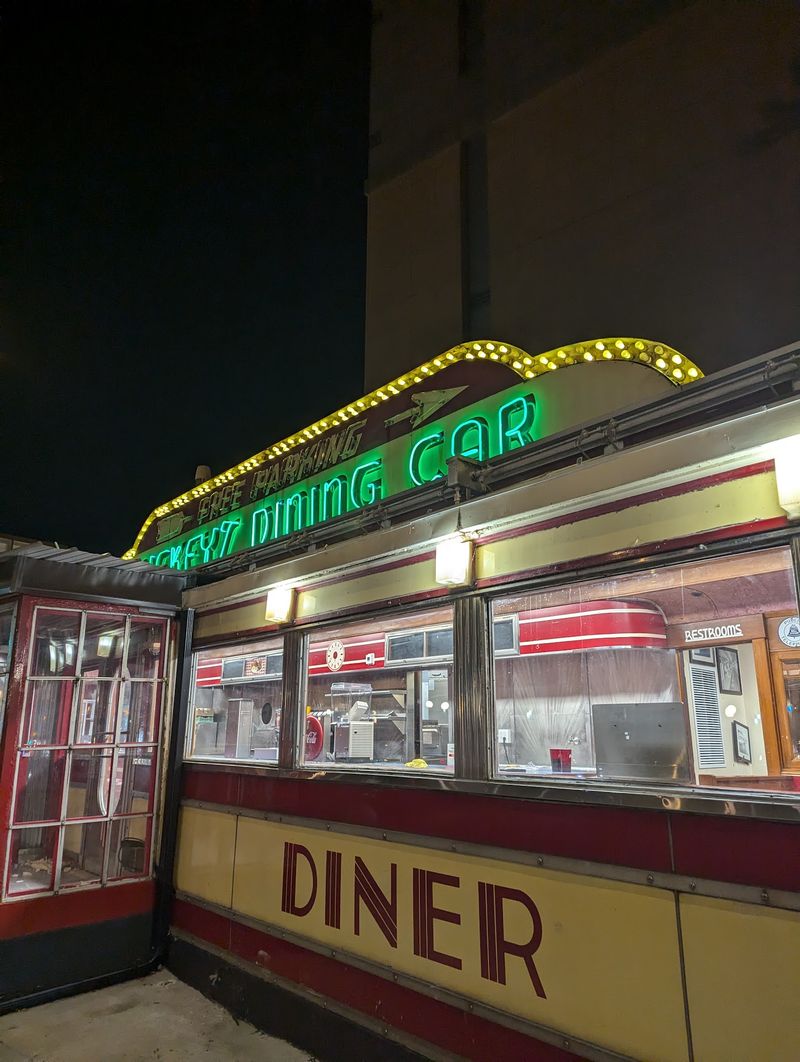
Its legend was built on round-the-clock service, and the late hours still keep that spirit going.
The diner opens at 6 a.m. every day of the week. Sunday through Thursday, it runs until 11 p.m.
Friday and Saturday stretch later, with doors open until 1 a.m. That makes it a solid stop after a weekend event downtown.
Hours can change, so checking the diner’s Instagram page before heading over is a smart move. It is the place’s main online presence.
Early mornings tend to be the calmer window. The room can start filling up by mid-morning, especially on weekends and during big events in the city.
Late evenings bring a different crowd and a different energy. The old railcar glowing on the corner after dark is a sight that many people consider part of the experience.
Plan around the rush, and the hours give plenty of room to fit in a meal on almost any schedule.
Parking, Prices, and Practical Tips
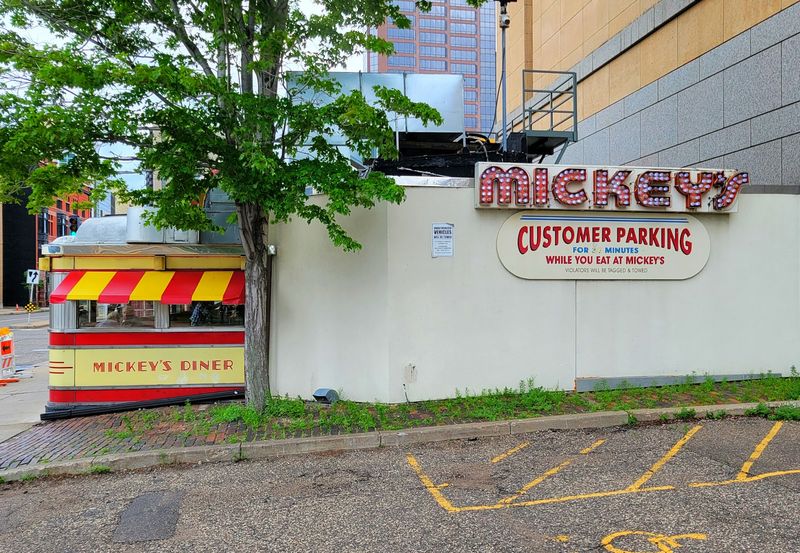
Downtown parking can be a headache. Mickey’s quietly solves that problem.
The diner has its own free parking lot right next to the building, set aside for customers. Guests from out of state have called it a genuine relief compared with hunting for city spaces.
Walking works well too. Several downtown hotels are within about ten minutes on foot.
On cost, opinions split. Some feel prices are fair for the hefty portions, while others find certain items, like a $20 triple burger or a $7 latte, steep for a diner.
A basic breakfast of eggs, pancakes, and a side has come in around $15. Checking the menu board before ordering helps avoid surprises.
A few more quick pointers:
Shakes and malts depend on ice cream supply, which sometimes runs out. Asking about warm or cold preferences for desserts helps get them right.
Bring a small group, a bit of patience, and realistic expectations, and the visit tends to go smoothly.
Worth the Stool?
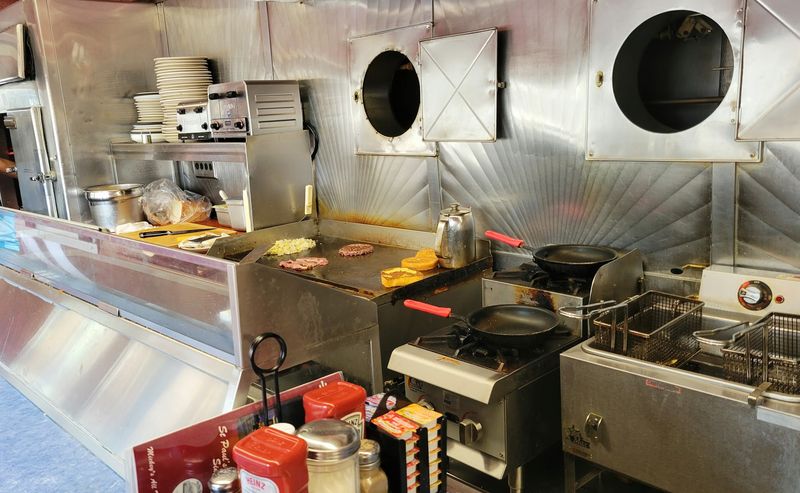
Every city has restaurants. Very few have one that has been parked on the same corner since 1937.
Mickey’s Diner is not a polished dining room, and it never claimed to be. It is a small, busy, sometimes chaotic railcar where the cook might take your order and the coffee comes from a percolator.
The food draws mixed opinions, and the room can get crowded. Those are real factors to weigh before heading over.
What keeps people coming back is the experience. The history, the film fame, the counter-side view of the grill, and the family traditions all add up to something a newer restaurant simply cannot copy.
Many locals and travelers call it a must-visit in St. Paul. Some return several mornings in a row once they find their favorite stool.
Go early, keep the group small, and grab that counter seat if it is open. Whatever lands on the plate, the stories you leave with are the real takeaway from this little railcar that has outlasted nearly everything around it.
Enjoyed this story?
Add Fast Food Club as a preferred source to see more of our reporting on Google.