


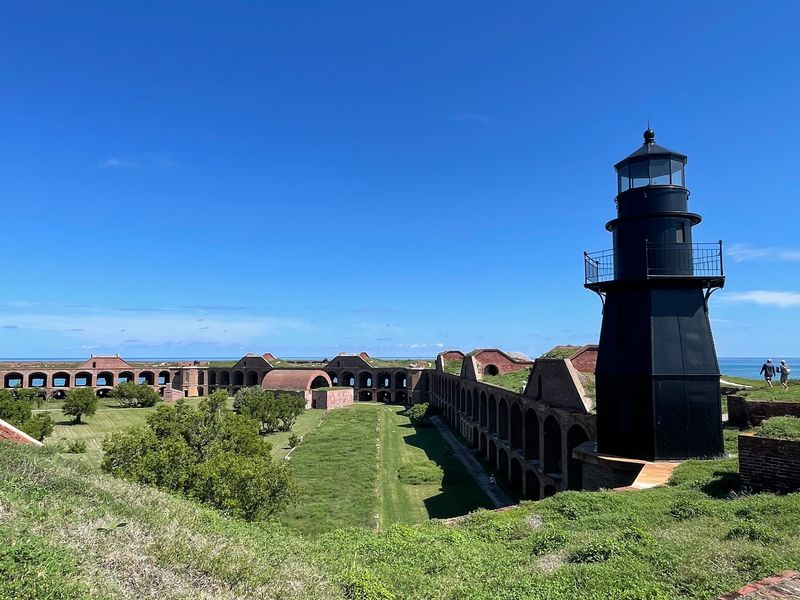
Most people who visit Key West never learn that a massive brick fortress waits far past the horizon, built on a tiny island where there is no road and no bridge. Getting there takes a long boat ride or a seaplane, and tickets can sell out months ahead.
It is also one of the least visited national parks in the country, which makes reaching it feel like a real accomplishment. Keep reading to find out how to get there, what to do once you arrive, and the smart planning moves that can make or break your day.
A Fortress Hiding Past the Horizon
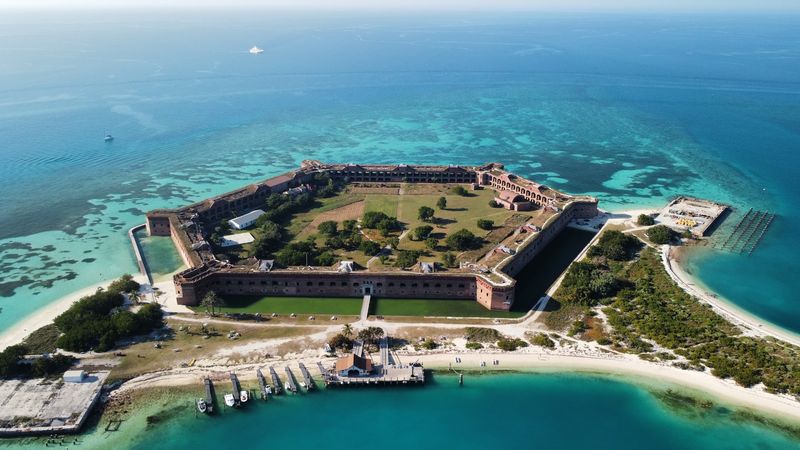
Some national parks greet you with a parking lot and a visitor center. This one greets you with open ocean in every direction and a six-sided brick fort that seems to float on the water.
Dry Tortugas National Park is located in Florida, United States, roughly 70 miles west of Key West. The park covers seven small islands surrounded by coral reefs, marine life, and plenty of birds.
The centerpiece is Fort Jefferson, a 19th-century coastal fortress that takes up most of its island. There are no roads leading here, so the only ways in are by boat or by plane.
That remoteness is a big part of the appeal. The park sees far fewer people each day than most national parks, so it often lands on bucket lists for travelers trying to visit every park in the system.
A trip here usually starts early in Key West and ends late in the afternoon back on the same dock. In between, the day is packed with history, swimming, snorkeling, and long stretches of sea.
The phrase “middle of nowhere” gets used a lot in travel writing. Out here, it is simply an accurate description.
Why Build a Fort Out Here
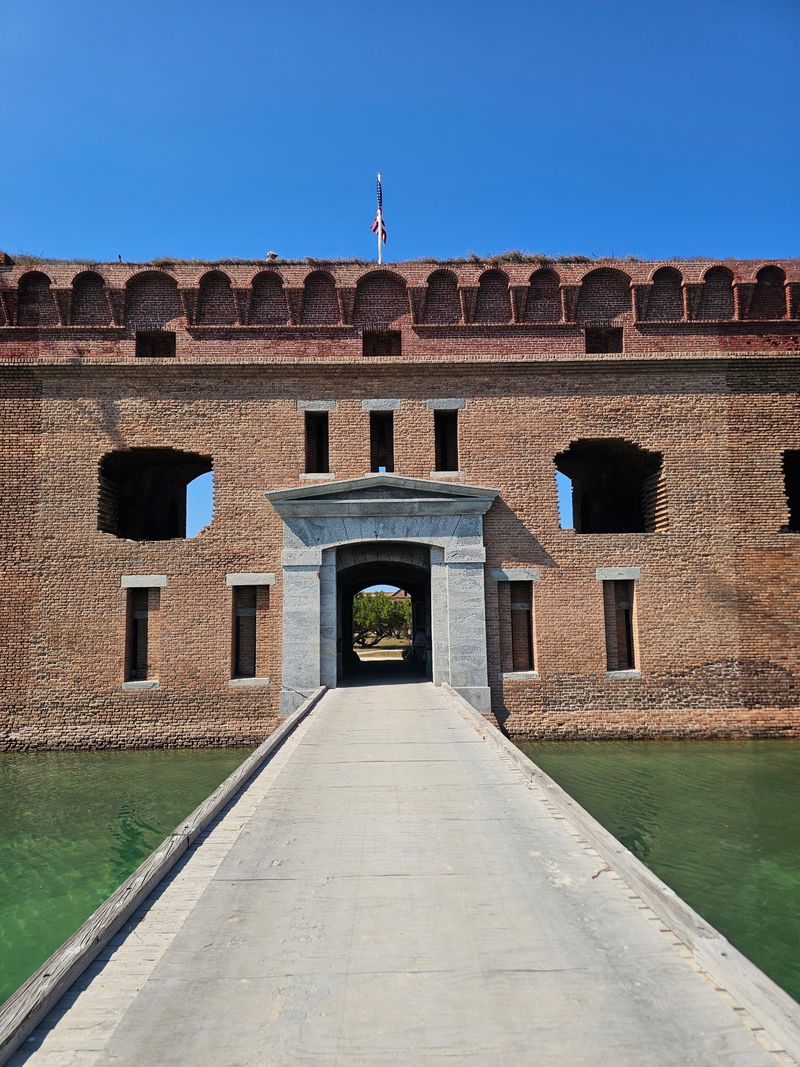
A huge military base on a speck of land 70 miles from the nearest city sounds like a strange idea. That puzzle is exactly what makes the history so interesting.
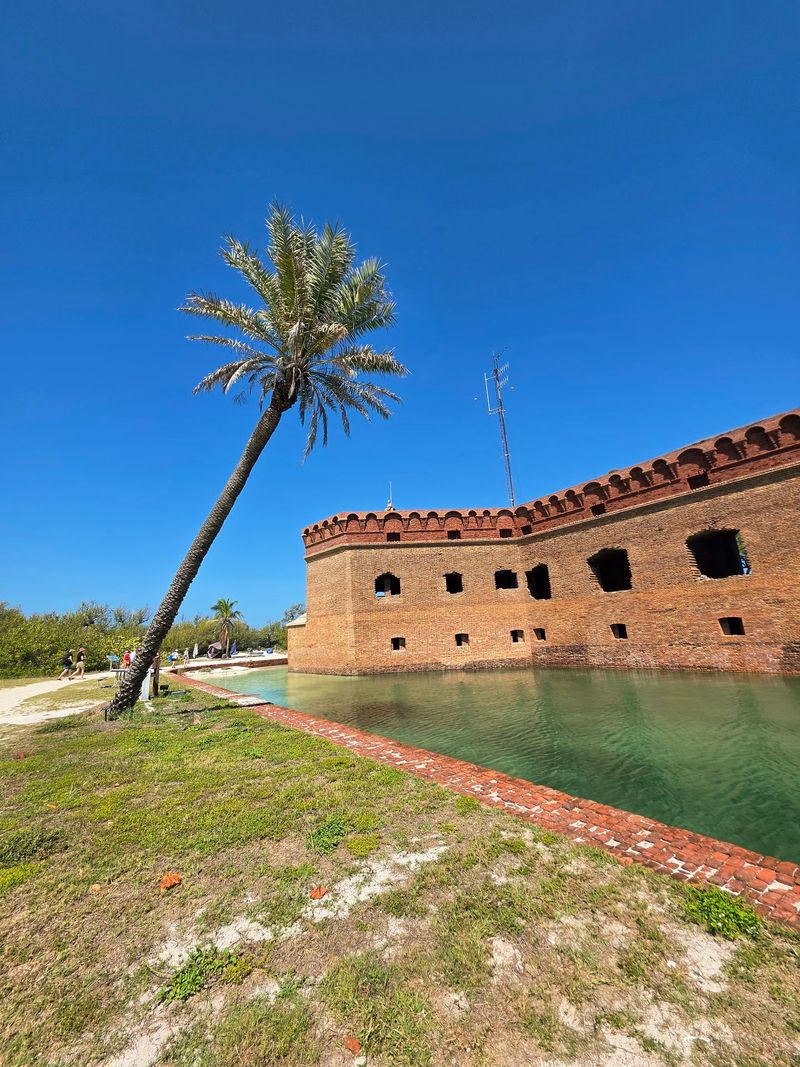
Fort Jefferson was built in the 1800s, and it remains an enormous structure even by modern standards. It rises three stories, with massive brick walls, rows of arches, and lighthouses connected to its past.
The scale of the project is hard to take in at first. Building something this large in such a remote spot, at that point in history, was a remarkable feat of construction.
The fort also offers a window into early American naval history. It shows how the country was thinking about infrastructure and defense in its younger years.
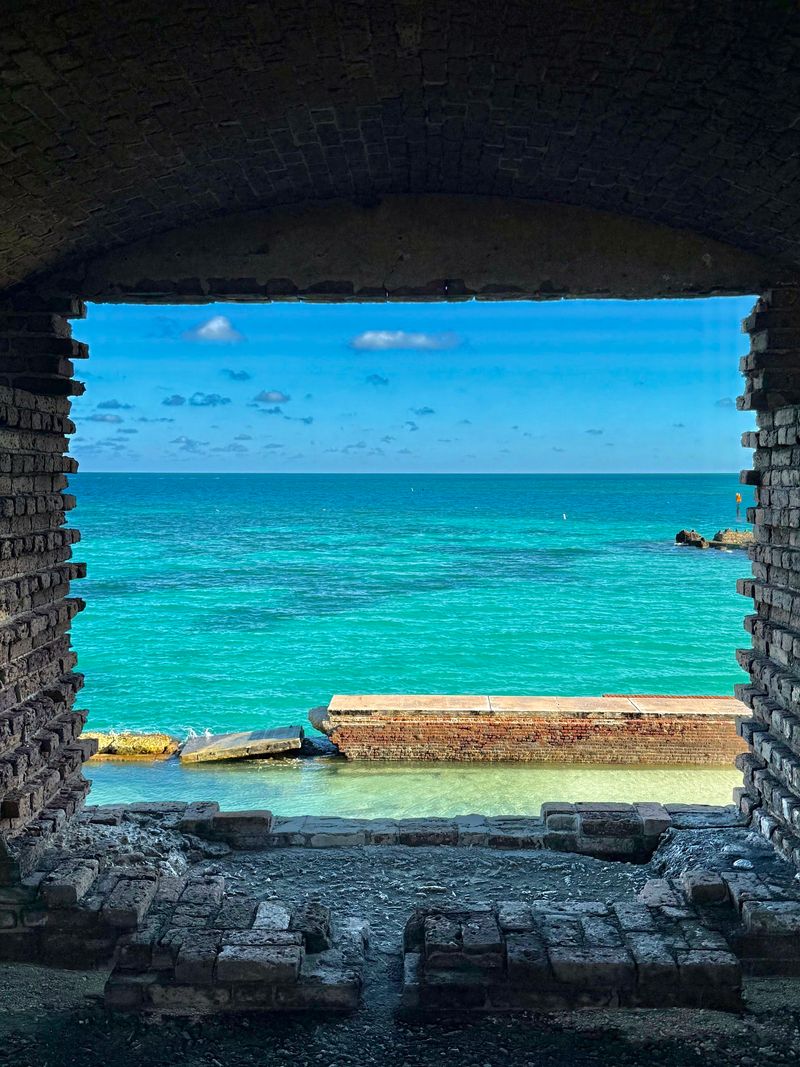
Openings in the walls frame views of the surrounding sapphire and turquoise water. Those portholes have become some of the most photographed spots in the park.
Time has left its mark on the structure. The aging brick facade shows wear, and some sections are closed off to protect what remains.
Not every part of the story is cheerful, and the history here is serious in places. Still, it is a story worth hearing in full.
The Tour That Answers Every Why
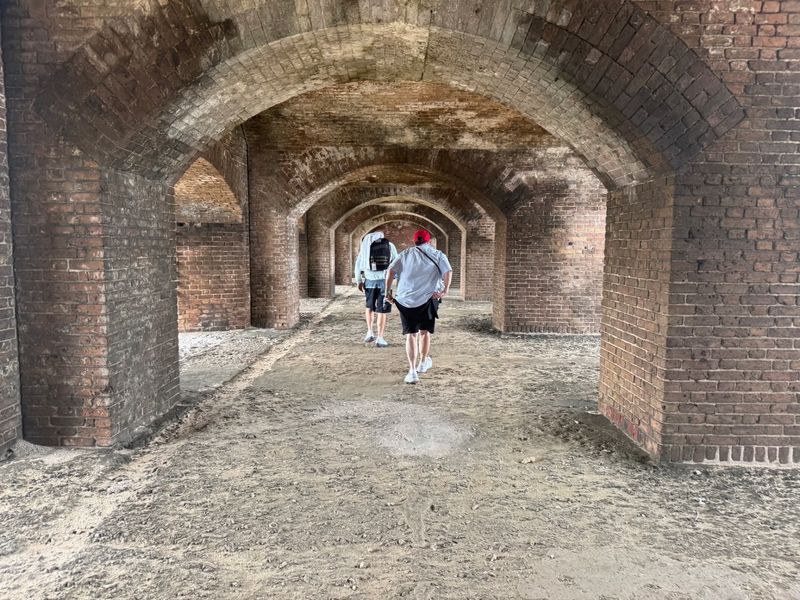
Plenty of travelers plan to wander the fort alone, then end up wishing the guided walk had lasted longer. The ranger-led tour runs about 1.5 hours, and it is one of the most praised parts of the day.
One guide, known as Hollywood, has built a strong following for his passion and storytelling. He walks groups back in time and explains why such a massive base was built in what looks like empty ocean.
The tour helps connect the dots between the bricks and the bigger picture. It also offers some perspective on how easy modern life is compared with life at the fort long ago.
Prefer to roam at your own pace? A self-guided route through the fort takes about 90 minutes.
Exploring inside, outside, and up on top is encouraged where access is allowed. Keep in mind that a number of areas are off limits for preservation.
The small gift shop is worth a stop, too. Rangers there can share extra details about the fort, and it is a handy place to grab a park sticker.
A ferry video on the ride out also covers background on the fort. Arriving with that context makes every corridor more meaningful.
Snorkeling Along the Moat Wall
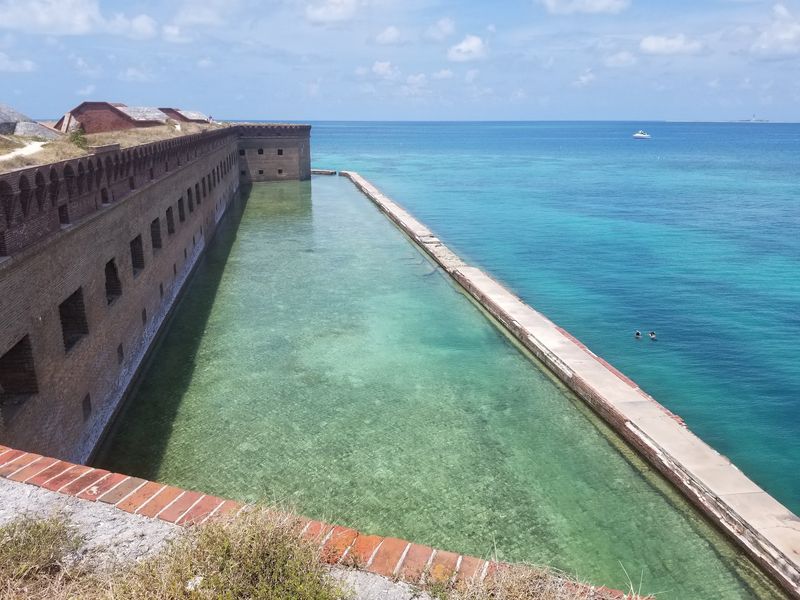
Snorkeling comes up more than any other activity here, even more than the fort itself. For many travelers, the underwater side of the park steals the show.
Gear is provided for free to ferry passengers, which keeps packing simple. The waters around the moat wall are a popular starting point.
Another favorite route runs from one swim beach to the other. The south side of the fort also gets attention, with schools of colorful fish and the occasional group of barracuda passing by.
Coral, parrot-bright fish, and even nurse sharks are all possible sightings. Crew members are happy to point out where conditions look best that day.
Conditions do change, though. Water clarity can drop in winter months like December, and on some days the experience is more modest than the photos suggest.
Currents can be strong, especially close to the fort walls. On rough days, swimmers may be limited to a smaller area, so it pays to check conditions and stay within your comfort level.
Summer brings warmer water, while some months bring jellyfish. A thin long-sleeve shirt can help anyone prone to sting reactions.
When the weather cooperates, the snorkeling here easily earns its reputation.
Turtles, Groupers, and a Crowd of Birds
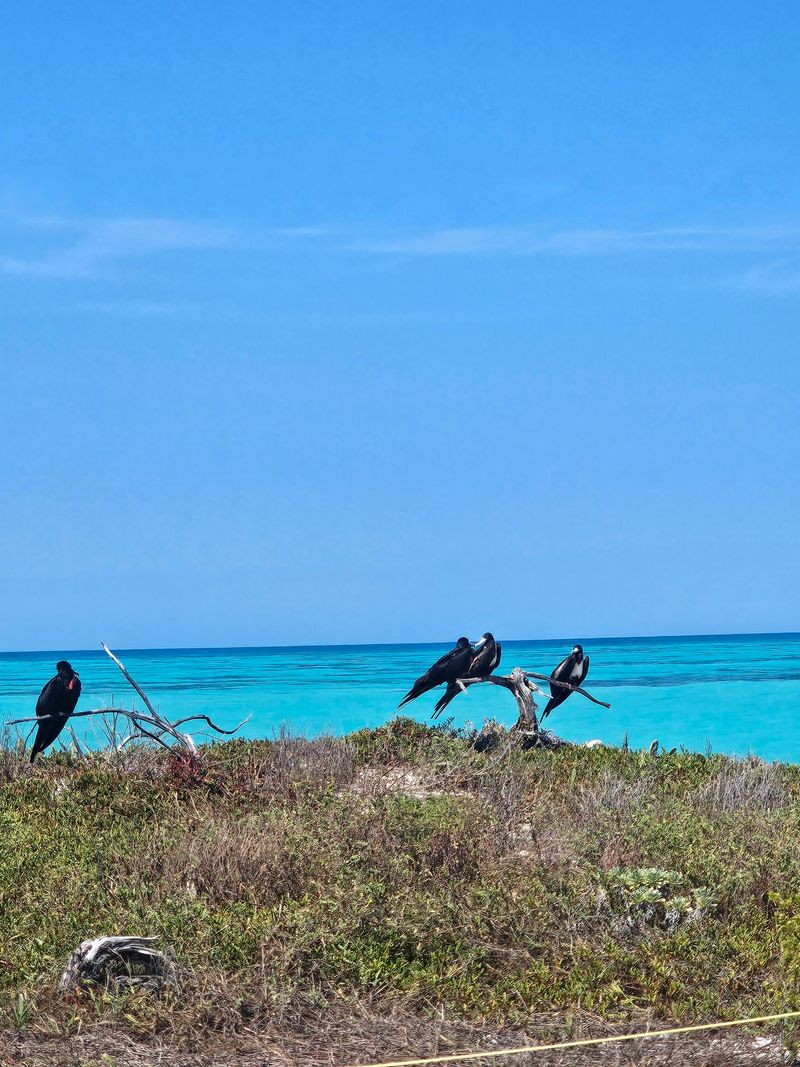
The park’s name hints at one of its star residents. Sea turtles cruise these waters, and lucky snorkelers sometimes share a swim with one.
The list of wildlife is long. Goliath groupers, starfish, stingrays, and plenty of reef fish all make appearances.
Back on land, hermit crabs scuttle along the beaches. They are small, but they tend to win over kids and adults alike.
Birds are another major highlight. Nesting seabirds add a distinctive ecological layer to the park, and large birds are easy to spot while walking the island.
Even the boat ride can turn into a wildlife show. Sharks, jellyfish, and dolphins have all been spotted on the trip between Key West and the fort.
Nothing is guaranteed, of course. Animals keep their own schedules, and a calm, patient eye usually pays off.
Bringing a camera is a smart move. Between the fish below and the birds above, there is rarely a quiet moment for the lens.
Wildlife here is a reminder that the park protects far more than old brick walls.
Beaches Made of Shells
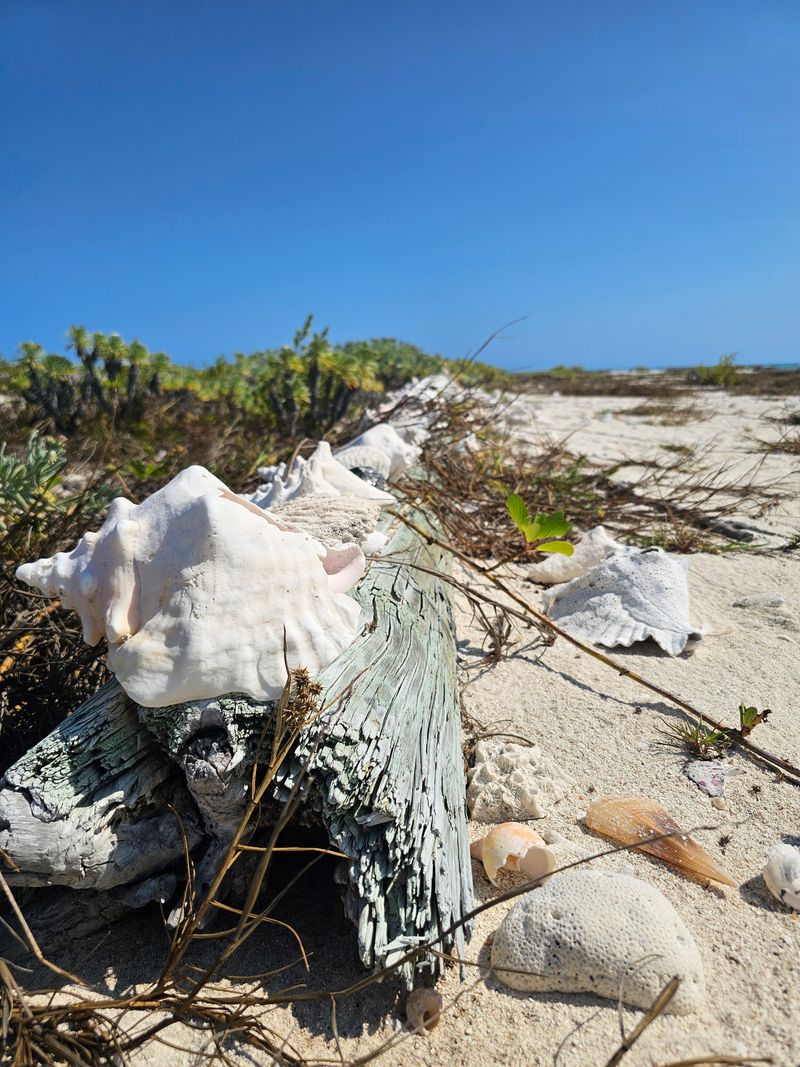
The beaches look like a postcard come to life, with white shores and calm water. Look closer, and much of that “sand” turns out to be countless pieces of shell.
Shell lovers will find millions of them scattered along the shore. That same feature makes walking barefoot or in thin sandals uncomfortable for some people.
Sturdy water shoes or comfortable footwear solve the problem. They also help when exploring the fort’s walkways later in the day.
One special walk deserves a spot on the list. During winter, a beach path opens to a neighboring island that is closed during other parts of the year.
Lunch on the beach is a popular way to spend the midday break. It is a relaxed spot to rest between a fort tour and another round of snorkeling.
Facilities are limited on the island. There is no place to rinse off after swimming, so a towel and a change of clothes are worth packing.
Shade is mostly found inside the fort. Out on the beaches, sun protection becomes essential very quickly.
It is a simple setup, but that simplicity is part of the charm.
Riding the Yankee Freedom III
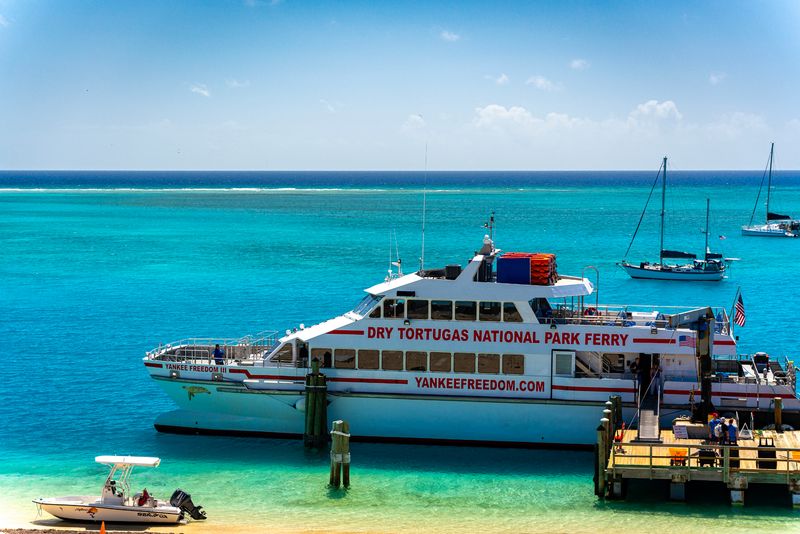
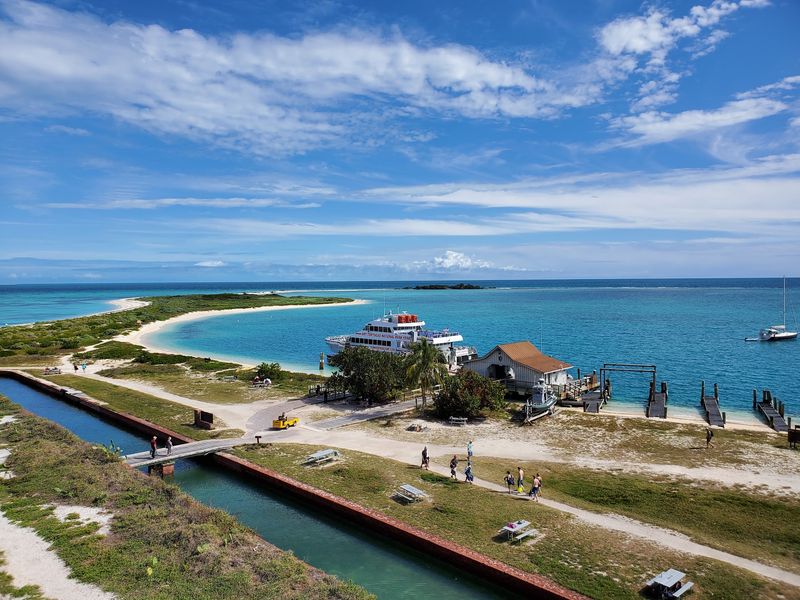
For most travelers, the day begins on the deck of the Yankee Freedom III. The ferry leaves Key West and makes the trip in about two to two and a half hours each way.
Breakfast on the way out and lunch on the island are included in the ticket. Lunch is typically served between 11 a.m. and 1 p.m.
The boat has restrooms, indoor tables, and outdoor seating for watching the ocean roll by. Many people describe the crew as friendly, helpful, and happy to chat.
A highlight comes near the end of the outbound trip. Seeing the fort slowly appear on the horizon feels like stepping back in time.
The sea does not always cooperate. Some trips are smooth and stable, while others run into big swells and a rough ride home.
Anyone prone to motion sickness should prepare ahead. Ginger and over-the-counter motion sickness tablets are popular choices before departure.
The schedule leaves roughly four hours on the island. Last call to board for the return is around 2:45 p.m., so keep an eye on the clock.
Many people say those hours fly by faster than expected.
The Seaplane Shortcut
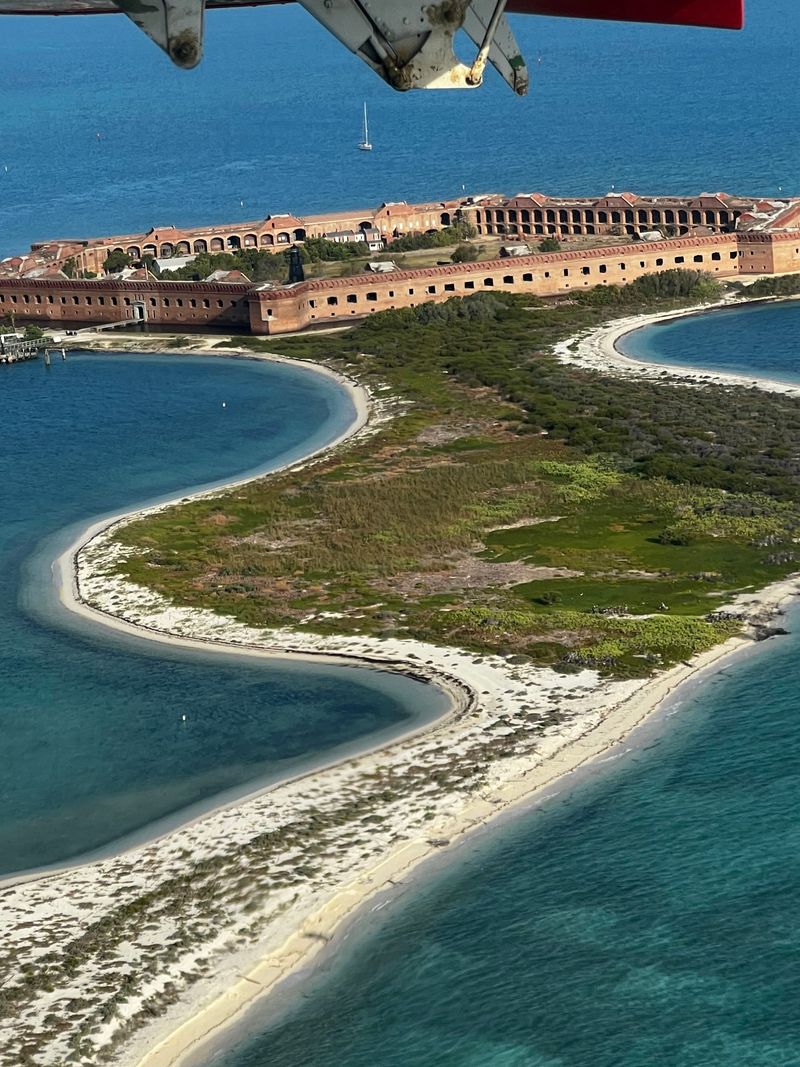
Two and a half hours on a boat is not for everyone. That is where the seaplane comes in.
The flight from Key West takes about 35 minutes. It turns a full-day outing into a more compact half-day excursion.
The biggest bonus is the view. Arriving by air shows off the fort, the reefs, and the scattered islands from a perspective boat passengers never get.
Many travelers describe the trip as a three-part experience. They see the park from the air, explore it on land, and then discover it underwater.
The views on the return flight are just as impressive. It is one of the few ways to take in the entire park in a single glance.
Seaplane seats also sell out well in advance. Planning three to six months ahead is a good rule for both the plane and the ferry.
Shorter travel time can mean more time on the island compared with sitting on a long ride. For people with tight vacation schedules, that trade can be worth it.
Either way, arriving here never feels ordinary.
Booking Early and the Standby Gamble
The hardest part of visiting may happen months before the trip. Tickets for both the ferry and the seaplane often sell out far in advance.
Booking can open up to six months ahead. Most planners suggest securing seats three to six months before the travel date.
Missed the window? A standby list offers a second chance, though it comes with an early alarm.
Some hopefuls arrive in the middle of the night to grab a spot near the front of the line. Others show up around 4:30 a.m. and still get lucky when no-show seats open up.
Arriving early improves the odds, but nothing is promised. Treat standby as a backup plan rather than the main strategy.
Parking is another detail worth sorting out ahead of time. A 24-hour lot sits across from the check-in building, which can save stress on travel day.
Phone service also drops off during the ferry ride. Finish any last-minute arrangements before leaving the dock.
A little planning goes a long way here.
What the Day Really Costs
A day trip to a remote island fort is not a budget outing. Ferry tickets have run around $170 per person in some cases and around $250 per person in others.
Prices can change, so checking the official booking options before travel is wise. The park’s official website is a reliable starting point for current details.
A national parks pass can help. Bringing the card may unlock a discount on ferry tickets.
The ticket covers more than the ride. Breakfast, lunch, snorkeling gear, and access to the guided fort tour are all part of the package.
Many travelers call it money well spent for a full day of history, swimming, and scenery. Others feel the long ride eats into time on the island.
Weather plays a role in how the value feels. A calm day with clear water can turn the trip into a highlight, while rough seas can make it a test of patience.
Setting expectations helps. The cost reflects the effort of reaching a place this far from shore.
For many, that effort is the point.
Camping and a Smart Packing List
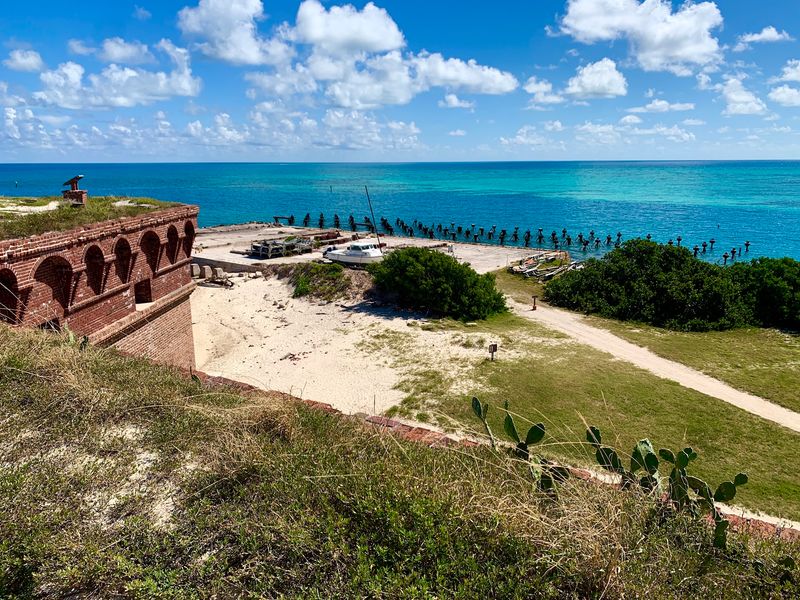
Four hours on the island leaves many people wanting more. An overnight stay is the answer, but it requires some serious planning.
Camping is allowed on the island when arranged in advance. Campers must bring their own equipment, food, and water.
There are no stores or restaurants waiting on shore. Facilities are limited, so self-sufficiency is part of the deal.
Day-trippers should pack with care, too. A brimmed hat, sunscreen, and comfortable footwear top the list.
A light long-sleeve shirt helps with sun protection and possible jellyfish. A small backpack with water and snacks makes it easier to explore every corner of the fort.
Bring a bathing suit if swimming is part of the plan. A towel and dry clothes are also helpful, since there is no rinse station.
A camera is practically required. Between the fort, the water, and the wildlife, photo opportunities appear nonstop.
Many people who leave after one day say their next trip will include a night on the island.
Worth the Long Haul
Few destinations ask this much of travelers before they even arrive. Early bookings, long rides, and unpredictable seas are all part of the package.
In return, the park delivers something rare. A 19th-century fortress, reef snorkeling, sea turtles, and wide open water all share one small island.
History fans will find plenty to explore in the fort’s corridors and stories. Snorkelers and wildlife watchers will find their own reasons to linger.
National park collectors get a special prize, too. Checking off one of the least visited parks in the country is a badge of honor.
The trip may not suit everyone. Travelers who struggle on boats or want lots of amenities should plan carefully or consider the seaplane.
Families with very young children should also think about sea conditions before booking. Rough return rides can be challenging.
For those who plan ahead and pack smart, the reward is a day unlike any other in Florida. Many people call it a trip of a lifetime and start planning a return before the boat even docks.
Fort Zachary may be easy to reach, but Fort Jefferson is the one that truly feels like an expedition.
Enjoyed this story?
Add Fast Food Club as a preferred source to see more of our reporting on Google.