


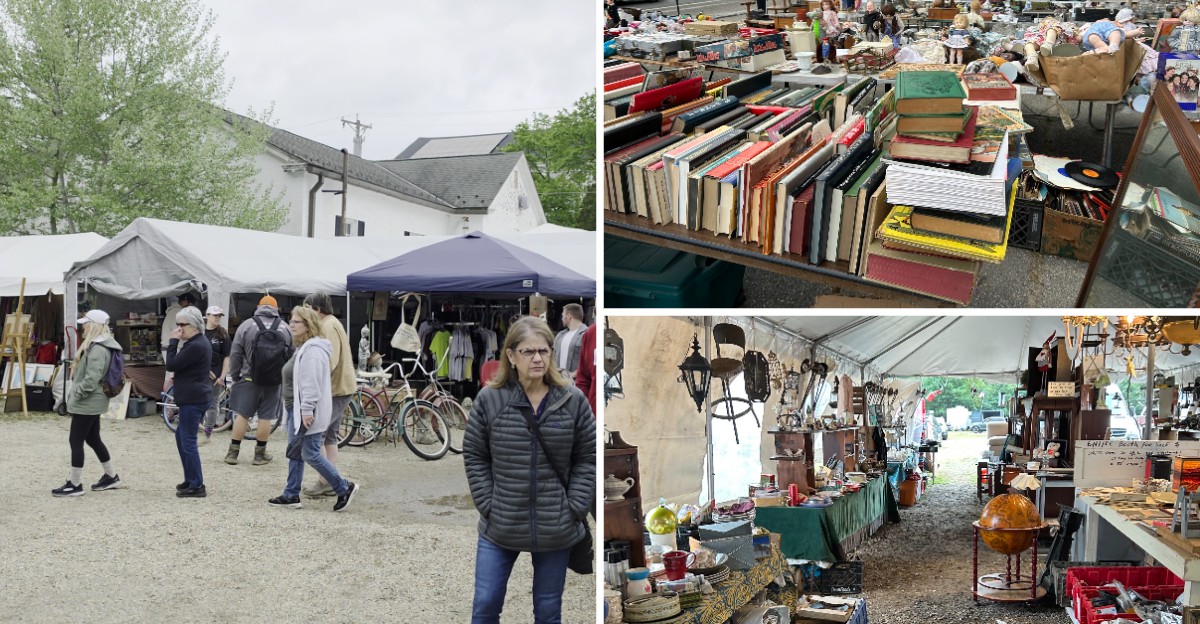
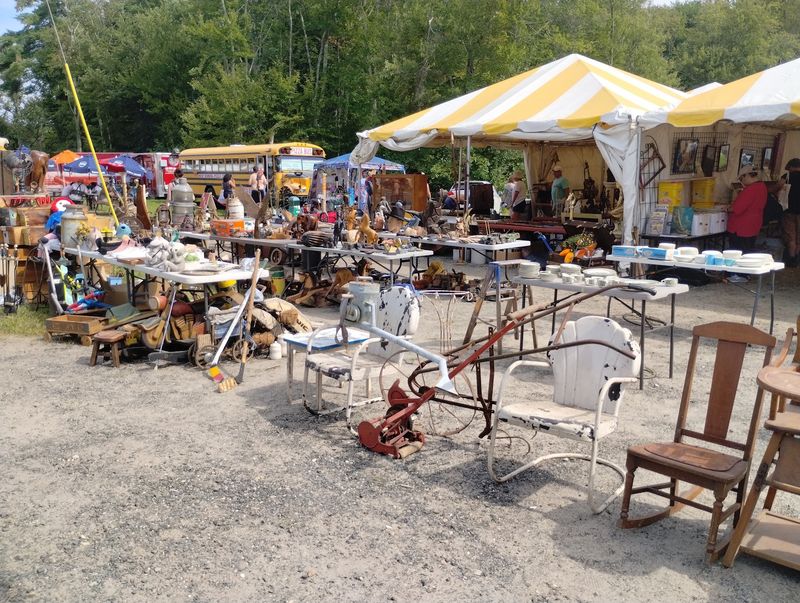
Three times a year, a quiet New England town turns into one long shopping street. Tents go up on both sides of the road, parking lots fill with cars, and hundreds of sellers set out furniture, signs, toys, and things nobody can quite name.
People walk for miles and still miss whole fields of goods. Some shoppers come back every season and plan their year around it.
Others show up by accident and leave with a lamp, a chair, and a story. The best finds can sell before lunch, and the bargains depend on how well you talk with sellers.
This guide covers where it is, when it runs, what you can buy, what parking costs, and the small tips that save your feet and your wallet. Read on before your next trip to central Massachusetts.
A Small Town With a Giant Weekend Habit
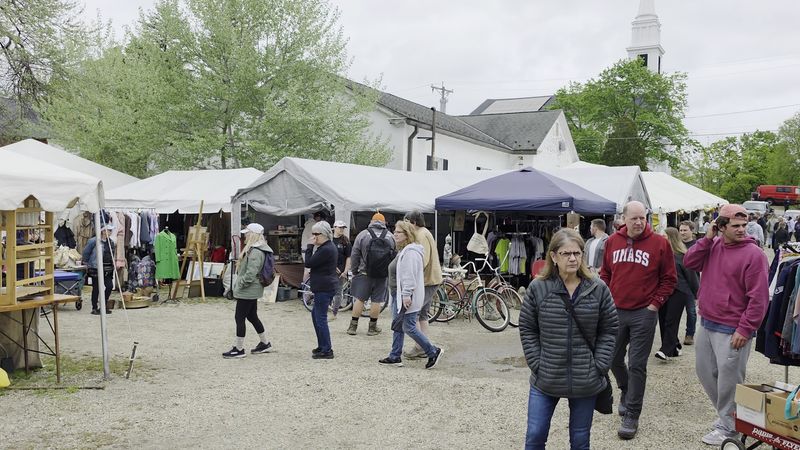
Brimfield Antique Flea Market sits at 35 Palmer Rd, Brimfield, MA 01010, in central Massachusetts, United States. It is often called the largest open-air flea market in the country.
The setup stretches along both sides of Palmer Road, which is part of Route 20. Fields fill with tents, tables, and trailers, and the whole town seems to shift its focus to the market while it runs.
Admission to the main market is free. That said, a few individual fields open on certain days and charge their own cover fee, so it helps to know which areas you want to see.
The scale is the first thing people talk about. Shoppers describe walking more than five miles over five hours and still not seeing everything.
Hundreds of vendors show up each season. Some set up elaborate tents for the whole week, turning a stretch of country road into something close to a pop-up village.
The Google listing holds a 4.6 average from more than 200 people, which says a lot for a place this sprawling and busy. Start here, and the rest of the map will start to make sense.
Three Seasons, Six Days Each
Timing is everything here, because the market does not run all year. It happens three times annually, in May, July, and September.
Each show is open six days, generally from 8 a.m. to 5 p.m., rain or shine. The weather does not cancel anything, so a wet day just means muddier shoes.
Not every vendor is open every day. Most sellers are on site Tuesday through Sunday, while some fields open only on certain dates.
Vendors themselves point to May and September as the stronger shows. Those months tend to bring more sellers than July.
The market website posts updated schedules each year. Checking it before you go is the easiest way to avoid showing up to an empty field.
The calendar matters even inside a single show. Arrive on the first day and you get the full selection, while later days bring thinner tables and, sometimes, better deals.
Pick your date based on whether you want variety or bargains.
From the 1800s to Last Year
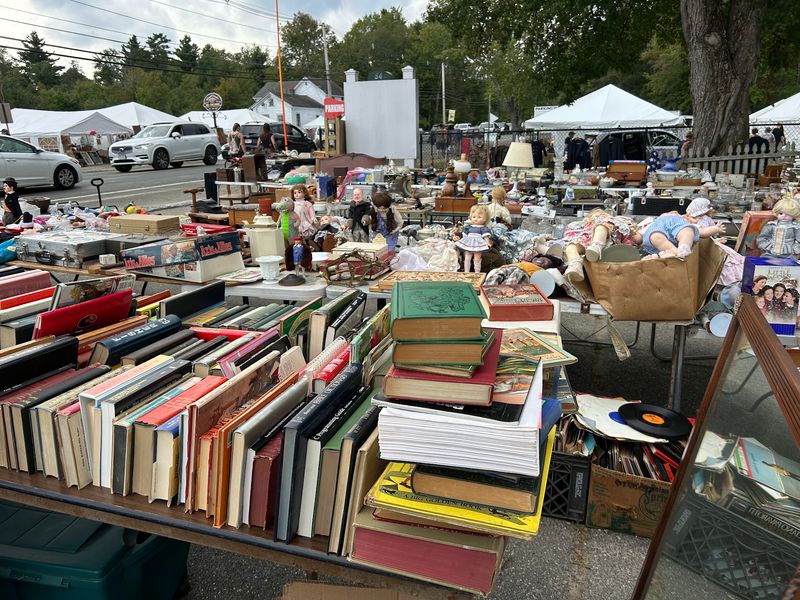
Goods here span a wide range of eras, from pieces dating to the 1800s all the way to items made in recent years. Old and new sit side by side on the same tables.
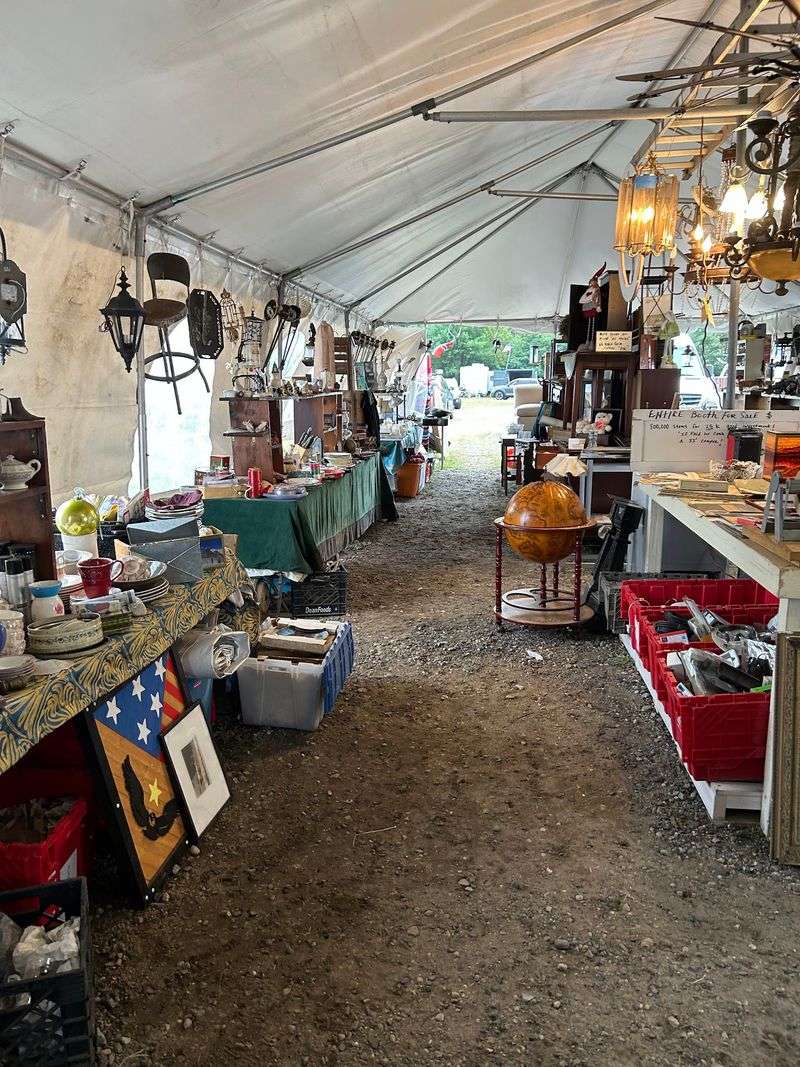
Furniture is a big draw, including chairs, tables, storage cabinets, and custom-made pieces. Rugs, textiles, and home furnishings fill many tents too.
Smaller treasures show up everywhere. Expect jewelry, artwork, paintings, books, crystal, glassware, kitchenware, toys, cameras, tools, and electronics.
Then there is the odd stuff. Taxidermy, Soviet-era propaganda art, and strange paper ephemera all appear among the more familiar collectibles.
Vintage signs and mid-century furniture are common finds for decorators. Collectors tend to roam with a target in mind, while casual shoppers often walk away with something they never planned to buy.
The spread runs from random junk to high-end antiques. That range is the reason people describe the place as part time machine and part scavenger hunt.
Leave space in the trunk before you arrive, since a small table can turn into a dresser fast.
Racks of Denim and Old Threads
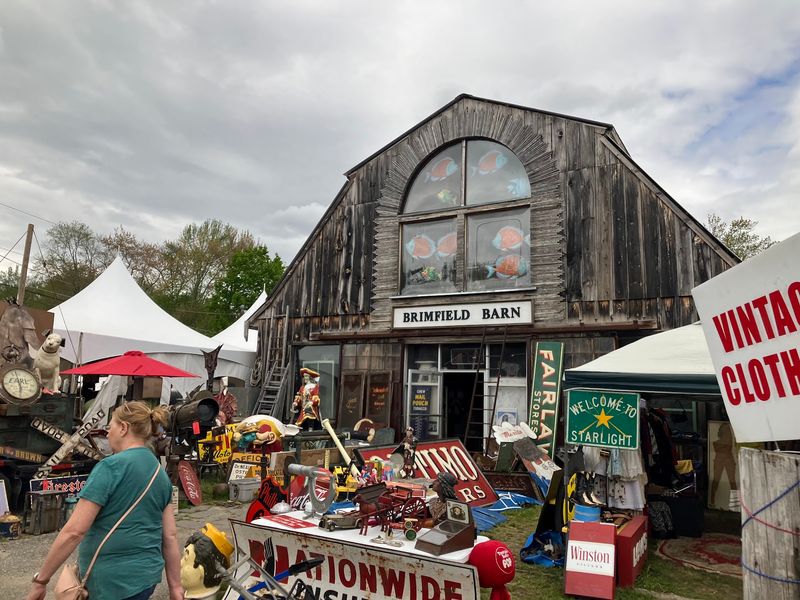
Fashion fans have their own reasons to make the trip. Vintage clothing shows up across the fields, with vintage denim a frequent find.
Racks of older garments sit near tables of jewelry and accessories. It makes the market a solid stop for anyone building a wardrobe with some history to it.
Prices vary a lot by seller. One tent may ask premium amounts for well-known labels, while a nearby table offers a pile of pieces at a much lower cost.
Patience pays off here. Clothing can be tucked in the back of tents that mostly sell furniture or home goods, so it helps to look past the front table.
The best pieces can go early, especially on opening days. Shoppers who arrive around late morning on the first day have found items already sold.
Bring a bag that folds flat and carry it all day. Textiles are light, but an armful of jackets gets awkward after two miles of road.
Garden Goods and Lawn Finds
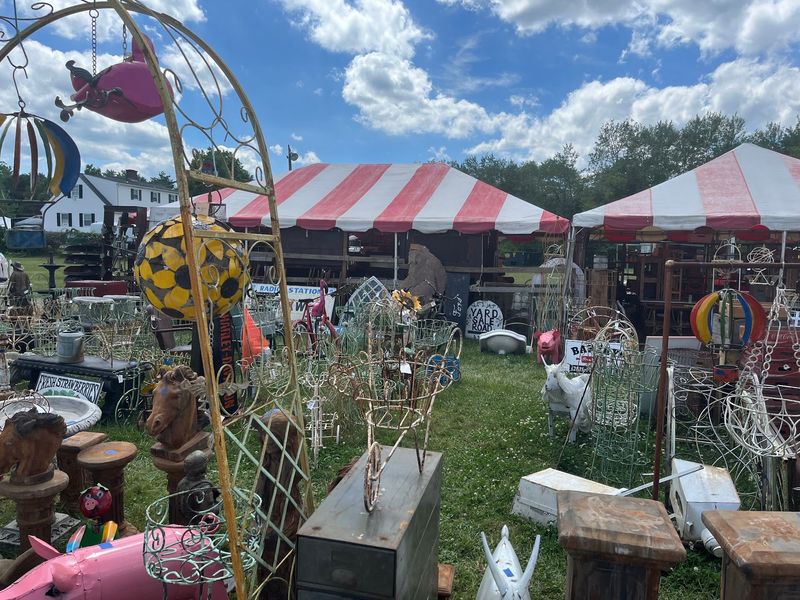
Not everything at Brimfield belongs on a shelf indoors. A good share of the market leans toward the yard.
Garden accessories, gardening supplies, and plants are all part of the mix. Some shoppers come specifically for lawn items and tools.
Old hand tools often sit on the same tables as planters and decorative outdoor pieces. It is a practical side of the market that tends to get less attention than the antiques.
Shoppers looking to fix up a porch or patio can find decorative items with plenty of character. Vintage signs often end up hanging on fences and sheds, too.
Heavy pieces are where planning matters. The market has areas where purchases can be shipped, which helps a lot with bigger buys.
Bring a measuring tape if you have a spot in mind. A planter that looks small in a field full of tents can look very different on a front step at home.
The Art of the Friendly Haggle
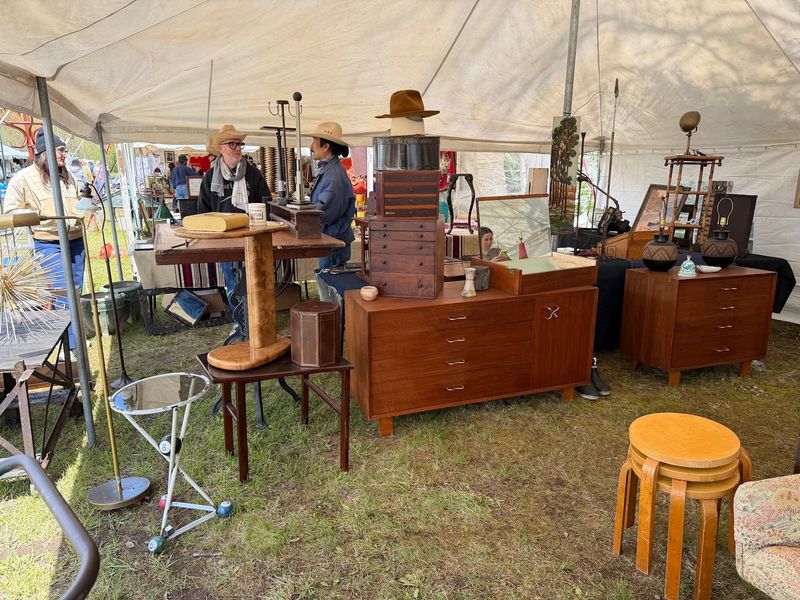
Price tags at Brimfield are often a starting point rather than a final word. Bartering is part of the tradition here.
Asking prices frequently come down when shoppers ask politely. Some sellers also run sales later in the week, especially on Saturday.
Fair warning: prices vary widely. Some items carry high price tags, and anything that looks old may be marked up well past typical flea market levels.
Other tables offer great prices on great pieces. The trick is to keep walking and compare before committing.
Sellers here are often happy to chat. Many share stories about their goods and their businesses, which can make the deal part of the fun.
People come from all over the world to shop and to sell, so conversations can get interesting. A good talk sometimes ends with a better number.
Treat it like a treasure hunt, not a checkout line, and the uneven prices start to feel less frustrating and more like part of the game.
Food Trucks Around Every Bend
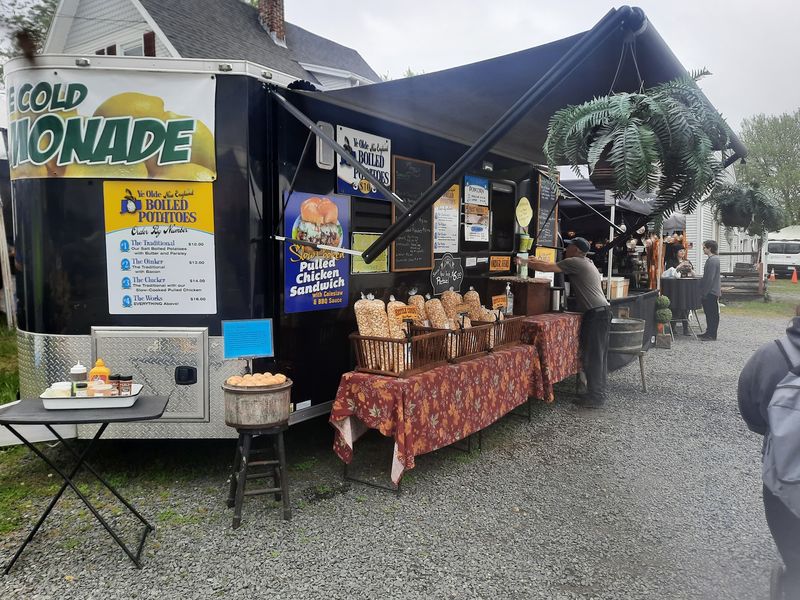
Shopping for hours takes fuel, and the market handles that well. Food trucks, food carts, and snack stands line the road.
A food court area offers trucks along with tables set up for sitting. Other snack options appear along the whole route.
There is also an Italian restaurant selling food and refreshments. Coffee and barbecue are among the choices people mention.
Costs differ by spot. Some trucks on the sides charge high amounts for small portions, while the food court tends to offer fairer prices.
The atmosphere has a carnival feel, with vendors on almost every corner. Some shoppers admit they spent a good chunk of their day eating rather than buying.
Bring water as well. Staying hydrated matters when the day involves miles of walking in open fields.
Plan meals around your route, and the market becomes a full day out instead of a quick dash.
Parking Lots, Prices, and a Back Road
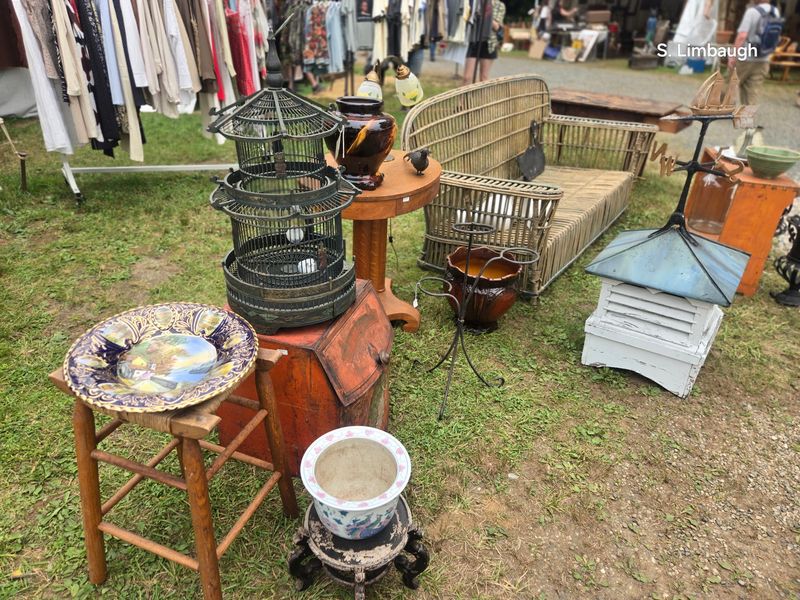
Here is the one fee almost everyone pays. Parking is in paid lots, and roadside parking is not allowed.
Rates commonly run $5, $10, or $15, rising as lots get closer to the center. Some days and spots reach up to $20.
Lots often raise prices later in the day. Arriving early helps you grab cheaper spots and better locations.
Parking a little farther out can save money. A half-mile walk or a five-minute stroll often means a lower rate.
Signs for parking are easy to spot. Lots are described as safe and secure, and some have portable restrooms with signs pointing the way.
Traffic can be heavy and slow at busy times, though it keeps moving. Getting there around 8 a.m. tends to mean lighter roads.
A quiet back road can also skip the jam. If your GPS sends you down an empty lane, it may be doing you a favor.
Comfy Shoes Are Not Optional
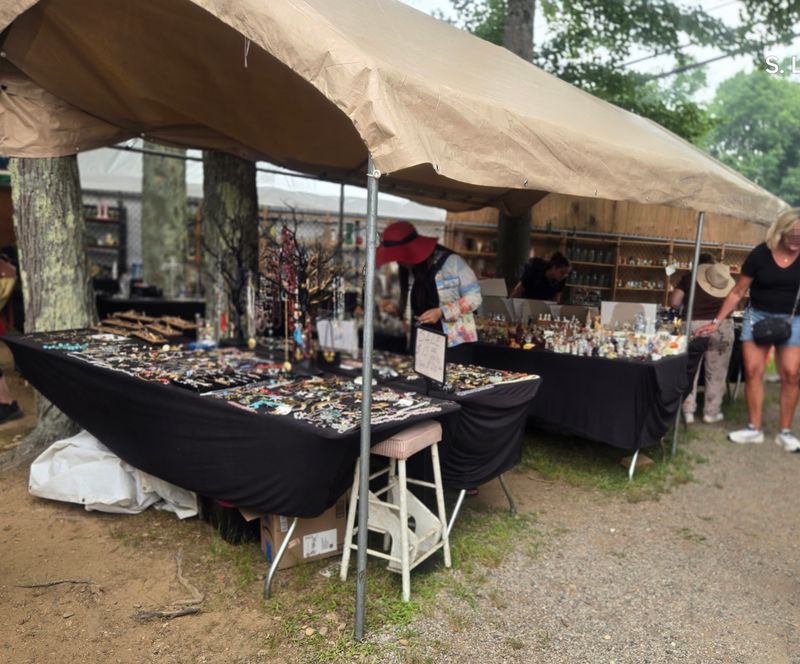
Leave the heels at home. The market runs very long on both sides of Palmer Road, and the walking adds up fast.
Comfortable shoes come up again and again as the top tip. A full day can easily cover five miles or more.
The roadside can be tricky. Curbs drop off onto milled asphalt in places, and the mix of cars and crowds means careful footing matters.
Older shoppers and anyone with balance concerns should take extra care near the curb edges. Going slower is a smart plan.
Seating is limited outside the food court. Some people wish there were more spots to rest along the route, so plan breaks near the tables where you eat.
A light bag, water, and a pace that leaves room for stops make the day easier.
Your feet will be the real judges of the trip, so treat them kindly from the first step.
Cash, Cards, and the Early Bird
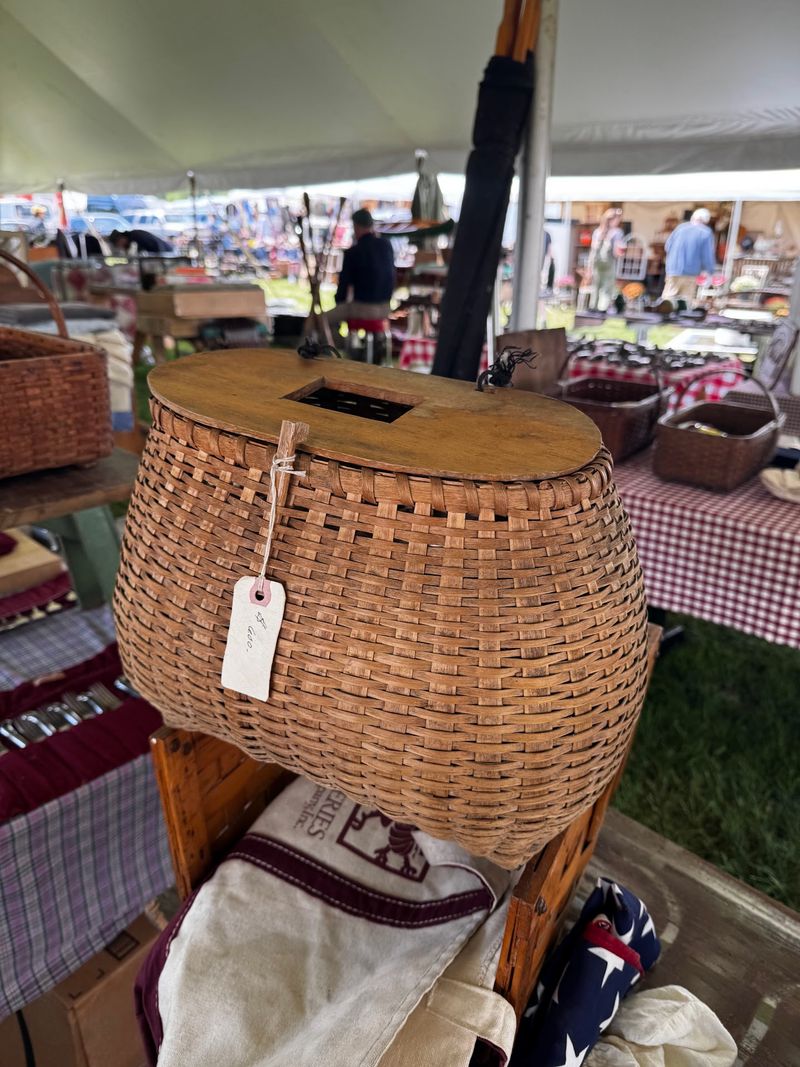
Cash is still king on most of these fields. Some vendors take only cash, though ATMs are available.
Others accept Venmo and similar payment apps. Carrying both options covers almost every table.
Timing affects what you find. On opening day, items can be gone by 11 a.m., so serious shoppers arrive near the 8 a.m. start.
Later in the week, the picture changes. By Saturday many sellers run sales, but some leave early or have little stock left.
Show up near noon on a slow day and you may catch vendors packing up. That can mean either quick deals or empty tents.
Go early and stay late if you want the full experience. The market rewards people who give it real time.
Treat your schedule like a strategy, and you will come home with more than just sore legs.
Who Feels Right at Home Here
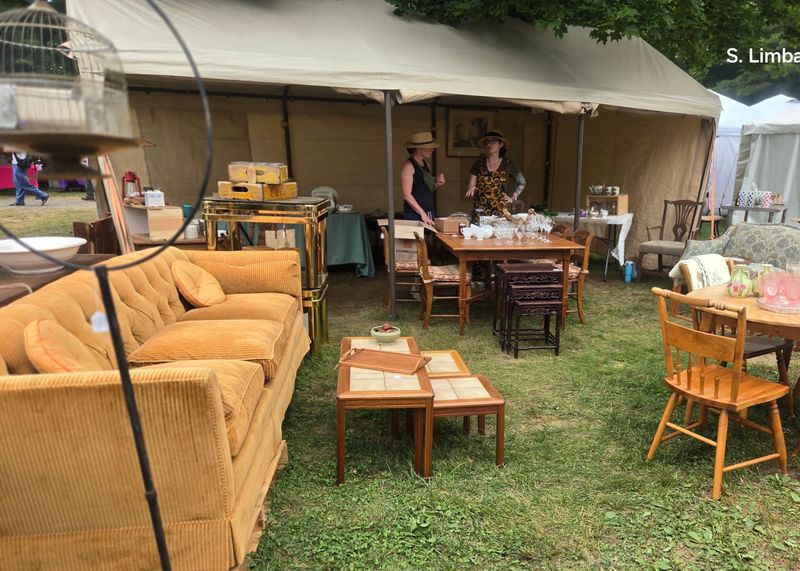
Collectors, decorators, and the simply curious all share these fields. The crowd is a big part of the appeal.
People watching is half the entertainment for some. Folks come from across New England and from overseas, both as shoppers and as sellers.
Dogs show up with their owners, so pets seem to be fine in many areas. Police and mounted patrols are a visible presence too.
Some free tents and shops feel more interesting to certain shoppers than the paid fields. It is worth exploring both before deciding where to spend time.
The place is not for everyone. Those hoping for rock-bottom prices may leave disappointed, and muddy days can wear on patience.
Still, people who love vintage goods or a good hunt tend to return season after season. Even shoppers who buy little often call the outing worth it.
Passersby who stumble onto the market sometimes end up staying all afternoon, which may be the best compliment of all.
Worth the Miles, Season After Season
Some places are a one-time stop, and some become a habit. Brimfield tends to land in the second group for treasure hunters.
The market is huge, busy, and uneven in price. It also packs in more variety than most shoppers expect to see in a single trip.
Free admission, paid parking, and a long road of tents make it a manageable day out with a little planning. Good shoes, cash, water, and an early start cover most needs.
May and September bring the biggest crowds of sellers. July still offers plenty for anyone who cannot wait.
Not every table will match every budget, and that is fine. The fun is in the search, the chats with sellers, and the find you did not see coming.
Check the website for current dates, pick your day, and leave room in the car. The next lamp, chair, or oddball keepsake may already be waiting on a folding table in Brimfield.
Enjoyed this story?
Add Fast Food Club as a preferred source to see more of our reporting on Google.