


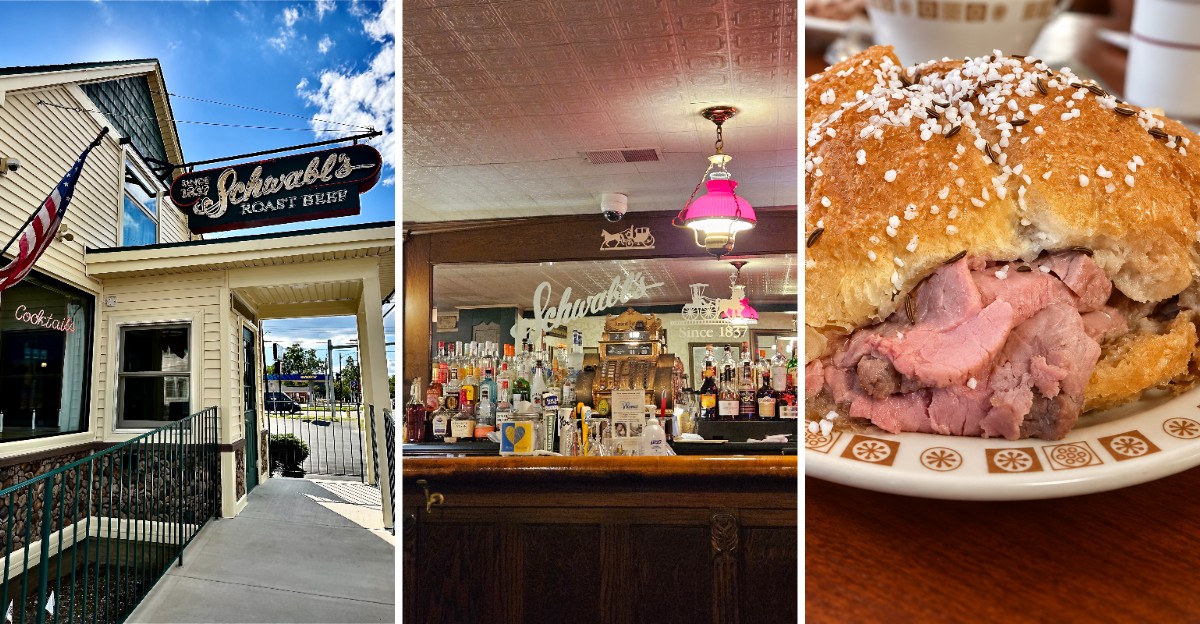
Western New York takes its roast beef sandwiches seriously, and arguments about the best one can outlast a Buffalo snowstorm. One small restaurant just outside the city has been part of that debate for longer than most American states have existed.
Its story stretches back to 1837, and plenty of families still treat a trip there as a tradition passed from grandparents to grandkids. The beef is carved by hand, the rolls are made fresh every day, and each table gets its own pot of horseradish.
Locals will tell you it is worth the drive, the wait, and the extra napkins. This article covers where to find it, how it all started, what makes its beef on weck stand apart, and the practical tips that will help a first trip go smoothly.
A Landmark on Center Road
Some restaurants chase trends, and some simply stay put while the trends come and go around them.
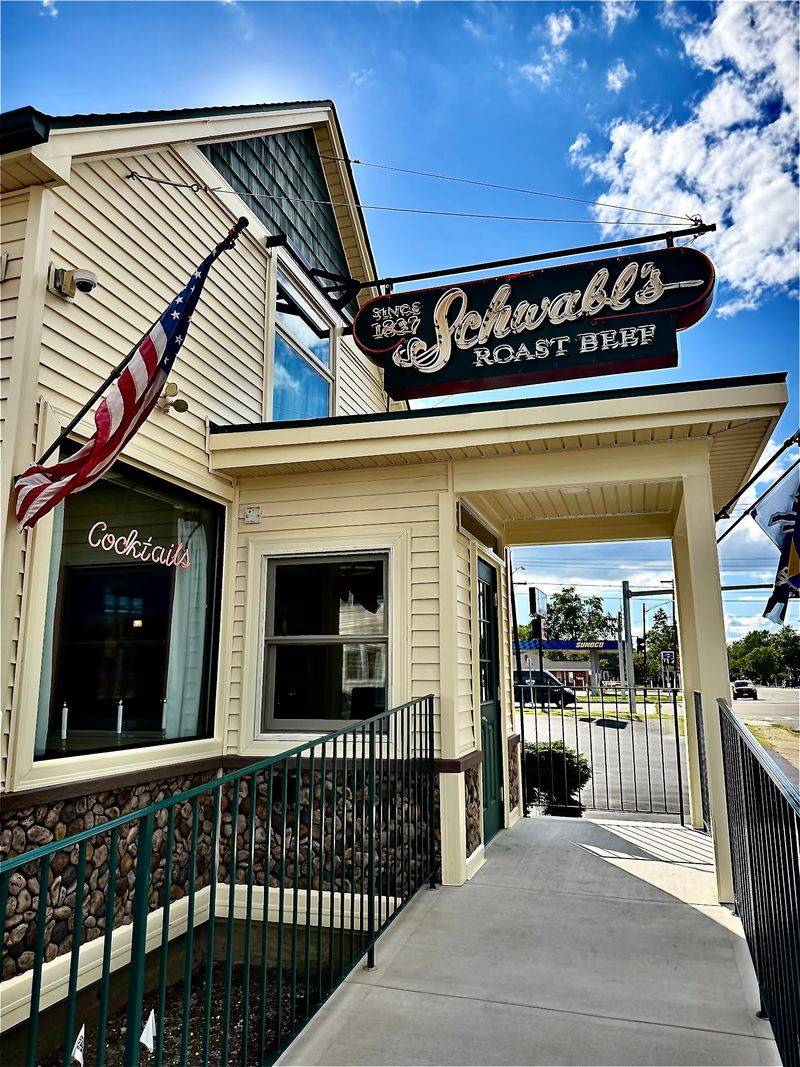
Schwabl’s belongs firmly in the second group. The restaurant sits at 789 Center Rd, West Seneca, NY 14224, in the suburbs just southeast of Buffalo in Western New York.
It is listed as a German restaurant, and the menu leans into hearty German-American cooking. Still, the thing that keeps people driving to West Seneca is one famous sandwich.
That sandwich is the beef on weck, a Buffalo-area classic built from roast beef piled onto a kummelweck roll. Plenty of spots across the region serve it, which makes Schwabl’s local reputation even more interesting.
The building itself is modest in size. Seating is limited, so the dining room can fill quickly during the lunch rush.
Out-of-towners who arrive for a Bills game often add it to their plans, and some even make a solo trip before their friends land in town. Families from the area tend to treat it as a familiar stop rather than a special occasion.
A spot like this does not need flashy signs or a giant parking lot to stay busy. Its address has been doing the talking for generations, and the story behind it goes back much further than most people expect.
Roots Reaching Back to 1837
Here is a number worth repeating at the dinner table: 1837.
That is the year Schwabl’s traces its roast beef tradition back to, making it one of the longest-running names in the Buffalo area. Andrew Jackson had just left the White House around that time.
The restaurant is known locally as a roast beef institution. That label is not marketing fluff, since the sandwich has carried the business through nearly two centuries of changing tastes.
Fans have already started looking ahead. The 200th anniversary would land in 2037, and regulars openly hope the restaurant reaches that milestone.
Family history runs deep here too. Some guests remember grandparents who came every Wednesday for the soup and sandwich special.
Others return after decades away. One family came back roughly 50 years after moving from the area, simply because the restaurant had been a grandmother’s favorite.
Those kinds of stories explain why Schwabl’s feels less like a business and more like a shared memory for many Western New Yorkers. The walls even hold historical items that hint at the long timeline.
A restaurant does not last this long by accident. It lasts by doing one thing well and refusing to drift too far from it, which becomes obvious the moment guests take in the dining room.
Old-School Digs With Character
Time seems to move a little slower inside Schwabl’s, and that is exactly the point.
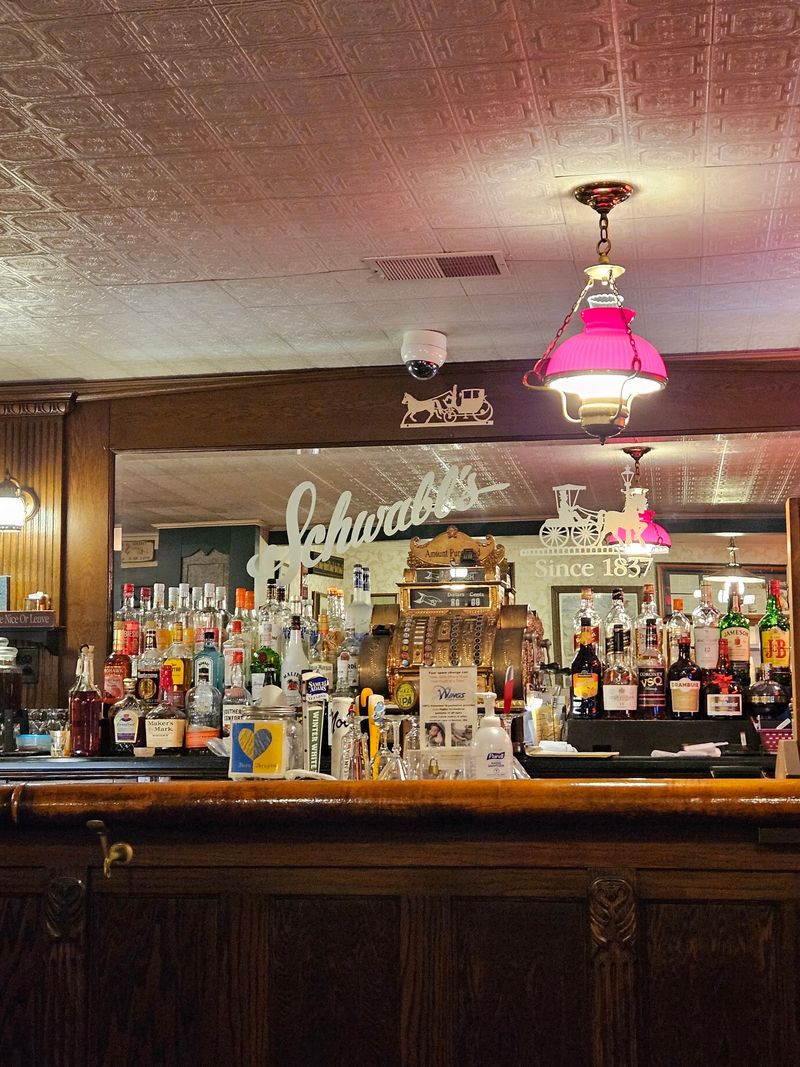
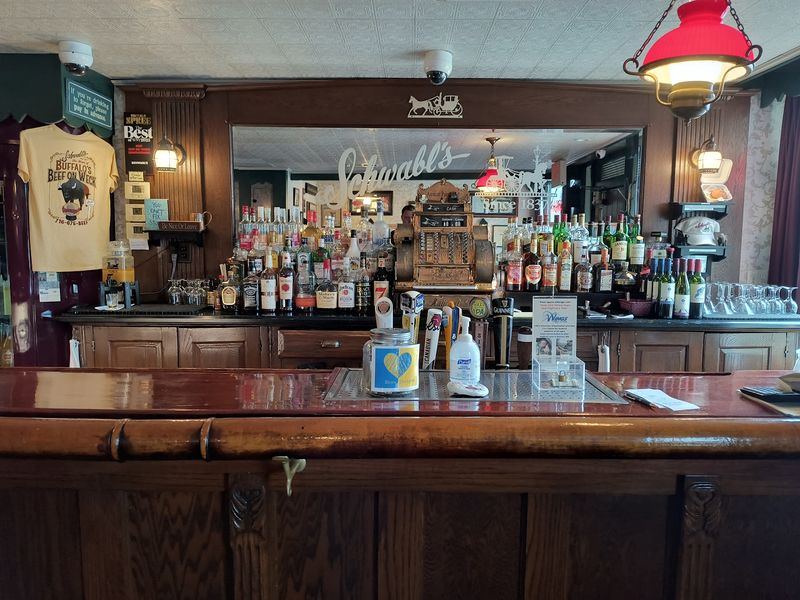
The dining room keeps an old-fashioned look that many guests compare to a scene from a classic holiday film. Some say it resembles a pub from the early 1900s, before remembering the history goes back even further.
Servers wear white, and the carver works in a white chef’s smock. That uniform tradition adds to the feeling of stepping into another era.
Decor plays a role as well. Historical items line the walls, and even the restroom gets compliments for its charm.
During winter, Christmas decorations add a seasonal layer to the vintage setting. Guests who arrive in January sometimes catch the last of the holiday trimmings.
The room is modest rather than grand. It is small, comfortable, and focused on the food instead of fancy design.
Many people describe the atmosphere as relaxed and easygoing. On quiet weekday afternoons, staff have time to chat, which makes a solo lunch feel friendly rather than lonely.
Nostalgia is part of the menu here, even if it never appears in print. Of course, the real star of the show stands at the carving station.
Hand-Carved Beef, Cut Your Way
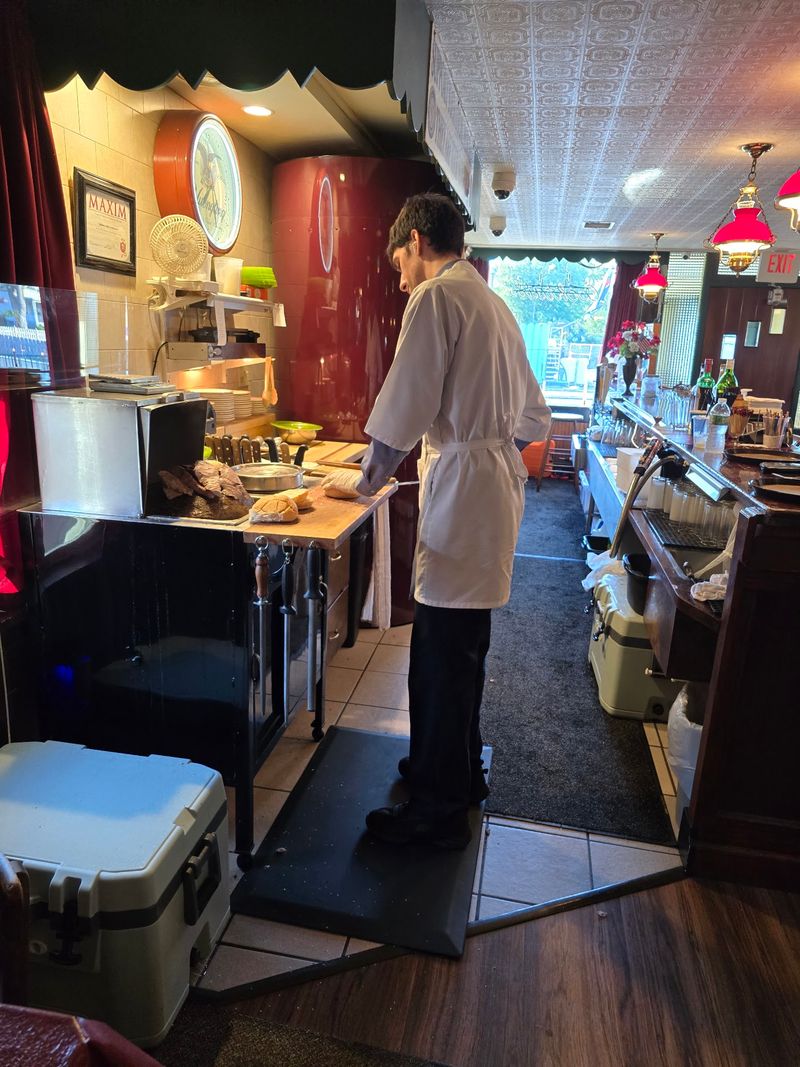
Forget the paper-thin slices found in many Buffalo sandwiches.
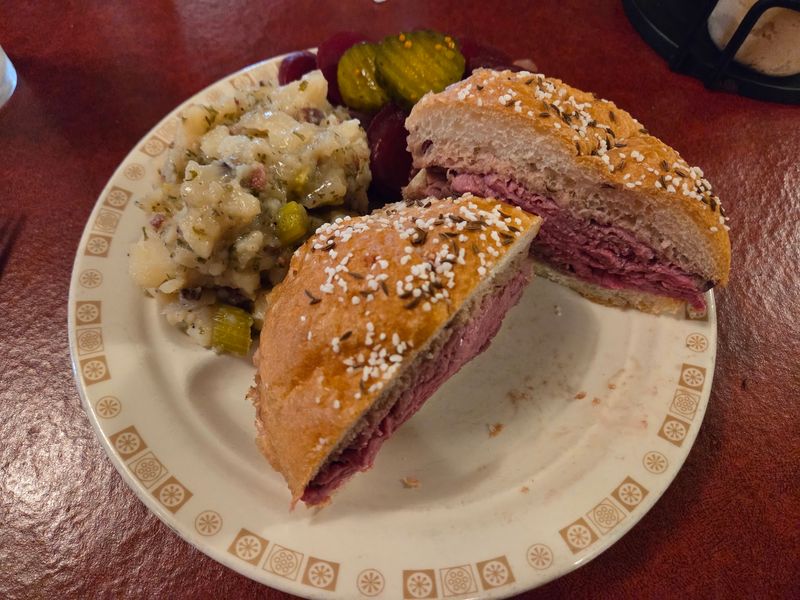
At Schwabl’s, the roast beef is hand-carved a bit thicker than the typical Western New York version. That single choice sets it apart from much of the competition.
Guests can choose how they want the beef cooked. The options include rare, medium rare, and medium.
The carving happens at a station in the restaurant, often by the owner himself. He works with careful precision, and his attention to quality is one of the first things people notice.
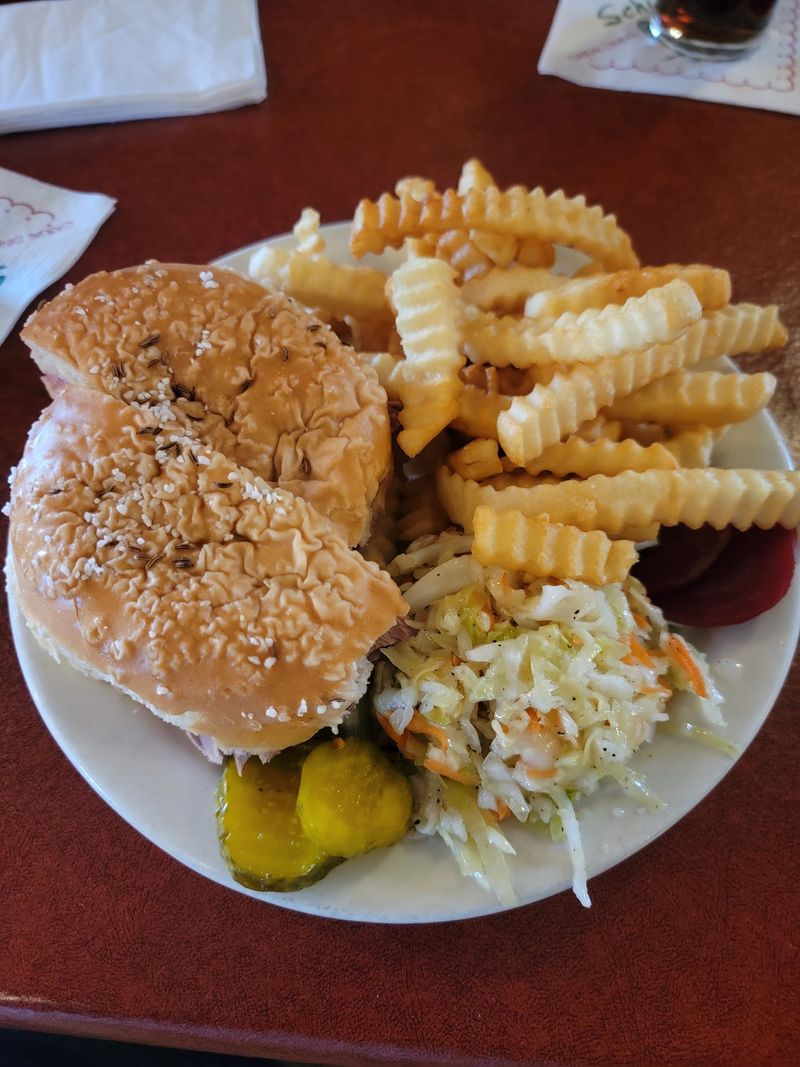
Portions are generous. The beef gets piled high on the roll rather than spread thin across it.
Not everyone loves the thicker cut, and the occasional sandwich misses the mark. Most fans, however, say the thicker slices are exactly why they keep coming back.
Some go as far as calling it the best beef on weck they have ever had. Others rank it near the top of the four best-known beef on weck restaurants in the region.
A carving station turns lunch into a small show. Watching the sandwich come together explains a lot about why this place has lasted so long, but the beef is only half the equation.
The Kummelweck Roll Behind It All
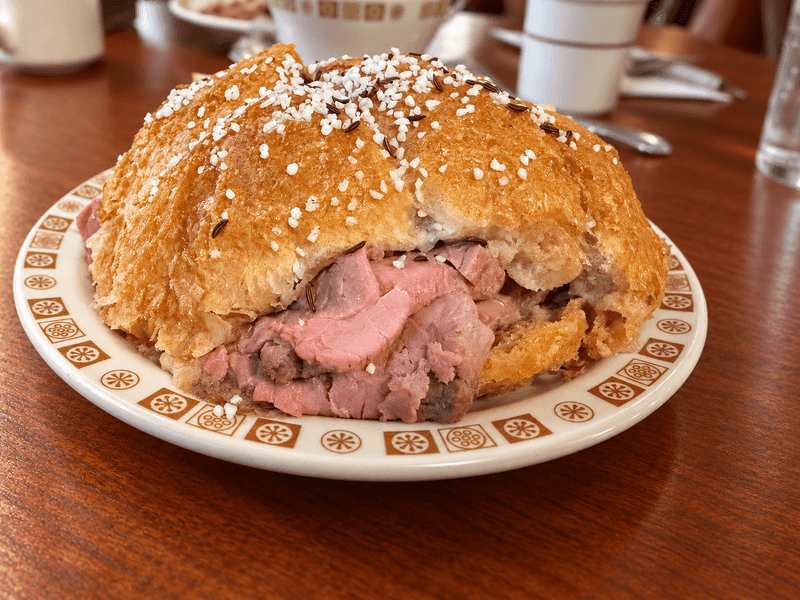
Without the weck, a beef on weck is just a roast beef sandwich.
The kummelweck roll is the backbone of this Buffalo specialty. It is topped with coarse salt and caraway seeds, which give it a look unlike any ordinary sandwich bun.
At Schwabl’s, the rolls are made fresh daily. Staff are happy to share that detail, and it clearly matters to the kitchen.
First-timers from outside Western New York are often surprised. Many have never seen a roll like it before.
The salt topping is generous here. Fans of the classic style appreciate that the restaurant does not hold back.
Fun fact: the name comes from German, with “kummel” referring to caraway and “weck” being a regional word for a roll. It fits nicely at a German restaurant with nearly two centuries of history.
The roll also has an important job. It needs to stay sturdy enough to hold a towering stack of beef while soaking up the au jus without falling apart.
Getting that balance right every day is harder than it sounds. Then again, a sandwich is never complete until someone reaches for the horseradish.
Horseradish at Every Table
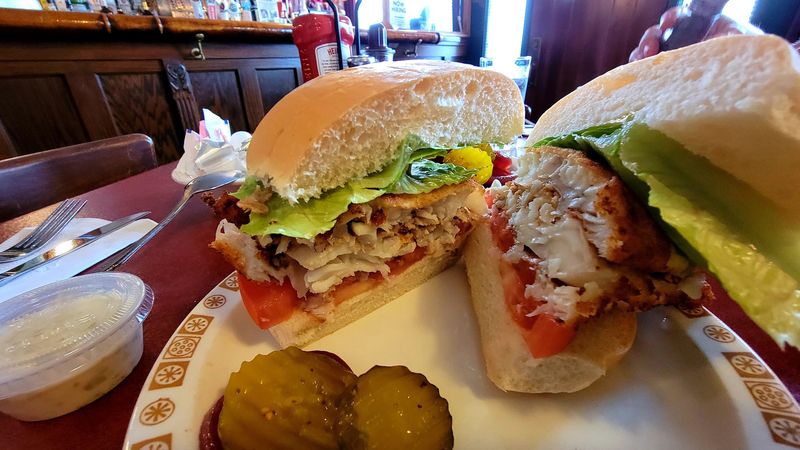
Ask any beef on weck devotee about the secret ingredient, and the answer usually comes fast: horseradish.
Schwabl’s puts individual pots of horseradish right on the tables. Each person can add as much or as little as they want.
That small detail earns big praise. Nobody has to share a single jar or wait for a server to bring more.
The horseradish itself is thick and fresh. Plenty of guests call it some of the best they have come across anywhere.
Some first-timers get a kick out of the dispenser setup alone. More importantly, they say the horseradish takes the whole sandwich to another level.
Beginners might want to start slowly. A small amount goes a long way, and it is easy to add more later.
Regulars tend to have their own routines. Some spread a thin layer across the beef, while others pile it on without hesitation.
Giving every diner control is a quiet sign of respect for how personal this sandwich can be. Speaking of personal preferences, there is one more topping that out-of-towners often wonder about.
Au Jus Without the Awkwardness
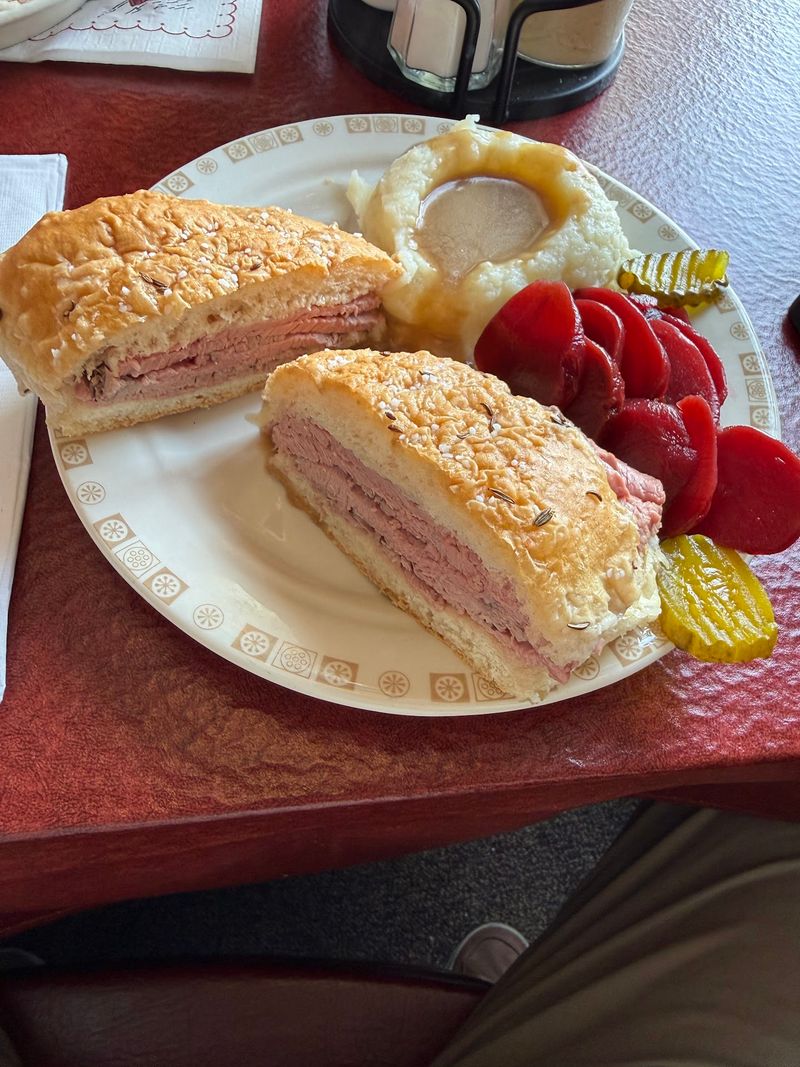
Out-of-towners sometimes worry that asking for au jus with a beef on weck is a local faux pas.
At Schwabl’s, there is no need to stress. Au jus is available, and it comes in a generous portion.
Many fans say it makes the sandwich complete. The juice soaks into the kummelweck roll, softening the bottom just enough without turning it into a mess.
For travelers who have tried other spots and wished for a dip on the side, this is welcome news. They can order it without feeling like they broke an unwritten Buffalo rule.
The combination of thick beef, fresh roll, horseradish, and au jus is what keeps people talking. Each part plays its role, and none of them gets lost.
A few practical tips help here. Grab extra napkins, and consider dipping a little at a time so the roll holds together.
Some guests prefer their sandwich dry, letting the beef and horseradish carry the load. Others would not dream of skipping the au jus.
There is no wrong answer, which suits the welcoming spirit of the place. That same spirit shapes who tends to fill the tables on any given day.
Who Fills the Tables
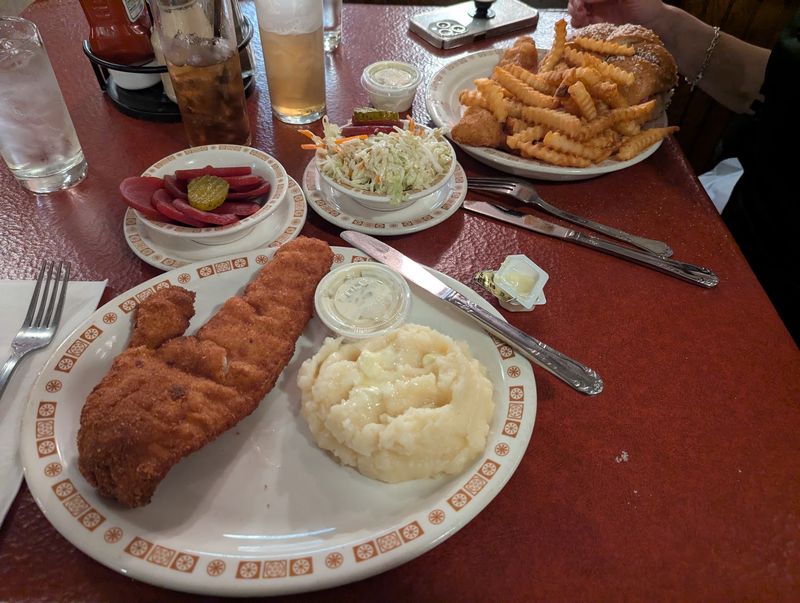
Lunch at Schwabl’s often looks like a family reunion that nobody officially planned.
Grandparents bring grandkids to the place they once visited with their own parents. Adult children return with stories about relatives who never missed the weekly special.
Sports fans make up another big group. Travelers heading to Buffalo for a Bills game frequently plan a stop, and some arrive a day early just to fit it in.
Solo diners feel welcome too. On a slow weekday, the staff happily strikes up conversations with whoever is at the table.
The restaurant also suits anyone who enjoys history with their meal. People who appreciate old-fashioned settings tend to fall for the vintage charm quickly.
Picky eaters are not left out. Even guests who call themselves hard to please often leave satisfied and a little sleepy.
Kids have options on the menu as well, which makes family outings easier. Larger groups should plan ahead, since gratuity is automatically included for parties of five or more.
Every table seems to carry a slightly different reason for being there. Before planning a visit, though, a few practical details are worth knowing.
Hours, Costs, and Smart Timing
Timing matters here more than at most restaurants.
Schwabl’s is open Tuesday through Saturday from 11:30 AM to 7:30 PM. It is closed on Sundays and Mondays, which catches some weekend travelers off guard.
The early closing time also means dinner plans should start on the earlier side. Showing up at 8 PM will only lead to disappointment.
Since the dining room is small, waits can happen. Arriving early, especially at lunch, is the best way to grab a table quickly.
Most meals land in the $20 to $30 per person range. A sandwich with fries runs around $25, and some guests find the price surprising at first.
Many change their minds once the plate arrives. The portions are large, and splitting dishes is an easy way to save money.
A few house rules are good to know ahead of time:
Water may come with a charge unless another drink is ordered. Outside drinks are not allowed, and parties of five or more have gratuity added automatically.
Takeout is available for anyone short on time. Service tends to be quick and friendly for to-go orders, which makes it handy before heading to a game.
The Verdict From West Seneca
So, does Schwabl’s really beat everything in Buffalo?
Locals certainly make a strong case. The hand-carved beef, the daily fresh kummelweck rolls, the table pots of horseradish, and the generous au jus add up to a sandwich with a loyal following.
The thicker cut will not please every purist. Some prefer the thin, traditional style found elsewhere around Western New York.
Prices also sit higher than a quick lunch counter. Still, large portions and the option to split plates help balance things out.
What truly separates this place is the combination of food and history. Few restaurants can point to roots reaching back to 1837 while still drawing crowds on a Tuesday afternoon.
The vintage dining room, white uniforms, and owner at the carving station keep the experience grounded in tradition. It feels personal rather than polished.
For a first trip, go early, bring an appetite, and plan around the Tuesday to Saturday schedule. Leave room for a little horseradish experimentation too.
The beef on weck debate will never fully end in Buffalo. That is part of the fun, and this West Seneca landmark seems perfectly happy to keep the argument going for another couple hundred years.
Enjoyed this story?
Add Fast Food Club as a preferred source to see more of our reporting on Google.