


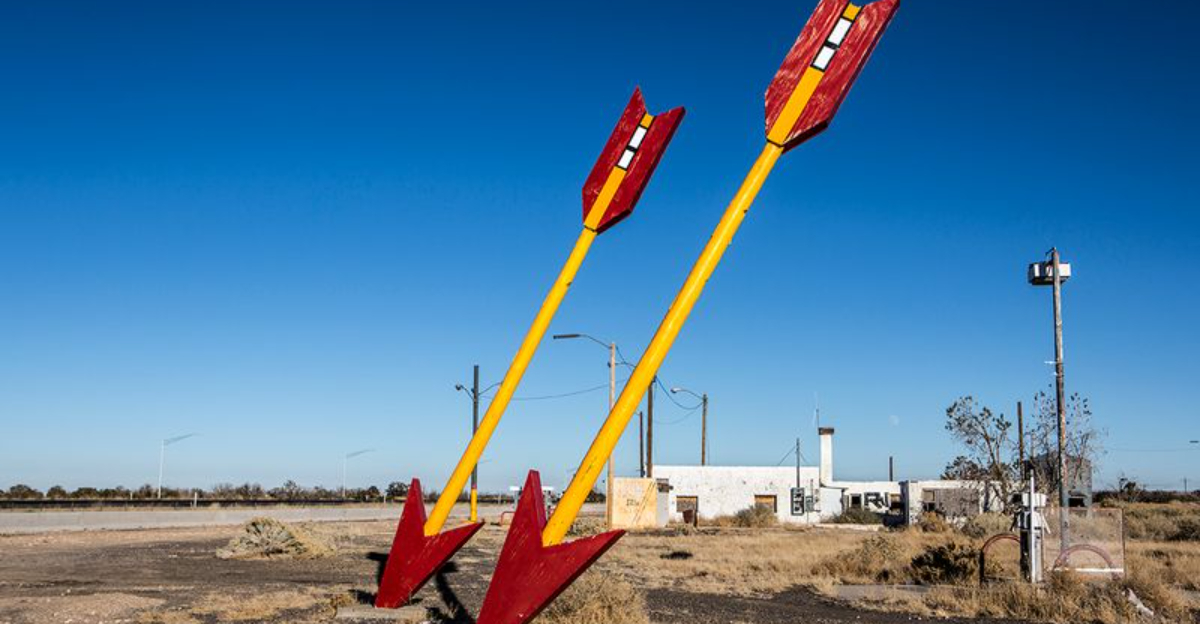
Hidden along the dusty stretch of Historic Route 66 near Flagstaff, Arizona, the Twin Arrows Trading Post Ruins stand as a quiet reminder of a road trip era that most people have completely forgotten. Once a buzzing stop for travelers cruising America’s most famous highway, this site now sits abandoned, weathered, and wrapped in mystery.
What makes it even more intriguing is the layers of history, street art, and Route 66 culture packed into one crumbling roadside landmark. If you have ever wondered what happened to the golden age of road travel, this place tells that story better than any museum could.
The Origins of Twin Arrows Trading Post
Back in the 1940s and 1950s, Route 66 was the beating heart of American road travel. Families packed their cars and headed west, stopping at colorful roadside attractions along the way.
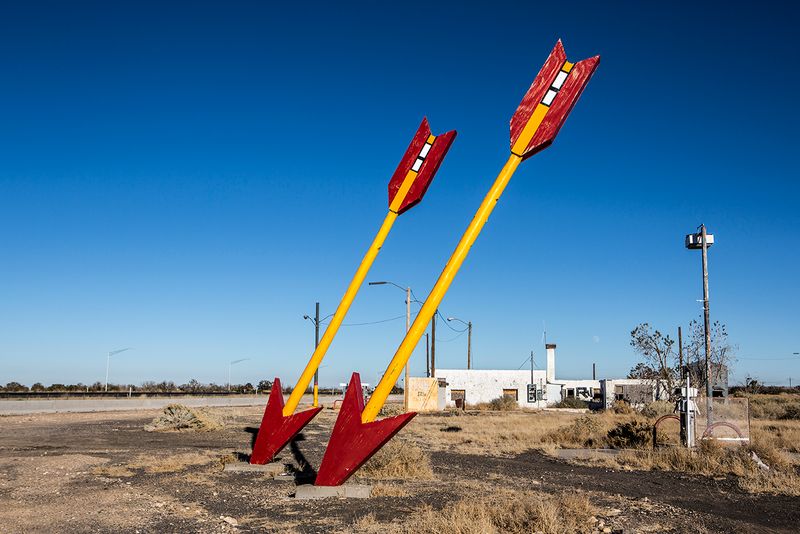
Twin Arrows Trading Post was born right out of that exciting era, designed to catch the eye of every passing driver.
The trading post started as a small fuel and supply stop, eventually growing into a full roadside destination. It offered gas, snacks, souvenirs, and a taste of the American Southwest that travelers craved.
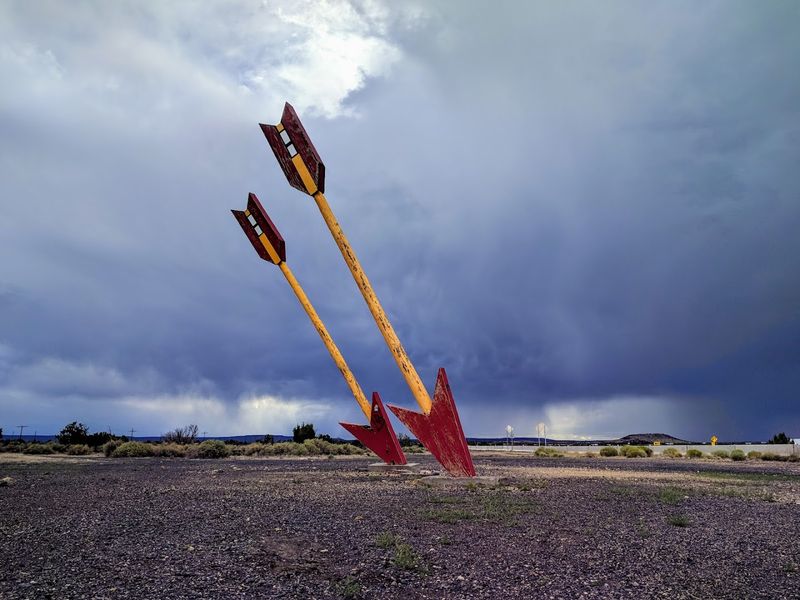
The two massive arrow sculptures out front became its most recognized feature, visible from far down the highway.
For decades, it thrived on the energy of Route 66 traffic. Knowing that this lively spot once welcomed thousands of road-trippers makes walking through its ruins feel like stepping straight into a time capsule from another world.
Why Interstate 40 Killed the Trading Post
When Interstate 40 was built across Arizona, it bypassed many of the small towns and roadside stops that had thrived along Route 66 for decades. Suddenly, drivers had a faster, straighter path west, and places like Twin Arrows Trading Post were left completely off the map.
The new highway changed everything. Traffic dried up almost overnight, and businesses that depended on those passing cars simply could not survive.
Twin Arrows held on for a while, but eventually the doors closed and the property was left to the elements.
This story played out at hundreds of stops along the old Mother Road, turning once-thriving communities into ghost towns. Twin Arrows became one of the most recognizable symbols of that painful transition.
Understanding why it was abandoned actually makes the visit far more meaningful than just snapping a quick photo and driving away.
The Famous Twin Arrow Sculptures
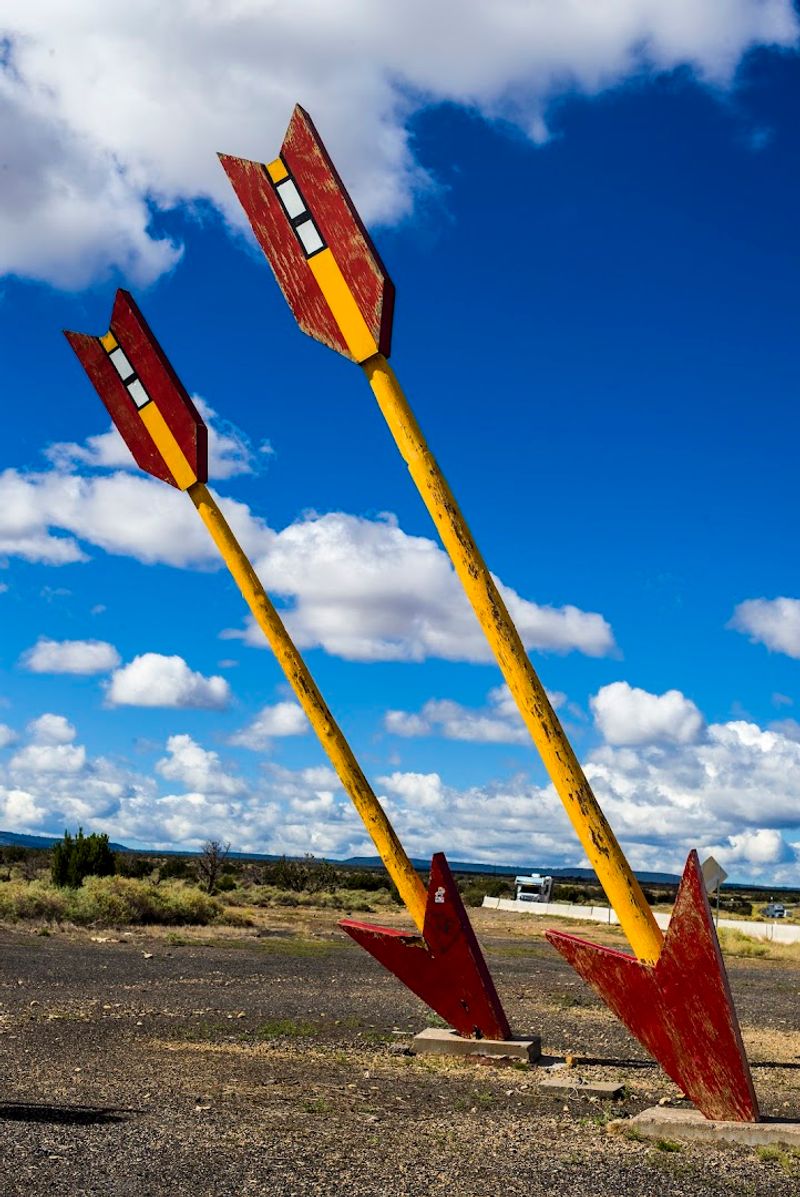
Those two enormous arrow sculptures were the heartbeat of this location, and for good reason. Standing tall against the Arizona sky, they were impossible to miss from the highway and became one of Route 66’s most photographed landmarks.
Travelers loved stopping just to snap a picture beside them.
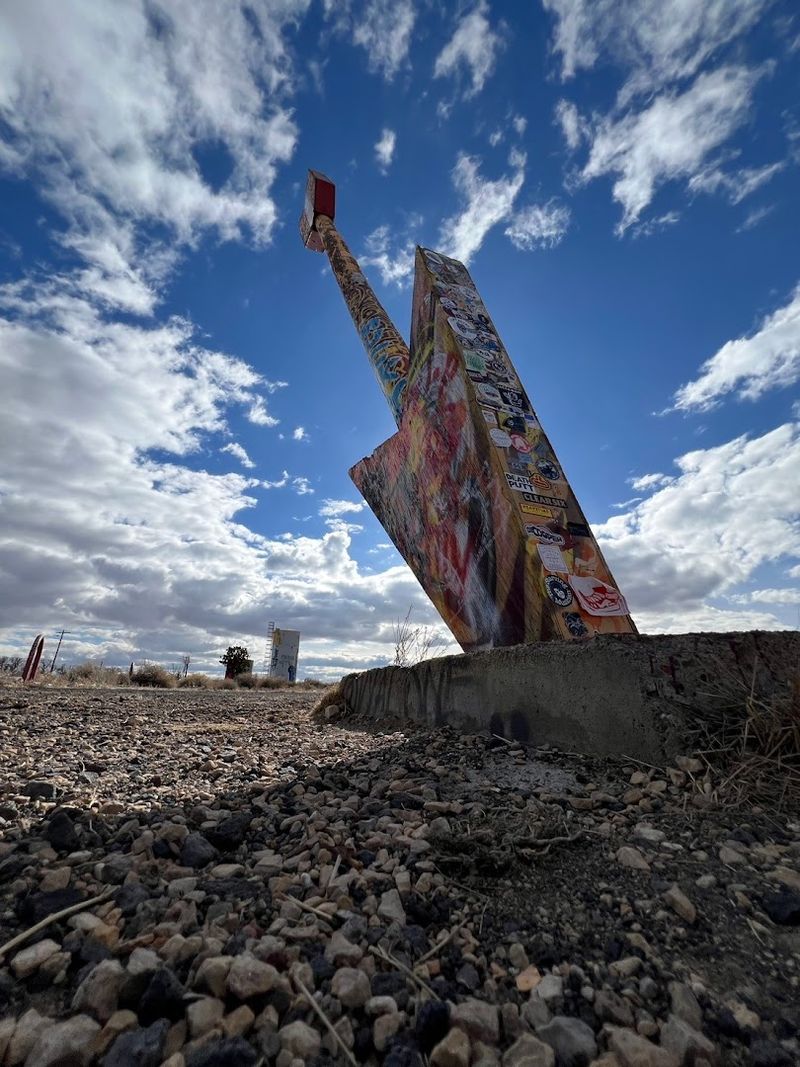
Sadly, only one arrow remains standing today. The second arrow fell and broke apart over the years, leaving just a lone log sticking out of the desert ground where its partner once stood.
Several visitors have noted the irony of a place called Twin Arrows now being down to just one.
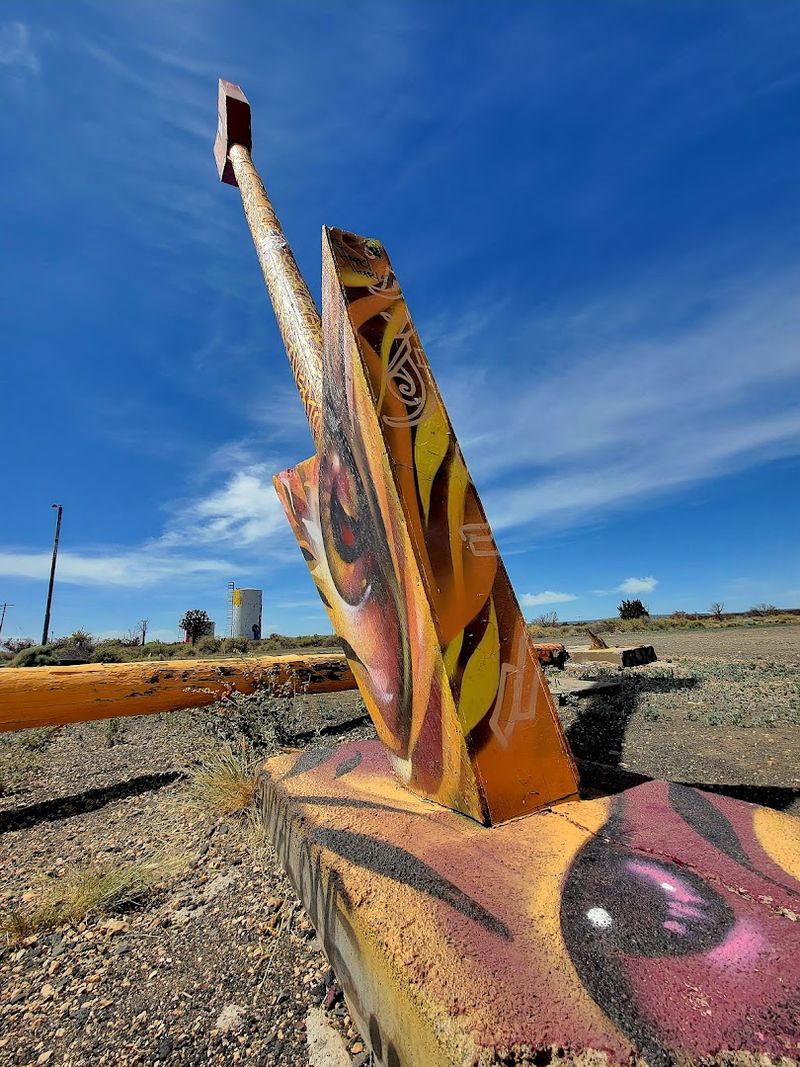
The surviving arrow has been covered in graffiti over time, but it still carries that unmistakable roadside charm. Despite the wear and tear, standing next to it feels genuinely special.
You are looking at one of the last physical connections to old Route 66 roadside culture.
A Canvas for Street Artists and Activists
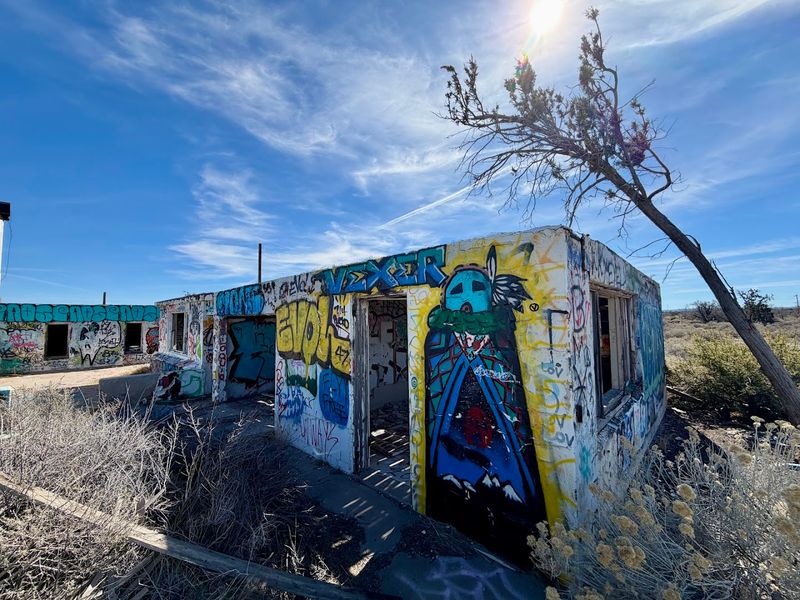
One of the most surprising things visitors discover at Twin Arrows is the sheer quality of the art covering every surface. This is not just random tagging.
Talented street artists have turned the crumbling walls into a rotating outdoor gallery that covers topics from war and indigenous rights to pop culture and modern politics.
References to Andy Warhol-style pop art, resistance messaging, and stunning murals have left many visitors genuinely speechless. One reviewer even called it the best gallery they had visited in years, which says a lot about the creative energy found here.
The art keeps changing with every visit, making each trip feel like a brand-new experience. If you appreciate street art that actually says something meaningful, this abandoned trading post delivers in a way that polished city galleries rarely do.
Bring your camera, because the visuals here are absolutely worth capturing.
What the Trading Post Once Sold
Trading posts along Route 66 were more than just gas stops. They were cultural hubs where travelers could pick up handcrafted Native American goods, turquoise jewelry, woven blankets, pottery, and all kinds of Southwest souvenirs.
Twin Arrows was no different, offering a window into the rich heritage of the region.
For many travelers, these stops were their first real encounter with Indigenous art and craftsmanship. The items sold were not just trinkets.
They represented generations of skilled tradition from the Native communities of Arizona and the surrounding Southwest.
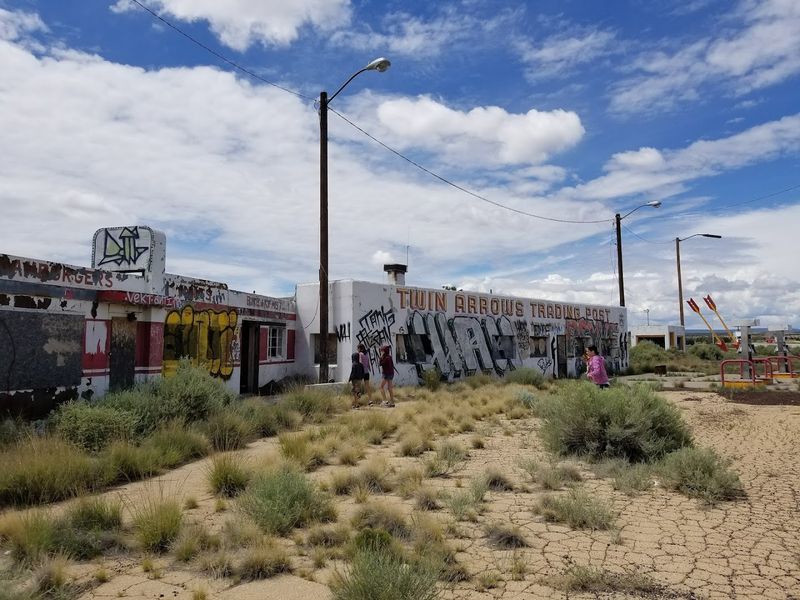
Today, the shelves are long gone and the windows are shattered, but knowing what once filled those rooms adds a layer of depth to every visit. Imagining families browsing handmade goods while the smell of desert air drifted through the door makes the ruins feel far more alive than they first appear.
The Forrest Gump Connection Visitors Love
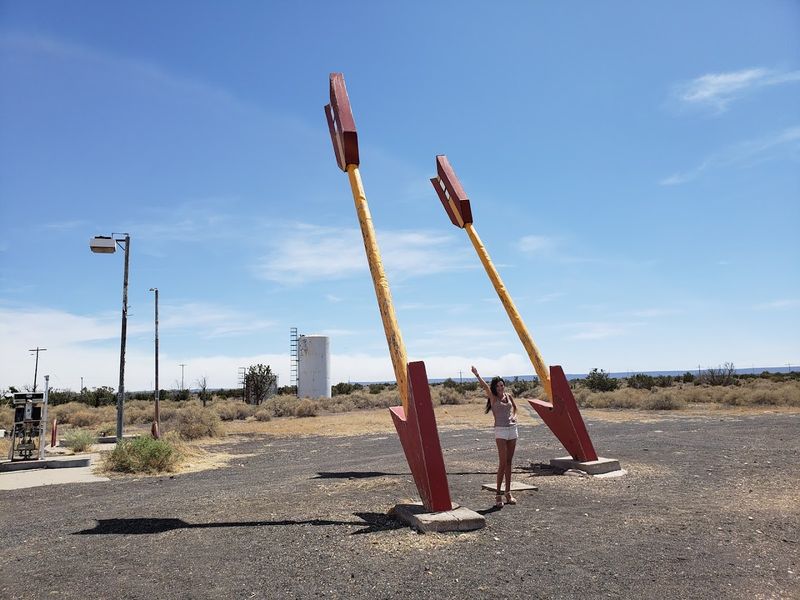
Here is a fun piece of trivia that Route 66 fans absolutely love. The area around Twin Arrows is known as a spot where visitors recreate the iconic “Have a nice day” running scene from the movie Forrest Gump.
The wide, open desert highway stretching out in both directions makes it the perfect backdrop.
Whether you are a movie buff or just someone who enjoys a good laugh, acting out that scene next to the arrow is a genuinely joyful experience. It has become a quirky little tradition among road-trippers who know about the connection.
Small moments like this are exactly what make Route 66 road trips so unforgettable. The combination of pop culture history, stunning desert scenery, and crumbling Americana creates something you simply cannot replicate anywhere else.
Pack your running shoes just in case you feel inspired when you arrive at the site.
Safety Tips for Visiting the Ruins
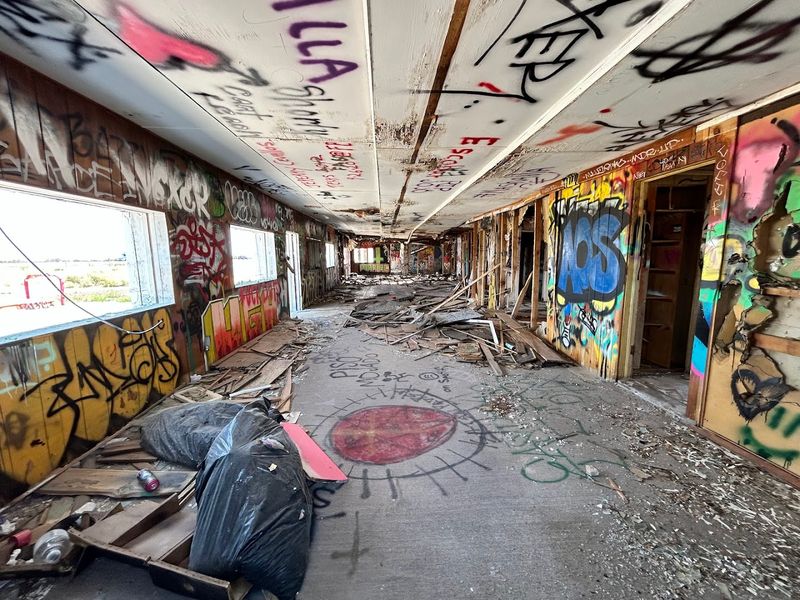
Visiting an abandoned site always comes with real risks, and Twin Arrows is no exception. The crumbling buildings are filled with broken glass, exposed nails, unstable floors, and sharp debris scattered throughout.
Sturdy, closed-toe shoes are an absolute must before you even think about stepping inside any structure.
Snake awareness is another serious consideration, especially during warmer months. Arizona is home to several venomous snake species, and abandoned properties with lots of debris make perfect hiding spots.
Going early in the morning, when temperatures are cooler, reduces the chance of unexpected encounters.
Some visitors have also mentioned feeling uneasy about other people occasionally present on the property. Going with a friend or group rather than alone is always a smarter approach.
Staying alert, sticking to open areas, and keeping your visit to daylight hours will help ensure your experience stays fun and completely safe.
Best Time of Day to Visit for Photos
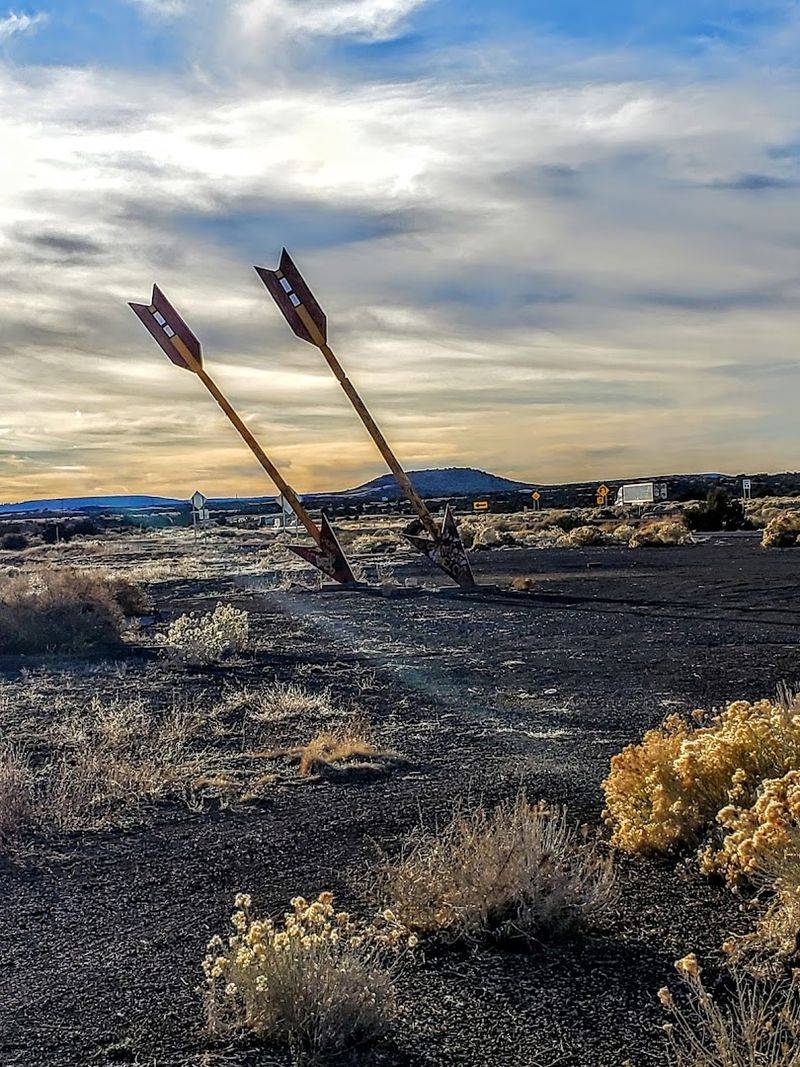
Photographers who have visited Twin Arrows consistently agree on one thing: early morning light is absolutely magical here. The golden hour just after sunrise bathes the desert landscape and the surviving arrow in warm, dramatic tones that midday sun simply cannot match.
Shadows stretch long and the ruins glow beautifully.
The Arizona desert sky also puts on a show during early morning, often featuring stunning gradients of orange, pink, and purple that frame the decaying structures perfectly. If you are serious about getting great shots, setting your alarm early is one hundred percent worth it.
Afternoon light can be harsh and flat, washing out the texture and character that makes this location so visually interesting. Arriving at dawn also means fewer other visitors, giving you the rare chance to experience the haunting stillness of this place completely undisturbed.
Your camera roll will thank you for the early wake-up call.
The Protest Art and Political Messaging on Site
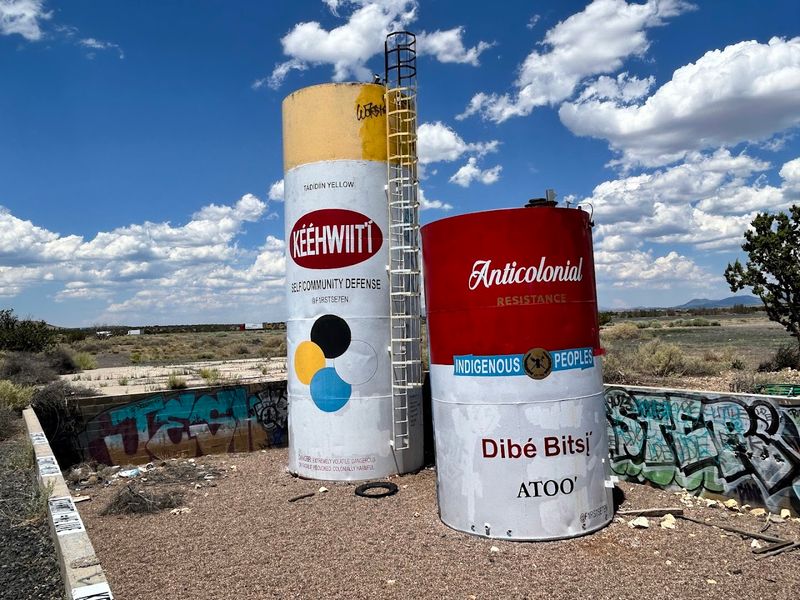
Beyond the pure artistic beauty found at Twin Arrows, there is a strong undercurrent of political expression woven throughout the site. Spray-painted messages about indigenous land rights, ongoing conflicts, and social justice cover walls, tanks, and structures across the entire property.
None of it feels random or careless.
One particularly striking feature mentioned by visitors is a standing tank painted in the style of an Andy Warhol soup can, but reimagined as a protest symbol. The combination of pop art aesthetics with powerful resistance messaging creates a deeply thought-provoking visual experience that surprises most people who stop by.
For a place that started as a simple roadside trading post, Twin Arrows has evolved into something far more complex and culturally significant. The voices expressed through the art here speak to real, ongoing struggles that go well beyond nostalgia for old highways and vintage road trips.
How Route 66 Culture Shaped Twin Arrows
Route 66 was never just a road. It was a cultural movement that shaped American identity throughout the mid-20th century.
Songs were written about it, movies featured it, and entire communities built their livelihoods around the steady flow of travelers moving along its iconic path from Chicago to Santa Monica.
Twin Arrows was deeply embedded in that culture. The oversized arrow sculptures were a classic example of roadside architecture designed to grab attention and create a memorable experience for passing drivers.
Big, bold, and impossible to ignore, they embodied the playful spirit of the Route 66 era perfectly.
Understanding that cultural backdrop transforms the ruins from a simple abandoned building into a meaningful historical artifact. Every cracked wall and faded sign carries the echo of a time when road travel was an adventure, not just a commute, and stopping at quirky roadside spots was half the fun of any trip.
What Remains of the Buildings Today
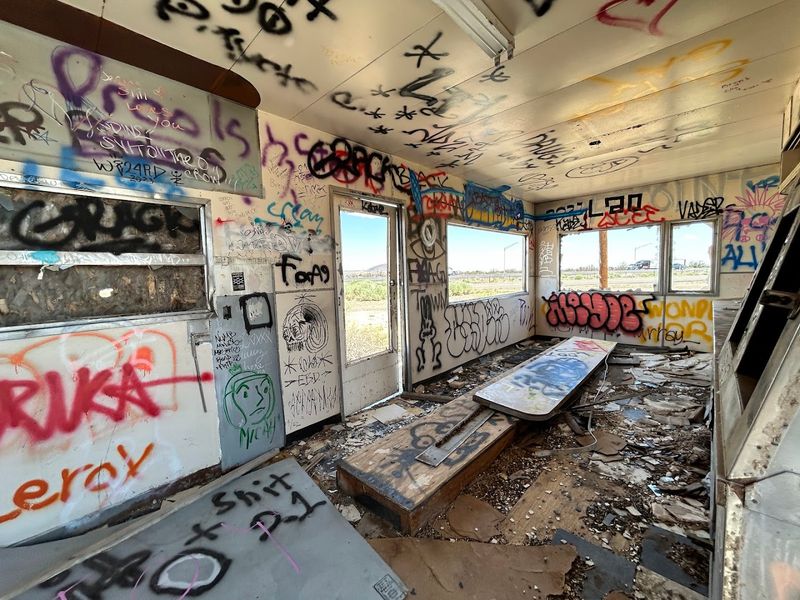
Walking through what remains of the Twin Arrows Trading Post is a genuinely eerie experience. The main building still stands, though barely, with broken windows, collapsed sections, and walls covered floor to ceiling in layers of graffiti.
Inside, the floors are littered with broken glass, old debris, and the occasional remnant of the building’s former life.
Fuel pump structures and old storage tanks dot the property, each one tagged and weathered beyond recognition of their original purpose. The surrounding land is flat and open, which makes the ruins feel both exposed and strangely isolated at the same time.
Despite the decay, there is an undeniable atmosphere here that keeps people coming back. Something about the combination of desert silence, crumbling history, and unexpected art creates a mood that is hard to describe but easy to feel the moment you step out of your car and look around.
Getting There and What to Expect
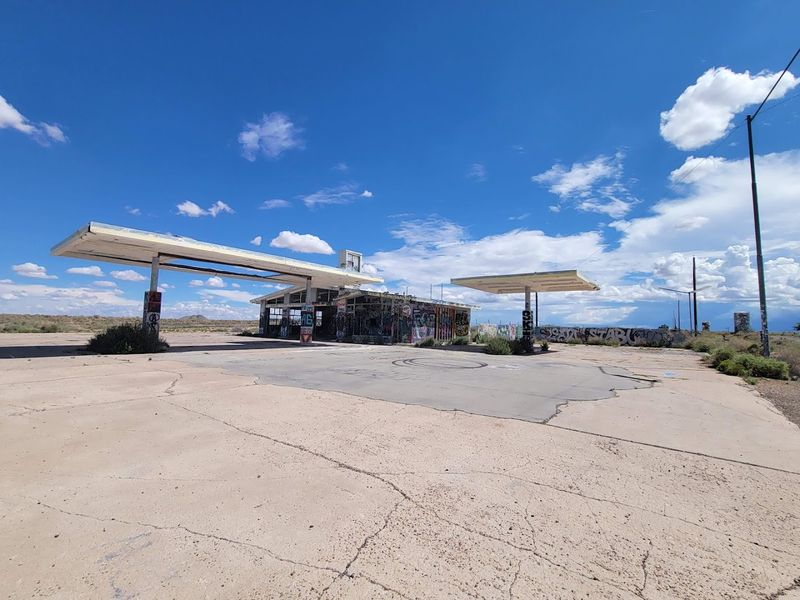
Reaching Twin Arrows Trading Post is actually pretty straightforward. The site sits right off old Route 66, east of Flagstaff, and is accessible from Interstate 40 via Exit 219.
From there, a short drive along the historic highway brings you directly to the property, and there is enough room for larger vehicles including RVs and even semi-trucks to park comfortably.
The site is open 24 hours a day, seven days a week, and there is no admission fee whatsoever. You simply pull up, get out, and start exploring.
That said, there are no restrooms, no water, and no services of any kind on the property, so plan accordingly before you arrive.
Most visitors spend between 15 and 30 minutes here, which is plenty of time to walk the grounds, photograph the arrow, explore the murals, and soak in the atmosphere. A little bit of preparation goes a long way toward making the stop enjoyable.
Why This Place Deserves to Be Remembered
There is something quietly heartbreaking about watching a piece of American history slowly disappear into the desert. Twin Arrows Trading Post was once a living, breathing part of Route 66 culture, full of travelers, stories, and the energy of a country in motion.
Now it stands empty, slowly returning to the earth around it.
Preserving the memory of places like this matters. They remind us of how quickly things can change when economic forces shift, and how entire communities can be left behind when a new road bypasses them.
That is a story worth understanding, especially for younger generations who never experienced Route 66 in its heyday.
Even in its ruined state, Twin Arrows still draws hundreds of curious visitors every year. Each person who stops, reads about its history, and shares their experience helps keep the story alive just a little longer.
Some places deserve to be remembered, and this is absolutely one of them.
Enjoyed this story?
Add Fast Food Club as a preferred source to see more of our reporting on Google.