


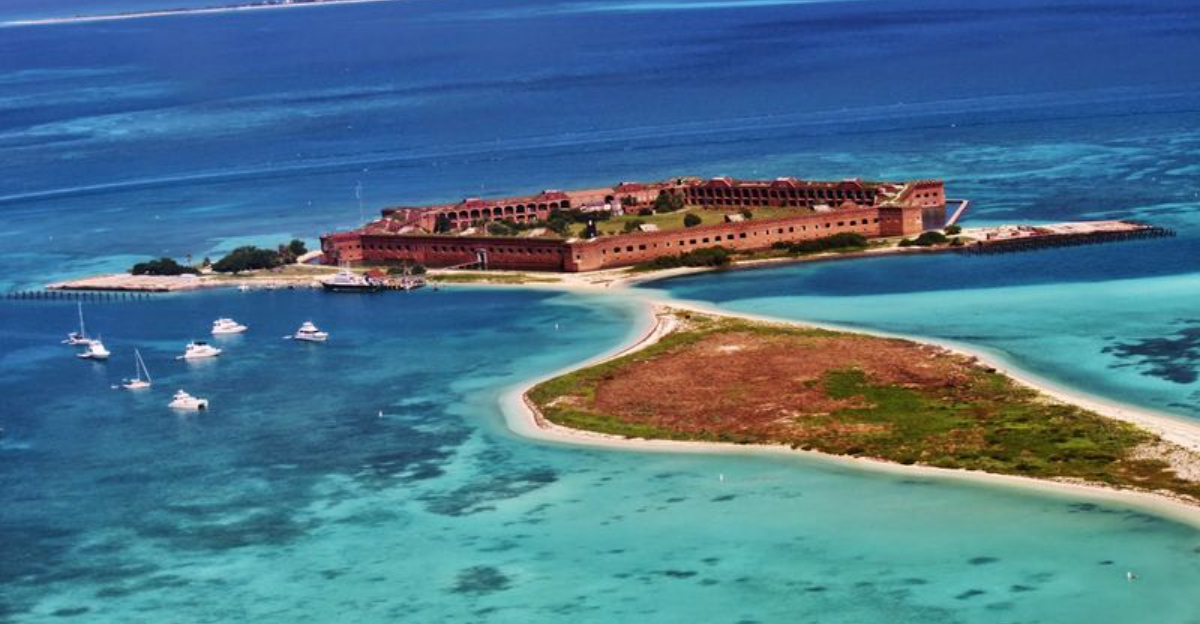
Hidden 70 miles west of Key West, deep in the Gulf of Mexico, sits one of the most jaw-dropping structures most Americans have never heard of. Fort Jefferson is a massive 19th-century sea fortress built on a tiny island in the middle of open ocean — and it is absolutely enormous.
Constructed from over 16 million bricks, it stands as the largest masonry structure in the Western Hemisphere. Whether you love history, adventure, or just stunning scenery, this hidden gem deserves a spot on your bucket list.
A Fortress Built in the Middle of the Ocean
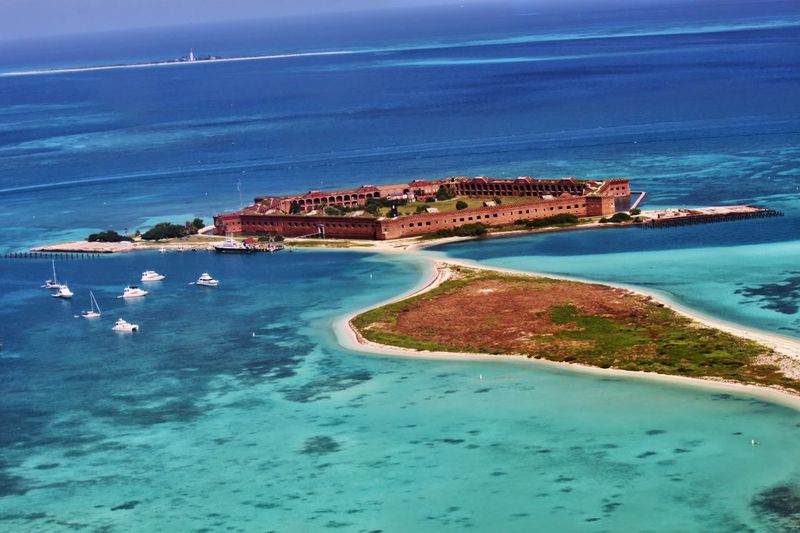
Imagine sailing for over two hours and suddenly spotting a six-sided brick fortress rising straight out of the ocean. That is exactly what happens when you approach Fort Jefferson for the first time.
Built on Garden Key in the Dry Tortugas, this Civil War-era fort sits in the middle of the Gulf of Mexico with nothing but open water in every direction.
The sheer scale of the place hits you before you even dock. The walls stretch nearly half a mile around the perimeter, and the fort rises three stories tall.
Over 16 million bricks were used in its construction, making it the largest masonry fort ever built in the United States.
What makes this even more mind-blowing is that all those bricks had to be shipped by boat. There is no natural land route to this place — it has always been reachable only by sea or air.
Construction Took Nearly 30 Years to Complete
Work on Fort Jefferson began in 1846 and continued all the way until 1875 — that is nearly three decades of non-stop building. Even after all that time, the fort was never actually finished.
Engineers kept running into problems, including the fact that the island’s soft ground could not support the full weight of the planned structure.
Originally, the design called for 450 cannons and enough space to house 1,500 soldiers. The goal was to control the shipping lanes between the Gulf of Mexico and the Atlantic Ocean, a strategically critical waterway during that era.
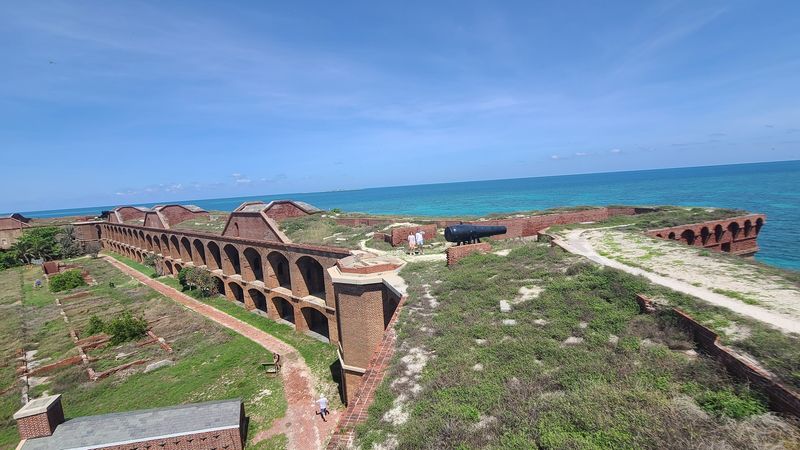
Despite being incomplete, the fort still became one of the most impressive military structures of its time. Visitors today can see the unfinished upper tiers and get a real sense of just how ambitious the original plan truly was.
It is a building frozen mid-thought, and that makes it even more fascinating.
Getting There Is Half the Adventure
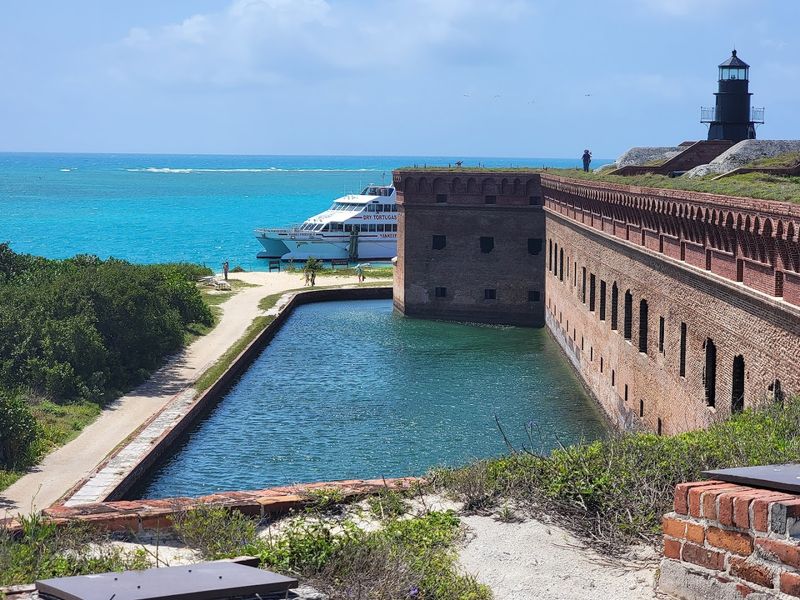
There is no bridge, no road, and no shortcut to Fort Jefferson. Your only options are a ferry or a seaplane, and both experiences are unforgettable in their own way.
The Yankee Freedom ferry departs from Key West each morning and takes about two and a half hours each way, cutting through some seriously beautiful open water.
Plenty of visitors report waves that get a little wild on the crossing — some people experience seasickness, so picking up some Dramamine beforehand is a smart move. But most agree the journey itself is part of the magic.
Dolphins often swim alongside the boat, and the views of the open Gulf are stunning.
If you want to splurge, the seaplane option cuts travel time dramatically and gives you a breathtaking bird’s-eye view of the fort and surrounding reef system as you approach. Either way, arriving feels like discovering something truly secret.
The Fort Served as a Civil War Prison
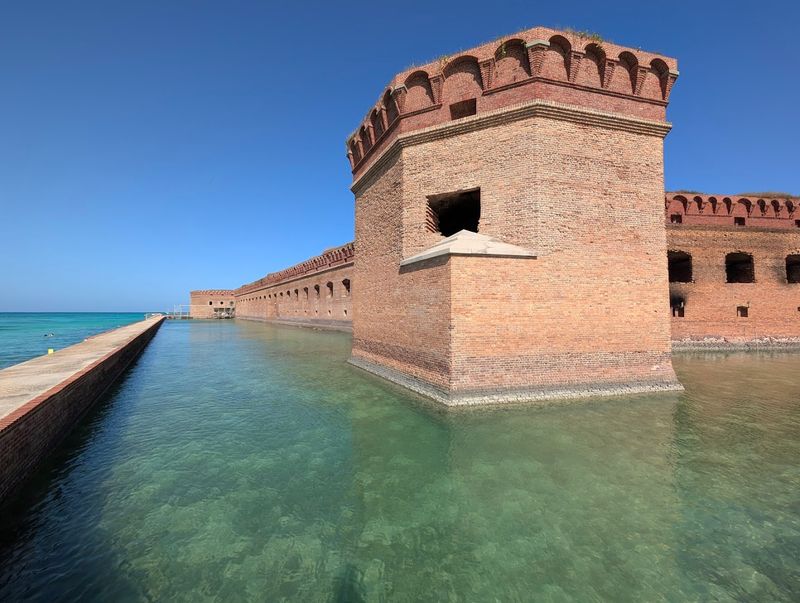
Fort Jefferson was not just a military base — it also became one of the most remote and escape-proof prisons in American history. During and after the Civil War, the U.S. government used it to hold military prisoners, including deserters and those convicted of serious offenses.
Its most famous prisoner was Dr. Samuel Mudd, the physician who set the broken leg of John Wilkes Booth after Lincoln’s assassination. Mudd was convicted of conspiracy and sentenced to life imprisonment at Fort Jefferson.
He later earned some goodwill by helping treat soldiers during a yellow fever outbreak, which eventually led to his pardon in 1869.
Walking through the fort today, you can actually visit the area associated with Mudd’s imprisonment. Some sections have been closed off for safety reasons, but the history still seeps through every brick.
It is eerie, fascinating, and unlike anything you will experience at a typical history museum.
Snorkeling Around the Fort Walls Is Incredible
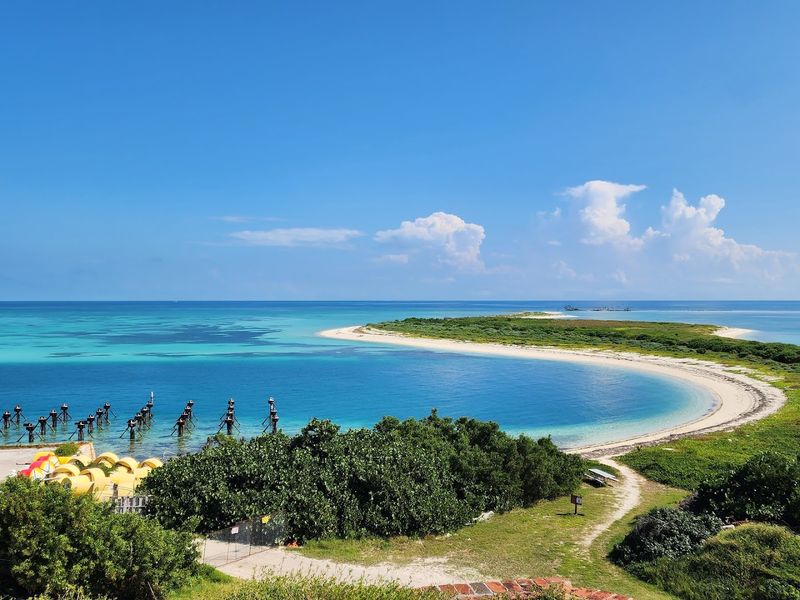
Right below the surface of the water surrounding Fort Jefferson lies a whole other world. The moat and surrounding waters are teeming with tropical fish, colorful coral, and all sorts of sea creatures.
Snorkeling here is considered one of the best experiences in all of Florida, and that is saying something.
Visitors regularly spot parrot fish, barracuda, schools of baby squid, and even the occasional sea turtle. The old coal dock pylons on the western side of the island are a particular hotspot — fish gather there in huge numbers, making for spectacular viewing even for beginner snorkelers.
The water clarity around the fort is remarkable. Some reviewers say you can see through the moat water almost as clearly as through a snorkel mask just by looking over the edge.
Bring your own gear if possible, since rental options are limited. Getting in the water here is genuinely one of the highlights of the entire trip.
Walking the Fort Walls Offers Jaw-Dropping Views
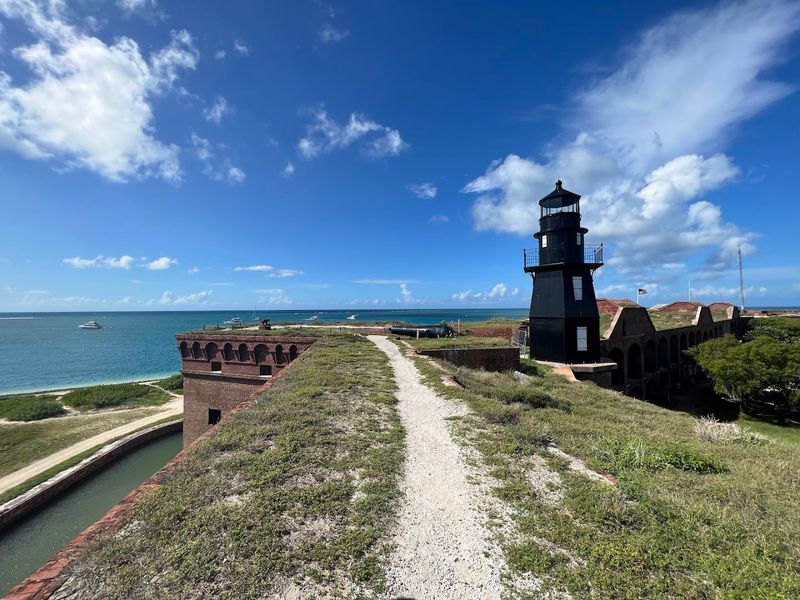
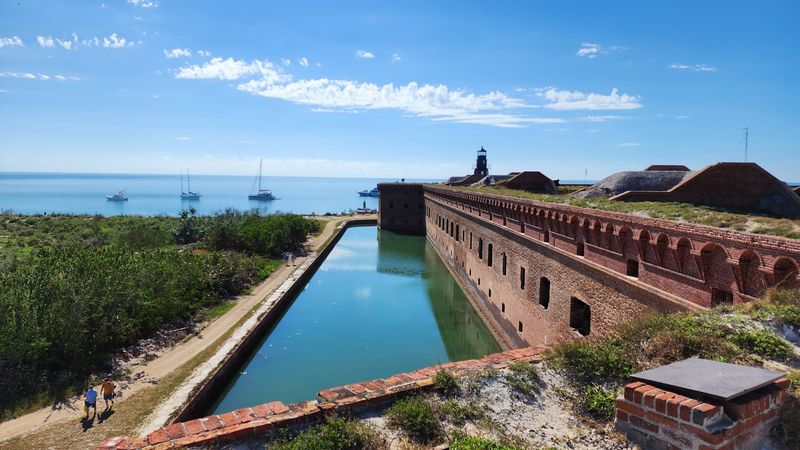
Climbing up to the top of Fort Jefferson’s walls and walking the perimeter is one of those experiences that stops you in your tracks. From up there, you can see the turquoise ocean stretching out in every direction, with nearby Bush Key visible in the distance and the reef system shimmering below.
Fair warning though — there are no guardrails on the upper walls. This makes the walk a little nerve-wracking for anyone with a fear of heights, and parents should keep a close eye on young children who might wander too close to the edges.
The drop is significant, and the surface can be uneven in spots.
That said, the views are absolutely worth it. Photographers especially love this vantage point for capturing the scale of the fort against the endless ocean backdrop.
Sunrise and sunset from the top of the walls are reportedly stunning, especially if you are camping overnight and have the place mostly to yourself.
A Yellow Fever Outbreak Changed the Fort’s History
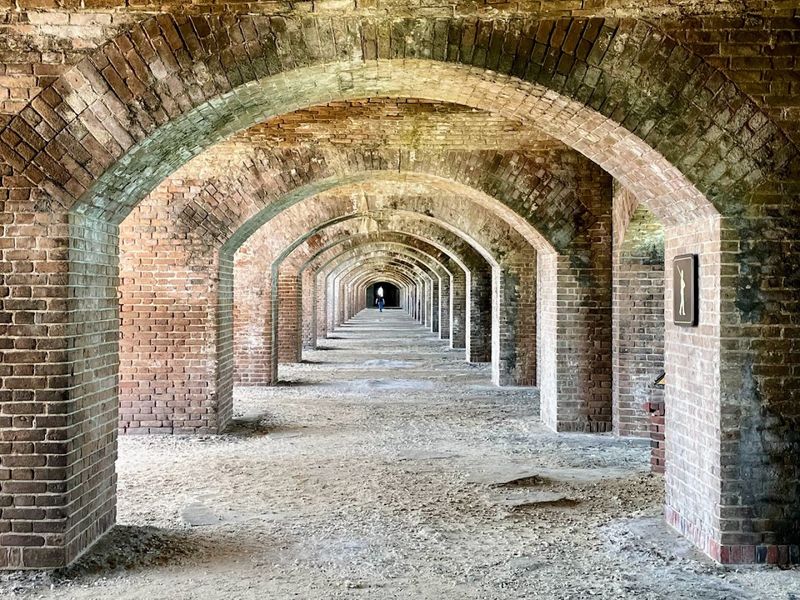
Yellow fever was one of the deadliest diseases of the 19th century, and Fort Jefferson was not spared. In 1867, a severe outbreak swept through the garrison stationed at the fort, killing many soldiers and civilians.
The remote location made getting medical help extremely difficult, turning the island into an isolated disaster zone.
Dr. Samuel Mudd, despite being a prisoner himself at the time, stepped up to help treat the sick when the fort’s doctor also fell ill. His efforts during the outbreak are credited with saving lives, and the grateful soldiers petitioned for his release.
President Andrew Johnson granted Mudd a full pardon in 1869.
This chapter of the fort’s story is a powerful reminder that history is rarely black and white. A convicted conspirator became a hero in a crisis, and his actions on this tiny ocean island are still talked about over 150 years later.
History has a way of surprising you.
Camping Overnight Transforms the Experience Completely
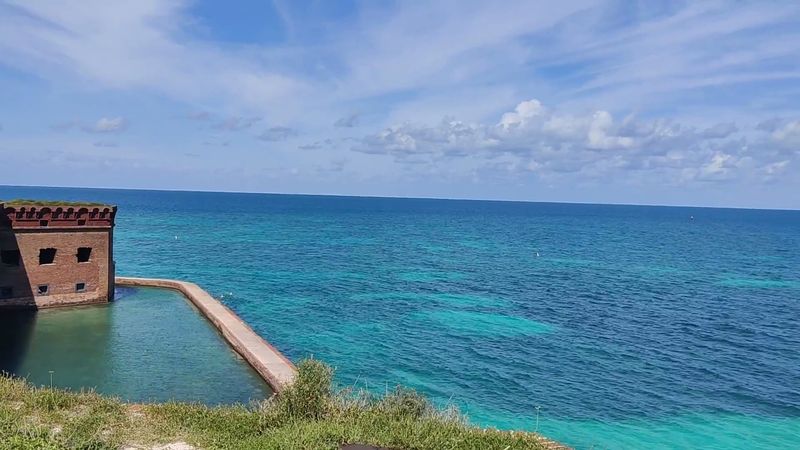
Most visitors only get about four to six hours at Fort Jefferson before the ferry heads back to Key West. But those who camp overnight get something completely different — a quiet, almost magical experience that day-trippers never see.
Once the last ferry leaves, the island becomes serene and unhurried.
There are designated campsites just outside the fort walls, right on the beach. Campers need to bring absolutely everything with them: food, water, gear, and anything else they might need.
There are no stores or restaurants on the island, and all trash must be carried out when you leave.
Waking up inside a national park with a 19th-century fortress as your neighbor and nothing but ocean around you is genuinely surreal. Several campers recommend bringing a solar-powered battery charger for cameras, since outlets are nonexistent.
For those who love solitude and adventure, camping at Fort Jefferson is a bucket-list experience unlike anything else in Florida.
The Dry Tortugas Is One of America’s Least Visited National Parks
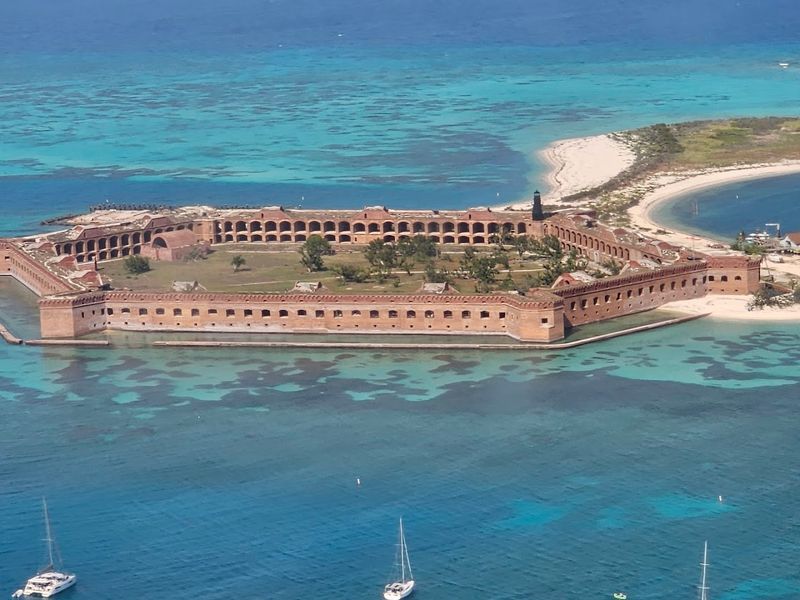
Fort Jefferson sits within Dry Tortugas National Park, and that park holds a pretty impressive title — it is consistently ranked among the least visited national parks in the entire United States. The sheer effort and cost required to reach it keeps the crowds away, which means those who do make the trip enjoy a refreshingly uncrowded experience.
Getting there requires either a $200-per-person ferry ticket or even pricier seaplane fare. That price point alone filters out casual visitors, giving the park a quiet, exclusive atmosphere that feels worlds away from busy tourist spots like the main Key West strip.
The visitor center inside the fort offers passport cancellation stamps — a treat for national park passport collectors — including stamps for Dry Tortugas NP, Underground Railroad Freedom, Loggerhead Lighthouse, and Garden Key Lighthouse. Junior ranger booklets are also available for kids, making it a surprisingly educational stop for families who make the trek.
Wildlife Around the Fort Will Blow Your Mind
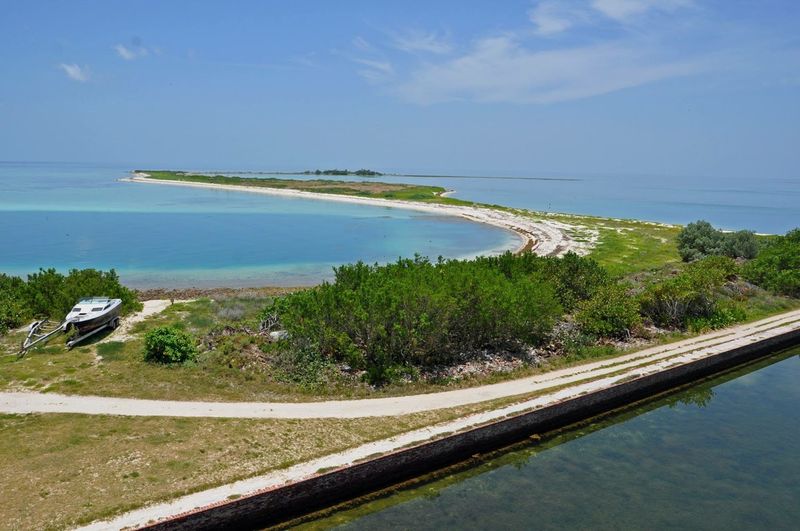
Fort Jefferson is not just a history lesson — it is a wildlife paradise. The waters surrounding the fort are part of a protected marine environment, which means sea life here is thriving and abundant.
Sea turtles nest on the nearby beaches during warmer months, and the reef system hosts an almost unbelievable variety of fish species.
Birdwatchers are equally rewarded. The Dry Tortugas sit along a major migratory flyway, and during peak migration seasons, the trees and bushes on the islands become packed with exhausted songbirds resting after crossing the Gulf of Mexico.
Frigatebirds, sooty terns, and brown noddies also nest in massive colonies nearby.
One particularly memorable sight reported by multiple visitors is the giant pink jellyfish that sometimes gather in huge numbers near the docks. They are mostly harmless with very short stingers, but seeing hundreds of dinner-plate-sized jellyfish floating in the clear water is something you do not easily forget.
The Self-Guided Walking Tour Is Surprisingly Detailed
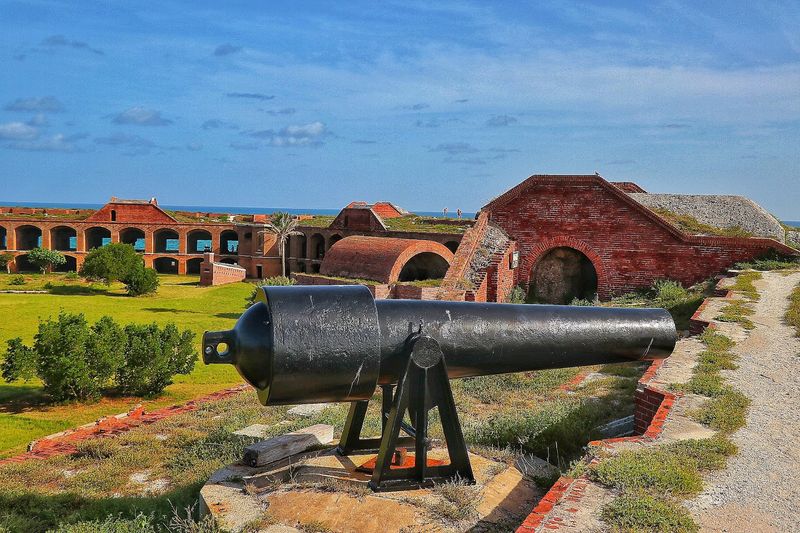
You do not need to pay for a guided tour to get the full Fort Jefferson experience. The park service has set up a well-marked self-guided walking tour throughout the fort, complete with informational plaques at each stop.
These signs explain the purpose of each room, the history of specific areas, and fascinating details about life inside the fort during its active years.
The tour winds through multiple levels of the fortification, including the massive gun rooms, the old cisterns used to collect rainwater, and the bakery that once fed hundreds of soldiers. Each stop adds another layer to the story of this remarkable place.
Many visitors say the plaques alone make the visit worthwhile, offering context that transforms a pile of old bricks into a living piece of American history. Plan to spend at least an hour just on the tour before you even think about snorkeling or beach time.
There is genuinely a lot to absorb here.
Arriving by Seaplane Is an Unforgettable Experience
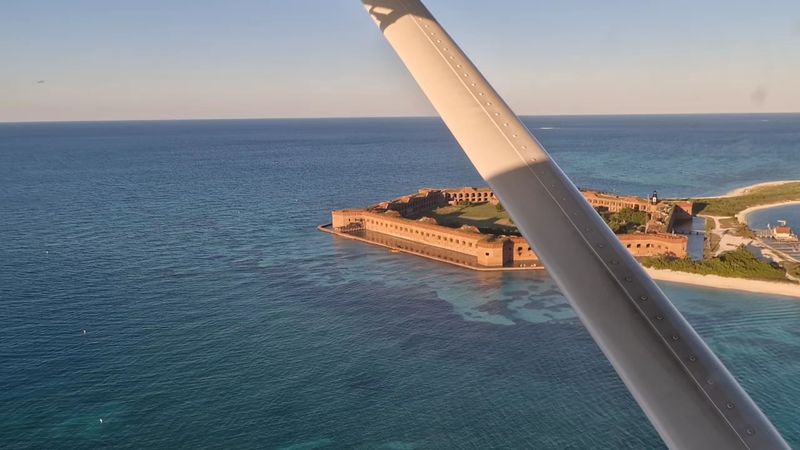
For those willing to spend a little extra, arriving at Fort Jefferson by seaplane is a completely different kind of experience. The flight from Key West takes only about 40 minutes each way, cutting the travel time dramatically compared to the ferry.
But the real payoff is the view from above.
Looking down at the hexagonal brick fortress surrounded by shimmering turquoise water and coral reef from a low-flying seaplane is genuinely breathtaking. You can see the full scale of the structure from the air in a way that is impossible to appreciate from sea level.
Several visitors say the seaplane ride alone was worth the splurge.
Another bonus of flying in is timing. Seaplane passengers often arrive before or after the main ferry crowd, which means you can have large sections of the fort and beach to yourself.
One reviewer described arriving after the ferry departed and feeling like they had the entire island to themselves. That kind of solitude is priceless.
Practical Tips to Make the Most of Your Visit
A little preparation goes a long way at Fort Jefferson. The island has almost no shade outside the fort walls, so sunscreen is absolutely essential — bring more than you think you need.
Hydration is equally important, since the heat and open sun can wear you out faster than expected.
Pack your own food and snacks if possible. The Yankee Freedom ferry does include breakfast and lunch in the ticket price, but if you have specific dietary needs or just prefer your own food, bring it along.
Remember that every single piece of trash must leave the island with you — there are no waste disposal facilities on site.
Snorkel gear is worth bringing from home since options on the island are limited. Comfortable water shoes also help when exploring the rocky areas near the fort walls.
Finally, give yourself a full day — multiple visitors agree that four hours is simply not enough time to see everything this extraordinary place has to offer.
Enjoyed this story?
Add Fast Food Club as a preferred source to see more of our reporting on Google.