


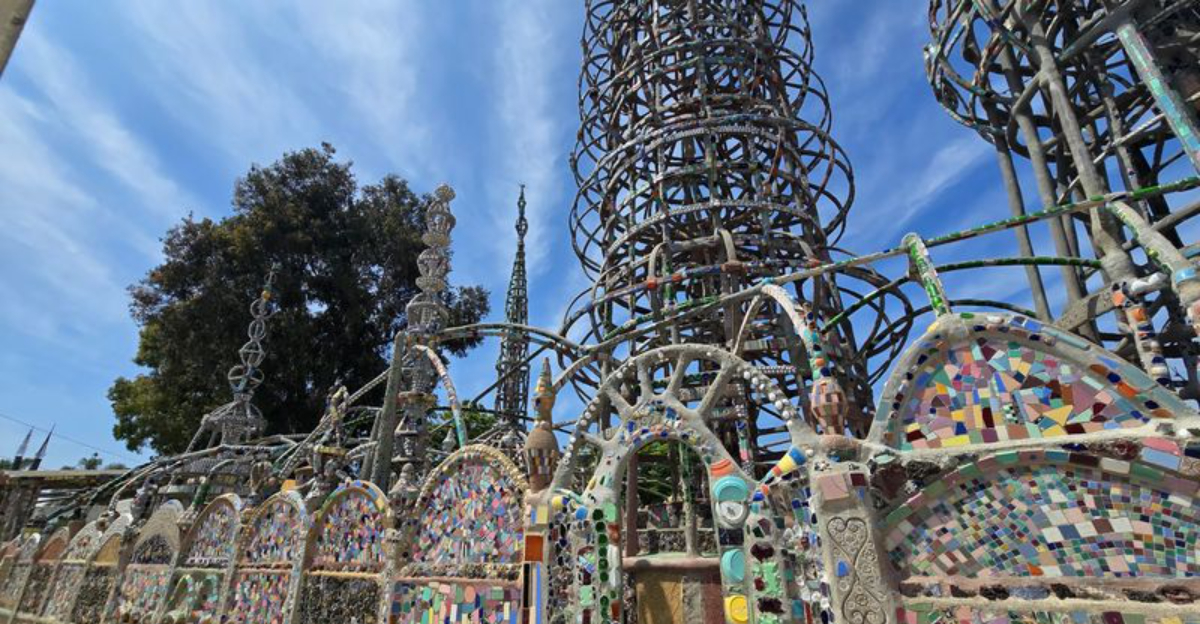
Imagine spending 33 years of your life building something extraordinary out of broken tiles, glass, and scraps of metal. That is exactly what Simon Rodia, an Italian immigrant, did in the Watts neighborhood of Los Angeles, California.
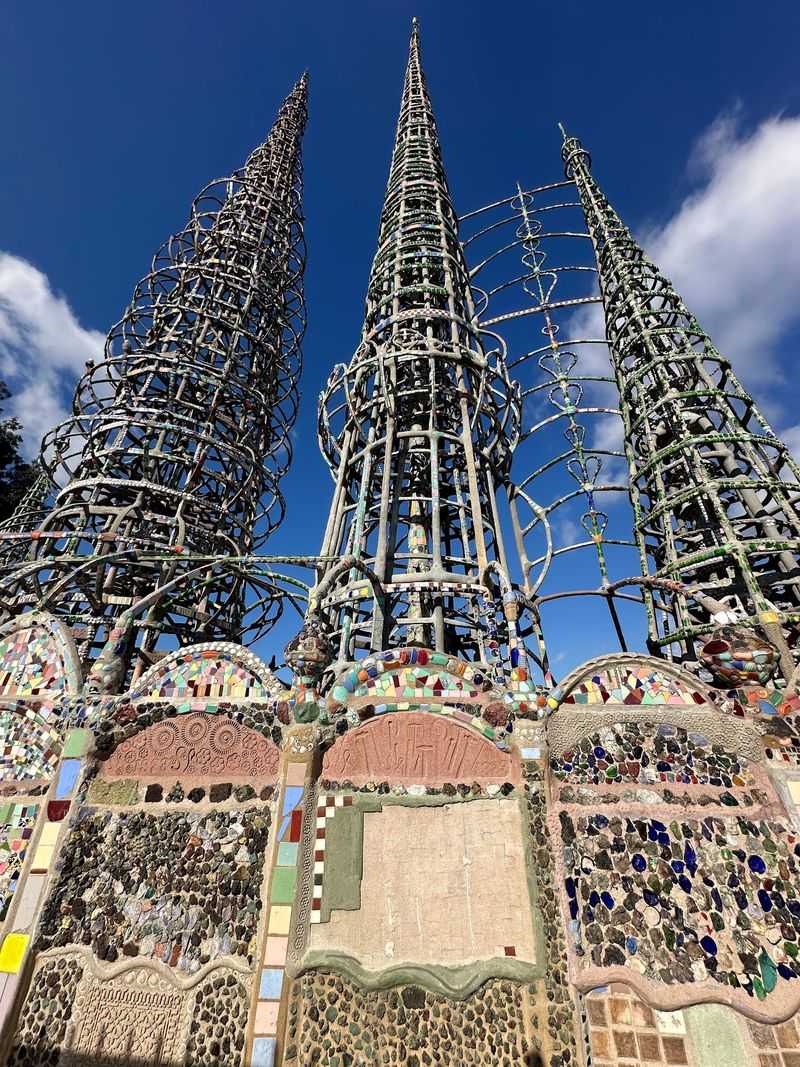
His incredible creation, known as the Watts Towers, consists of 17 major sculptures that have amazed visitors for over a century. This is the story of one man’s unstoppable dedication, creativity, and love for his adopted home.
The Man Behind the Magic: Who Was Simon Rodia?
Born in Italy and arriving in the United States around 1894, Simon Rodia was a construction worker with an extraordinary dream. He came to the Watts neighborhood of Los Angeles in 1921 at the age of 42, carrying nothing but determination and a wild creative vision.
Rodia had no formal training in architecture or art. He was simply a working man who believed he could build something unforgettable.
Neighbors often watched him work alone, puzzled by what he was doing but unable to look away.
His story is a true American Dream tale, proof that passion and persistence can turn an ordinary life into something legendary. Rodia once said he wanted to do something big, and he absolutely delivered on that promise in the most spectacular way imaginable.
33 Years of Relentless Building: The Timeline of Construction
Starting in 1921 and finishing in 1954, Simon Rodia spent 33 straight years constructing his towers without ever taking a real break from his vision. That is longer than most people spend at any single job in their entire career.
Every evening after his day job, Rodia would return to his Watts property and keep building. He worked through hot California summers, cool winters, and everything in between, fueled by a drive that never seemed to fade.
What makes this timeline even more remarkable is that Rodia worked almost entirely alone. He did not hire a crew or use heavy machinery.
He climbed the towers using a window washer’s belt and hand-packed mortar into every corner himself. Three decades of solo labor produced one of the most jaw-dropping folk art landmarks America has ever seen.
17 Sculptures Built From Everyday Junk
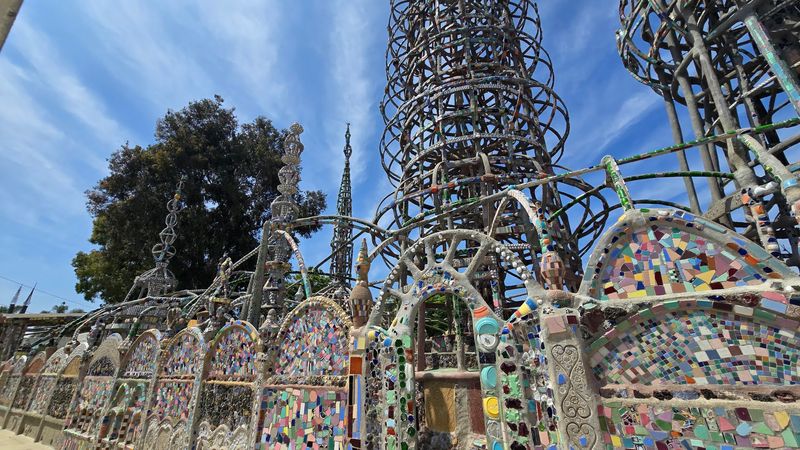
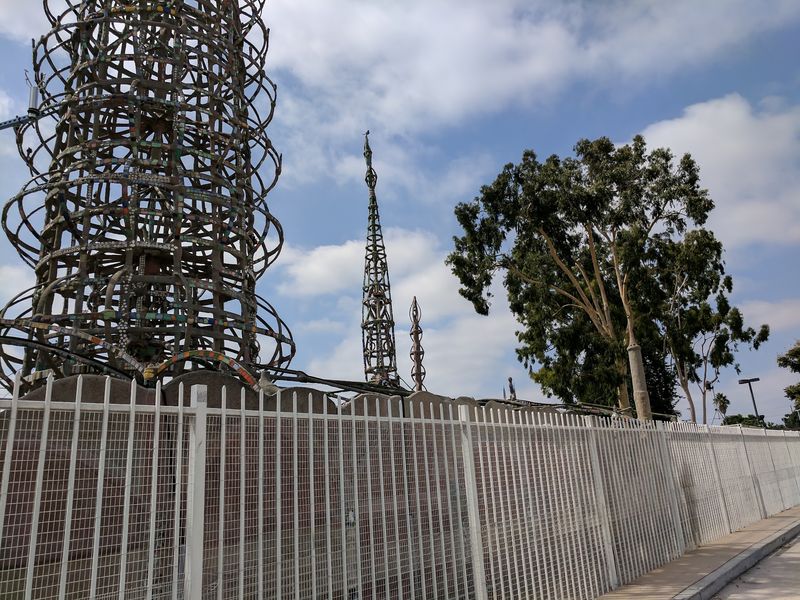
Seventeen major sculptures make up the Watts Towers, and each one is completely unique. Rodia built them using steel rods wired together, wrapped in wire mesh, and packed with mortar by hand.
No welding machine, no blueprints, no professional help.
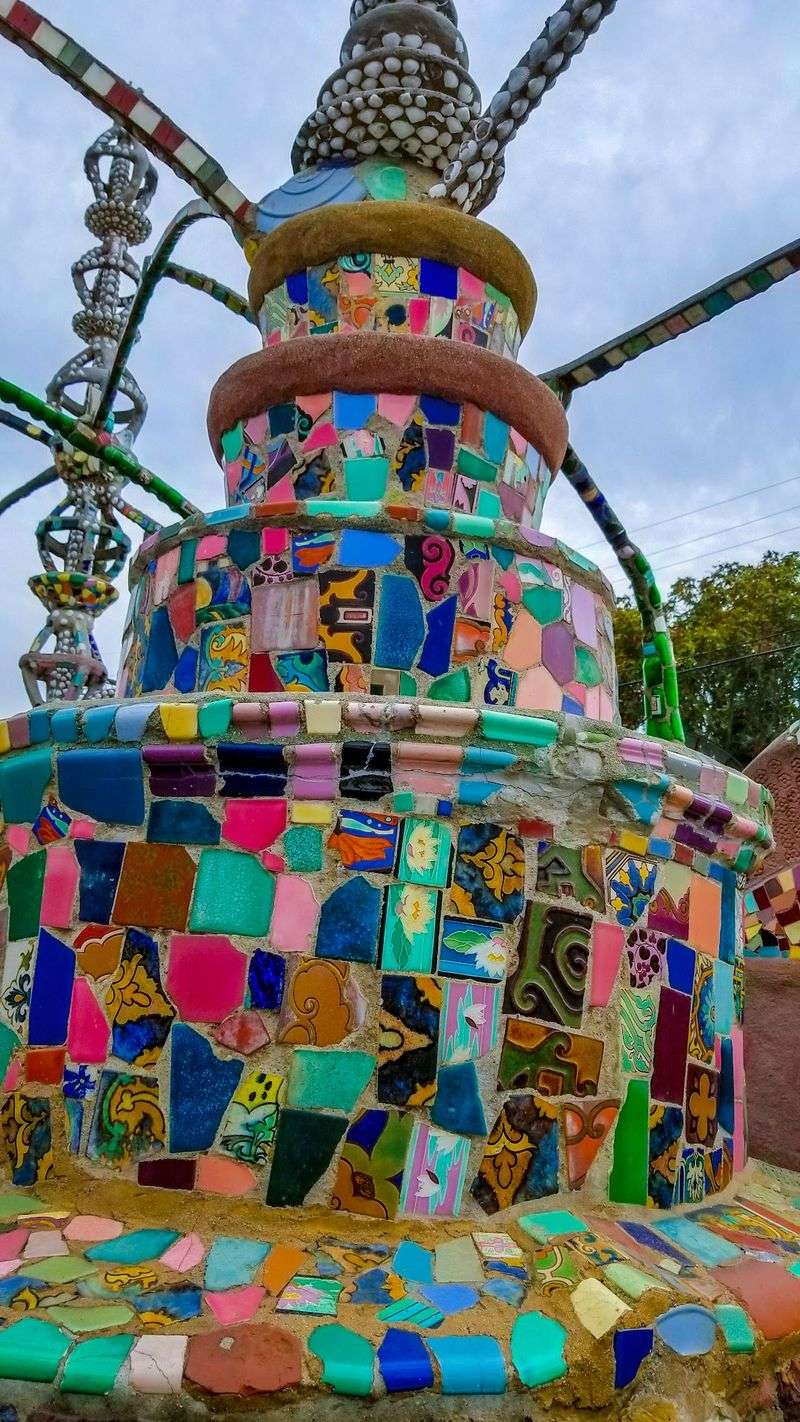
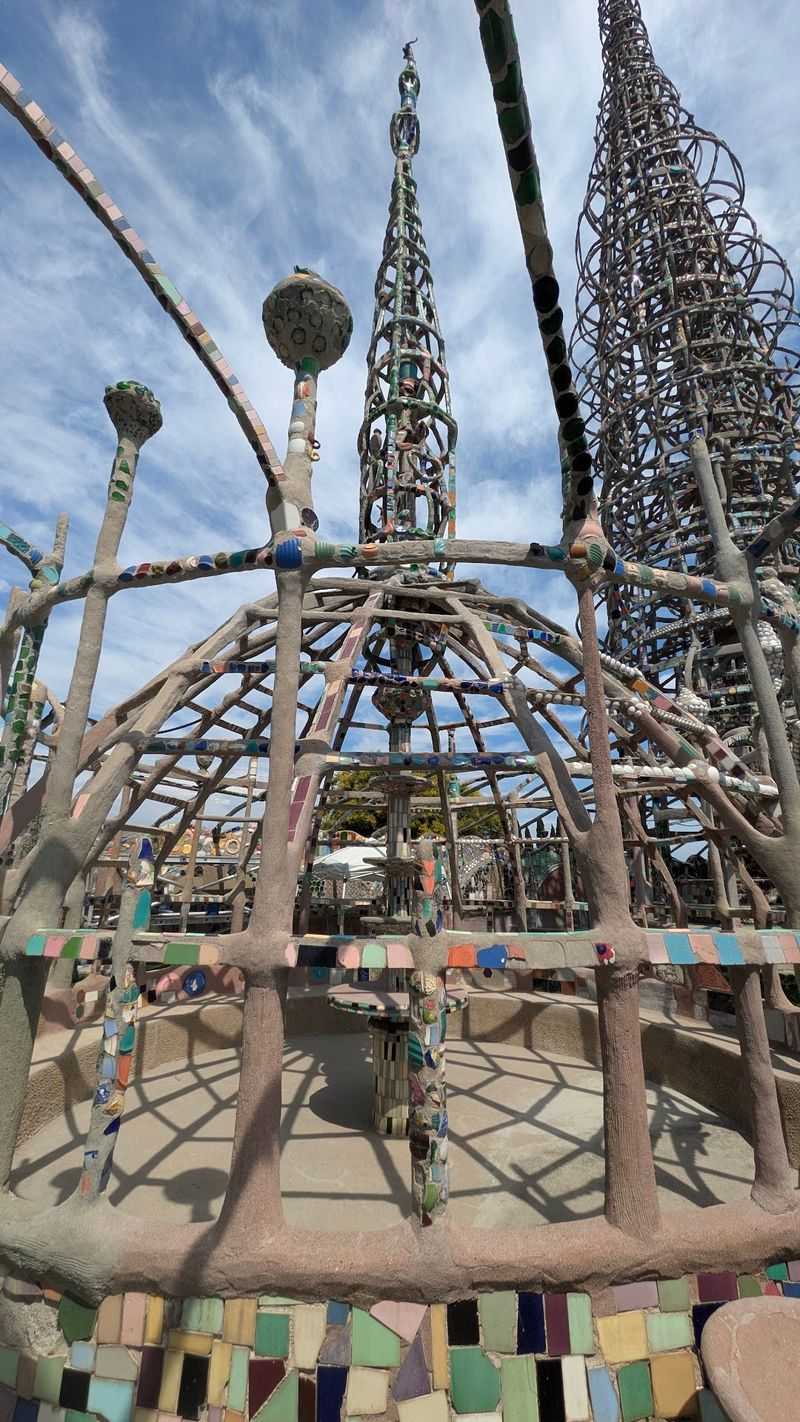
The surfaces of every structure are covered with an astonishing mix of broken ceramic tiles, glass bottles, seashells, rocks, and even old corn cobs pressed into the mortar. Rodia collected these materials from construction sites, beaches, and local neighborhoods.
What looks like a pile of junk up close transforms into breathtaking mosaic artwork when you step back. The tallest tower reaches nearly 100 feet into the Los Angeles sky.
Visitors consistently report that photographs simply cannot capture the full impact of standing next to these enormous, glittering structures in person for the very first time.
No Welds, No Blueprints: The Genius Construction Technique
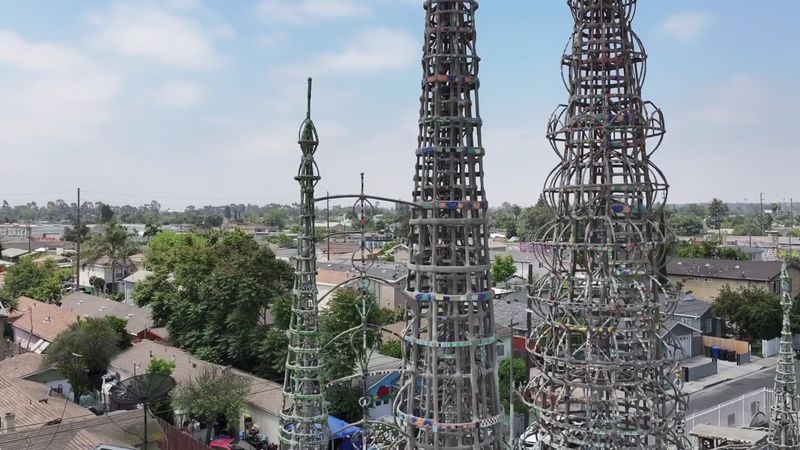
Here is a fact that genuinely surprises most engineers who visit the Watts Towers: Rodia never used a single weld to hold the structures together. Instead, he wired steel rebars together by hand, wrapped the joints in wire mesh, and then packed everything tightly with mortar.
This technique, invented entirely by Rodia himself, has proven incredibly strong. The towers have survived earthquakes, harsh weather, and more than a century of exposure to the elements.
Engineers who have studied the structures admit they are baffled by how well the method works.
Rodia also climbed his creations using only a window washer’s belt looped around the tower, inching his way upward to apply mosaic details near the very tops. No scaffolding, no safety harness, no construction crew.
Just one fearless man with a belt, a trowel, and an unshakable belief in what he was creating.
Broken Tiles, Glass, and Shells: The Materials That Made History
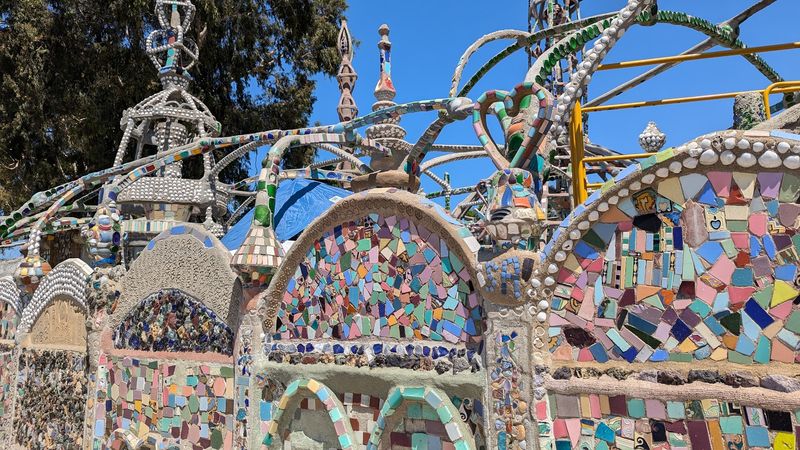
Walking up close to the Watts Towers feels like reading a secret diary written in colorful fragments. Every inch of the surface tells a small story through pieces of broken pottery, discarded glass bottles, seashells from California beaches, and even old clay pipes.
Rodia collected these materials obsessively from wherever he could find them. He picked up broken tiles from local businesses, gathered shells along the Pacific coast, and salvaged glass from wherever it appeared.
Nothing that could add beauty was ever wasted.
Some of the most recognizable embedded objects include green 7-Up bottle glass, blue Milk of Magnesia bottles, and colorful pottery shards from local manufacturers. Researchers have spent years identifying specific materials pressed into the towers.
Each discovery adds another layer to the story of a man who saw art hiding inside things everyone else had already thrown away.
A National Historic Landmark That Almost Got Torn Down
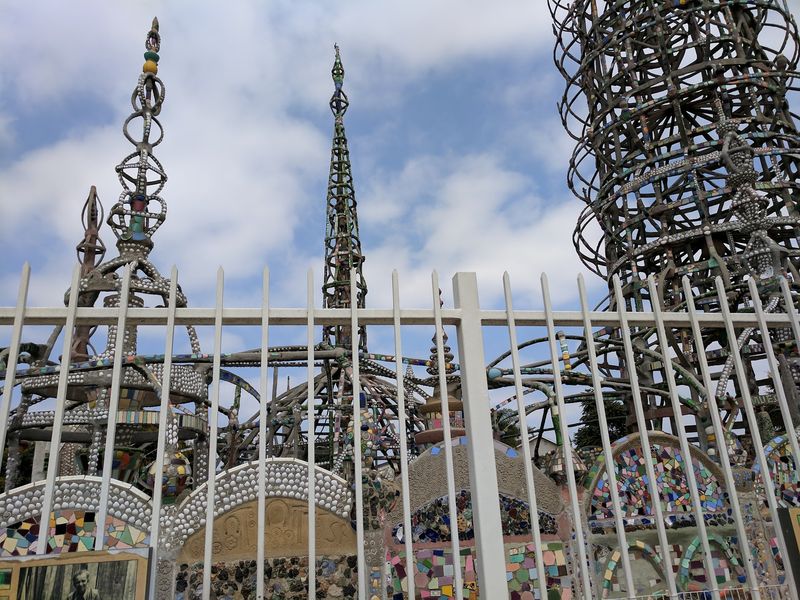
Believe it or not, the Watts Towers nearly disappeared forever. After Rodia walked away from his creation in 1954 and never returned, the city of Los Angeles seriously considered demolishing the towers, calling them a safety hazard.
A group of passionate community members and art lovers stepped in to fight back. In 1959, they organized a dramatic stress test, attaching a cable to the tallest tower and pulling with a tractor.
The tower did not budge, and the demolition order was dropped.
That same year, the International Conference of Museum Curators declared the Watts Towers the most important work of folk art in 20th-century America. Today, the towers hold designations as a National Historic Landmark, a California State Historic Monument, and Los Angeles Cultural Heritage Monument Number 15.
A near-demolition story turned into one of the greatest preservation victories in American cultural history.
The Watts Towers Arts Center: More Than Just a Museum
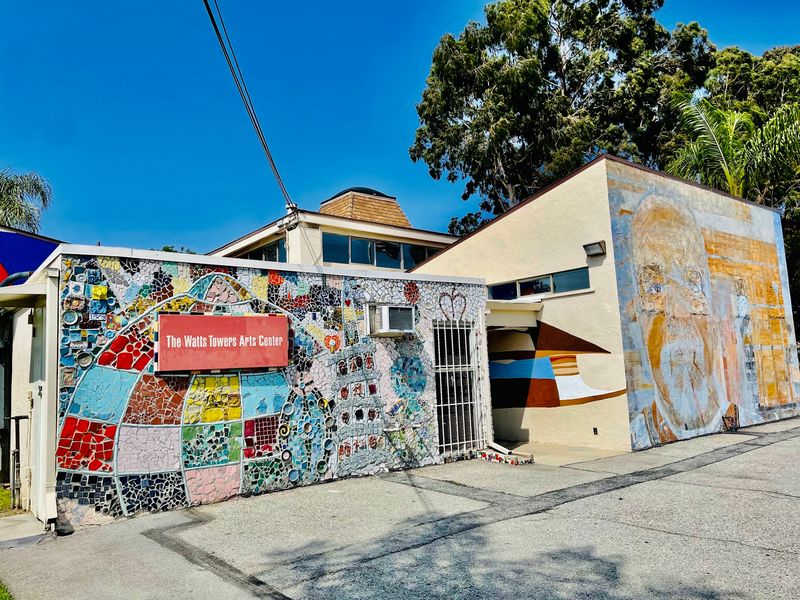
Right next to the towers themselves sits the Watts Towers Arts Center, a lively community hub that has been enriching the neighborhood since 1921. The center is located at 1727 E 107th St, Los Angeles, CA 90002, and offers far more than a quiet museum experience.
Classes in painting, sculpture, photography, music, dance, gardening, tiling, and multimedia arts are offered to both students and teachers. Professional artists lead every program in a supportive, non-competitive environment where creativity is encouraged freely and openly.
Rotating art exhibitions feature work from outstanding local and international artists throughout the year. Visitors consistently praise the friendly and knowledgeable staff, the welcoming atmosphere, and the small but impressive gallery spaces.
You can reach the center at +1 213-847-4646 or visit wattstowers.org to plan your trip. Tours run Wednesday through Saturday from 10 AM to 12:30 PM, so check before you go.
Guided Tours That Bring the Story to Life
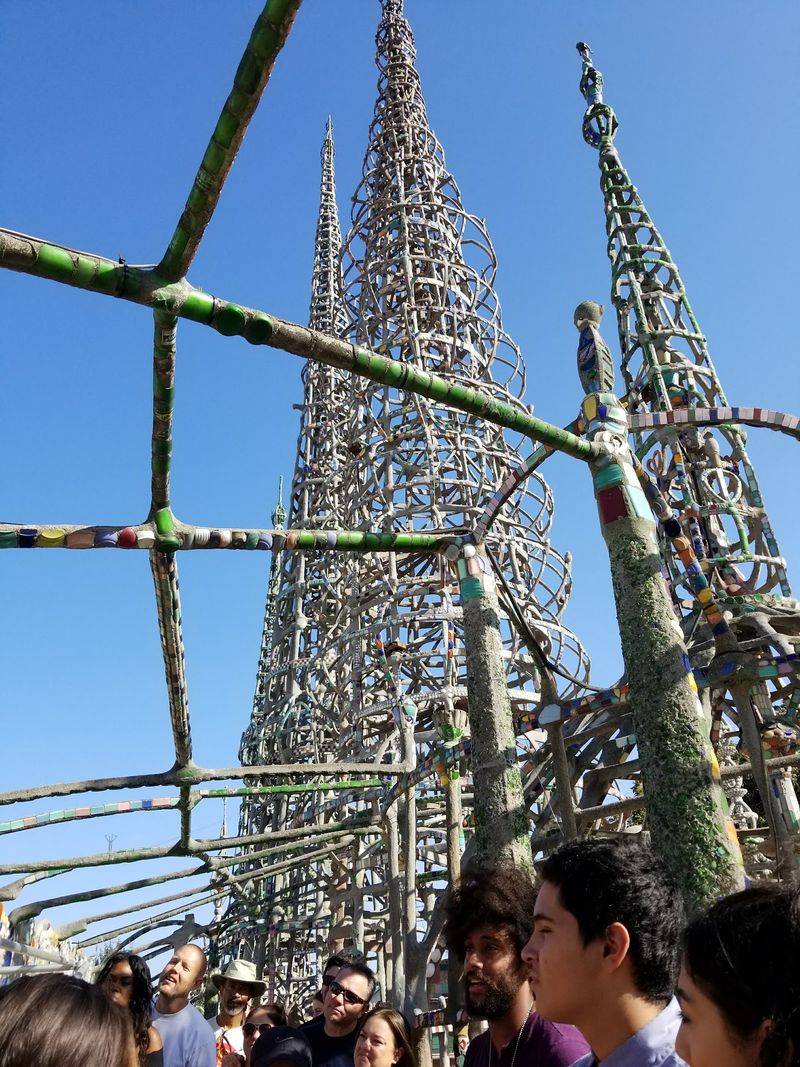
Seeing the Watts Towers from outside the fence is one thing, but stepping inside the gated complex on a guided tour is a completely different experience. Tour guides bring the story of Simon Rodia to life in ways that plaques and photographs simply cannot match.
One visitor named Marty, who grew up playing near the towers as a child, leads tours with personal stories that make the history feel immediate and real. Reviewers frequently describe tours as the highlight of their entire Los Angeles visit, noting that guides reveal details invisible to the casual observer.
Tours are available Wednesday through Saturday from 10 AM to 12:30 PM. Tickets are required, and staff are serious about having them ready at the gate.
Groups should book ahead by calling +1 213-847-4646. Parking is available off Willowbrook Ave rather than the 107th Street address that GPS often suggests.
The Day of the Drum Festival: Community Spirit at Its Best
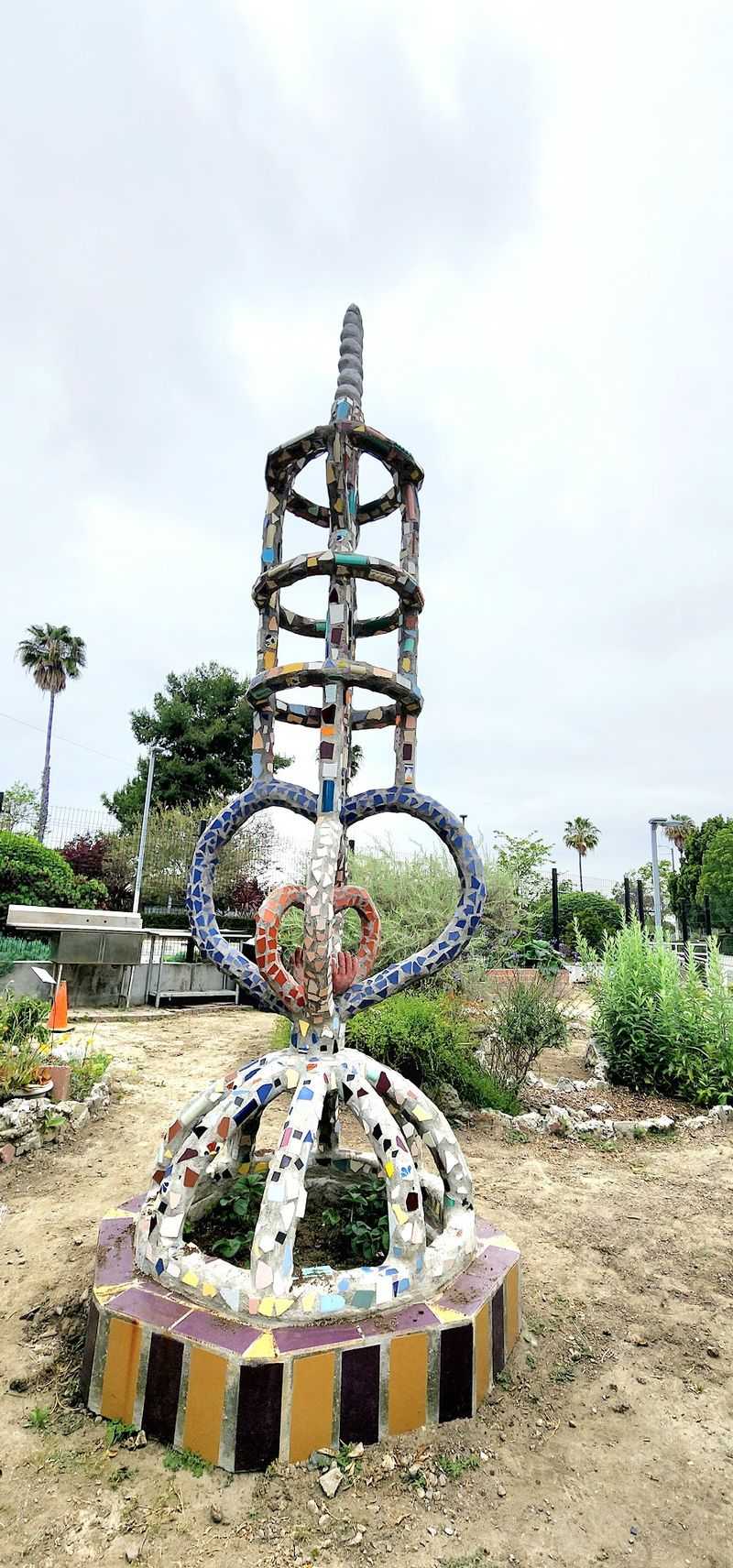
Once a year, the Watts Towers Arts Center transforms into a pulsing celebration of rhythm, culture, and community with the legendary Day of the Drum Festival. Drummers, musicians, and performers from across Los Angeles gather to fill the air with sound.
Visitors describe the festival as deeply moving, with some comparing it to memories of watching family members play music in neighborhood parks decades ago. The energy is infectious, joyful, and unlike anything else happening in the city on that day.
Live music vendors, food, and local art all come together to create an atmosphere that feels both historic and deeply alive. Events like this are exactly why the Watts Towers Arts Center is considered so much more than a static landmark.
The center actively uses the legacy of Simon Rodia to fuel new creativity and celebrate the cultural heartbeat of the Watts community every single year.
Folk Art of the Century: How the World Recognized Rodia’s Work
When the International Conference of Museum Curators gathered in 1959, they made a bold declaration that shocked the art world: the Watts Towers were officially the most important work of folk art produced in the United States during the entire 20th century.
That recognition changed everything. Before the declaration, many city officials saw the towers as a liability.
Afterward, the art community rallied to protect and celebrate them. The towers went on to earn spots on the National Register of Historic Places and became a National Historic Landmark recognized across the country.
For a self-taught Italian immigrant who worked with wire, mortar, and discarded glass, earning that kind of international recognition is extraordinary. Rodia never sought fame or awards.
He simply built because he felt compelled to create. The world eventually caught up with his vision, even though he was long gone from Watts by the time the praise arrived.
The Neighborhood of Watts: History Written Into the Ground
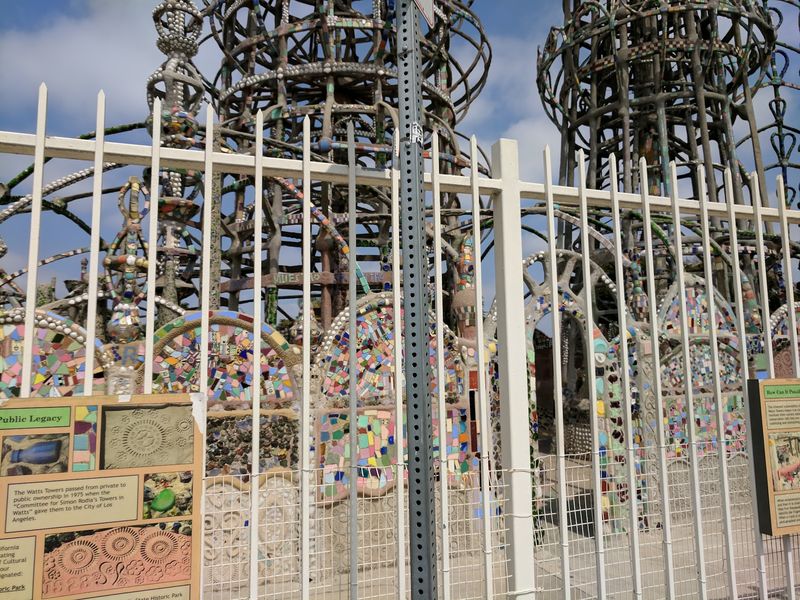
The Watts Towers do not stand alone as isolated sculptures. They are woven into the fabric of one of Los Angeles’s most historically significant neighborhoods, and the Arts Center makes sure visitors understand that connection deeply.
Plaques embedded along the ground around the towers trace the full history of Watts from its early days through to the present. Walking the perimeter of the complex becomes a journey through decades of community life, struggle, and resilience that shaped both the neighborhood and the city.
Watts has faced real hardships over the years, including the famous 1965 Watts Uprising that shook all of Los Angeles. The towers survived that turbulent period and continue to stand as a symbol of creative strength and community pride.
Reviewers recommend walking the full perimeter of the towers slowly, reading every plaque, to get the most meaningful and complete experience the site has to offer.
What Visitors Say: Real Reviews From Real People
With a 4.5-star rating from over 1,620 reviews, the Watts Towers Arts Center earns high praise from nearly everyone who visits. Reviewers consistently use words like “magical,” “inspiring,” and “unforgettable” to describe the experience of seeing the towers up close.
Many visitors admit they had low expectations before arriving, only to be completely blown away once they stood next to the structures. The intricate mosaic details, the sheer height of the towers, and the emotional weight of knowing one man built all of it tend to hit visitors hard in the best possible way.
Staff members receive special mention in review after review for being friendly, enthusiastic, and genuinely knowledgeable. A few visitors note that parking can be tricky, recommending the lot off Willowbrook Ave. Almost everyone agrees on one thing: photographs do not come close to capturing what seeing the Watts Towers in person actually feels like.
Planning Your Visit: Everything You Need to Know Before You Go
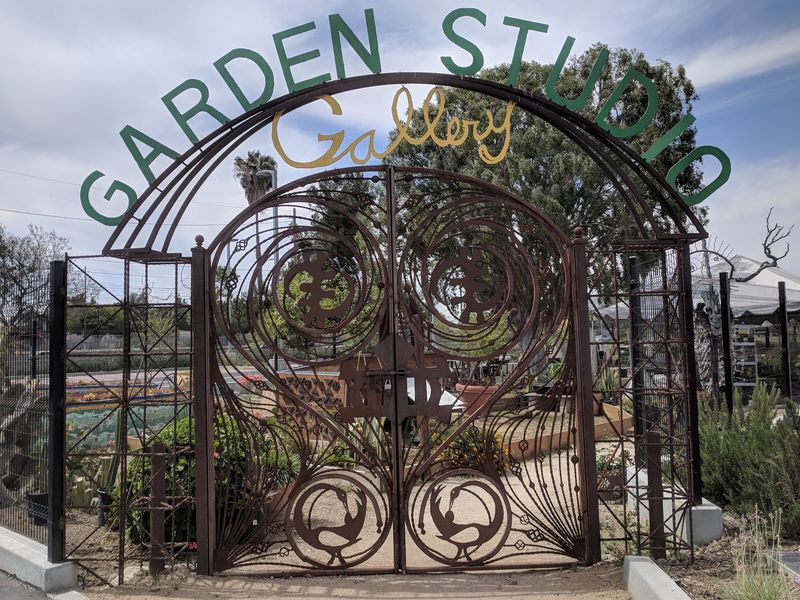
Ready to see the Watts Towers for yourself? The Arts Center is open Wednesday through Saturday from 10 AM to 12:30 PM.
Tours are available during those hours, but they do close for lunch, so arriving early in the morning gives you the best shot at getting inside the gated area.
Admission is affordable, with a small fee that is well worth every penny for the guided experience. Call ahead at +1 213-847-4646 or check wattstowers.org to confirm tour availability, especially for larger groups who should book in advance.
Parking at the 107th Street address is very limited and awkward to navigate. Most experienced visitors recommend using the parking lot off Willowbrook Ave instead.
The surrounding neighborhood is transitional, so staying aware of your surroundings is smart. Bring comfortable shoes, a camera, and plenty of patience because there is more to see here than most people expect.
Enjoyed this story?
Add Fast Food Club as a preferred source to see more of our reporting on Google.