


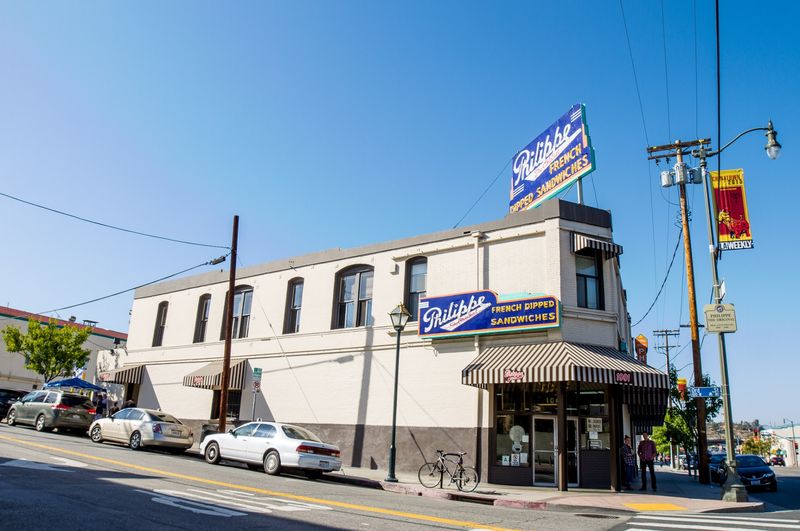
Some lunch spots chase trends, and some just keep the same counter running for more than a century. Near the edge of Chinatown in Los Angeles, there is a sandwich hall where sawdust still covers the floor, servers wear old-style uniforms, and a cup of coffee has been known to cost less than a dollar.
People drive an hour to eat here, and Dodgers fans line up out the door before first pitch. The big claim on the wall is bold: this is where the French dip was born.
That claim alone starts friendly arguments across the city. The sections ahead cover the story, the menu, the lines, the parking, the best hours to show up, and the honest trade-offs.
By the end, the choice between single dip and double dip should feel a lot easier.
A Corner of Alameda With a Big Claim
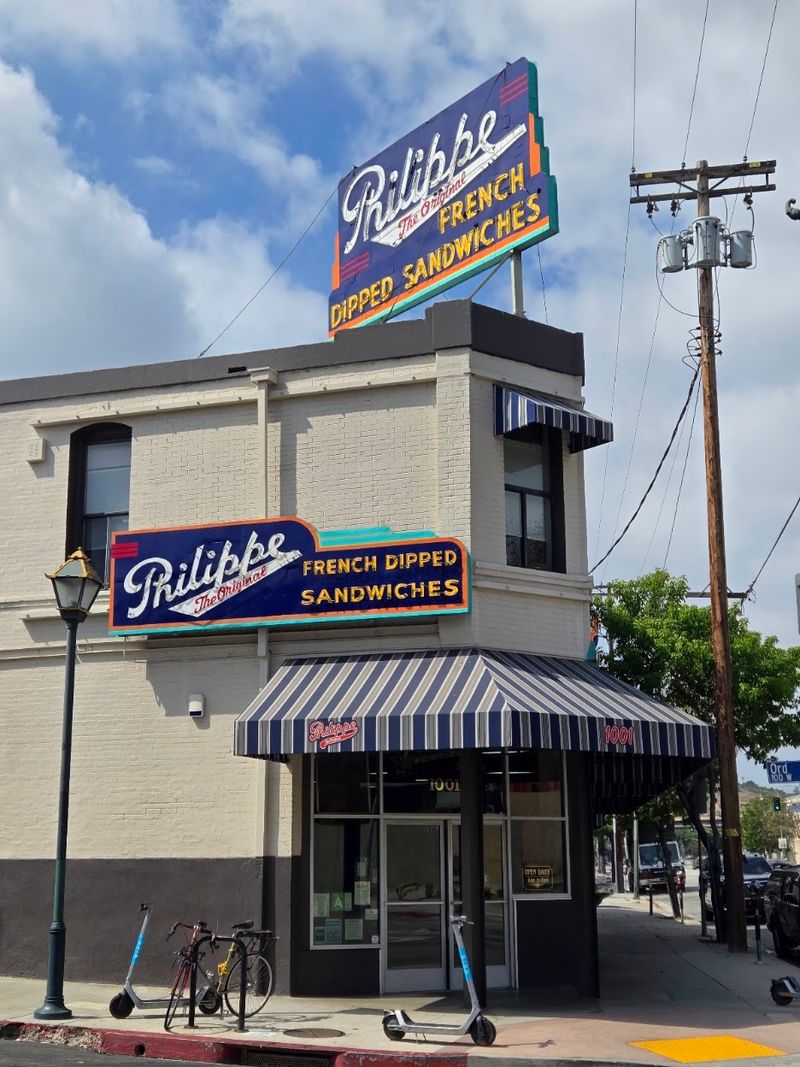
Philippe The Original sits at 1001 N Alameda St, Los Angeles, CA 90012, in the state of California, United States.
The address puts it a short walk from Union Station and about three blocks from Chinatown. That location makes it easy to reach from several directions without much planning.
It is officially a sandwich shop, but that label sells it short. The place is known as the landmark home of the French dip, serving signature sandwiches and other comfort fare in busy communal dining rooms.
The setup feels part deli, part cafeteria. Guests order at the counter, carry their trays, and grab a seat wherever one opens up.
People do not come here for white tablecloths or a long wine list. They come for a sandwich with a story attached, and for a room that has refused to modernize itself into blandness.
The crowd shows it works. With more than 12,000 opinions logged online and a 4.6 average, this corner of Alameda has clearly built a following that stretches well past downtown.
So the claim on the door is big, and the line out front suggests plenty of people want to test it in person.
Open Since 1908, Still Dipping
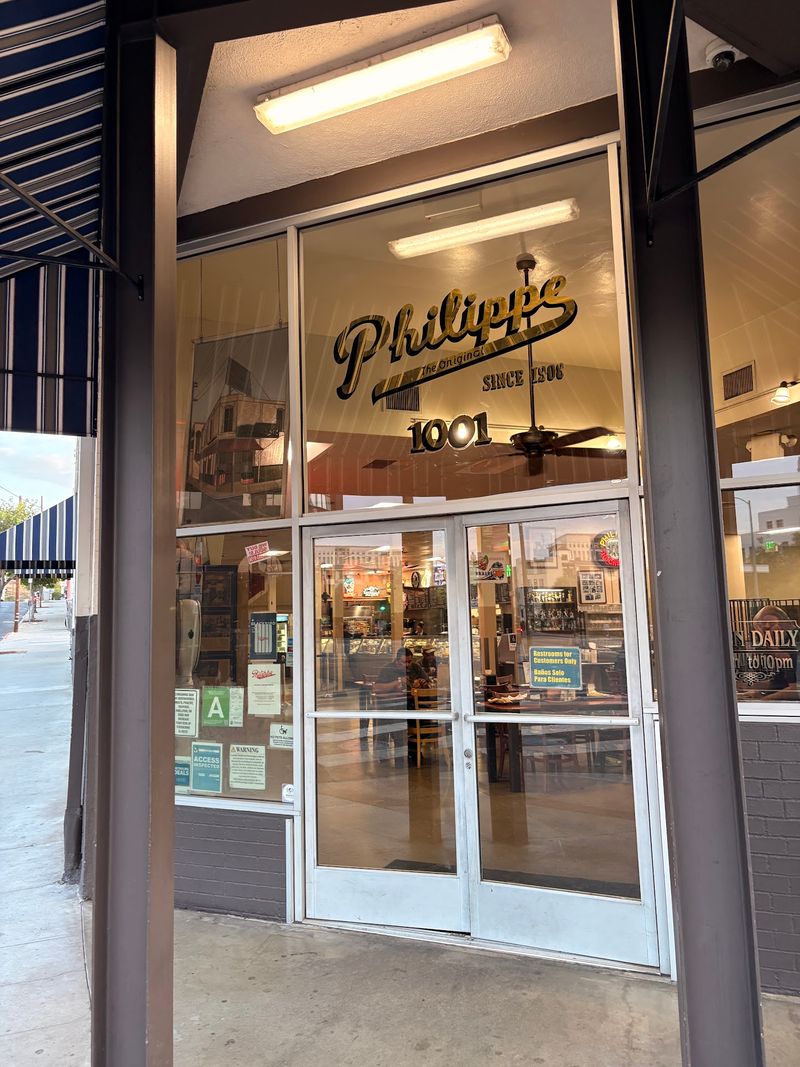
Few restaurants in Los Angeles can say they have been open continuously since 1908. Philippe The Original can.
That is more than a century of slicing, dipping, and serving. The restaurant claims to be the inventor of the French dip sandwich, a title that gives it plenty of bragging rights.
Not everyone in town agrees on who created the sandwich first. That friendly rivalry is part of the fun, and it keeps the conversation going at tables across the city.
What matters most to many guests is the continuity. Some regulars have been coming for over 40 years, and they still find the place running the same way.
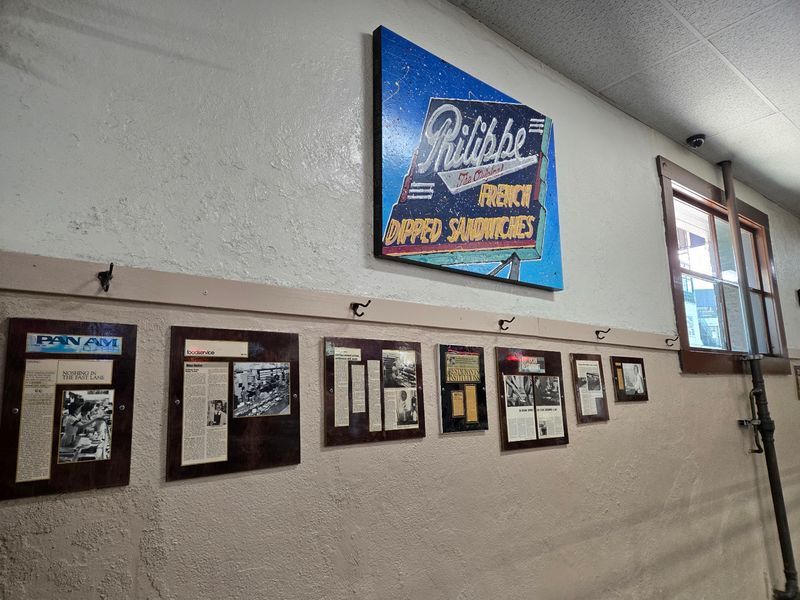
The walls help tell the story. Old Los Angeles Times pages and photos of the city share space with sports memorabilia, giving the dining rooms the feel of a scrapbook.
History here is not behind glass. It is the plate, the counter, and the floor under your feet.
For a city that reinvents itself constantly, a restaurant that stays put makes a quiet statement about staying power.
Sawdust, Penny Tile, and Phone Booths
Yes, the sawdust is real. It still covers the floor, and it is one of the first details people notice.
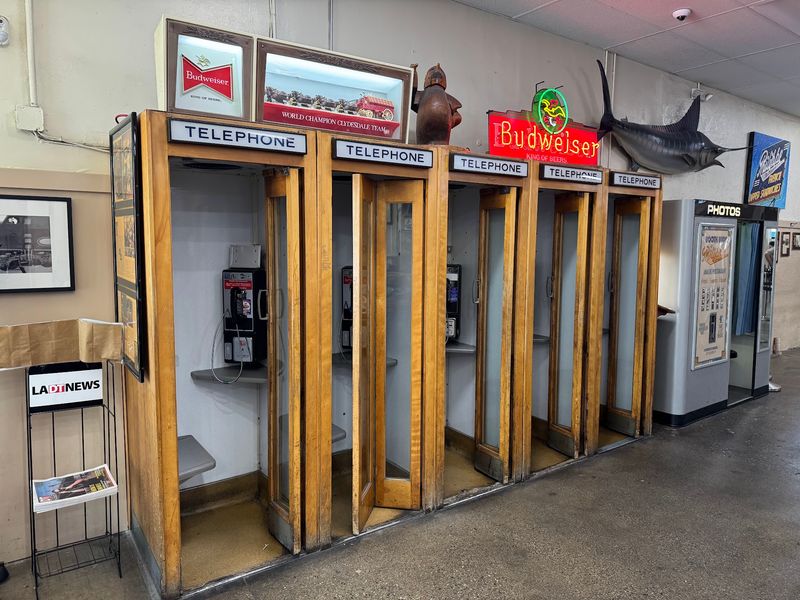
Penny tile floors, classic wooden booths, and a row of old phone booths complete the time capsule look. Guests often stop to take photos in front of those booths before they even order.
Servers wear vintage-style uniforms that nod to the 1940s and 1950s. The look matches the room so well that the whole place feels like a set, except it is entirely real.
The dining space is large, with long tables and plenty of seating. It reads as vintage cafeteria, with air conditioning that helps a lot during the summer heat.
Staff keep busy wiping tables and sweeping throughout the day. For such a high-traffic room, it stays tidy.
Nothing here feels fussy or curated by a design firm. The charm comes from keeping things the way they were, rather than recreating them.
Spend a few minutes looking around before eating. The walls have a lot to say.
The French Dip, Single or Double
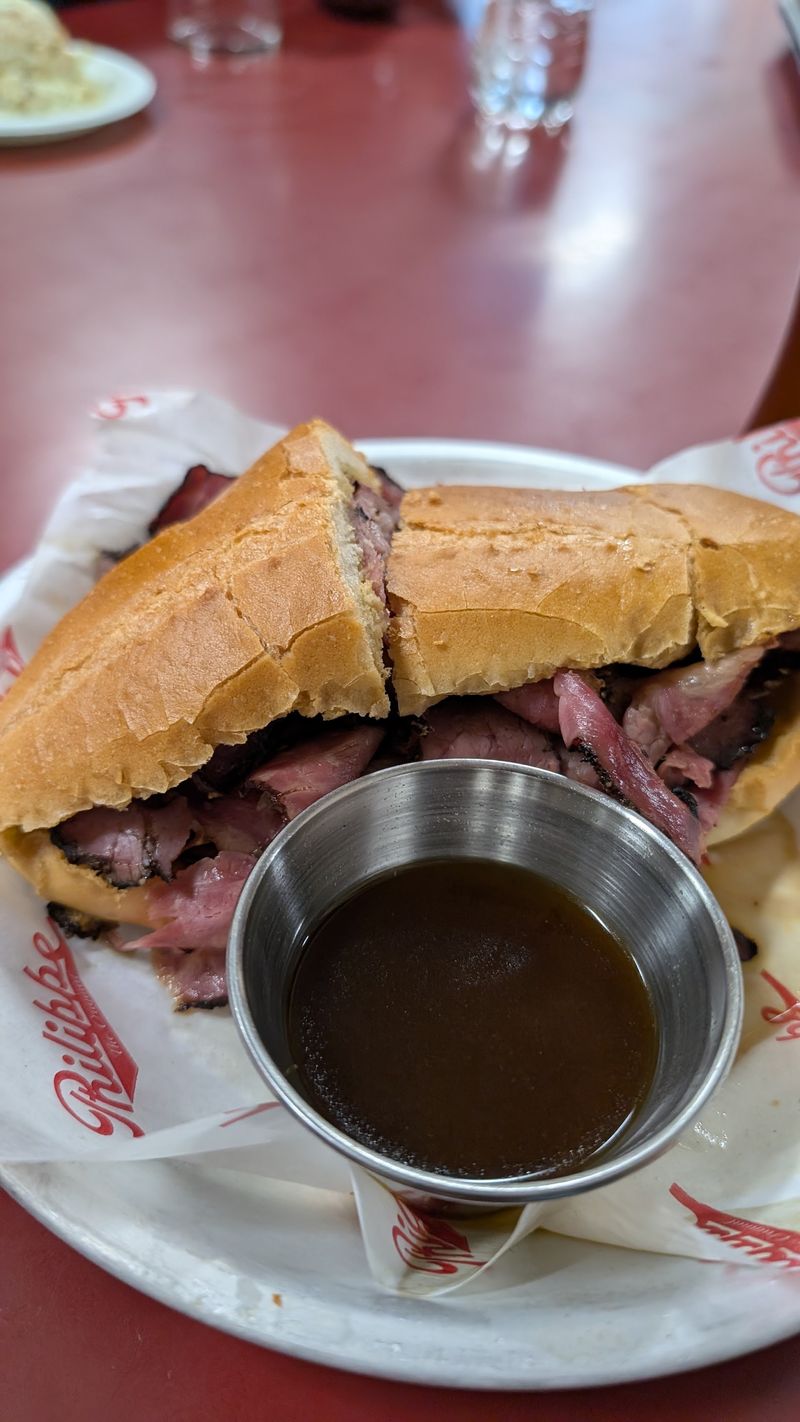
The star of the menu comes in degrees of soak. Guests choose a single dip, a double dip, or a fully wet version for the boldest of bread lovers.
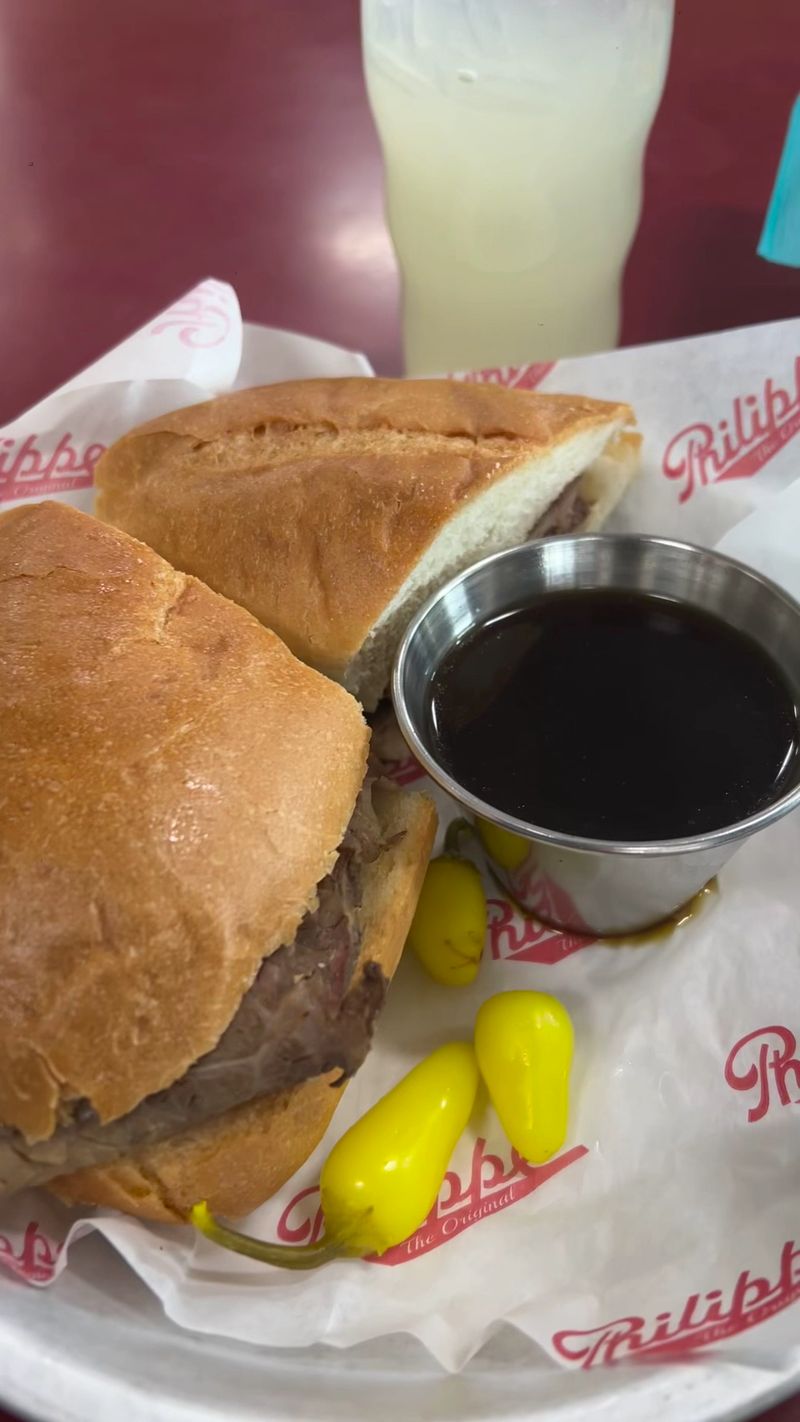
The beef French dip is the classic order. Tender roast beef sits on a French roll, and the bread gets dipped in the house jus before it reaches the tray.
The roll runs about six inches. It is crisp outside and soft inside, which helps it hold up against all that jus.
The double dip is a favorite among regulars. It hits a nice balance without turning the bread into mush.
Beef is not the only option. Lamb, pork, turkey, and pastrami all show up as dip choices, and the lamb version earns strong praise.
Cheese can be added, with provolone and Swiss among the options. Extra jus is available too, for anyone who wants more for sopping.
Keep expectations simple. It is bread, meat, and jus, and the appeal lies in that straightforward approach.
Mustard That Means Business
Consider this a friendly warning. The house hot mustard has a serious kick.
Squeeze bottles sit on the tables, and plenty of regulars insist the sandwich is incomplete without it. A small amount ties the meat and jus together nicely.
Go slow on the first try. The mustard is strong enough to clear sinuses, and fans talk about it with a mix of respect and caution.
Horseradish is another punchy companion, especially alongside the pastrami. It also deserves a careful hand.
The condiment table turns a basic sandwich into something personal. Each diner adjusts the heat level, which is part of the ritual here.
Homemade salsa appears with breakfast plates, adding a mild kick of its own. A house blue cheese also gets attention for being especially creamy.
Small add-ons, big personality. Start with a dab and work your way up from there.
Sides, Soups, and the Pickle Question
A whole pickle on the side is practically a house rule among longtime fans. Many regulars say lunch is not finished without one.
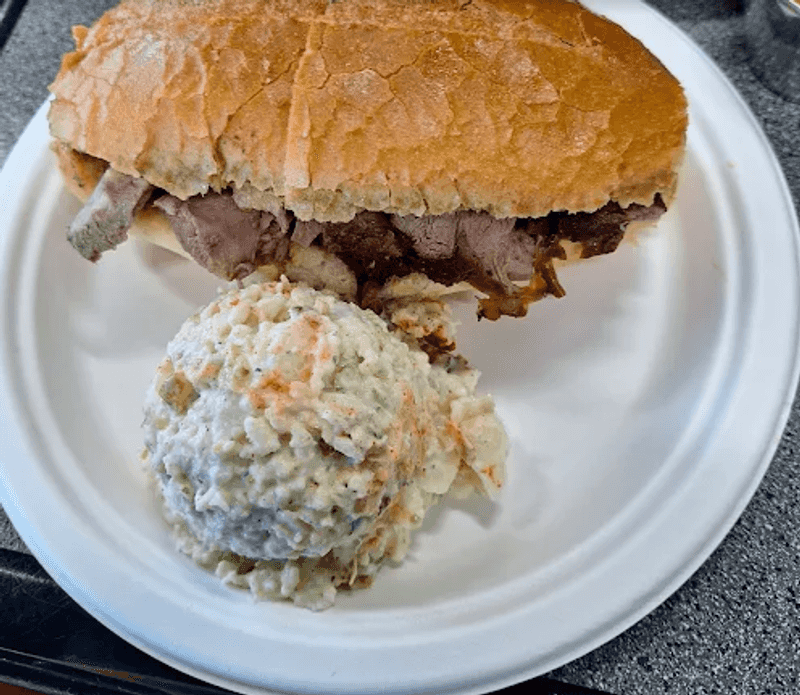
Sides are purchased separately, and the list goes well beyond chips. Potato salad gets consistent praise and is often called the best partner for the sandwich.
Macaroni salad also has loyal fans. Coleslaw is available too, though it splits opinion, and staff have been known to swap it out for something else.
The counter holds some old-school choices as well. Pickled eggs, beets, and even pig’s feet sit among the options.
Soups round things out on cooler days. The homemade navy bean soup and cream of broccoli both earn kind words.
Desserts include pies and tapioca. The pies get more enthusiasm than the tapioca, which lands in the fine but not memorable zone.
Build a tray carefully, because those sides add up fast. The pickle, though, is hard to skip.
Breakfast Before the Dip
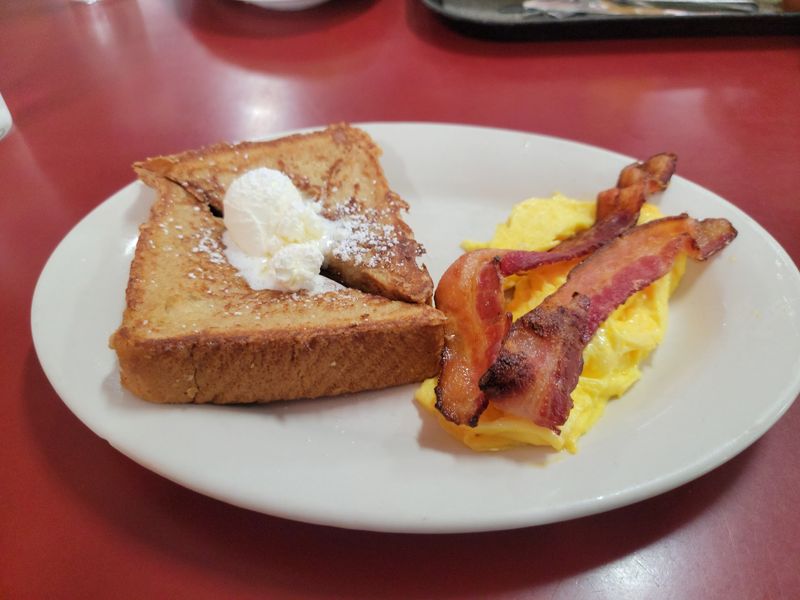
Doors open at 6 AM, and the morning crowd has its own menu to work with. Many first-timers do not realize breakfast is served at all.
The full breakfast lineup includes pancakes and French toast. Eggs come out cooked to order, and runny yolks arrive exactly as requested.
Homemade salsa adds a little heat to morning plates. It is a nice touch for those who like a bit of spice early in the day.
Coffee is a famous bargain here. It has been priced at just 46 cents, which feels almost impossible for downtown Los Angeles.
Morning is also a calmer time to see the room. The booths and phone booths get easier to appreciate without a lunch rush squeezing past.
For non-meat eaters, the menu offers tuna, cheese, and even peanut butter and jelly sandwiches later in the day. Options exist, even if beef runs the show.
An early start pays off here. Fewer crowds and cheap coffee make a strong opening act.
How the Line Actually Works
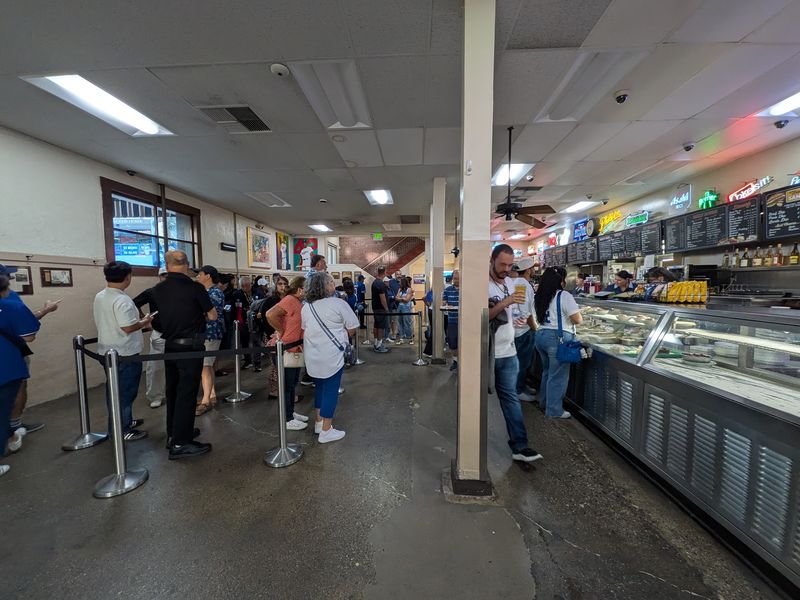
Lines here look intimidating, but they move. That is the first thing to know before panicking at the door.
Customers form organized single-file lines that wind toward the counter. Once at the front, watch for an open order taker, step up, and place the order.
Behind the counter, the staff hustle. They slice, dip, and assemble while keeping the queue flowing, even during the lunch rush and on game days.
The team gets plenty of credit for being warm and patient. First-timers who seem unsure still get a friendly welcome.
Food goes on a tray, and diners find their own seats. The big lunch room makes finding a spot easier than expected.
A little preparation helps. Decide on the dip level, the meat, and the sides before reaching the counter.
The system is old, but it is efficient. Think of it as a well-rehearsed routine that has had a century of practice.
Blue Caps Before First Pitch
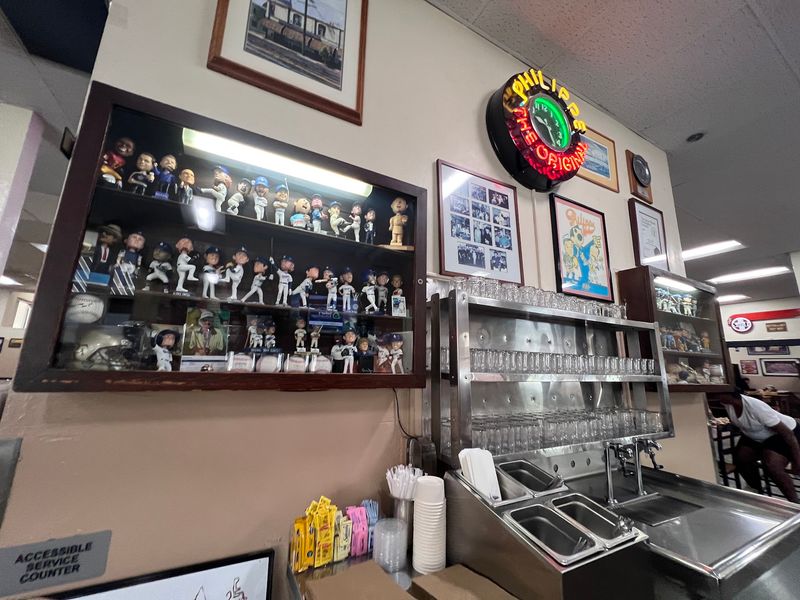
On game days, the room turns Dodger blue. A line out the door before first pitch is completely normal.
The restaurant has become a pregame ritual for many fans. Dodgers memorabilia, including bobbleheads, decorates the space and fits the mood.
The energy is high on those days. Long tables fill with jerseys and caps, and the conversation leans heavily toward baseball.
Families also find it fun. Some arrive by train, enjoying the short walk from Union Station before settling in.
Out-of-town guests are a big part of the mix. Locals often bring visiting friends here as a classic introduction to Los Angeles.
The place suits people who enjoy shared tables and a little noise. Anyone wanting a quiet, private meal may prefer an off-peak visit.
Communal seating makes strangers into temporary neighbors. That is part of the charm, especially when the home team is playing.
Hours, Parking, and Smart Timing
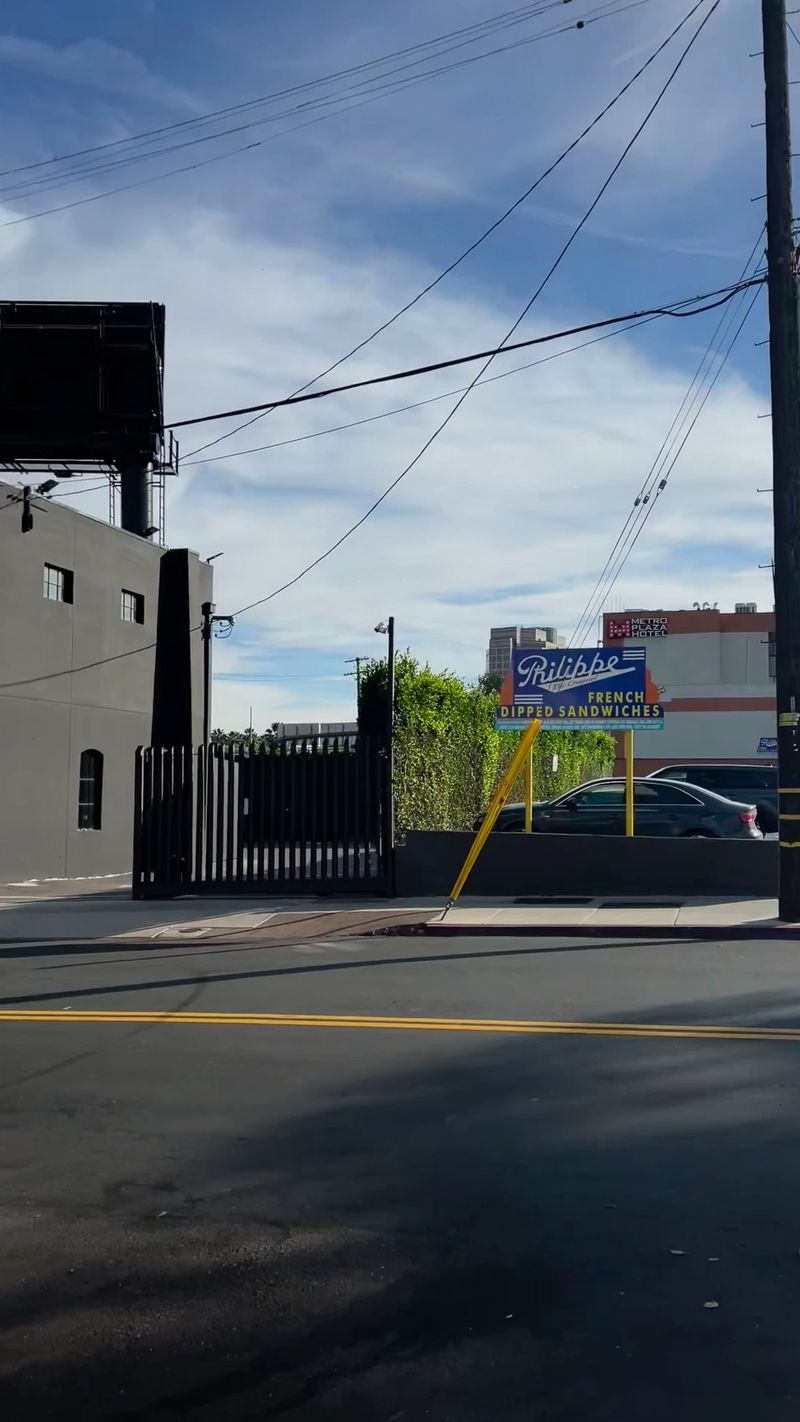
Here is a rare Los Angeles luxury: free parking. The restaurant has its own lot behind the building for customers.
Hours are generous and simple. The doors open from 6 AM to 10 PM every day of the week, Monday through Sunday.
Lunchtime gets crowded, and the lot fills up. Longtime regulars often wait until around 2 or 3 PM for easier parking and shorter lines.
Some guests park in Chinatown and walk over. Others take the train to Union Station, which is just a short stroll away.
Prices are mixed in opinion. A beef dip has run about $14.69, and extra meat costs over $10, which some find steep for the portion.
Others feel the prices are fair for downtown. The 46-cent coffee and filling double meat pastrami help balance things out.
After eating, Chinatown is about three blocks away. Bakeries there make a sweet follow-up stop for anyone still hungry.
Worth the Detour, With Fair Expectations
Not every sandwich legend wins every heart. Honest opinions on this one vary, and that is worth knowing upfront.
Some diners find the French dip simply okay. A few feel modern sandwich shops do it bigger or bolder, and portions can seem small for the price.
Many more leave thrilled. They praise the tender meat, the fresh roll, the potato salad, and the feeling of eating inside a living piece of city history.
The best approach is to come curious. Order the double dip, add a careful dab of mustard, grab a pickle, and decide for yourself.
The room itself is reason enough for a first visit. Sawdust floors, phone booths, vintage uniforms, and walls full of Los Angeles memories are hard to find anywhere else.
Families, baseball fans, and out-of-town guests all fit in here. So do regulars who have been ordering the same tray for decades.
More than a century after opening, the counter is still busy. That kind of loyalty does not happen by accident, so pull up a stool and see what the fuss is about.
Enjoyed this story?
Add Fast Food Club as a preferred source to see more of our reporting on Google.