


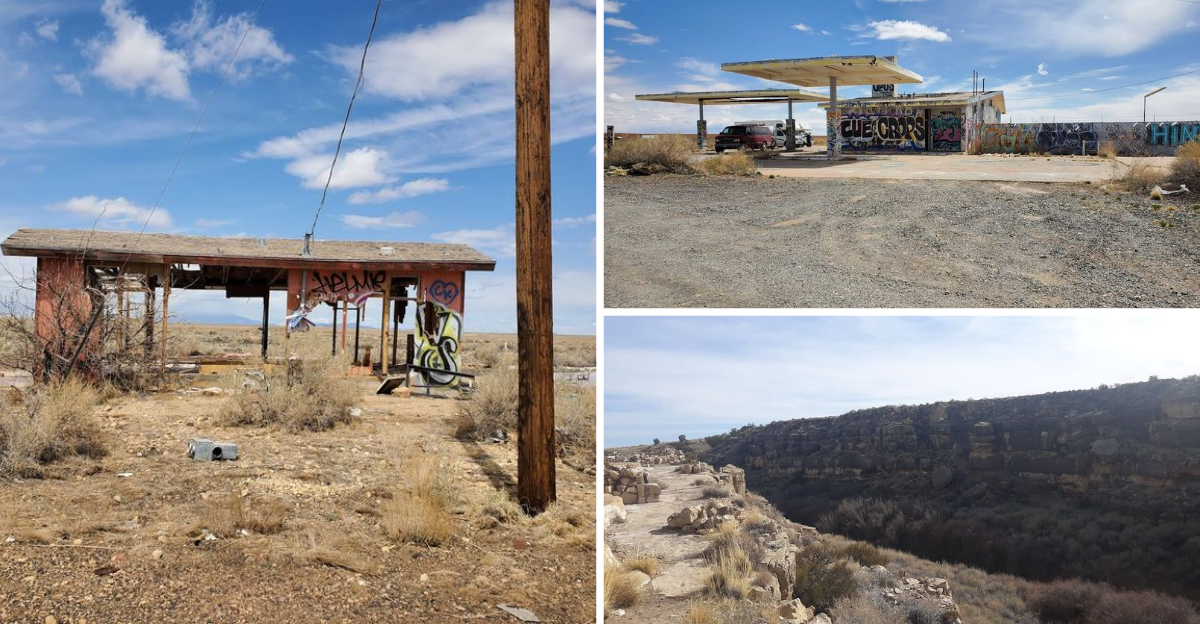
Tucked along a forgotten stretch of Route 66 in northern Arizona, Two Guns is one of the strangest and most haunting ghost towns you will ever visit. Once a bizarre roadside attraction built on top of a dark and violent history, this crumbling settlement draws curious travelers from all across the state.
From ruined zoo cages to ancient canyon battles, every corner of Two Guns has a story worth knowing. If you love history, mystery, and a little bit of spookiness, this place absolutely belongs on your list.
The Dark and Twisted Origins of Two Guns
Before it became a ghost town, Two Guns was already one of the strangest places in Arizona. The settlement popped up in the early 1920s along Route 66, when a man named Harry Miller — who called himself “Two Gun Miller” — decided to build a roadside tourist trap unlike anything else on the highway.
He constructed fake cliff dwellings, a zoo filled with mountain lions, and even charged visitors to see a nearby cave where a brutal massacre had taken place decades earlier. The whole operation was built on shock value, legend, and a healthy dose of deception.
Miller even feuded violently with the landowner, leading to a deadly shooting that only added more grim history to the place. From the very start, Two Guns never had a peaceful moment — and that dark energy still clings to its ruins today.
Route 66 Connection That Put It on the Map
Route 66 made Two Guns famous — or at least infamous. When the Mother Road was at its peak in the 1930s through 1950s, thousands of travelers passed directly through this stretch of northern Arizona every single year.
Roadside stops were everything back then, and Two Guns knew exactly how to grab attention. Painted signs, animal attractions, and promises of ancient Native American ruins lured curious drivers off the road and into Miller’s pocket.
When Interstate 40 bypassed Route 66 in the 1970s and 1980s, the traffic disappeared almost overnight. Without a steady stream of tourists, Two Guns had no reason to survive.
Buildings were abandoned, animals were gone, and the desert slowly started taking everything back. Today, Route 66 enthusiasts make a special trip just to stand where so many road-trippers once stopped and stared in amazement.
Canyon Diablo and the Apache Death Cave
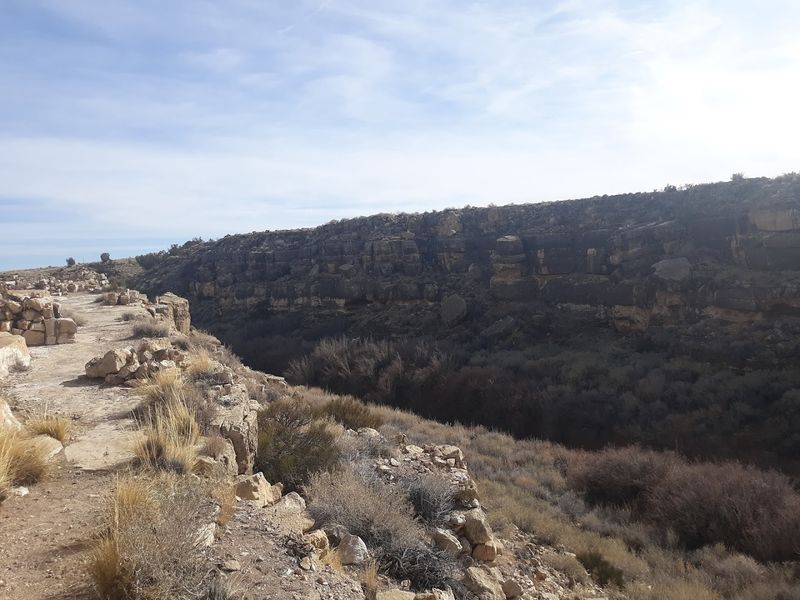
Right next to Two Guns sits Canyon Diablo, a dramatic and jagged gash in the earth that looks like something out of a Western film. The canyon itself is striking, but what makes it truly chilling is the cave hidden within its walls — a place locals have long called the Apache Death Cave.
According to historical accounts, a group of Navajo raiders sheltered in this cave after attacking a nearby Apache camp. The Apache warriors found them, blocked the entrance, and lit a fire — trapping everyone inside.
The story is grim, violent, and deeply sobering.
Harry Miller saw the cave as a moneymaking opportunity and charged tourists to peer inside at what he claimed were human remains. Whether his claims were fully accurate is debated, but the cave undeniably carries a heavy, unsettling feeling that visitors still talk about long after leaving Two Guns behind.
The Ruins of the Mountain Lion Zoo
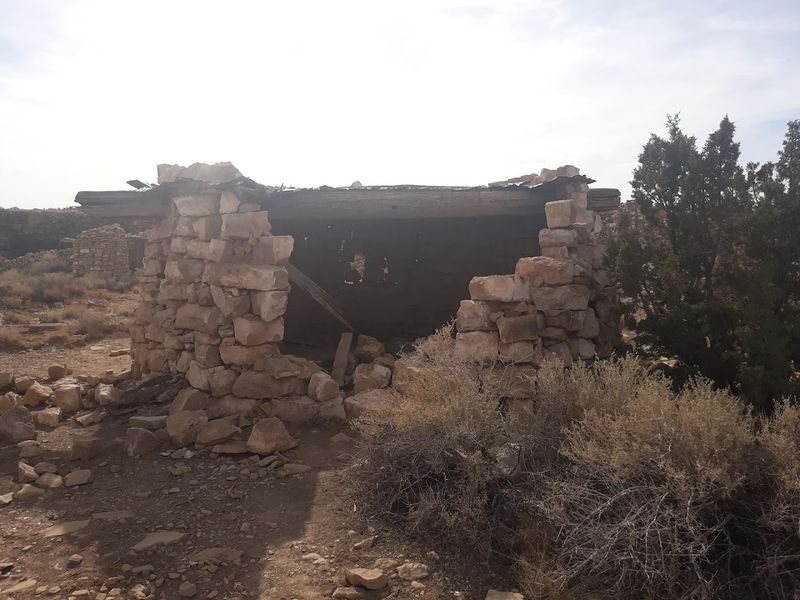
One of the most jaw-dropping things still standing at Two Guns is the remains of a zoo — yes, an actual zoo — built right in the middle of the Arizona desert. Harry Miller constructed stone enclosures and filled them with mountain lions, which he advertised as one of the main attractions for Route 66 travelers.
The cages are still there, cracked and crumbling, slowly being swallowed by creosote bushes and desert grasses. Standing inside the old enclosures gives you a genuinely eerie feeling, like the place remembers what it used to be.
Mountain lions are already mysterious and powerful animals, and imagining them pacing behind these rough stone walls decades ago makes the ruins feel even more alive. Photographers especially love this spot because the textures, shadows, and decay create images that look almost too dramatic to be real.
It is one of the most photographed spots in the ghost town.
Harry Miller — The Man Behind the Madness
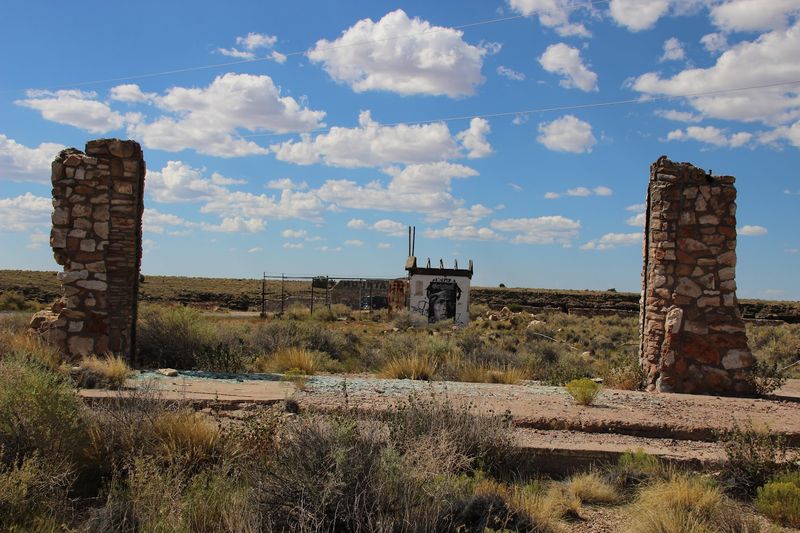
No story about Two Guns is complete without talking about Harry Miller, the eccentric and sometimes dangerous man who built the whole operation from scratch. Miller arrived in Arizona in the early 1920s and quickly spotted a business opportunity along what would become Route 66.
He leased land near Canyon Diablo, built his tourist attractions, and crafted a persona as a rugged frontier showman. He even went by the name “Two Gun Miller” to sound more like a Wild West legend than a simple businessman.
But Miller was no peaceful entrepreneur — he shot and killed the landowner, Ed Cundiff, during a heated property dispute in 1926.
Remarkably, Miller was acquitted after claiming self-defense. He continued operating Two Guns for a while before eventually abandoning it.
His story is equal parts fascinating and troubling, perfectly matching the twisted spirit of the place he created.
The Abandoned Gas Station and Trading Post
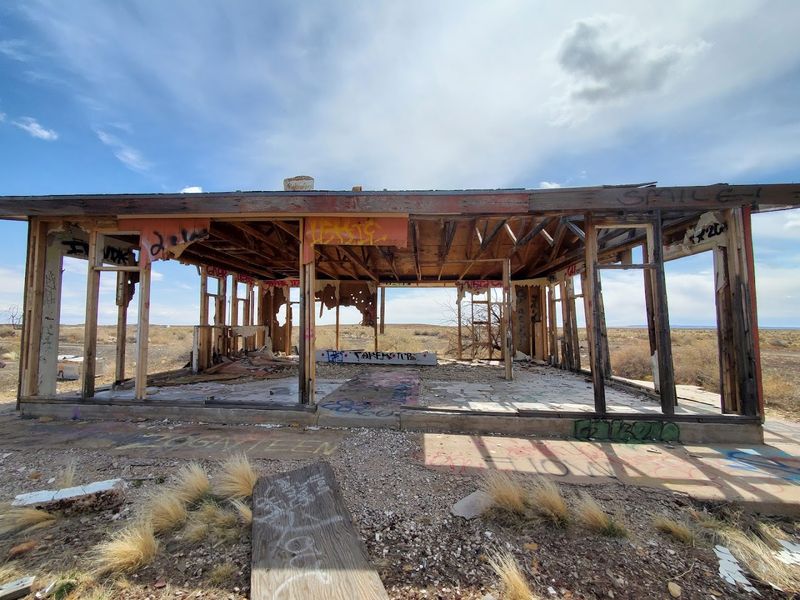
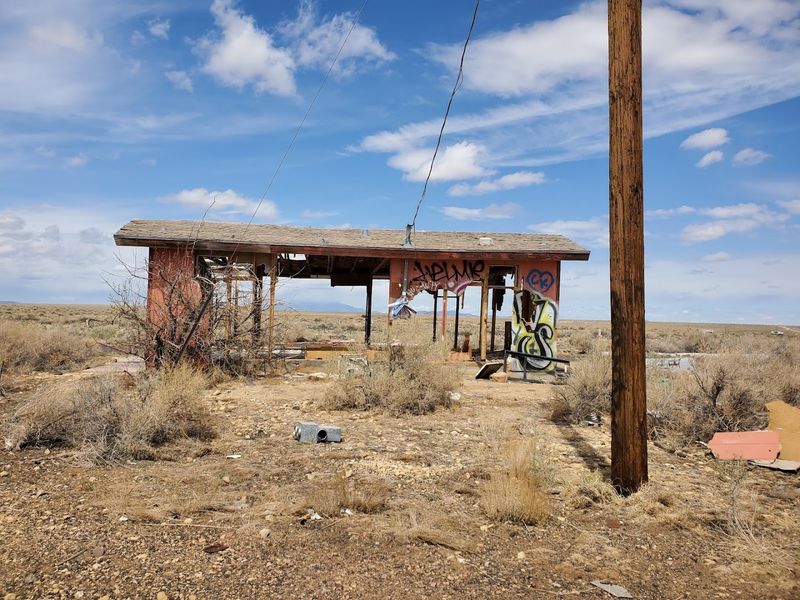
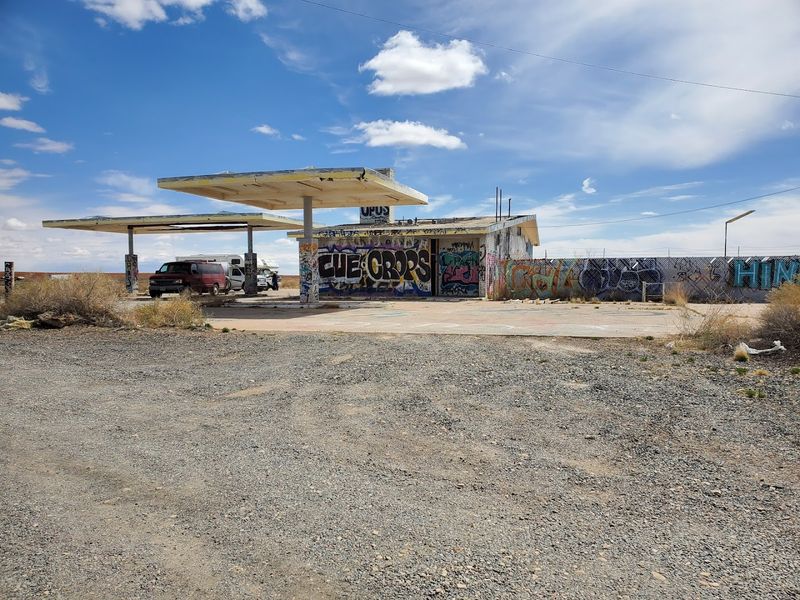
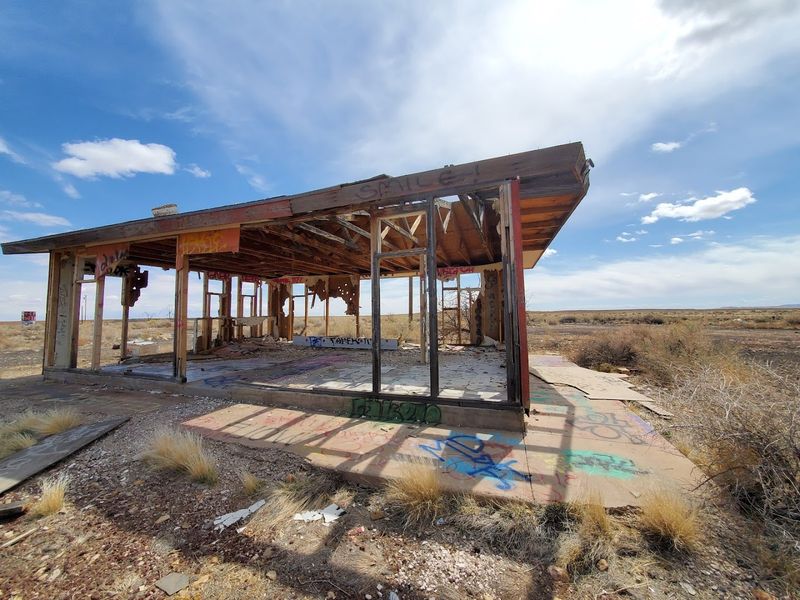
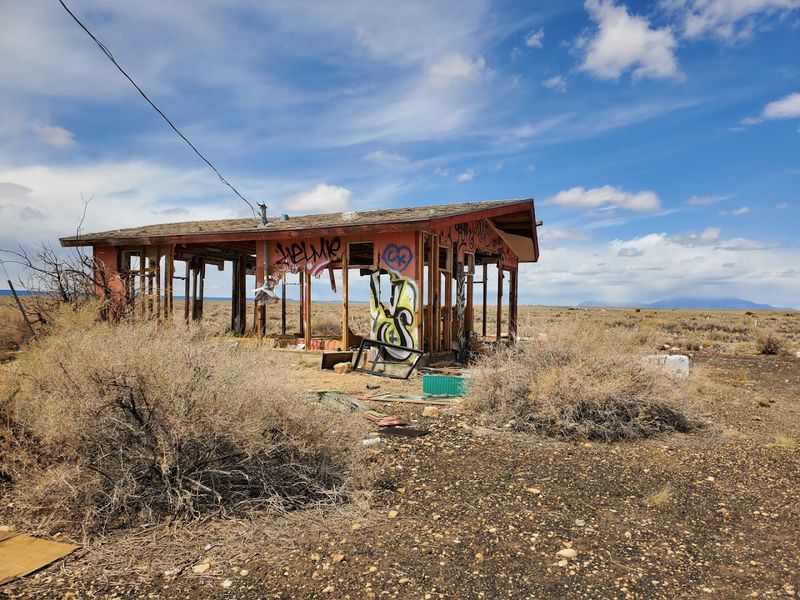
Among the most recognizable images from Two Guns is the shell of an old gas station and trading post that still stands near the highway. The structure is roofless now, its walls pockmarked and faded, but you can still make out the bones of what it once was.
Back when Route 66 was humming with traffic, this stop would have been a lifeline for travelers running low on fuel or needing supplies before crossing the open desert. The trading post sold souvenirs, snacks, and Native American crafts to anyone willing to pull over.
Now, the building serves as a canvas for graffiti artists and a playground for urban explorers. Colorful murals and spray-painted tags cover its interior walls, creating an oddly beautiful contrast against the crumbling stone.
It is a snapshot of two different eras colliding — the Route 66 golden age and the modern fascination with forgotten places.
The Eerie Silence That Greets Every Visitor
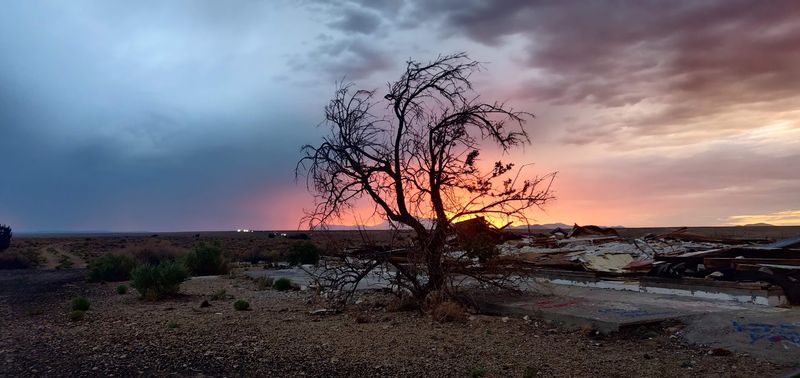
People who visit Two Guns for the first time often say the same thing: the silence is almost unbearable. Out here in the high desert of northern Arizona, there is no traffic noise, no background hum of a city, and no crowds of people chattering around you.
There is just wind, the crunch of gravel underfoot, and the occasional creak of something shifting in the ruins. That kind of quiet has a way of making your imagination run wild, especially when you know the history of the place you are standing in.
Some visitors find the silence peaceful and meditative, a welcome break from modern noise. Others find it deeply unsettling, like the quiet that follows something terrible.
Either way, the atmosphere at Two Guns is unlike anything you will experience at a typical tourist destination. The desert holds its breath here, and somehow you feel it.
What Remains of the Fake Cliff Dwellings
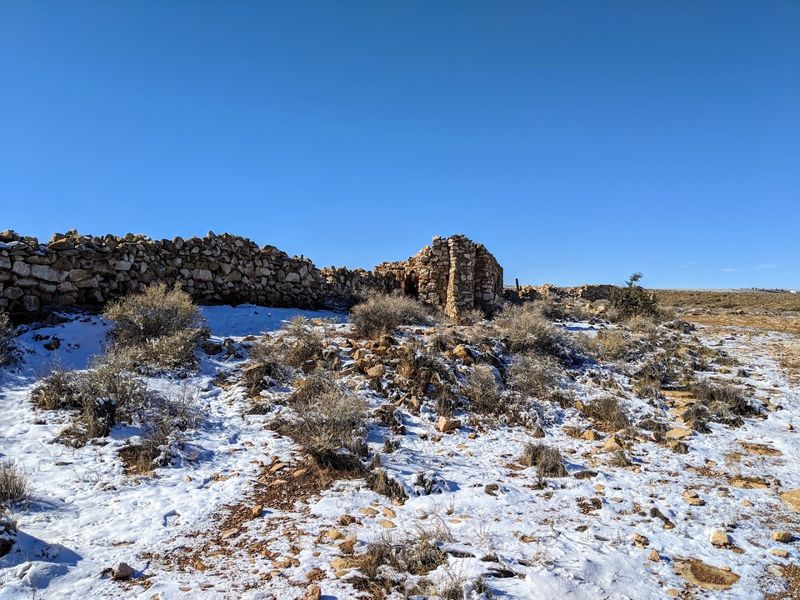
Harry Miller was never shy about bending the truth to make a profit. Among his more creative schemes was the construction of fake cliff dwellings near Canyon Diablo, designed to mimic the ancient Ancestral Puebloan ruins found elsewhere in Arizona.
Miller sold the idea that these structures were genuine archaeological finds, charging visitors for a look at what he framed as sacred ancient history. In reality, they were largely fabricated or heavily embellished.
Even so, the structures are interesting to see today precisely because they represent the wild, unregulated carnival spirit of early roadside America.
Standing next to these crumbling walls, it is hard not to feel a mix of amusement and disbelief. How did people fall for it?
But then again, the 1920s and 1930s were a very different time for travel and tourism. People were hungry for wonder, and Miller gave them exactly what they wanted — real or not.
Photography Opportunities That Are Hard to Beat
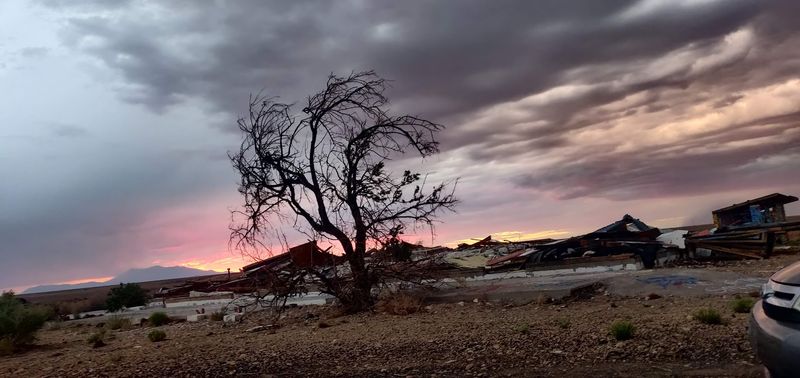
Ask any photographer who has visited Two Guns and they will tell you — this place is an absolute goldmine for dramatic, moody images. The combination of crumbling stone, open desert sky, rusted metal, and long shadows creates compositions that practically frame themselves.
Golden hour, when the sun sits low on the horizon in the late afternoon, turns the ruins into something almost otherworldly. The warm orange and red tones bounce off the rough stone walls and fill every crack and crevice with rich, dramatic light.
Many photographers plan their entire visit around catching that specific light.
Even on overcast days, the flat light strips away harsh shadows and reveals incredible texture in the decaying structures. Whether you shoot on a phone or a professional camera, you will leave Two Guns with images that genuinely impress people.
The ruins do most of the creative work for you — just show up ready.
How to Get There and What to Expect on Arrival
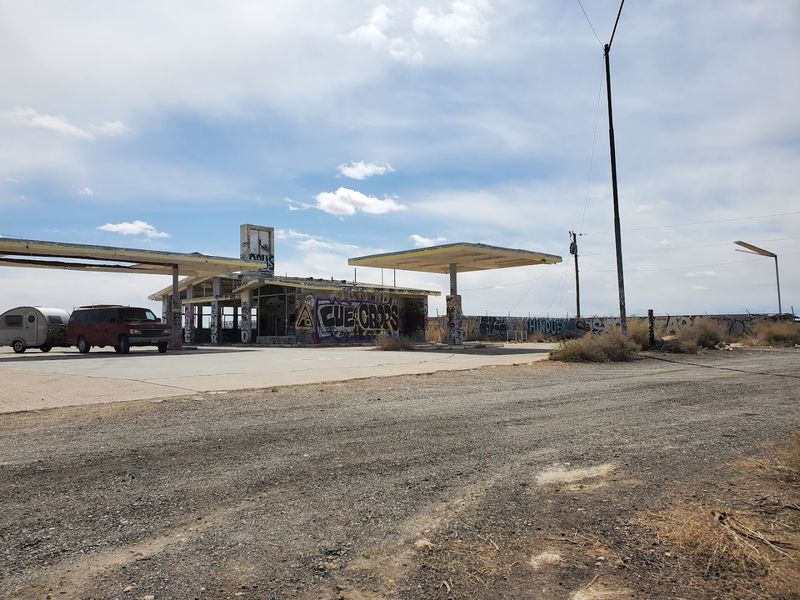
Finding Two Guns is straightforward, but the remote location means you need to come prepared. The site sits along Interstate 40 near exit 230, roughly halfway between Flagstaff and Winslow in northern Arizona.
A short drive off the highway brings you directly to the ruins.
There are no admission fees, no visitor center, and no guided tours waiting for you. Two Guns is completely open and unmanaged, which means you explore entirely on your own terms — but also entirely at your own risk.
The ground is uneven, structures are unstable, and there are no safety rails or warning signs to protect you.
Bring plenty of water, wear sturdy shoes, and let someone know where you are headed. Cell service can be spotty in this area.
The best times to visit are spring and fall when temperatures are comfortable. Summer heat in this part of Arizona can be genuinely dangerous for unprepared visitors.
The Legends and Ghost Stories That Follow Two Guns
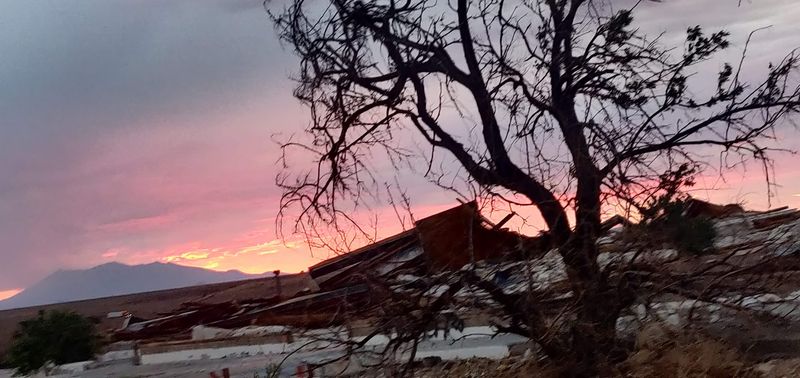
Ghost stories and Two Guns go together like desert heat and sunburn — completely inseparable. Given the violent deaths, the cave massacre, and decades of abandonment, it would almost be surprising if people did not report strange experiences here.
Visitors have described hearing unexplained sounds, feeling sudden cold spots in the open desert heat, and capturing odd shapes in their photographs that were not visible to the naked eye. Whether you believe in the paranormal or not, the atmosphere at Two Guns absolutely encourages the imagination to run free.
Local legends suggest that the spirits of those who died in the Apache Death Cave still linger around Canyon Diablo. Some paranormal investigators have included Two Guns on their list of Arizona’s most actively haunted locations.
Even hardcore skeptics admit that spending time here as the sun goes down produces a feeling that is genuinely hard to explain away with simple logic.
Comparing Two Guns to Other Arizona Ghost Towns
Arizona is not exactly short on ghost towns — the state is packed with abandoned mining camps, failed railroad stops, and forgotten frontier settlements. But Two Guns stands apart from almost all of them in one very important way: its story is genuinely bizarre.
Most Arizona ghost towns faded simply because the silver or gold ran out. Two Guns faded because its entire identity was built on a foundation of violence, deception, and wild spectacle.
That makes it a completely different kind of historical experience compared to places like Gleeson, Mayer, or Vulture City.
Visiting Two Guns feels less like a history lesson and more like stumbling into a fever dream from a century ago. The layers of story — Native American tragedy, frontier con artistry, Route 66 nostalgia, and slow desert decay — stack on top of each other in a way that no other Arizona ghost town quite manages to replicate.
Why Two Guns Keeps Drawing People Back
There is something magnetic about Two Guns that is genuinely hard to put into words. People who visit once almost always find themselves thinking about it again later, turning the details over in their minds like a puzzle that never quite resolves.
Maybe it is the layers of history crammed into such a small and desolate place. Maybe it is the strange beauty of ruins slowly returning to the earth.
Or maybe it is the feeling that something important happened here — something worth remembering, even if the full truth has blurred over time.
Two Guns reminds us that American history is not always clean or comfortable. Some of the most fascinating chapters are messy, morally complicated, and etched into places most people drive right past without a second glance.
Pulling off the highway and walking through these ruins is a small act of paying attention — and it turns out that matters more than you might expect.
Enjoyed this story?
Add Fast Food Club as a preferred source to see more of our reporting on Google.