


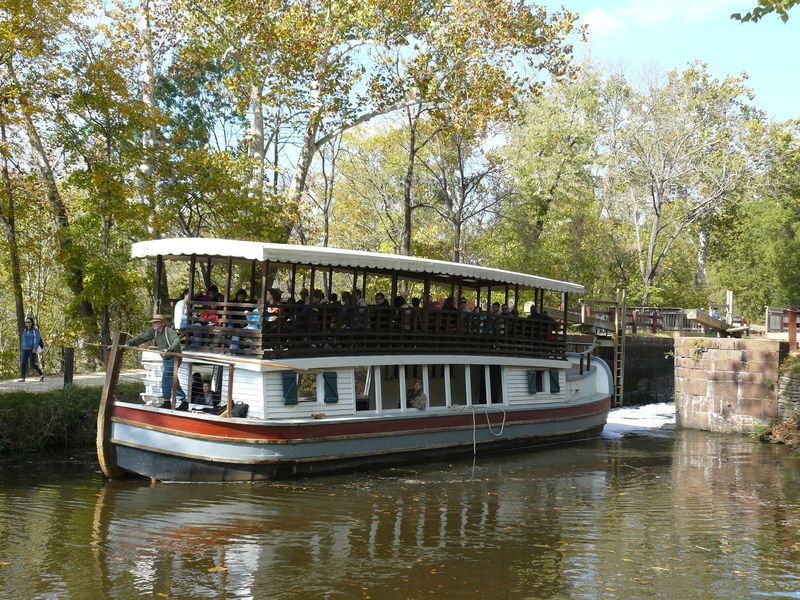
A working canal from the 1800s still runs through the woods just outside Washington, and in warmer months a wooden boat glides along it slowly, tugged not by an engine but by mules walking the towpath. That old-fashioned method turns a short water trip into a lesson about how goods once traveled across Maryland.
Beyond the boat, there are waterfall overlooks, rocky trails, and a historic building packed with stories about the people who once worked the locks. Families, cyclists, and history fans all find a reason to linger here.
Keep reading to learn where the boat launches, what the surrounding park holds, and the practical details that make a visit smooth.
Where the Towpath Begins in Potomac
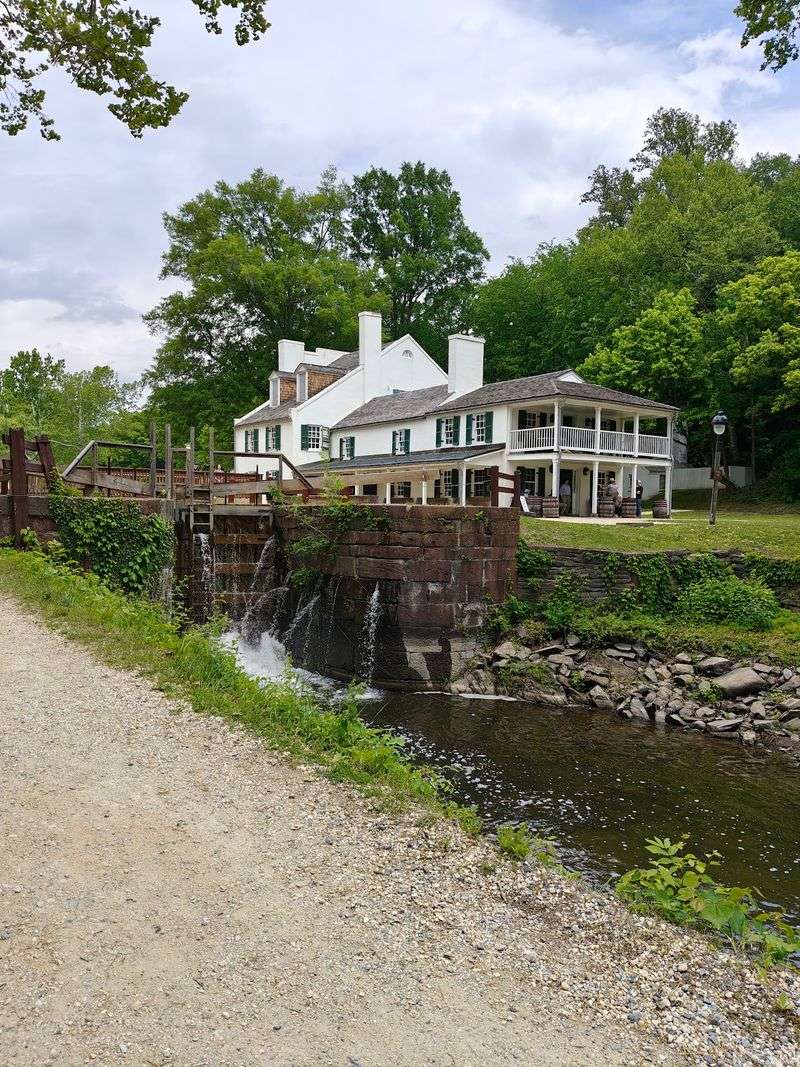
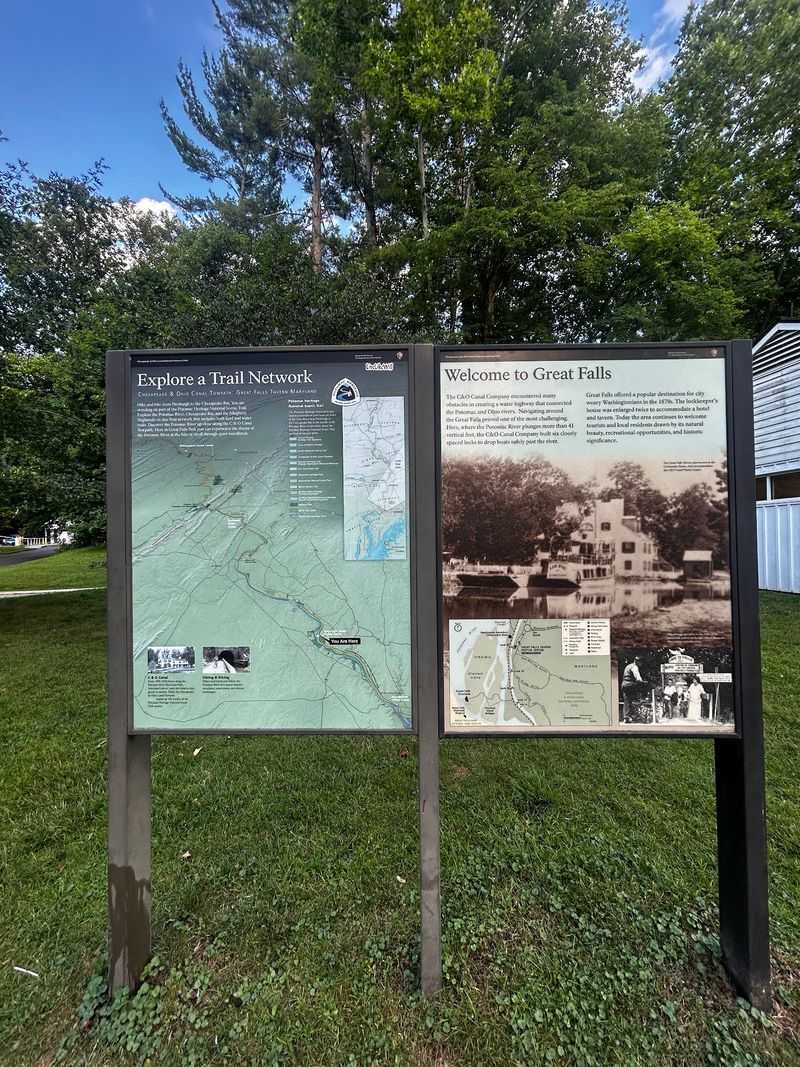
Tucked along the Potomac River at 11710 MacArthur Blvd in Potomac, Maryland, the Great Falls Tavern Visitor Center anchors the Maryland side of the Chesapeake and Ohio Canal National Historical Park.
The white building itself once operated as a lively tavern during the canal’s busiest years in the 19th century. Today it serves a different crowd, handing out maps, answering questions, and taking reservations for the seasonal canal boat.
Staff here have a reputation for being genuinely helpful, pointing newcomers toward the right trail or overlook. The center works as a launch pad rather than just a stop.
From this single point, paths branch out toward waterfall views, wooded towpaths, and the canal locks that made this place important long ago. It sits only a short drive from Washington, which makes it an easy escape without a long road trip.
Anyone new to the park is smart to start right here before wandering off.
Mules, Ropes, and a Slow Ride Through History
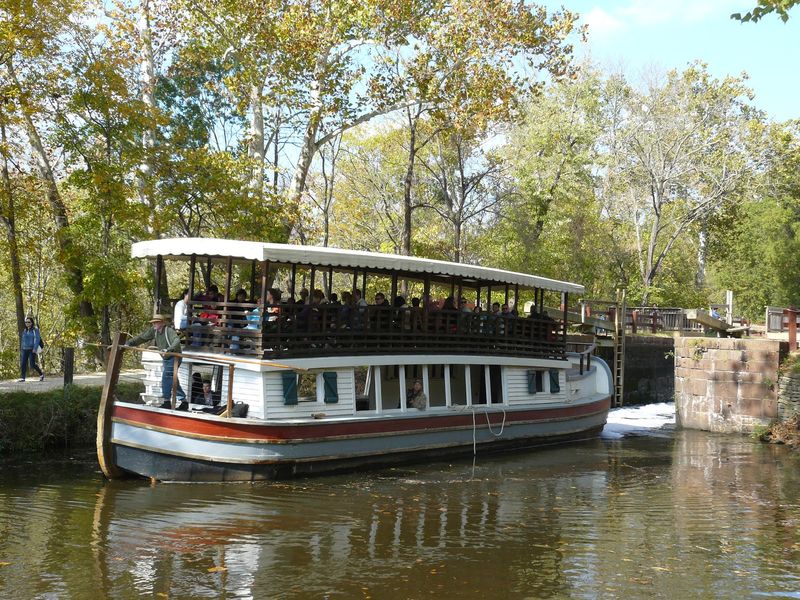
The main event for many families is the canal boat, a replica flat wooden vessel that moves the old way, pulled by mules walking steadily along the towpath.
No motor hums beneath the deck. Instead, ropes stretch from the animals to the boat, recreating the exact method used when the canal carried coal and cargo through the region.
The ride is seasonal, running in the warmer months, so timing matters if this is your goal. Regulars mention that the boat is a highlight, and some who visited years ago still remember it fondly.
During the trip, park staff often share how the locks worked and what daily life looked like for canal families. It turns a gentle float into a hands-on history lesson that children and adults both follow easily.
Because the schedule depends on the season, checking ahead with the visitor center before you arrive saves disappointment. When it is running, it is a rare chance to experience transportation from another century firsthand.
The Falls That Steal the Show
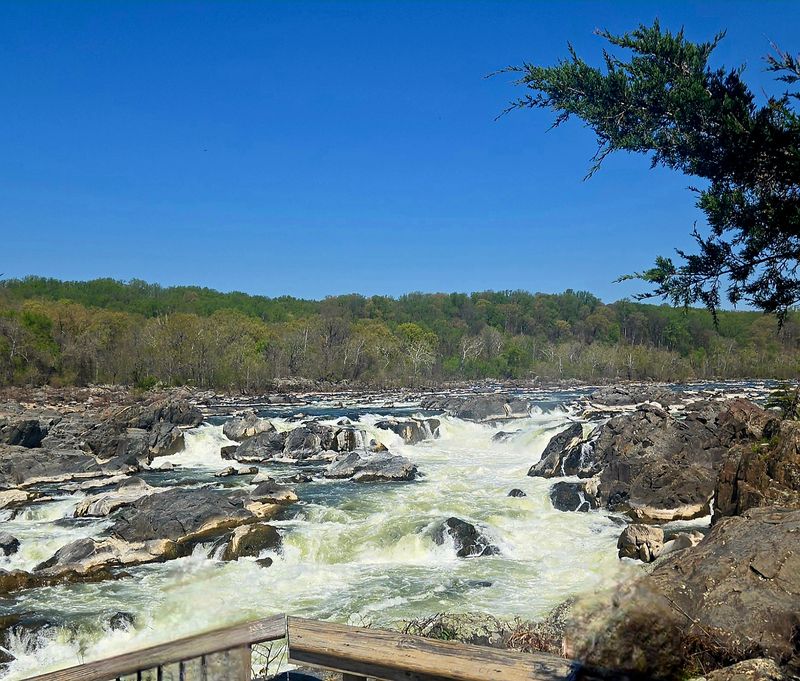
Rushing water is the reason many people make the trip, and the Great Falls of the Potomac deliver a genuinely dramatic scene of rapids tumbling over rock.
Reaching the main overlook takes only a short walk from the tavern, so you do not need to be a serious hiker to earn the view. Families describe it as one of the most rewarding payoffs for so little effort.
The overlook offers a panorama of whitewater churning through the gorge, a sight that shifts in mood with the seasons and recent rainfall. Fall tends to draw praise for the color surrounding the water.
Many find the Maryland vantage point more impressive than the Virginia side across the river. The falls are strong enough to feel like an event rather than a quiet backdrop.
Whether you stay half an hour or several hours, the falls tend to be the moment people remember most.
Boardwalks and the Walk to Olmsted Island
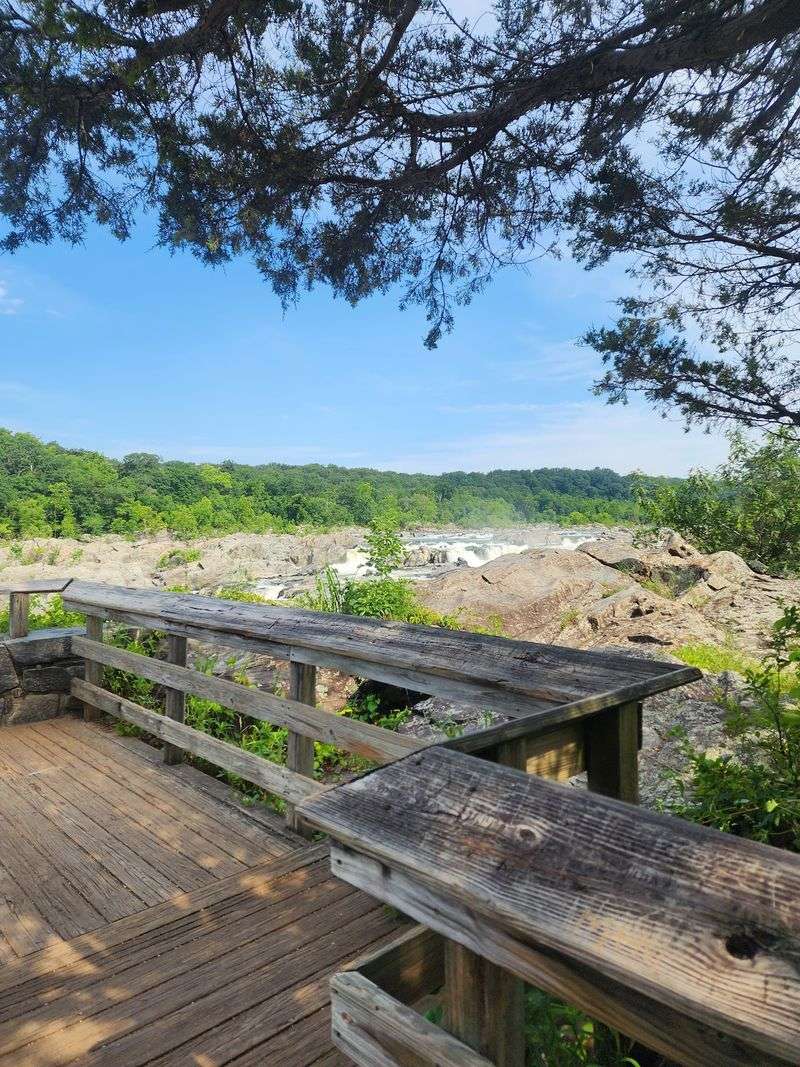
Getting to the best falls view involves the Olmsted Island trail, a short route from the tavern that crosses onto an island by way of a wooden boardwalk.
The path is famously easy to manage, wide enough and level enough to handle strollers and wheelchairs, with bicycles welcome too. That accessibility makes it a favorite for groups with mixed abilities.
Follow the boardwalk far enough and it leads to a second overlook, which many consider the more spectacular of the pair. Benches along the way give tired legs a place to rest.
Signage is clear, and the trails stay clean and open, which helps first-timers feel confident about where they are headed. Dogs are allowed here as long as they stay leashed and owners clean up.
It is the kind of walk that rewards little effort with a big scene, and it suits nearly everyone who steps onto it.
The Billy Goat Trail for Bolder Feet
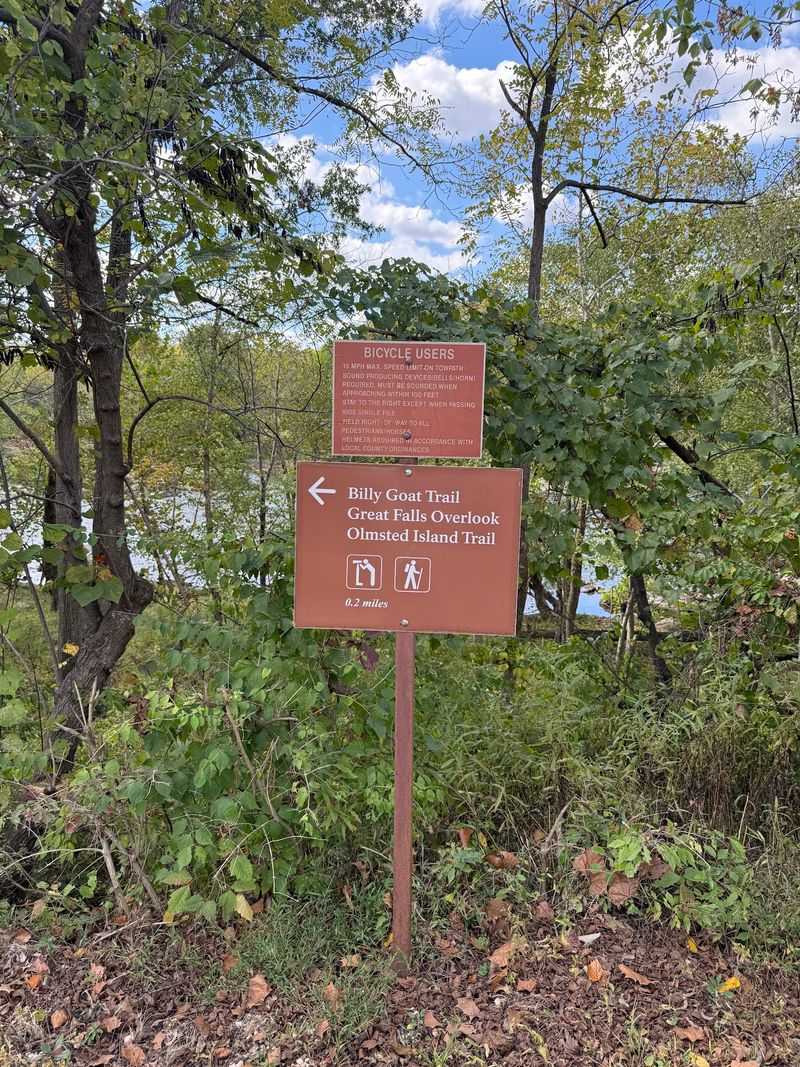
Not every path here is a gentle stroll, and the Billy Goat Trail proves it with rocky terrain, steep spots, and a stretch of genuine rock scramble.
The trail runs along the boulders of the Potomac River Gorge, giving confident hikers a rugged workout with river views as the reward. Fall is often named as the finest time to tackle it.
Despite the challenge, it is not off-limits to younger explorers. Some families have taken children as young as eight along parts of it and had a good time.
It stands as the more adventurous counterpart to the easy boardwalk, appealing to people who want their scenery to come with a bit of effort. Sturdy footing and water are wise companions on this one.
For those craving something more demanding than a flat towpath, this trail is the clear answer.
Inside the Old Tavern’s Rooms
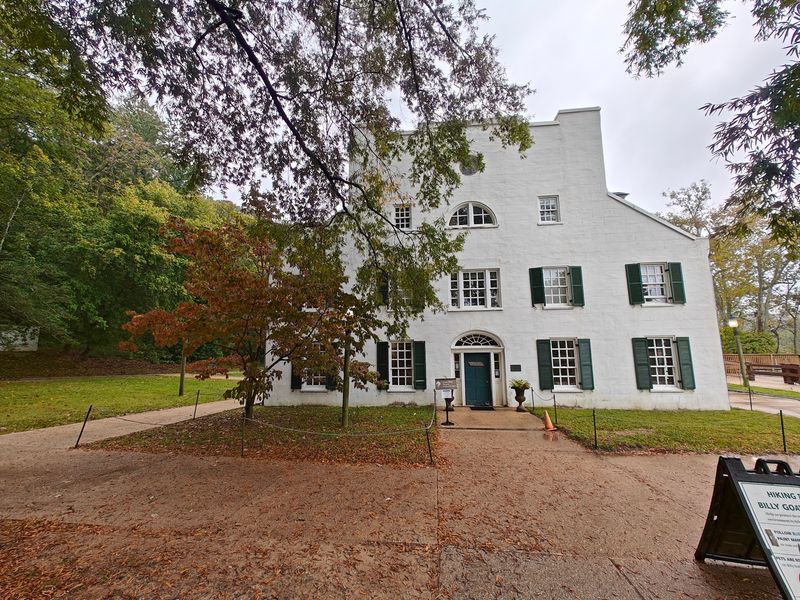
Step past the front door and the building reveals its second life as a small museum devoted to the Chesapeake and Ohio Canal.
Exhibits walk visitors through the construction and operation of the canal, the daily grind of the workers, and how a busy social tavern became a quiet visitor center. There is also a Discovery Room that gets a few mentions for hands-on learning.
The staff inside are known for being friendly and knowledgeable, ready to explain the displays or suggest the best way to spend an afternoon. Brochures and maps are free for the taking.
For anyone curious about early American transportation, the center packs a lot of context into a modest space. It works well as a rainy-day option or a warm-up before heading outdoors.
History fans tend to leave with a deeper appreciation for the water they are about to walk beside.
A Park Built for Every Kind of Day
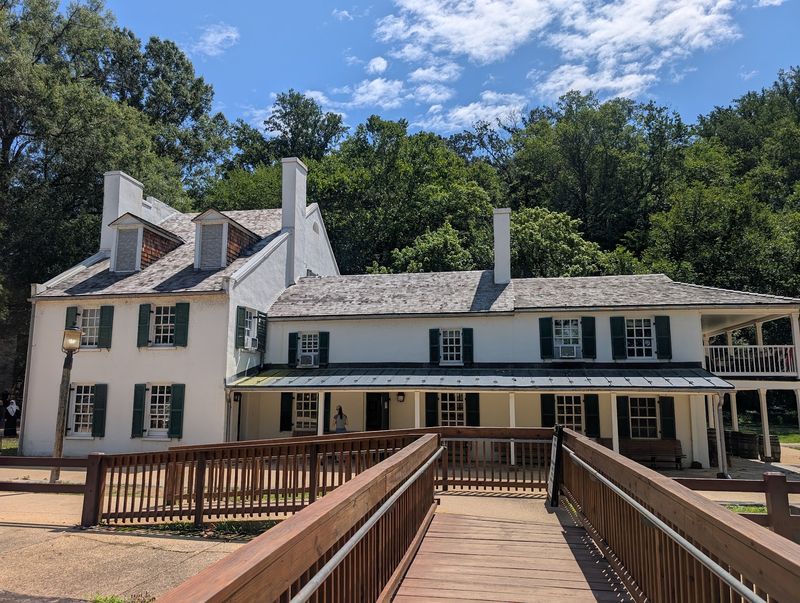
Few places manage to please toddlers, cyclists, and history buffs at once, yet this stretch of park pulls it off with room to spare.
Beyond the falls, the grounds open up to biking, canoeing, fishing, and climbing, all reachable from the same central starting point. Some children treat it as better than any playground.
The C&O Canal towpath draws long-distance cyclists who name this as a favorite stop along the route. Meanwhile, benches, picnic areas, and calm canal-side walks suit anyone wanting a slower pace.
Wildlife adds to the appeal, with birds, turtles, and fishing all part of the scenery on a good day. The setting shifts with the seasons, so return trips rarely feel repetitive.
You can spend thirty minutes or an entire afternoon, and the park bends to fit whatever kind of outing you had in mind.
Hours, Fees, and Getting There
Planning ahead keeps a visit smooth, and the details here are refreshingly simple to follow.
The visitor center opens Wednesday through Sunday from 9 AM to 4 PM, and it stays closed on Mondays and Tuesdays. Aim for those open days if you want inside access or boat reservations.
Entry runs about twenty dollars for a seven-day car pass, while hikers and cyclists entering on their own pay around ten dollars. An annual National Parks pass costs roughly eighty dollars and pays off quickly for repeat trips.
Parking is plentiful at the visitor center, and the location is an easy reach from Washington and nearby metropolitan areas. Restrooms are available, and refreshment options sometimes appear near the parking area in season.
Bringing water is a smart move, especially before a longer walk. With a 4.7-star reputation across more than a thousand visitor opinions, the Great Falls Tavern Visitor Center earns its steady stream of admirers, and it makes a worthy day out for history seekers and trail wanderers alike.
Enjoyed this story?
Add Fast Food Club as a preferred source to see more of our reporting on Google.