


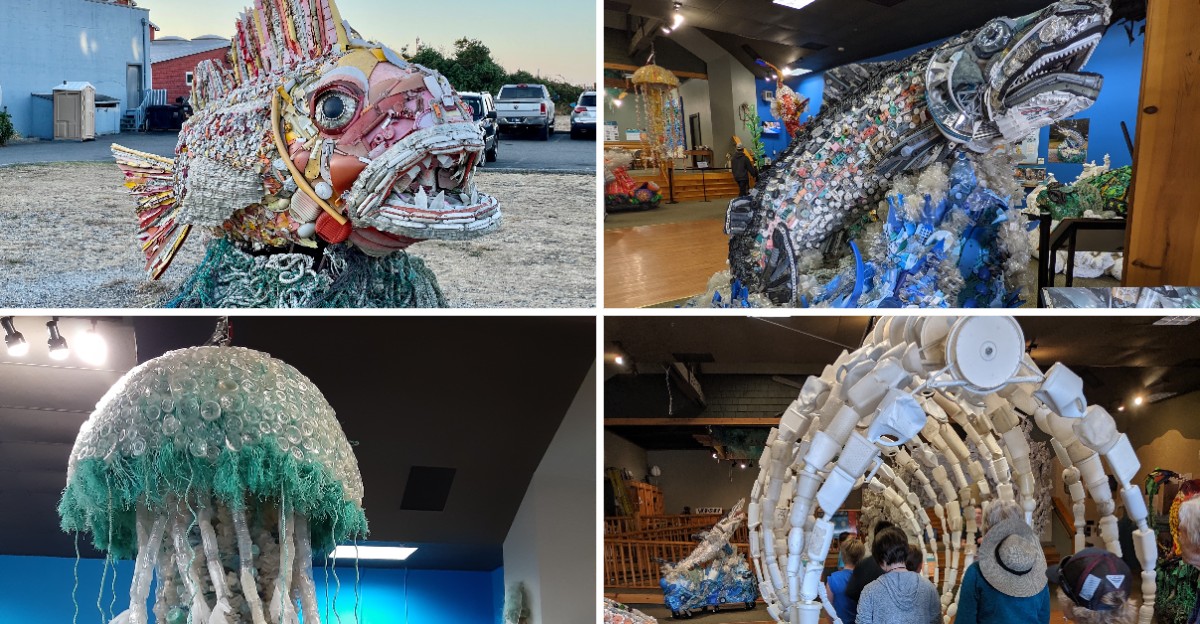
A puffin the size of a person, a jellyfish glowing with light, a seahorse built entirely from plastic pulled off the beach. Along the southern Oregon coast, one small gallery turns tons of ocean garbage into towering sea creatures that stop people in their tracks.
The best part is that stepping inside costs nothing, and the same building hides a coffee shop, a seafood market, and a few other local finds under one roof. What starts as a quick stop often turns into an afternoon of wandering and wondering.
Keep reading to find out where this place is hiding, why the sculptures carry such a strong message, and how to make the day trip smooth from start to finish.
A Warehouse With No Sign On The Bandon Coast
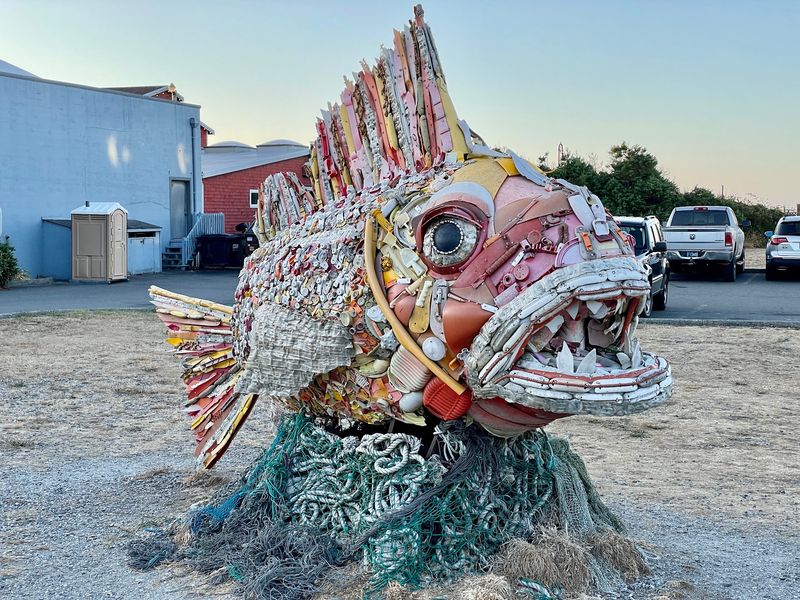
Finding this spot takes a little faith. The gallery lives at 250 1st St SW in Bandon, Oregon, tucked inside a warehouse that shares space with a coffee shop, a bar and gathering area, a mercantile, and a fish market.
Here is the tricky part. The outside of the building does not have a sign board for the gallery itself, which throws off plenty of first-timers.
The trick is to head for the cafe entrance and walk toward the back on the left, where the sculptures wait. Google Maps does lead people to the right address, so trust it even when the front looks quiet.
Once inside, the mix of businesses makes the whole visit feel like a treasure hunt. You came for art and stumbled onto spices, seafood, and something warm to sip.
The setup surprises people in the best way, turning a simple errand into a full stop worth lingering over.
Trash That Refuses To Stay Trash
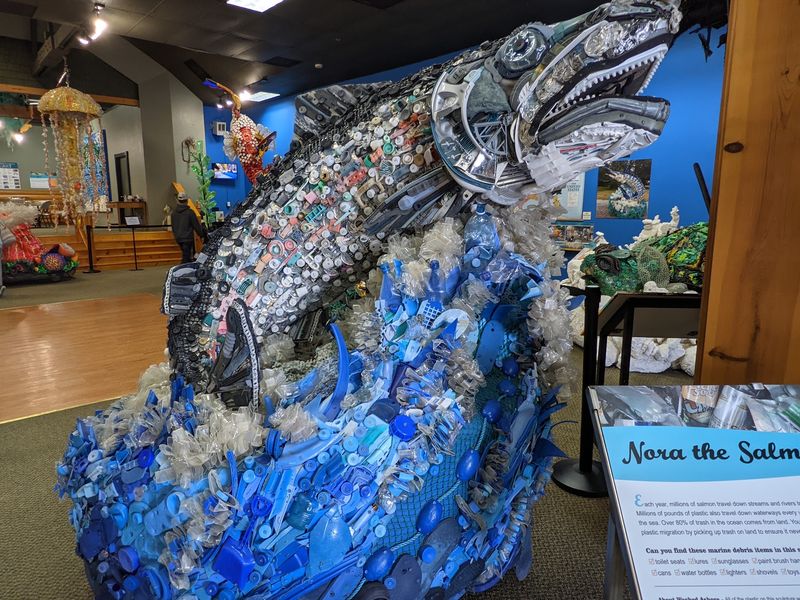
Every piece here started as garbage. The team collects plastic and cast-off junk that washes up along Oregon’s coast, cleans it, sorts it, and rebuilds it into elaborate sculptures.
The mission behind the work carries real weight. Rather than tossing the debris back into a landfill, the project transforms it into art with a clear purpose.
People often describe the results as both beautiful and sobering, a combination that sticks with them long after they leave. The sculptures look impressive from across the room, then reveal their secret up close when you realize each part was once litter.
Marine debris art shows up again and again as the reason people stop by. It is a reminder that the ocean gives back exactly what it receives.
The gallery proves that even the least wanted objects can find a second life when someone decides to see them differently.
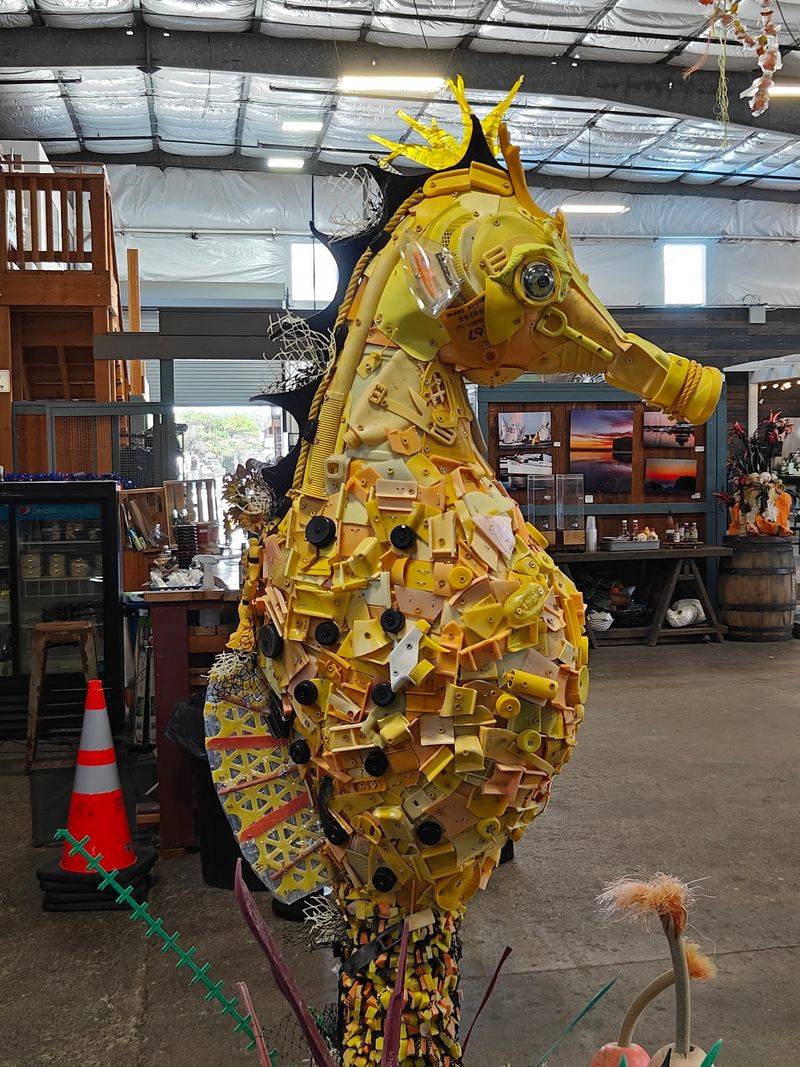
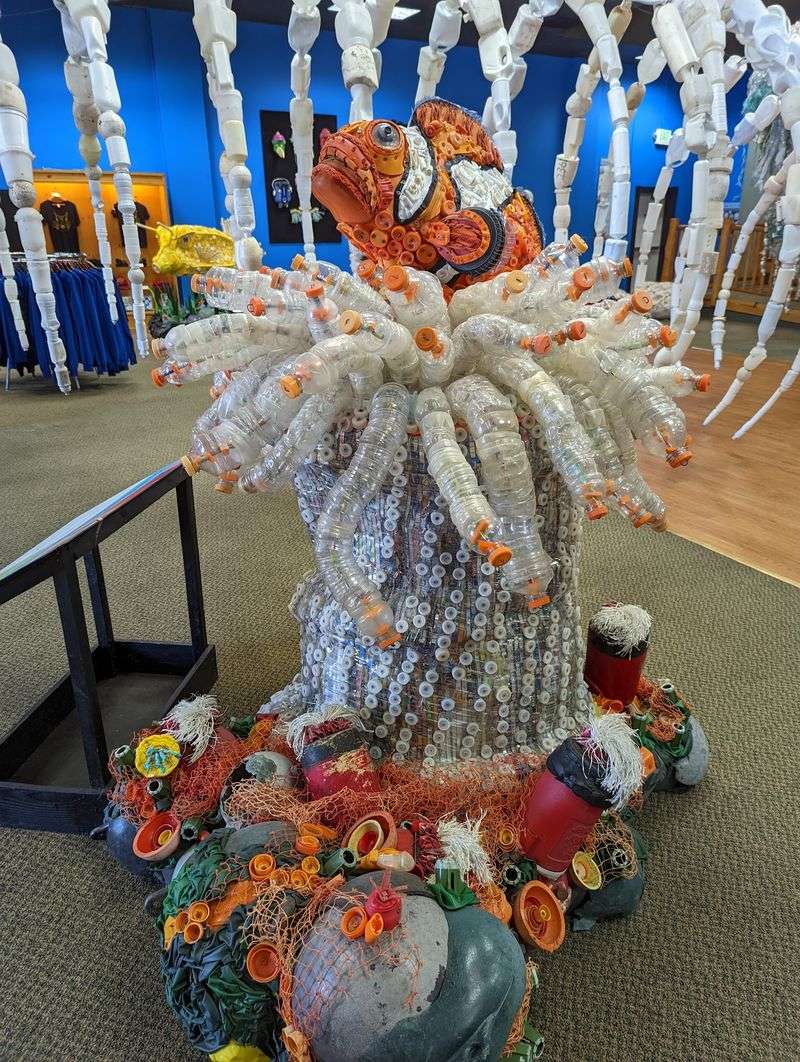
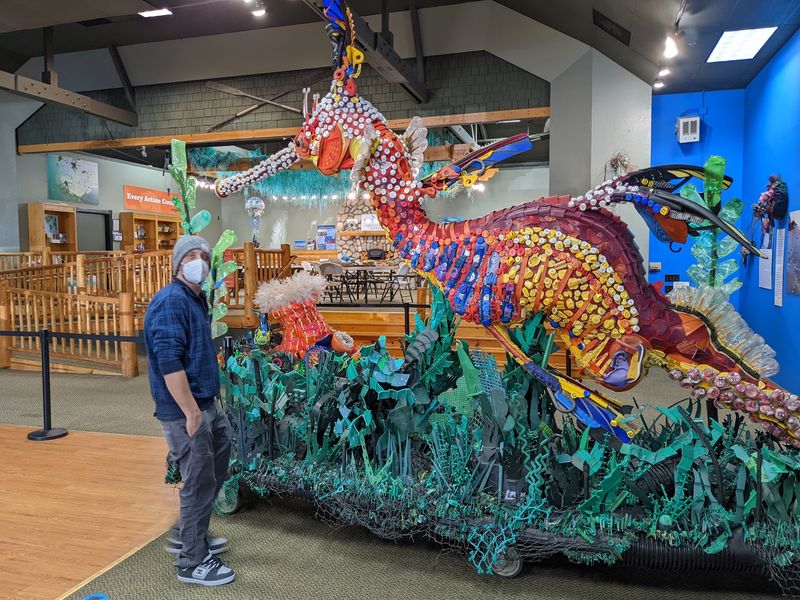
Sea Creatures Built From Bottle Caps And Beach Junk
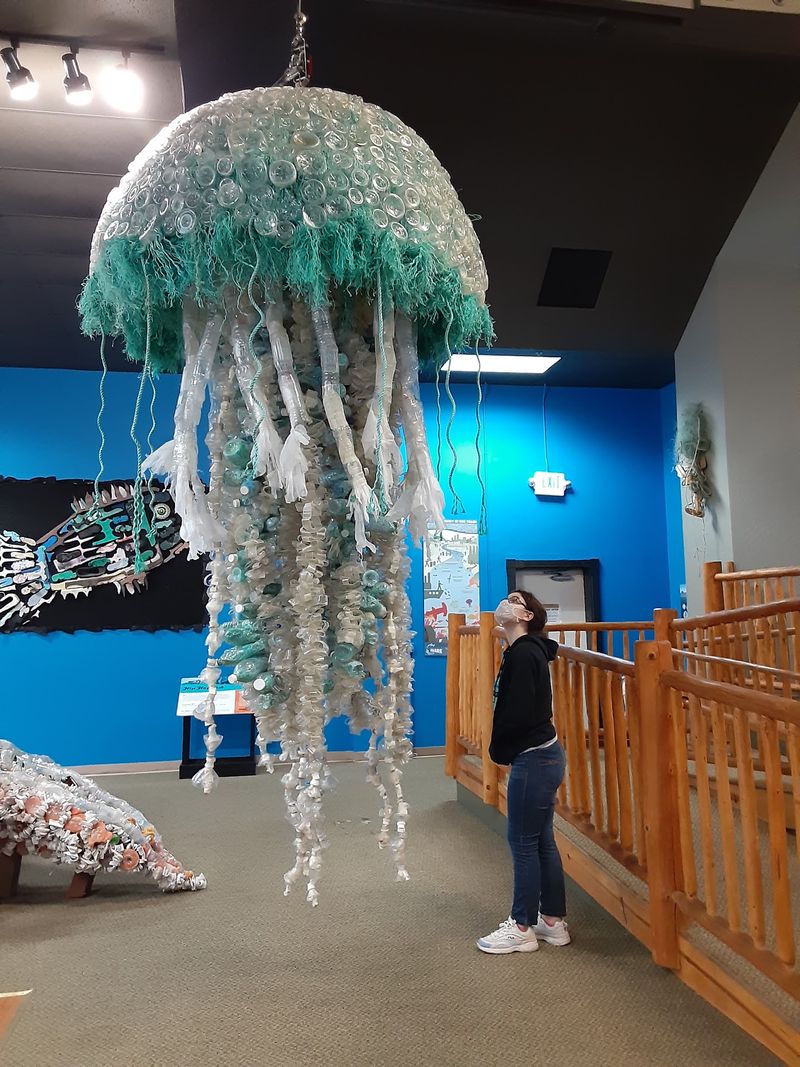
The lineup of creatures reads like an ocean roll call. Jellyfish, a puffin, a seahorse, and a swordfish all take shape from bottles, caps, and whatever else the tide delivers.
One favorite is the jellyfish lamp, which draws attention for the way light plays through its recycled parts. The details make each piece a small puzzle of recognition.
Part of the fun is spotting the everyday objects hidden inside. Guests enjoy figuring out what each item used to be before it became a fin, a tail, or an eye.
The scale of these figures adds to the wow factor, with several standing large enough to make kids crane their necks. There is a running tip among guests to remember to look up, since some pieces hang overhead.
The creatures turn a lesson about pollution into something playful and memorable, which is exactly the point.
Signs That Tell A Bigger Story
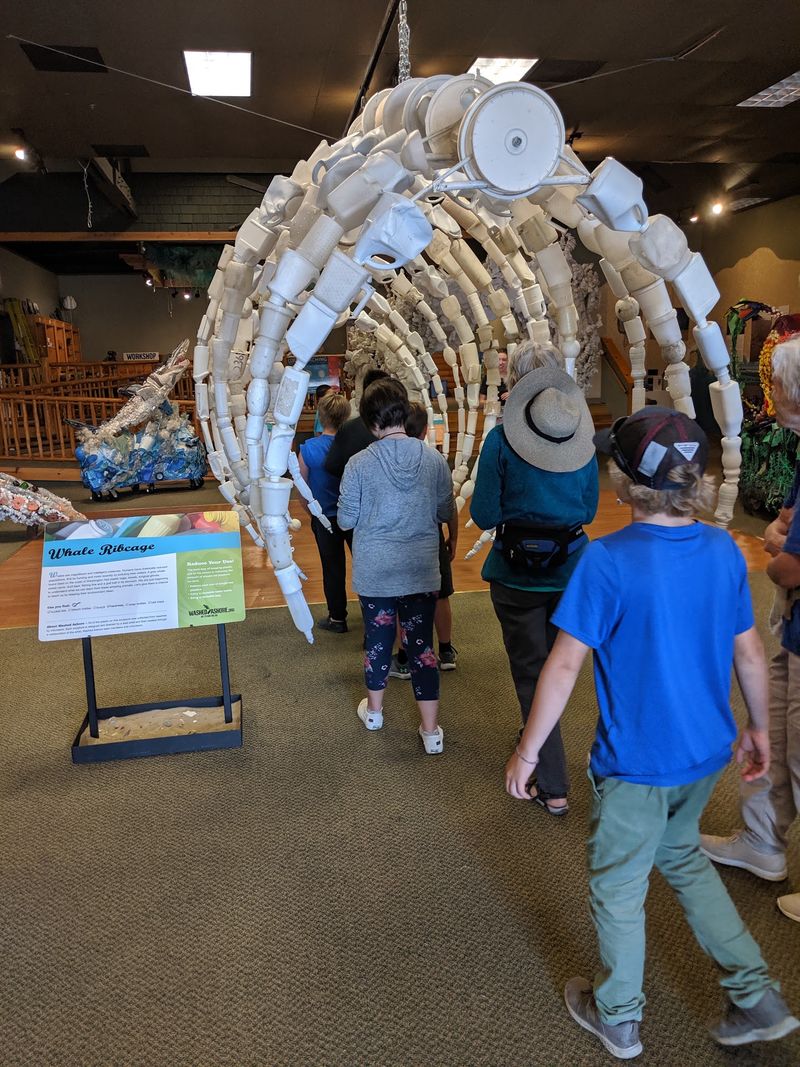
Beyond the art, the words matter here. Each sculpture comes with signage that explains the piece and the program behind it.
The signs go further than simple labels. They describe how individual species are affected by trash in the sea, giving the sculptures a layer of meaning that lands hard.
Guests appreciate how the displays name what the waste is and where it comes from. That kind of detail turns a quick glance into a genuine moment of understanding.
The gallery even points toward realistic alternatives to plastic, so the message never feels like scolding. People leave rethinking their own habits, which is a rare thing for any exhibit to pull off.
Clear signage keeps the whole space feeling educational without being heavy-handed. It is the reason so many walk out both moved and informed.
A Coffee Shop Sharing The Roof
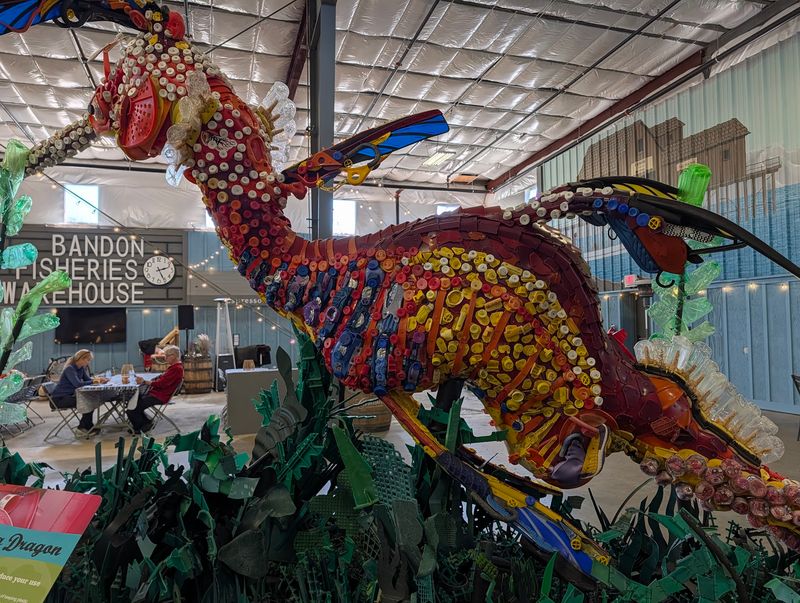
Half the charm of this stop has nothing to do with sculptures. The same warehouse holds a coffee shop that draws people in through the very door that leads to the gallery.
The cafe doubles as the entrance, so a warm drink and the art come as a package deal. Guests have grabbed lattes here, including a lavender and white chocolate version that gets happy mentions.
Having a coffee counter on site makes the whole trip more relaxed. You can browse the sculptures, then settle in without hunting for somewhere to sit.
The gathering space and bar area give the building a social hum that a standalone gallery rarely has. It feels like a hub rather than a single attraction.
For a day trip, that combination is gold, letting one address cover both curiosity and comfort in a single stop.
More Than Just Art Under One Roof
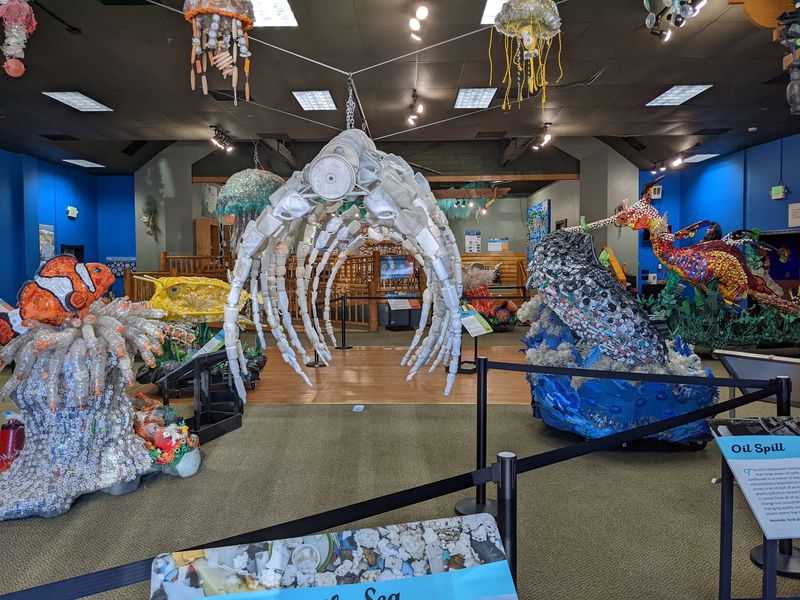
The building keeps giving once you are inside. Along with the gallery and coffee, there is an indoor seafood market, a mercantile, and spices from local sources.
On certain days a farmers market pops up too, with offerings that change by season. One visit might feature plant starts, another something entirely different.
The mix means shoppers and art fans share the same space happily. You can pick up local goods and admire recycled sculptures within a few steps of each other.
This variety is part of why the stop rewards a slower pace. Rushing through would mean missing half of what makes the place special.
The blend of vendors turns a simple gallery visit into a mini adventure, packing several small businesses into one easy-to-reach spot.
Free To Walk In And Wander
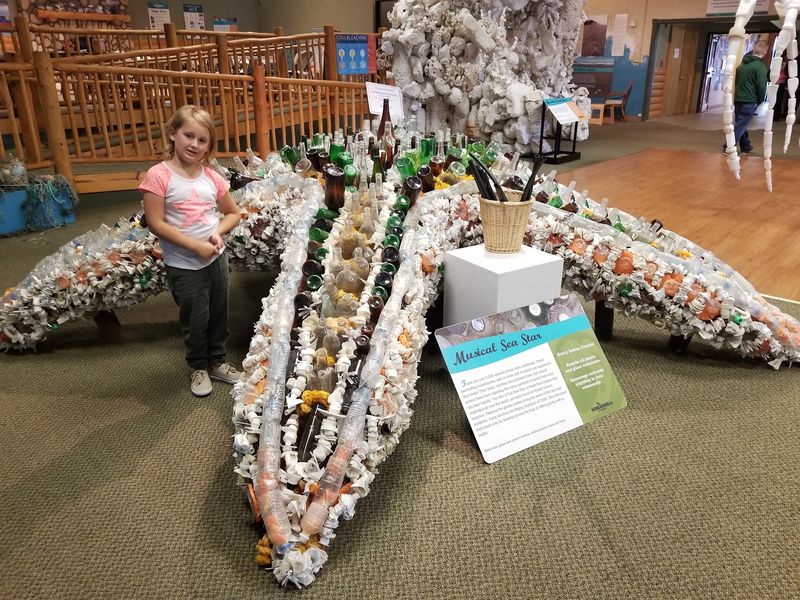
Money rarely stands between people and this experience. Admission to the gallery is free, which comes up often as a pleasant surprise.
Because it is a nonprofit focused on cleanup and awareness, the funding works differently. There is a donation box by the door for anyone who wants to chip in.
The no-charge setup makes it easy to stop on a whim. Families driving through can pull over without weighing the cost, then decide to support the cause if they feel moved.
A small gift shop also sells items made from repurposed plastics, giving guests a way to take the mission home. Spending there helps keep the effort going.
Free access lowers the bar for curiosity, which fits a place built on getting more people to care about the ocean.
A Hit With The Younger Crowd
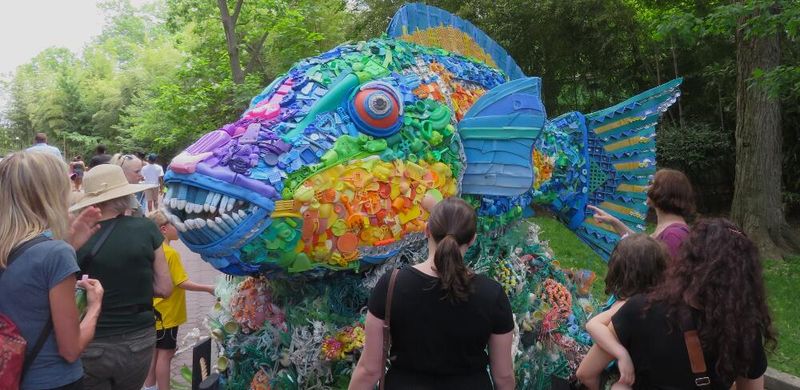
Kids tend to light up here. The giant sea creatures grab their attention instantly, and the lessons behind them stick in a way textbooks rarely manage.
Families point to the gallery as a great place to teach children about caring for the ocean. The hands-on feel of the exhibit keeps young minds engaged rather than bored.
Part of the appeal is the interaction. Little ones love searching each sculpture for familiar objects and guessing what they used to be.
The experience often becomes something children remember long after the trip ends, especially when they can connect the art to real actions. Learning wrapped in fun tends to last.
For a family looking to mix a road stop with a bit of meaning, this gallery checks the box with room to spare.
Volunteers Behind The Vision
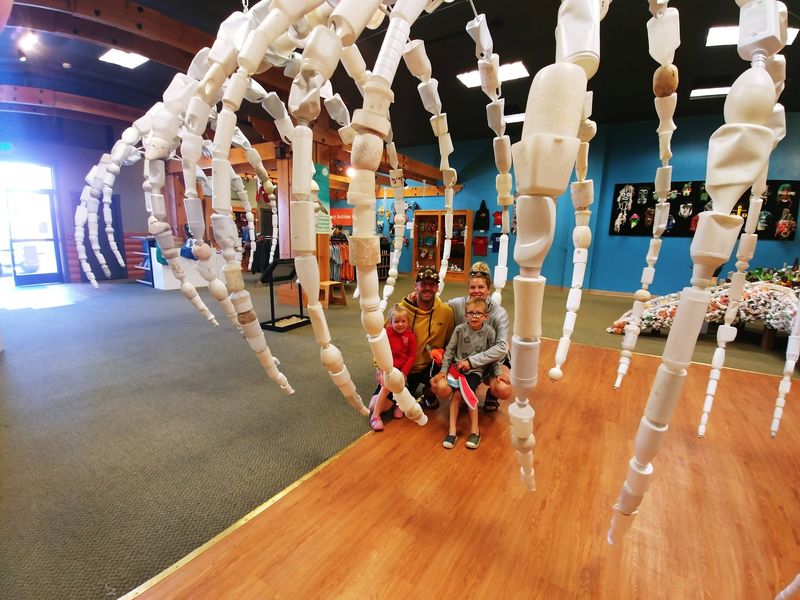
Real people power every creature on display. The sculptures come together through volunteer work, from beach cleanup to the careful building of each piece.
The chance to join in is part of the pitch. Guests can sign up for a workshop and help create pieces for future exhibits, becoming part of the solution rather than just an observer.
Workshops have welcomed all ages, with beach-cleaned plastic sorted and shaped into art by whoever shows up ready to help. It is a rare hands-on way to support a cause.
People often describe the greeters and staff as friendly and full of information. That warmth makes newcomers feel welcome to ask questions and dig deeper.
The volunteer heart of the place gives it a spirit that store-bought exhibits simply cannot match, rooted in community effort.
Where The Art Travels
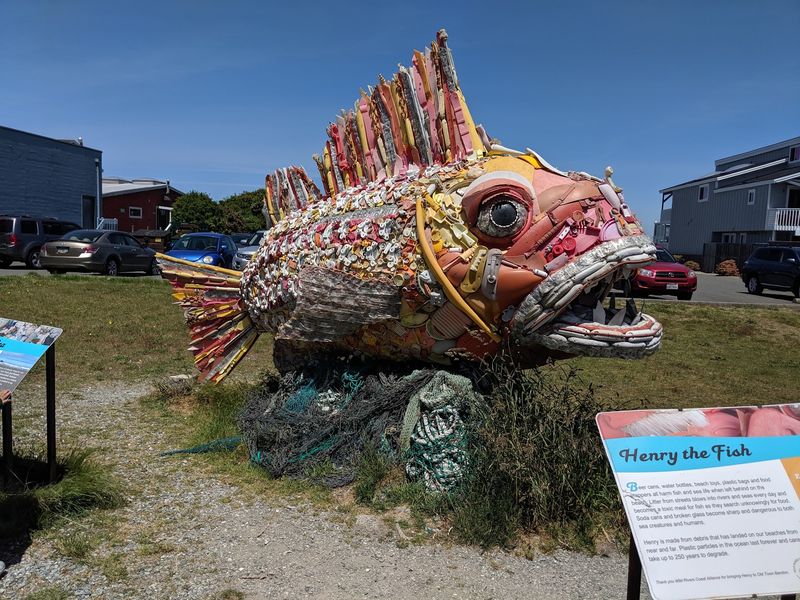
The reach of this project stretches well beyond Bandon. Some of the sculptures have traveled far, with similar structures reported as far south as California.
Locally, the collection has shifted around too. A portion of the workshop and much of the art has moved to other spots, including sites in the Coos Bay area and North Bend.
Because pieces come and go, the Bandon location may show a limited selection at any given time. That is worth knowing before setting expectations too high.
The traveling nature also means the mission keeps spreading, carrying its message to new audiences in new places. Art that moves reaches more eyes.
Still, seeing the sculptures where they are made and gathered gives the Bandon stop a special connection to the source.
Planning Around The Hours
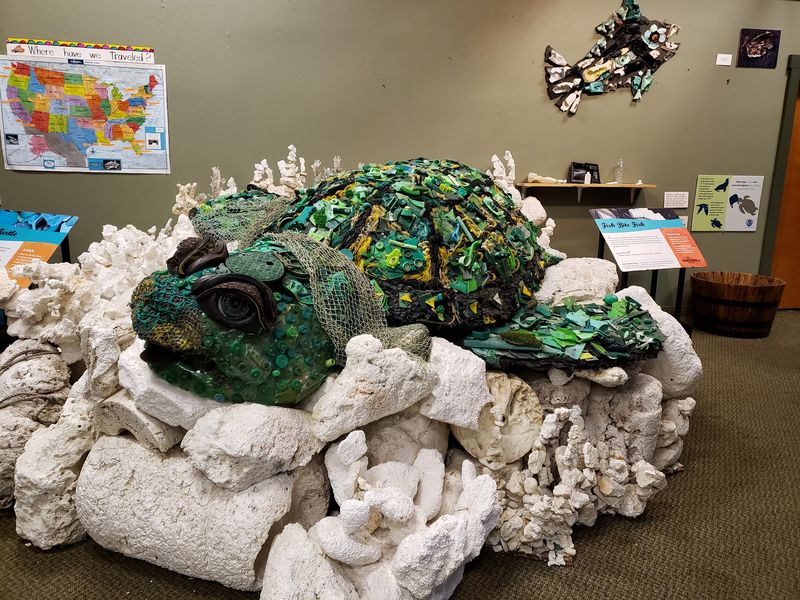
Timing your visit takes a quick check. The gallery keeps daily hours, opening at 7 AM most mornings and closing at 4 PM.
Tuesday runs a little shorter, wrapping up at 2 PM instead of 4. Every other day of the week follows the longer schedule.
The early opening pairs nicely with the coffee shop, making this a fine first stop on a coastal drive. You can fuel up and view art before the day gets busy.
Arriving with time to spare helps, since the sculptures reward slow looking and the building holds more than one reason to linger. Rushing sells the place short.
Checking the current hours before heading out keeps the day smooth, especially on that shorter Tuesday.
Check The Details Before You Drive
A word of caution saves frustration. Because the collection has shifted between locations, the current details can lag behind what is posted online.
A few guests have arrived expecting the full workshop only to find part of it relocated. Confirming ahead helps set the right expectations for the day.
The official website at washedashore.org is the best place to look for updates on what is showing and where. A quick peek before the drive is smart.
Even with a smaller display, the Bandon site still holds cool sculptures and the surrounding businesses that make the trip worthwhile. It rarely disappoints as long as you know what to expect.
A little planning turns a possible letdown into a satisfying stop, so it pays to do the homework first.
An Easy Detour On A Coastal Drive
The location makes this a natural pit stop. Travelers heading home from Gold Beach or passing through the southern coast have folded it into their routes with ease.
Others have driven over from nearby Coos Bay just to see the sculptures. The short distances between coastal towns make Bandon simple to reach.
Because the stop sits inside a shared warehouse with food and coffee, it works well as a mid-drive break. You stretch your legs, grab a drink, and see something memorable all at once.
The convenience is a big part of why people call it a must-stop when they are anywhere in the area. Little effort, big payoff.
Slotting it into an existing road trip is about as painless as day-trip planning gets, which only adds to its appeal.
Why This Stop Sticks With You
Some stops fade from memory fast, and this one does not. Rated 4.7 stars across hundreds of impressions, it earns steady praise for turning waste into wonder.
People describe it as inspiring, informative, and unique, a rare trio for any small gallery. The art gives many a renewed sense of hope in human creativity.
The combination of a free exhibit, a coffee shop, local markets, and a message that matters makes the trip feel bigger than its size. You leave with more than you came for.
Bandon holds plenty of coastal charm, and this warehouse packs a surprising amount of it into one address. It rewards the curious and the casual alike.
Add it to the next coastal outing, bring the kids or just your curiosity, and let a pile of former trash change how you see the ocean.
Enjoyed this story?
Add Fast Food Club as a preferred source to see more of our reporting on Google.