


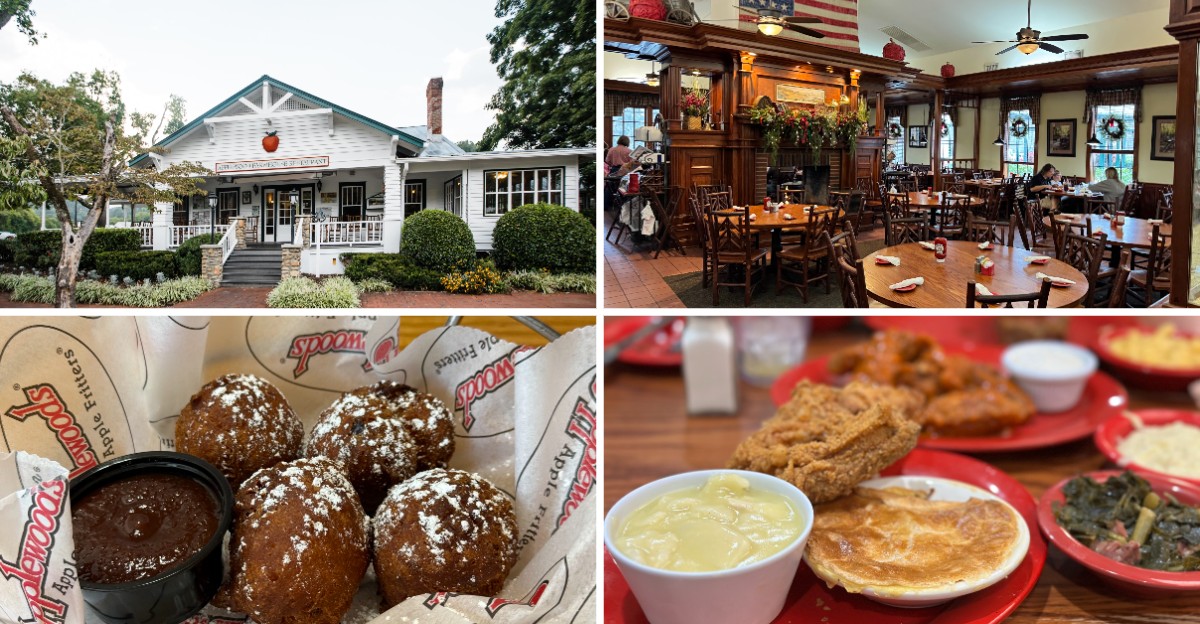
Some tables in Sevierville get claimed before the menus even land, and the reason usually arrives in a basket. Locals and returning families have turned one farmhouse dining room into a standing appointment, built around a free plate of apple fritters and a small glass of apple julep that shows up the moment chairs scoot in.
The habit runs deep enough that groups of 12 or 14 plan whole mornings around it. There is more going on here than a starter, though.
A sunroom with stained glass, a creek across the way, servers in old farmhouse outfits, and sides that refill on request all play a part. The pages ahead walk through the history next door, the meal from first fritter to dessert, the best times to show up, and what a full table actually costs.
An Orchard Address Off the Parkway
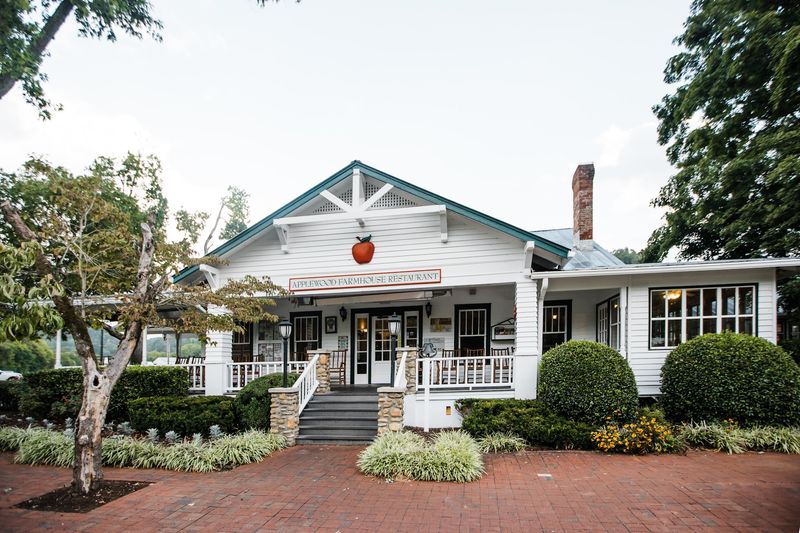
Plenty of Smoky Mountain restaurants shout from billboards along the main drag. Applewood Farmhouse Restaurant takes a quieter route.
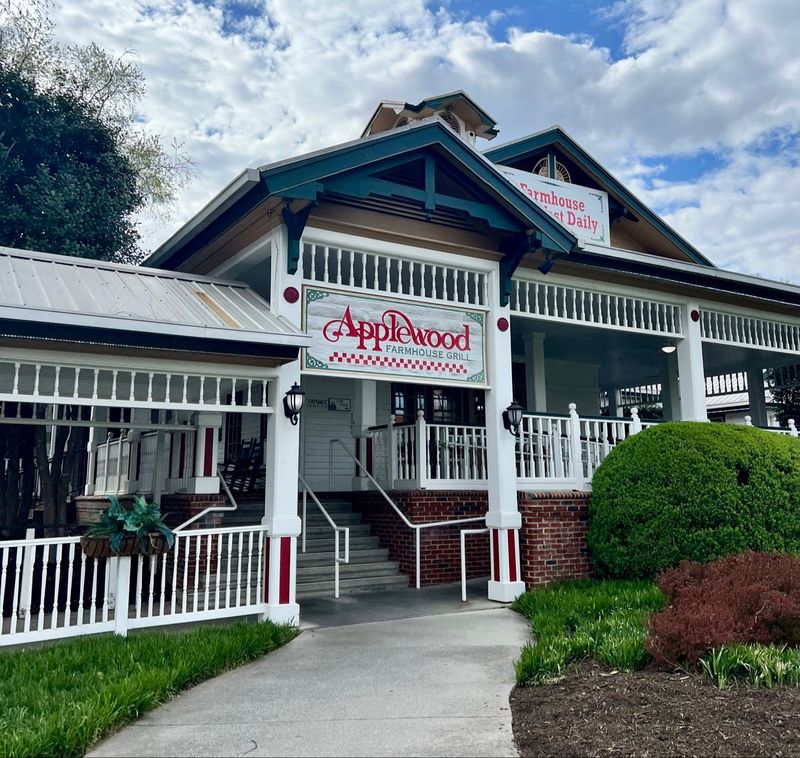
The address is 240 Apple Valley Rd, Sevierville, TN 37862, in the United States. It sits on a side street off the main parkway that runs toward Pigeon Forge, which gives it a tucked-away feel despite being close to the busiest stretch of the region.
That small detour matters more than it seems. Traffic noise and souvenir shops fade, and the setting shifts toward open grounds, mountain views, and orchard rows.
The restaurant is listed as an American restaurant serving Southern fare that leans on orchard fruits. Hearty comfort cooking is the core of the menu, and the casual environment keeps things relaxed from the parking lot onward.
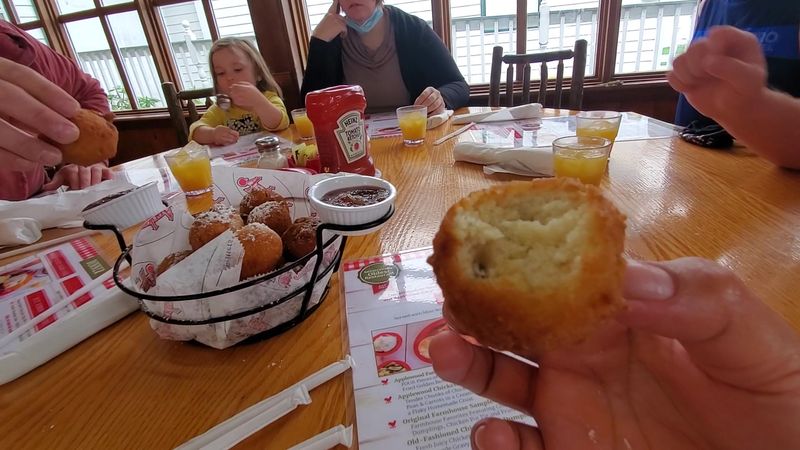
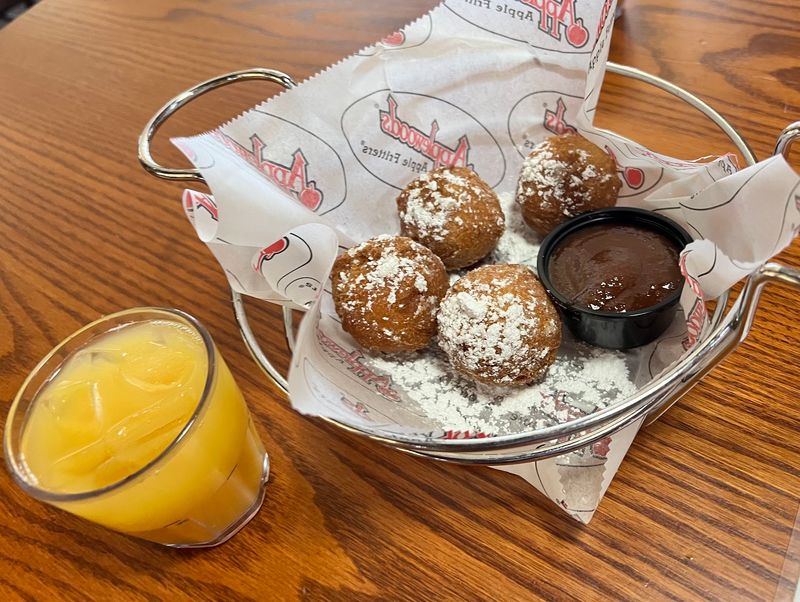
Its signature, and the reason so many regulars keep coming back, is the apple fritter. Every meal begins with a round of them, paired with a small apple julep, a fruit juice drink served at the table.
Families drive in after a morning of sightseeing, couples stop by for breakfast, and big groups book for dinner. The address may sit a few turns away from the crowds, but nobody seems to have trouble finding it.
Neighbors at the Apple Barn
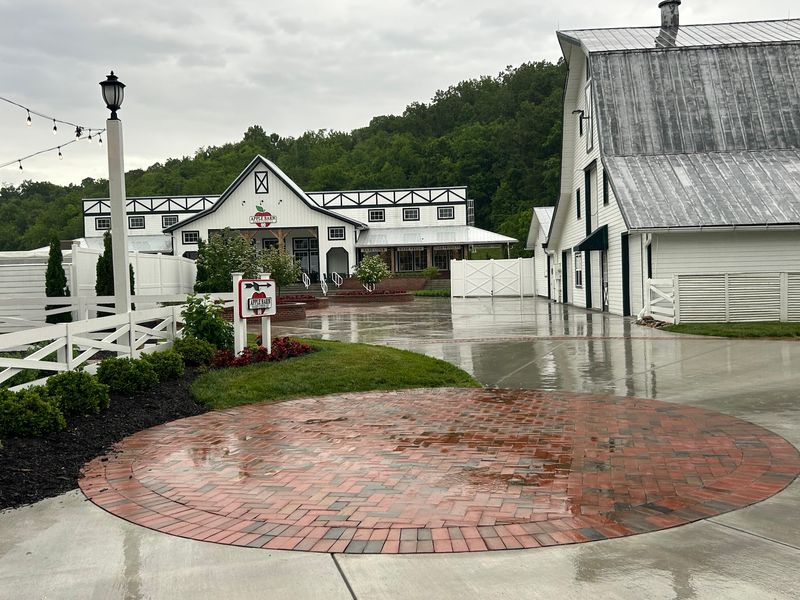
A restaurant rarely gets to share a block with an entire orchard village. This one does.
The farmhouse is part of the Apple Barn complex in Sevierville, a large development that keeps growing with new buildings and places to explore. Longtime fans who have come for years, across every season, mention that something new seems to appear on each trip.
Two restaurants operate on the property. Alongside them stand a barn, gift shops, apple tree orchards, and several other stops worth a stroll.
That mix turns a meal into a half-day outing. Plenty of groups eat first and then wander the shops, or browse before their table is ready.
The complex is open year round, so the fritter habit does not have to wait for autumn. Spring trips, summer vacations, and winter getaways all fit the calendar.
Quick tip: the shops can close before the restaurant does, so anyone hoping to browse should plan the shopping portion earlier in the day. Families who arrive late sometimes get the meal but miss the stores.
Think of the restaurant as the anchor of a much bigger stop. The orchard rows outside the windows are a steady reminder of where the menu gets its apple-forward personality.
Rooms With Their Own Personalities
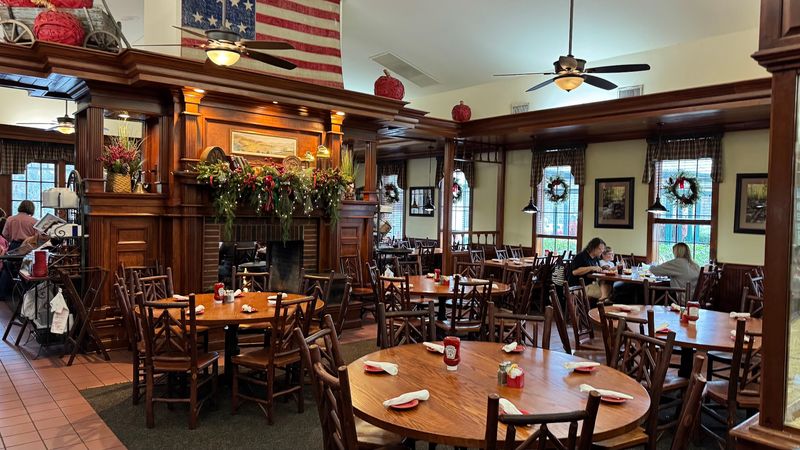
Forget the single giant dining hall. The farmhouse is split into different rooms, and each one carries its own look.
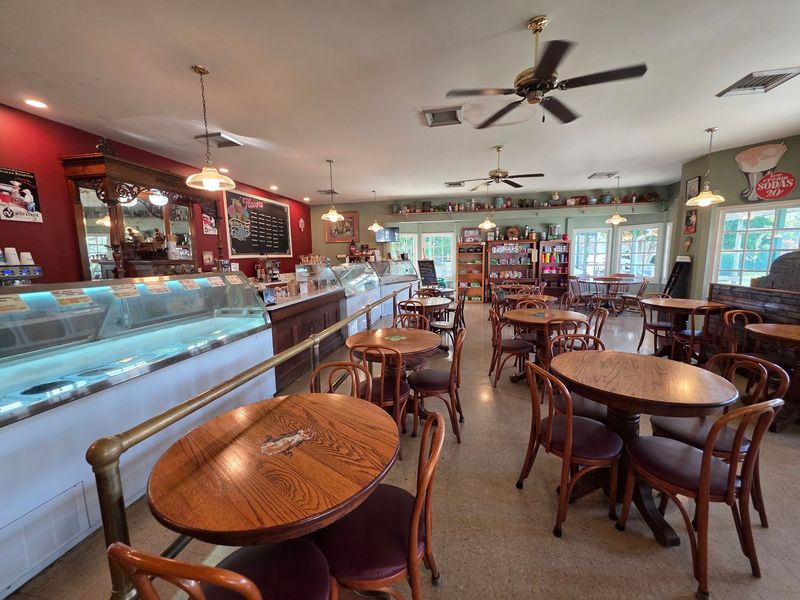
The standout is the sunroom, framed by stained glass windows that draw plenty of attention from first-timers. It is the room many people hope to land in when the host calls their name.
Elsewhere, the style leans toward a lodge-like farmhouse. Decor fills the walls and corners, creating the sense of sitting down to dinner in someone’s country home rather than a chain restaurant.
The overall mood is relaxing and old fashioned. Nothing feels rushed or flashy, and the decorating choices clearly aim for charm over trendiness.
Couples tend to call it romantic. Families describe it as homey and inviting, the kind of place where grandparents and toddlers settle in equally well.
There is one trade-off with all that character. Older farmhouse layouts come with tight corners and narrow walkways, and on busy nights the paths between tables can feel crowded.
For most guests, though, the rooms are part of the appeal. Ask about the sunroom when checking in, since a little luck with seating can make the visit even more memorable.
The Fritter That Starts Everything
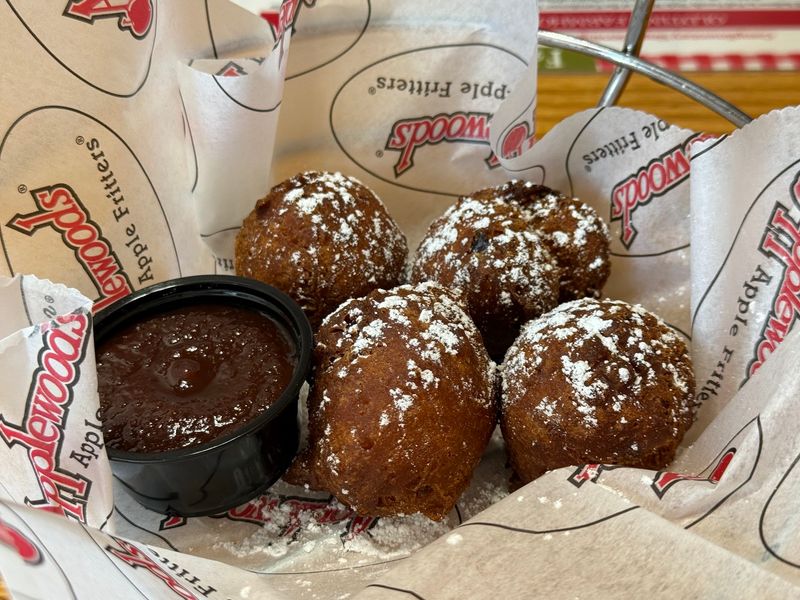
Nine hundred thirty-seven. That is roughly how many times apple fritters come up when people talk about this place online, far more than any other dish.
The reason is simple. Fritters arrive at every table, with every meal, before anyone has even ordered an entree.
They come complimentary, served as a welcome gesture rather than an add-on. Breakfast, lunch, and dinner all begin the same way.
Adults and kids alike tend to treat the basket as the opening act. Some guests admit the fritters could almost serve as a meal on their own, which is saying something given how much food follows.
Even the restaurant team jokes that the fritters have a way of stealing the show. Diners who come in for fried favorites or a hearty breakfast often leave talking about the starter first.
Fun fact: the fritters are so tied to the brand that the place itself is described as Southern fare featuring orchard fruits, with these little rounds as the signature.
Pacing is the smart move here. Eating three fritters before the entree arrives is tempting, yet the courses ahead are generous, so a little restraint goes a long way.
A Julep Built From Fruit
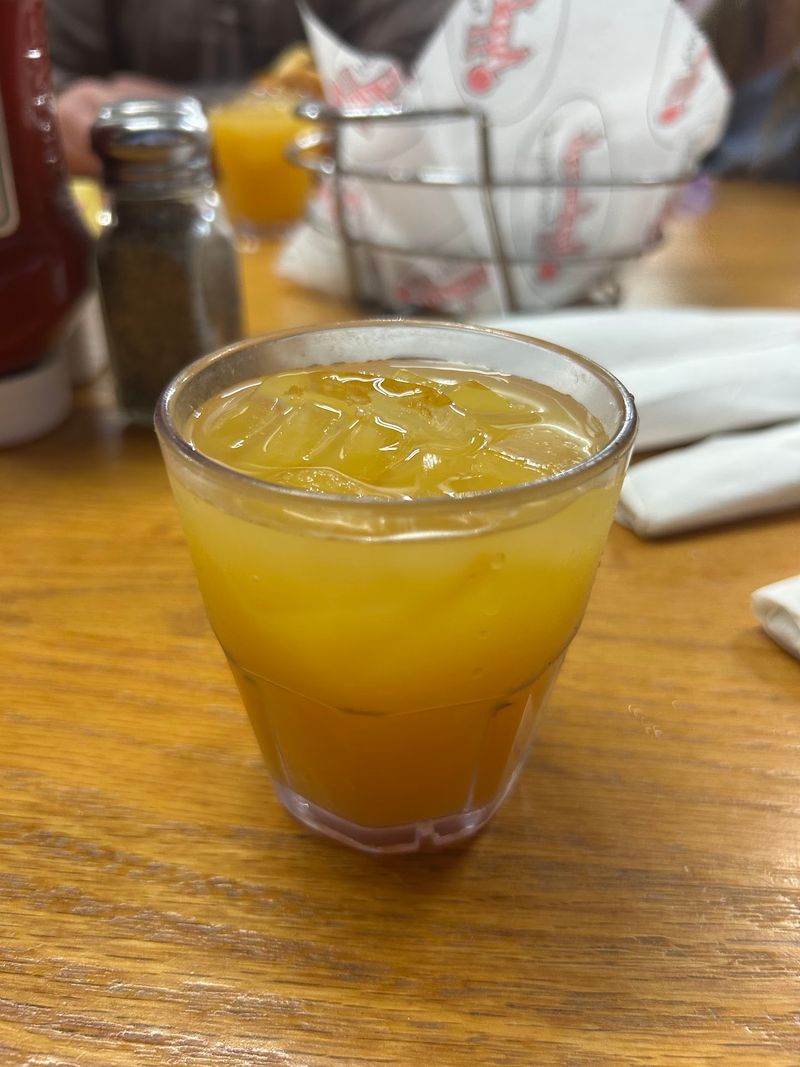
Here is the part of the headline that surprises newcomers. The apple julep at this farmhouse is a family-friendly fruit drink, poured for kids and adults alike.
It lands on the table alongside the fritters as soon as guests sit down. The small glass is part of the welcome, included with the meal rather than ordered separately.
The blend is a fruit juice mix built around pineapple and apple. That simple combination has earned a loyal following of its own.
Plenty of diners mention the julep in the same breath as the fritters. The pairing has become the unofficial handshake of the restaurant.
Breakfast crowds seem especially fond of it. A small juice to open the morning fits neatly beside pancakes, eggs, or a bigger country plate.
Kids enjoy it because it feels like a treat. Parents enjoy it because it shows up without anyone having to flag down a server.
Since the portion is small, some guests order a regular drink too. That is easy enough, and attentive staff keep glasses topped up throughout the meal.
Spelling varies on menus and in conversation, julep or julip, but the meaning stays the same around here. It is the second half of a two-part greeting that regulars now expect.
Sides That Keep Coming Back
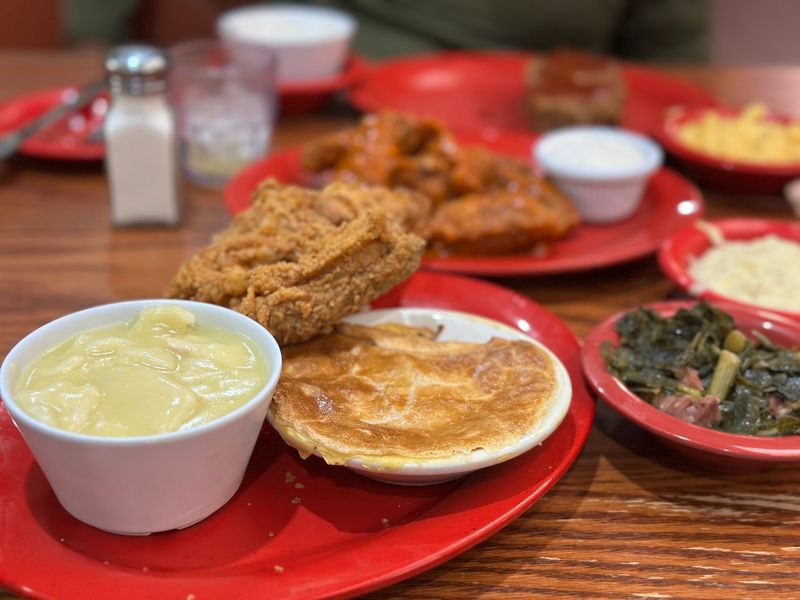
Refills are not just for coffee at this farmhouse. The side dishes come back too.
Meals are served semi family style. Each person orders an individual entree, and the table picks side dishes to share in the middle.
The number of sides depends on the meal and the table. Some groups get two shared choices, while others pick three.
Those sides are refillable. Even better, guests can swap to different sides on the second round, which turns one dinner into a chance to sample a large part of the menu.
It is a format that rewards indecision. Tables that cannot agree on choices simply try one set first and another later.
One thing trips up first-timers. The sides are per table rather than per entree, so a party of six shares the same bowls instead of each person getting separate plates.
That approach builds a dinner-table feel. Bowls get passed, someone asks for another round, and the meal moves at a conversational pace.
Not every side wins over every diner, and opinions on individual dishes vary. With refills and swaps on offer, though, a miss rarely sticks around long before something new replaces it.
A Meal in Several Acts
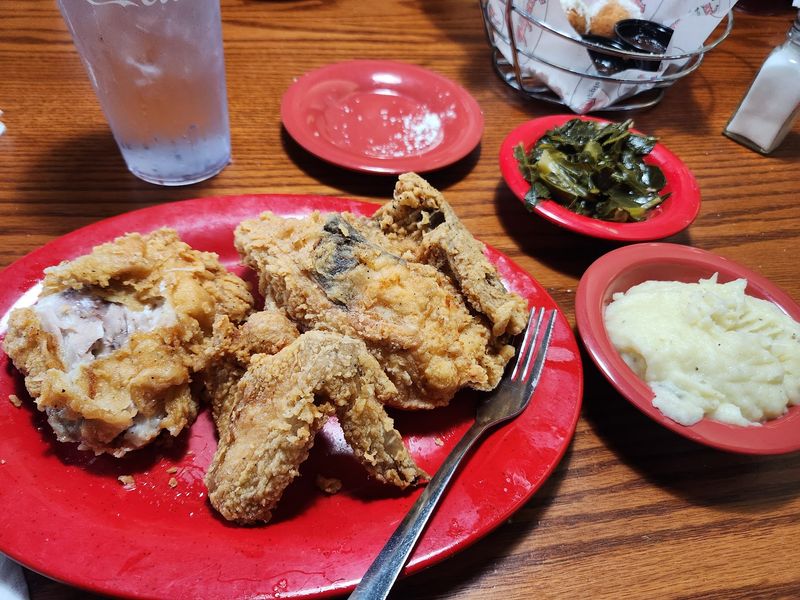
Some diners call it a seven-course meal, half joking. The structure does feel like a full production.
Act one is the fritters and julep. Act two brings a homemade soup, with choices such as a vegetable soup or a broccoli cheddar soup.
Next comes the main event. Each guest selects an entree, and the shared sides arrive to round out the table.
Biscuits often join the spread. Then, just when the table seems finished, dessert shows up.
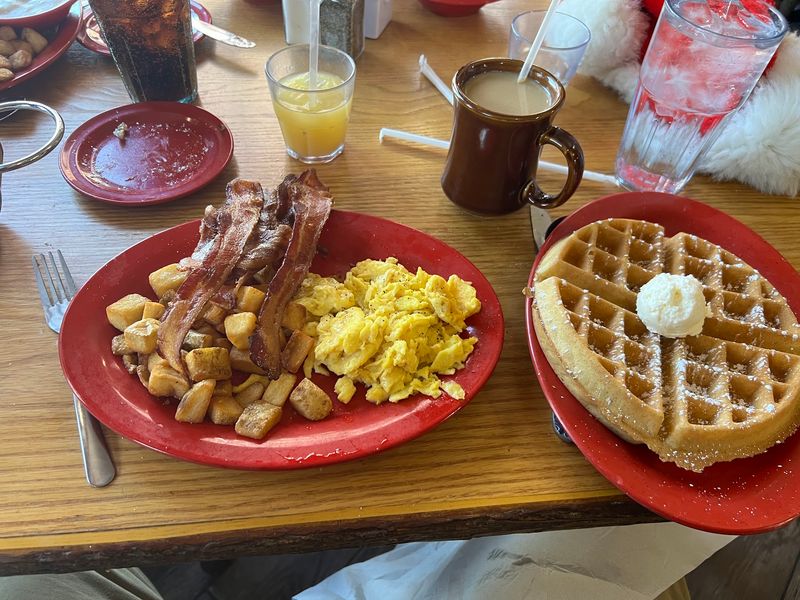
The menu itself is broad, covering a long list of classic Southern country favorites. Breakfast has its own lineup, and lunch and dinner bring heartier entrees and sampler-style plates.
Portions run large. Many guests split plates, and plenty leave with takeout boxes for later.
Here is a practical tip for anyone planning the day. A full dinner here can easily replace two meals, so scheduling a lighter lunch or a later breakfast makes sense.
The team likes to say nobody should leave the table hungry. Judging by the leftover containers heading out the door, that promise holds up well.
Each act sets up the next, which may explain why so few people skip straight to dessert.
Servers Dressed for Another Century
A server in a historical farmhouse outfit walks up, explains the whole menu, and suddenly the old house makes even more sense.
The period-style clothing is part of the experience. It matches the decor and gives the room a storybook quality without feeling like a costume party.
Staff here take time to walk newcomers through how things work. The family-style sides, the soup choices, and the dessert all get explained so nobody feels lost.
Friendliness comes up again and again. Many diners say their server treated them like longtime friends, and plenty mention names they want to thank.
The attention extends past the table. One server even chased a family into the parking lot because she thought they had left part of their order behind.
Patience is another common thread. Groups arriving close to closing time say they never felt rushed out the door.
Drinks get refilled, check-ins happen often, and questions get real answers. That steady attention helps big parties and first-timers alike.
Good hospitality is hard to fake over thousands of meals. Here, it seems to be built into the routine as firmly as the fritter basket.
Room for the Whole Reunion
Twelve for breakfast. Eleven in April.
Fourteen, counting four little kids.
Those are the kinds of party sizes that show up here regularly. The restaurant has built a strong reputation for handling large groups with ease.
Staff often find a way to seat big parties together rather than splitting them across rooms. For reunions and multi-family vacations, that detail makes a real difference.
The family-style format helps too. Shared sides mean less juggling of separate orders, and refills keep everyone fed without constant reordering.
Kids fit in easily. The fritters and julep keep little ones busy while the adults look over the menu.
Planning still matters for big crowds. Calling ahead or making a reservation is a smart move, especially during busy vacation weeks when the dining rooms fill quickly.
A group that arrives late should not panic either. One party of eight walked in about fifty minutes before closing and still felt welcome.
The bill tends to land well for groups. With soup, entree, sides, and dessert bundled together, splitting the check across families stays fairly simple.
Big tables are not an inconvenience here. They might just be the house specialty after the fritters.
Creekside Gazebos and a Front-Door Birdcage
Dessert is not the final stop. The grounds outside deserve a few minutes too.
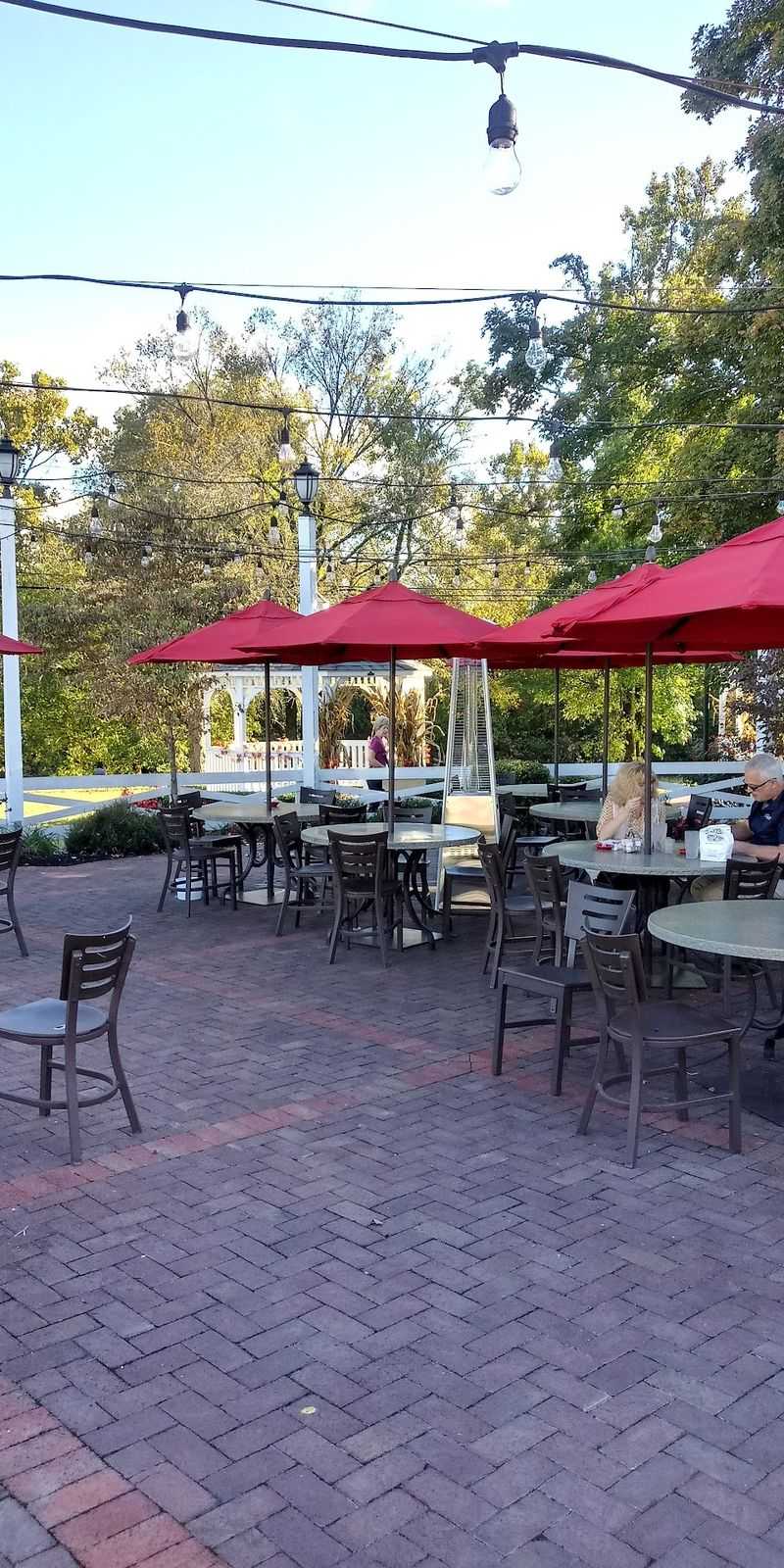
A creek runs across the way from the restaurant. Plenty of couples and families take an after-meal walk along it and come back with a camera roll full of photos.
Gazebos dot the property and work well as photo spots. They give big families a natural backdrop for that group picture nobody remembers to take indoors.
Mountain views add to the setting. Sitting outside for a few minutes is a popular way to let a large meal settle before getting back in the car.
Small details catch attention as well. A little birdcage near the front door has its own fans and often becomes a quick photo before heading inside.
Outdoor seating is part of the property mix. It gives guests another option when the weather cooperates.
For anyone traveling with restless kids, the open space is a gift. A short wander around the creek can turn a long wait or a big meal into a more balanced outing.
Bring comfortable shoes. The prettiest part of the visit might just happen after the check is paid.
The Kind of Crowd That Feels at Home
Grandparents, newlyweds, toddlers, and road-tripping friends all end up at neighboring tables here. That mix tells the story.
The casual environment works for nearly anyone. Nobody needs to dress up, and the pace stays relaxed even when the rooms are full.
Families with young children find it especially easy. Starters arrive quickly, portions are generous, and staff seem used to high chairs and spilled napkins.
Couples appreciate the romantic farmhouse styling. One pair even stumbled in by accident, thinking they were at a different restaurant, and ended up calling it a happy mistake.
Breakfast fans have their own reasons to visit. The morning menu draws plenty of devotees, and the fritter tradition applies at 8 am just as much as at dinner.
Fans of country and home-style cooking are the clearest match. Diners chasing modern or experimental menus may find the approach more traditional than adventurous.
Tourists coming off a day of attractions in Pigeon Forge often swing by afterward. The side-street location makes it an easy reset after a busy afternoon.
The common thread is comfort. Whoever walks in, the goal seems to be making them feel like a regular before the second fritter disappears.
Clocks, Crowds, and Smart Timing
Early birds have a real advantage at this farmhouse. Doors open at 8 am every single day of the week.
Closing times shift slightly. Sunday through Thursday, service runs until 8:30 pm, while Friday and Saturday stretch to 9 pm.
Waits happen, especially during vacation season. A 20-minute wait is common enough that most guests consider it reasonable.
Busy days can feel hopping, and a reservation is a good idea for anyone on a tight schedule. Large parties benefit most from calling ahead.
Arriving early has a bonus. Diners who show up before the rush often walk straight to a table and avoid the crowd near the exit later.
Accessibility is worth a heads-up. The old farmhouse has a ramp up to the porch, but it is not ideal for everyone, and tight corners and narrow walkways inside can be tricky for wheelchairs or walkers.
Guests with mobility needs may want to visit at quieter hours. Mid-morning or mid-afternoon tends to be calmer than peak dinner.
Shops in the complex may close before the restaurant does. Plan the browsing first, then settle in for the meal with no clock ticking.
What a Full Table Costs
Numbers first. Most meals land in the $20 to $30 range per person.
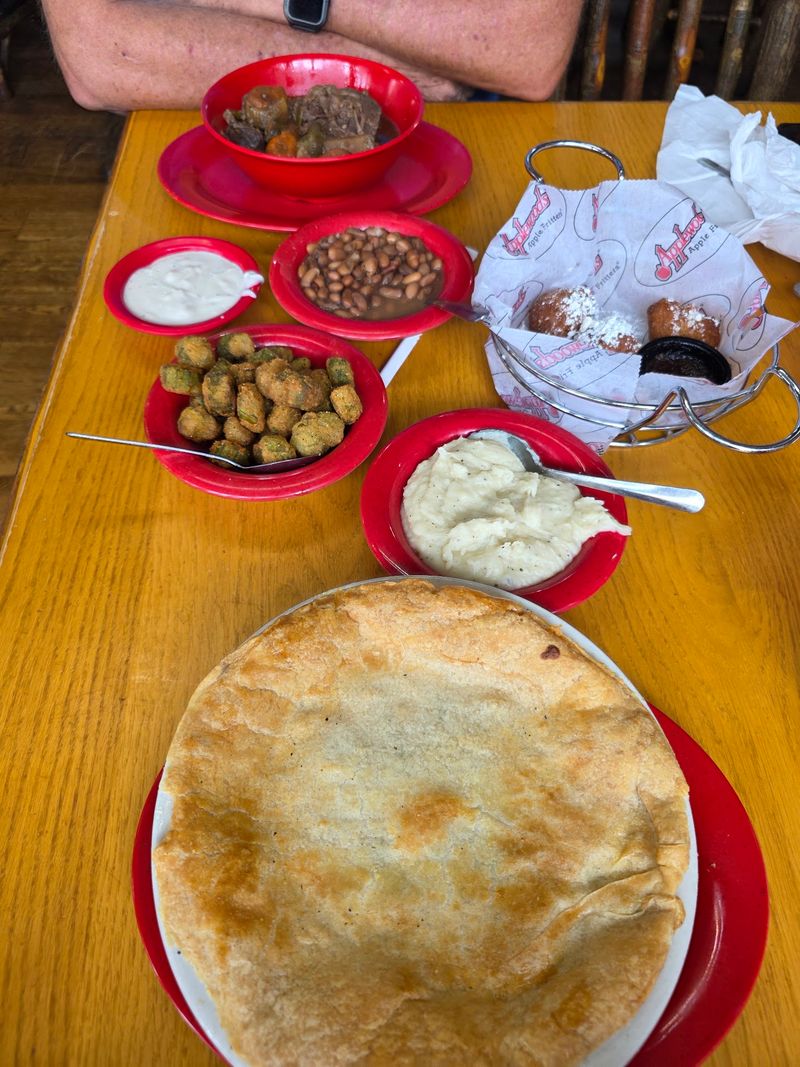
That figure covers a lot. A typical dinner bundles the fritters, the julep, soup, biscuits, an entree, shared refillable sides, and dessert.
Specific meals have been quoted around $18.99 for an entree with fritters, julep, biscuits, and sides. Another full dinner with soup and dessert came in near $23.99.
Menu figures can change over time, so checking the current menu before arriving is wise. Still, the general range has stayed friendly for families.
Value is the word that keeps popping up. Many diners say the cost felt reasonable or even exceptional for the amount of food on the table.
Leftovers stretch the dollar further. Plenty of guests carry boxes back to the cabin for a second meal later.
For larger families, the math gets especially appealing. A bundled dinner with dessert included avoids the add-on creep that inflates bills elsewhere.
Breakfast tends to be a lighter spend. It still comes with the complimentary fritters and julep, so the signature experience does not require a dinner reservation.
Bring an appetite and the bill feels even better.
Why the Side Street Stays Busy
Over ten thousand people have weighed in on this farmhouse, and the conversation keeps circling back to the same small basket.
Applewood Farmhouse Restaurant has turned a simple welcome into a ritual. Fritters and a julep greet every guest, and that small gesture sets the tone for everything after.
The rest of the visit backs it up. Multi-course meals, refillable sides, friendly servers in farmhouse dress, and rooms full of character give people reasons to stay.
Not every dish will win over every diner. Some plates draw mixed opinions, and the older building has real limits on space and accessibility.
Still, the overall picture is consistent. Families return year after year, groups of a dozen keep booking tables, and first-timers often leave planning their next trip.
The setting helps seal the deal. A creek, gazebos, orchards, and the wider Apple Barn complex turn dinner into a small outing.
For anyone heading to Sevierville or Pigeon Forge, the advice is simple. Arrive hungry, leave time for the grounds, and save room for dessert.
The fritters will be waiting. So will the regulars, probably already on their second round.
Enjoyed this story?
Add Fast Food Club as a preferred source to see more of our reporting on Google.